
Seraphinite Meaning: Origin, Value, Spiritual Symbolism, and Buying Guide for Modern Crystal Buyers
Written by: Rocrystal Sourcing & QC Team, Last updated: April 20, 2026
What Does Seraphinite Mean and Why Are Buyers Drawn to It?
A Simple Introduction to Seraphinite
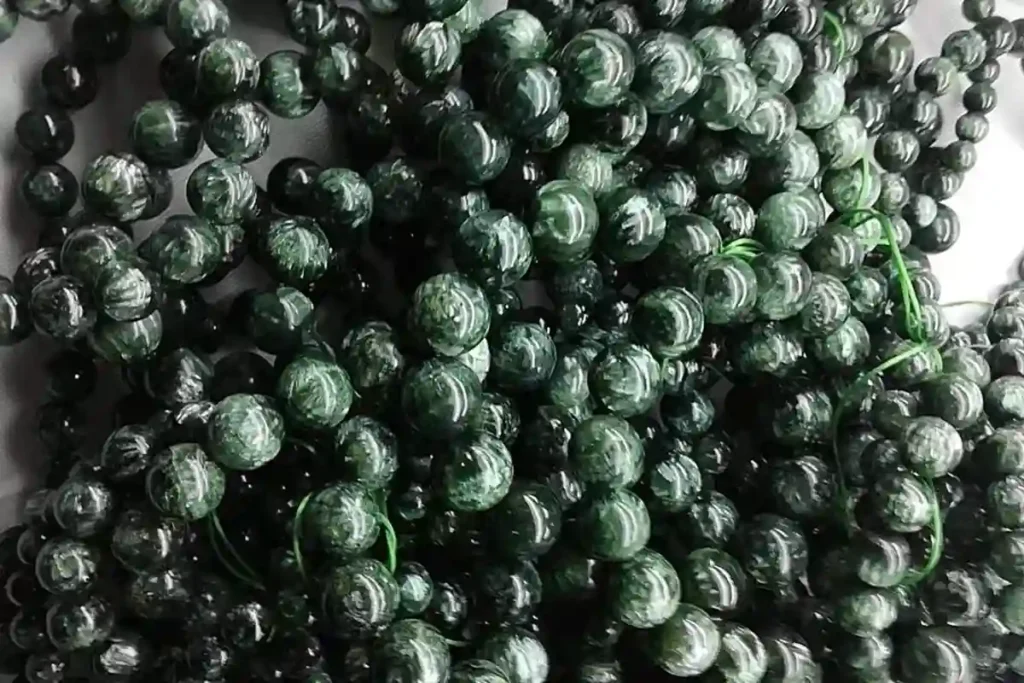
Seraphinite Meaning often starts with appearance. This stone is known for its deep green body color and soft silver patterns that look almost like feathers moving across the surface. Many buyers notice it right away because it does not look flat or common. Even before they learn the name, they usually react to the contrast between the green base and the silky flash.
In the crystal and jewelry market, seraphinite stands out as a material that feels elegant without looking overly polished or artificial. It has a natural softness in both color and texture, which makes it appealing to customers who want something refined but still organic. That visual character is one reason the stone draws attention in rings, pendants, earrings, and other small featured pieces.
For many readers, the first layer of interest comes from beauty. The second layer comes from symbolism. A lot of people feel that the feather-like silver movement gives the stone a calm, elevated, and slightly spiritual presence. That is where terms like seraphinite stone meaning and seraphinite crystal meaning often enter the conversation.
Why the Feather-Like Pattern Feels So Symbolic
One reason this stone leaves a strong impression is the pattern itself. The silver areas do not usually appear as random spots. They move in streaks, fans, or soft flashes that resemble wings, light, or flowing threads. Because of that, many buyers connect the stone with ideas such as clarity, peace, and inner quiet.
This is also why the phrase seraphinite spiritual meaning appears so often in search behavior. People are not only asking what the stone is. They also want to know what it seems to represent. In many cases, the answer is emotional as much as visual. The stone feels gentle rather than loud. It attracts people who like green stones but want something with more movement and more personality.
At the same time, the symbolic side should be kept grounded. Different buyers describe the stone in different ways. Some talk about calm and reflection. Others focus more on beauty, rarity, and the special silver glow. The meaning is not limited to one fixed idea. It grows from the way the stone looks, the way it is used, and the kind of customer it attracts.
Why This Stone Appeals to Retail and Wholesale Buyers
From a business point of view, seraphinite works well because it is easy to separate from ordinary green materials. Many stones look nice in bulk, but fewer stones remain memorable when made into small finished items. Seraphinite does. That matters to shop owners, jewelry sellers, and wholesale buyers who need materials with a clear identity.
Another reason it performs well is that it often suits higher-value small products. It is commonly used in rings, pendants, earrings, and select cabochon pieces where the pattern can be shown clearly. Buyers do not usually choose it because it is cheap or easy to replace. They choose it because it gives a premium look in a compact format.
For wholesale customers, this also changes how the material is approached. The focus is often not on ordering very large volume at the lowest price. Instead, it is about finding better-looking pieces, stable quality, strong silver flash, and product forms that are easier to resell. That is why terms like Seraphinite meaning and benefits often overlap with practical buying questions. Customers want beauty, story, and resale logic at the same time.
What “Meaning” Looks Like in Real Buying Behavior
In real business, meaning is not only a spiritual topic. It also affects buying decisions. A stone with a strong visual identity is easier to present, easier to describe, and easier to remember. That gives retailers a better story to share with their customers.
With seraphinite, buyers are often drawn by three things working together: the wing-like silver pattern, the rare feel of Russian material, and the refined look of finished jewelry. That combination gives the stone both emotional appeal and commercial value. For wholesale buyer, that balance matters more than abstract language alone.
The Origin, Geology, and Mineral Identity of Seraphinite
Where Seraphinite Comes From
Seraphinite is most strongly associated with Russia, and that origin plays a major role in how the stone is viewed in the market. When buyers hear about it, they often connect it with Russian material first, not only because of supply history, but also because that source has shaped the stone’s identity for years. In wholesale conversations, origin is not a small detail. It affects trust, pricing, and how rare the material feels to the customer.
This is one reason terms like russian seraphinite meaning show up in search behavior. People are trying to understand more than the name. They want to know whether the place of origin adds value, whether the material is genuinely limited, and why so many sellers mention Russia when presenting better-grade pieces. In practice, source matters because the market has long linked the best-known seraphinite with Russian supply.
For retail and wholesale buyers alike, that origin also adds story value. A stone tied to a specific region often feels more distinctive than one with broad or uncertain sourcing. That does not automatically make every piece high grade, but it does help explain why seraphinite is often treated as a more selective material instead of a mass-market green stone.
What Seraphinite Is Made From
From a mineral point of view, seraphinite is generally understood as a green variety of clinochlore, a mineral in the chlorite group. That scientific identity matters, but most buyers do not need an overly technical explanation. What they really need is a clear reason for why the stone looks the way it does.
The deep green color comes from its mineral composition, while the silver shimmer comes from the internal structure and reflective surfaces within the material. That combination creates the soft, feather-like movement that makes seraphinite stand out. Instead of showing a simple flat green, it often shows layers of green and silver that seem to shift under light.
For commercial writing, this part is useful because it helps bridge visual appeal and material truth. When customers ask what seraphinite is made from, they are often trying to understand whether the beauty is natural or enhanced. Explaining the chlorite-family identity in plain language builds confidence without turning the article into a mineralogy textbook.
How It Forms and Why Good Rough Is Limited
Seraphinite forms under geological conditions that do not produce endless amounts of large, clean, jewelry-friendly rough. That is one reason good material can feel limited in the market. Buyers may see more finished products today than before, but that does not mean high-quality rough suddenly became abundant.
In practical terms, the most desirable pieces usually need a balance of strong green base color, visible silver flash, and a surface that looks lively rather than dull. Once those conditions are added together, the usable rough becomes much more selective. Small pieces may still be beautiful, but large, clean, bright material is harder to find.
This explains an important point for wholesale buyers: scarcity often shows up through yield, not just through total supply. A supplier may have access to rough, but only part of that rough may be suitable for better rings, pendants, or polished pieces. That limited yield is one of the hidden reasons why the better-looking products usually cost more.
Why Source Matters More Than Many Buyers Expect
Many buyers think source matters only for marketing, but in this category it also affects visual performance. Different lots can vary in brightness, silver pattern density, background tone, and surface cleanliness. Some pieces look alive as soon as they catch the light. Others look darker, flatter, or heavier in appearance even when the size is similar.
That difference becomes important when the material is used in smaller jewelry formats. A ring stone, pendant face, or earring pair needs strong visual impact in a limited space. If the silver movement is weak or the green looks muddy, the finished product may feel less premium, even if it is technically the same material.
For that reason, experienced buyers usually care about close-up videos, real lighting, and lot-by-lot consistency. They are not only buying by name. They are buying by how well the source translates into sellable product quality.
The History of Seraphinite and How Its Name Shaped Its Image
How the Name Seraphinite Became Popular
The name seraphinite has played a big role in how the stone is understood and marketed. Many buyers remember the name because it sounds soft, unusual, and closely tied to the stone’s feather-like silver pattern. In the gem and crystal market, a memorable name can shape first impressions long before a customer learns the mineral details.
The word is commonly linked to “seraph,” a term often associated with higher angelic imagery. That connection helps explain why the stone is so often described in spiritual or symbolic language. The name gives people a mental picture right away. Instead of sounding heavy or earthy, it sounds light, graceful, and almost luminous. That has influenced how the material is presented in jewelry, crystal writing, and retail storytelling.
Even so, the commercial power of the name should not be confused with scientific classification. The name helps communicate the stone’s visual personality, but buyers still need to judge quality through color, silver flash, cut, and finish. A beautiful name can attract attention, but it is the stone itself that supports long-term value.
How the Stone Moved from Niche Material to Collector Favorite
For many years, seraphinite was not the kind of green stone that appeared in every shop or every jewelry line. It was more niche, more selective, and often known mainly to mineral lovers, crystal collectors, and buyers looking for materials with a distinct visual identity. That smaller presence actually helped the stone build a more special reputation over time.
As interest in unusual gemstone materials grew, seraphinite gained more visibility. Buyers started paying more attention to stones that offered both natural beauty and a story. Seraphinite fit that demand well. Its Russian association, limited feel, and striking silver-on-green pattern gave it a stronger identity than many ordinary green stones in the market.
Later, as more designers and sellers began using smaller pieces in pendants, rings, earrings, and polished forms, the stone reached a wider audience. It still kept its niche feel, but it no longer stayed hidden in specialist circles. That shift helped turn it into a collector favorite and a premium option for shops that wanted something less common.
Why Its Story Still Matters in Modern Sales
In today’s market, buyers do not only respond to appearance. They also respond to story, origin, and the feeling that a material has character. That is one reason the history and naming of seraphinite still matter. They give the stone a stronger identity, which makes it easier to present and easier for customers to remember.
For wholesale and retail selling, that story works best when it supports real quality. A customer may first be drawn in by the name, the Russian background, or the wing-like pattern. The actual sale, though, is usually completed by the finish, the silver glow, and how well the material suits the final product.
That balance is important. Story opens the door, but product quality keeps the stone credible. With seraphinite, the strongest sales approach usually combines both.
Seraphinite Meaning in Spiritual, Emotional, and Personal Use
Spiritual Associations Commonly Linked to Seraphinite
When people talk about the spiritual side of this stone, they usually focus on peace, inner clarity, and a softer kind of strength. Rather than being described as intense or overpowering, seraphinite is often associated with quiet reflection. Many users are drawn to it because the silver patterns feel light and uplifting, while the green base gives it a grounded and natural presence.
In crystal language, this is why seraphinite spiritual properties are often linked with personal growth, self-awareness, and emotional balance. Some people keep it nearby during meditation, journaling, or quiet time because they feel the stone supports a more peaceful mindset. Others simply enjoy what it represents visually and emotionally, even if they do not follow crystal traditions in a formal way.
It is important to keep this kind of language realistic. Spiritual use is personal, and different people connect with the stone in different ways. For some, it feels calming. Others connect with its symbolic side. Many are simply drawn to its beauty and rarity. All of those responses can exist at the same time.
Emotional Meaning: Why People Reach for It During Stress
A big part of the stone’s appeal comes from the emotional tone it gives off. Seraphinite does not usually feel bold, fiery, or dramatic. It feels softer. That matters because many customers who search for green stones are not always looking for something loud. They want something that looks soothing, steady, and comforting in a visual way.
This helps explain why Seraphinite benefits are often described in emotional terms. Buyers may associate it with rest, reflection, or the feeling of slowing down after mental pressure. In that sense, the stone appeals to people who want objects around them that carry a quiet and settled mood. The material itself becomes part of that experience, especially when the polish is smooth and the silver movement shows clearly under light.
For sellers, this emotional side is useful because it gives the product a softer story without turning the message into exaggerated healing claims. The best approach is to describe what people commonly associate with the stone, while leaving room for personal interpretation.
Heart, Reflection, and the Appeal of Green Stones
Green stones often carry a strong emotional identity in the market. Buyers tend to connect them with balance, renewal, softness, and heart-centered themes. Seraphinite fits naturally into that pattern, but it also brings something extra. The silver feather-like flash adds movement and elegance, which makes the stone feel more layered than many plain green materials.
That is one reason the phrase green seraphinite meaning feels intuitive to many readers. The green color suggests calm and growth, while the silver details make the stone feel lighter and more expressive. This combination gives it a refined emotional presence that works especially well in jewelry.
In practical sales terms, that visual language matters. Customers may not always explain their choice in technical words, but they often respond to how a stone feels at first glance. Seraphinite benefits from that response because its look already suggests depth, softness, and a little mystery.
Meditation, Quiet Rituals, and Personal Symbolism
Many people who buy seraphinite for personal use are not looking for a loud statement piece. They want something they can wear, hold, or keep nearby during quiet moments. Because of that, the stone often appears in personal rituals such as meditation, reflective writing, or simple daily pauses where visual calm matters more than formal practice.
This is where ideas like seraphinite stone spiritual meaning often become more personal than theoretical. One person may use the stone during meditation. Another may choose it because it reminds them to slow down. Someone else may wear it as a gentle symbol of calm, growth, or emotional space. The same stone can take on different meaning depending on the person and the moment.
That flexibility is part of its strength. Seraphinite does not need one strict message to be meaningful. Its value often comes from how naturally it fits into modern, quiet, reflective use.
A Grounded Note About Spiritual Language
When writing about Seraphinite Meaning, it makes sense to include the spiritual and emotional side, because that is clearly part of why people search for this stone. At the same time, it is better to stay grounded. The stone may hold personal symbolism, emotional comfort, or spiritual interest for many buyers, but those ideas should not be exaggerated into promises.
A better approach is to treat the stone as something people often associate with calm, reflection, beauty, and inward focus. That keeps the language honest, useful, and easier for modern readers to trust.
Why Seraphinite Is Expensive, Rare, and Often Sold in Smaller Quantities
Is Seraphinite Rare in Today’s Market?
Seraphinite is not rare in the sense that it never appears, but good seraphinite is still limited enough to feel selective in the market. That distinction matters. Buyers may find listings online, yet once they begin comparing pieces more carefully, they usually notice a clear gap between ordinary material and the better-looking grades.
The main difference is not just whether the stone is available. It is whether the stone shows the right visual balance. Better pieces usually have a richer green body color, stronger silver feather-like movement, and a cleaner face overall. Once those standards are applied, the number of truly attractive pieces becomes smaller. That is why the question Is seraphinite rare often leads to a more nuanced answer than people expect.
For wholesale buyers, rarity often shows up as limited consistency. A seller may have stock, but not every lot will deliver the brightness, pattern, and finish needed for higher-end jewelry or premium retail presentation. In that sense, rarity is tied to quality, not just presence in the market.
Why High-Quality Pieces Cost More
The price of seraphinite rises quickly when the material shows stronger visual performance. Buyers usually pay more for pieces with a lively silver flash, a cleaner deep green background, and fewer distracting black spots or dull areas. Those details may seem small at first, but they make a major difference once the stone is cut, polished, and placed into jewelry.
Another reason better pieces cost more is that good rough does not always produce a high yield. A supplier may start with material that looks acceptable in bulk, then lose a meaningful portion during cutting and sorting because some parts are too dark, too spotted, or too flat in pattern. As a result, the pieces that remain attractive enough for rings, pendants, and featured stones carry more value.
This is also why seraphinite gemstone meaning in commercial content often overlaps with questions of quality and price. People are not only asking what the stone symbolizes. They are also asking why one piece looks ordinary while another feels premium. The answer usually comes down to pattern quality, surface life, and how much of the rough is actually usable.
Personal Experience: How We Judge Good Seraphinite Rough
In our experience, seraphinite is one of those stones that looks simple from a distance but becomes much more selective once you start sorting real material. It comes in from Russia, and compared with many common green stones, the supply in the market feels much tighter. That alone already puts it in a higher price range, but the real difference comes from quality.
Lower-grade seraphinite often shows black dots on the surface, and the overall shine can look darker or more muted. It may still be usable, but it does not have the same refined feeling. Better material is very different. The silver flash and green base move together more clearly, the surface feels smoother, and the whole piece looks brighter and more elegant. That visual contrast is a big part of Seraphinite Meaning in the real market, because buyers often respond to the look before they ask anything else.
Another detail worth noting is weight. Even though the price is high, the stone itself is relatively light compared with what some buyers expect. That surprises people sometimes, especially if they assume a higher price should come with a heavier feel. In this case, the value comes from beauty, rarity, and usable quality, not from weight alone.
Why Even Repeat Buyers May Order Small Quantities
One of our European customers buys from us regularly, but the order size for seraphinite is usually small. The reason is not lack of interest. The reason is resale speed. The material is expensive, and once it reaches the retail level, the end customer often buys more carefully and in lower volume.
That pattern is common with higher-priced niche stones. A shop owner may love the material, appreciate the look, and still choose to restock in smaller amounts because the turnover is slower than with more affordable everyday stones. In other words, repeat demand can be real even when each order stays modest.
This is useful for wholesale sellers to understand. A smaller order does not always mean weak demand. Sometimes it means the customer knows the market well and wants to keep their selection focused, premium, and easier to move at retail price.
How Seraphinite Is Used in Jewelry, Beads, and Small High-Value Products
Why Seraphinite Often Appears in Rings and Pendants
Seraphinite is often used in rings and pendants because the material works especially well in smaller featured formats. A good piece does not need to be large to look impressive. When the silver flash is strong and the green base is clean, even a modest stone can create a premium look. That makes it a practical choice for jewelry designs where the stone needs to catch attention quickly.
This is also why many higher-quality pieces are not wasted on large low-margin products. Better seraphinite rough is usually saved for cabochons, pendant, ring stones, and matched jewelry components where the pattern can be shown clearly. A small but beautiful stone often sells better than a bigger piece with weak movement or dull color.
For buyers, this product logic matters. The value of seraphinite often comes from how much visual effect can be created from a limited piece of material. That makes rings and pendants some of the most natural formats for this stone.
What Buyers Should Know About Seraphinite Bracelet Styles
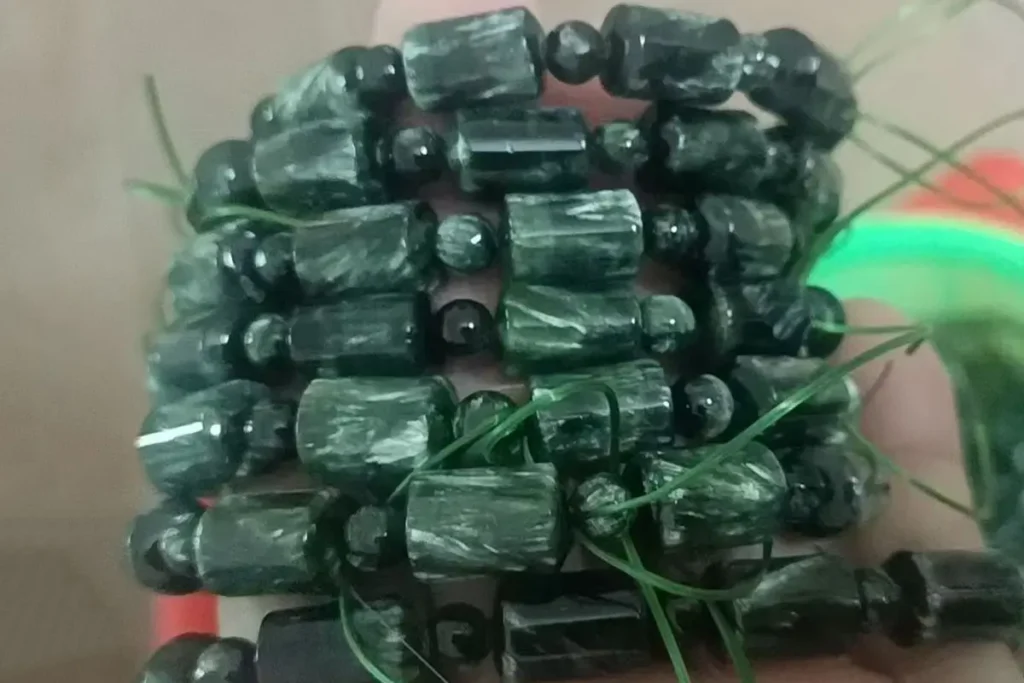
Bracelets give buyers another way to work with this material, but the selling logic is a little different. A Seraphinite bracelet can be very attractive when the beads or polished pieces show enough silver movement. The challenge is that bracelet material usually needs more consistent appearance from bead to bead, which is not always easy with a higher-priced and visually selective stone.
That is why bracelet styles often vary by market and by quality level. Some are made with round beads, while others use faceted pieces, flat shapes, cut-corner forms, or plate-style components. In each case, the goal is similar: show enough of the feather-like flash to make the bracelet feel special, while keeping the material usable in a wearable design.
For wholesale buyers, bracelets can offer broader product access for customers who want seraphinite but are not ready to buy a larger pendant or high-priced ring. They also make the material easier to introduce into a collection without relying on only one product type.
Why Product Format Changes the Selling Speed
Not every seraphinite product moves at the same pace. Rings and pendants often appeal to customers who want a standout piece, while bracelets and smaller polished goods may feel easier to wear and easier to gift. Earrings can work well too, especially when the stones are light enough and the silver pattern still shows clearly.
Product format affects more than style. It also affects price perception, display value, and how quickly a customer decides to buy. A pendant may look more dramatic in photos. A bracelet may feel more practical for daily wear. A ring may look more luxurious, but it also depends more on the face quality of a small stone.
For retailers and resellers, this means seraphinite should not be treated as one single-category material. The same rough can lead to very different sales results depending on how it is cut, set, and presented.
Personal Experience: How Product Variety Improved Buyer Choice
In the past, better seraphinite was often used mainly for rings, pendants, and earrings because the material was small and expensive, so every piece had to be used carefully. That is still true for many top-grade pieces today. When the rough is limited and the cost is high, smaller high-visual-value formats usually make the most sense.
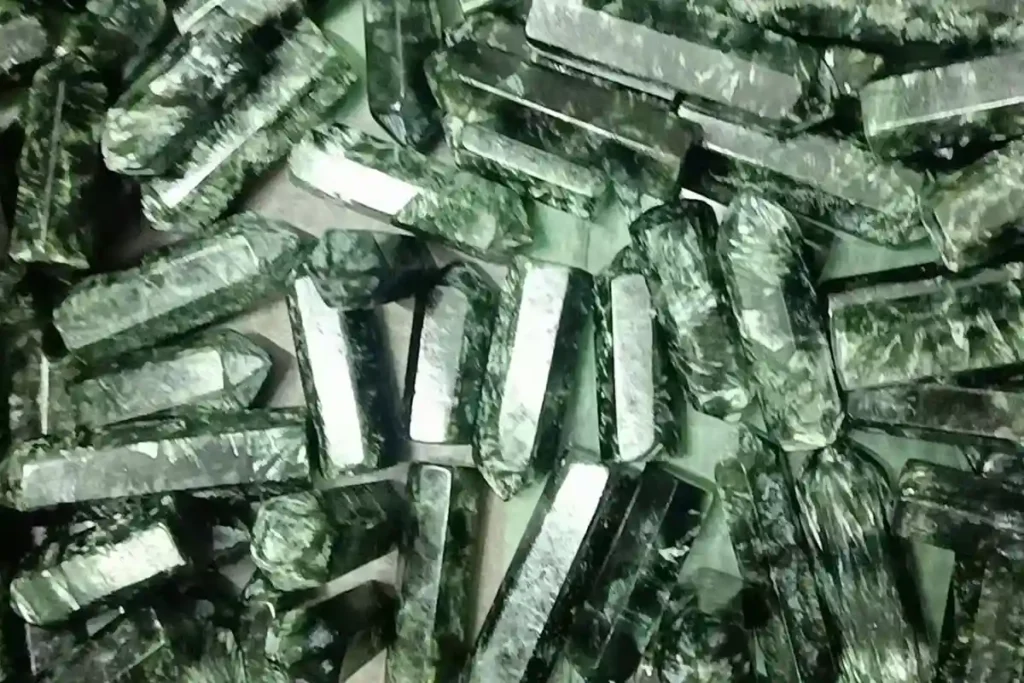
Now, compared with earlier years, there is a little more variety in the market. We can see cut-corner pieces, bracelet plates, some bead styles, and even tumbled stones in addition to the more traditional jewelry formats. That change gives buyers more room to build a product line around the material instead of treating it as a one-format stone.
From a wholesale point of view, this is helpful. It allows different levels of customers to enter the category. Some may start with a few pendant pieces. Others may test a small bracelet line. Some may prefer polished stones for display or gift use. More product forms make the material easier to introduce without reducing its premium image.
How to Evaluate Seraphinite Quality Before You Buy
Color: What Good Green Looks Like
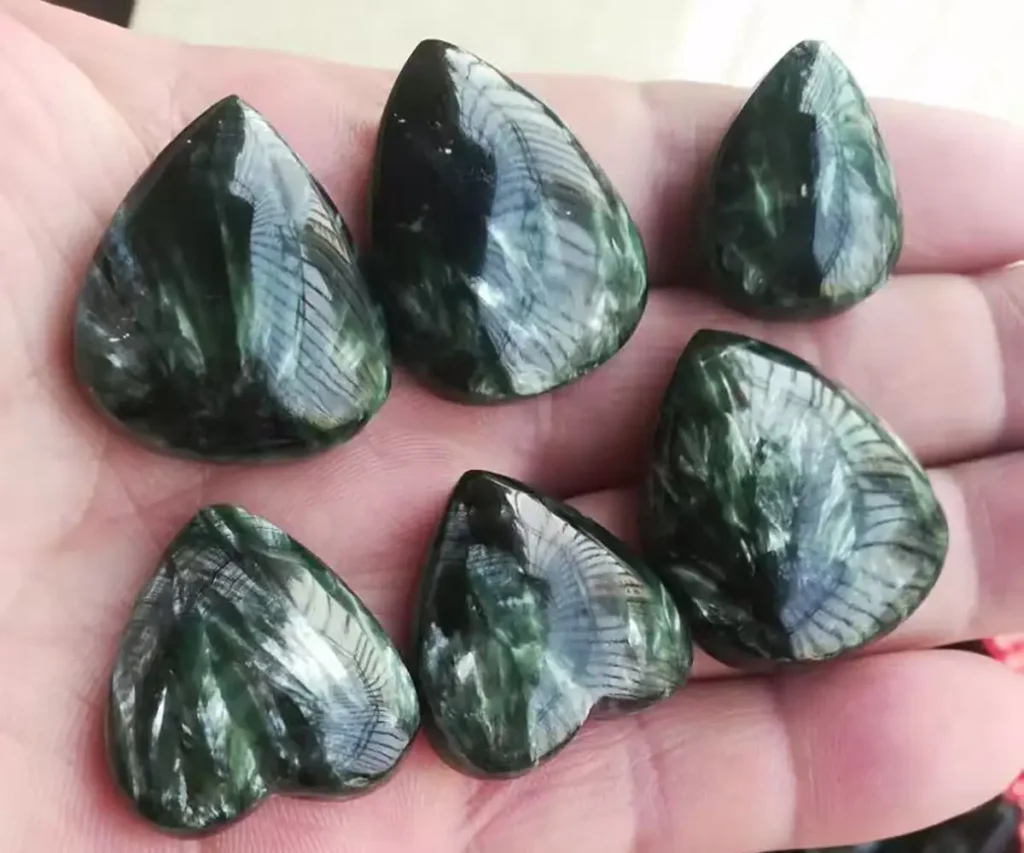
Color is one of the first things buyers should check when judging seraphinite. Good material usually shows a rich green base that feels alive rather than flat. The tone does not need to be extremely dark to look premium, but it should have enough depth to support the silver pattern. If the green looks muddy, grayish, or lifeless, the finished piece often loses much of its appeal.
Not every green tone performs the same way in jewelry. Some pieces lean toward a cleaner deep green, while others look more gray-green or muted. That difference matters because the silver movement becomes more striking when the background has better contrast. A clean green base helps the feather-like flash stand out and gives the stone a more elegant look.
For wholesale buyers, color is not only a beauty issue. It is also a resale issue. Stronger green usually makes product photos clearer, display presentation stronger, and customer response more immediate. A stone may be genuine, but if the base color feels dull, it becomes much harder to sell as a premium item.
Shine: The Silver Flash That Buyers Care About Most
If color creates the base impression, silver flash creates the real character. This is often the first detail experienced buyers look for, because it is what makes seraphinite feel different from many other green stones. When the flash is strong, the surface seems to move under light. That movement adds life, softness, and a more valuable appearance.
Not all pieces show this effect equally. Some have bright silver streaks that spread clearly across the face. Others show only weak patches or a more faded shimmer. In lower-grade material, the flash may appear dull or broken, which reduces the visual impact. In better pieces, the silver and green work together in a way that feels graceful and layered.
This is also why close-up videos matter so much when buying remotely. A still photo may show the color, but it often cannot fully show how the silver movement reacts to light. For serious buyers, shine is not a minor detail. It is one of the main reasons the stone carries a higher price.
Surface, Black Spots, and Overall Visual Cleanliness
After color and flash, the next thing to check is surface quality. A cleaner surface usually makes the stone feel more refined, especially in rings, pendants, and polished pieces where the face is easy to inspect. If the surface is too dull, too spotty, or too uneven, the overall impression drops quickly.
Black spots are one of the common issues buyers notice. A small amount may be acceptable depending on the style and price level, but heavy spotting can break the visual flow and make the material feel lower grade. This matters most when the stone is used in jewelry with a small visible face, because every mark becomes more noticeable.
Visual cleanliness also includes pattern balance. A stone may have good color and still feel weak if the silver is crowded into one corner or if the face looks busy without a clear focal area. The best pieces usually feel balanced at first glance. They do not need perfect uniformity, but they should feel pleasing and easy to read.
Treatments and Market Expectations
Buyers should also ask simple but practical questions about treatments and finishing. In this category, many customers care less about complex technical language and more about whether the material looks natural, whether the polish is stable, and whether the product matches the grade they were promised.
A good supplier should be able to explain the basic condition of the stone clearly. If the material has visible filler, unusual coating, or heavy enhancement, that should not be hidden behind vague language. Most wholesale buyers want honest presentation more than fancy wording. They need to know what they are paying for and how the material will hold up in resale.
That is especially important with premium-looking stones. When a stone carries a higher price, buyers become more sensitive to mismatches between expectation and reality. Clear communication reduces disputes and builds trust faster than exaggerated descriptions ever could.
What Wholesale Buyers Should Ask Before Placing an Order
Before placing an order, wholesale buyers should ask for real close-up photos and videos under normal light. That helps reveal the silver flash, color depth, and overall face quality more honestly. It is also wise to ask whether the lot contains visible black spots, how consistent the size range is, and which product types the material suits best.
Another good question is whether the batch works better for rings, pendants, beads, or polished display pieces. Not all lots perform equally across all formats. Some material looks excellent in small featured stones but less impressive in bead lines. Asking early helps avoid the wrong fit.
In short, the best buying decisions usually come from visual confirmation, simple questions, and realistic expectations rather than from product names alone.
Is Seraphinite Toxic, How Do You Clean It, and What Should You Avoid?
Is Seraphinite Toxic?
A lot of buyers ask this because they want to know whether the stone is safe for jewelry, daily handling, or home use. In normal finished form, seraphinite is generally handled as a wearable decorative stone, but that does not mean it should be treated carelessly. Like many mineral materials, it is best used in a sensible way rather than as something to grind, cut roughly, or turn into dust at home.
For most customers, the practical answer is simple: a polished seraphinite piece is usually fine for normal wearing, holding, or display. The main caution is to avoid unnecessary dust exposure if the material is being cut, drilled, or heavily shaped. That is more of a workshop issue than a regular customer issue.
This is why the question Is Seraphinite toxic should be answered calmly, not dramatically. For ordinary use, the concern is not about panic. It is about basic material awareness and proper handling.
How to Clean Seraphinite Safely
Seraphinite should be cleaned gently. A soft dry cloth is often enough for routine care, especially for polished jewelry or display pieces. If the stone needs more cleaning, use a slightly damp soft cloth and mild soap, then dry it carefully right away. The goal is to clean the surface without stressing the polish.
It is better to avoid harsh chemicals, strong detergents, and long soaking. Those methods are too aggressive for a stone that is valued partly for its surface look and reflective pattern. Heavy cleaning can reduce the fresh appearance that makes the material attractive in the first place.
For the same reason, ultrasonic cleaners and rough scrubbing are not good choices. Gentle care is the smarter approach. Buyers who spend more on a premium-looking stone usually want that finish to stay attractive, so soft cleaning methods make more sense than fast but risky methods.
Wearing Tips for Jewelry and Daily Handling
Seraphinite jewelry looks refined, but it should still be worn with care. Rings usually need the most attention because they come into contact with hard surfaces more often. Pendants and earrings are generally easier to protect in daily use, while bracelets depend on how often they hit desks, bags, or other hard objects during the day.
It also helps to remove the stone before sports, heavy lifting, cleaning work, or any activity that may cause impact. Even a beautiful polished surface can lose its appeal if it gets scratched or knocked too often. That is especially true for jewelry pieces where the face of the stone is the main feature.
Some customers also ask which hand to wear it on. In practical terms, that is more about comfort, habit, and personal meaning than a strict rule. For a bracelet or ring, the better choice is usually the side that feels natural and keeps the piece safer from daily wear.
If You Source Seraphinite for Resale
If you source seraphinite jewelry stones, beads, pendants, or polished pieces for resale, we can help you check current stock, product forms, and close-up quality before you order. You can contact us through WhatsApp for faster communication, or send your request through the inquiry form if you want a more detailed quotation.
For this material, video confirmation is especially useful because it shows the silver flash, surface condition, and overall face quality better than a still image. If you need small-batch testing, mixed styles, or a closer look at specific pieces, that can be discussed before production or packing.
FAQ About Seraphinite for Buyers and Wearers
What is seraphinite crystal good for?
Seraphinite crystal is mainly used for jewelry, collecting, and calm personal use. Many buyers choose it for pendants, rings, earrings, and small polished pieces because of its green color and silver feather-like flash. Some people also like it for meditation or symbolic use.
Why is seraphinite expensive?
Seraphinite is expensive because good-quality material is limited. Pieces with strong silver shine, clean green color, and fewer black spots are harder to find, so the better grades cost more.
Which hand to wear seraphinite?
You can wear seraphinite on either hand. Most people choose the hand that feels more comfortable or safer for daily wear, especially for bracelets and rings.
What pairs well with seraphinite?
Seraphinite pairs well with silver settings, soft green stones, clear stones, and simple neutral materials. The best matches are usually pieces that do not overpower its silver-green pattern.
How rare is seraphinite?
Seraphinite is moderately rare, especially in better quality. It is not impossible to find, but clean pieces with strong silver flash are much less common than ordinary green stones.
Conclusion: Why Seraphinite Still Holds Strong Appeal in a Crowded Stone Market
Final Thoughts for Retail and Wholesale Buyers
Seraphinite Meaning is not only about symbolism. In the real market, it also reflects appearance, rarity, source, and product value. This is a stone that stands out because it combines a rich green body color with soft silver movement that few other materials show in the same way. That alone gives it a strong identity, but the appeal goes further than looks.
For buyers, seraphinite works because it feels selective. It is not the kind of material people buy only because it is cheap or easy to replace. They choose it because it carries a quieter kind of luxury. Good pieces look refined, memorable, and suitable for small high-value products such as pendants, rings, earrings, bracelet components, and polished collector pieces.
For sellers, that makes the stone useful in a very specific way. It may not always move in huge volume, but it can help shape a more premium product line. Customers who buy it are often responding to beauty, rarity, and the sense that the material has character. That is why Seraphinite meaning and benefits continue to attract interest from both personal buyers and wholesale customers.
Contact Us for Current Stock and Wholesale Options
If you are sourcing seraphinite for resale, jewelry making, crystal retail, or boutique collection building, you can contact us directly for current stock details and available product forms. We can help check options such as pendants, rings, beads, polished stones, bracelet styles, and other small featured pieces depending on the material currently available.
For faster communication, you can reach us through WhatsApp. If you need a quotation, mixed-order discussion, or product photos and videos for review, you can also send your request through the inquiry form on our website. For a material like seraphinite, close-up confirmation matters, so we are happy to help you review quality, finish, and suitable product types before ordering.
Disclaimer
The information about Seraphinite is for reference only. While we strive to ensure accuracy, we are not responsible for any loss or damage resulting from the use of this information. Product details, prices, and availability are subject to change. The effects and benefits of the products may vary by individual, so please make informed decisions based on your needs and professional advice.