
Rhodonite vs Rhodochrosite: Key Differences in Color, Price, Meaning, and Buying Value
Written by: Rocrystal Sourcing & QC Team, Last Update Time: April 3, 2026
When buyers compare rhodonite vs rhodochrosite, they are usually trying to answer a simple question: which pink stone is better for bracelets, beads, gifts, or wholesale orders? At first glance, the two can seem similar, but once you look at color, pattern, price, and quality, the differences become much clearer.
For buyers, retailers, and wholesale customers, the choice is not only about color. It is also about price, structure, rarity, durability, customer preference, and how the stone performs in different products. Some people want a soft and elegant pink stone with beautiful banding. Others want a stronger contrast stone that looks bold in bracelets and is easier to buy at a more practical price. This guide will help you compare both in a simple and useful way.
What Are Rhodonite and Rhodochrosite?
What Is Rhodonite?
Rhodonite is a pink to rose-colored mineral that is well known for the black lines or dark manganese patterns that often run across its surface. In the jewelry market, this contrast is what makes it so recognizable. Some pieces show a rich deep pink body color with strong black veining, while others look softer and more muted. Because the pattern is usually obvious, rhodonite has a bold and earthy personality that many buyers like right away.
In the market, rhodonite is often made into bracelets, loose beads, pendants, palm stones, carvings, and decorative items. It is especially popular in bead strands because the black lines help every bead look slightly different, which gives the finished bracelet more visual character. For wholesale buyers, rhodonite is often a practical choice because it is easier to source in commercial quantities and works well in both affordable and mid-range jewelry collections.
What Is Rhodochrosite?
Rhodochrosite is a pink manganese carbonate mineral that is loved for its softer, cleaner, and often more elegant appearance. Instead of looking bold and dramatic like rhodonite, rhodochrosite usually gives a gentler feeling. Many good pieces show light pink, rosy pink, or creamy pink tones with natural white or pale banding. That softer surface pattern is one of the reasons many buyers see it as a more premium and more delicate stone.
In jewelry, rhodochrosite is commonly used for bracelets, pendants, cabochons, earrings, rings, and collector pieces. Higher-grade material has a very pleasing color that feels refined and eye-catching without looking too dark or too busy. In the retail market, it often attracts customers who want a feminine pink gemstone that feels more special than common pink stones. In the wholesale market, however, buyers usually need to pay much closer attention to grade, origin, and surface quality before making a decision.
Latin Roots: “Rhodo” and “-ite”
The names of both stones can confuse beginners because they sound so similar. The root “rhodo” comes from Greek and relates to a rose-like or pink color, which makes sense because both stones belong to the pink gemstone family. The ending “-ite” is commonly used in mineral names, so from the name alone, many people assume they must be very close relatives.
That is exactly why these two stones are often compared side by side. Their names sound alike, and both can appear in shades of pink, but their composition, structure, market value, and visual feel are quite different. Once you understand that foundation, the rest of the comparison becomes much easier.
Appearance, Composition, and Structure
Composition
One of the biggest differences between these two stones starts at the mineral level. Rhodonite is a manganese silicate mineral. Rhodochrosite, by contrast, is a manganese carbonate mineral. That may sound technical at first, but the takeaway is simple: even though they can both look pink, they are not the same material and do not behave the same way in cutting, polishing, pricing, or wear.
This difference in composition affects how the stones look and how they are used in jewelry. Rhodonite often feels more structured and more solid in everyday bead and bracelet production. Rhodochrosite tends to feel more delicate, more premium, and in better grades, more refined. That is one reason why buyers comparing rhodochrosite vs rhodonite properties often notice that the two stones may share a color family, but they create very different product impressions once made into finished jewelry.
Appearance
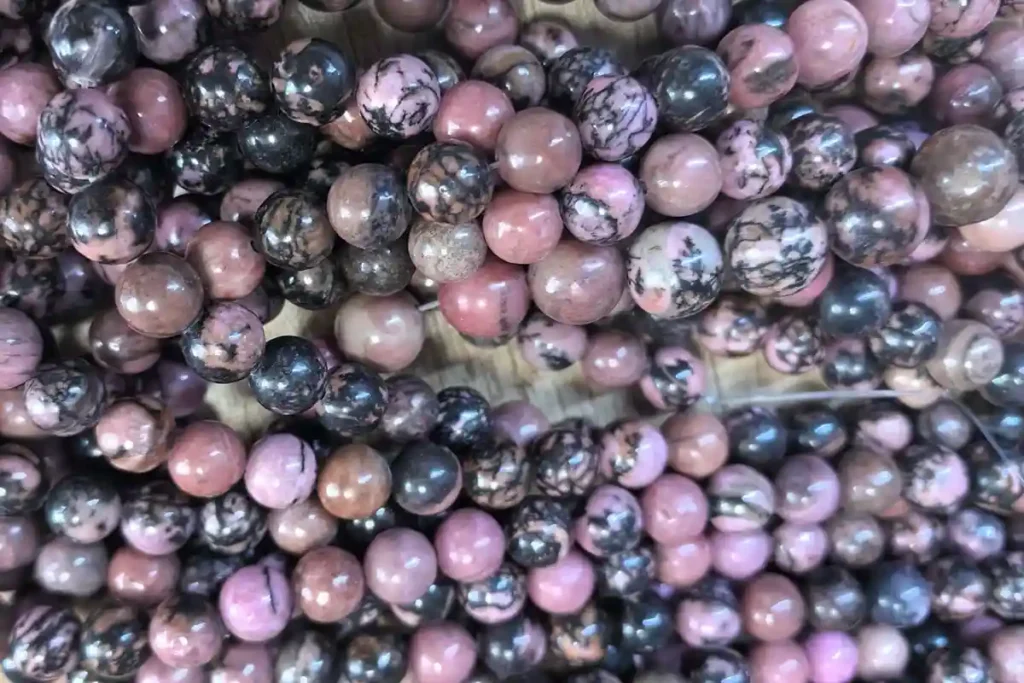
If you put the two stones side by side, the visual difference usually becomes clear very quickly. Rhodonite often shows a stronger pink or dark rose base with black lines, patches, or web-like matrix across the surface. Those black markings are part of what gives the stone its character. In bracelets, they create contrast and make the beads look bold, natural, and slightly dramatic.
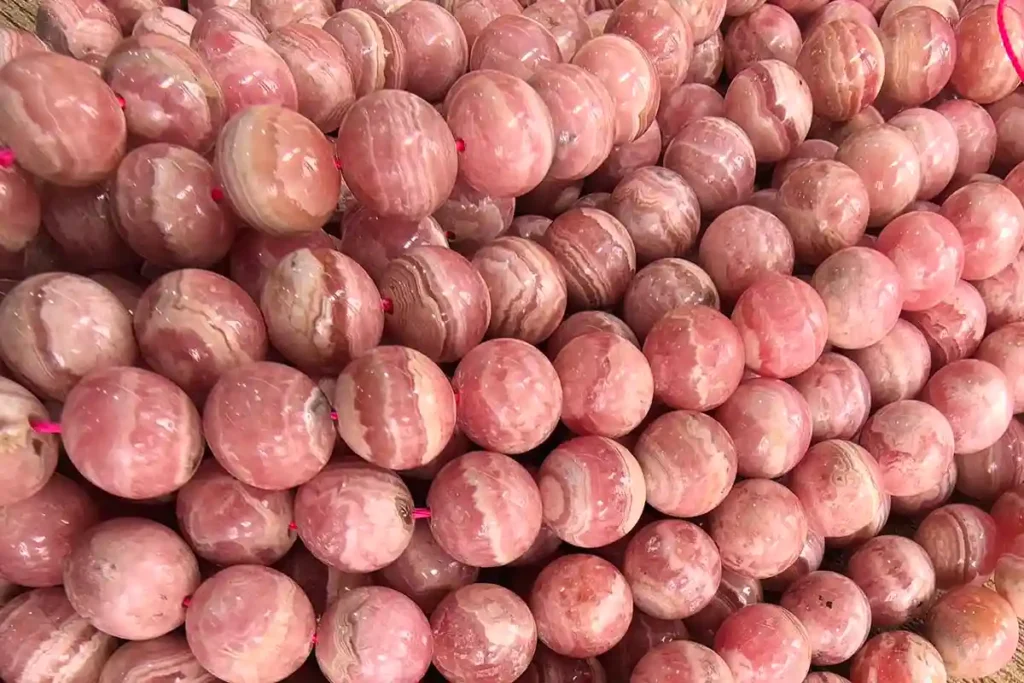
Rhodochrosite usually moves in a softer direction. Instead of strong black veining, it is better known for gentle pink tones and natural white, cream, or pale banding. Good material can look calm, smooth, and very pleasing to the eye. Some pieces almost have a candy-like softness, while others look elegant and high-end. This is one of the biggest Rhodonite and Rhodochrosite difference points for buyers: rhodonite tends to look stronger and darker, while rhodochrosite often looks softer, cleaner, and more premium.
Characteristics: Similarities and Differences
It is easy to see why people compare these stones so often. Both are pink, both are associated with emotional themes in the crystal market, and both are widely used in jewelry. For a new buyer, especially someone shopping online, the names alone can create confusion. That is why rhodonite vs rhodochrosite is not just a gemstone question. It is also a buying decision about look, budget, and customer taste.
The main similarity is their overall pink identity. The main difference is how that pink shows up. Rhodonite usually comes with dark contrast and a more grounded appearance. Rhodochrosite usually presents a softer, more polished, and more luxurious visual effect. If a buyer wants bold contrast, rhodonite often wins. If a buyer wants elegant banding and a gentler pink tone, rhodochrosite often stands out more.
Appearance and Rarity
Rarity also plays a role in how the market sees these stones. Rhodochrosite, especially attractive material with clean color and nice banding, is much more likely to be treated as a premium product. It is not just a pink stone. It is a stone where origin, quality, and visual purity can change the price very quickly. That is why many buyers asking rhodonite vs rhodochrosite price soon discover that rhodochrosite often sits in a higher category.
Rhodonite is generally easier to find in the market and more flexible for regular jewelry production. That does not mean it lacks beauty. It simply means it is usually more practical for commercial use, especially in bead strands and bracelets. For wholesale customers, this matters a lot. A stone that is easier to source with more stable pricing often works better for repeat orders, larger quantities, and broader customer appeal.
Differences Between Rhodochrosite and Rhodonite
Geographical Occurrence
Where these stones come from also affects how they are discussed in the market. Rhodochrosite is strongly associated with Argentina, especially when people talk about attractive pink material used in jewelry and collector pieces. Some other deposits exist in places like Peru, South Africa, and the United States, but Argentine material has a very strong reputation, especially in the crystal and jewelry trade.
Rhodonite has a broader commercial presence and is found in several regions, including places such as Madagascar, Russia, Peru, Australia, and Mexico. Because supply is usually more flexible, rhodonite is easier to work into regular wholesale production. For buyers, that means it is often simpler to source matching bead strands, repeat bracelet styles, and larger-volume orders without the same level of price pressure that often comes with higher-grade rhodochrosite.
Usage in Jewelry and Ornaments
In jewelry, rhodonite and rhodochrosite are both popular, but they suit different product styles. Rhodonite works very well in bracelets, loose strands, carved items, palm stones, and casual jewelry because its black veining gives each piece clear character. It has a more natural and slightly stronger visual effect, which many customers like in everyday bead jewelry. A Rhodonite and Rhodochrosite Bracelet may both look beautiful, but they usually attract different buyers.
Rhodochrosite often feels more suited to refined pieces, especially pendants, higher-grade bracelets, statement cabochons, and gift jewelry. Its softer pink banding gives it a more elegant appearance, so it tends to appeal to customers looking for something pretty, gentle, and premium. In ornaments and display pieces, rhodochrosite can also stand out because the better material has a very clean and pleasing surface that looks more luxurious at first glance.
Rhodonite vs Rhodochrosite Price
Price is one of the biggest reasons people compare these two stones so carefully. In general, rhodochrosite is much more expensive than rhodonite, especially when the material comes from Argentina and shows nice pink color, attractive banding, and a clean surface. Lower-grade material may still be available at more approachable prices, but once the quality improves, the cost can rise very quickly. That is why rhodonite vs rhodochrosite price is not a small gap in many cases. It can be a very large one.
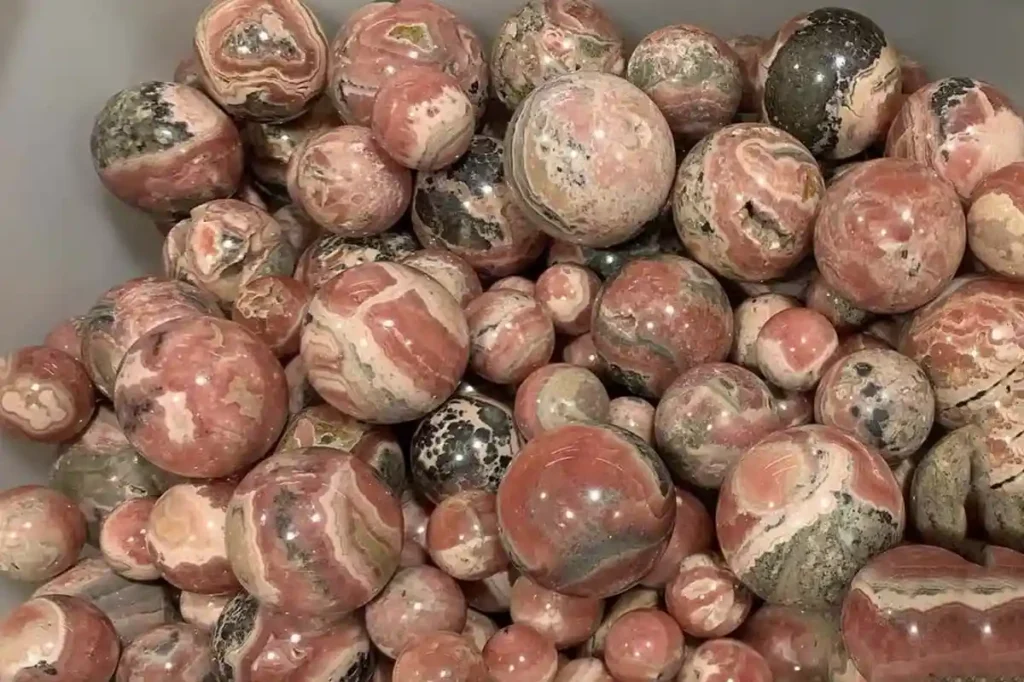
From real trading experience, Argentine rhodochrosite has a very wide price range. Lower grades can start around $0.50 per gram, while very good material can reach well over $10 per gram. The difference comes from quality. Poorer material often has more black spots, a less attractive surface, and weaker visual appeal. Better material has cleaner patterns, softer pink color, and a much more beautiful overall look. When it is polished well and made into jewelry, the result can look truly elegant.
With rhodochrosite, it makes more sense to check photos first and talk about price after that, because the quality gap can be huge. Rhodonite is much easier on the budget for regular orders. For example, black-line rhodonite 8mm bracelets are often around $1 per strand, depending on grade and supply, so they work well for bulk orders and entry-level product lines.
If you are comparing grades for bracelets, beads, or custom jewelry, it is always smarter to ask for close-up photos or videos before placing an order. For current stock, quality comparison, or bracelet options, buyers can reach out on WhatsApp first and then confirm details through the inquiry form.
How to Tell Rhodochrosite From Rhodonite
Remember Color-Banding
For most buyers, the easiest way to tell these stones apart is to look at the pattern before anything else. Rhodochrosite is often known for its soft banding. You may see layers of pink, light pink, white, cream, or blush tones moving across the surface in a smoother and more flowing way. Good pieces often look calm, clean, and naturally decorative even before they are made into jewelry.
Rhodonite usually shows a very different type of pattern. Instead of soft bands, it often has black lines, black patches, or dark web-like markings against a pink body color. That contrast is one of its signature features. This is why Rhodonite and Rhodochrosite difference becomes much easier to spot once you stop focusing only on the word “pink” and start looking at the pattern. Rhodochrosite tends to look layered and soft, while rhodonite tends to look veined and bold.
Test Hardness
Hardness is another useful clue, especially for buyers who care about wearability. Rhodonite is generally the harder and more practical stone of the two for everyday jewelry use. That makes it a strong option for bracelets, loose beads, and other pieces that may face regular friction during wear, packing, shipping, or handling. For many wholesale buyers, that added practicality matters just as much as appearance.
Rhodochrosite is softer, which does not make it less beautiful, but it does mean buyers should handle it with a little more care. Softer stones can scratch or wear more easily, especially in rings or heavily used bracelets. This is one reason why some buyers comparing rhodochrosite vs rhodonite which is better end up choosing based on product use rather than color alone. If the goal is daily-wear bead jewelry, rhodonite often feels safer. If the goal is visual beauty and premium presentation, rhodochrosite may still be the preferred choice.
Test Reaction to Acid
At the mineral level, rhodochrosite is a carbonate, which means it can react to acid, while rhodonite does not behave the same way. In gem identification, that can be a technical difference between the two materials. On paper, it sounds like a simple test, but in practice, it is not something most casual buyers should try at home, especially not on finished jewelry or polished pieces.
A direct acid test can damage the surface, affect polish, and lower the value of the stone. For normal buying decisions, it is much better to rely on visible pattern, hardness expectations, seller transparency, and close-up images. In other words, the acid reaction is useful as mineral knowledge, but not the best first step for practical product selection.
Care and Maintenance
Rhodonite is usually easier to maintain in daily jewelry use. It still deserves normal care, of course, but it is generally more forgiving in bracelets, bead strands, and simple accessories. It is best to keep it away from harsh chemicals, strong impact, and rough storage, but for most buyers, standard gemstone care is enough. A soft cloth, light cleaning, and separate storage will usually keep it looking good.
Rhodochrosite needs gentler handling, especially if the material is high grade or more polished. Because it is softer and often more expensive, buyers should avoid hard knocks, strong cleaners, and careless stacking with harder stones. This also matters in wholesale packing. Better packaging protects not only the stone, but also the value of the order. If you are buying for resale, asking about polish quality, surface condition, and packing method before shipment is always a smart move.
Healing Properties, Spiritual Meaning, and Emotional Appeal
Rhodonite vs Rhodochrosite Healing Properties
When people compare these two stones in the crystal market, the conversation usually goes beyond color and price. Many buyers also want to understand the emotional image behind each one. In that context, rhodonite is often linked with emotional balance, patience, grounding, and support during stressful periods. Its deeper pink color mixed with black lines gives many people the feeling of strength, recovery, and steadiness rather than softness alone.
Rhodochrosite is usually described in a gentler way. It is often associated with love, emotional warmth, compassion, and inner comfort. Because of its lighter pink tone and smoother visual effect, many people see it as more tender and more soothing in appearance. When reading about rhodonite vs rhodochrosite healing properties, the simplest way to understand the difference is this: rhodonite often feels stronger and more grounded, while rhodochrosite usually feels softer, more delicate, and more emotionally comforting.
Healing Uses
In everyday crystal use, rhodonite is often chosen by people who want a stone that feels supportive but not overly soft. Some wear it in bracelets during busy workdays, while others keep it nearby as a reminder to stay calm and steady. Its visual contrast also helps it fit buyers who prefer crystals that feel practical, earthy, and less decorative. That makes it popular with customers who want meaning and style at the same time.
Rhodochrosite is often chosen for a different reason. People are usually drawn to it when they want something that looks gentle, warm, and comforting. It is common in heart-centered jewelry, gift items, and pieces chosen for emotional symbolism. Still, it is important to keep these uses in perspective. These meanings belong to traditional crystal culture and personal belief. They should not be treated as medical advice or as a substitute for professional care.
Chakra Healing
Both stones are commonly connected with the heart chakra in crystal culture because both sit in the pink color family and are often associated with emotion, love, and healing. That shared connection is one reason buyers often compare them. Even so, the feeling they give is not exactly the same.
Rhodonite is often seen as the more stabilizing option, while rhodochrosite is usually seen as the more nurturing one. In simple terms, some people choose rhodonite when they want emotional strength, and choose rhodochrosite when they want emotional softness. That is also why discussions around Rhodochrosite vs Rhodonite spiritual meaning often end with personal preference rather than a single right answer.
Rhodonite: The Healing Heart Stone
Rhodonite is often called a heart stone, but in the market it tends to appeal most to people who want more than a soft romantic look. Its darker pink base and black veining give it a sense of depth. Many buyers feel it carries a stronger personality, which makes it a popular choice for bracelets and bead jewelry that should look meaningful without looking too delicate.
It also suits customers who like gemstones with contrast and presence. In that sense, rhodonite often feels easier to wear in daily life, especially for people who prefer stronger color and more visible natural pattern. For some buyers, that is exactly what makes it more attractive than lighter pink stones.
Rhodochrosite: The Stone of Love and Balance
Rhodochrosite is usually seen as the softer and more romantic option. Its appeal often comes from its gentle pink tone, natural banding, and calmer visual texture. Many buyers choose it because it feels elegant and emotionally warm at the same time. In pendants, cabochons, and finer bracelets, it often gives a polished and graceful impression that stands out quickly.
Some shoppers also compare Rhodochrosite vs rose quartz because both stones can look soft and feminine. Even so, rhodochrosite usually has more visible banding, a richer mineral identity, and a more premium price feel in better grades. For buyers who want a pink gemstone that looks more special and less common, rhodochrosite often becomes the stronger choice.
How to Use, Wear, and Pair These Stones
How to Use Rhodonite
Rhodonite is one of those stones that fits easily into everyday jewelry. It works well in bead bracelets, loose strands, pendants, and small carved items because the black lines give it a natural pattern that already looks interesting without much extra design. For many buyers, that makes it a practical stone for collections that need color, character, and a price point that feels easier to manage.
It is also a good option for product lines aimed at customers who like meaningful stones but do not want jewelry that looks too soft or too delicate. In wholesale, rhodonite often works well in standard bracelet sizes, mixed bead collections, and entry-level crystal jewelry because it has a recognizable look and broad customer appeal.
How to Wear Rhodonite
Rhodonite is easy to wear in casual settings because its deeper pink tone and dark veining give it enough contrast to stand on its own. It often looks especially good in bracelets, where each bead shows a slightly different pattern. That variety makes a finished piece feel more natural and less repetitive, which is something many customers enjoy when buying gemstone jewelry.
For styling, rhodonite can work with both simple and layered looks. It pairs well with neutral clothing, darker tones, and other natural stones. Buyers who ask who should wear rhodonite are often looking for something that feels grounded, expressive, and easy to match. In that sense, rhodonite usually fits people who want pink jewelry with more structure and a stronger visual presence.
How to Use Rhodochrosite
Rhodochrosite is usually chosen when the goal is softness, elegance, and a more refined finish. It works beautifully in pendants, finer bracelets, collector pieces, and polished cabochons because the color and banding often look best when the material is given room to stand out. In product planning, it often suits premium collections better than mass-market lines, especially when the quality is high.
Because of its value and appearance, many buyers use rhodochrosite in designs where the stone itself is the focus. It does not need heavy decoration. A good piece already has enough visual appeal. That is why it is often used in gift jewelry, feminine styles, and collections built around a softer and more polished look.
How to Wear Rhodochrosite
Rhodochrosite wears best when the design respects its gentle appearance. It looks especially attractive in bracelets with clean bead spacing, in pendants where the pink banding can be seen clearly, and in jewelry that does not compete too much with the stone itself. Buyers who want a romantic or elegant pink gemstone often prefer it for exactly that reason.
It can also be worn as part of a curated pink-toned collection. Some buyers like Rhodonite and rhodochrosite together in one product line because the two stones create contrast: one is softer and more polished, while the other feels bolder and more grounded. That kind of pairing can work well in stores that want to serve different customer tastes without leaving the pink gemstone category.
Necklaces and Pendants
If the goal is visual softness and a more premium feel, rhodochrosite often performs better in necklaces and pendants. The stone has enough beauty on its own that even a simple setting can look special. Rhodonite can also work well here, especially for buyers who want stronger contrast and more natural pattern.
Bracelets
Bracelets are where both stones perform very well, but in different ways. Rhodonite is often the easier choice for everyday bead bracelets because it is practical, recognizable, and usually more affordable. The black lines also help each bead stand out, so the bracelet looks lively and full of natural detail. For many wholesale buyers, this makes rhodonite a reliable option for repeat orders and broader customer groups.
Rhodochrosite bracelets usually sit in a more selective market. Better grades can look very elegant on the wrist, especially when the pink tone is soft and the surface is clean. But because price rises quickly with quality, buyers usually need to plan more carefully. This is where photos, videos, and grade checks matter. A bracelet made from average material and one made from beautiful Argentine material can feel like two very different products.
Rings, Earrings, and Brooches or Pins
These categories depend more on design and stone quality. Rhodochrosite often suits statement rings, softer earrings, and gift-style jewelry where the color and polish can take center stage. Rhodonite can also work well in earrings and pins, especially when the design wants stronger contrast or a more earthy character.
For wholesale buyers, these smaller categories usually make sense after the main bracelet or pendant line is already clear. Once you know which pink stone your audience prefers, it becomes easier to extend the collection into other jewelry types without creating confusion in the product line.
Pairing with Other Gemstones
Both stones can be paired with other materials, but the effect is very different. Rhodonite pairs well with black onyx, lava stone, hematite, and other darker gemstones because the black matrix already gives it a grounded look. It can also work beside softer pink stones, though in many cases it will look more dramatic. Buyers sometimes compare Rhodonite vs Thulite for this reason, since both can bring pink color but create a very different visual mood.
Rhodochrosite often pairs better with lighter stones or more elegant combinations. Some buyers compare Rhodochrosite vs rose quartz when planning soft pink collections, and the two can work together if the goal is a gentle and feminine look. If you want help choosing bracelet styles, matching stones, or mixed-order options, the best next step is to send a message on WhatsApp or leave details through the inquiry form so the product direction is easier to confirm.
Wholesale Experience: How to Choose the Right Grade Before You Buy
What Makes Argentine Rhodochrosite Expensive?
One of the biggest mistakes buyers make with rhodochrosite is treating it like a stone with one standard price. In reality, the quality range is huge. Argentine rhodochrosite can start at a relatively low level, but better material quickly becomes expensive. In the trade, lower-grade pieces may start around $0.50 per gram, while top material can reach more than $10 per gram. That price gap is not random. It reflects a real difference in appearance, finish, and overall value.
From hands-on buying experience, the first thing to check is the surface. Lower-grade Argentine rhodochrosite often shows more black spots, more visual noise, and less pleasing color. Better material has cleaner banding, fewer dark marks, and a softer light pink tone that looks much more elegant in finished jewelry. On the hand, it also feels different. Poorer material may still look pink from a distance, but once you hold both grades side by side, the better one feels more refined, more solid, and much more attractive.
That is why it is smarter to ask for photos before you ask for the final price. With this stone, a quote without clear images does not tell you enough. For bracelets, beads, or pendants, even a small change in surface quality can change the whole value of the product. If the material is good, it will usually look good in photos too.
Why Black-Line Rhodonite Is Easier for Wholesale Orders
Black-line rhodonite feels much more approachable for wholesale business. It is not only cheaper, but also more predictable in the kind of look buyers can expect. In 8mm bracelets, a common price point is around $1 per strand, depending on quality and source. That makes it far easier to build into entry-level collections, everyday bracelet lines, and larger orders where price control matters.
Its appearance is also easier to explain to customers. The black lines are usually obvious, and many beads show them clearly from bead to bead. The body color is often a deeper pink rather than the softer blush tone seen in fine rhodochrosite. Because of that, black-line rhodonite has a stronger visual identity. It looks bold, natural, and easy to recognize, which is one reason it sells well in commercial bead jewelry and crystal bracelet collections.
Practical Buying Tips for Beads, Bracelets, and Bulk Orders
If you are buying these stones for resale, samples, or custom jewelry production, start with the product purpose first. Rhodochrosite works better when the design needs softness, premium appearance, and higher perceived value. Rhodonite works better when the design needs stronger contrast, easier pricing, and broader market reach. In other words, rhodochrosite vs rhodonite which is better depends less on theory and more on what you plan to make and who you plan to sell to.
Before placing a wholesale order, ask for close-up photos, videos in natural light, bead size confirmation, surface polish details, and packing information. For higher-value material, ask about origin and grade consistency as well. If you want current stock, quality comparison, or custom options for bracelets and loose beads, the easiest next step is to contact us on WhatsApp or send your requirements through the inquiry form.
Rhodonite vs Rhodochrosite: Which One Is Right for You?
Choosing Your Pink Gemstone
If your first priority is budget, durability, and easy wholesale use, rhodonite is usually the better fit. It has a stronger look, a more obvious natural pattern, and a price point that works better for regular bracelet lines, loose beads, and entry-level gemstone jewelry. It is also easier to explain to customers because the black veining gives it a clear identity. For many sellers, that makes it the safer commercial choice.
If your first priority is softness, rarity, and a more premium visual effect, rhodochrosite often stands out more. Better material has a gentle pink tone, attractive banding, and a refined appearance that feels more special in bracelets, pendants, and gift jewelry. It usually costs much more, but for buyers who want a softer and more elegant stone, that higher price can make sense.
The real answer depends on your use, your market, and your customer taste. If you sell affordable daily-wear bracelets, rhodonite may give you better flexibility. If you want to offer higher-end pink gemstone pieces, rhodochrosite may be worth the extra attention and budget. Some stores even keep both in the same collection, using rhodonite for bold contrast and rhodochrosite for a softer premium option.
FAQ
Which is better, rhodonite or rhodochrosite?
Rhodonite is usually better for buyers who want stronger contrast, lower cost, and everyday bracelet use. Rhodochrosite is better for buyers who prefer a softer pink color, more elegant banding, and a more premium look.
What is the spiritual meaning of rhodonite and rhodochrosite?
Rhodonite is often associated with emotional balance, patience, and inner strength. Rhodochrosite is more often linked with love, compassion, warmth, and gentle emotional support.
Why is rhodochrosite so expensive?
Rhodochrosite is expensive because quality varies a lot, and better material is much rarer. Fine pieces usually have cleaner surfaces, softer pink tones, and more attractive banding, which raises the price quickly.
Who should wear rhodonite?
Rhodonite suits people who like deeper pink stones with bold natural pattern and stronger contrast. It is also a good choice for buyers who want meaningful gemstone jewelry at a more practical price.
What two crystals cannot be together?
There is no strict rule that says two crystals cannot be worn together. In most cases, pairing depends more on personal belief, design style, and whether the stones look good in the same piece.
Conclusion
Rhodonite and rhodochrosite may look similar at first, but they serve very different needs once you compare color, pattern, price, and product use. Rhodonite is usually the better choice for buyers who want stronger contrast, easier pricing, and practical use in bracelets and bead jewelry. Rhodochrosite is better for buyers who want softer pink color, natural banding, and a more premium look.
For wholesale and custom orders, the best choice depends on your budget, your target customer, and the type of jewelry you want to build. If you need help comparing grades, checking current stock, or choosing the right bracelet or bead option, you can contact us on WhatsApp or send your request through the inquiry form.
Disclaimer:
The information in this article is for general educational and product reference purposes only. Any crystal, spiritual, or healing-related descriptions reflect traditional beliefs and market perspectives, not medical advice. These stones are not intended to diagnose, treat, cure, or prevent any disease. Please evaluate products based on your own needs, preferences, and professional guidance when necessary