
Rainbow Moonstone Benefits: Meaning, Properties and Uses
Written by: Rocrystal Sourcing & QC Team, Last updated: August 28, 2026
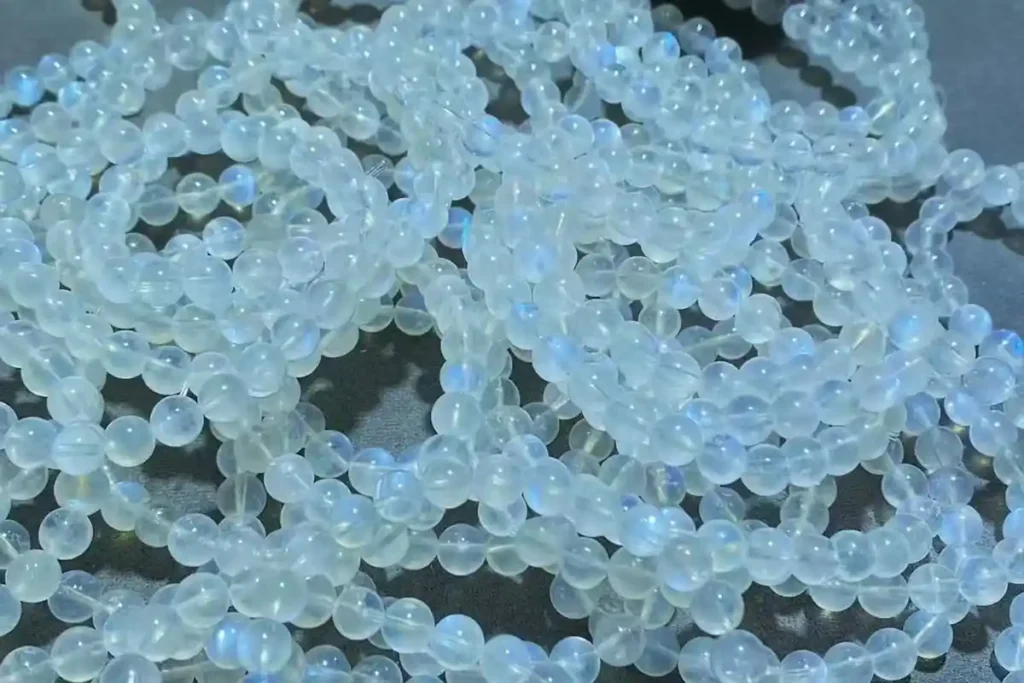
Rainbow moonstone is known for its white or semi-transparent body and flashes of blue, green, or other colors. The light often appears when the stone moves or when it is viewed from a different angle. This changing glow makes the gemstone popular among crystal collectors, jewelry designers, gift retailers, and buyers looking for an attractive natural material.
Many people explore Rainbow Moonstone Benefits because they associate the stone with intuition, emotional balance, meditation, and new beginnings. Others simply value its soft color and eye-catching flash. Its spiritual uses come from traditional beliefs and personal experiences rather than medical science. Therefore, rainbow moonstone should never replace professional care, medicine, or support for a physical or mental health condition.
This guide explains rainbow moonstone meaning, physical properties, traditional spiritual uses, quality grades, and safe care methods. It also compares rainbow moonstone with traditional moonstone, white labradorite, and opal. Wholesale buyers will find practical information about transparency, blue flash, inclusions, product forms, and market preferences, helping them choose a suitable grade for their customers.
What Is Rainbow Moonstone?
Is Rainbow Moonstone a True Moonstone?
Rainbow moonstone is a commercial name widely accepted in the gemstone and jewelry trade. Despite its name, most material sold as rainbow moonstone is a transparent or semi-transparent variety of white labradorite. It belongs to the feldspar mineral family. Its pale body and colorful light effect give it an appearance similar to traditional moonstone.
Traditional moonstone is usually associated with orthoclase feldspar, while rainbow moonstone belongs to the plagioclase feldspar group. The two materials are closely related, but they are not exactly the same mineral variety. This distinction helps explain the common rainbow moonstone vs moonstone comparison. Traditional moonstone often shows a soft, floating glow, while rainbow moonstone may display brighter blue, green, or multicolored flashes.
In the wholesale market, suppliers sometimes use the names rainbow moonstone and white labradorite for the same material. Buyers should not judge a batch by its name alone. They should compare its transparency, flash, inclusions, surface finish, and actual product videos. Understanding what is rainbow moonstone helps buyers communicate their quality requirements clearly and avoid confusion when comparing quotations from different suppliers.
Why Does Rainbow Moonstone Show Blue or Rainbow Flash?
The flash in rainbow moonstone appears when light enters the stone and interacts with its thin internal mineral layers. As the light scatters, the stone may show blue, green, yellow, or several colors at once. This optical effect creates the shifting glow that makes a rainbow moonstone crystal easy to recognize and visually attractive.
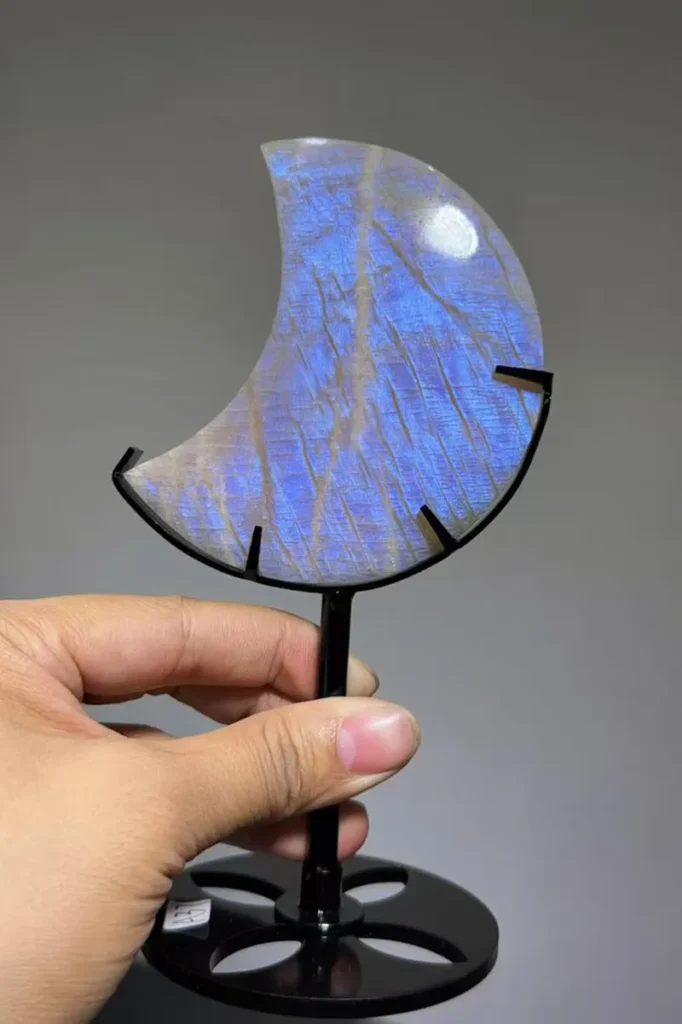
The flash does not remain visible from every direction. It may look strong under direct light but disappear when the viewing angle changes. A stone that shows bright blue light in a photograph may appear softer under normal indoor lighting. For this reason, buyers should rotate the stone and view it from several angles instead of judging it from one carefully positioned image.
The brightness, color, coverage, and viewing angle of the flash can vary between stones. Some pieces show a wide blue area, while others display only a small flash near one edge. These natural differences are important rainbow moon stone properties. For wholesale orders, actual batch videos provide a more reliable view of the color and flash than edited photographs or images taken under very strong lighting.
Rainbow Moonstone Meaning and History
Rainbow Moonstone Meaning and Symbolism
The Rainbow Moonstone meaning is often connected with intuition, new beginnings, inner growth, and emotional awareness. Its pale body recalls moonlight, while its moving blue or colorful flash can resemble light crossing the night sky. These visual qualities have helped the stone become a symbol of change, reflection, and personal discovery in modern crystal traditions.
Many people use rainbow moonstone as a reminder to slow down and examine their thoughts before making decisions. Others connect the stone with hope during a new relationship, job, or stage of life. The rainbow moonstone crystal meaning can vary because personal beliefs, cultural traditions, and individual experiences influence how someone understands and uses the stone.
These symbolic ideas do not mean that rainbow moonstone can guarantee emotional balance or change a person’s circumstances. Its meaning comes mainly from spiritual traditions and personal interpretation, not from medical evidence. When buyers search for the meaning of rainbow moonstone, they should separate these traditional beliefs from its measurable features, such as transparency, hardness, inclusions, surface finish, and colorful flash.
History, Trade Name and Modern Popularity
Moonstone has a long history in jewelry and decorative objects. Its soft glow encouraged people in different cultures to connect it with the moon, natural cycles, and changing emotions. However, many older stories refer to traditional moonstone rather than the material now sold as rainbow moonstone. Buyers should keep this difference in mind when reading historical claims.
The name rainbow moonstone became widely used in the modern gemstone trade because the material has a pale body and a colorful moving flash. Although gem specialists usually identify it as a transparent or semi-transparent variety of labradorite, the commercial name remains familiar to jewelry makers and crystal buyers. Today, both rainbow moonstone and white labradorite may describe similar material.
Its popularity comes from both appearance and symbolism. Jewelry designers value the changing blue light, while spiritual buyers connect the rainbow moonstone spiritual meaning with intuition and personal growth. Retailers can also offer it in many forms, including beads, bracelets, pendants, cabochons, and tumbled stones. This combination of visual appeal, flexible uses, and symbolic meaning supports demand across several markets.
Rainbow Moonstone Properties at a Glance
Physical and Gemological Properties
Rainbow moonstone belongs to the feldspar mineral family. Most material sold under this name is a transparent or semi-transparent variety of white labradorite. Its body color may appear colorless, white, milky, or slightly gray. When light reaches its internal layers, the stone can display blue, green, yellow, or multicolored flashes that change with the viewing angle.
The stone generally measures about 6 to 6.5 on the Mohs hardness scale. This makes it suitable for beads, pendants, earrings, cabochons, and carefully worn rings. However, hardness does not mean that the material is resistant to every type of damage. Feldspar has natural cleavage and can chip or split after a strong impact, especially near thin edges or drilled holes.
These physical facts help buyers separate measurable rainbow moonstone properties from traditional claims about Rainbow Moonstone Benefits. Its mineral identity, hardness, transparency, inclusions, and optical effect can be examined. Spiritual meanings depend on personal belief. Wholesale buyers should evaluate both the beauty and durability of the material before selecting it for a particular jewelry design or retail market.
Transparency, Inclusions and Natural Variations
Rainbow moonstone may be transparent, semi-transparent, milky, or cloudy. Transparent pieces often display a clearer blue flash and usually command a higher price. Semi-transparent material has a softer white appearance, while cloudy stones allow less light to pass through. These differences can occur naturally, even among rainbow moonstones cut from the same rough material.
Internal lines, white clouds, small black spots, and mineral inclusions are common. Their presence does not automatically mean that the stone is fake or unsuitable for jewelry. However, large cracks, open fractures, and damaged bead holes can weaken the material. Buyers should distinguish harmless internal features from defects that may affect durability or the finished product’s appearance.
Surface quality also matters. Well-polished stones should feel smooth and show no serious chips, scratches, or rough areas. In a bulk order, complete uniformity is unrealistic because each stone has its own body color, pattern, and flash. A reliable grade should still maintain an agreed range of transparency, inclusion level, size, and surface finish throughout the batch.
Rainbow Moonstone Benefits
Spiritual Growth and Self-Discovery
In modern crystal traditions, Rainbow Moonstone Benefits are often linked with spiritual growth and greater self-awareness. Some people use the stone when they want to examine their habits, values, or future direction. Its changing flash can serve as a visual reminder that personal growth is gradual and that the same situation may look different from another point of view.
Rainbow moonstone may be included in meditation, quiet reflection, or journal writing. A person might hold a tumbled stone while setting an intention or place one nearby when reviewing personal goals. These simple practices can create a calm routine, but the stone does not complete the inner work on its own. Meaningful change still requires thought, effort, and practical action.
The metaphysical properties of rainbow moonstone come from spiritual beliefs rather than scientific proof. Experiences can differ from one person to another. Some users feel a strong connection with the stone, while others mainly enjoy its appearance. Both responses are valid, and sellers should present its traditional meaning honestly without promising guaranteed spiritual results.
Intuition and Meditation
Rainbow moonstone is often associated with intuition in modern crystal practices. Some users believe it helps them notice their feelings and consider choices more carefully. Rather than treating the stone as a source of answers, they may use it as a reminder to pause, reflect, and listen to their own judgment before making an important decision.
During meditation, a person can hold a polished stone, wear a pendant, or place the crystal nearby. Focusing on its cool surface and shifting flash may help create a simple point of attention. However, meditation results depend more on regular practice, breathing, surroundings, and personal focus than on any single crystal.
The rainbow moonstone metaphysical properties connected with intuition have not been scientifically proven. The stone cannot predict events or provide supernatural knowledge. When described responsibly, its value lies in supporting a personal ritual or reflective habit. These traditional Rainbow Moonstone Benefits should be presented as beliefs and experiences, not as guaranteed effects that every user will feel.
Emotional Balance and Relationships
The healing properties of rainbow moonstone are often described as calming and emotionally supportive. Some users keep the stone nearby when they feel stressed or need time to understand their emotions. Its soft color and gentle flash may create a peaceful visual focus, but the crystal does not directly control moods or remove emotional difficulties.
Rainbow moonstone is also connected with patience, empathy, and thoughtful communication. For this reason, it sometimes appears in friendship gifts, couple’s jewelry, and relationship-themed crystal sets. The stone may serve as a reminder to listen carefully and respond calmly. A healthy relationship, however, still depends on trust, honest communication, clear boundaries, and practical effort.
People experiencing ongoing anxiety, depression, conflict, or emotional distress should seek suitable professional support. A crystal can be part of a personal wellness routine, but it cannot replace counseling or medical care. Sellers discussing rainbow moonstone healing properties should explain this difference clearly and avoid promising that wearing the stone will repair a relationship or solve a mental health condition.
Rainbow Moonstone Benefits for Female Buyers
The traditional Rainbow Moonstone benefits for female users are often connected with feminine energy, intuition, self-care, and the changing cycles of life. Some women choose the stone during a new stage, such as beginning a career, starting a relationship, or setting a personal goal. These meanings come from spiritual traditions and individual beliefs rather than established medical evidence.
Rainbow moonstone is sometimes promoted for fertility, pregnancy, hormones, or menstrual health. Such claims should be treated carefully because a crystal cannot diagnose, prevent, or cure a medical condition. Anyone concerned about reproductive or hormonal health should speak with a qualified healthcare professional. The stone may still serve as a personal symbol, but it should never replace appropriate care.
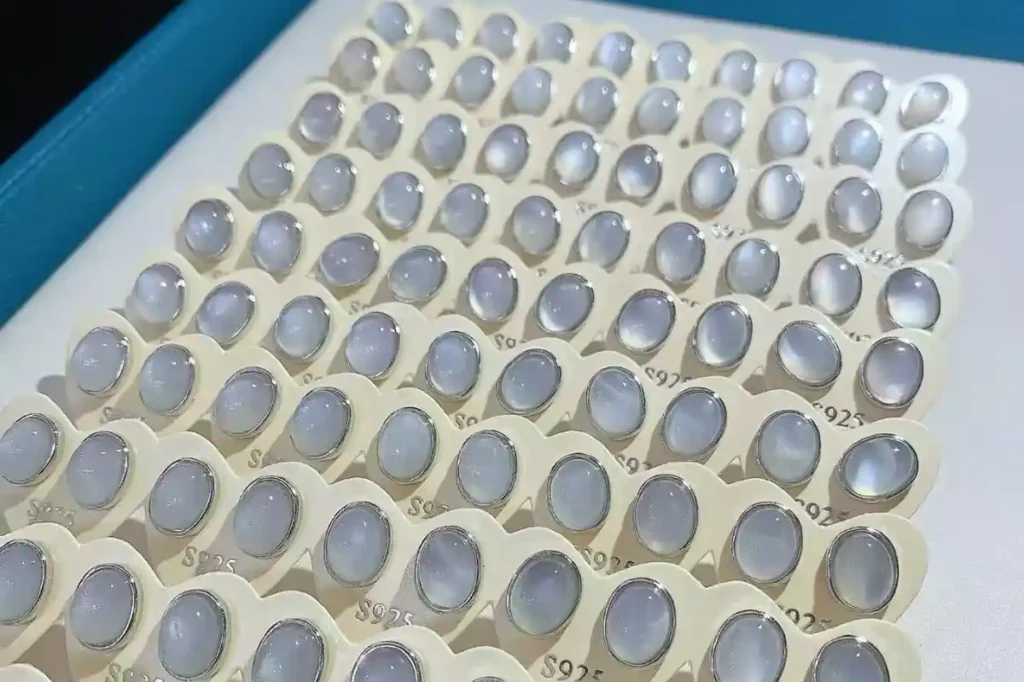
From a commercial perspective, its pale color works well in bracelets, earrings, rings, and pendants. The blue flash also gives each piece a distinctive appearance without making it difficult to match with other jewelry. Many female customers value the stone for its beauty or symbolic meaning, while others simply choose it because the soft white tone suits their personal style.
Rainbow Moonstone Benefits for Men
The traditional rainbow moonstone benefits for men are not fundamentally different from those described for women. Crystals do not have a fixed gender, and anyone may choose rainbow moonstone for meditation, reflection, jewelry, or collecting. Some male users connect it with emotional awareness, patience, and intuition, while others are mainly attracted to its natural blue flash.
Men who prefer a simple style may choose a single pendant, a pocket stone, or a bracelet that combines rainbow moonstone with darker materials. Black tourmaline, labradorite, onyx, and lava stone can create a more neutral color palette. Jewelry designers can also use smaller rainbow moonstone beads as highlights instead of making them the main material.
These uses should not be presented as male-specific physical or emotional treatments. A stone cannot guarantee confidence, control emotions, or improve health. Its role is better understood as a personal symbol or visual focus. Retailers can serve a wider audience by describing the stone’s appearance, traditional meaning, and product options without limiting it to one gender.
Rainbow Moonstone Astrology and Chakra Associations
Rainbow Moonstone Benefits in Astrology
In modern crystal astrology, Rainbow Moonstone benefits astrology discussions often connect the stone with the moon, intuition, changing emotions, and personal cycles. Some users select it according to their birth chart or zodiac sign. Others wear it during a new beginning because they feel its symbolic meaning matches a period of change or reflection.
Moonstone is also recognized as a June birthstone, although rainbow moonstone and traditional moonstone are not exactly the same mineral variety. Crystal sellers may still place them in the same symbolic group because both have a pale body and a moving glow. These associations can make rainbow moonstone suitable for birthstone jewelry, themed gifts, and astrological sets.
Different astrologers and spiritual systems may recommend the stone for different zodiac signs. There is no single rule that every buyer must follow, and no scientific evidence shows that a zodiac sign determines how a crystal affects someone. Customers can consider traditional guidance, but personal preference, comfort, design, and intended use remain more practical reasons for choosing the stone.
Chakra and Energy Associations
The Rainbow Moonstone spiritual meaning is commonly linked with the crown and third eye chakras. In some modern systems, it is also connected with the soul star chakra, an energy point believed to sit above the head. Practitioners may use the stone to support meditation, spiritual awareness, and a stronger connection with their inner thoughts.
During chakra practices, a person may hold rainbow moonstone, place it near the forehead, or keep it above the head while lying down. Others arrange it with clear quartz or amethyst to create a light-colored meditation set. There is no single required position, and users can choose a method that feels comfortable and suits their routine.
Chakras and crystal energy belong to spiritual traditions, not modern medical diagnosis. The rainbow moonstone metaphysical properties described in these systems have not been scientifically confirmed. Sellers should explain them as traditional associations rather than measurable health effects. This approach allows customers to explore the stone’s symbolism while maintaining realistic expectations about what it can and cannot do.
How to Use Rainbow Moonstone
Wearing Rainbow Moonstone Jewelry
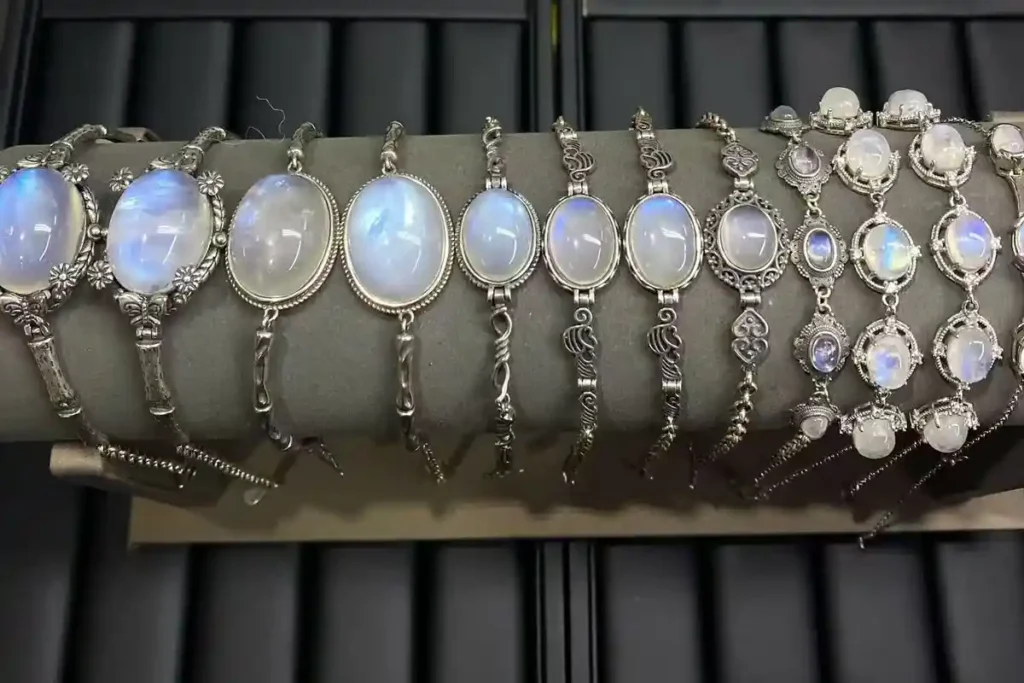
Rainbow moonstone appears in bracelets, necklaces, pendants, rings, and earrings. Pendants and drop earrings can display its moving flash well because the stone changes position as the wearer moves. Beaded bracelets offer a softer appearance, although the blue flash and transparency may vary from one bead to another within the same strand.
Rings can also show the stone clearly, but they require more careful wear. Rainbow moonstone is softer and more likely to chip than gemstones such as sapphire or diamond. A protective setting can reduce the risk of damage. Wearers should remove a rainbow moonstone ring before exercising, lifting heavy objects, cleaning, or completing work that may cause an impact.
Some customers choose jewelry because they are interested in Rainbow Moonstone Benefits, while others focus on color, flash, or design. Retailers should therefore describe both its traditional symbolism and physical features. Clear photos, rotating videos, accurate sizes, and honest explanations of natural inclusions can help buyers understand what they will receive.
Meditation, Home Display and Daily Rituals
Rainbow moonstone can be used during meditation without creating a complicated routine. A person may hold a polished stone, place it on a table, or keep it beside a journal. Focusing on its surface, weight, and changing flash can provide a simple point of attention while breathing slowly or reflecting on a personal intention.
Tumbled stones, palm stones, and free-form pieces also work well in home displays. They can be placed near a desk, reading area, or other quiet space. Some users include a rainbow moonstone crystal in a small decorative arrangement with candles or other stones. Any candles should remain a safe distance from jewelry, packaging, and natural materials.
Daily rituals depend on personal preference. A user may carry a small stone, wear a pendant, or spend a few minutes observing it before writing down a goal. These practices may support focus, but rainbow moonstone healing properties should not be treated as guaranteed results. The value of the routine comes from consistent reflection and the meaning the user gives it.
Crystal Pairings
Rainbow moonstone pairs well with clear quartz, amethyst, rose quartz, black tourmaline, and labradorite. Clear quartz and amethyst create a light, cool-colored combination, while rose quartz adds a softer pink tone. These pairings work well in bracelets, necklaces, gift sets, and decorative crystal arrangements designed around calm or reflective themes.
Black tourmaline offers a strong visual contrast with the pale body of rainbow moonstone. Labradorite creates a coordinated design because both stones may display changing flashes. Jewelry makers can adjust bead sizes, metal spacers, and stone proportions to suit different customers. A pairing should look balanced even when the buyer does not follow traditional beliefs about Moonstone benefits.
From a wholesale perspective, mixed-stone designs can expand the ways retailers present the material. Small rainbow moonstone beads may serve as highlights, while larger beads or pendants can become the main feature. Sellers should describe the traditional meanings of each combination carefully. Pairing two crystals does not guarantee stronger physical, emotional, or spiritual effects.
Looking for rainbow moonstone beads, bracelets, pendants, tumbled stones, or custom jewelry for your market? Contact us through WhatsApp or send your requirements through our inquiry form. Tell us your preferred transparency, blue flash, product size, order quantity, and target price. We can then recommend a suitable quality range and prepare a quotation for your business.
Rainbow Moonstone vs. Moonstone and Similar Gemstones
Rainbow Moonstone vs Moonstone
The rainbow moonstone vs moonstone comparison begins with their mineral identity. Most rainbow moonstone sold in the market is transparent or semi-transparent white labradorite. Traditional moonstone is usually associated with orthoclase feldspar. Both belong to the feldspar family, but they are not exactly the same mineral variety.
Their optical effects may also look different. Traditional moonstone often displays a soft white or blue glow that appears to float beneath the surface. Rainbow moonstone may show brighter blue, green, yellow, or multicolored flashes. However, appearance can vary, so some stones may look similar without gemological testing.
Suppliers sometimes use moonstone, rainbow moonstone, and white labradorite loosely in commercial descriptions. Wholesale buyers should therefore look beyond the name. Comparing actual videos, body color, transparency, flash coverage, inclusions, cut, and surface finish gives a clearer understanding of each batch. For higher-value orders, an independent gemstone report can provide more reliable identification.
White Labradorite vs Rainbow Moonstone
White labradorite and rainbow moonstone often refer to the same type of material in the gemstone trade. The name white labradorite describes its mineral identity and pale body color, while rainbow moonstone highlights its moon-like appearance and colorful flash. Different suppliers may choose either term when selling beads, cabochons, pendants, or polished stones.
The name alone does not indicate quality. One batch may be highly transparent with strong blue light, while another may appear milky with a softer flash. Inclusions, cracks, surface finish, cutting, and color consistency can also vary. Buyers should ask for current photos and rotating videos instead of assuming that every stone with the same name has the same grade.
Understanding what is rainbow moonstone can prevent confusion when comparing quotations. Buyers should describe the appearance they need, including transparency, flash color, acceptable inclusions, size, and intended use. This is more useful than requesting only “white labradorite” or “rainbow moonstone,” because suppliers may apply those commercial names to several quality ranges.
Rainbow Moonstone vs Opal
Although rainbow moonstone and opal can both display changing colors, they are different gemstones. Unlike opal, rainbow moonstone belongs to the feldspar mineral family, while opal consists of hydrated silica. Their internal structures create different optical effects. The flash in rainbow moonstone often appears in one area and changes as the stone moves.
Precious opal can show small patches or patterns of spectral color known as play-of-color. These colors may appear across several parts of the stone and can look like spots, streaks, or broad flashes. Rainbow moonstone usually has a white or colorless body with blue, green, or multicolored light that moves when the stone turns.
Buyers should not identify either material from color alone. Body appearance, pattern, hardness, structure, and optical behavior all matter. Photos taken under strong lighting may make the two look more similar than they are. For valuable pieces or large wholesale orders, professional gemstone testing provides more reliable identification than a visual comparison or a supplier name by itself.
Quality, Blue Flash and Wholesale Price
Transparency and Blue Flash
High-quality rainbow moonstone usually combines good transparency with a bright blue or multicolored flash. The most desirable pieces may look almost clear before a strong flash appears across the surface. However, quality is not determined by transparency alone. The brightness, color, movement, and coverage of the flash also affect the stone’s appearance and wholesale price.
Buyers should view each batch from several angles. Some stones show blue light across most of the surface, while others display only a narrow flash near one edge. Direct lamps can make the effect appear stronger than it looks under normal indoor light. Rotating videos offer a more realistic view than still photographs taken at one selected angle.
Highly transparent material with wide, vivid blue flash is usually more expensive because fewer pieces meet this standard. Semi-transparent stones with softer or limited flash can provide a more affordable option. The right grade depends on the target market, jewelry design, expected retail price, and the appearance preferred by local customers.
Inclusions, Cracks and Surface Finish
Natural rainbow moonstone often contains white clouds, internal lines, small black spots, or mineral inclusions. These features may lower the grade, but they do not automatically make the stone unsuitable for sale. Their effect depends on size, location, visibility, and the quality level agreed upon before the order.
Cracks require closer attention because they can affect durability. A deep fracture, open crack, or damaged bead hole may cause a stone to break during stringing, transport, or daily wear. Buyers should also check thin cabochon edges and drilled areas, where feldspar products can be more vulnerable to chipping.
Surface finish influences both appearance and customer satisfaction. Well-polished stones should feel smooth and should not have serious scratches, flat spots, or rough holes. In wholesale orders, quality control should cover the full batch rather than a few selected samples. Clear acceptance standards make it easier for buyers and suppliers to manage natural variation.
My Experience with Indian and European Buyers
In my wholesale experience, buyers from different markets do not always prefer the same rainbow moonstone quality. Highly transparent stones with strong blue flash are usually considered top-grade material. One of my Indian customers only buys this quality because he believes the vivid blue color makes the stones more desirable to his customers.
Many of my European customers prefer a different appearance. They often choose semi-transparent rainbow moonstone with a softer white body. The blue flash is usually weaker in this grade, and some pieces may show almost no visible flash. For these buyers, the gentle, natural appearance matters more than maximum transparency or a bright optical effect.
This experience taught me that the highest grade is not automatically the best choice for every market. Customer preference, jewelry style, and target price can influence buying decisions as much as clarity or flash. When discussing Rainbow Moonstone Benefits and quality, wholesale buyers should first understand what their own customers value instead of following one universal grading preference.
Choosing the Right Grade for a Target Market
High-end jewelry buyers may prefer transparent rainbow moonstone with vivid blue flash, fewer visible inclusions, and careful cutting. This grade works well for pendants, earrings, cabochons, and other designs that place the optical effect at the center. Its higher material cost should match the expected retail price and customer demand.
Semi-transparent material can suit buyers who prefer a softer, more natural appearance. It may contain more clouds or show less blue flash, but this does not make it unsuitable for jewelry. These stones can work well in beaded bracelets, mixed-stone designs, affordable gift lines, and markets where customers value a gentle white tone.
Before ordering, wholesale buyers should confirm the preferred transparency, flash coverage, inclusion level, size tolerance, and surface quality. Sample approval and actual batch videos can reduce misunderstandings. Instead of asking only for A grade or high quality, buyers should describe visible standards that both sides can understand and check before shipment.
How to Identify Genuine Rainbow Moonstone
Visual Checks Buyers Can Make
A genuine rainbow moonstone often shows a flash that moves, strengthens, or disappears as the stone turns. Buyers should examine it from several directions under natural light and ordinary indoor lighting. A fixed patch of color that looks identical from every angle may require closer inspection, although appearance alone cannot confirm a stone’s identity.
Natural material may contain internal lines, cloudy areas, small inclusions, and differences between individual pieces. A batch that looks perfectly identical in color, flash, and internal pattern deserves further review. However, inclusions alone do not prove that a stone is natural. Some imitations can also contain bubbles, marks, or artificial-looking imperfections.
For wholesale orders, buyers should request rotating videos of the current batch and ask the supplier to show randomly selected pieces. Close-up images can help reveal surface scratches, cracks, drilled holes, and polish. These checks improve purchasing decisions, but they cannot replace professional testing when exact mineral identification is important.
Limits of Home Tests
Online guides sometimes recommend scratching, burning, freezing, or soaking a stone to check whether it is genuine. These methods can damage rainbow moonstone and may still produce an incorrect result. Feldspar can scratch, chip, or split, so destructive tests are not suitable for finished jewelry, polished stones, or saleable wholesale samples.
Photos and videos can reveal appearance, but they cannot always confirm mineral composition. Glass, synthetic materials, and other pale gemstones may look similar under selected lighting. Refractometers, microscopes, and other gemological equipment provide more useful evidence, but accurate interpretation still requires training and suitable testing conditions.
For high-value pieces or large orders, buyers can request an independent report from a qualified gemstone laboratory. Supplier experience and clear quality descriptions are helpful, but they do not replace testing. No home test can verify spiritual claims described as Rainbow Moonstone Benefits, because these ideas come from personal belief rather than measurable mineral properties.
Rainbow Moonstone Products and Wholesale Applications
Popular Product Forms
Rainbow moonstone beads are widely used in bracelets, necklaces, earrings, and handmade jewelry. Round beads create a classic look, while faceted beads reflect more surface light. Because each bead may show a different level of transparency and flash, buyers should decide how much variation they can accept before ordering strands or finished bracelets.
Cabochons, pendants, and earrings can display the blue flash more clearly because cutters can orient the stone toward its strongest optical effect. Rings are also attractive, but they need protective settings and careful wear. Tumbled stones suit crystal shops, gift bags, meditation sets, and mixed-stone collections where exact size matching is less important.
Rough pieces and free-form stones work well for collectors, home displays, and natural-style gifts. Each product form needs different quality standards. Beads require clean holes and consistent sizing, while cabochons need balanced shapes and polished edges. Wholesale buyers should match the material, cutting style, and grade with the way their customers plan to use the stone.
Wholesale Buying Checklist
Before requesting a quotation, buyers should confirm the product form, stone size, order quantity, and intended use. They should also explain whether they need transparent, semi-transparent, or milky material. If blue flash is important, the required brightness and approximate coverage should be discussed instead of using only broad labels such as A grade.
Buyers should set acceptable limits for black spots, white clouds, internal lines, cracks, chipped edges, and uneven bead holes. Size tolerance, strand length, polish, matching, and packaging also affect the finished order. Photos of approved samples can create a useful reference, while videos of the actual batch help show differences that still images may hide.
Customers interested in Rainbow Moonstone Benefits may focus on symbolism, but wholesale purchasing also requires practical standards. A clear checklist helps suppliers select a suitable batch and quote the correct price. Buyers should compare quality and cost together, since stronger flash, higher transparency, better consistency, and more careful sorting usually increase the final wholesale price.
How to Clean and Care for Rainbow Moonstone
Safe Cleaning Methods
Clean rainbow moonstone with lukewarm water, mild soap, and a soft cloth or soft-bristled brush. Wipe the surface gently, especially around bead holes, settings, and thin edges. After cleaning, rinse away any soap and dry the stone completely with a clean cloth before returning it to storage.
Avoid harsh chemicals, bleach, acidic cleaners, steam systems, and ultrasonic machines. Heat, vibration, or sudden temperature changes may damage a stone with existing internal fractures. Abrasive brushes and polishing powders can also scratch the surface. When cleaning jewelry, consider the care requirements of the metal, adhesive, string, and other stones in the design.
Brief contact with clean water is different from leaving the stone submerged for a long period. Extended soaking is unnecessary and may affect stringing materials, glue, metal parts, or dirt trapped inside small cracks. Gentle cleaning followed by immediate drying is safer than using aggressive methods to remove marks or restore shine.
Storage and Daily Wear
Store rainbow moonstone separately from harder gemstones such as quartz, topaz, sapphire, and diamond. Contact with these materials may leave scratches on its polished surface. A soft pouch or a lined jewelry box with divided sections can reduce rubbing, impacts, and damage during storage or transportation.
Remove rainbow moonstone jewelry before exercising, lifting heavy objects, cleaning, gardening, or completing other physical tasks. Rings and bracelets face the greatest risk because they can strike hard surfaces. Pendants and earrings usually receive less impact, but their settings, chains, and hooks still need regular checks for looseness or wear.
Wholesale packaging should protect every piece during shipment. Separate bags, soft wrapping, and suitable cushioning help prevent beads and cabochons from knocking against one another. Although customers may focus on Rainbow Moonstone Benefits, proper storage and careful handling determine how well the stone maintains its polish, shape, and appearance over time.
Frequently Asked Questions
What Is a Rainbow Moonstone Good For?
Rainbow moonstone is commonly used in jewelry, meditation, crystal displays, and symbolic gifts. Traditional Rainbow Moonstone Benefits include intuition, emotional reflection, spiritual growth, and support during new beginnings. These ideas come from personal and spiritual beliefs, not medical evidence. The stone is also valued for its white body, shifting blue flash, and use in bracelets, pendants, earrings, and tumbled-stone sets.
Who Should Not Wear Rainbow Moonstone?
There is no group of people who must completely avoid rainbow moonstone. Anyone can wear it for its appearance or symbolic meaning. However, people doing sports, heavy work, or other physical activities should remove rainbow moonstone rings and bracelets to prevent damage. Anyone with skin sensitivity should also check the jewelry metal, string, or adhesive rather than assuming the stone caused the reaction.
Which Zodiac Should Not Wear Moonstone?
No zodiac sign is scientifically proven to be incompatible with moonstone. Astrological traditions may give different recommendations, so there is no universal rule. People interested in Rainbow Moonstone benefits astrology can consider their preferred spiritual system, but personal taste and comfort remain more practical guides. Anyone may wear the stone if they enjoy its appearance, symbolism, or use in jewelry.
Can I Sleep with Rainbow Moonstone?
You can keep rainbow moonstone near your bed if it forms part of a calming personal routine. However, sleeping while wearing a necklace, bracelet, or ring may feel uncomfortable and can damage the jewelry or create a tangling risk. Placing a polished stone safely on a bedside table is usually more practical. The stone is not scientifically proven to improve sleep or prevent nightmares.
Why Can’t Moonstone Get Wet?
Brief contact with clean water is usually acceptable, so moonstone can be washed gently with mild soap. The main concern is long soaking, especially when the stone contains fractures or forms part of jewelry. Water may affect string, glue, coatings, or metal components. Avoid salt water, harsh chemicals, steam, ultrasonic cleaning, and sudden temperature changes, then dry the stone immediately after washing.
Conclusion: Understanding Rainbow Moonstone Benefits and Quality
Rainbow Moonstone Benefits are traditionally connected with intuition, emotional reflection, spiritual growth, and new beginnings. These meanings can make the stone appealing for meditation, symbolic gifts, and themed jewelry. However, they come from personal beliefs rather than medical science. Rainbow moonstone should not replace professional treatment or practical action.
Its commercial value depends on measurable features such as transparency, blue flash, inclusions, cutting, polish, and consistency. My Indian customer prefers highly transparent material with strong blue flash, while many European customers choose a softer, semi-transparent appearance. This shows why one quality grade cannot satisfy every market.
If you are sourcing rainbow moonstone beads, bracelets, pendants, tumbled stones, or custom jewelry, contact us through WhatsApp or submit our inquiry form. Tell us your preferred grade, size, quantity, transparency, and blue-flash requirements. We can help you compare suitable options and prepare a wholesale quotation for your market.
Disclaimer
The information about Rainbow Moonstone Benefits, spiritual meaning, chakra associations, and astrology is provided for educational purposes only. Crystal practices are based on traditional beliefs and personal experiences, not scientific or medical evidence. Rainbow moonstone should not replace professional medical advice, diagnosis, treatment, or mental health support.