Labradorite
Explore our labradorite collection, including natural labradorite stone, labradorite crystal, jewelry, beads, carvings, and polished display pieces. Find labradorite bracelets, necklaces, rings, earrings, pendants, spheres, towers, palm stones, tumbled stones, hearts, cabochons, and raw labradorite. We inspect every item for natural color, surface finish, and distinctive flash. Wholesale buyers can order mixed styles, bulk quantities, and custom packaging for crystal shops, jewelry brands, gift stores, and online retailers. Contact us to confirm current stock and wholesale options.
Showing all 2 results
Labradorite Collection for Jewelry, Crystals, and Wholesale Buyers
Labradorite is known for the colorful light that appears when the stone is viewed from different angles. This optical effect is often called labradorescence. Depending on the piece, the flash may appear blue, green, gold, purple, or a mixture of several colors.
Our labradorite collection includes jewelry, beads, polished stones, carvings, and decorative crystal pieces for retailers, designers, wholesalers, and collectors. Whether you need a finished labradorite necklace or loose labradorite beads for jewelry making, different shapes and product styles can be combined to suit your market.
Because labradorite is a natural gemstone, every piece has its own color, internal structure, flash area, and surface pattern. These natural differences are part of what makes each labradorite gem unique.
What Is Labradorite Stone?
Labradorite is a feldspar mineral valued for its changing colors and reflective flash. In normal lighting, a labradorite stone may appear gray, dark gray, greenish, or almost black. When light reaches the stone at the correct angle, bright colors become visible beneath the surface.
The strength and coverage of the flash can vary considerably. Some pieces show a small area of blue light, while higher-flash pieces may display color across most of the surface. This variation affects the appearance and wholesale price of the finished product.
Labradorite is sometimes marketed as labradorite moonstone, especially when the material has a pale base color or soft blue sheen. However, labradorite and moonstone are different members of the feldspar mineral group. Using accurate product names helps retailers give customers clearer information.
Explore Our Labradorite Jewelry Collection
Labradorite jewelry is popular because the stone can look simple in normal light and suddenly reveal bright color when moved. This makes it suitable for both everyday accessories and more distinctive statement designs.
Labradorite Rings, Earrings, and Pendants
A labradorite ring usually uses a polished cabochon that places the flash at the center of the design. Oval, round, teardrop, and freeform shapes are common choices for silver and brass settings.
Labradorite earrings can be made with matching cabochons, faceted stones, beads, or small drops. Because natural stones vary, perfectly identical pairs may be limited. We select pairs with similar color, shape, and flash whenever possible.
A labradorite pendant is another practical option for retailers. Pendants allow the stone to move naturally, helping customers see its color from different angles. Available designs may include simple wire-wrapped pieces, metal-set cabochons, polished points, and carved shapes.
Labradorite Necklaces and Bracelets
Our labradorite necklace selection may include beaded necklaces, pendant necklaces, chip necklaces, and mixed-gemstone designs. A labradorite bead necklace can be made with round beads, faceted beads, chips, or graduated stones.
Labradorite bracelets are available in different styles for crystal shops and jewelry retailers. Popular options include round-bead bracelets, faceted bracelets, adjustable designs, and mixed-stone combinations.
A labradorite chip bracelet offers a more natural and affordable appearance. Since the chips are irregular, each bracelet has a slightly different texture and shape. This style is often suitable for gift shops, beginner crystal collections, and lower-priced retail ranges.
Labradorite Beads for Jewelry Making
Labradorite beads are used by jewelry designers, handmade brands, craft suppliers, and bead stores. Round beads are among the most versatile options, but faceted, coin, oval, teardrop, and irregular shapes may also be available.
The visible flash on small beads is normally less consistent than on a large labradorite cabochon. Buyers should therefore consider the overall color, polish, hole quality, bead size, and strand consistency rather than expecting every bead to show a full-face flash.
For bulk labradorite beads, we can sort products by size, general color, finish, and quality range according to order requirements.
Raw, Tumbled, and Polished Labradorite
Different customers prefer different levels of processing. Some want natural surfaces, while others prefer polished pieces that make the color easier to see.
Raw and Rough Labradorite
Raw labradorite retains its original mineral surface and shape. It is commonly purchased for crystal displays, mineral collections, craft projects, cutting, and polishing.
Rough labradorite may not show strong color until the surface is wet, cut, or polished. This does not necessarily mean the material has no flash. The angle of the light and the direction of the mineral layers both affect what can be seen.
Because rough pieces vary greatly, wholesale batches may contain different shapes, thicknesses, colors, and flash coverage.
Tumbled Labradorite and Palm Stones
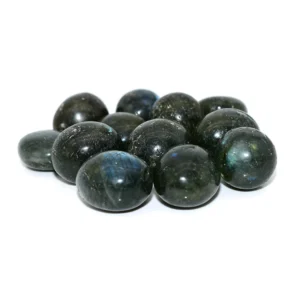
Tumbled labradorite has rounded edges and a smooth surface, making it suitable for crystal shops, gift sets, meditation collections, and decorative bowls.
A labradorite palm stone is larger and flatter than a standard tumbled stone. Its broad polished surface can make the natural flash easier to display. Palm stones may be oval, round, rectangular, or freeform depending on the original material.
Each piece is checked for major cracks, sharp edges, polish quality, and overall appearance before packing. Small natural inclusions, internal lines, and surface variations may still be present.
Labradorite Spheres, Towers, and Hearts
A labradorite sphere provides a full view of the stone from different directions. The flash may appear strongly on one side and more subtly on another because of the mineral structure.
A labradorite tower is cut with a pointed top and flat base. Towers are popular for crystal displays, home décor, gift stores, and spiritual product collections.
A labradorite heart combines the natural appearance of the stone with a familiar gift shape. Hearts can be sold individually, included in mixed crystal sets, or used as seasonal gift products.
Blue, Purple, and Black Labradorite
Color-related names normally describe the stone’s visible flash or base appearance rather than a completely separate mineral variety.
Blue labradorite is one of the most widely requested types. Its flash may range from pale sky blue to deep electric blue, sometimes with green or gold areas.
Purple labradorite is less common and may display violet, pink, blue, or multicolor reflections. Strong purple flash is generally available in smaller quantities and may require more careful sorting.
Black labradorite usually refers to material with a darker body color. Some pieces may show blue, green, or gold flash against an almost black background. The exact terminology can vary among suppliers, so product photos and grading details are more reliable than the color name alone.
Labradorite Carvings and Decorative Pieces
Labradorite can be carved into animals, moons, stars, leaves, skulls, mushrooms, and other decorative shapes. A labradorite dog figure may appeal to pet-themed gift shops or collectors, while moons and stars are often selected for crystal and spiritual stores.
Other decorative products may include a labradorite mala, carved pendants, display slabs, freeform pieces, and small pocket stones. Availability depends on the size and shape of the raw material because not every piece is suitable for detailed carving.
For wholesale orders, carving styles can usually be mixed within the same product category, subject to current stock.
How We Check Labradorite Quality
Labradorite quality cannot be judged by flash alone. We also consider the body color, flash coverage, polish, shape, cracks, bead holes, matching, and suitability for the intended product.
Flash and Viewing Angle
A strong-flash stone should show clear color under suitable lighting, but the color may only appear from a particular direction. Product photos should therefore be taken from an angle that accurately shows the natural flash without creating unrealistic expectations.
Surface Finish and Natural Inclusions
Polished labradorite should feel smooth and should not have obvious deep scratches or sharp edges. However, natural internal lines, small pits, mineral inclusions, and slight surface marks can occur.
These features should be evaluated according to the product grade. Standards for a premium labradorite gemstone cabochon will be different from those used for raw stones or lower-priced tumbled pieces.
Real and Fake Labradorite
Real labradorite usually shows color that changes as the stone or light source moves. The flash appears to come from beneath the surface rather than sitting on top like paint.
Fake labradorite products may use glass, resin, coatings, or printed patterns to imitate the effect. Repeated identical flashes, surface coatings, bubbles, and an unnatural appearance can be warning signs.
However, photographs alone may not always provide a final answer. Material origin, supplier experience, inspection, and physical testing are more dependable when authenticity is uncertain.
Labradorite Wholesale Supply
Our labradorite collection is designed for crystal wholesalers, jewelry brands, gift shops, bead suppliers, importers, online sellers, and independent retailers.
Wholesale buyers may combine different labradorite jewelry styles, beads, carvings, and polished stones according to product availability. We can also discuss size selection, quality levels, packaging, labeling, and product matching for larger orders.
Because every labradorite crystal is different, bulk orders should be based on an agreed quality range rather than one exact sample. Before production or packing, important requirements such as flash level, color preference, acceptable inclusions, sizes, and packaging should be confirmed clearly.
How to Care for Labradorite
Labradorite should be handled carefully because it can be scratched, chipped, or damaged by hard impacts. Jewelry and polished pieces should be stored separately from harder gemstones and metal items.
Clean the stone with a soft cloth, mild soap, and a small amount of lukewarm water. Avoid strong chemicals, ultrasonic cleaners, steam cleaning, and long periods of soaking.
After cleaning, dry the piece completely before returning it to its packaging or display.
Frequently Asked Questions About Labradorite
What Does Labradorite Do Spiritually?
In crystal traditions, labradorite is associated with intuition, transformation, protection, creativity, and personal awareness. Some people use it during meditation or keep it nearby when starting a new project or life change.
These spiritual meanings are based on cultural and personal beliefs. Labradorite should not be presented as a replacement for medical, psychological, or professional treatment.
Who Should Not Wear a Labradorite Stone?
There is no generally accepted rule stating that a particular person cannot wear labradorite. Most people can wear labradorite jewelry if they enjoy the stone.
People with sensitive skin should pay attention to the metal used in a labradorite ring, necklace, bracelet, or pair of earrings rather than the stone itself. Anyone who finds crystal symbolism uncomfortable can simply use labradorite as jewelry or decoration.
What Zodiac Is Labradorite Good For?
Labradorite is often connected with Scorpio, Leo, Sagittarius, and Pisces in modern crystal and astrology traditions. Different sources may give different zodiac associations because there is no single official system.
Customers can choose labradorite based on its appearance, personal meaning, or jewelry style instead of limiting it to one zodiac sign.
Why Should You Wear Labradorite?
Many people wear labradorite because of its blue, green, gold, or purple flash. It works well as a distinctive jewelry stone while remaining easy to combine with silver, brass, leather, and other natural gemstones.
Other customers choose it for its traditional spiritual meaning. The reason for wearing it ultimately depends on personal taste and belief.
What Happens If Labradorite Gets Wet?
Brief contact with clean water normally does not immediately damage a polished labradorite stone. However, repeated soaking may affect surface treatments, adhesives, elastic cord, metal settings, or the finish of some jewelry products.
It is safer to remove labradorite jewelry before swimming, bathing, or using cleaning chemicals. Dry the stone and metal parts thoroughly if they become wet.
Conclusion – Source Labradorite Products for Your Business
Labradorite offers a wide product range for jewelry stores, crystal shops, designers, gift retailers, and online sellers. From labradorite beads and bracelets to raw stones, cabochons, towers, spheres, hearts, and carved figures, each product displays its own natural color and character.
We focus on practical quality grading, clear product communication, secure packaging, and stable wholesale supply. Request a quote for current labradorite styles, mixed wholesale quantities, custom packaging, and bulk order options.