
Malachite Benefits: Meaning, Spiritual Properties, Uses, and Safety
Written by: Rocrystal Sourcing & QC Team, Last updated: August 29, 2026
Malachite is easy to recognize by its rich green color, flowing bands, and circular patterns. For centuries, people have connected this striking stone with protection, personal change, and emotional balance. Today, many crystal users explore Malachite Benefits when choosing jewelry, meditation stones, or meaningful gifts. Its natural appearance also makes it popular with crystal shops, jewelry designers, and collectors who want each piece to look distinctive.
The traditional Malachite Benefits include spiritual protection, greater self-awareness, and support during periods of change. However, these beliefs come from crystal traditions rather than medical science. Malachite should never replace professional medical, psychological, or financial advice. This guide explains its meaning, properties, common uses, possible safety concerns, and proper care. It also covers natural patterns, quality differences, and practical points that wholesale buyers should check before placing an order.
What Is Malachite?
Malachite Composition and Geological Properties
Malachite is a natural copper carbonate hydroxide mineral. Its copper content creates the green shades that make the stone so easy to identify. It often forms near copper deposits, where water and minerals react over a long period. Although people often discuss Malachite Benefits, its color, composition, and formation are physical mineral properties rather than spiritual effects.
The stone ranks about 3.5 to 4 on the Mohs hardness scale, so it is softer than quartz, jade, and many popular gemstones. Malachite can scratch, chip, or break if it hits a hard surface. This softness makes careful cutting, polishing, storage, and transportation important, especially for beads, bracelets, carvings, and tumbled stones.
Colors, Bands, Circles, and Natural Patterns
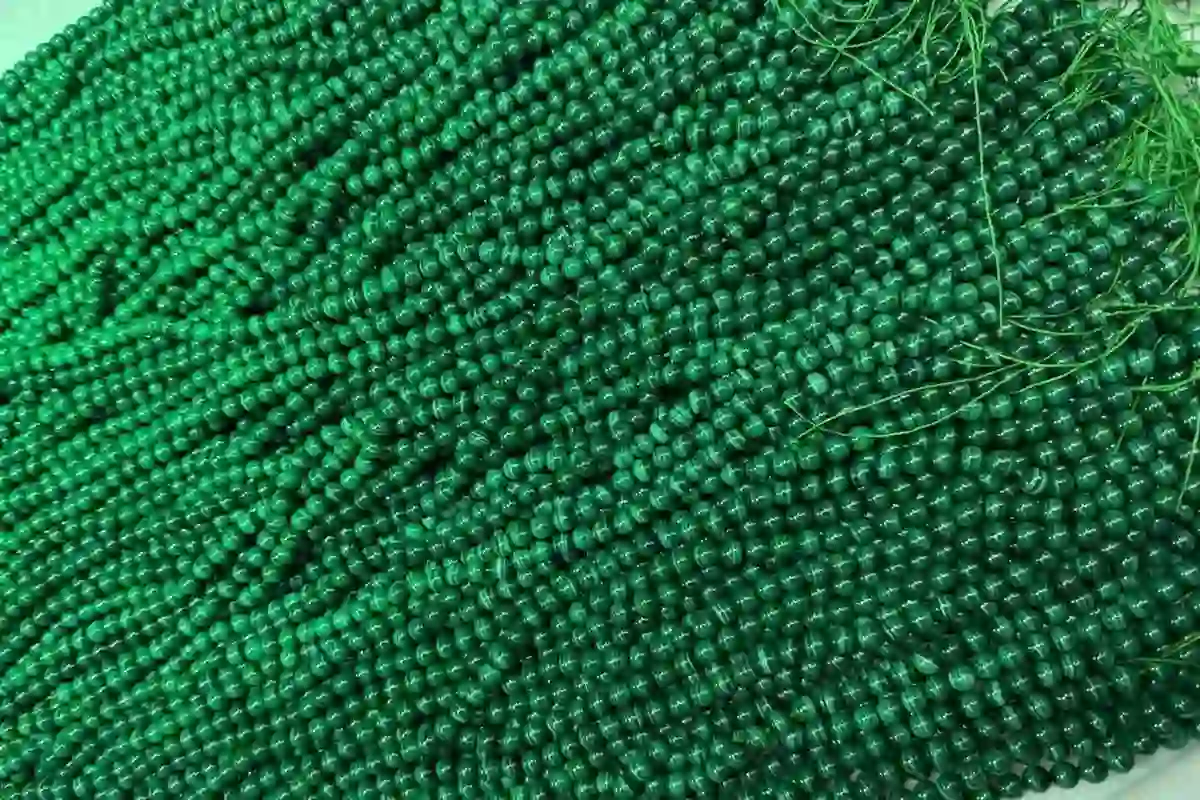
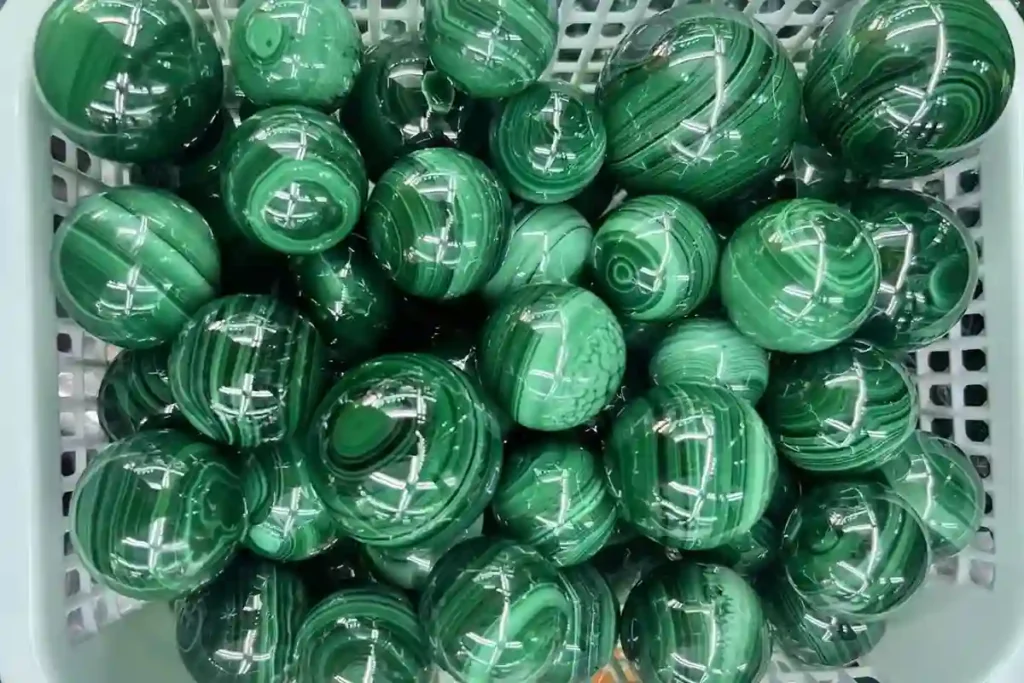
Natural malachite ranges from pale green to deep forest green. Many pieces display a mixture of light and dark shades. Its most desirable features include curved bands, waves, circles, and eye-like patterns. These markings form naturally as the mineral develops in layers. No two stones have exactly the same design, which gives polished malachite its distinctive appearance.
Pattern quality can strongly affect the value of finished products. Stones with clear bands, circular shapes, and strong color contrast usually attract more attention. Pieces with large plain areas or weak patterns may cost less and can be harder for retailers to sell. However, a simple pattern does not automatically mean the malachite is fake. Natural appearance can vary widely between deposits and batches.
Major Origins and Sources
Important malachite sources include the Democratic Republic of the Congo, Zambia, Namibia, Russia, Australia, and the United States. Material from each location may show different shades, bands, and formations. Still, origin alone does not determine quality or authenticity. Buyers should also examine pattern visibility, color contrast, surface polish, cracks, and overall condition. Natural malachite from the same mining region can vary greatly, so actual photos and videos are more useful than relying only on a stated country of origin.
Malachite Meaning and Historical Uses
The Meaning of Malachite Stone
The meaning of malachite stone centers on transformation, protection, and personal growth. Its layered green patterns often remind people of change in nature, such as new leaves appearing after winter. For this reason, many crystal users choose malachite when they want to leave old habits behind, face a new stage of life, or become more aware of their thoughts and emotions.
Another part of malachite meaning relates to courage and emotional honesty. Traditional beliefs suggest that the stone encourages people to recognize feelings they may have avoided. These ideas help explain why Malachite Benefits often include emotional balance and inner growth. However, spiritual meanings remain personal interpretations. They do not prove that the stone can create a specific emotional or physical result.
Malachite in Ancient History and Culture
People have valued malachite for thousands of years. Ancient Egyptians used the mineral to make ornaments, amulets, and green pigment. Other cultures carved it into decorative objects or wore it as a symbolic protective stone. Its strong color made it useful long before modern polishing methods became available. Historical records also show that ground malachite once served as a pigment in paintings and decorative finishes.
These early uses helped shape the symbolism connected with malachite today. Protection, status, beauty, and renewal became part of its cultural identity. However, historical use does not confirm modern healing claims. Ancient communities understood minerals differently, and they did not have today’s safety knowledge. Malachite powder can create health risks, so people should never copy old cosmetic or pigment practices with raw material.
Modern Uses of Malachite
Today, manufacturers turn malachite into beads, bracelets, pendants, rings, tumbled stones, carvings, and decorative objects. Jewelry designers value its bold green bands, while crystal shops often display it with stones linked to protection and transformation. Some people keep polished pieces near a desk or meditation space as a personal reminder of change. In wholesale markets, buyers usually compare pattern visibility, polish, shape, durability, and price before selecting malachite products for their customers.
The Main Malachite Benefits
Emotional Balance and Personal Transformation
Emotional balance is one of the most discussed Malachite Benefits. Crystal traditions describe the stone as a tool for noticing feelings instead of avoiding them. Some users hold it while reflecting on stress, relationships, or difficult choices. The stone cannot remove emotional pain, but its distinctive patterns may serve as a visual reminder to pause and examine what is happening inside.
Personal transformation also plays a central role in malachite healing properties. Many people choose the stone during a career change, the end of a relationship, or another uncertain period. They may use it to represent courage, acceptance, and a willingness to move forward. In this way, the healing properties of malachite describe symbolic emotional support rather than a guaranteed result.
These traditional Malachite Benefits can complement journaling, meditation, or other healthy routines. However, malachite cannot diagnose or treat anxiety, depression, trauma, or any other mental health condition. Anyone facing ongoing emotional distress should contact a qualified professional. A crystal may support a personal ritual, but trained care and practical action remain far more important.
Protection and Energy Clearing
Protection is another traditional theme linked to Malachite Benefits. Some crystal users believe the stone helps create a sense of security and encourages them to set healthier personal boundaries. Others keep it near an entrance, workspace, or meditation area as a symbol of protection. These practices reflect the spiritual properties of malachite, but no scientific evidence shows that the stone can block danger or remove harmful energy.
The malachite metaphysical properties also include energy clearing in many modern crystal traditions. People may use it while letting go of negative thoughts, unhealthy habits, or difficult experiences. Its green layers can act as a reminder that change often happens gradually. Malachite should support awareness, not replace practical safety steps, honest communication, or professional help when a serious problem requires attention.
Malachite Benefits for Spiritual Growth
Spiritual growth is often described as one of the main Malachite Benefits. Many users connect the stone with greater self-awareness and a willingness to examine personal beliefs. They may keep it nearby while thinking about their choices, values, or direction in life. The stone does not provide answers, but it can become a meaningful object within a reflective practice.
The malachite stone spiritual meaning also includes intuition and inner honesty. Some people believe its layered patterns encourage them to look beneath surface reactions and recognize repeated behavior. Discussions of Malachite benefits spiritual practices often focus on this type of self-examination. These ideas belong to spiritual traditions and personal experience, not established scientific evidence.
During meditation, a user may hold a polished piece and focus on one clear intention, such as accepting change or releasing an old pattern. The metaphysical properties of malachite can give that practice symbolic meaning. Still, lasting growth usually requires time, honest reflection, and practical action. Malachite Benefits should support those efforts rather than replace them.
Malachite Benefits for Money and Success
The traditional Malachite Benefits for money relate to opportunity, confidence, and positive change. Some people place the stone near a desk, cash register, or business records as a symbol of growth. Others carry a small polished piece when making plans or starting a project. These practices may help users remember their financial goals, but malachite cannot attract money by itself or guarantee business success.
People also connect malachite with the courage to make careful decisions and leave unhelpful habits behind. In this sense, Malachite benefits money practices by acting as a personal reminder rather than a source of income. Good results still depend on budgeting, research, work, and responsible choices. Buyers should treat abundance claims as traditional beliefs, not as financial promises.
Malachite Benefits for Female and Male Users
The traditional Malachite Benefits for female users often focus on emotional awareness, confidence, relationships, and personal change. Some women wear a bracelet or pendant as a reminder to protect their boundaries and express their feelings clearly. However, malachite does not affect every woman in the same way, and its meaning should not depend on stereotypes about gender.
Descriptions of Malachite Benefits for male users commonly mention courage, focus, decision-making, and the willingness to change unhealthy patterns. A man may keep the stone at work or wear it during a challenging period. These uses reflect personal intentions rather than different physical effects. Malachite has no proven ability to change hormones, strength, fertility, or other male health conditions.
In practice, the malachite crystal benefits are not limited to one gender. Anyone may connect with its green patterns and traditional themes of protection, growth, and emotional balance. The most relevant benefit of malachite depends on the user’s reason for choosing it. Personal preference, safe use, and realistic expectations matter more than gender-based claims.
Physical Wellness Claims and Possible Side Effects
Traditional Physical Healing Beliefs
Traditional crystal practices sometimes connect malachite healing properties with physical comfort, circulation, menstrual discomfort, and general well-being. These claims have passed through spiritual traditions and modern crystal communities. However, reliable scientific research has not shown that wearing or holding malachite can treat these conditions. The healing benefits of malachite should therefore be presented as beliefs, not medical facts.
Some people use a polished stone during rest, breathing exercises, or other calming routines. The activity itself may help them slow down and focus, but malachite does not replace diagnosis or treatment. Anyone with pain, skin problems, pregnancy concerns, or ongoing symptoms should speak with a qualified healthcare professional. The claimed malachite stone benefits must never delay proper medical care.
Malachite Benefits for Skin: Claims and Safety
Claims about Malachite Benefits for skin often come from cosmetic marketing or traditional mineral practices. Some beauty products contain a carefully processed malachite extract as part of a tested formula. However, this does not mean people should rub raw malachite, crushed stone, or mineral powder directly onto their skin. A finished cosmetic product and a natural mineral specimen require very different safety standards.
Never make homemade skin treatments or crystal water with malachite. The stone contains copper, and damaged material may release dust or small particles. People with sensitive skin should also stop wearing malachite jewelry if redness or irritation appears. Any genuine skin condition needs appropriate medical advice rather than unproven malachite skin benefits.
Malachite Benefits and Side Effects
When discussing Malachite Benefits and side effects, it is important to separate polished jewelry from loose mineral dust. People commonly wear smooth, undamaged malachite as an external accessory. However, they should never lick, chew, crush, or grind it. Cutting and polishing can create copper-containing dust, so professional workers need suitable ventilation, protective equipment, and safe workshop practices.
Do not prepare drinking water, oils, or homemade skincare products by soaking malachite. Children and pets should not handle small pieces without supervision. Anyone who develops irritation while wearing malachite should remove it and seek medical advice if symptoms continue. Careful handling allows people to enjoy the stone’s appearance and traditional meaning without ignoring basic mineral safety.
Malachite Spiritual Properties, Chakras, and Astrology
Heart Chakra and Emotional Awareness
In modern crystal traditions, malachite is closely connected with the heart chakra. This symbolic energy center relates to love, compassion, trust, and relationships. The green color of the stone strengthens this association because green often represents growth and renewal. Some users place a polished piece near the chest during quiet reflection, although this practice does not produce a proven physical effect.
The malachite spiritual properties linked to the heart chakra also include emotional honesty and healthier boundaries. People may use the stone while thinking about forgiveness, grief, or communication. These Malachite Benefits can give a personal ritual more meaning, but they cannot repair a relationship without effort. Open conversation, responsible choices, and professional support remain essential when emotional problems become serious.
Malachite Stone Benefits in Astrology
The claimed Malachite stone benefits astrology practitioners describe often include transformation, confidence, and emotional growth. Some modern sources connect malachite with Scorpio, Capricorn, or Taurus, while others associate it with different zodiac signs and planets. These differences exist because crystal astrology has no single universal system. A person does not need a particular birth sign to wear or appreciate malachite.
Astrological associations can help users choose a symbolic intention, but they should not control important decisions. No zodiac sign must wear malachite, and no sign needs to avoid it based only on astrology. The stone may still appeal to someone because of its color, natural patterns, or personal meaning. Comfort and safe handling matter more than a fixed birthstone rule.
Meditation and Inner Reflection
Malachite can serve as a visual focus during meditation. A user may hold a smooth stone, observe its green bands, and breathe slowly while considering a simple intention. Common themes include accepting change, recognizing emotions, or releasing an unhealthy pattern. The stone does not create spiritual insight by itself, but it may help a person remain focused. Regular reflection, honest self-examination, and practical action give the meditation greater value than relying on the crystal alone.
How to Use Malachite
Wearing Malachite Jewelry
People often wear malachite as bracelets, pendants, necklaces, earrings, or rings. Keeping the stone nearby may help users remember an intention related to confidence, protection, or personal change. Its bold green patterns also make it attractive even for buyers who do not follow crystal traditions. These practical and symbolic qualities explain why wearable pieces remain a popular way to explore Malachite Benefits.
Because malachite is relatively soft, jewelry needs careful handling. Remove it before exercising, showering, swimming, cleaning, or using skincare products. Sweat, chemicals, and repeated impact may damage the polish or metal setting. Avoid wearing a cracked piece that releases particles. Safe use protects both the wearer and the stone while preserving its natural surface for longer.
Malachite Bracelet Benefits
The traditional malachite bracelet benefits include emotional awareness, protection, and support during personal change. A bracelet keeps the stone visible throughout the day, so it can serve as a reminder of a chosen intention. Many customers also buy malachite bracelets simply because the green bands look distinctive. These symbolic uses and natural patterns make them suitable for crystal shops, gift retailers, and jewelry collections.
Quality matters as much as the claimed Malachite Benefits. Buyers should check whether the beads show attractive bands, even polishing, clean drill holes, and minimal chipping. They should also examine the elastic cord, bead size, and overall color balance. A bracelet with clear natural patterns is usually easier to display and sell than one made from plain or poorly finished beads.
Using Malachite at Home or Work
Some people keep polished malachite on a desk, near a cash register, or inside a meditation area. They may associate it with focus, business growth, protection, or positive change. Its vivid green color also works well as a decorative feature. A visible stone can remind someone to review goals, manage money carefully, or approach decisions with greater confidence.
Place malachite on a stable, dry surface where it cannot fall easily. Keep small pieces away from children and pets, and avoid kitchens, bathrooms, or other wet areas. In busy retail spaces, a protected display case can reduce scratches and accidental damage while still allowing customers to see the natural patterns.
Setting an Intention with Malachite
A simple intention can give malachite a clear personal purpose. Hold a polished piece, observe its bands, and choose one realistic goal, such as speaking more honestly or adapting to change. Take several slow breaths and write down one action you can complete. This practice helps answer what is malachite good for without promising an automatic spiritual result.
The stone should act as a reminder, not as the source of change. For example, someone seeking confidence might keep malachite near a notebook and record daily progress. Another person may use it during quiet reflection before making a decision. Consistent effort gives the intention practical value, while the stone provides a meaningful visual symbol.
Looking for natural malachite for your crystal shop or jewelry collection? Contact us on WhatsApp or send an inquiry through our form to discuss available patterns, sizes, packaging options, and wholesale quantities.
How to Clean, Cleanse, and Care for Malachite
Why Malachite Should Not Stay in Water
Malachite is a relatively soft and porous copper mineral. Long exposure to water may dull its polish or affect the surface, especially when a piece already has cracks or damage. Soap, salt water, acidic liquids, and household cleaners can create additional problems. For this reason, remove malachite jewelry before showering, swimming, washing dishes, or cleaning.
A quick wipe with a slightly damp cloth differs from soaking the stone. Never place malachite in drinking water or use it to prepare a crystal elixir. Water does not activate Malachite Benefits, and soaking creates unnecessary safety concerns. If the stone becomes wet, dry it immediately with a soft cloth and store it in a protected place.
Safe Cleaning Methods
Use a soft, dry microfiber cloth for regular malachite care. Gently remove fingerprints, dust, and light surface marks without applying heavy pressure. If dry cleaning is not enough, use a slightly damp cloth and wipe the stone briefly. Dry it immediately afterward. This simple method protects the polish and allows people to enjoy the appearance and traditional Malachite Benefits without damaging the mineral.
Avoid ultrasonic cleaners, steam cleaning, stiff brushes, and abrasive polishing products. Bleach, acids, jewelry dips, and strong household chemicals may also harm the surface. When malachite jewelry needs deeper cleaning or repair, ask a jeweler who understands soft copper minerals. Do not try to polish scratches at home because improper grinding can release mineral dust.
Non-Water Cleansing Methods
People who follow crystal traditions can cleanse malachite without soaking it. Common methods include placing it in a dry area under gentle moonlight, using sound from a bell, or setting it near a piece of selenite. These practices are symbolic and do not physically clean dirt from the surface. Avoid salt, soil, direct sunlight, smoke residue, and any method that may scratch, stain, or overheat the stone. A soft cloth remains the safest choice for practical cleaning.
Storage and Daily Protection
Store malachite separately in a soft pouch or lined box. Harder stones such as quartz may scratch it when pieces rub together. Keep bracelets and pendants away from direct sunlight, moisture, perfume, and household chemicals. During transportation, wrap each item carefully and reduce empty space inside the package. Good storage protects the polish, edges, drill holes, and natural patterns from avoidable damage.
How to Identify and Buy Natural Malachite
Natural Malachite Versus Imitation Material
Natural malachite usually shows irregular bands, curves, circles, and gradual changes between light and dark green. Each piece should look different, although beads cut from the same rough material may share similar colors. Imitation products often display identical patterns, harsh black lines, or repeated designs that look printed. Some sellers also offer resin, polymer clay, dyed material, or reconstructed malachite powder.
Visual checks can reveal warning signs, but photos alone cannot always confirm authenticity. Lighting and editing may change the color, while small images can hide surface details. Wholesale buyers should request close-up videos, current batch photos, samples, or independent testing when necessary. Genuine material supports the value of Malachite Benefits, but pattern quality and workmanship still vary among natural stones.
How Patterns Affect Malachite Price
Clear bands, rounded eyes, and strong contrast between green shades usually raise the value of malachite. Retail customers can see these features easily, which makes patterned pieces more attractive in displays and photographs. Two stones with the same weight and size may have very different prices because one shows rich natural markings while the other looks mostly plain. Attractive patterns can therefore matter more than weight alone.
Common malachite products have become more affordable as processing methods and raw material supply have improved. However, high-quality patterns still command higher prices. Buyers should not expect premium banding at the lowest market rate. When comparing quotes, they should review the actual grade, polish, cracks, shape, and pattern coverage. These visible features influence both Malachite Benefits marketing and the product’s practical retail value.
Popular Shapes and Wholesale Uses
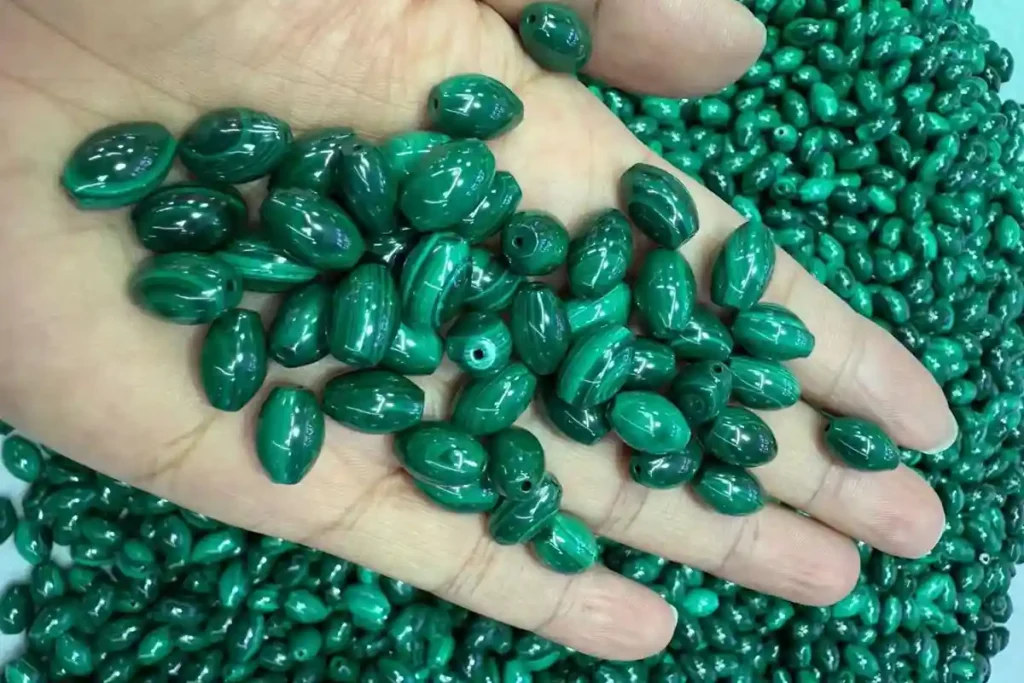
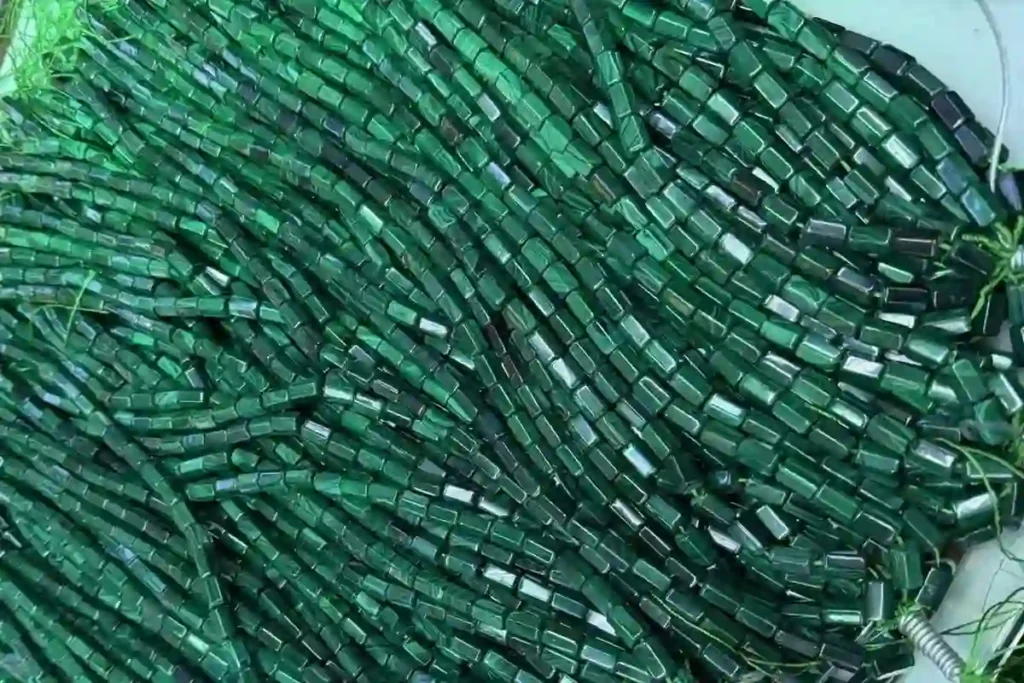
Malachite is available as tumbled stones, round beads, bracelets, pendants, cabochons, carvings, and mineral specimens. Crystal shops often choose polished pieces for displays and spiritual gift sets. Jewelry designers may prefer beads or cabochons with clear bands and strong color contrast. Each shape requires different cutting skills and quality standards.
For tumbled stones, buyers should examine pattern visibility, surface polish, chips, and size range. Beads also need clean drill holes, even sizing, and secure stringing. Carvings and cabochons require smooth edges and balanced shapes. Choosing the right product type depends on the customer base, target price, and intended retail use.
What Wholesale Buyers Should Check
Before confirming a wholesale order, buyers should inspect current batch photos or videos. Key points include pattern coverage, green color, surface polish, cracks, chips, shape, and size range. They should also confirm whether the supplier uses natural, reconstructed, or imitation material. A low quote may reflect plain patterns, small sizes, weak polishing, or a higher percentage of damaged pieces.
Packaging deserves equal attention because malachite can chip during transportation. Buyers should ask how the supplier separates products, limits movement, and protects the goods inside the carton. Order quantity, grade tolerance, replacement terms, and sample approval should also be clear. These checks reduce misunderstandings and help retailers receive products they can display and sell.
My Experience Supplying Malachite Tumbled Stones
Why Pattern Quality Matters in Retail
In my experience, the beauty of natural malachite depends greatly on its patterns. Pieces with clear bands, rounded eyes, and strong color contrast usually command higher prices. Plain stones with little visible pattern may still be natural, but crystal retailers often find them harder to display and sell. For many buyers, attractive markings matter more than the general Malachite Benefits associated with the stone.
Malachite products used to be relatively expensive. In recent years, improved processing methods and a larger supply of raw material have made many common products more affordable. However, well-patterned pieces still cost more. Buyers should not compare malachite only by weight or size because two similar stones may have very different retail value. Pattern coverage, polishing, shape, and surface condition all influence the final grade.
A Customer Complaint About Plain Malachite
I learned the importance of visible patterns from one customer order. After receiving the shipment, the buyer found that some malachite tumbled stones looked too plain and had almost no clear banding. He told me that the quality was too low for his market because he could not sell stones with such an empty appearance. His concern was reasonable, even though the material itself was natural.
I accepted the feedback and offered to add the same quantity of replacement stones to his next order at no charge. Since then, I have paid closer attention to pattern visibility during inspection. We try to identify pieces that look overly plain before packing the goods. This experience also taught me that supplier grading and customer expectations must be discussed clearly, especially when natural patterns vary from stone to stone.
Packing Fragile Malachite for Shipping
Malachite tumbled stones can chip or break when they strike one another during transportation. If we place a large quantity in one heavy bag, the stones at the bottom receive more pressure. Movement inside the carton can also damage polished surfaces and edges. We therefore divide the order into smaller bags, usually packing about 1 kg in each bag instead of combining everything together.
After sealing the small bags, we wrap them with several layers of bubble wrap. We also fill empty spaces inside the carton to reduce movement and impact. This process requires more packaging material and time, but it helps the stones arrive in saleable condition. Careful packing is especially important for wholesale orders because even a small breakage rate can affect the customer’s available stock and expected profit.
Malachite Versus Similar Green Stones
Malachite vs. Emerald
Malachite and emerald both show rich green colors, but their appearance and structure differ greatly. Malachite is opaque and usually displays light and dark bands, while high-quality emerald is transparent or translucent with internal inclusions. Emerald also ranks much higher on the Mohs hardness scale. Jewelry buyers usually choose emerald for its brilliance and rarity, while they select malachite for its bold patterns, lower price, and traditional Malachite Benefits. Each stone requires different care and grading standards.
Malachite vs. Jade
Malachite usually has obvious green bands, circles, or waves, while jade often shows a smoother and more even color. Jade can appear green, white, lavender, yellow, or other shades, depending on whether it is jadeite or nephrite. Both types of jade are harder and more durable than malachite. For everyday jewelry, jade generally handles impact better. Buyers who want dramatic natural patterns may prefer malachite, while those seeking a softer appearance and greater durability may choose jade.
Malachite vs. Chrysocolla
Malachite is known for its deep green bands, while chrysocolla often displays blue, turquoise, or blue-green areas. Both are copper minerals and may occur together in the same specimen, creating mixed colors and patterns. Chrysocolla is generally softer and can vary greatly when combined with quartz or other minerals. Buyers should review the actual material instead of judging by color alone. Clear descriptions help prevent confusion when a product contains both malachite and chrysocolla.
Frequently Asked Questions
Who Should Not Wear Malachite?
People who develop skin irritation while wearing malachite should remove it and seek medical advice if the reaction continues. Anyone handling a cracked, rough, or powdery piece should also avoid direct contact until the stone is safely stored or repaired. Young children and pets must not chew or swallow small pieces. Pregnant users do not need to avoid finished malachite jewelry automatically, but they should never use mineral powders, homemade elixirs, or untested skin products.
Does Malachite Attract Money?
Some crystal traditions connect Malachite Benefits with abundance, opportunity, and financial growth. People may keep the stone near a desk or cash register as a reminder to focus on their goals. However, malachite cannot produce money or guarantee business success. Financial results still depend on planning, research, budgeting, and responsible decisions. The stone works best as a symbolic object that encourages action rather than as a replacement for practical financial management.
Why Can’t Malachite Get Wet?
Malachite is a soft copper mineral, and long exposure to water may dull or damage its polished surface. Soap, salt, acids, and cleaning chemicals can cause further problems. A brief wipe with a slightly damp cloth is different from soaking the stone, but it should still be dried immediately. Never use malachite to prepare drinking water or crystal elixirs. Keeping it dry protects both its appearance and the safe enjoyment of Malachite Benefits.
What Are the Spiritual Benefits of Malachite?
Traditional Malachite Benefits include protection, personal transformation, emotional awareness, and spiritual growth. Some users connect the stone with the heart chakra and use it during meditation or periods of change. Its green bands may serve as a reminder to examine emotions and release unhealthy patterns. These ideas come from spiritual traditions and personal beliefs. Scientific evidence does not show that malachite can remove negative energy or guarantee emotional healing.
Why Is Malachite Considered Toxic?
Malachite contains copper, so the main safety concerns involve swallowing the material or inhaling dust created during cutting, grinding, and polishing. Finished, undamaged jewelry presents a different situation from loose mineral powder, but users should still handle it responsibly. Never lick, crush, or place malachite in drinking water. Professional lapidary workers need ventilation and suitable protective equipment. Children and pets should not handle small pieces without supervision. Safe use allows people to enjoy Malachite Benefits without unnecessary exposure.
Conclusion: Understanding Malachite Benefits and Choosing Quality Stones
The traditional Malachite Benefits center on protection, transformation, emotional awareness, and spiritual growth. People may wear the stone, meditate with it, or keep it in a meaningful space. These practices can support personal reflection, but malachite cannot guarantee healing, wealth, protection, or any other result.
Safe handling is equally important. Users should keep malachite away from drinking water, avoid damaged or powdery material, and clean finished pieces gently. Anyone with medical, emotional, or financial concerns should seek qualified advice instead of depending on the claimed malachite stone benefits.
For retailers and wholesale buyers, natural patterns, polish, authenticity, and secure packaging strongly affect value. Attractive bands make the stone easier to display, while careful packing reduces chips and breakage. Understanding both Malachite Benefits and practical quality standards helps buyers choose products that meet customer expectations.
Need natural malachite for your crystal shop, jewelry business, or wholesale collection? Contact us on WhatsApp or submit our inquiry form. We can discuss available patterns, product sizes, packaging options, and bulk order requirements.
Disclaimer
The information about Malachite Benefits, spiritual meanings, chakras, and healing properties reflects traditional beliefs and personal experiences. It is for general informational purposes only and does not replace medical, psychological, legal, or financial advice. Malachite cannot diagnose, treat, cure, or prevent any disease.
Malachite contains copper. Do not swallow it, inhale its dust, apply raw material to the skin, or use it to make drinking water or crystal elixirs. Seek professional advice if you have health concerns or experience irritation.