
Hematite Ring Benefits: Meaning, Uses, Wearing Guide, and Buying Advice
Written by: Rocrystal Sourcing & QC Team, Last updated: September 2, 2026
Hematite rings stand out for their dark metallic shine, smooth surface, and noticeable weight. Many people wear them as simple everyday jewelry, while others choose them for their traditional spiritual meaning. The most commonly discussed hematite ring benefits include grounding, emotional balance, focus, confidence, and a stronger sense of stability during stressful moments.
In crystal traditions, hematite often represents strength, protection, and a connection to the earth. Some wearers say that touching or looking at the ring reminds them to slow down, clear their thoughts, and stay focused. However, these experiences are personal. Scientific research has not proven that hematite rings can treat anxiety, improve blood circulation, or cure any medical condition.
Many traditional hematite benefits, such as grounding, focus, and emotional balance, are also associated with wearing the stone as a ring. One person may use it as a symbol of self-discipline, while another may simply enjoy its bold gray-black color. Its neutral appearance makes it suitable for men, women, and many jewelry styles.
Before choosing one, buyers should understand the difference between natural hematite, man-made magnetic material, and rainbow-coated hematite. Ring size, polish, edge finish, durability, and material disclosure also matter, especially for retailers and wholesale buyers. This guide explains the traditional benefits, symbolism, wearing methods, break meaning, price factors, care instructions, and practical buying advice for hematite rings.
What Is a Hematite Ring?
Hematite as a Natural Iron Oxide Mineral
Hematite is a natural iron oxide mineral with the chemical formula Fe₂O₃. Its name comes from a Greek word related to blood because powdered hematite often leaves a reddish-brown streak. In its polished form, however, the stone usually appears steel gray, silver gray, or almost black. This contrast can surprise buyers who only know hematite as a dark metallic stone.
Natural hematite feels heavier than many stones of a similar size because it has a high iron content. A well-polished piece has a smooth surface and a metallic or semi-metallic shine. These features make the material suitable for rings, bracelets, beads, pendants, and other modern jewelry.
Hematite and magnetite are not the same mineral. Magnetite usually reacts strongly to a magnet, while natural hematite normally shows little or no magnetic attraction. Some hematite may contain magnetite and show a weak response, but many strongly magnetic rings sold as hematite are made from man-made materials. For this reason, buyers should confirm the material instead of judging it only by color or magnetism.
Although hematite contains iron, wearing a ring does not provide the body with dietary iron. Its iron content explains the mineral’s weight and appearance, not a medical benefit.
How Hematite Rings Look and Feel
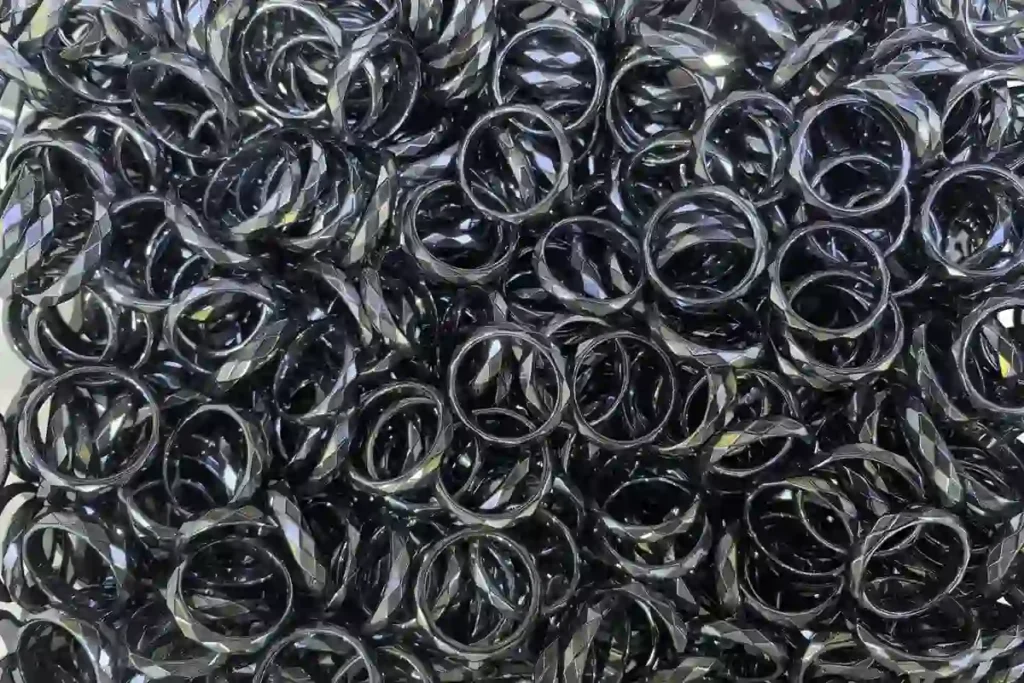
Hematite rings have a smooth, solid appearance that works well with both casual and formal clothing. Polished styles reflect light with a silver-gray or gunmetal shine, while matte finishes look softer and more understated. Their dark, neutral color also pairs easily with silver, stainless steel, black jewelry, and many natural gemstones.
A solid hematite ring usually feels cool at first and heavier than a plastic or resin ring of the same size. Common designs include plain stone bands, faceted rings, bead rings, and small hematite pieces set into metal bands. Some suppliers also offer a haematite ring, using the British spelling, but the name refers to the same mineral.
Size matters because a solid stone band cannot be adjusted like an open metal ring. A ring that feels comfortable in cool weather may become tight when the fingers swell. Buyers should therefore check the inner diameter, band width, thickness, and available size range before ordering.
Natural hematite may show slight differences in color, shine, or surface texture. These variations are acceptable when the seller explains them clearly. Deep scratches, sharp edges, hidden cracks, or uneven polishing are quality problems rather than normal natural features. For wholesale orders, consistent sizing and finishing make the rings easier to display, describe, and sell.
Hematite Ring Meaning and Symbolism
Traditional Meaning of Hematite
The traditional hematite ring meaning centers on grounding, stability, strength, and protection. Crystal users often connect hematite with the earth because of its weight, iron content, and dark metallic appearance. Its solid feel may remind the wearer to remain calm and present when daily life becomes busy or uncertain.
In spiritual practices, hematite often represents courage and personal boundaries. Some people wear it when they want to feel more disciplined or less affected by outside pressure. Others use the ring during meditation, work, travel, or difficult conversations as a personal reminder to slow down and think clearly.
Historical cultures used hematite as a pigment, decorative material, and carved object. Its reddish-brown powder may have influenced its long connection with blood, vitality, and strength. Modern crystal traditions later expanded these ideas to include emotional balance, focus, and protection from negative energy.
These meanings come from cultural traditions and personal beliefs rather than medical research. Wearing hematite cannot guarantee protection or solve physical and emotional health problems. A responsible seller should explain the symbolism without presenting it as a proven treatment. This honest approach helps customers understand why people value the stone while keeping expectations realistic.
What Wearing a Hematite Ring May Represent
Wearing a hematite ring can represent stability, self-control, courage, or a fresh start. Some people choose it when they begin a new job, build a healthier routine, or work toward a personal goal. The ring then becomes a visible reminder of the promise they made to themselves.
For others, the meaning feels more emotional. A wearer may touch the ring during a stressful moment and use that small action as a signal to pause, breathe, and organize their thoughts. The stone does not create these changes by itself, but it can support a personal habit or daily ritual.
The hematite rings meaning may also vary between cultures and individuals. One person may associate the dark color with protection, while another sees the metallic shine as a symbol of confidence and inner strength. Many buyers simply appreciate the ring as a bold yet practical piece of jewelry.
When describing hematite ring benefits, sellers should use careful phrases such as “traditionally associated with,” “some wearers believe,” or “often used as a symbol of.” These expressions respect spiritual beliefs without making unsupported promises. They also help retailers present the ring honestly to customers who may value its appearance, symbolism, or both.
Common Hematite Ring Benefits
Grounding and a Sense of Stability
Grounding is one of the most commonly discussed hematite ring benefits. In crystal traditions, grounding means feeling present, steady, and connected to everyday life. People may seek this feeling when they face a busy schedule, frequent travel, demanding work, or periods of uncertainty.
A hematite ring has a noticeable weight and a cool, smooth surface. Some wearers use these physical features as a simple reminder to return their attention to the present moment. Touching the ring may encourage them to pause, take a slow breath, and focus on what they can manage right now.
Others wear hematite during meditation or before an important meeting. The ring can become part of a personal routine that supports calm and organized thinking. Its dark color and solid appearance may also create a visual sense of strength and stability.
These grounding effects remain subjective. Hematite does not remove stress or control emotions on its own. However, a meaningful object can help someone maintain a helpful habit. Sellers should therefore describe grounding as a traditional belief or personal experience, not as a guaranteed physical or psychological result.
Focus and Mental Clarity
Some people wear a hematite ring when they need to concentrate on work, study, or an important decision. In crystal traditions, hematite is often linked with clear thinking and reduced mental distraction. Its solid weight can serve as a physical reminder to return to the task when attention begins to drift.
A wearer might touch the ring before checking a list, answering an important message, or starting a difficult project. This small action can create a useful pause between distraction and focused work. The habit matters more than the stone itself, but the ring gives the wearer a consistent object to connect with that routine.
For business owners and designers, the dark metallic appearance also fits professional settings without looking too bright or decorative. A simple band can be worn during meetings, travel, or daily work, which makes it easier to include in a regular focus practice.
Hematite cannot improve memory, treat attention disorders, or guarantee better decisions. Experiences with mental clarity differ from person to person. Retailers should present this benefit as a traditional association and avoid claims that suggest a medical or neurological effect.
Confidence and Personal Strength
Hematite is often associated with courage, confidence, and personal strength. Its deep gray color, metallic shine, and solid weight give the ring a bold appearance. Some wearers feel that these features help them project a calmer and more confident image in social or professional situations.
People may choose a hematite ring before a job interview, business meeting, public presentation, or difficult conversation. The ring can remind them to speak clearly, maintain their boundaries, and trust their preparation. It does not create confidence automatically, but it may support an intention that the wearer has already set.
Others connect hematite with discipline and persistence. They may wear it while developing a new habit, completing a long project, or working toward a personal goal. In this way, the ring becomes a simple symbol of commitment rather than a source of instant power.
These experiences explain why confidence often appears among the traditional benefits of hematite rings. However, results remain personal and cannot be guaranteed. Sellers should focus on symbolism, appearance, and individual experience instead of promising that every wearer will feel stronger or more confident.
Emotional Balance and Calm
Many crystal users connect hematite with emotional balance and a calmer state of mind. They may wear a ring during stressful days, uncomfortable conversations, or periods of change. The ring can act as a familiar object that reminds them to pause before reacting.
Some wearers combine hematite with slow breathing, meditation, journaling, or a short period of quiet reflection. Touching the smooth surface may help bring their attention away from racing thoughts and back to the present moment. This simple routine can feel comforting, especially when practiced regularly.
The dark color and steady weight may also create a personal sense of security. However, emotional responses vary widely. One person may find the ring reassuring, while another may enjoy only its appearance and feel no emotional difference.
Claims about hematite rings benefits should therefore remain realistic. Hematite jewelry cannot cure anxiety, depression, trauma, or another mental health condition. Anyone experiencing ongoing emotional distress should seek support from a qualified professional. Retailers can describe hematite as traditionally associated with calm and balance, but they should never present it as a substitute for proper care.
Style and Everyday Wear
The practical appeal of a hematite ring goes beyond its traditional spiritual meaning. Its silver-gray or gunmetal color works well with casual clothing, office wear, and formal outfits. Buyers can also match it with silver, stainless steel, black onyx, lava stone, or other dark-toned jewelry.
Polished rings offer a bright metallic shine, while matte styles look softer and more understated. Faceted surfaces reflect more light and create a modern appearance. These options allow retailers to serve customers with different tastes without changing the basic color palette.
Hematite rings also suit men, women, and customers who prefer unisex jewelry. A narrow band looks simple and light, while a wide ring creates a stronger visual effect. However, solid stone bands may feel heavier than metal rings and cannot be resized easily.
Among the practical hematite ring benefits, versatility is one of the easiest to explain without making spiritual claims. The ring has a distinctive appearance, remains easy to coordinate with other accessories, and can be worn during many everyday activities. Wearers should still remove it before sports, heavy work, bathing, or any activity that may cause a hard impact.
Who May Choose to Wear a Hematite Ring?
Who Is It Commonly Chosen By?
A hematite ring may appeal to people who enjoy dark, simple, or gender-neutral jewelry. Its metallic gray color looks modern without appearing overly bright, so it works well for office wear, casual outfits, and formal occasions. Customers who already wear silver, stainless steel, black onyx, or lava stone may find it especially easy to match.
Crystal enthusiasts often choose hematite because they associate it with grounding, focus, protection, and emotional stability. Some wear the ring during meditation or stressful periods, while others use it as a daily reminder of discipline and personal boundaries. These meanings remain personal and may not feel the same for every wearer.
Hematite rings can also suit customers who want a symbolic but affordable gift. Retailers may present them for birthdays, career changes, travel, or new personal goals without promising a specific outcome. The meaning behind the gift often matters more than the price.
People who dislike heavy jewelry, need an adjustable size, or regularly work with their hands may prefer another design. Solid stone bands do not bend or resize, and hard impacts can break them. Choosing the correct style depends on comfort, daily activities, and personal taste rather than spiritual rules alone.
Which Finger to Wear a Hematite Ring On?
There is no required finger for wearing a hematite ring. The best choice depends on comfort, ring size, daily habits, and the meaning the wearer wants to give it. A solid stone band should fit securely without pressing tightly against the skin or restricting finger movement.
In some spiritual traditions, the index finger represents direction, confidence, and leadership. People who use hematite as a symbol of personal strength may prefer this finger. The middle finger often represents balance, responsibility, and self-discipline, making it another popular choice for a grounding ring. A ring worn on the ring finger may carry a more personal meaning connected with commitment or emotional intentions.
Some wearers believe that the left hand receives energy while the right hand expresses or releases it. Under this belief, they may wear hematite on the left hand for calm and protection, or on the right hand for confidence and stronger boundaries. These interpretations vary and do not form a universal rule.
Anyone asking which finger to wear hematite ring should first consider practical use. The ring should not interfere with writing, lifting, machinery, or other jewelry. Comfort and safety matter more than following a fixed spiritual placement.
Hematite Ring for Men and Unisex Styles
A Hematite Ring for Men often has a wide band, a polished gunmetal finish, or a simple geometric shape. These designs create a strong appearance without requiring bright colors or complex decoration. Matte finishes and faceted surfaces also work well for customers who want a modern or understated style.
Narrow bands, bead rings, and hematite set into silver-colored metal may appeal to customers who prefer lighter jewelry. However, these styles do not need to be limited to women. Many hematite rings have a naturally unisex look, so retailers can organize them by size, width, finish, and design instead of relying only on gender labels.
Wholesale buyers should ask for a clear size assortment before ordering. Men’s collections often need more large sizes, while mixed retail displays require a wider range. Accurate inner-diameter measurements and size labels reduce customer complaints because solid hematite bands cannot be adjusted or resized.
Natural, Magnetic, and Rainbow Hematite Rings
How Natural Hematite Differs From Magnetic Hematite
Natural hematite is an iron oxide mineral that usually shows little or no attraction to an ordinary magnet. Some specimens contain small amounts of magnetite and may respond weakly, but strong magnetism is not a standard feature of pure hematite. Therefore, a ring should not be called natural hematite simply because it looks metallic or attracts a magnet.
Many strongly magnetic rings sold under the hematite name consist of man-made magnetic material, sometimes called hematine or magnetic hematite. These products can still work as attractive jewelry, but suppliers should describe their composition honestly. Retailers also need to know what they are buying before making claims about natural origin or mineral properties.
Color alone cannot confirm the material because natural hematite and manufactured alternatives may both appear black, gray, and highly polished. Natural hematite often feels dense and can leave a reddish-brown streak when tested on unglazed porcelain. However, a streak test may scratch or damage a finished ring, so it is not suitable for sellable stock.
Wholesale buyers should request material details, samples, close-up images, and testing information when necessary. Clear disclosure protects the buyer and prevents customers from receiving a magnetic product when they expected a natural stone.
Rainbow Hematite Ring Benefits and Appearance
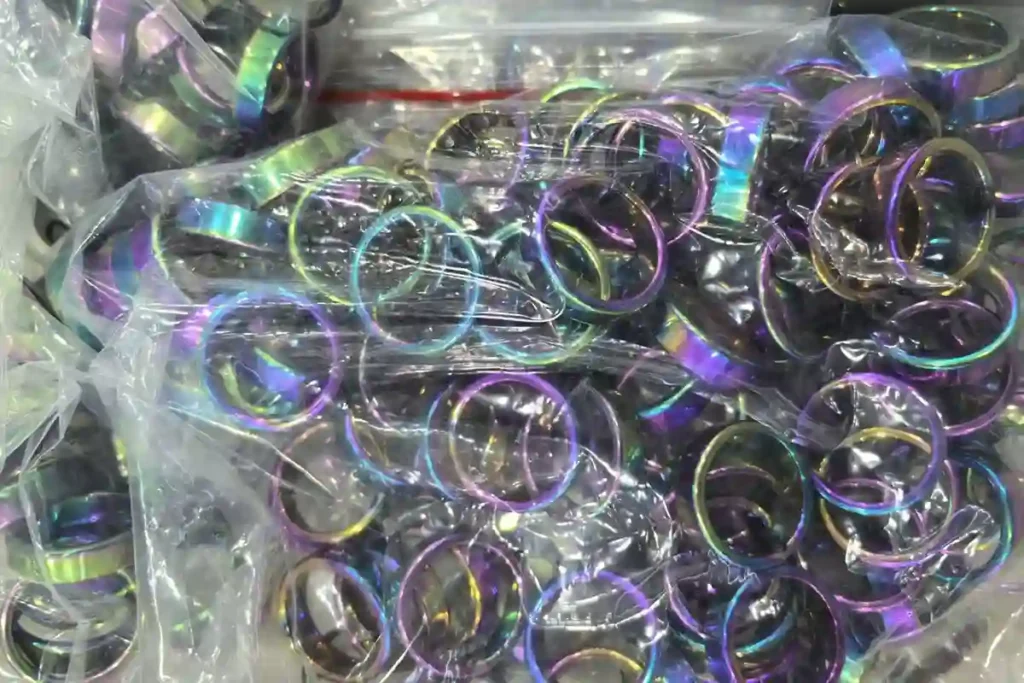
Rainbow hematite rings display blue, purple, green, gold, or pink colors across a metallic surface. Their changing shine makes them more eye-catching than standard gray or black hematite. Retailers often use these rings as colorful statement pieces or place them in gift collections for customers who prefer unusual finishes.
The color may come from natural surface iridescence, but many jewelry products receive a coating or another artificial treatment to create a stronger rainbow effect. Buyers should ask the supplier whether the material is natural hematite, a manufactured alternative, or a coated product. Product descriptions should clearly disclose treatments instead of allowing customers to assume every color formed naturally.
Commonly discussed Rainbow Hematite ring benefits include creativity, optimism, emotional balance, and grounding. Some crystal users also connect its multiple colors with the chakra system. These ideas come from modern spiritual traditions and personal interpretations, not scientific evidence.
For wholesale orders, appearance and coating quality require careful inspection. Buyers should compare color coverage, brightness, scratches, faded areas, and differences between batches. A poorly applied coating may wear unevenly after repeated contact with water, sweat, perfume, or hard surfaces. Clear care instructions help customers protect the finish and understand how a rainbow ring differs from untreated hematite.
Why Does a Hematite Ring Break?
Practical Reasons a Hematite Ring May Break
A solid hematite ring can break when it hits a hard surface. Although hematite is reasonably hard, it can still be brittle. A ring may resist light scratches yet crack after falling onto tile, concrete, stone, or another rigid material. Hardness and impact resistance are not the same quality.
Thin bands and rings with uneven thickness face a greater risk of damage. Hidden cracks may also grow after repeated knocks against tables, doors, tools, or other jewelry. If the size is too small, extra pressure on the band can make an existing weakness worse. Cold and swollen fingers may further affect how tightly it fits.
Damage can also happen during packing and transportation. Rings placed together without separate protection may strike or rub against one another. Wholesale suppliers should use individual bags, foam, or divided boxes and avoid leaving too much empty space inside the shipping carton.
A broken ring does not automatically indicate poor quality. However, repeated breakage within the same batch may point to bands that are too thin, weak material, rough handling, or insufficient packaging. Buyers should record the quantities, sizes, break locations, and package condition before discussing the problem with their supplier.
Hematite Ring Break Meaning in Spiritual Traditions
The hematite ring break meaning depends on personal belief. Some crystal users believe the ring breaks after absorbing negative energy or protecting its wearer during a difficult period. Others see the event as a sign that an old habit, relationship, or stage of life has reached its end.
Another interpretation suggests that the wearer no longer needs the ring’s support. Under this belief, the break marks a transition rather than a warning. A person may use the moment to reflect on recent changes, emotional pressure, or goals that require a new approach.
However, the spiritual meaning of hematite ring breaking is not universal. A broken ring does not reliably predict bad luck, danger, or a future event. These explanations come from spiritual traditions and individual experiences, not scientific evidence.
Practical causes should always come first. The ring may have hit a hard surface, contained a small internal crack, or experienced repeated pressure. Sellers should not use fear to convince customers that every break has a supernatural cause. A balanced explanation can respect the customer’s beliefs while also considering the material, ring thickness, fit, and way it was worn.
What to Do With a Broken Hematite Ring
Stop wearing a hematite ring as soon as you notice a crack or break. The damaged edge may become sharp and scratch the skin. Collect the pieces carefully, especially if the ring shattered on a floor where children or pets could reach them.
What you do next depends on the ring’s condition and your personal beliefs. Some people keep the pieces in a small box, use them in a decorative display, or return them to the earth where local rules allow. Others thank the ring for its symbolic purpose and dispose of it safely. No single ritual is required.
If a recently purchased ring breaks during normal use, take clear photos of the fracture, packaging, size label, and order details. Wholesale buyers should also record how many pieces failed within the same batch. This information helps the supplier determine whether the cause involves impact, thin bands, material weakness, or poor packing.
Do not repair a solid stone ring with glue and continue wearing it. The joint may fail again without warning. Replacing the damaged ring is usually the safer choice.
How to Tell If a Hematite Ring Is Real
Color, Weight, Luster, and Streak
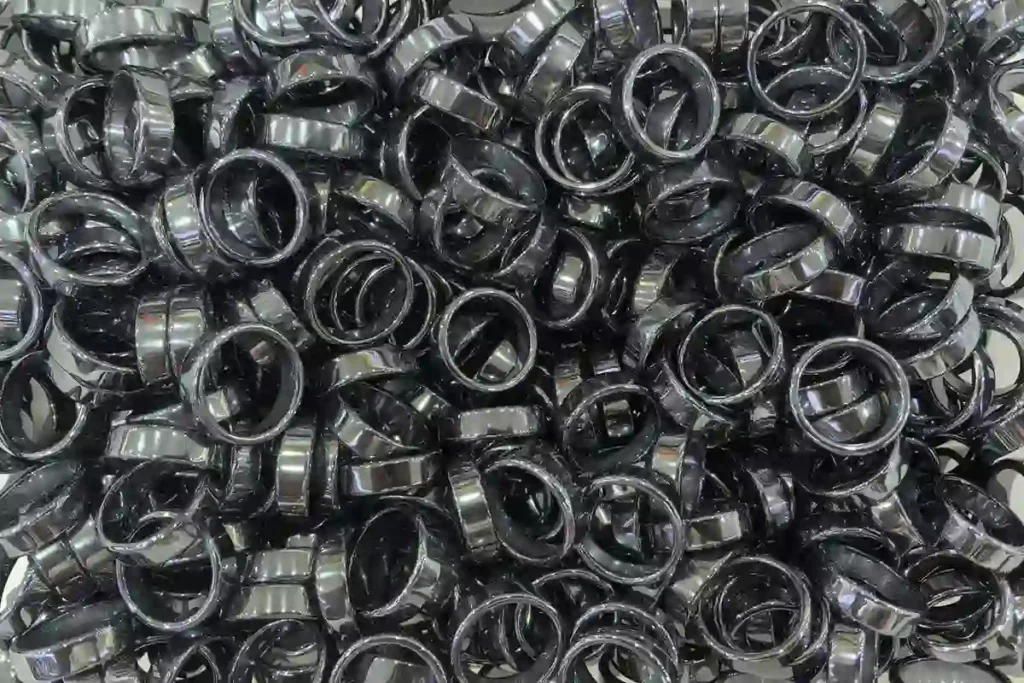
Natural polished hematite usually appears steel gray, silver gray, or nearly black. Its metallic to semi-metallic luster gives the surface a reflective shine, although matte and lightly polished pieces may look softer. Color can support identification, but it cannot prove authenticity because glass, resin, metal, and man-made magnetic materials may have a similar finish.
Weight provides another useful clue. Hematite has a high density, so a solid ring often feels heavier than plastic or resin of the same size. Buyers can compare several rings with matching dimensions, but they should not rely on weight alone. Other dense materials may create a similar impression.
The most distinctive mineral feature is hematite’s reddish-brown streak. An unpolished specimen can leave this color when rubbed across an unglazed porcelain streak plate. Magnetite normally leaves a black streak, which helps separate the two minerals. However, this test may scratch, chip, or permanently damage a finished ring.
Retailers should never perform a destructive test on stock they plan to sell. They can instead review material documents, compare samples, inspect weight and luster, and ask the supplier direct questions. When the material value or authenticity claim is important, professional gemological or mineral testing offers more reliable evidence than a single home test.
Why Magnetism Can Be Misleading
Magnetism alone cannot confirm whether a hematite ring is natural. Pure hematite usually shows little or no response to a common magnet. However, some natural specimens contain magnetite and may show weak attraction. This variation makes a simple magnet test useful as an initial check, but not as final proof.
A strongly magnetic ring often contains a manufactured material sold as magnetic hematite or hematine. It may resemble polished hematite in color, weight, and metallic shine, even though its composition differs from the natural mineral. These rings are not necessarily poor products, but sellers should not market them as untreated natural hematite.
The word “magnetic” can also lead customers to expect health effects. Claims that magnetic rings improve circulation, reduce pain, or treat medical conditions require reliable evidence and may create compliance problems. Retailers should focus on the ring’s material, appearance, size, and design instead.
Before placing a bulk order, buyers should ask whether the product is natural, reconstructed, synthetic, coated, or magnetic. A written material confirmation provides more useful information than a product title alone. Samples from the actual production batch can also help reveal differences in magnetism, color, weight, and finish.
Quality Checks for Retailers and Wholesale Buyers
Wholesale buyers should begin with the ring’s inner diameter, size label, width, and thickness. A small measurement difference can affect comfort because solid hematite bands cannot be adjusted. Buyers should measure samples with a ring gauge or caliper and compare the results with the supplier’s size chart.
Next, inspect the polish under clear light. The surface should look even and feel smooth, without sharp edges, deep scratches, flat spots, cracks, or chipped areas. Minor color variation may occur in natural material, but poor finishing should not be described as a natural feature. Extra attention is necessary around thin edges, where damage often begins.
Material disclosure also matters. Buyers need to know whether the rings contain natural hematite, man-made magnetic material, a coating, or another treatment. For rainbow styles, check color coverage, faded areas, peeling, and consistency between pieces. Photos should show actual stock rather than only a perfect sample.
Before approving a bulk shipment, randomly inspect rings from several bags or cartons. Compare their sizes, finish, color, weight, and packaging. Ask for close-up photos or a video if an in-person inspection is not possible. Clear quality standards agreed upon before production make later claims easier to resolve and help retailers provide accurate information to their customers.
My Experience Evaluating Hematite Jewelry
Material Identification Comes Before Marketing
Although I have more experience sourcing and supplying hematite bracelets and beads than hematite rings, I pay attention to the same basic material characteristics. Natural hematite normally has a noticeable weight, a dark metallic color, and a smooth shine after proper polishing. These qualities help me make an initial evaluation before discussing styles, packaging, or prices with a buyer.
One issue I always check is whether the item contains natural hematite or a man-made magnetic material. Many strongly magnetic products use the hematite name in the market, even though they are not made from the natural mineral. I do not think a seller should rely on the product name alone or describe every magnetic ring as natural hematite.
Material identification should come before any discussion of hematite ring benefits. If a customer expects a natural stone but receives a manufactured magnetic ring, a beautiful finish cannot correct that misunderstanding. For this reason, I would ask the factory to confirm the composition, treatment, magnetism, and available testing information before placing a wholesale order. Clear disclosure protects the buyer and makes the final product easier to describe honestly.
What I Would Check Before a Wholesale Order
Before confirming a wholesale order, I would first check the ring sizes, inner diameters, band widths, and thicknesses. Solid hematite rings cannot be adjusted, so inconsistent sizing can lead to customer complaints even when the surface looks good. I would also request samples from the available stock rather than judge quality from one carefully selected photo.
During inspection, I would look for cracks, chipped edges, deep scratches, uneven polish, and differences between batches. A ring should feel smooth on both the inside and outside. Thin edges need extra attention because they may break more easily after an impact. For rainbow styles, I would also check whether the color coating looks even and whether the supplier has clearly disclosed the treatment.
Packaging is another important point. I would not allow solid stone rings to move freely against each other during transport. Individual bags, foam layers, divided boxes, and a tightly packed outer carton can reduce friction and impact damage.
When customers ask about spiritual uses, I would explain them as traditional beliefs and personal experiences. Honest descriptions build more trust than exaggerated health promises, especially for retailers who need to answer questions from their own customers.
Looking for hematite rings or related hematite jewelry for your retail collection? Contact us on WhatsApp or send your requirements through our inquiry form. Please include your preferred material, ring sizes, finish, quantity, and packaging needs. If you are unsure whether to choose natural, magnetic, polished, matte, or rainbow styles, we can help you compare the available options. We recommend confirming samples and quality standards before placing a larger wholesale order.
Hematite Ring Price and Wholesale Buying Factors
What Affects Hematite Ring Price?
The Hematite Ring price depends first on the material. A natural solid hematite band, a man-made magnetic ring, and a metal ring set with hematite may look similar in photos, but they have different production costs. Buyers should confirm the composition before comparing quotations from different suppliers.
Ring size, width, and thickness also affect the cost. Larger or wider bands require more material and may need extra polishing. Faceted surfaces, carved patterns, inlays, and special shapes add processing steps. If the ring uses a metal setting, the type of metal, plating quality, and setting method can change the final price.
Rainbow colors may require an additional surface treatment. The coating method, color consistency, and durability influence both quality and cost. Custom logos, size labels, display cards, gift boxes, and individual packaging can raise the unit price as well.
Order quantity is another important factor. Larger orders may reduce the unit cost, but buyers should not choose a large quantity only to obtain a lower quotation. Samples, size accuracy, material disclosure, breakage rate, and finish consistency matter more than a small price difference. Shipping, import charges, and protective packaging should also be included when calculating the actual landed cost.
What Wholesale Buyers Should Confirm
Before placing an order, buyers should confirm the minimum order quantity, available sizes, size ratio, unit price, production time, and packaging method. A low quotation may not include size labels, individual bags, display cards, boxes, or protective materials. Asking for a complete cost breakdown makes different offers easier to compare.
Material details should appear in writing. The supplier needs to state whether the ring is natural hematite, man-made magnetic material, coated hematite, or another product. Buyers should also ask about treatments used on rainbow and metallic finishes. Clear information prevents misleading descriptions later.
A sample order provides useful evidence about size accuracy, comfort, polish, color, weight, and edge quality. However, one good sample cannot guarantee that every piece in a bulk order will match it. Buyers should agree on acceptable standards and request photos or videos from the actual production batch before shipment.
Packaging deserves the same attention as the rings. Each piece should have enough protection to prevent friction and impact. Wholesale buyers also need to confirm replacement or compensation terms for breakage and serious quality problems. The lowest wholesale price offers little value if inconsistent sizes, unclear materials, or damaged rings make the stock difficult to sell.
Disadvantages and Safety Considerations
Practical Downsides of Hematite Rings
A solid hematite ring has several practical disadvantages that buyers should understand. First, it cannot be adjusted or resized like an open metal band. If the measurement is slightly wrong, the ring may feel too tight or move loosely on the finger. Changes in temperature and temporary finger swelling can also affect the fit.
Weight is another consideration. Hematite has a high density, so a wide stone band may feel heavier than a similar ring made from resin or lightweight metal. Some people enjoy this solid feeling, while others find it uncomfortable during long periods of wear.
Hematite can also break after a hard impact. Dropping the ring on tile or concrete may cause cracks, chips, or complete breakage. Thin edges and existing internal weaknesses increase this risk. Surface scratches may develop when the ring rubs against harder stones, tools, or metal objects.
These downsides do not make hematite unsuitable for jewelry, but they affect how the ring should be sold and worn. Accurate sizing, careful handling, protective packaging, and clear care instructions can reduce complaints and help customers decide whether the material fits their daily routine.
When to Remove the Ring
Remove a hematite ring before exercising, lifting heavy objects, gardening, or working with tools. These activities can place pressure on the band or cause it to strike a hard surface. The ring may also catch on equipment, so people who work with machinery should follow workplace jewelry rules.
It is also safer to take the ring off before showering, swimming, washing dishes, or using household cleaners. Long contact with moisture, salt, chlorine, perfume, and cleaning chemicals may dull the surface or damage a rainbow coating. Dry hands before putting the ring back on.
Stop wearing it if the skin becomes red, itchy, swollen, or uncomfortable. A tight ring should be removed before swelling makes removal difficult. Anyone with an implanted medical device should follow medical and device-manufacturer advice before using strongly magnetic jewelry.
Hematite rings should never replace professional medical care. Claims about improving circulation, reducing pain, or treating anxiety lack reliable clinical support. Wearers can enjoy the ring’s appearance and traditional symbolism while maintaining realistic expectations about what jewelry can and cannot do.
How to Clean and Care for a Hematite Ring
Safe Cleaning Steps
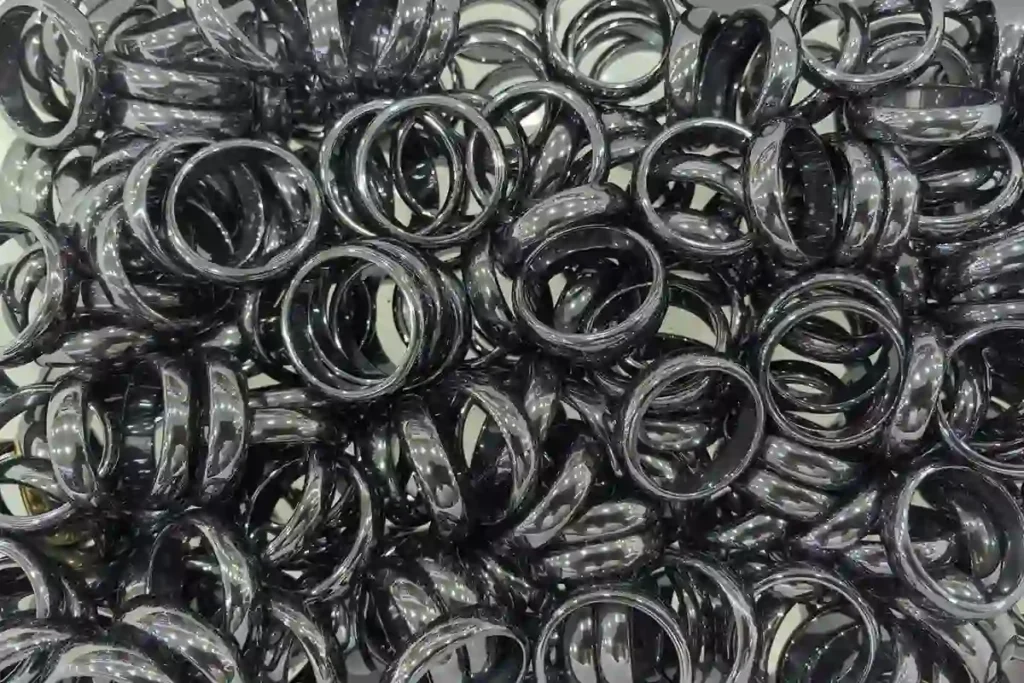
For regular cleaning, wipe the hematite ring with a soft, dry microfiber cloth. This removes fingerprints, light dust, and skin oils without scratching the polished surface. Use gentle pressure and check the edges for small chips or cracks while cleaning.
If dry wiping does not remove the dirt, lightly dampen the cloth with clean water and wipe the ring quickly. Do not leave the ring soaking in a bowl or hold it under running water for a long time. Dry the entire surface immediately, including the inside of the band and any narrow spaces around a metal setting.
Avoid bleach, acidic cleaners, salt water, ultrasonic machines, abrasive powders, and stiff brushes. These methods may dull the finish, damage a coating, or affect other materials used in the ring. Perfume, lotion, hairspray, and household chemicals can also leave residue on the surface.
Rainbow hematite requires extra care because its color may come from a surface treatment. Frequent rubbing or chemical exposure can cause uneven fading. A gentle cloth is usually enough. When the supplier provides specific care instructions for a coating or metal setting, follow those directions instead of using a general gemstone-cleaning method.
Storage and Daily Protection
Store a hematite ring separately in a soft pouch or a divided jewelry box. Keeping it away from harder gemstones and metal accessories reduces scratches and prevents the pieces from striking one another. Quartz, diamonds, and other hard materials can damage a polished surface during storage or travel.
Choose a dry location away from bathrooms, sinks, and areas with high humidity. Before storing the ring, wipe away moisture, sweat, lotion, and skin oils with a soft cloth. If the ring includes a metal setting or rainbow coating, keeping it dry can also help preserve its finish.
Do not place heavy jewelry on top of a solid hematite band. Pressure and impact may create cracks that remain difficult to see until the ring breaks. A padded travel case offers better protection than a loose pocket or handbag when carrying it away from home.
Retailers and wholesalers should apply the same principles to bulk packaging. Pack rings individually or place them in divided trays, then fill empty space inside the carton to limit movement. Regularly inspect stored stock for chips, scratches, moisture, or coating changes. Careful storage protects the appearance of each piece and reduces avoidable losses before sale.
Frequently Asked Questions
What Finger Should I Wear a Hematite Ring On?
You can wear a hematite ring on any finger that feels comfortable. Some spiritual traditions connect the index finger with confidence and direction, while the middle finger represents balance and responsibility. Others wear it on the ring finger for a more personal meaning.
There is no scientific or universal rule that requires a specific placement. Choose a finger based on the ring’s size, your daily activities, and the other jewelry you wear. A solid band should fit securely without restricting movement or pressing tightly against the skin.
Who Should Not Wear Hematite Stone?
People who find heavy rings uncomfortable or who regularly work with tools and machinery may prefer not to wear solid hematite jewelry. Anyone who develops redness, itching, swelling, or skin discomfort should remove the ring and seek medical advice if the reaction continues.
Strongly magnetic products require additional caution. People with pacemakers or other implanted medical devices should follow guidance from their doctor and the device manufacturer. Hematite should also not be worn as a replacement for medical treatment, regardless of its traditional spiritual meaning.
Do Hematite Rings Actually Work?
Hematite rings can work as meaningful jewelry, a focus reminder, or part of a personal spiritual practice. Some wearers report feeling calmer, more grounded, or more confident, but these experiences are subjective and may differ from person to person.
Scientific evidence does not show that a hematite ring can improve circulation, remove negative energy, relieve pain, or treat a health condition. Its value may come from its symbolism, appearance, and the habits connected with wearing it. Customers should enjoy the traditional hematite ring benefits without replacing professional medical or mental health care.
What Are the Downsides of Wearing a Hematite Ring?
A solid hematite ring may feel heavier than other jewelry, and its fixed size cannot be adjusted. It can crack or break after hitting tile, concrete, tools, or another hard surface. The polished finish may also develop scratches through repeated contact with harder materials.
Moisture and chemicals can dull the surface or damage a rainbow coating. Remove the ring before bathing, swimming, exercising, or doing heavy work. Proper sizing, careful handling, and separate storage can reduce these problems, but they cannot make a natural stone ring completely resistant to damage.
How Can I Tell If My Hematite Ring Is Real?
Natural hematite usually feels dense and shows a steel-gray to nearly black metallic surface when polished. It normally has little or no magnetic attraction, although specimens that contain magnetite may respond weakly. A strongly magnetic ring may contain a manufactured material commonly sold as magnetic hematite.
A reddish-brown streak is a useful mineral clue, but a streak test can damage finished jewelry. For this reason, rely on clear material disclosure, supplier records, and professional testing when authenticity matters. Color, weight, or magnetism alone cannot provide a final answer.
Conclusion
The most commonly discussed hematite ring benefits include grounding, focus, confidence, emotional balance, and a sense of personal strength. These ideas come from crystal traditions and individual experiences rather than established medical evidence. A hematite ring can still serve as meaningful jewelry, a daily reminder, or a simple accessory with a strong metallic appearance.
Before buying, customers should consider the material, ring size, weight, finish, and daily care requirements. Natural hematite, man-made magnetic material, and rainbow-coated products should not be presented as if they are identical. Wholesale buyers also need to inspect size consistency, polish, edges, cracks, treatments, and protective packaging before approving a larger order.
If you are looking for hematite rings or related hematite jewelry in wholesale quantities, contact us through WhatsApp or submit your requirements using our inquiry form. Tell us the material, sizes, finish, quantity, and packaging you need. We can discuss available options, confirm the product details, and help you evaluate samples before you start a larger order.
Disclaimer
The information in this guide is provided for educational and general reference purposes only. The spiritual meanings and benefits associated with hematite rings come from traditional beliefs and personal experiences. They have not been scientifically proven and should not be considered medical advice. Hematite jewelry cannot diagnose, treat, cure, or prevent any physical or mental health condition. Always consult a qualified healthcare professional about health concerns or before using magnetic jewelry near an implanted medical device.