
Angelite Stone Meaning, Properties, Benefits and Uses
Written by: Rocrystal Sourcing & QC Team, Last updated: September 7, 2026
Angelite is known for its soft blue color and peaceful appearance. Many people explore Angelite Stone Meaning because they connect this gentle crystal with calm communication, compassion, and spiritual awareness. Its sky-blue shade also makes it attractive for jewelry, meditation sets, and crystal collections. However, Angelite is more than a symbolic stone. Its mineral composition, low hardness, surface quality, and care requirements are also important, especially for buyers choosing it for regular use or resale.
The angelite spiritual meaning comes mainly from modern crystal traditions and personal beliefs. Crystal users often associate blue Angelite with the throat chakra, thoughtful expression, emotional calm, and a stronger sense of spiritual connection. Some people hold it during meditation, place it in a quiet room, or wear it as jewelry. These practices are personal and should not be treated as proven medical treatments.
This guide explains the angelite crystal meaning, physical properties, traditional benefits, chakra connections, and practical uses. It also covers Angelite bracelets, necklaces, rings, quality differences, prices, cleaning methods, and safe storage. Retailers and wholesale buyers will find additional guidance on evaluating polished surfaces, choosing suitable products, and protecting this relatively soft stone during packaging and international transportation.
What Is Angelite?
Angelite as a Blue Variety of Anhydrite
Angelite is the commercial name for a pale blue to blue-gray variety of anhydrite. This mineral consists of calcium sulfate and has the chemical formula CaSO₄. Unlike gypsum, anhydrite does not contain water within its mineral structure. The name “Angelite” comes from its gentle color and the spiritual associations that developed around it.
Natural Angelite usually has an opaque or slightly translucent appearance. Manufacturers shape the material into beads, bracelets, pendants, tumbled stones, palm stones, spheres, and small carvings. Its soft blue tone makes it popular with crystal collectors, jewelry designers, gift shops, and retailers that sell meditation or spiritual products.
Understanding the mineral behind Angelite Stone Meaning also helps buyers choose and care for it correctly. Angelite is not a type of quartz, and it is not the same mineral as Celestite. Because the stone is relatively soft, its polished surface can develop scratches or chipped edges if handled carelessly. Buyers should consider both its symbolic meaning and its physical properties when selecting Angelite products.
How Angelite Forms
Angelite forms from anhydrite, a calcium sulfate mineral commonly found in sedimentary environments. These deposits can develop when seawater or mineral-rich water evaporates and leaves layers of sulfate minerals behind. Over long periods, changes in temperature, pressure, and surrounding rock conditions influence the structure and appearance of the material.
Anhydrite is closely related to gypsum, but the two minerals contain different amounts of water within their structures. Gypsum contains water molecules, while anhydrite does not. Under suitable geological conditions, one mineral may change into the other. However, this natural relationship does not mean that every piece of gypsum will become blue Angelite.
The attractive blue color of angelite crystals is uncommon compared with white, gray, or colorless anhydrite. Natural pieces may contain pale areas, cloudy patterns, veins, or uneven color distribution. These variations are part of the stone’s formation rather than automatic signs of poor quality. Still, wholesalers should examine color, stability, polishing, and visible damage when comparing different batches.
What Does Angelite Look Like?
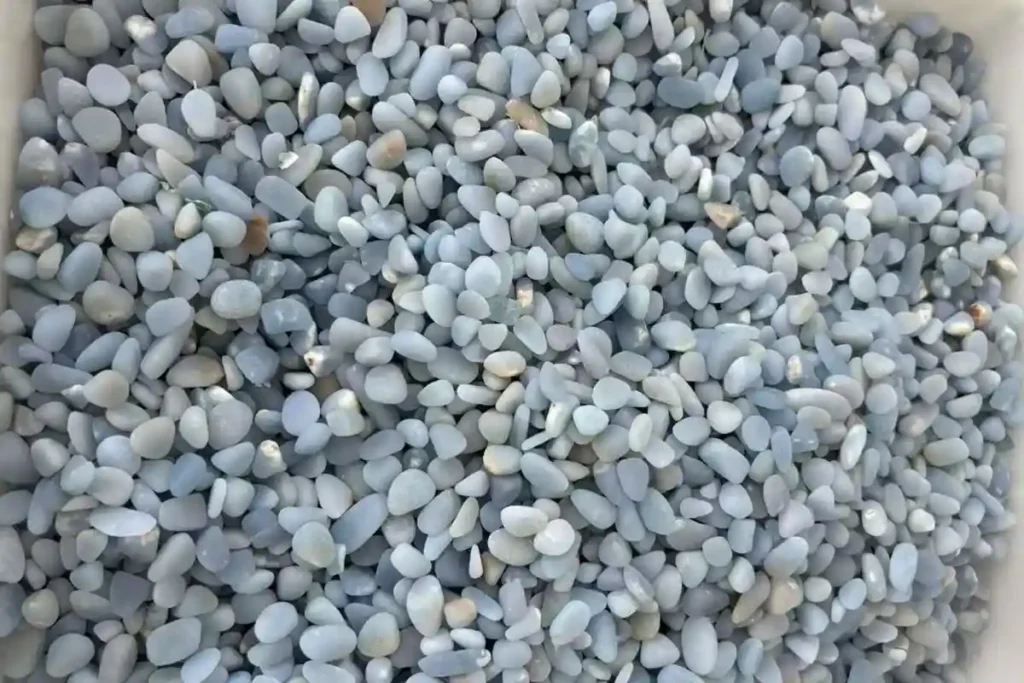
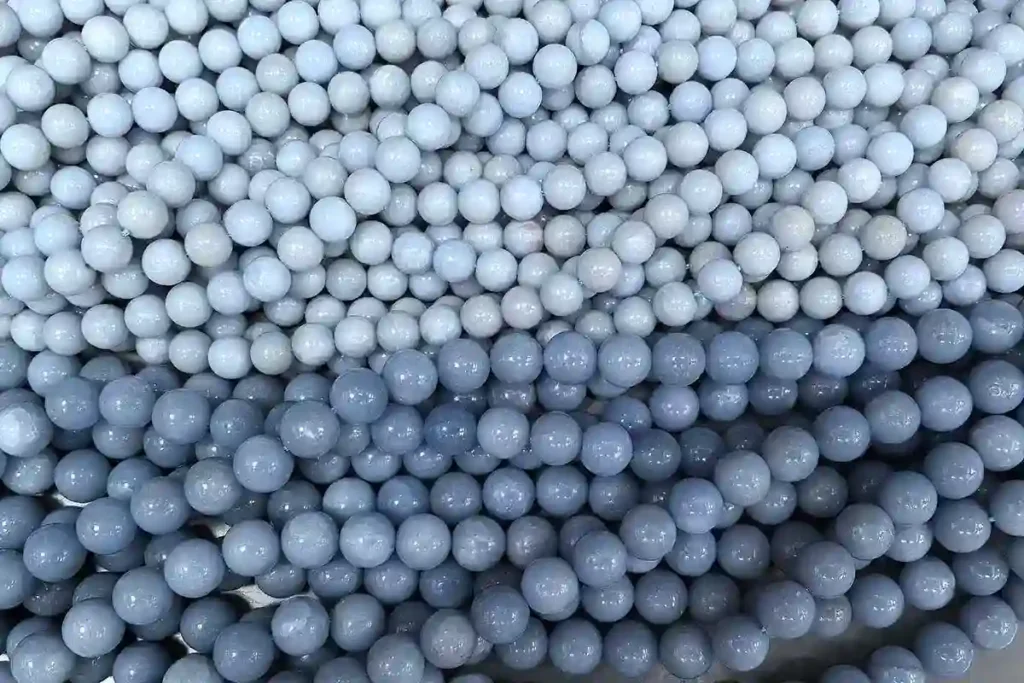
Natural Angelite usually appears in pale blue, powder blue, or blue-gray tones. Some pieces display an even color, while others contain cloudy white areas, fine lines, darker spots, or irregular patterns. Most polished products are opaque, although thinner edges may look slightly translucent under strong light. Its gentle blue color is the feature that makes the stone easy to recognize.
The appearance can vary between raw material, beads, tumbled stones, and carvings. Polishing often gives a blue Angelite crystal a smooth, soft luster rather than the glass-like shine seen in quartz. Color depth may also change under different lighting. Therefore, wholesale buyers should review photos and videos taken in natural light before confirming a large order.
Natural variation does not always mean low quality, but buyers should separate mineral characteristics from processing problems. White patches and subtle color differences may occur naturally. Deep scratches, chipped edges, poorly drilled holes, and rough polishing usually result from production or handling. A good Angelite gemstone should match the agreed grade, size range, surface standard, and overall color requirement.
Angelite History, Meaning and Symbolism
The History and Name of Angelite
Angelite is a relatively modern name in the gemstone market. The pale blue material became commercially known during the late twentieth century, and gemological testing identified it as a form of anhydrite. Unlike stones connected with well-documented ancient jewelry traditions, Angelite does not have a clear history of use in ancient Egypt, Greece, or Rome.
The name comes from the stone’s soft sky-blue appearance and its similarity to colors commonly associated with angels and the heavens. This connection helped shape the modern angelite gemstone meaning. Over time, crystal users began linking it with peace, protection, gentle communication, and spiritual awareness.
Much of the meaning of Angelite comes from modern crystal traditions rather than ancient historical records. Retailers should be careful with claims that describe it as an ancient healing stone unless reliable evidence supports them. A more accurate description explains that Angelite is a modern commercial gemstone with symbolic associations inspired by its name, calming color, and use in contemporary spiritual practices.
Angelite Stone Meaning and Symbolism
The central Angelite Stone Meaning is connected with peace, compassion, gentle communication, and spiritual awareness. Its pale blue color resembles an open sky, which helps explain why many people view it as a symbol of calmness and emotional space. Some crystal users also choose it as a reminder to slow down, listen carefully, and respond with greater patience.
The angelite crystal meaning is closely related to honest but considerate expression. People may carry the stone before a difficult conversation, place it near a journal, or hold it while reflecting on their feelings. In these situations, Angelite acts as a personal symbol that supports a chosen intention rather than directly controlling thoughts or emotions.
Angelite also symbolizes connection in modern spiritual practices. Depending on personal beliefs, this may mean feeling closer to one’s inner voice, other people, or a spiritual tradition. These interpretations are subjective and can differ between users. They should be presented as cultural associations and personal experiences, not scientifically proven effects or guaranteed results.
What Does Angelite Represent in Modern Crystal Practice?
In modern crystal practice, Angelite often represents inner peace, mindful communication, and a willingness to understand others. Some users keep it nearby when they want to create a quieter atmosphere or become more aware of their words and reactions. Its meaning is usually personal, so two people may use the same stone for different intentions.
The angelite crystal spiritual meaning also includes ideas about intuition, spiritual guidance, and connection with angels. People may hold Angelite during meditation, include it in a personal ritual, or place it beside meaningful objects. These activities reflect individual spiritual beliefs. They do not prove that the stone can contact supernatural beings or predict future events.
Because of these gentle associations, Angelite often appears in beginner crystal sets, meditation kits, and thoughtful gifts. Retailers may describe the metaphysical properties of Angelite as traditional or symbolic qualities. This language lets customers explore the stone’s spiritual significance without presenting personal beliefs as established scientific facts.
Angelite Crystal Benefits and Healing Properties
Spiritual and Metaphysical Properties of Angelite
The spiritual and metaphysical properties of Angelite are commonly associated with peace, reflection, and a deeper awareness of personal beliefs. Many crystal users hold the stone during meditation because its pale blue appearance helps create a quiet visual focus. Others use it as a reminder to approach spiritual practices with patience, openness, and compassion.
Some traditions connect Angelite spiritual properties with angels, spirit guides, and higher levels of awareness. These ideas explain why the stone is sometimes called a high-vibration crystal. However, “vibration” in this context is a spiritual expression rather than a scientifically measured feature of the mineral. Experiences can differ widely from one person to another.
The spiritual side of Angelite Stone Meaning does not require complicated rituals. A person may simply hold the stone, breathe slowly, and focus on a clear intention. Angelite can support the atmosphere of a personal practice, but it cannot guarantee spiritual messages, psychic abilities, or contact with supernatural beings. These associations should always be understood as matters of belief.
Emotional and Mental Associations
Many people explore Angelite crystal benefits when they want a physical reminder to slow down and respond more calmly. Its gentle blue color may suit quiet activities such as meditation, breathing exercises, or writing in a journal. Holding the stone can become part of a personal routine focused on patience, self-awareness, and thoughtful communication.
Angelite is also associated with compassion and emotional balance in modern crystal traditions. Some users keep it nearby during stressful conversations or periods of change. The stone does not remove difficult feelings, but it may remind the user to pause, listen, and consider a situation more carefully before reacting.
These Angelite benefits are based mainly on personal experience and spiritual belief. Angelite has not been proven to treat anxiety, depression, trauma, or any other mental health condition. Anyone facing ongoing emotional distress should speak with a qualified healthcare professional. The crystal may be used as a personal symbol or comforting object, but it should not replace appropriate medical or psychological support.
Angelite and Communication
Angelite is often connected with clear, honest, and considerate communication. Its traditional link with the throat chakra helps explain this association. Some people carry the stone before a meeting, presentation, or important conversation as a reminder to express their thoughts calmly. Others place it beside a journal while organizing feelings that may be difficult to explain aloud.
The Angelite spiritual meaning also emphasizes listening. Good communication involves understanding another person instead of only preparing a reply. During a disagreement, the stone may serve as a visual prompt to pause, choose words carefully, and leave room for another point of view. This simple practice can support a more thoughtful approach to conversation.
However, Angelite properties cannot control how another person thinks, speaks, or reacts. The stone does not automatically solve conflicts or create better relationships. Its value comes from the intention a user connects with it. Real improvement still depends on patience, respectful behavior, honest expression, and a willingness to listen.
Understanding Physical Healing Claims
Some sources connect Angelite healing properties with the throat, thyroid, bones, inflammation, or physical recovery. These claims are common in crystal traditions, but reliable medical research has not shown that Angelite can diagnose, prevent, or treat health conditions. The stone’s calcium sulfate composition does not mean that wearing or holding it provides calcium to the body.
People may still include Angelite in meditation, relaxation, or other personal wellness routines. Its color and texture can provide a pleasant object of focus, while the practice itself may encourage a quiet moment. However, these experiences are subjective and should not be described as proven physical Angelite crystal benefits.
Angelite must never replace professional medical advice, medication, testing, or treatment. Anyone with pain, illness, or continuing symptoms should contact a qualified healthcare provider. Sellers should also avoid promises such as “cures,” “heals,” or “guarantees recovery.” Clear and responsible wording allows customers to appreciate traditional Angelite stone properties without confusing spiritual beliefs with medical evidence.
Angelite Chakra, Zodiac and Spiritual Connections
The Throat Chakra Connection
Angelite is most commonly associated with the throat chakra, which is linked with communication, truth, and self-expression in modern chakra traditions. This connection supports a major part of Angelite Stone Meaning. People may choose the stone when they want to express an idea more clearly, speak with greater kindness, or become more confident during an important conversation.
A simple Angelite crystal chakra practice involves holding the stone near the upper chest rather than placing it directly on the throat. The user can breathe slowly and think about one message they want to communicate honestly. Angelite jewelry may also serve as a visible reminder to listen carefully and choose words with greater awareness.
The relationship between Angelite and the throat chakra is spiritual rather than medical. Wearing the stone cannot treat throat pain, thyroid problems, or speech disorders. Its role is symbolic and depends on the user’s intention. These Angelite spiritual properties can support a personal meditation practice, but they should never replace appropriate healthcare or professional communication support.
Angelite and the Third Eye Chakra
Some crystal traditions also connect Angelite with the third eye chakra, which represents intuition, awareness, and inner reflection. People may hold the stone during meditation when they want to observe their thoughts without reacting immediately. The soft blue color provides a gentle point of focus and can support a quieter setting for personal reflection.
Within the Angelite crystal spiritual meaning, intuition does not need to mean predicting future events. It may simply describe noticing emotions, habits, or concerns that are easy to ignore during a busy day. Writing down these observations after meditation can help users understand what they experienced and decide whether any practical action is needed.
Angelite is sometimes described as a high-vibration stone because of its connection with spiritual awareness. However, this is part of the traditional Angelite metaphysical properties, not a scientifically measured vibration. Experiences remain personal and may vary considerably. The stone cannot guarantee visions, psychic abilities, accurate predictions, or messages from spiritual beings.
Angelite Zodiac Connections
Angelite is often connected with Aquarius and Pisces in modern crystal traditions. Aquarius is associated with ideas, communication, and humanitarian thinking, while Pisces is linked with sensitivity, intuition, and compassion. These themes overlap with the peaceful and reflective qualities commonly included in the Angelite gemstone meaning.
Some sources also recommend Angelite for Gemini because of its connection with communication. However, these associations are not universal, and different crystal guides may name different zodiac signs. Angelite is not an official or traditional birthstone, so people do not need to follow a particular astrological sign when choosing it.
Anyone can wear or use a blue Angelite crystal based on personal preference, color, intention, or jewelry style. A retailer can mention common zodiac connections, but should avoid presenting them as fixed rules. The Angelite spiritual meaning is broad enough to appeal to customers who value calmness and thoughtful expression, regardless of their birth date or astrological beliefs.
How to Use Angelite Crystals
Using Angelite for Meditation
Angelite can be included in a simple meditation practice without complicated tools or rituals. Choose a quiet place, sit comfortably, and hold the stone gently in one hand. Take several slow breaths while focusing on an intention such as calm communication, patience, or self-reflection. Beginners can start with five to ten minutes and increase the time gradually.
During meditation, notice the stone’s color, weight, temperature, and texture. This physical focus may help bring attention back when the mind begins to wander. Some people also place Angelite nearby instead of holding it. Both methods support the reflective side of Angelite Stone Meaning, so users can choose whichever feels more comfortable.
The traditional Angelite crystal benefits connected with meditation come from spiritual beliefs and personal experience. The stone cannot guarantee visions, messages, or immediate emotional changes. Its main role is to support the atmosphere and intention of the practice. Regular breathing, realistic expectations, and a comfortable setting remain more important than using the Angelite crystal in one exact way.
Placing Angelite at Home or Work
Angelite can be placed in a meditation area, reading corner, bedroom, or another quiet part of the home. Its soft blue color works well in spaces intended for rest and reflection. Some people keep Angelite crystals beside a journal or meaningful object as a reminder to communicate calmly and approach the day with greater patience.
At work, a small piece of blue Angelite can sit on a stable desk or shelf. It may serve as a visual reminder to pause before answering difficult messages or entering an important meeting. Place it where it can be seen without being handled constantly, because frequent contact with hard objects may scratch its polished surface.
The physical Angelite stone properties also affect where it should be displayed. Keep the stone away from sinks, bathrooms, humid areas, direct sunlight, and the edge of a shelf. Avoid placing it with harder minerals that may rub against it. A padded stand, soft cloth, or individual display box provides safer support and reduces accidental damage.
Using Angelite Before Sleep
Some people keep Angelite near the bed as part of a quiet evening routine. They may hold the stone while breathing slowly, reviewing the day, or setting aside stressful thoughts before sleep. The gentle color and traditional Angelite benefits can make it a meaningful object for relaxation, even though the experience differs from person to person.
Angelite is also connected with dreams and spiritual awareness in modern crystal traditions. However, it cannot guarantee deeper sleep, prevent nightmares, or produce meaningful dreams. Anyone with continuing sleep problems should look at practical factors such as stress, room conditions, and daily habits, and seek professional advice when necessary.
Place the stone on a stable bedside table rather than directly under a pillow. Pressure and repeated movement may scratch or chip this relatively soft mineral. A small tray, fabric pouch, or padded box offers better protection. These simple precautions allow users to explore Angelite spiritual properties while keeping the stone clean, dry, and away from accidental damage.
Can You Wear Angelite Every Day?
Angelite can be worn regularly, but it requires more care than harder gemstones. Its relatively low hardness makes the polished surface vulnerable to scratches, chips, and wear. An Angelite crystal bracelet may rub against desks, doors, metal watches, or other jewelry, so removing it before physical work can help preserve its appearance.
An Angelite crystal necklace is often easier to protect because it usually receives less direct impact. Rings face the greatest risk because hands contact hard surfaces throughout the day. Regardless of the jewelry type, remove Angelite before bathing, swimming, exercising, cleaning, or applying chemical products. Store each piece separately when it is not being worn.
Daily wear should also fit the user’s lifestyle. Someone working at a desk may find Angelite jewelry easier to manage than a person doing frequent manual work. Regular inspection can identify loose components, stretched cords, or new surface damage. Careful handling allows customers to enjoy Angelite without assuming that this soft stone can withstand the same treatment as quartz or agate.
Looking for Wholesale Angelite?
If you need Angelite beads, bracelets, pendants, tumbled stones, or other crystal products for resale, tell us your preferred size, quantity, quality grade, and target price. We can provide current stock photos, packaging details, MOQ information, and a wholesale quotation. Contact us through WhatsApp for a faster discussion, or submit your purchasing requirements through our inquiry form. We will help you compare suitable options based on your market and order size.

Choosing Angelite Jewelry for Retail and Wholesale
Angelite Crystal Bracelets
An Angelite crystal bracelet is easy to display, wear, and include in gift sets. Common bead sizes give retailers options for delicate designs, standard unisex bracelets, or larger statement pieces. Before placing a bulk order, buyers should confirm bead diameter, bracelet length, hole size, cord type, color range, and acceptable natural variations.
Quality inspection is especially important because Angelite is softer than quartz or agate. Each bracelet should be checked for deep scratches, chipped holes, flat areas, uneven polishing, and loose or damaged elastic. Beads can also rub against one another during packing, so rows should not be compressed tightly inside the shipping carton.
Color consistency depends on the selected grade and available raw material. Some customers prefer evenly matched pale blue beads, while others accept white patches and natural tonal differences at a more accessible price. Retailers should request photos of the current batch and agree on the quality standard before production. Clear grading helps prevent differences between customer expectations and the goods received.
Angelite Crystal Necklaces and Pendants
An Angelite crystal necklace often receives less direct impact than a bracelet or ring, making it a practical choice for this relatively soft stone. Simple pendants highlight the pale blue color, while beaded necklaces create a more noticeable display. Both styles work well for crystal shops, jewelry retailers, and gift collections.
Wholesale buyers should inspect the stone surface, drilled holes, pendant edges, clasps, jump rings, and other metal components. Poorly finished holes may damage stringing material, while sharp or chipped edges can lower the product’s retail value. For matched necklaces, buyers should also confirm bead size, overall length, color consistency, and the arrangement of natural white areas.
Packaging must prevent the stone from rubbing against chains, clasps, or harder jewelry. Each Angelite stone necklace or pendant should be separated with a soft bag, tissue, or protective layer. Small cardboard boxes offer additional support for low-quantity orders. Careful packing preserves the polished surface and gives retailers a better product to present to their customers.
Angelite Crystal Rings
An Angelite crystal ring needs more protection than most other Angelite jewelry. Rings regularly touch desks, doors, tools, and other hard surfaces, which increases the risk of scratches or chipped edges. For this reason, Angelite rings are better suited to occasional, mindful wear than continuous everyday use.
The setting also affects durability. A bezel or another protective design can cover more of the stone’s edge than an exposed setting. Wholesale buyers should inspect the stone, setting, adhesive, band finish, and connection points before accepting a batch. The ring size, metal type, stone dimensions, and any surface treatment should also be confirmed before production.
Retailers should give customers clear care instructions. An Angelite ring should be removed before washing hands, bathing, swimming, exercising, cleaning, or doing manual work. It should also be stored separately from harder jewelry. These practical details help customers understand the physical Angelite stone properties and reduce damage caused by unrealistic expectations about its durability.
Carvings, Tumbled Stones and Gift Sets
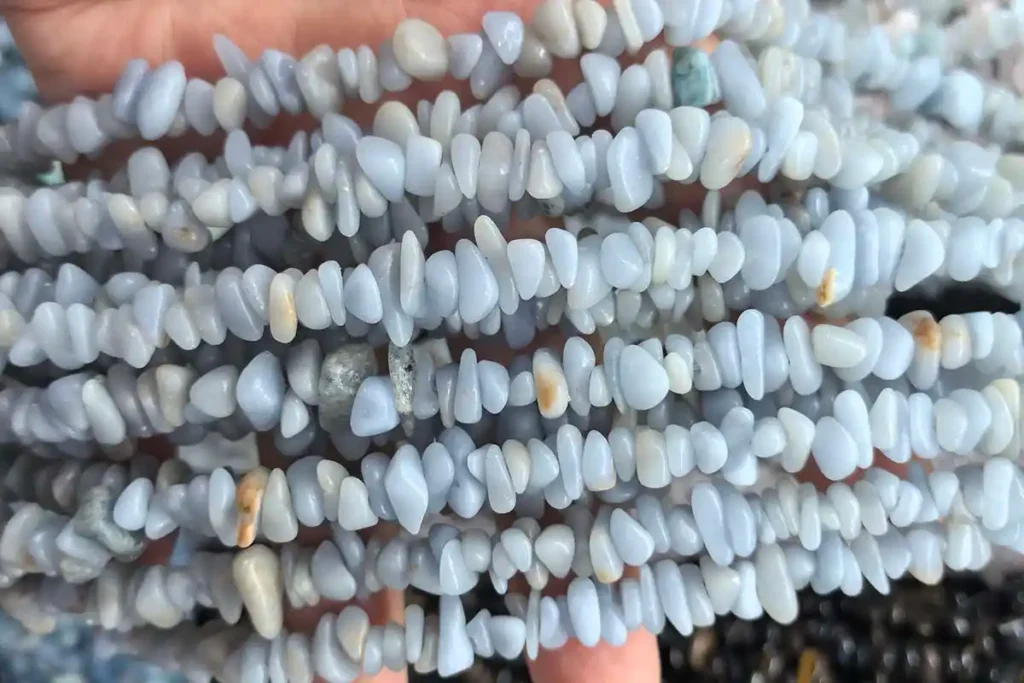
Angelite is also available as tumbled stones, palm stones, hearts, spheres, and small carvings. These forms make the material suitable for display, meditation, gifting, and beginner crystal sets. The soft blue color pairs easily with white, gray, or other pastel stones, giving retailers several options for creating coordinated collections.
Wholesale buyers should inspect carved products carefully. Thin wings, pointed tips, narrow edges, and detailed shapes are more likely to chip during production or transportation. Tumbled stones should have a reasonably smooth finish without deep scratches, sharp edges, or excessive flat areas. Size ranges and natural color variations should be confirmed before ordering.
Gift sets can combine Angelite crystals with information cards, fabric pouches, or simple display boxes. However, harder stones should not rub directly against Angelite inside the packaging. Individual compartments or soft wrapping provide better protection. Thoughtful presentation helps communicate the traditional Angelite crystal benefits while keeping each piece secure and suitable for retail display.
Angelite Quality, Price and Buying Guide
How to Evaluate Angelite Quality
Angelite quality should be judged through color, polishing, shape, size, and overall condition. Many buyers prefer a clear pale blue or blue-gray tone, but natural pieces may contain white areas, cloudy patterns, fine lines, or uneven shades. These variations do not automatically indicate poor quality. The accepted appearance should depend on the grade and price agreed before ordering.
Processing problems require separate attention. Deep scratches, broken edges, damaged holes, rough surfaces, and obvious flat spots can reduce retail value. Beads should also be checked for diameter, hole alignment, strand length, and general matching. Under normal lighting, the actual batch may look different from samples photographed under strong lights or edited with filters.
For wholesale orders, buyers should request current photos and videos rather than relying only on standard images. A clear grading agreement makes Angelite Stone Meaning products easier to source consistently. Suppliers and buyers should confirm the acceptable color range, size tolerance, natural inclusions, surface standard, and packaging method before production or shipment.
Is Angelite the Same as Celestite?
Angelite and Celestite can both appear pale blue, but they are not the same mineral. Angelite is the commercial name for blue anhydrite, which is composed of calcium sulfate with the formula CaSO₄. Celestite, also called Celestine, is a different mineral composed of strontium sulfate with the formula SrSO₄.
Their usual forms also look different. Angelite often appears as opaque or slightly translucent polished beads, tumbled stones, palm stones, and carvings. Celestite is widely recognized for its pale blue crystal clusters, although it may also occur in other forms. Color alone is not enough to identify either material accurately.
Buyers should confirm the mineral name, product form, and supplier description before purchasing. A seller should not label Celestite as Angelite simply because both stones are blue or share similar spiritual associations. Understanding what is Angelite helps retailers give customers accurate information and avoid mixing two separate gemstones in inventory, packaging, or sales descriptions.
What Determines Angelite Stone Price?
The Angelite Stone price depends on color, size, polishing, shape, quality grade, and order quantity. Pieces with an attractive blue tone, fewer distracting white areas, smooth surfaces, and consistent dimensions generally cost more. Larger palm stones, matched bead strands, detailed carvings, and finished jewelry also require more material or labor.
Natural variation makes fixed pricing difficult. Two batches with the same product name may have different color saturation, surface condition, or usable yield from the raw material. Production costs can also change when buyers request tight size tolerances, highly consistent colors, custom designs, special accessories, or individual retail packaging.
Wholesale buyers should compare the actual quality instead of choosing only by the lowest quotation. A cheaper batch may contain more scratches, irregular beads, pale areas, or poorly finished pieces. Request current photos, size details, grade information, MOQ, and packaging specifications before confirming an order. This provides a more accurate comparison of each Angelite gemstone offer and reduces unexpected quality differences.
Wholesale Buying Tips for Retailers
Before ordering Angelite crystals in bulk, buyers should confirm the material, product type, dimensions, quantity, color range, and quality grade. The supplier should also understand which natural variations are acceptable. A pale area or cloudy pattern may be normal, while deep scratches, chipped edges, broken holes, and poor polishing are production or handling concerns.
Current batch photos and videos provide more useful information than a standard sample image. Buyers can request views under normal lighting, close-ups of the surface, and measurements of representative pieces. For beads and an Angelite crystal bracelet, confirm bead diameter, hole size, strand length, bracelet size, and cord quality before production.
A small trial order may help new retailers evaluate local demand and verify the supplier’s grading. Larger buyers should discuss size tolerance, color sorting, inspection, packing layers, lead time, and replacement terms in advance. Since Angelite stone is relatively soft, protective packaging must be treated as part of the order specification rather than an optional detail.
How to Clean, Store and Protect Angelite
Can Angelite Go in Water?
Angelite should not be soaked in water or cleaned with saltwater. It is a relatively soft form of anhydrite, and repeated or prolonged exposure to moisture may affect its surface and condition. Water can also enter drilled holes, cords, adhesives, or metal components used in finished jewelry, creating additional maintenance problems.
Brief accidental contact does not mean the stone will immediately dissolve or become completely damaged. If an Angelite stone gets wet, remove it from the water and dry it gently with a clean, soft cloth. Do not use heat, a hair dryer, or direct sunlight to speed up the process, as sudden temperature changes may create further risk.
Understanding these physical limits is an important part of Angelite Stone Meaning and ownership. Remove Angelite jewelry before bathing, swimming, washing dishes, or using household cleaners. Dry storage and gentle handling are safer than testing whether a particular piece can tolerate water. These precautions help protect the polish, surface, stringing materials, and jewelry components.
How to Cleanse and Charge Angelite
Angelite can be cleansed with dry and gentle methods that do not expose the stone to water or abrasive materials. Wipe the surface carefully with a clean microfiber cloth to remove dust and fingerprints. For spiritual cleansing, some users prefer sound, smoke, moonlight, or simply placing the stone in a quiet location while setting a personal intention.
Avoid saltwater, chemical cleaners, steam, ultrasonic machines, and stiff brushes. Angelite should not be buried in damp soil or placed directly against rough salt crystals. These methods may scratch its soft surface or introduce unwanted moisture. Strong sunlight is also unnecessary, especially when a shaded and stable location provides a safer option.
“Charging” or “activating” Angelite belongs to personal spiritual practice rather than mineral care. A user may hold the Angelite crystal, focus on a purpose, and connect it with qualities such as patience or thoughtful communication. These rituals may support the traditional Angelite spiritual properties, but they do not physically increase the stone’s power or change its mineral composition.
How to Store Angelite Jewelry
Angelite jewelry should be stored separately from harder gemstones and metal accessories. Quartz, agate, steel, and other durable materials can scratch its polished surface when pieces move against one another. A soft fabric pouch, padded jewelry box, or small cardboard box provides simple protection for an Angelite crystal bracelet, necklace, or ring.
Keep the storage area dry, cool, and away from direct sunlight. Do not leave Angelite beside a sink, humid window, or bathroom shelf. Bracelets and bead strands should lie naturally instead of being compressed under heavier items. Necklaces should be arranged so that chains, clasps, and pendants do not rub against the stone.
Retailers should follow similar precautions in display areas and stockrooms. Individual compartments help prevent repeated contact between products, while padded trays reduce the risk of accidental drops. Before shipping an Angelite crystal necklace or Angelite crystal ring, inspect the surface and components again. Proper storage preserves the finish and makes final quality control easier.
My Experience Handling and Shipping Angelite
In my experience, Angelite is softer than many other stones we supply. Its polished surface can be scratched when pieces rub against one another or touch harder materials. For this reason, the factory places a thick layer of bubble wrap at the bottom of the carton before sending Angelite products to our warehouse. This extra layer helps reduce pressure, movement, and direct contact with the box.
When preparing an order for international shipping, we try to place Angelite products in the middle of the outer carton instead of close to its walls. We add bubble wrap both above and below the stones to limit movement and provide additional protection. We also check the surfaces, edges, drilled holes, and polishing before packing the goods.
Packaging is adjusted according to the order size. Larger wholesale orders receive layered protection based on the product type and quantity. If a customer orders only a few bead strands or Angelite crystal bracelets, we pack them in a small cardboard box with plenty of bubble wrap inside. This method takes more time, but it lowers the risk of scratches, chipped edges, and unnecessary after-sales problems.
Frequently Asked Questions About Angelite
What Is the Stone Angelite Good For?
Angelite is commonly used for meditation, personal reflection, jewelry, crystal collections, and meaningful gifts. In modern crystal traditions, Angelite crystal benefits are associated with calm communication, compassion, patience, and spiritual awareness. Some people hold it while meditating or keep it nearby as a reminder to speak and listen more thoughtfully. These Angelite benefits come from personal beliefs and experiences. The stone has not been proven to treat physical or mental health conditions and should not replace professional care.
Where Should You Put Angelite in the Home?
Angelite can be placed in a meditation area, reading corner, bedroom, or quiet workspace. Some people keep Angelite crystals near a journal or on a bedside table to support a calm and reflective atmosphere. Choose a stable, dry surface where the stone will not fall or rub against harder objects. Avoid bathrooms, sinks, humid areas, and strong direct sunlight. Since blue Angelite is relatively soft, a padded stand, fabric pouch, or small display tray can provide additional protection.
Is Angelite a High-Vibration Stone?
Angelite is often described as a high-vibration stone in modern crystal traditions. In this context, “high vibration” refers to spiritual ideas such as awareness, intuition, peaceful reflection, and connection with angels or spirit guides. It is not a scientifically measured vibration or mineral property. The Angelite spiritual meaning may support meditation and personal intention for some users, but experiences vary. Claims about Angelite metaphysical properties should therefore be understood as spiritual beliefs rather than guaranteed or scientifically proven effects.
Is Angelite Crystal Rare?
Anhydrite, the mineral behind Angelite, is not considered extremely rare. However, attractive pale blue material with suitable color, stability, and cutting quality is less common than ordinary white, gray, or colorless anhydrite. Well-matched beads, larger polished pieces, and carvings with fewer distracting marks may also be harder to source. The Angelite Stone price depends on color, size, finish, product form, and available supply. Buyers should evaluate the actual grade rather than assuming every blue Angelite gemstone has the same quality or value.
How Do You Activate Angelite?
Angelite does not require a complicated activation process. First, wipe the stone gently with a soft, dry cloth. Then hold the Angelite crystal, take several slow breaths, and choose a clear intention, such as patient communication or peaceful reflection. Some people also use sound, smoke, or soft moonlight as part of their personal routine. Avoid water, salt, and harsh cleaners because the stone is relatively soft. Activation relates to Angelite spiritual properties and personal belief; it does not physically change the mineral.
Conclusion: Understanding and Choosing Angelite
Angelite is a pale blue variety of anhydrite valued for its gentle appearance, symbolic meaning, and use in jewelry, meditation tools, and crystal collections. The traditional Angelite Stone Meaning centers on calm communication, compassion, spiritual awareness, and thoughtful reflection. These associations come from modern crystal traditions and personal beliefs rather than medical science.
Physical Angelite stone properties are equally important. The material is relatively soft, should not be soaked in water, and can develop scratches or chipped edges through careless handling. Buyers should evaluate the color, polishing, size, surface condition, product construction, and packaging before confirming an order.
Understanding both Angelite meaning and material quality helps customers choose suitable products and care for them correctly. Retailers and wholesale buyers should set clear expectations about natural color variation, durability, spiritual claims, and maintenance. Accurate information, careful quality inspection, and protective packaging all contribute to a better customer experience.
Request a Wholesale Angelite Quote
If you are looking for Angelite beads, bracelets, necklaces, pendants, tumbled stones, or carvings for resale, send us your required sizes, quantities, quality grades, and target prices. We can provide current stock photos, MOQ details, packaging information, and a quotation based on your purchasing needs. Contact us through WhatsApp for a faster response, or submit your requirements through our inquiry form. We will help you compare suitable Angelite options for your market.
Disclaimer
The information provided here is intended for educational and general reference purposes only. The spiritual meanings, chakra connections, metaphysical properties, and reported benefits of Angelite come from crystal traditions, personal beliefs, and individual experiences. They have not been scientifically proven and may vary from person to person.
Angelite and other crystals should not be used to diagnose, treat, cure, or prevent any physical or mental health condition. They are not substitutes for professional medical advice, diagnosis, medication, or treatment. Always consult a qualified healthcare professional if you have health concerns. Product colors, patterns, sizes, and natural markings may also vary between individual stones and batches.