
Mookaite Meaning: Spiritual Symbolism, Uses, Colors, and Buying Guide
Written by: Rocrystal Sourcing & QC Team, Last updated: April 2, 2026
What Is Mookaite and What Does It Symbolize?
Introduction to Mookaite
Among many jasper materials, Mookaite is one of the easiest to recognize and one of the hardest to sort well. At first glance, it is simply a colorful jasper from Australia. In actual product selection, though, the gap between average material and standout material usually comes down to color layering, surface polish, and how naturally the tones move across the stone.
That color contrast is one reason Mookaite remains popular in bracelets, tumbled stones, earrings, pendants, palm stones, and decorative crystal items. It feels warm, natural, and visually strong. For retail buyers, it catches attention because it does not look flat or ordinary. For wholesale buyers, it offers enough variation to build a product line that still feels consistent.
In the trade, it is often called Mookaite Jasper. That tells buyers it belongs to the jasper family, but it also has its own identity. Compared with many other jaspers, Mookaite often looks bolder and more layered. Even simple product forms can feel more distinctive when the material has strong pattern movement.
What We Notice When Sorting Mookaite in Real Product Work
In real sourcing work, Mookaite is not a stone that sells well just because it is colorful. What matters more is how the colors are arranged. Pieces with natural transitions between red, yellow, and cream usually feel more balanced and more premium than pieces that look too flat or too segmented.
We also find that mixed-color material tends to perform better in product photos. Once polished, those layered tones create more depth, especially in bracelets, tumbled stones, and small decor items. That visual depth helps online buyers notice the stone faster.
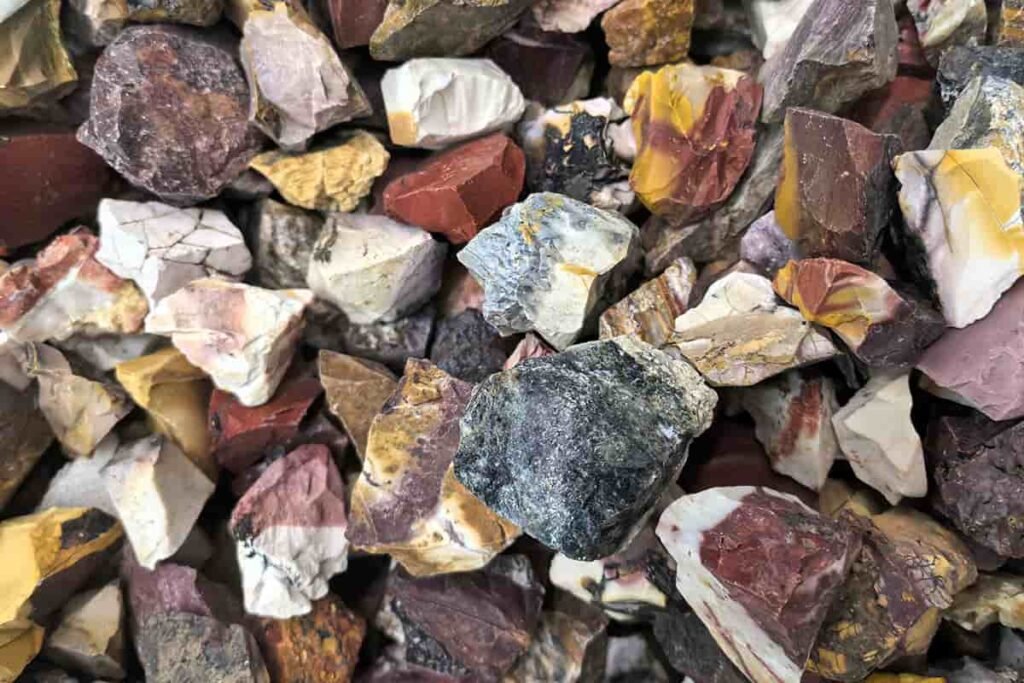
Another thing we pay attention to is how well the pattern survives shaping. Some rough pieces look promising at first, but once they are cut into beads or polished into smaller forms, the color zoning becomes less interesting. Better lots keep their character even after processing.
For wholesale buyers, this matters because the beauty of Mookaite is rarely about one perfect color. It is usually about balance, contrast, and natural movement across the surface.
Mookaite Meaning
When people search for mookaite meaning, they usually want more than a definition. They want to know what the stone represents and why so many people are drawn to it. In simple terms, Mookaite is often linked with grounded strength, flexibility, instinct, and the courage to move forward.
Many crystal users see it as a stone of balance during change. It is often described as supportive, but not passive. It suggests movement with steadiness, action with awareness, and confidence without recklessness. That is part of what makes it easy to understand and easy to market.
The meaning of Mookaite also connects with personal growth. It is often chosen by people starting something new, making decisions, or rebuilding momentum. That does not mean the stone changes life on its own. It means many people use it as a symbol of inner steadiness during uncertain periods.
Symbolism and Meaning Through Color
A large part of Mookaite’s symbolism comes from its color range. Yellow Mookaite is often connected with warmth, optimism, and forward movement. Red Mookaite usually suggests courage, strength, and drive. Cream and beige tones soften the overall look and add a sense of calm and balance.
From a product view, mixed-color Mookaite often performs better because it gives customers more to notice. In our experience, lots that include yellow, red, and creamy tones usually create stronger visual layering. That makes finished products more distinctive, especially in tumbled stones, earrings, and decorative items.
This is one reason Mookaite works well in both spiritual and decorative markets. Its colors already suggest warmth, earth energy, and natural character before a customer reads any product description.
Mookaite Jasper Healing Energy and Spiritual Associations
Spiritual Healing Properties
Many buyers want to understand how Mookaite is used on a spiritual level. In crystal traditions, it is often linked with grounded intuition, inner stability, and the ability to move through change without feeling scattered. That is why searches for mookaite meaning spiritual are so common. People are often looking for a stone that feels steady, supportive, and quietly energizing.
Mookaite appeals to many spiritual users because it seems to balance two needs at once: grounding and forward movement. It is not usually described as a dreamy escape stone. Instead, it is seen as a reminder to stay present, trust your judgment, and act with more confidence.
Emotional Healing Properties
On an emotional level, Mookaite is often associated with resilience and balance. People are drawn to it when life feels noisy, uncertain, or unsettled. In crystal-based wellness language, it is often described as a stone that supports calm and composure during transitions.
This is one reason Mookaite Jasper benefits are often described in practical rather than overly soft terms. It is not usually presented as a sleepy or overly delicate stone. It feels warmer, steadier, and more encouraging, which makes it appealing to customers who want emotional support without losing a sense of strength.
Mental Healing Properties
Mookaite is also commonly connected with mental clarity and decision-making. In crystal language, it often symbolizes focus, adaptability, and the ability to sort through options without feeling overwhelmed. This part of the mookaite stone meaning is especially appealing to people who are facing change or making new plans.
That practical side makes Mookaite easy to understand. It is often kept on a desk, near a workspace, or in a pocket during busy periods. Even buyers who are not deeply involved in crystal practice can relate to the simple idea of steadiness and clearer thinking.
Physical Healing Properties
In the crystal world, Mookaite is sometimes linked with vitality, stamina, and strength. These are traditional symbolic associations, not medical facts, and the stone should never be treated as a replacement for professional care. Still, many people are drawn to stones through the meanings attached to them, and Mookaite is often seen as a stone of active, grounded energy.
That symbolic connection also helps explain why it remains popular in wearable forms. Bracelets, pocket stones, and palm stones all make sense for customers who want something they can keep close during daily routines.
Mookaite Chakra Healing and Balancing Energy
When people search for Mookaite chakra, they usually want to know where this stone fits within common crystal systems. Mookaite is often connected with the root chakra, sacral chakra, and sometimes the solar plexus. In simple terms, that means grounding, personal drive, creativity, and confidence.
Its earthy reds, yellows, and creams naturally fit those themes. That broad symbolism is one reason Mookaite works well in bracelets, tumbled stones, and intention-based gift products.
Mookaite Color Energy
Color shapes how people read Mookaite’s energy. Yellow zones often feel open and lively. Deep red areas feel stronger and more rooted. Cream sections soften the piece and make it feel more balanced. When these colors appear together, the stone often feels more complete.
This is where mookaite meaning and uses come together naturally. Buyers are not only responding to symbolism. They are also responding to visible color energy, which helps the stone sell in both spiritual and decorative product lines.
Geology, Origin, and Formation of Mookaite Jasper
Where Does Mookaite Jasper Come From?
Mookaite Jasper comes from Australia, and that origin is part of its appeal. For many buyers, a stone with a clear geographic story is easier to remember and easier to sell. Its warm, earthy colors also match the landscape image many people already associate with Australia.
In wholesale and retail, origin helps shape trust and storytelling. A bracelet or tumbled stone feels more meaningful when customers know it is not just another colorful jasper, but a material with a specific source and a recognizable look.
Geological Formation
In simple terms, Mookaite formed through natural mineral processes over a long period of time. It belongs to the jasper family, so it is best understood as a dense, opaque stone known for solid color and pattern rather than sparkle or transparency.
For most buyers, the technical details matter less than the result. What matters is that Mookaite has enough body to polish well, while still showing natural pattern shifts that make each piece feel unique.
Mineral Family
Mookaite belongs to the jasper family, which explains both its appearance and its practical value. Jasper is generally known for being opaque, durable, and visually varied, and Mookaite fits that profile well. At the same time, it often shows stronger contrast than many other jaspers.
From a commercial angle, that matters. Stones in the jasper family usually work well in beads, tumbled stones, and simple polished forms, which makes Mookaite easy to introduce to both new buyers and repeat customers.
Mining and Treatments
One of the attractive things about Mookaite is that its natural color is already strong enough to sell on its own. Buyers do not need heavy enhancement to appreciate it. In the stone trade, that is always a positive sign because natural-looking material is easier to trust and easier to market.
Still, wholesale buyers should ask practical questions. It is smart to confirm treatments, sorting standards, and whether the photos truly represent the batch. With Mookaite, consistency matters because color mix is a major part of the stone’s value.
Mookaite Jasper Formation and Crystal Associates
For most buyers, formation matters mainly because it helps explain why Mookaite looks the way it does. It belongs to a broader natural stone family, but it stands apart because its patterns feel warmer and more layered than many other opaque materials in the same category.
That distinct identity matters more than technical language in most product settings. Customers respond first to what they can see, and Mookaite usually gives them enough character right away.
Physical Characteristics and Color Variations
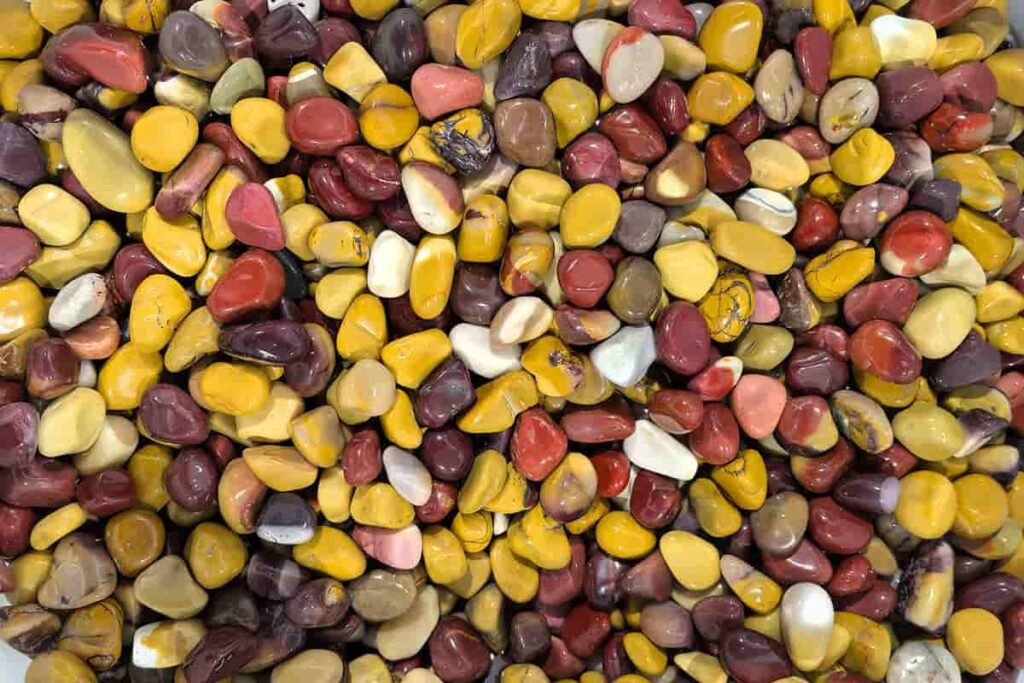
Mookaite is known for its solid, opaque appearance and its ability to take a smooth polish. That polish helps bring out contrast between color zones, which is important because the stone’s main beauty comes from visible pattern.
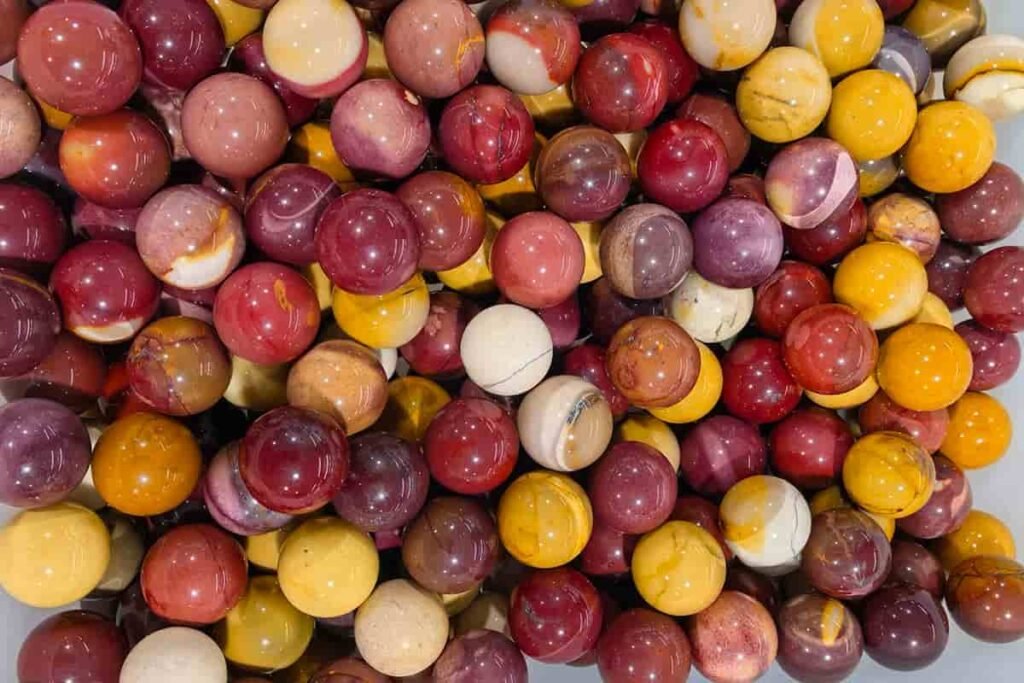
Some pieces lean yellow or mustard, while others show more red, burgundy, cream, or brown. Many of the most attractive stones combine several shades at once. That variation is one reason Mookaite works across so many product forms and continues to attract both retail and wholesale buyers.
History, Lore, and Cultural Appeal of Mookaite
History of Mookaite Jasper
Mookaite has lasting appeal because it combines strong natural color with a clear sense of place. Even people who know little about stones often remember it after one look. That kind of recognition matters in both the crystal and gift markets.
Over time, Mookaite gained attention in modern crystal culture for its warm, grounded image and its practical versatility. It works in polished stones, beads, bracelets, earrings, and carvings, so it has never been limited to one narrow niche.
Ancient Powers, Lore, and Legend
Like many natural stones, Mookaite is often surrounded by stories about vitality, instinct, courage, and connection to the earth. These belong more to crystal tradition than measurable fact, but they still shape how people think about the stone.
What makes Mookaite different from more dreamy materials is that its lore feels practical. The message is less about escape and more about staying rooted, reading situations clearly, and moving forward with confidence.
Why Modern Buyers Still Respond to Mookaite
Modern buyers still respond to Mookaite because it offers several things at once: strong color, natural variation, symbolic depth, and practical usability. That combination makes it commercially reliable.
Spiritual buyers may like its grounding image. Jewelry customers often love the red, yellow, and cream contrast. Boutique owners may value how well it photographs and how easily it fits both gift and decor categories.
Mookaite Meaning and Uses in Jewelry, Decor, and Daily Life
Mookaite Meaning and Uses in Real Products
Once people understand the symbolism behind the stone, the next question is practical: how does that meaning carry into real products? This is where mookaite meaning and uses matters most. Mookaite works naturally in bracelets, tumbled stones, earrings, pendants, palm stones, and small display carvings.
Part of the reason is visual. Mookaite already looks warm and layered before any explanation begins. A customer may notice the color first and become interested in the symbolic side second. That means the stone can sell through both appearance and meaning.
This also makes it useful for different types of businesses. Crystal shops can position it around grounding and confidence. Gift stores can focus on its natural warmth. Jewelry sellers can highlight its unique patterns. Wholesale buyers can build several product styles from one material without losing consistency.
Use in Jewelry
Jewelry is one of the most natural ways to introduce Mookaite to customers. The stone has enough color depth to stand on its own, but it also works well in simple bead designs or minimal settings. Among all product types, the Mookaite Bracelet is often the easiest entry point because it combines visibility, wearability, and symbolism.
Earrings and pendants can also work very well, especially when the material has bold contrast between yellow, red, and cream. Since no two pieces look exactly the same, Mookaite jewelry often feels less generic than flat-colored mass-market products.
Therapeutic Use and Lifestyle Use
Outside jewelry, Mookaite also works well as a lifestyle stone. Many customers keep it on a desk, shelf, bedside table, or in a quiet corner for journaling and reflection. Sometimes they are using it symbolically. Sometimes they simply enjoy its warm colors and natural presence.
In crystal-based wellness culture, Mookaite is often chosen as a support stone during periods of change or decision-making. It is best to describe these uses honestly. The stone is not a replacement for real action or care. What it offers is symbolic value and a sense of connection many users appreciate.
Meditation with Mookaite Jasper
Mookaite can also be used in simple meditation or quiet reflection. Many people hold it in the hand, place it nearby, or focus on its colors during a short pause in the day. Because it feels warm and solid, it often supports a grounded mood rather than a dreamy one.
That practical simplicity is part of its appeal. The mookaite crystal meaning already leans toward stability, instinct, and forward movement, so it fits easily into everyday habits like journaling, mindful pauses, or intention setting.
Use + Crystal Pairings
Mookaite also pairs well with other stones, both visually and symbolically. Some people like darker grounding stones for contrast, while others prefer warm-toned stones that match its earthy palette. In many cases, pairing is just as much about color harmony as spiritual preference.
From a symbolic view, mookaite meaning often works best with stones linked to steadiness, warmth, or confidence. From a product view, it works best with materials that do not overpower its natural pattern. That is especially true in bracelets and beaded jewelry.
If you source Mookaite bracelets, tumbled stones, earrings, or gift-ready crystal items for resale, you can use both the visual story and the symbolic story to strengthen your product line. For current stock, mixed-color options, or bulk inquiries, direct buyers to WhatsApp or your inquiry form so they can review real photos and available styles.
How to Choose Good Mookaite: Quality, Carving Limits, and Wholesale Advice
Selecting Quality Gemstones
When buyers choose Mookaite, the first thing they notice is usually color. Still, good selection goes beyond choosing the brightest piece. In practice, quality depends on color richness, surface polish, pattern flow, and how well the final shape shows the material. The mookaite stone meaning may draw attention, but visual quality usually decides the sale.
A good Mookaite piece should feel alive, not muddy or flat. It does not need to show every color at once, but buyers usually respond better when the material has visible layering and enough contrast to catch the eye. Polish also matters. A strong finish makes the color transitions clearer and helps the product look more premium.
Industry Experience: What We Look for First
In our own selection work, we usually prefer Mookaite lots that show a richer mix of yellow, red, and creamy tones. The reason is simple: mixed-color material creates stronger visual layering. When the colors are too limited, the finished pieces can still look nice, but they often do not feel as distinctive.
This is especially noticeable in tumbled stones, earrings, and decorative items. Mixed-color Mookaite often gives each piece more personality while still keeping the collection visually unified. We have also found that these richer lots photograph better, which matters a lot for online selling. Strong yellow-red-cream contrast usually gives product photos more depth and helps them stand out faster.
Processing Limits and Why Some Shapes Are Less Common
Mookaite is relatively hard and stable, which helps it perform well in polished forms. At the same time, that does not mean every shape is equally easy to produce. In carving, higher hardness can create more loss when the design includes sharp curves, thin edges, or narrow connecting points.
That is one reason some shapes are less common. Heart shapes, for example, are popular in many stone categories, but in Mookaite they are often harder to produce cleanly. Thin edges and curved outlines can increase breakage and waste during shaping and polishing. For wholesale buyers, that affects both cost and supply stability.
Choosing Forms for Different Buyers
Different product forms suit different customers. Bracelets are often the easiest option for repeat sellers because they are wearable, easy to display, and easy to explain. Tumbled stones work well for gift shops and beginner crystal buyers. Earrings and pendants are better for style-driven collections where pattern contrast matters more.
This is also where Mookaite Jasper benefits becomes part of the selling language. In wearable products, customers often connect the stone with grounding, balance, and confidence. In decor pieces, the appeal is often more visual. That flexibility is one reason the material stays commercially useful.
Procurement Tips for Wholesale Buyers
If you are buying Mookaite in bulk, ask practical questions before placing an order. Request real batch photos, confirm whether the lot is mixed or sorted by tone, and check size tolerance for beads and tumbled stones. If you are buying bracelets, ask about bead polish and drill-hole consistency.
It is also smart to ask how representative the photos are. Some suppliers show only selected pieces, while the shipment itself may be more average. Short videos, grouped batch images, and multi-angle photos can help reduce that risk.
For bulk buyers, product planning matters as much as stone beauty. Think about which form best suits your customer base, whether you need mixed-color stock or more uniform tones, and whether the pattern will still show well after shaping. If you want current batch photos, size details, or mixed-color options for resale, the best next step is to request them through WhatsApp or your inquiry form before confirming the order.
How to Use Mookaite in Spiritual Practice Without Overcomplicating It
Simple Ways to Use Mookaite
A lot of people become interested in Mookaite because they like its colors first, then wonder how to use it in daily life. The good news is that it does not need a complicated routine. Some people wear it as jewelry, some carry a small stone in a pocket or bag, and others place it on a desk or shelf where they can see it often.
This is one reason mookaite meaning and uses is such a practical search phrase. People are not always looking for a complex spiritual system. Sometimes they just want to know how a stone fits into ordinary life. Mookaite works well for that because its symbolism connects easily with habits like staying grounded during busy weeks or keeping a visual reminder nearby during a personal reset.
Intention Setting and Programming
Some crystal users like to set a simple intention when they begin using a stone, and Mookaite works well for that because its symbolism is clear. The intention can be as simple as staying steady during change, trusting your judgment, or keeping your energy focused on one goal.
In this kind of practice, the stone acts more like a reminder than a solution. That simplicity is often more useful than elaborate ritual language, especially for beginners.
Combining Mookaite With Other Stones
People often ask whether Mookaite should be used alone or combined with other stones. In practice, both options are fine. Some prefer a single-stone approach because it keeps the message clear. Others enjoy pairing it with stones that match the color palette or emotional tone they want.
This also connects to the question of what stones should not be together. In real life, there is no universal rule. Some people avoid combinations that feel visually busy or emotionally mismatched, while others mix stones freely based on mood or design. With Mookaite, warm-toned and grounding combinations usually feel the most natural.
Which Hand to Wear Mookaite?
Another common question is which hand to wear Mookaite on. Different traditions give different answers, so it is better not to present one rule as absolute. Some people prefer the left hand for inner balance and support, while others choose the right hand for action and confidence.
In practical terms, either choice can work. A bracelet only becomes meaningful if the wearer enjoys using it. Comfort, personal habit, and connection matter more than rigid rules.
FAQ About Mookaite Meaning
What is mookaite stone good for?
Mookaite is often used for bracelets, tumbled stones, pendants, and small decor pieces. Many people choose it for its warm earthy colors and its symbolic connection to grounding, confidence, and change.
How rare is mookaite?
Mookaite is not extremely rare, but high-quality pieces with strong color contrast and clean polish are more valuable. Mixed-color material with yellow, red, and cream tones is often more attractive in the market.
What are the spiritual benefits of mookaite bracelets?
Mookaite bracelets are often associated with grounding, balance, confidence, and steady energy. Many people wear them as a daily reminder to stay calm, trust their instincts, and move forward with more stability.
Which hand to wear mookaite?
There is no fixed rule. Some people wear Mookaite on the left hand for inner balance and support, while others wear it on the right hand for action and confidence. The best choice is the hand that feels most comfortable to you.
What stones should not be together?
There is no universal rule about stones that cannot be worn together. Most people choose combinations based on color, intention, and personal preference. If two stones feel mismatched, it is usually better to wear them separately.
Conclusion
At its core, mookaite meaning is about grounded strength, movement, instinct, and the ability to stay steady while life changes around you. That is a big reason this stone remains popular. Mookaite offers more than color alone. It gives people a material that looks warm, natural, and expressive while also carrying a message that feels easy to understand.
It also works especially well in the real product market. Bracelets, tumbled stones, earrings, pendants, palm stones, and small carvings all benefit from its layered color and strong visual identity. For wholesale buyers, that versatility matters because one material can support several product categories while still keeping a clear style.
If you are sourcing Mookaite bracelets, tumbled stones, earrings, or mixed-color crystal products for resale, a direct inquiry is usually the best next step. Use WhatsApp or your inquiry form to request current stock photos, color mix details, available sizes, and wholesale pricing before choosing the styles that fit your market best.
Disclaimer:
This article is intended for general information only. Any spiritual or healing meanings mentioned are based on traditional crystal beliefs and personal interpretation, not scientific evidence or medical advice.