
Red Jasper Meaning: Symbolism, Uses, Identification, and Buying Guide for Crystal Buyers
Written by: Rocrystal Sourcing & QC Team, Last updated: April 14, 2026
If you have been looking into red stone products for jewelry, gift sets, crystal retail, or bulk resale, red jasper is one of the first materials you will probably come across. It is common in bracelets, loose beads, palm stones, hearts, and small carvings because it has a strong natural color, a stable look, and wide market acceptance. For many buyers, it feels easier to understand than some more mixed or harder-to-identify stones.
The reason Red Jasper Meaning continues to attract attention is simple. People are not only buying a red stone. They are also buying the story behind it, the visual warmth it brings, and the symbolic value attached to it. Some customers like it for grounding and strength. Others choose it because it looks earthy, rich, and dependable in finished products. In wholesale, both reasons matter.
This guide is written for readers who want more than a basic definition. It will explain what red jasper is, how people understand its symbolism, how to identify it more clearly, where it comes from, and what serious buyers should pay attention to before placing an order. The goal is to keep everything clear, practical, and easy to read.
What Is Red Jasper?
A Simple Definition of Red Jasper
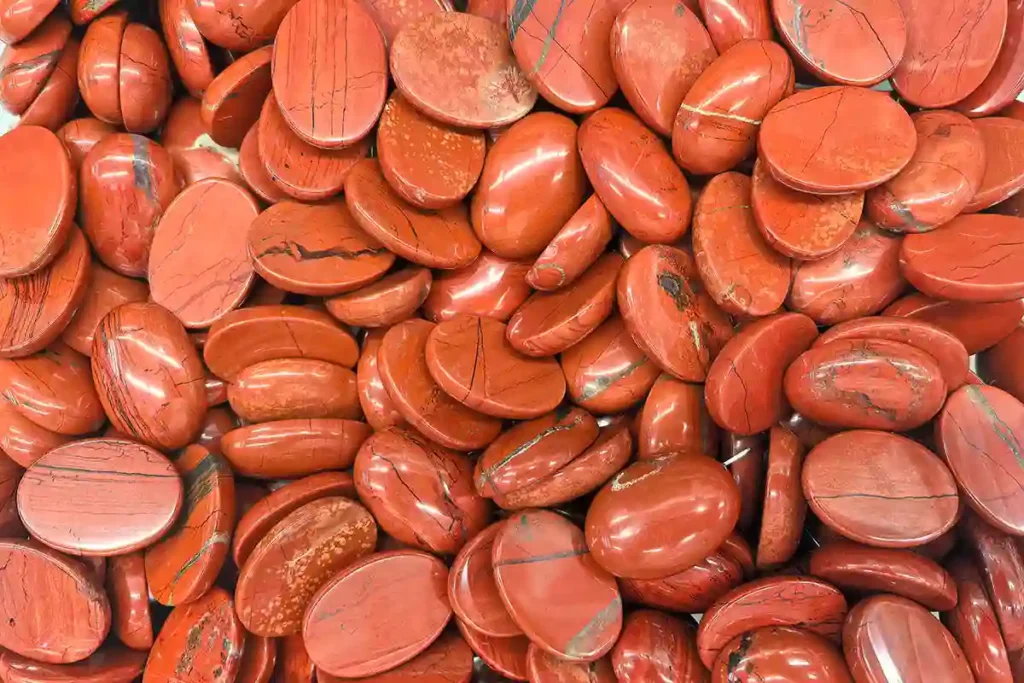
Red jasper is a natural opaque stone in the jasper family, which itself belongs to the broader quartz group. Most pieces show a red base color, but the shade can vary quite a bit. Some look like brick red, some lean toward rusty red or deep brownish red, and some include small veins, spots, or soft bands that break up the surface. That natural variation is one reason it remains popular across many product styles.
When people search for red jasper crystal meaning or try to understand the broader Jasper Meaning, they usually want a simple answer first. In everyday terms, red jasper is known as a stone connected with steadiness, warmth, and grounded energy. Even buyers who are not deeply interested in crystal culture often like it because the material feels solid, looks natural, and fits many retail themes without much explanation.
It is also a very practical stone for product making. You will often see it made into round beads, stretch bracelets, hearts, palm stones, tumbled stones, pendants, and decorative carvings. The color is easy to match with black, silver, brown, wood, and other earthy materials, so it works well in both jewelry and display pieces. That flexibility helps explain why red jasper keeps showing up in both entry-level and repeat-order product lines.
Why Buyers Notice It So Quickly
One reason red jasper stands out so easily is that it does not need much explanation when people first see it. The color already does a lot of the work. A deep, earthy red feels warm, stable, and natural, so even first-time buyers can quickly understand why it belongs in bracelets, beads, hearts, or small carvings. It has presence without looking too flashy.
From a product point of view, red jasper also fits many different customer groups. Some people like it because it looks strong and grounded. Some prefer it because it works well in men’s jewelry, unisex styles, or gift items with a more natural tone. In bead lines, it pairs easily with black obsidian, hematite, tiger eye, wood, and other neutral materials, which makes it easier for shops to build matching collections.
That is also why Red Jasper Bracelet styles tend to sell steadily in many markets. The stone feels approachable, the color is easy to recognize, and the overall look can be simple or symbolic depending on how it is presented. When buyers search for the meaning of red jasper stone or the wider red jasper gemstone meaning, they are often reacting not only to metaphysical ideas, but also to the material’s strong visual identity and reliable retail appeal.
Red Jasper Meaning and Symbolism
The Core Symbolism Behind Red Jasper
At the center of Red Jasper Meaning is the idea of strength with stability. Unlike stones that are often described as light, dreamy, or highly emotional, red jasper is usually understood in a more grounded way. People often connect it with endurance, courage, patience, and the ability to stay steady when life feels demanding. That is one reason it has remained popular for such a long time.
The meaning of red jasper is also closely tied to energy that feels practical rather than dramatic. Many crystal users describe it as a supportive stone, not because it promises sudden change, but because it symbolizes staying rooted and moving forward step by step. In that sense, meaning red jasper is often less about fantasy and more about resilience, discipline, and quiet confidence.
In modern crystal language, red jasper meaning spiritual often points to emotional steadiness, inner support, and a stronger sense of personal grounding. That does not mean everyone experiences it in the same way. Still, the shared symbolism remains consistent across many markets: red jasper is widely seen as a stone of warmth, courage, protection, and dependable energy.
Red Jasper Spiritual Meaning in Modern Use
Today, Red Jasper spiritual meaning is often explained in a way that feels more personal and less ceremonial than in older crystal traditions. Many people are drawn to it not because they expect something dramatic to happen, but because they want a stone that feels steady, warm, and reassuring in daily life. That is why it is often linked with grounded routines, emotional support, and the feeling of staying centered under pressure.
In practical terms, red jasper spiritual meaning is commonly associated with inner balance, courage, and a calm kind of strength. Some people keep it on a desk, carry it in a pocket, or wear it as jewelry during stressful periods because they like what it represents. Others choose it during times when they want more discipline, stronger boundaries, or a reminder to move with intention instead of reacting too quickly.
The meaning of red jasper crystal in modern use also depends on context. For one person, it may symbolize protection and endurance. For another, it may simply feel like a steady red stone that brings comfort through color, texture, and symbolism. That flexibility is part of the reason it remains relevant. It can feel spiritual without becoming difficult to understand.
Why Symbolism Matters in Jewelry and Gifts
Symbolism plays a bigger role in sales than many new buyers expect. A stone may look attractive on its own, but once it also carries a clear message, it becomes easier to present, easier to gift, and easier to remember. That is especially true with red jasper, because its color already suggests warmth, strength, and emotional support before anyone even reads the product description.
This is one reason red jasper works well in bracelets, heart-shaped carvings, pocket stones, and small gift items. A bracelet can be sold as a simple red stone accessory, but it can also be presented as a meaningful gift for someone going through a hard season, starting a new chapter, or needing encouragement. The same is true for hearts and palm stones, which often appeal to buyers who want something symbolic but still practical to display or carry.
When people look up the meaning of red jasper gemstone, they are often trying to connect product value with personal meaning. That connection matters in retail. A stone with a clear story usually has a stronger emotional hook, and that makes it easier for shops, gift sellers, and crystal businesses to turn a basic product into something customers feel more attached to.
Geology, Formation, and Where Red Jasper Is Found
What Red Jasper Is Made From
Red jasper is generally understood as a variety of jasper within the larger chalcedony and microcrystalline quartz family. In simple language, that means it is a dense natural stone made of very fine quartz particles packed together over time. Most buyers do not need the full mineral textbook version, but it helps to know that red jasper is a real stone material with a solid internal structure, not something soft, hollow, or glass-like.
Its red color is usually linked to iron content. That is why the tone can range from warm brick red to deeper earthy red, rusty red, or brownish red depending on the material. Some pieces appear cleaner and more even in color, while others show lighter veins, darker spots, or mixed areas across the surface. Those details are part of what makes the stone feel natural rather than manufactured.
When people search for red jasper rock meaning or explore the broader red jasper gemstone meaning, they are often thinking about symbolism. Still, the material side matters too. Understanding what the stone is made from helps buyers feel more confident about what they are actually purchasing, especially when comparing beads, carvings, bracelets, and bulk loose pieces from different suppliers.
How Red Jasper Forms
Red jasper forms over a long period as mineral-rich silica settles, hardens, and develops into a dense opaque stone. During that process, iron and other natural materials influence the final color, which is why red jasper can show different shades even within the same batch. Some stones come out with a more even red body, while others develop soft veins, cloudy areas, small spots, or mixed bands that make each piece look a little different.
That natural formation process is also the reason surface patterns should not be judged too quickly. A buyer may see a pale streak or a darker patch and assume the stone is low grade or artificial, but in many cases those features are simply part of how the material formed underground. Natural stone rarely grows with perfect visual uniformity, especially when it is cut into beads or polished into small finished goods.
For product sellers, this matters because customers often expect all red stones to look exactly the same. In real wholesale supply, that is rarely the case. Formation affects color depth, pattern density, and the amount of visible contrast on the surface. Once buyers understand that, they usually become better at reading natural variation and more realistic about what a natural red stone product line should look like.
Where Is Red Jasper Found?
Red jasper is found in several parts of the world, and that wide distribution is one reason it has remained a common and workable material in the stone trade. Different sources may produce slightly different shades, pattern styles, and texture qualities. Some material looks deeper and more even in color, while some shows more lines, spots, or mixed tones. For buyers, the exact source is less important than the final look, stability, and grading of the finished goods.
When people ask Where is red jasper found, they are often also asking why one batch looks cleaner or richer than another. In practice, origin can influence color consistency, but processing, sorting, and grade selection also matter a lot. Two suppliers may both sell red jasper, yet one lot can appear much more uniform simply because it was sorted more carefully before drilling, polishing, or packing.
That is why serious buyers should not rely only on origin names. They should also ask for current stock photos, videos under natural light, size tolerance details, and information about visible veins or dark spots. In wholesale, the real question is not just where the stone came from. It is whether the supplier understands how to match the material to the buyer’s market, product type, and quality expectations.
Red Jasper Properties in Everyday Language
Emotional and Mental Support People Commonly Associate With It
When people talk about the softer side of Red Jasper Meaning, they often describe it as a stone linked with steadiness, patience, and emotional support. That wording is part of why red jasper has stayed popular for so long. It is not usually presented as a dramatic or highly intense stone. Instead, many people see it as something that represents calm strength, emotional grounding, and the ability to stay centered during demanding periods.
In everyday crystal language, Red Jasper meaning and benefits are often connected with focus, endurance, and emotional balance. Some users like to keep it nearby during stressful work periods, big life changes, or times when they feel scattered and need a stronger sense of routine. Others simply enjoy what the stone stands for. Even without strong spiritual beliefs, they may still feel drawn to its stable and supportive image.
This is also why red jasper crystal meaning is often described in practical words rather than abstract ones. People talk about courage, consistency, and staying grounded. They talk about moving forward without panic. They talk about support that feels quiet but dependable. That kind of interpretation makes red jasper easier to understand and easier to connect with for both new buyers and long-time crystal users.
Physical Associations Without Overclaiming
Some crystal descriptions connect red jasper with stamina, physical steadiness, and a stronger sense of body awareness. That kind of language has been around for a long time, and many users still mention it when they talk about their personal experience with the stone. In traditional crystal culture, it is often grouped with materials that symbolize strength, grounded movement, and stable energy rather than light, fast, or highly stimulating qualities.
At the same time, it is important to keep the wording responsible. Red Jasper meaning and benefits can be discussed as part of historical belief, symbolic use, or personal preference, but they should not be presented as medical facts. A careful description helps readers understand the cultural and spiritual side of the stone without turning the article into an exaggerated promise.
That balance matters even more on a business website. Buyers usually trust content more when it sounds measured and realistic. A stone can still be meaningful without being oversold. In fact, clear and careful language often makes the material more believable, especially for customers who are interested in symbolism but do not want dramatic claims.
Why “Healing” Content Still Needs Careful Wording
A lot of crystal content online uses the word healing very freely, but that does not always help the reader. In many cases, it makes the stone sound exaggerated or vague. A better approach is to explain that these ideas usually come from traditional crystal culture, personal belief, or symbolic interpretation. That gives the reader useful context without making promises that the stone cannot fairly support.
This matters because many people are genuinely interested in spiritual tools, but they still want clear and honest language. When a site talks about energy, support, or grounding in a measured way, the content feels more trustworthy. It also respects the fact that different buyers relate to stones in different ways. Some see them as symbolic gifts. Some use them in meditation. Others simply like the meaning attached to them.
That is why careful wording fits red jasper meaning spiritual discussions much better than dramatic claims. Red jasper can be described as a stone many people associate with steadiness, courage, and grounded support. That is very different from saying it will fix specific problems. Responsible writing builds more trust, and in wholesale or retail, trust usually matters more than hype.
Red Jasper Chakra, Zodiac, and Spiritual Associations
Red Jasper Chakra Connections
In crystal practice, Red Jasper chakra is most often connected with the root chakra. That association makes sense even for people who do not follow chakra systems closely, because red jasper is usually described as a grounding stone. The color, the dense opaque body, and the steady symbolism all support that connection. It is commonly placed in the category of stones that represent stability, safety, and a stronger connection to the present moment.
For many users, the root chakra idea is less about technical theory and more about how the stone feels in daily life. Red jasper is often chosen by people who want something that symbolizes balance, calm strength, and emotional steadiness. In that way, the chakra connection gives buyers a simple framework. It helps explain why this stone is often recommended for routines, stressful work periods, and moments when someone wants to feel more centered.
Even so, not every buyer uses chakra language. Some customers simply like the look of the stone and the message attached to it. That is completely normal. The chakra association is helpful because it adds one more layer of meaning, but it does not need to become complicated in order to be useful.
Zodiac and Traditional Associations
Red jasper is also linked with zodiac traditions, although most buyers treat that as a secondary detail rather than the main reason to choose it. In many crystal guides, it is associated with signs that are often described as determined, practical, or strong-willed. The exact pairing can vary from one source to another, which is why it is better to present zodiac links as a traditional reference, not a strict rule.
When people ask What zodiac should wear red jasper, they are usually looking for a simple connection point. A short answer works best: it is often recommended for people who want more grounding, patience, and emotional steadiness, regardless of zodiac sign. Some customers enjoy matching stones to astrology, while others care much more about color, symbolism, and overall style.
That is why zodiac content should stay light in this kind of article. It can add interest and give readers one more way to relate to the stone, but it should not take over the page. For a buying-intent reader, usefulness matters more than mystique. A clear explanation will always work better than a long list of symbolic claims.
Spiritual Meaning vs Personal Preference
Some buyers care a lot about symbolism, while others choose red jasper for much simpler reasons. They may like the color, the weight, the matte earthy look, or the way it works with silver, black, wood, and other natural materials. That difference matters, because not every purchase starts from belief. Sometimes a customer is drawn to the stone first and only later becomes interested in its story.
That is also why red jasper spiritual meaning should be explained in a flexible way. For some people, it represents grounding, protection, and endurance. For others, it is simply a meaningful red stone that feels warm and stable. Neither approach is wrong. In the real market, both types of buyers exist, and many shops serve both at the same time.
The same is true for meaning red jasper in a commercial setting. A product can succeed because of symbolism, but it can also succeed because it is visually strong, easy to display, and easy to understand. When an article respects both sides, it feels more honest. That usually helps customers trust the content more, especially when they are deciding whether to buy for themselves, for gifting, or for resale.
How Red Jasper Is Used in Daily Life
Red Jasper Bracelet and Bead Jewelry
Among all finished products, Red Jasper Bracelet styles are probably the most familiar to most buyers. Round beads are easy to drill, polish, string, and match with other materials, so red jasper moves naturally into bracelet lines, stretch jewelry, malas, and simple beaded accessories. In retail, that matters because bracelet products are easier for customers to understand at a glance and easier for shops to display in larger quantity.
Red jasper beads also work well across different design directions. A plain strand can feel earthy and classic. A mixed design with tiger eye, black obsidian, hematite, or wood can look more masculine or more modern. Smaller bead sizes usually feel lighter and easier for everyday wear, while larger beads tend to look bolder and more giftable. That gives sellers room to offer several looks without changing the core material.
From a wholesale point of view, bead jewelry is also one of the easiest ways to turn natural stone into repeat business. Bracelet customers often come back for different sizes, mixed combinations, or matching items. That is one reason red jasper continues to perform well in bead-based collections. The material is recognizable, practical, and flexible enough to fit both entry-level and more curated product lines.
Home, Office, and Gift Use
Red jasper is not limited to jewelry. It is also widely used in home décor, office settings, and gift products because it has a stable look that feels warm without being too bright. A polished heart, palm stone, small tower, or simple carving can sit on a desk, shelf, or bedside table without looking out of place. That makes it easier for stores to sell red jasper not only as a wearable item, but also as a display piece with meaning.
In office settings, some people choose it because they like the idea of keeping a grounding stone nearby during work. Others simply prefer the natural red tone and the solid feel of the material. At home, it often works as part of a gift box, a decorative stone tray, or a personal keepsake. A heart-shaped red jasper piece, for example, can carry a stronger emotional message than a loose bead, even when the material is the same.
That flexibility helps explain why red jasper continues to do well across different product forms. A buyer may first notice it in a bracelet, then later add hearts, palm stones, or small carvings to the same line. For retailers and wholesalers, that makes the stone easier to build into a broader collection instead of treating it as a one-item product.
If you source red jasper beads, bracelets, hearts, or carvings for resale, you can contact us on WhatsApp or send an inquiry through our contact form. We can help with size suggestions, grade matching, and product recommendations based on your market, whether you focus on crystal retail, gift sales, or bead-based jewelry lines.
Real Buying Experience: Quality, Sourcing, and Wholesale Advice
Natural Patterns, White Veins, and Why Some Buyers Mistake Them for Fake
This is where real market experience matters. A while ago, I shipped red jasper beads to a customer in Germany. After he resold them, one of his own customers said the beads were fake because the surface showed some milky white lines. The assumption was simple: if the color was not perfectly pure red, then the material must be glass or some other substitute. That kind of misunderstanding happens more often than many people think.
To explain it clearly, I took one of my own sample beads, broke it with a hammer, and recorded a video. After the bead cracked open, the inside was still stone. It was not glass, not resin, and not an artificial shell over a different core. The white lines on the surface were simply part of the natural pattern of the material. In natural red jasper, those veins, cloudy bands, or darker dots can appear, especially in more commercial grades.
That kind of experience helps explain Red Jasper Meaning in a more realistic product context. Buyers often focus on symbolism first, but when it comes to actual orders, they also need to understand natural variation. A stone can still be real even if it is not perfectly clean in color. In fact, many genuine stones show small details that prove they came from nature, not from a factory mold.
Higher Grades, Cleaner Color, and Why Good Material Is Scarce
In the market, not all red jasper looks the same. Some lots are more commercial grade, with visible white veins, dark points, mixed red-brown areas, or uneven tone across the bead surface. Those qualities are still acceptable for many buyers, especially when the price is reasonable and the material is natural. But higher grades are a different story. Better stones usually show a richer red body, fewer distracting marks, and a cleaner overall appearance.
The cleanest material is always harder to find. Truly nice red jasper with strong color and very little surface interruption does exist, but it is not common in large volume. It usually needs to be selected out of many thousands of beads, and that extra sorting raises the cost. That is why some buyers are surprised when they ask for very pure-looking goods but still expect entry-level pricing. The visual gap between commercial and cleaner stock can be obvious, and so can the price gap.
When people explore red jasper gemstone meaning or the broader meaning red jasper stone, they often imagine a smooth, beautiful, evenly colored stone. In actual wholesale, that level of appearance usually belongs to better-graded material, not standard stock. A buyer who understands that early will make better decisions, ask better questions, and avoid frustration later in the order process.
A Wholesale Inquiry That Sounded Huge but Ended Small
Last month, I had a customer from Pakistan ask about a very large order for 8mm red jasper beads. On paper, the quantity sounded massive. He mentioned a number in the tens of millions, which would make almost any supplier stop and pay attention. But as the conversation went on, it became clear that his main goal was not really to build a stable order plan. He mostly wanted factory contact details and direct access.
I quoted a very competitive price at the time, but the discussion still did not move forward. Later, I heard that he ended up working with someone else, and the actual order was much smaller than the first number he mentioned. Instead of an enormous deal, it was closer to a normal commercial order. The final price was also said to be higher than mine, which says a lot about how early inquiry numbers do not always reflect real buying behavior.
Experiences like that are frustrating, but they are also useful. In wholesale, large claims do not always mean serious intent. A reliable buyer usually asks about color consistency, stock stability, drilling quality, packing, delivery time, and whether the goods can match their market. Those questions matter much more than headline quantity. Serious sourcing is usually more about fit and trust than about the biggest number mentioned in the first message.
What Serious Buyers Should Actually Ask Before Ordering
Before placing a red jasper order, buyers should ask better questions than just price and origin. They should ask about color consistency across the lot, how much visible veining is normal, whether darker spots are common, and how closely the goods match the sample photos. For beads, they should also confirm size tolerance, hole size, polish quality, and whether the strand count is stable from batch to batch. Those details affect resale much more than a slightly lower quote.
For bracelet and bead buyers, Red Jasper Meaning may help attract interest, but product consistency is what protects repeat business. If one shipment looks clean and the next one looks muddy or heavily veined, customers notice right away. That is why videos in natural light, close-up bead photos, and honest grade explanations matter so much. A strong supplier should be able to explain what is standard stock, what is cleaner stock, and what level needs extra sorting.
The same applies when ordering hearts, palm stones, carvings, or mixed finished products. Buyers should ask about crack rate, shape consistency, polish finish, packing method, and whether custom sorting is available. In real sourcing, Red Jasper Meaning supports the sale, but material control supports the business. Shops that ask detailed questions early usually make better buys and face fewer problems after the goods arrive.
Red Jasper Identification, Comparison, and Care
Red Jasper Identification Basics
The simplest way to approach red jasper identification is to start with what your eyes can see. Most red jasper is opaque, not transparent, and the color usually looks earthy rather than bright like dyed glass. Some pieces are deep brick red, some lean rusty red, and some show white veins, darker dots, or mixed red-brown areas. Those natural details do not automatically mean the stone is low quality or fake. They often mean the material is real and formed naturally.
Weight and feel also matter. Real stone beads usually feel solid in the hand, and when you compare them with plastic or glass imitations, the difference is often noticeable. Surface polish can vary, but the internal character should still look like stone. If a bead has slight pattern variation from one side to another, that is often a normal sign. Natural materials rarely look perfectly identical across every piece.
For everyday buyers, identification does not need to become too technical. In most cases, good close-up photos, short videos under natural light, and an honest explanation from the supplier are already very helpful. A reliable seller should be able to explain what kind of pattern variation is normal, what grade level the goods belong to, and whether the color is naturally mixed or especially clean.
Red Jasper vs Carnelian
A lot of buyers confuse these two stones at first because both can appear in warm red or reddish-orange tones. The easiest difference is transparency. Red jasper is usually opaque, with a denser and more earthy look, while carnelian often has some translucency and a brighter, cleaner glow when light passes through it. Even when both are polished into round beads, they usually give off very different visual impressions once you look closely.
In style terms, Red jasper vs carnelian often comes down to mood. Red jasper tends to feel heavier, steadier, and more grounded. Carnelian usually looks livelier, brighter, and more energetic. That is why some buyers prefer red jasper for earthy collections, masculine styles, or stones associated with support and stability, while carnelian is often chosen for lines that need more shine, warmth, and movement.
For sourcing, Red Jasper Meaning also plays a role in how the two materials are presented. Red jasper is commonly marketed around grounding, courage, and steady energy. Carnelian is more often linked with motivation, creativity, and bold expression. Neither one is better by default. The better choice depends on your market, your design style, and the kind of story your customers respond to most strongly.
How to Cleanse and Care for Red Jasper
Red jasper is generally easy to care for, but like most polished stone products, it still benefits from basic handling and common sense. For physical care, a soft cloth and mild water-based cleaning are usually enough. It is better to avoid harsh chemicals, strong acids, or rough storage conditions that can scratch the surface or damage the polish over time. Beads and bracelets should also be stored in a way that reduces hard friction with sharper materials.
When people ask how to charge a red jasper, the answer often depends on personal belief. Some like to place it under moonlight, some leave it on a clean cloth overnight, and some simply hold it for a quiet moment with intention. There is no single rule that everyone follows. On a practical level, many buyers are really asking how to refresh the stone’s symbolic value, not how to change the stone physically.
That is why care can be understood in two ways. One is material care, which protects the product’s appearance. The other is symbolic care, which helps users feel more connected to the stone’s meaning. Both can matter, but neither needs to be complicated. A clear, simple routine is usually more useful than an overly mystical one.
FAQ
What should Red Jasper not be paired with?
There is no universal rule saying red jasper must never be paired with a certain stone. In real use, this is usually a matter of style, preference, or personal belief. Some people feel it clashes with very light, airy stones if they want a more grounded look, while others mix it freely based on color and design. For product matching, the better question is whether the stones look good together and tell a clear story.
How do you charge a Red Jasper?
Most people who charge red jasper keep the process simple. Common methods include placing it under moonlight, setting it aside on a clean cloth, or holding it quietly with intention. Some also prefer to cleanse it first with a soft cloth and keep it in a calm space overnight. There is no single required method, so the best choice is usually the one that feels natural and easy to repeat.
What does it mean to gift Red Jasper?
Gifting red jasper is often understood as offering support, encouragement, and steady strength. Because the stone is widely associated with grounding and warmth, it can feel like a thoughtful gift for someone going through change, stress, or a new beginning. A red jasper heart or bracelet can carry that message especially well because the symbolism feels clear without needing too much explanation.
Can Red Jasper and tiger’s eye together?
Yes, red jasper and tiger’s eye are often paired together. Visually, they work well because both stones carry warm, earthy tones that look strong and natural side by side. Symbolically, many people like this combination because red jasper is associated with grounding and steadiness, while tiger’s eye is often linked with confidence and focus. That makes the pairing popular in bracelets and mixed bead designs.
What zodiac should wear red jasper?
Red jasper is often linked with zodiac signs that are described as determined, practical, or action-oriented, but these associations vary from source to source. In everyday use, it is more helpful to think about personality and purpose than strict zodiac rules. Anyone who wants a stone associated with grounding, courage, and steady support may feel drawn to red jasper, whether they follow astrology closely or not.
Conclusion
Red Jasper Meaning continues to appeal to buyers because it combines visual strength with a clear symbolic message. It is easy to recognize, easy to work into bracelets, beads, hearts, and carvings, and easy to explain to customers who want a stone linked with grounding, warmth, and steady support. At the same time, serious buyers also need to understand variation, grading, identification, and sourcing if they want to buy with confidence.
If you are sourcing red jasper beads, bracelets, hearts, or carvings for your store, feel free to contact us on WhatsApp or send us an inquiry through the contact form. We can help with size suggestions, grade matching, bulk pricing, and product selection for different markets.
Disclaimer:
The information in this article is for general educational and product reference purposes only. Red Jasper meanings, spiritual associations, and symbolic uses are based on traditional beliefs, cultural interpretations, and personal experiences. They are not medical claims and should not be used as a substitute for professional medical, psychological, or legal advice.