
Jasper Meaning: Symbolism, Types, Benefits, and Uses
Written by Roc Gong | Founder of RoCrystal
Last updated: October 30, 2026
Jasper meaning centers on grounding, protection, courage, and nurturing strength in crystal traditions. Many people choose the stone as a reminder to stay patient, face challenges, and feel connected to the natural world. These associations express cultural beliefs and personal symbolism rather than proven effects.
However, jasper stone meaning also varies with color and variety. Red jasper often symbolizes determination, while picture jasper suggests a connection with landscapes and the earth. Its many patterns give buyers plenty of choice, whether they want a meaningful bracelet, a polished stone, or beads for a jewelry design.
This guide explains jasper crystal meaning alongside the material itself. You will learn about its name, history, common varieties, everyday uses, and the details worth checking before buying.
What Is Jasper?
Jasper is a fine-grained, quartz-rich material that is usually opaque. Its crystals are too small to see with the naked eye, so its surface looks solid rather than visibly crystalline. According to Mindat, the name has historically described impure chalcedony or microcrystalline chert containing fine mineral inclusions, including hematite and iron hydroxides.
These inclusions contribute to its varied colors and markings. A piece may show earthy patches, stripes, spots, or patterns that resemble a landscape. For a practical jasper definition, think of a mostly opaque, fine-grained silica material valued for its color and pattern.
Although sellers often call it a crystal or gemstone, jasper is not a single large crystal. Also, the bead trade uses “jasper” in some commercial names for materials with different compositions. Therefore, a product name alone does not confirm exactly what a stone contains.
What Does the Word Jasper Mean?
The gemstone word has a history separate from the personal name Jasper. The Online Etymology Dictionary traces it through Old French jaspre, Latin iaspis, and Greek iaspis, with earlier connections to languages of the ancient Near East. It also notes that the word covered a broader range of stones in ancient times than it does today.
So, what does jasper mean in this guide? It refers to the stone, its cultural associations, and its uses. Questions about a person’s name or a slang expression belong to a different topic.
Is Jasper the Same as Jade?
No. Jasper and jade are different gem materials, even when both appear green or have a smooth, polished surface.
Jasper is quartz-rich. By comparison, GIA explains that jade includes nephrite and jadeite, as well as certain green omphacite materials. Their mineral composition differs from jasper’s.
For buyers, this distinction matters more than a similar color or translated product name. Ask for the material’s identity rather than relying on appearance alone. Our separate guide to jade stone meaning explains jade’s symbolism and background.
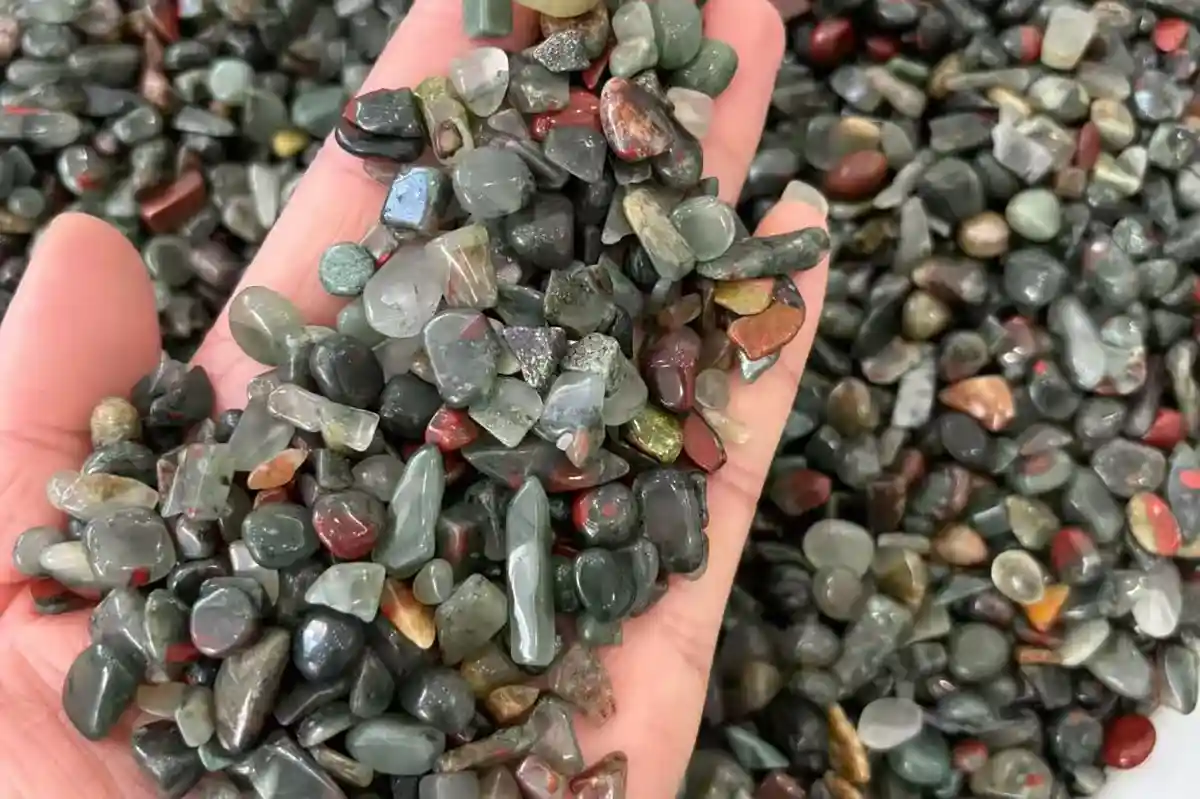
Jasper Spiritual Meaning and Symbolism
Jasper spiritual meaning often centers on steadiness, patience, and a connection with the earth. In modern crystal traditions, people choose it as a symbol of support through demanding work, personal change, or uncertain times. However, these interpretations vary between practitioners and stone varieties.
Grounding, Protection, and Nurturing Strength
Grounding describes the symbolic idea of returning attention to the present moment. A jasper bracelet or pocket stone can serve as a reminder to pause, notice your surroundings, and approach the next task calmly.
Protection is another common theme in jasper symbolism. Some people carry the stone to represent personal boundaries or courage. Here, protection expresses an intention; it does not mean the stone can prevent accidents, illness, or other harm.
Jasper is also known in modern crystal writing as the “Supreme Nurturer.” This phrase describes its association with comfort, patience, and sustained support. For example, someone might choose jasper jewelry to mark a difficult transition or celebrate steady progress toward a goal.
Together, these ideas explain much of jasper significance: its meaning often rests in the qualities a person wants to remember and practice.
Jasper Metaphysical Meaning
Jasper metaphysical meaning builds on the same themes through beliefs about energy and spiritual connection. Practitioners may describe jasper stone metaphysical properties as grounding, balancing, or protective. These descriptions belong to crystal belief systems rather than measured mineral properties.
The metaphysical properties of jasper also change with the variety. Red jasper commonly represents determination and vitality, while picture jasper suggests reflection and a connection with nature. Such associations offer ways to interpret a stone, but they are not fixed rules.
When choosing jasper, consider both its appearance and the meaning you give it. A pattern that reminds you of a familiar landscape may hold more personal value than a general list of spiritual attributes.
Chakra Associations and Personal Intentions
In chakra practices, red jasper is commonly associated with the root chakra and themes of security and belonging. Yellow varieties may be linked with the solar plexus chakra, while green stones sometimes represent heart-centered intentions. These connections vary across modern traditions.
You can use jasper as a simple cue for reflection. Hold a polished stone, take a quiet moment, and choose an intention such as “I will approach this task with patience.” Alternatively, wear a bracelet as a reminder throughout the day.
The stone gives that intention a visible, tangible form. Its role in this practice is personal and symbolic, with no need to promise a particular outcome.
Jasper in History and the Bible
Jasper has a place in both surviving historical objects and religious texts. These sources show how people valued the stone, although they do not always use gemstone names in the same way we do today.
Historical Uses of Jasper
Ancient Egyptian craftspeople shaped jasper into small amulets. For example, the Metropolitan Museum of Art holds a red jasper heart amulet with a human head, dated to the New Kingdom or early Third Intermediate Period. This object provides a specific example of jasper’s use in Egyptian religious craftsmanship.
Such objects help connect jasper history with the material itself: its color, carved form, and cultural setting. However, one amulet cannot establish what every ancient community believed about jasper. Its meaning depended on the object and the people who made or used it.
Therefore, historical use and modern crystal symbolism should remain distinct. A surviving artifact documents how people worked with a stone; it does not prove modern claims about energy or healing.
Jasper Meaning in the Bible
The meaning of jasper in the Bible comes from its place in sacred descriptions. In Exodus 28:17–21, the NIV lists jasper among the stones mounted on the priestly breastpiece. The passage connects the twelve stones with the names of Israel’s twelve tribes.
Jasper also appears in descriptions of the New Jerusalem. In Revelation 21:11–21, it features in the city’s radiance, wall, and first foundation. Within this passage, jasper contributes to imagery of divine glory, beauty, and splendor. These are contextual interpretations of jasper biblical meaning, rather than a fixed list of powers assigned to the stone.
There is also an important naming distinction. Revelation describes jasper with crystal-like clarity, whereas modern jasper is generally opaque. As the Online Etymology Dictionary notes, the ancient gemstone term had a broader meaning than its modern use. Consequently, a biblical reference should not serve as a precise mineral identification for a stone sold today.


Jasper Colors and Varieties and Their Meanings
Jasper stones carry different symbolic meanings according to their color, pattern, and commercial variety. The comparisons below summarize common interpretations in modern crystal traditions. These are personal and spiritual associations, rather than fixed meanings or proven effects.
Jasper Color Meanings
Color offers a simple starting point when choosing a stone. However, jasper stone color meaning is only one part of its appeal: the pattern, shape, and story behind a piece can matter just as much.
| Color and meaning | Typical appearance | Common symbolic associations |
|---|---|---|
| Red jasper meaning | Brick red to reddish brown, sometimes with contrasting markings | Courage, perseverance, and grounding |
| Yellow jasper meaning | Mustard, ochre, and earthy yellow tones | Confidence, optimism, and patience |
| Green jasper meaning | Green shades with variable patches or markings | Renewal, balance, and connection with nature |
| Black jasper meaning | Dark gray to black material sold under this name | Protection, boundaries, and inner strength |
| Blue jasper meaning | Blue or blue-gray material with variable patterns | Calm expression, reflection, and patience |
Black jasper spiritual meaning often emphasizes standing firm during change. By comparison, green jasper stone spiritual meaning usually focuses on growth and renewal. Color alone, however, cannot establish a material’s identity or treatment status.
For a closer look at appearance and variation, explore our jasper stone color guide.
Landscape and Orbicular Patterns
Landscape-like markings and rounded patterns give these materials their distinctive appearance. The names below include commercial varieties, so they should not be read as a list of geologically identical stones.
| Variety and meaning | Commonly sold appearance | Modern symbolic associations |
|---|---|---|
| Mookaite meaning | Cream, mustard, burgundy, and earthy red patches | Adaptability and practical decision-making |
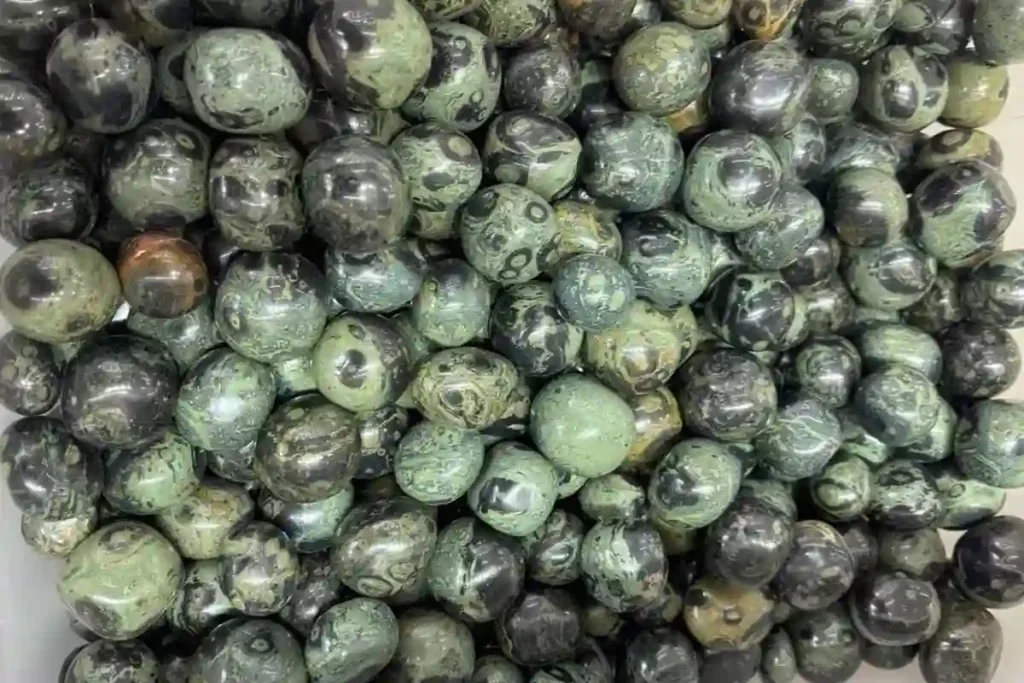
| Kambaba jasper meaning | Dark green material with rounded black patterns | Patience, reflection, and steadiness |
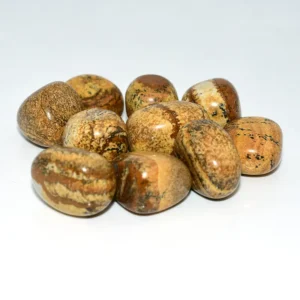
| Picture jasper meaning | Tan and brown patterns resembling landscapes | Earth connection and perspective |
| Ocean jasper meaning | Variable colors, often with rounded or orb-like markings | Joy, renewal, and emotional balance |
Choose according to the actual piece rather than its name alone. A broad landscape pattern may stand out in a pendant, while smaller markings can work well across a bead strand.
Contrasting and Spotted Patterns
Strong contrasts, speckles, and abstract lines create a different visual effect. Their symbolic meanings often draw on ideas of balance, creativity, or companionship.
| Variety and meaning | Commonly sold appearance | Modern symbolic associations |
|---|---|---|
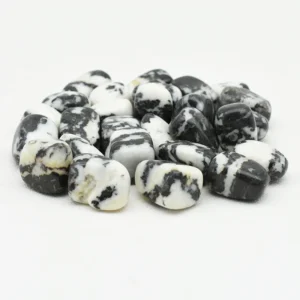
| Zebra jasper meaning | Contrasting light and dark patterns | Balance, cooperation, and motivation |
| Dalmatian jasper meaning | Cream or beige material with dark spots | Playfulness, loyalty, and lightheartedness |
| Kiwi jasper meaning | Pale greenish material with dark speckles | Support, calmness, and companionship |
| Picasso jasper meaning | Abstract lines and contrasting patches | Creativity and openness to change |
For jewelry, compare several pieces together. A striking individual bead may look different from the overall strand, especially when the markings vary in size or contrast.
Multicolored and Other Trade Varieties
These names cover a broad range of appearances. When comparing products, check the supplier’s material description alongside the color and pattern.
| Variety and meaning | Commonly sold appearance | Modern symbolic associations |
|---|---|---|
| Imperial jasper meaning | Varied colors with bands, patches, or rounded patterns | Composure, confidence, and personal growth |
| Pink zebra jasper meaning | Pink-toned material with contrasting markings | Kindness and supportive relationships |
| Polychrome jasper meaning | Broad patches of contrasting earthy colors | Creativity, adaptability, and grounding |
| Fancy jasper meaning | Mixed colors and irregular patterns | Balance, flexibility, and cooperation |
| Leopard jasper meaning | Spotted or rounded patterns resembling an animal’s coat | Resilience and adaptability |
Polychrome jasper spiritual meaning often draws on its contrasting colors as a symbol of embracing change while staying grounded. Likewise, fancy jasper spiritual meaning and fancy jasper crystal meaning commonly emphasize harmony within variety.
When sellers describe fancy jasper properties, separate these symbolic ideas from measurable material characteristics. Choose a stone for the appearance and personal meaning that appeal to you, rather than expecting a particular result.
Trade Names and Related Stones
Commercial names do not always describe mineral composition accurately. For example, GIA’s study of Dalmatian stone explains why “Dalmatian jasper” is a misleading geological name, despite its widespread use in the trade.
Unakite is another important distinction. The North Carolina Geological Survey describes it as a granitic rock containing epidote, feldspar, and quartz. Therefore, it belongs here as a related ornamental material, rather than a true jasper variety. Our unakite meaning guide explores its symbolism separately.
Similarly, do not assume that pink jasper meaning refers specifically to pink zebra jasper. Names such as Ibis Jasper and Cobra Jasper also require a clear material description before comparison. When buying, confirm what the supplier means by the name and whether any color treatment applies.
Jasper Benefits and Everyday Uses
Jasper benefits include its decorative appeal, versatility in jewelry, and value as a meaningful personal object. Its colors and patterns suit many designs, while its traditional symbolism can add a story to a gift or keepsake.
Symbolic Benefits and Personal Practices
People discussing jasper stone benefits often mean the comfort or encouragement they associate with the stone. A bracelet might mark a fresh start, while a pocket stone could remind someone of a commitment they want to keep.
For example, place a polished piece beside a journal and use it as a cue to write down one practical goal. Alternatively, carry it as a keepsake from someone who supports you. These activities connect the object with a habit, memory, or intention.
The benefits of jasper stone in these situations are personal. Different people may respond to the same piece differently, so there is no required ritual or guaranteed result.
Jasper Beads and Jewelry Meanings
Jasper beads meaning comes from both the material’s traditional associations and the choices behind a design. Earthy colors may express a love of nature, while a handmade strand can celebrate the time and care involved in making it.
When selecting stone beads, consider how the pattern will look across the finished piece. Smaller beads create a more subtle design; larger beads give individual markings more space to stand out. Contrasting metal, wood, or other gemstone components can change the overall effect.
Jasper bracelet meaning often reflects the wearer’s intention or the occasion behind a gift. For someone comparing stone bracelets, comfort, fit, and construction matter alongside symbolism. A meaningful bracelet should also feel comfortable enough to wear.
Likewise, jasper ring meaning is not fixed. A ring may represent perseverance, affection, or simply an appreciation for an unusual pattern. Pendants offer another way to display a distinctive stone, especially when its markings form the focus of the design.
Tumbled Stones, Carvings, and Decor
Common jasper stone uses include polished pocket stones, palm stones, carvings, and decorative objects. Each form presents the material differently: a small tumble is easy to carry, while a larger carving can display a broader arrangement of colors.
For a quiet personal practice, keep a smooth stone nearby while reading, reflecting, or journaling. As decor, choose a piece whose colors complement the room and place it where you can enjoy its pattern.
Jasper stone meaning and uses can also come together in a gift. A carved heart may express care, while a small polished stone can accompany a note of encouragement. The shape, message, and relationship give the object its particular meaning.
How to Choose Jasper Stones and Beads
Choose jasper by checking the material description, the actual batch, and the quality of the finished pieces. A meaningful name or attractive sample photo cannot tell you everything about the stones you will receive.
Confirm the Material and Any Treatments
Start by asking what material the supplier is selling. As the variety guide above explains, some commercial names containing “jasper” refer to different kinds of rock. This distinction affects how you describe, compare, and care for a product.
Next, ask whether the material has undergone dyeing, filling, stabilization, or surface coating. A treated stone may still suit your design, but you need clear disclosure to make an informed choice and describe it accurately to customers.
When considering how to tell if jasper is real, avoid relying on one visual clue. Irregular patterns do not prove natural origin, and a cool surface does not establish identity. Likewise, a bright color is a reason to ask questions, rather than automatic proof of dyeing.
For a higher-value purchase or uncertain material, seek identification from a qualified gemologist or laboratory. Avoid scratch or solvent tests on finished goods, since they can damage the stone, treatment, or polish.
Check Color, Pattern, Polish, and Drilling
Request photos and videos of the actual goods, including several strands or stones together. Close-ups help reveal surface quality, while wider views show the overall color range.
For beads and polished pieces, check:
- Color and pattern: Does the full batch match the range you agreed to accept?
- Polish: Look for uneven shine, rough patches, pits, and visible surface residue.
- Condition: Examine cracks, chipped edges, and damage around drill holes.
- Dimensions: Confirm bead diameter, strand length, hole size, or individual stone measurements.
- Consistency: Compare several pieces, especially when a design requires matching pairs or a controlled palette.
Our Ocean Jasper orders provide a useful example. One European customer purchases around 20 kg per order. Before shipment, we use video to confirm the main colors with the customer. This gives us a shared reference for the appearance they expect, rather than relying on the variety name alone.
For your own order, agree on the acceptable variation before buying. A mixed-color batch may suit individual statement pieces, while coordinated jewelry sets may require closer sorting. Clear expectations make the selection process more useful than a grade label without supporting details.
How to Clean and Care for Jasper
Gentle cleaning is a practical starting point for ordinary, untreated jasper. However, the method should also suit any treatments, metal fittings, glue, or cord in the finished piece.
Gentle Cleaning Steps
For a loose, polished stone with confirmed treatment status, follow these steps:
- Wipe away surface dust with a soft cloth.
- Clean gently with lukewarm water and a little mild soap.
- Rinse briefly to remove soap residue.
- Pat dry with a clean cloth before storing.
For strung beads or glued jewelry, use a lightly dampened cloth instead of soaking the whole piece. Allow the cord and areas around drill holes to dry fully.
Treated Stones and Cleaning Equipment
Treatment information matters. GIA’s introduction to gem treatments explains that alcohol or acetone can dissolve some gemstone dyes, while prolonged sunlight may cause dyed colors to fade. Therefore, avoid solvents when cleaning jasper of uncertain treatment status.
Also, skip ultrasonic and steam cleaning unless a qualified jeweler confirms that the complete piece is suitable. GIA’s ultrasonic cleaning guidance highlights risks involving treatments, fractures, and certain gem materials. A commercial “jasper” name alone does not establish suitability for these methods.
Storage and Symbolic Cleansing
Store polished pieces separately in soft pouches or divided compartments to reduce rubbing and accidental knocks. Remove bracelets and rings before activities that could strike them against hard surfaces.
Finally, physical cleaning and spiritual cleansing serve different purposes. Washing removes dirt and residue; an intention-setting ritual expresses a personal belief. If symbolic cleansing is part of your practice, a quiet moment of reflection avoids exposing the stone and its fittings to salt, heat, or prolonged soaking.
Frequently Asked Questions
What Is the Spiritual Meaning of Jasper?
Jasper spiritual meaning commonly centers on grounding, protection, patience, and courage. In modern crystal traditions, people use it as a symbol of steadiness or a reminder of personal intentions. Its meaning varies by variety and individual interpretation.
What Does Jasper Mean in the Bible?
Jasper appears among the stones of the priestly breastpiece and in descriptions of the New Jerusalem. In these passages, it contributes to imagery of sacred beauty and divine glory. However, ancient gemstone names do not necessarily identify the same materials sold under those names today.
Is Jasper a Crystal or a Rock?
Jasper is a quartz-rich aggregate made of tiny crystals, rather than one large crystal. It is generally described as an ornamental rock or gem material. Sellers also use “jasper crystal” informally, especially in jewelry and spiritual contexts.
Is Jasper the Same as Jade?
No. Jasper is quartz-rich, while jade generally refers to nephrite, jadeite, and certain green omphacite materials. Similar colors or translated names can cause confusion, so confirm the material rather than identifying it by appearance alone.
How Can You Tell If Jasper Is Real?
Start with a clear material description and treatment disclosure. Photos can help you assess patterns, polish, and condition, but they cannot conclusively establish identity. Coolness, weight, or a scratch test alone is insufficient. For uncertain or higher-value pieces, seek identification from a qualified gemologist or laboratory.
Conclusion
Jasper meaning brings together traditional symbolism, distinctive patterns, and personal connections. Often associated with grounding, courage, and patience, it offers many ways to express an intention or enjoy a natural decorative material.
When choosing a piece, consider its appearance and practical quality alongside its story. Confirm the material and any treatments, then compare the color range, polish, dimensions, and construction. These details help you select stones that suit your design, collection, or customers.
Looking for jasper beads, bracelets, tumbled stones, or carvings for your business? Contact Rocrystal through WhatsApp or our inquiry form. Share your preferred variety, size, quantity, and color range so we can discuss suitable options.
Disclaimer
Spiritual meanings, chakra associations, and metaphysical benefits discussed in this article reflect traditions, beliefs, and personal interpretations. They are not established medical effects and should not replace professional health care. Commercial stone names may cover different materials, so confirm identity, treatments, and care requirements before purchasing.
References
- Mindat — Jasper: Material description and mineral inclusions.
- Online Etymology Dictionary — Jasper: The gemstone word’s origin and historical usage.
- GIA — Jade Description: Materials classified as jade.
- The Metropolitan Museum of Art — Heart Amulet with Human Head: A historical red jasper artifact.
- Bible Gateway — Exodus 28:17–21 and Revelation 21:11–21: Biblical passages discussed in this guide.
- GIA — True Colors of “Dalmatian Jasper”: Research on Dalmatian stone and its commercial name.
- North Carolina Geological Survey — Mineral Localities of North Carolina: Unakite’s mineral components.
- GIA — An Introduction to Gem Treatments: Treatments and related care considerations.
- GIA — Ultrasonic Cleaners for Gems: Cleaning risks involving treatments and fractures.