
Unakite Meaning: Properties, Uses, and Care
Written by Roc Gong | Founder of RoCrystal
Last updated: October 23, 2026
Unakite meaning centers on emotional balance, patience, and personal growth in modern crystal traditions. Its green and pink colors are often interpreted as symbols of renewal and compassion. Some people carry a polished piece as a reminder to slow down, reflect, and approach change with care. These meanings are symbolic beliefs rather than proven healing effects.
There is also a practical side to this colorful stone. Understanding what unakite is, how it is used, and what to check before buying can help you choose beads, jewelry, or tumbled stones with more confidence. This guide explores those topics alongside our firsthand experience checking a 100 kg wholesale order.
What Is Unakite?
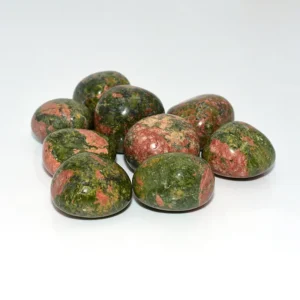
Unakite is a green-and-pink rock made mainly of epidote, feldspar, and quartz. Because it contains several minerals, it is classified as a rock rather than a single mineral. A geological study hosted by the University of Maryland describes it as an altered granitic rock and traces its name to the Unaka Mountains between Tennessee and North Carolina.
Its familiar mottled appearance comes from the minerals within it:
- Green epidote forms the green areas.
- Pink feldspar contributes pink or salmon-colored patches.
- Quartz adds clear, grayish, or whitish areas.
The proportions vary, so one piece may appear mostly green while another shows larger pink patches. Mindat’s documented unakite specimen illustrates this combination of green epidote, pink orthoclase feldspar, and quartz.
How Is Unakite Formed?
Unakite forms when hot fluids alter an existing granitic rock. During this process, some original minerals are replaced by epidote, while quartz and potassium feldspar can remain relatively unchanged. This helps explain why the finished rock contains distinct green and pink areas. The University of Maryland study examines this alteration in unakite from Virginia’s Blue Ridge Mountains.
Is Unakite the Same as Jasper?
You may see names such as “unakite jasper” or “unakite crystal” in shops. These labels can help you find products, but they do not describe its geology precisely.
Unakite is an altered granitic rock containing several minerals. Jasper is an opaque, microcrystalline quartz material. If you are exploring jasper meaning alongside unakite stone meaning, keep their symbolic associations separate from their mineral identities. A commercial name alone should not determine how a stone is described or labeled.

Unakite Meaning and Spiritual Symbolism
In modern crystal traditions, unakite spiritual meaning is often linked to emotional balance, compassion, and gradual change. Its mix of green and pink provides a visual metaphor: growth can happen alongside kindness toward yourself.
People exploring unakite metaphysical properties may use the stone as a personal reminder during reflection or meditation. These associations belong to spiritual practice and personal belief, rather than established effects of the rock.
Emotional Balance and Self-Acceptance
Unakite is often associated with making room for difficult feelings while choosing how to respond to them. In this symbolic sense, balance does not mean feeling calm all the time. It means recognizing an emotion without letting it decide every action.
A polished stone can serve as a simple reminder to pause. For example, someone might keep a piece beside a journal and use it as a cue to write down what they feel, what they need, and what they can reasonably do next.
Patience and Personal Growth
Another common interpretation of unakite crystal meaning is steady progress. Green is often associated with renewal, while pink represents care and compassion within these crystal traditions.
Together, those colors can symbolize a patient approach to change. Learning a skill, adjusting to a new routine, or working toward a long-term goal takes time. Someone who connects with this meaning might choose unakite as a reminder to notice small steps and set realistic expectations.
Reflection and the “Stone of Vision”
Some crystal practitioners call unakite a “stone of vision,” connecting it with insight and spiritual reflection. Here, vision refers to an interpretation within crystal belief systems, rather than improved eyesight or a demonstrated ability to predict events.
For everyday use, this symbolism can become a straightforward reflection prompt: What matters to me, and what is one useful step I can take? The stone provides a personal point of focus; the decisions and actions remain your own.

Unakite Chakra and Zodiac Associations
Within modern crystal practices, unakite is most often associated with the heart chakra. Some traditions also connect it with the third eye. These associations offer a spiritual framework for reflection; they are not physical properties of the stone.
Heart Chakra and Third Eye Symbolism
The heart chakra is traditionally linked with love, compassion, and connection. Crystal practitioners associate unakite’s pink and green colors with these themes, making it a symbolic choice for meditation focused on kindness toward yourself or others.
Its third eye association relates to intuition and inner awareness. Someone following this practice might keep a stone nearby while reflecting on a decision. You can also hold a smooth piece during meditation without placing it on your body or following a specific ritual.
What Zodiac Sign Is Unakite Associated With?
Scorpio is a common unakite zodiac association in contemporary crystal guides. Some sources include other signs, so there is no single agreed list. Within these belief systems, the connection usually centers on transformation, emotional reflection, and personal growth.
Your zodiac sign does not need to determine whether you wear unakite. Color, comfort, jewelry design, and personal meaning are equally valid reasons to choose it. A necklace or bracelet can be meaningful without an astrological connection.
What Is Unakite Used For?
Unakite is used for beads, pendants, rings, tumbled stones, and decorative carvings. Its green-and-pink pattern gives each piece a different look. The best format depends on whether you want to wear it, display it, or hold it during quiet reflection.
Unakite Jewelry
An unakite necklace or pendant can show a broad area of the stone’s natural pattern. Beaded necklaces and stone bracelets repeat those colors across several smaller pieces, creating a more varied design.
For jewelry projects, consider how the colors work together. Pink accents can highlight the feldspar, while neutral beads or simple metal spacers let the mottled stone stand out. You do not need to match every bead exactly; aim for a combination that looks balanced to you.
An unakite ring offers another way to feature the pattern. When comparing designs, check whether the setting leaves the stone’s edges exposed and whether the ring suits your daily activities.
Tumbled Stones and Decorative Pieces
An unakite tumbled stone works well as a small display piece or a stone to hold. Choose a size that feels comfortable in your hand, and check the surface for rough edges or obvious chips.
Hearts, spheres, and other carvings offer different ways to display the material. A small piece can sit beside books or on a desk, while a larger carving can become the focus of a shelf. Choose a stable spot where it will not easily fall.
Meditation and Personal Reflection
Some people include unakite in meditation or journaling because they connect with its symbolism. A simple practice is to hold a smooth piece, breathe at a comfortable pace, and focus on one question or intention.
In this setting, unakite crystal benefits refer to the meaning someone finds in the practice. The stone can act as a reminder to pause or reflect, without any need for a complex ritual.
How to Choose Unakite Stones
When choosing unakite, look beyond the green-and-pink pattern. Check the surface, edges, and finish, then consider whether the piece suits its intended use. An attractive color mix does not make up for a deep chip or an uncomfortable rough edge.
Check Color and Finish Together
Some pieces show more green, while others have larger pink patches. Choose a mix you like, or agree on a general color range when ordering a batch. Matching every pattern exactly is less useful than checking whether the pieces look good together.
Turn polished stones under good light and inspect them from several angles. Look for:
- Obvious chips or deep pits, especially around the edges.
- Rough areas that interrupt an otherwise smooth surface.
- Visible cracks that need closer inspection.
- Uneven finishing that affects the appearance or feel.
For stone beads, also check the drill holes and size consistency. For tumbled stones, pay attention to how each piece feels in your hand.
What We Learned from a 100 kg Unakite Order
An American customer once ordered 100 kg of unakite tumbled stones from us. After the factory finished production, I inspected the goods and found obvious chips and missing sections on some pieces.
I photographed the problem and asked the factory about it. The supplier explained that workers had left defective areas in the rough during cutting, making them difficult to remove through later grinding and polishing. That was their explanation for this batch, but the finished stones still did not meet our requirements.
I sorted out approximately 10 kg and returned them. The order was urgent, so I bought another 10 kg of ready stock from a different shop at a higher price. After checking the replacement stones, we combined them with the accepted goods, packed the order, and shipped it to the customer.
The lesson was straightforward: a polished surface does not guarantee a well-finished stone. Color matters, but checking for obvious defects matters too.
Confirm Expectations Before a Bulk Order
For wholesale purchases, request close-up photos or a video of the actual batch. Agree on the size range, acceptable surface condition, and general appearance before shipment. Clear examples of acceptable and unacceptable pieces help both sides understand the order requirements.

How to Clean and Care for Unakite
Gentle cleaning and careful storage help keep unakite looking its best. Before cleaning jewelry, check the whole piece, including its cord, metal parts, and any glued settings.
Cleaning the Surface
Start with a soft, dry cloth to remove dust. For routine surface dirt:
- Dampen a soft cloth with lukewarm water and a little mild soap.
- Gently wipe the stone without scrubbing chipped or cracked areas.
- Remove soap residue with a clean, damp cloth.
- Pat dry before storing.
For necklaces and bracelets, follow the maker’s care instructions for the cord, clasp, and setting. A damp cloth lets you clean the stone while keeping moisture away from other components. Avoid soaking pieces when you do not know how their fittings will react.
Storage and Everyday Care
Store individual pieces in soft pouches or separate compartments to limit contact. Place carvings on stable shelves, away from edges where they could fall.
Remove rings and bracelets before activities that could knock them against hard surfaces. If you notice a chip, rough edge, or loose setting, inspect the piece before wearing it again.
For bulk storage and shipping, use cushioning between pieces instead of relying only on an outer bag. Check that heavier stones cannot move freely and strike smaller items inside the package.
How to Cleanse and Charge Unakite
In crystal practices, “cleansing” and “charging” describe symbolic rituals. Physical cleaning removes dirt; these rituals express a personal intention.
A simple approach is to hold a clean, dry stone, take a quiet moment, and choose a thought to focus on. You could also place it beside a journal as a reminder of that intention.
There is no required ritual or schedule. Choose a practice that feels meaningful without exposing the stone, cord, or setting to unnecessary moisture or dirt.
FAQs About Unakite
Can You Wear Unakite Every Day?
You can wear unakite jewelry regularly, provided the design suits your activities. Check the cord, clasp, and setting, and remove rings or bracelets before work that could knock them against hard surfaces. Daily wear does not require a cleansing or charging ritual.
Is Unakite Always Green and Pink?
Green and pink are its characteristic colors, but their proportions vary. Some pieces look mostly green, while others show larger salmon-pink patches. Color alone cannot confirm a stone’s identity, origin, or treatment status.
What Are Unakite Healing Properties?
In crystal traditions, unakite healing properties refer to symbolic associations with balance, compassion, and growth. People may choose it for meditation or personal reflection. These beliefs do not establish that the stone can treat emotional or physical health conditions.
Does Unakite Have Any Side Effects?
There is no need to interpret discomfort or changes in mood as an “energy reaction” to unakite. For jewelry, check practical causes such as a tight fit, rough edges, or sensitivity to metal components. Stop wearing a piece if it irritates your skin.
Can You Pair Unakite with Other Stones?
Yes. For jewelry, choose combinations based on color, size, weight, and comfort. Pink beads can highlight its warmer patches, while neutral accents let the mottled pattern stand out. Spiritual pairing rules vary between practitioners; they are not universal requirements.
Conclusion
Unakite meaning brings together themes of balance, compassion, and gradual growth in modern crystal traditions. Its green-and-pink pattern also makes it an appealing choice for jewelry, tumbled stones, and decorative pieces.
When choosing unakite, consider both its appearance and its finish. Check for obvious chips, rough edges, and visible cracks, and choose a size and shape that suit your needs. For bulk orders, agree on quality expectations and review photos of the actual batch before shipment.
Looking for unakite for your store or jewelry collection? Send your preferred product type, size, and quantity through our inquiry form or contact us on WhatsApp. We can discuss available options and help you check the details before ordering.
References
- University of Maryland — Hydrothermal Formation of Unakite in the Blue Ridge Mountains, Virginia: A geological study covering unakite’s mineral composition, naming history, and alteration processes.
- Mindat — Unakite Specimen Record: A documented specimen showing green epidote, pink orthoclase feldspar, and quartz.
Disclaimer
Spiritual meanings, chakra associations, and healing traditions in this article reflect beliefs and personal interpretations, not scientifically established health benefits. Unakite does not replace professional medical advice, diagnosis, or treatment. Our wholesale experience describes one specific order; natural variations and quality can differ between batches.