Jade Stone Meaning, Colors, Symbolism, and Uses
Written by Roc Gong | Founder of RoCrystal
Last updated: November 7, 2026
Jade often symbolizes good fortune, harmony, and wisdom. But what does jade stone mean to someone who wears or gives it? A jade bracelet might be a wish for good luck, while a pendant passed down in a family may carry a more personal meaning.
The meaning of jade stone can vary with the culture, the design, and the person who wears it. If you’re choosing a jade stone for jewelry or retail, there’s a separate question to answer. What material did the maker use? The label “jade” can refer to jadeite or nephrite, and some stones sold under jade trade names are made from other materials.
What Is Jade Stone?
Jade is a gemstone material that people use for beads, bangles, pendants, and carvings. The two traditional types of jade are jadeite and nephrite. The Gemological Institute of America (GIA) also includes certain green omphacite materials under the name jade. Tiny interlocking crystals give jadeite jade and nephrite jade their toughness.
Jadeite vs Nephrite
When you compare jadeite and nephrite, start with their appearance. Jadeite comes in colors such as green, white, lavender, and reddish orange. Nephrite also comes in green and white, along with shades such as gray, brown, and black. Since the colors overlap, a green bead could be either material. Ask for the specific material name when comparing two pieces that look similar. GIA’s jade description
| Jade properties | Jadeite | Nephrite |
|---|---|---|
| Mohs hardness | 6.5–7 | 6–6.5 |
| Common appearance | A wide color range, sometimes with uneven patches of color | Often more muted in color |
| Common uses | Beads, cabochons, bangles, and carvings | Beads, bangles, and carvings |
Hardness describes how well a material resists scratches. Toughness describes how well it resists chipping or breaking. Both types of jade are tough, even though jadeite is generally harder on the Mohs scale. GIA’s jade care and cleaning guide
What Does Jade Symbolize?
Jade often symbolizes good fortune, harmony, and wisdom. In Chinese tradition, the significance of jade also extends to virtue. For example, Confucius compared jade to virtuous character, and a traditional jade disk called a bi symbolizes heaven. These examples show how the meaning of jade stone can depend on the object and its cultural context. GIA’s jade overview origin.prod.gia.edu
What does jade represent when someone gives it as a gift? A bracelet can express a wish for good fortune, while a pendant passed down through a family can carry a sense of continuity. In this context, jade symbolism comes from both the piece itself and the story behind it.
Jade Stone Meaning for Love and Relationships
In modern crystal traditions, people often associate jade with patience, compassion, and harmony in relationships. A person might wear a jade pendant as a reminder to listen with care. Someone else might give a jade bracelet to mark an anniversary or celebrate a lasting friendship. The symbolism of jade jewelry can be as personal as the reason someone chooses to wear it.
Jade Spiritual Meaning
Jade spiritual meaning often centers on inner balance, patience, and steady growth. In modern crystal traditions, people sometimes connect green jade with the heart chakra and use it as a symbol of compassion. This view of jade crystal meaning gives the stone a personal role. For example, someone might keep a polished piece nearby as a reminder to slow down and respond with care during a difficult conversation.
When people talk about the metaphysical properties of jade, they may also mention protection and prosperity. In practice, a person might carry jade as a good-luck charm or hold it while setting an intention for a new project. These customs reflect personal beliefs. The spiritual meaning of jade stone can vary from one person to another, even when they choose the same kind of jade.
Jade Stone Color Meaning
Jade stone color meaning varies across cultures and modern crystal traditions. Green jade often symbolizes growth and good fortune, while people may choose white jade as a symbol of peace. These associations can help someone choose a gift. For a buyer, the same color raises a different question: what material gives the piece its appearance? Jadeite and nephrite share several colors, so color alone cannot identify the material. GIA’s jade description
Jade Color Meanings at a Glance
| Jade color | Common symbolic association |
|---|---|
| Green Jade Meaning | Growth, harmony, and good fortune. Some people associate lighter green shades with fresh starts. |
| White Jade Meaning | Peace, simplicity, and clarity. |
| Black Jade Meaning | Protection and steadiness in modern crystal traditions. |
| Purple Jade Meaning | Compassion and reflection. Lavender jade carries similar associations in modern crystal traditions. |
| Red Jade Meaning | Courage, energy, and confidence. |
| Yellow Jade Meaning | Optimism, warmth, and good fortune. |
| Blue Jade Meaning | Calm and reflection. If a seller uses “blue jade” as a product name, ask what material the name refers to. |
Natural Color, Dyed Color, and Trade Names
Two green beads can look similar in a photo even when they come from different materials or one has undergone color treatment. If you buy jade by the strand or in bulk, ask the supplier to state the material and disclose any known treatment. Then compare photos of several pieces from the actual lot under the same lighting. That gives you a better sense of the color range your customers will see. GIA’s jade care and treatment guide
Jade Stone Benefits and Uses
People talk about jade stone benefits in two ways. In crystal traditions, jade can serve as a personal symbol of good fortune or balance. When people ask about jade crystal benefits, they often have these symbolic associations in mind. In jewelry and carving, jade has a practical advantage. Its toughness makes it suitable for pieces that people wear or handle often. GIA’s jade care and cleaning guide
So what is jade stone used for? Common jade stone uses include beads for jewelry making, finished bracelets and pendants, polished display pieces, and carvings. If you’re interested in our Jade collection, tell us which product type you need for your shop or jewelry line.
Jade Beads and Bracelets
When shoppers ask about jade beads meaning, they may want to know what a finished bracelet could symbolize. For example, green jade beads can carry a wish for good fortune when someone gives the bracelet as a gift. If you string your own jewelry, compare stone beads by bead diameter, hole size, and how well the shades match across a strand.
For finished stone bracelets, check the fit as well as the bead size. Two bracelets can use the same bead diameter and still fit differently. If you plan to sell several sizes, ask for the inside circumference of each option.
Tumbled Jade Stones and Carvings
Polished jade pieces can work as pocket stones, small gifts, or shop displays. If you’re selecting tumbled stones for a mixed assortment, check the size range and surface finish across several pieces. For a carving, look at how the cut follows the stone’s color pattern. A band of color can highlight part of the design.
How to Identify and Buy Jade
How to Tell If Jade Is Real
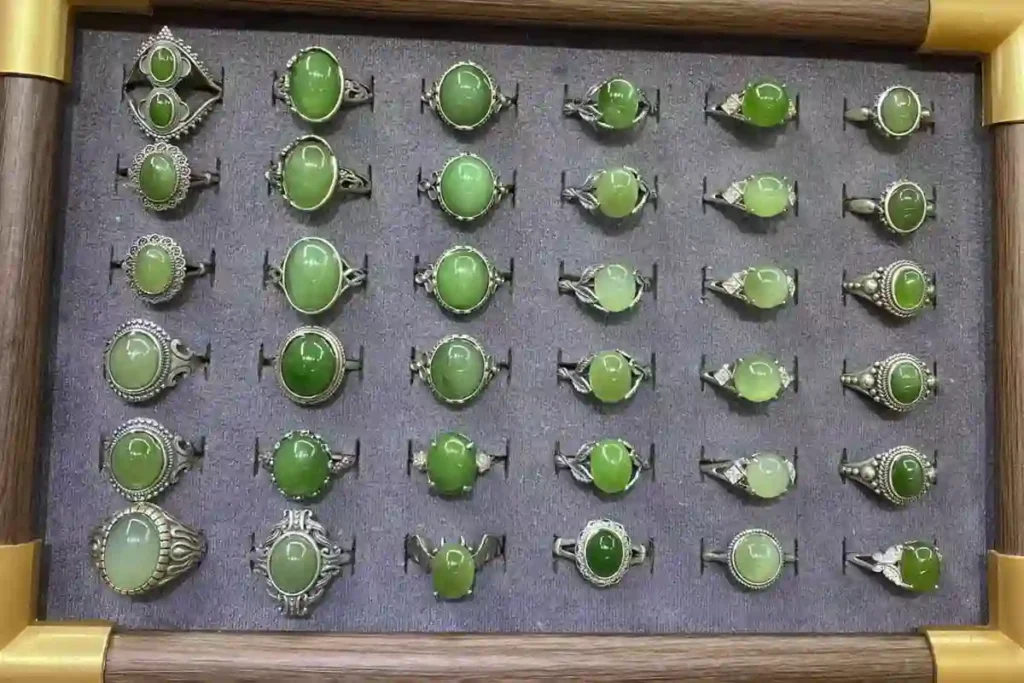
Start with two questions. What material is it, and what treatments has it undergone? A seller may use “jade” as a trade name for a look-alike, while a piece of genuine jadeite can still undergo dyeing or other treatments. Color and surface finish alone cannot settle either question. For a higher-value purchase, ask for a gemological report that identifies the material and states any treatments the lab detected.
What Does “Dyed Jade” Mean?
Dyed jade has added color. For jadeite, Type A refers to material with no treatment beyond possible surface waxing. Type B means acid bleaching followed by polymer impregnation. Type C means dyeing, and Type B+C combines the Type B process with dyeing. These labels describe treatment. When you compare two Type A pieces, look at their color, texture, transparency, and workmanship to judge their quality. GIA’s guide to jade treatment terminology
How Much Is Jade Worth?
Start with the material and treatment, then compare the color, transparency, texture, and workmanship of similar pieces. Jade hardness helps explain how well a piece resists scratches, while the finish and condition tell you more about the piece you’re buying. For a bulk bead order, check polish around the drill holes, bead diameter and tolerances, and how closely the strands match. Compare the approved sample with photos or video of the actual lot before you confirm the order. GIA’s jade buyer’s guide
My Experience Supplying Dyed Jade Beads in Bulk
Most of the jade products I currently supply are dyed jade beads. We disclose the color treatment and list the material separately when we can confirm it. One of my customers in India usually buys about 5,000 strands at a time and often orders several colors together. For green beads, he accepts only a deep shade. He believes deep green sells better and supports a higher retail price in his market. When he asks for green, I compare the available lots against the shade he wants before preparing the order.
On one order for 1,000 strands of deep green dyed jade beads, I quoted too low. The product price left me a margin of only RMB 0.10 per strand, or RMB 100 for the whole order, before extra handling costs. I honored the agreed product price. After discussing packing and local delivery to the customer’s freight forwarder, I charged a separate RMB 100 for those services. The order still left very little net profit.
When the customer later asked about the same beads, I quoted a price that covered the product and the work involved. He has asked about them since then, but he has never placed another order at the corrected price. I now use photos or video of the actual lot to confirm the shade and include color sorting, inspection, packing, and local delivery in the quote from the start.
Frequently Asked Questions
What Is the Meaning of Jade Stone?
Jade often symbolizes good fortune, harmony, and wisdom. The meaning of jade stone also depends on the piece and the occasion. A bracelet may express a wish for good luck, while a family pendant may carry memories of the person who wore it.
Is Jade a Crystal or a Gemstone?
Jade is a gemstone material. Tiny interlocking mineral crystals give jadeite and nephrite their toughness. That structure helps explain why people use both materials for jewelry and carvings. GIA’s jade description
Is All Jade Green?
No. Jade can also come in white, black, and other colors. Jadeite can show lavender or reddish-orange tones, while nephrite can range from creamy white to dark green. Several colors occur in both materials, so color alone cannot tell you which one you have. GIA’s jade color and material guide
Why Do People Wear Jade Jewelry?
Some people wear jade jewelry as a reminder of family, good fortune, or a personal intention. Others choose jade for its color or because they like the way a piece feels when they wear it. The same jade bangle can have a different meaning for each person.
What Is Jade Stone Good For?
Jade works well for beads, bangles, pendants, and carvings because it resists chipping and breaking. Its surface can still scratch, so store jade jewelry separately from harder gemstones. GIA’s jade care and cleaning guide
Conclusion
Jade stone meaning often centers on good fortune, harmony, and wisdom. The meaning of a particular piece can also come from its design, the occasion, or the person who gave it. If you’re buying jade for resale, confirm the material and any known treatments, then check whether the color, size, and finish suit your product range.
If you’re sourcing jade for your shop or jewelry line, share your preferred color, size, product type, and quantity. Message us on WhatsApp or use our contact form to ask about current options.
Disclaimer
This article discusses jade’s spiritual meanings as cultural traditions and personal beliefs. It offers no medical advice. For a specific piece, consult a qualified gemological laboratory to identify the material and check for treatments.
References
- Gemological Institute of America (GIA), Jade Overview. Cultural background and traditional jade objects.
- GIA, Jade Description. Jadeite, nephrite, and their color ranges.
- GIA, Jade Care and Cleaning. Hardness, toughness, and cleaning guidance.
- GIA, What Is “B” Jade?. Type A, B, and C jadeite treatment terminology.
- GIA, Jade Buyer’s Guide. Color, texture, transparency, and other quality factors.