
Black Obsidian vs Black Tourmaline: Differences, Benefits, and Uses
Written by Roc Gong | Founder of RoCrystal
Last updated: September 12, 2026
Black obsidian and black tourmaline may look similar because both are usually deep black. However, they are not the same material. Black obsidian is volcanic glass formed when lava cools rapidly, while black tourmaline is a crystalline mineral with natural grooves along its surface. They also differ in weight, texture, shape, durability, and appearance. Black obsidian is generally smoother and lighter, while black tourmaline often feels heavier and has a more textured surface.
Understanding the differences between Black Obsidian vs Black Tourmaline can help you choose the right stone for jewelry, decoration, spiritual practices, or wholesale purchasing. This guide compares their physical characteristics, traditional benefits, protection uses, beads, tumbled stones, rough material, and care requirements. It also explains what buyers should check when evaluating product quality, batch consistency, natural surface features, and shipping weight.

Black Obsidian vs Black Tourmaline at a Glance
The main difference between black obsidian and black tourmaline is their material structure. Black obsidian is volcanic glass, so it often has a smooth surface and glass-like shine. Black tourmaline is a crystalline mineral that commonly shows natural lines, grooves, and irregular shapes. Pieces of a similar size may also feel different because black tourmaline is generally heavier than black obsidian.
| Feature | Black Obsidian | Black Tourmaline |
|---|---|---|
| Material type | Natural volcanic glass | Crystalline tourmaline mineral |
| Formation | Rapid cooling of silica-rich lava | Forms through geological mineral processes |
| Surface | Smooth and glass-like | Textured with natural grooves |
| Weight | Generally lighter | Generally heavier |
| Tumbled shape | Rounded and relatively consistent | Full, narrow, long, or irregular |
| Rough appearance | Similar to broken black glass | Similar to coal-like crystalline pieces |
| Traditional association | Reflection and transformation | Grounding and protection |
| Common products | Beads, bracelets, carvings, and tumbled stones | Rough stones, beads, pendants, and tumbled stones |
Neither stone is automatically better for every buyer. Black obsidian may suit customers who prefer a smooth finish, consistent shape, and lighter feel. Black tourmaline may appeal more to buyers who value natural texture, visible mineral structure, and greater weight. When comparing black tourmaline vs black obsidian, buyers should consider the product form, surface quality, intended use, retail market, and acceptable level of natural variation.
What Is Black Obsidian?
How Black Obsidian Forms
Black obsidian forms when silica-rich molten rock reaches or approaches the Earth’s surface and cools very quickly. This rapid temperature drop gives the atoms too little time to arrange themselves into an orderly crystal structure. Instead, the material hardens into natural volcanic glass. This formation process explains why black obsidian can have a smooth surface, sharp edges, and a bright glass-like shine when freshly broken.
Although people often call it an obsidian crystal, black obsidian is not a crystal in the strict mineralogical sense. It does not have the repeating internal structure found in crystalline minerals such as black tourmaline. Its dark color usually comes from small amounts of iron and other mineral components within the glass. These geological differences are central to any accurate comparison of obsidian vs tourmaline.
Appearance and Common Product Forms
Black obsidian usually has a deep black color and a smooth, glass-like shine. Thin edges may appear slightly translucent when held under strong light, while thicker pieces normally look solid black. Rough material often has curved, sharp fractures that resemble pieces of broken black glass. After polishing, the surface becomes smooth and reflective, making small scratches, chips, or uneven areas easier to notice.
Common black obsidian products include round beads, bracelets, pendants, tumbled stones, carvings, spheres, and rough pieces. Its relatively consistent color and polished finish make it suitable for jewelry and decorative items that require a clean appearance. Black obsidian tumbled stones also tend to be rounded and fairly uniform within the same size range. Wholesale buyers should still check the actual batch for surface scratches, sharp edges, polishing quality, and noticeable size differences before confirming an order.
What Is Black Tourmaline?
Mineral Structure and Formation
Black tourmaline is the common trade name for dark tourmaline, most often the iron-rich variety known as schorl. Unlike black obsidian, it is a crystalline mineral rather than volcanic glass. Its internal structure develops in an orderly pattern, which often produces long crystal forms with visible lines or grooves running along the surface.
This mineral can form in several geological environments, including granite pegmatites and some metamorphic rocks. The natural crystal structure explains why rough black tourmaline may appear column-like, irregular, or broken into coal-like pieces. Even after tumbling, some stones retain narrow grooves and uneven areas. These features do not always indicate poor polishing or damage. They may be part of the material itself, making mineral structure an important factor when comparing black tourmaline vs obsidian.
Appearance and Common Product Forms
Black tourmaline usually has a deep black color with a matte, slightly glossy, or textured surface. Rough crystals often show long grooves that follow the direction of their growth. Broken pieces may have irregular ends and uneven shapes. After polishing, these natural lines can remain visible, especially on tumbled stones. Buyers should not automatically treat every groove as a scratch or polishing defect.
Common black tourmaline products include rough stones, crystal points, round beads, bracelets, pendants, tumbled stones, carvings, and decorative pieces. Rough material is popular with customers who prefer a natural mineral appearance, while polished beads and tumbled stones work well for jewelry and retail displays. Compared with black obsidian, black tourmaline products often show more variation in shape, surface texture, and weight. Wholesale buyers should review current batch photos before ordering if they require a uniform finish.
Physical Differences Between Black Obsidian and Black Tourmaline
Appearance and Surface Texture
Black obsidian usually has a smooth, glass-like surface with a bright reflective shine. Its color often looks even, especially after the material has been polished into beads or tumbled stones. Rough pieces commonly show curved fractures and sharp edges that resemble broken black glass.
Black tourmaline has a more crystalline and textured appearance. Natural grooves often run along rough crystals, while polished pieces may retain visible lines, shallow pits, or uneven areas. These marks can look like scratches, but many follow the natural structure of the stone. When comparing black tourmaline vs black obsidian, buyers should look beyond color. Surface texture, shine, fracture pattern, and natural growth lines provide more useful clues than the shared black appearance.
Weight and How They Feel in the Hand
Black tourmaline generally feels heavier than black obsidian when pieces have a similar size and shape. The difference is often noticeable when comparing round beads, tumbled stones, or rough material side by side. Black obsidian usually feels lighter and smoother, while black tourmaline may feel denser and more textured.
Weight can also affect wholesale purchasing. A large batch of black tourmaline may have a higher shipping weight than the same number of similarly sized black obsidian pieces. However, weight alone cannot confirm the material because size, shape, internal fractures, and product processing can change how each piece feels. Buyers should combine weight with surface texture, shine, structure, and reliable product information.
Hardness and Durability
Black tourmaline ranks about 7 to 7.5 on the Mohs hardness scale, while black obsidian is usually around 5 to 5.5. This means black tourmaline generally resists surface scratches better. However, greater hardness does not make it unbreakable. Natural grooves, crystal edges, and internal fractures can still chip or crack after a strong impact.
Black obsidian is softer and behaves like natural glass. Polished beads and tumbled stones may develop scratches if they rub against harder materials. Rough pieces can also have sharp, fragile edges. Both stones should be stored separately from harder gemstones and protected from drops. For wholesale packing, soft wrapping and secure inner boxes help reduce movement, surface damage, and broken edges during transportation.
Differences in Beads, Tumbled Stones, and Rough Material
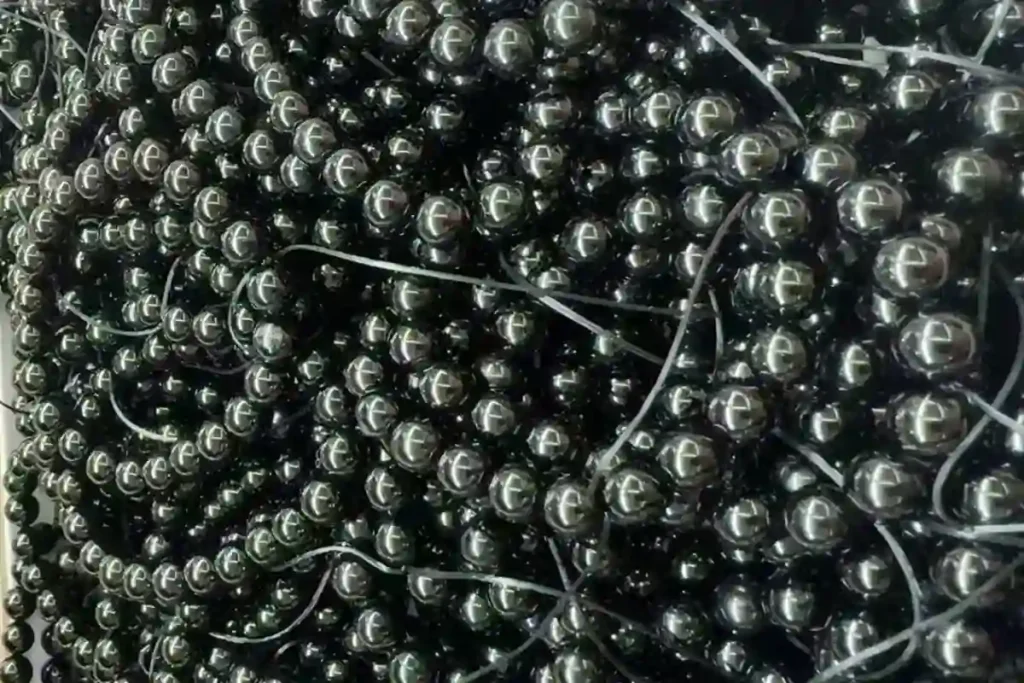
The differences between these materials change with the product form. Black obsidian beads normally have a smooth shine, even color, and a lighter feel. Black tourmaline beads are often heavier and may show small pits, mineral lines, or slight variations after polishing.
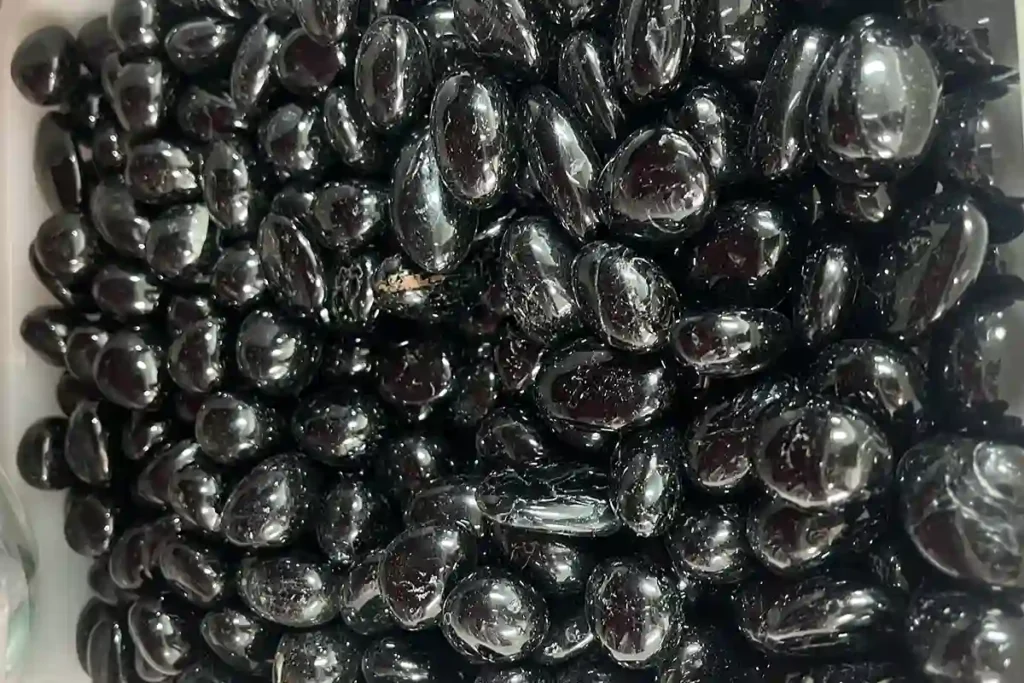
Tumbled black obsidian usually has a rounded shape and a relatively uniform surface. Tumbled black tourmaline can be full, narrow, long, or irregular, with natural grooves remaining on some pieces. These differences become even clearer in rough material. Broken black obsidian resembles shiny black glass, while rough black tourmaline often has a more crystalline, coal-like appearance. Buyers should compare the same product form because polishing and cutting can hide some natural features.
How to Identify Genuine Material
No single visual clue can confirm whether a stone is genuine. Buyers should compare its weight, surface texture, shine, fracture pattern, and internal structure. Clear photos and videos of the actual batch are more useful than heavily edited images. Thread color can reflect common manufacturing practice, but it is not a reliable identification test. When material authenticity has a major effect on value, buyers should request accurate supplier information or use an independent gemological laboratory for professional testing.
My Experience Comparing Black Obsidian and Black Tourmaline Products
Black obsidian and black tourmaline share the same dominant color, so buyers who have not handled both materials may think they are similar. In my experience working with their beads, tumbled stones, and rough pieces, the differences become much clearer when I compare their weight, surface, shape, and structure.
Differences Between the Beads
When I compare round beads of a similar size, black obsidian normally feels lighter. Finished strands are commonly made with clear elastic cord, which suits the smooth and glass-like appearance of the beads. Black tourmaline beads feel noticeably heavier and are often temporarily strung on black cotton thread in the wholesale market.
The thread provides a useful visual clue when sorting products, but I never use it as proof of the material. Factories may change the thread according to production needs. I also check the bead weight, polish, surface pits, natural lines, drill holes, and overall consistency before judging the batch.
Differences Between the Tumbled Stones
The contrast becomes more obvious when I inspect tumbled stones. Black obsidian pieces are usually rounded and full, with relatively consistent dimensions within the same size range. Their polished surfaces are smooth and reflective. This uniform appearance makes them easier to sort for customers who want neat retail displays or matching sets.
Black tourmaline tumbled stones are less consistent in shape. Some pieces are full, while others are narrow, long, or irregular. Their surfaces may also show natural grooves that look like knife scratches. In many cases, these lines follow the mineral structure and are not damage caused during polishing.
This difference needs to be explained before a wholesale order is shipped. Buyers who expect the smooth surface of black obsidian may incorrectly reject the natural texture of black tourmaline as a quality problem. I therefore prefer to show the actual batch through clear photos or videos. Black tourmaline also feels heavier, which can increase the total shipping weight of a bulk order.
Differences Between the Rough Stones
Rough material shows the clearest visual difference between these two black stones. In my experience, rough black obsidian often looks like fragments of broken black glass. Freshly fractured surfaces can appear smooth, shiny, and slightly curved. Some pieces also have sharp edges, so I handle and pack them carefully to reduce cuts, chips, and breakage.
Rough black tourmaline has a completely different structure. Irregular pieces can sometimes resemble fragments of black coal when viewed from a distance. A closer look usually reveals natural longitudinal grooves, uneven crystal faces, and a more solid mineral texture. It does not show the same smooth, glass-like fracture as black obsidian.
Photographs may hide some of these differences because both materials are black. Once buyers compare the structure, shine, texture, and weight in person, black obsidian and black tourmaline are usually easy to distinguish.
What Wholesale Buyers Should Confirm
Before confirming a wholesale order, buyers should review the actual batch rather than relying only on standard sample images. Important details include product form, size range, shape, surface texture, natural grooves, polishing quality, weight, and packaging. Customers should also explain how much variation their retail market can accept.
I prefer to provide clear photos or videos before shipment, especially for black tourmaline tumbled stones and rough pieces. This step helps prevent natural mineral features from being mistaken for defects. Buyers looking for current sizes, batch images, packaging options, or bulk pricing can contact us through WhatsApp or submit a Request a Quote form.
Black Obsidian vs Black Tourmaline Benefits
Traditional Benefits of Black Obsidian
In traditional crystal practices, black obsidian is often associated with self-reflection, emotional awareness, and personal transformation. Some users believe its dark, reflective appearance encourages them to examine difficult thoughts, recognize unhealthy patterns, and become more honest with themselves. For this reason, people may choose it during meditation, journaling, or periods of personal change.
Black obsidian is also commonly described as a symbolic stone for releasing negativity and setting clearer boundaries. These ideas come from spiritual traditions and personal experiences rather than established medical evidence. The stone should not be presented as a treatment for anxiety, depression, trauma, or any physical condition. Its value in these practices depends on the meaning and intention that each person gives it.
Traditional Benefits of Black Tourmaline
Black tourmaline is traditionally associated with grounding, stability, and personal protection. Some crystal users believe it helps them feel more centered when they face busy surroundings, emotional pressure, or stressful situations. It is often carried in a pocket, worn as jewelry, or placed near an entrance or workspace as a symbolic reminder to maintain calm and clear personal boundaries.
Many people also choose black tourmaline for daily use because its traditional meaning feels practical and steady. However, claims that it blocks harmful energy or protects against physical illness have not been scientifically established. These beliefs should be understood as part of spiritual practice rather than medical fact. Black tourmaline can support a personal routine, but it should never replace qualified medical or mental health care.
Healing Properties Compared
When comparing the traditional healing properties of black obsidian and black tourmaline, the main difference lies in how people use them. Black obsidian is more often connected with deep reflection, emotional awareness, and recognizing difficult personal patterns. Black tourmaline is usually associated with grounding, stability, and maintaining a sense of protection during daily activities.
These meanings can overlap, and individual experiences may vary. Neither stone has been scientifically proven to heal emotional or physical conditions. In spiritual practices, the better choice depends on whether someone prefers the reflective symbolism of obsidian or the steady, grounding meaning commonly linked with black tourmaline.
What They Have in Common
Black obsidian and black tourmaline are both widely used in meditation, personal rituals, protection-themed jewelry, and home or workspace displays. Their shared black color also makes them easy to combine with other stones and metal accessories. In traditional crystal practices, both are linked with protection, stronger boundaries, and reducing the influence of negative surroundings. These similarities explain why buyers often compare obsidian vs tourmaline benefits, even though the two materials have different structures, textures, and symbolic roles.
Which Is Better for Protection?
Black Obsidian for Reflection and Emotional Work
People who use crystals for spiritual purposes often choose black obsidian when they want to examine their thoughts, emotions, or repeated behavior patterns. Its reflective, glass-like surface has made it a symbol of honesty and self-awareness in many modern crystal practices. Some users keep it nearby while meditating or journaling because they feel it supports deeper personal reflection.
This type of protection is often described as becoming more aware of emotional triggers and setting clearer boundaries. However, black obsidian does not provide medically proven emotional protection or treatment. Its role is symbolic and depends on personal belief, intention, and the way each individual chooses to use it.
Black Tourmaline for Daily Grounding
Black tourmaline is more commonly selected for daily grounding and protection practices. Some users wear it as a bracelet or pendant, carry a small stone, or place rough pieces near entrances and workspaces. They believe its steady symbolism helps them maintain personal boundaries and feel more centered in busy or uncomfortable surroundings.
Unlike the reflective meaning often connected with black obsidian, black tourmaline is usually treated as a practical stone for regular use. Its traditional role focuses more on stability than deep emotional exploration. These effects have not been scientifically proven, so black tourmaline should be used as a personal or spiritual object rather than a substitute for professional care.
How to Choose Between Them
Neither stone is scientifically proven to provide stronger protection. Choose black obsidian if you prefer a smooth, glass-like appearance and symbolism connected with reflection and transformation. Select black tourmaline if you favor natural mineral texture, greater weight, and traditional associations with grounding and daily protection. Wholesale buyers should also consider product form, batch consistency, retail price, shipping weight, and customer preference. The best choice depends on the intended market rather than a universal judgment about which stone is more powerful.
Can You Wear Black Obsidian and Black Tourmaline Together?
Combining Them in Spiritual Practices
Yes, black obsidian and black tourmaline can be worn or used together. In traditional crystal practices, people often combine them because their symbolic roles are considered complementary. Black obsidian is linked with reflection and recognizing difficult patterns, while black tourmaline is associated with grounding and maintaining personal boundaries.
Some users wear both stones in one bracelet, carry them separately, or place them together during meditation. There is no fixed rule requiring this combination, and using both does not guarantee stronger protection. Personal comfort and preference matter most. Someone who finds the pairing too heavy in meaning or physical weight can use one stone at a time.
Practical Jewelry Considerations
Combining these stones in jewelry requires more than matching their black color. Black tourmaline beads are generally heavier, while black obsidian beads usually feel lighter and have a brighter, glass-like shine. Bead diameter, hole size, polish, and shape should be checked carefully so the finished bracelet or necklace looks balanced.
The stringing material must also support the total weight. A thin elastic cord that works well for a light obsidian bracelet may not suit a heavier mixed design. Jewelry makers should test the cord strength, knot security, and wearing comfort before production. Surface contrast can be attractive, but wholesale buyers should confirm whether their customers prefer a uniform finish or a more natural, textured look.
Which Stone Is Better for Jewelry and Retail Products?
When Black Obsidian Works Better
Black obsidian is often a better choice when buyers need products with a smooth surface, consistent black color, and clean polished appearance. Its lighter weight can make round-bead bracelets and necklaces more comfortable to wear, especially in larger bead sizes. The reflective finish also works well in pendants, carvings, spheres, and decorative pieces.
Tumbled black obsidian is suitable for matching sets and organized displays because pieces within the same size range are usually relatively uniform. However, buyers should still inspect the batch for scratches, chipped edges, uneven polishing, and excessive size differences. Its glass-like surface can make these defects easier to see under bright retail lighting.
When Black Tourmaline Works Better
Black tourmaline is a strong option for customers who prefer visible mineral texture, natural variation, and a heavier feel. Rough crystals, points, pendants, and tumbled stones often retain grooves or irregular areas that give each piece a distinct appearance. These features suit natural-style displays and protection-themed collections.
Polished black tourmaline beads can also work well in bracelets and necklaces, although they may show more surface variation than black obsidian. Retailers should explain that natural lines, shallow pits, and uneven shapes are not always defects. Buyers who require highly uniform products should confirm the grade and inspect the actual batch before ordering. Clear expectations make black tourmaline easier to present and sell.
Matching Products to Retail Customers
The right material depends on what the final customer values. Buyers seeking a smooth finish, lighter weight, and consistent shapes may prefer black obsidian. Customers who appreciate natural grooves, irregular forms, and a heavier mineral feel may choose black tourmaline. Crystal retailers, gift shops, and jewelry designers should match product form, quality grade, price, and appearance with their target market instead of selecting a stone based only on its traditional meaning.
Wholesale Buying Considerations
Shape and Size Consistency
Shape and size consistency can differ significantly between these materials. Black obsidian tumbled stones are usually rounded and relatively uniform within the same size range. Black tourmaline batches may contain full, narrow, long, or irregular pieces because the original crystal structure affects the finished shape.
Round beads should be checked for diameter, hole position, strand length, and noticeable size differences. Buyers who need matching sets or uniform displays should clearly define their tolerance before production. A stated size range does not mean every tumbled stone will have identical measurements, weight, or shape.
Surface Finish and Natural Features
A natural feature is not always a quality defect. Black tourmaline may retain longitudinal grooves, shallow pits, uneven surfaces, and irregular ends after processing. These characteristics can reflect its crystal structure. Black obsidian usually has a smoother finish, but minor flow patterns or natural inclusions may still appear.
Serious chips, loose particles, unstable cracks, poorly drilled holes, and incomplete polishing require separate attention. Wholesale buyers should agree on the acceptable standard before shipment. Clear close-up images help distinguish normal material variation from damage that could affect appearance, jewelry production, or resale.
Weight, Packaging, and Shipping Cost
Black tourmaline is generally heavier than black obsidian of a similar size, so bulk quantities may produce a higher chargeable shipping weight. Buyers should compare the total packed weight rather than estimating freight from the number of pieces alone.
Packaging requirements also differ. Rough black obsidian may have sharp, fragile edges that need individual wrapping or thicker cushioning. Black tourmaline rough can contain uneven crystal ends and loose surface particles, so it should be packed tightly enough to limit movement. Strong inner boxes, bubble wrap, and suitable outer cartons help reduce collision damage during international transportation.
Batch Confirmation Before Shipping
Before shipment, wholesale buyers should confirm the actual batch through clear photos or videos. The review should cover size range, shape variation, surface texture, polishing, natural grooves, packaging, and total weight. Black tourmaline requires particular attention because pieces may differ in fullness and visible crystal lines.
Written confirmation also helps both sides follow the same quality standard. If a buyer needs rounded stones, minimal grooves, or highly uniform beads, these requirements should be agreed upon before packing. Batch approval reduces misunderstandings and makes the received goods more suitable for the customer’s retail market.
How to Clean and Care for Both Stones
Caring for Black Obsidian
Clean black obsidian with a soft cloth and, when needed, a small amount of mild soapy water. Rinse it briefly and dry it completely. Avoid abrasive cleaners, stiff brushes, and rough surfaces because the polished glass-like finish can develop visible scratches.
Store obsidian separately from harder gemstones and metal jewelry. Rough pieces require extra care because freshly fractured edges may be sharp and fragile. Do not drop them or allow them to strike each other during storage. Bracelets should also be checked regularly for worn elastic cord, loose knots, chipped beads, and damaged drill holes.
Caring for Black Tourmaline
Clean black tourmaline with warm, mild soapy water and a soft cloth. A soft brush can remove dust from natural grooves, but scrub gently around crystal edges, surface pits, and internal fractures. Rinse the stone carefully and dry it completely before storage or display.
Avoid steam cleaners, ultrasonic cleaning, high heat, and sudden temperature changes because they may damage fractured or included material. Store rough pieces separately so irregular crystal ends do not strike other stones. For bracelets and pendants, inspect the cord, clasp, metal setting, and drill holes before cleaning. The safest method must protect the entire piece, not only the stone.
Black Tourmaline vs Obsidian vs Onyx and Other Black Stones
Several black materials can look similar after polishing, but they belong to different geological groups. Obsidian is volcanic glass, while black tourmaline is a crystalline mineral. Black onyx and black agate are varieties of chalcedony, and black spinel belongs to the spinel mineral group.
These differences affect hardness, weight, surface texture, fracture pattern, and value. Black tourmaline often shows natural grooves, while obsidian has a smoother glass-like appearance. Onyx and agate commonly have a waxier polish, and spinel can show a brighter gem-like luster. Questions such as black tourmaline vs obsidian vs onyx or black spinel vs black tourmaline cannot be answered by color alone. Reliable identification requires closer inspection and, when necessary, professional testing.
Frequently Asked Questions
Which Is More Powerful, Black Obsidian or Black Tourmaline?
Neither stone has been scientifically proven to possess stronger protective or healing power. In traditional crystal practices, black obsidian is often viewed as more intense because it is associated with self-reflection and personal transformation. Black tourmaline is usually considered steadier and is linked with grounding and daily protection. The better choice depends on personal belief, intended use, appearance, and how comfortable someone feels with each stone.
Can You Wear Black Tourmaline and Black Obsidian Together?
Yes, they can be worn together. Their matching black color works well in bracelets and necklaces, while their different shine and texture create visible contrast. In traditional practices, users may combine obsidian’s reflective symbolism with tourmaline’s grounding meaning. Jewelry makers should check bead diameter, hole size, total weight, and cord strength before production. Anyone who finds the combination uncomfortable or too heavy can wear one stone at a time.
Is Black Obsidian or Black Tourmaline Better for Protection?
Black tourmaline is more commonly associated with grounding, stability, and daily protection, while black obsidian is often linked with self-awareness, reflection, and personal transformation. For this reason, someone seeking a steady symbolic reminder may prefer black tourmaline. A person focused on examining emotions or habits may choose obsidian. Neither stone has scientifically proven protective power, so the decision should reflect personal belief, preferred appearance, intended use, and wearing comfort.
Who Should Not Wear Obsidian?
There is no scientific or universal rule stating that certain people must not wear obsidian. Someone may choose not to wear it if they dislike its weight, dark appearance, or symbolic connection with intense self-reflection. People who feel uncomfortable with spiritual interpretations can simply use it as jewelry or decoration. Those with sensitive skin should also check the cord, metal findings, and other components, since irritation may come from the jewelry materials rather than the obsidian itself.
What Zodiac Signs Are Associated With Black Obsidian?
Modern crystal guides often connect black obsidian with Scorpio, Sagittarius, or Capricorn because of its symbolic links with honesty, transformation, and determination. However, these associations differ between writers and spiritual traditions. Black obsidian is not an official modern birthstone for any zodiac sign, and people do not need a specific sign to wear it. Anyone can choose the stone based on its appearance, cultural meaning, intended use, or personal preference.
Conclusion
The comparison of Black Obsidian vs Black Tourmaline goes far beyond their shared black color. Black obsidian is natural volcanic glass with a smooth shine, relatively uniform polished shapes, and a lighter feel. Black tourmaline is a crystalline mineral that normally feels heavier and may show natural grooves, irregular forms, and a more textured surface.
Neither stone is better for every customer. Black obsidian suits buyers who prefer clean polishing and consistent appearance, while black tourmaline appeals to customers who value natural mineral texture and traditional grounding symbolism. Product form, quality grade, batch variation, shipping weight, and retail demand should all guide the final decision.
If you are sourcing black obsidian or black tourmaline in bulk, contact us through WhatsApp or submit a Request a Quote. We can provide current sizes, available forms, batch photos, videos, packaging details, and wholesale pricing before you confirm your order.
References
- Encyclopaedia Britannica. “Obsidian.”
https://www.britannica.com/science/obsidian - Gemological Institute of America. “Tourmaline Care and Cleaning Guide.”
https://www.gia.edu/tourmaline-care-cleaning - Gemological Institute of America. “Tourmaline Buyer’s Guide.”
https://www.gia.edu/tourmaline/buyers-guide
Disclaimer
The spiritual, healing, grounding, and protective properties described here are based on traditional crystal beliefs and personal practices. They have not been scientifically proven and should not be treated as medical or mental health advice. Crystals cannot diagnose, prevent, or treat any health condition. Always seek guidance from a qualified healthcare or mental health professional when needed. Product characteristics may also vary because natural stones differ in color, shape, texture, weight, and surface features.
About the Author
Roc Gong is the founder of RoCrystal and has over 10 years of experience in e-commerce and the crystal wholesale industry. He works directly with crystal sourcing, product selection, quality inspection, custom orders, packaging, and international shipping for wholesale buyers.