
White Turquoise: Meaning, Uses, and Howlite Explained
Written by Roc Gong | Founder of RoCrystal
Last updated: October 23, 2026
White turquoise is a trade name often used for white howlite, a stone with gray or dark veins. However, the name does not guarantee a particular material. It can also appear in listings for White Buffalo stone or other white materials, making the actual identity important.
Beyond its appearance, many people associate white turquoise with calm, patience, and a fresh start. This guide explores those symbolic meanings, explains the naming differences, and covers jewelry uses, value, and buying considerations.
What Is White Turquoise?
White turquoise is a commercial name rather than a reliable mineral identification. In the bead trade, it often refers to howlite—the white stone used in many stone bracelets, necklaces, and carvings. Calling it “white turquoise” does not make it a white variety of genuine turquoise.
According to GIA, turquoise is a hydrated copper and aluminum phosphate mineral, with colors that include blue and green. A white background with dark veins alone cannot establish that a stone is turquoise.
At Rocrystal, the natural white stone we supply under the familiar trade name “white turquoise” is howlite. We use the material name when discussing orders so buyers understand what they are purchasing.
For any white turquoise stone listing, check three details:
- Material: What is the actual stone or manufactured material?
- Treatment: Has it been dyed, stabilized, coated, or otherwise treated?
- Origin: If a specific mine is claimed, what supports that claim?
A natural stone can be attractive and useful without being turquoise. Clear labeling lets buyers choose it for its own appearance and value.
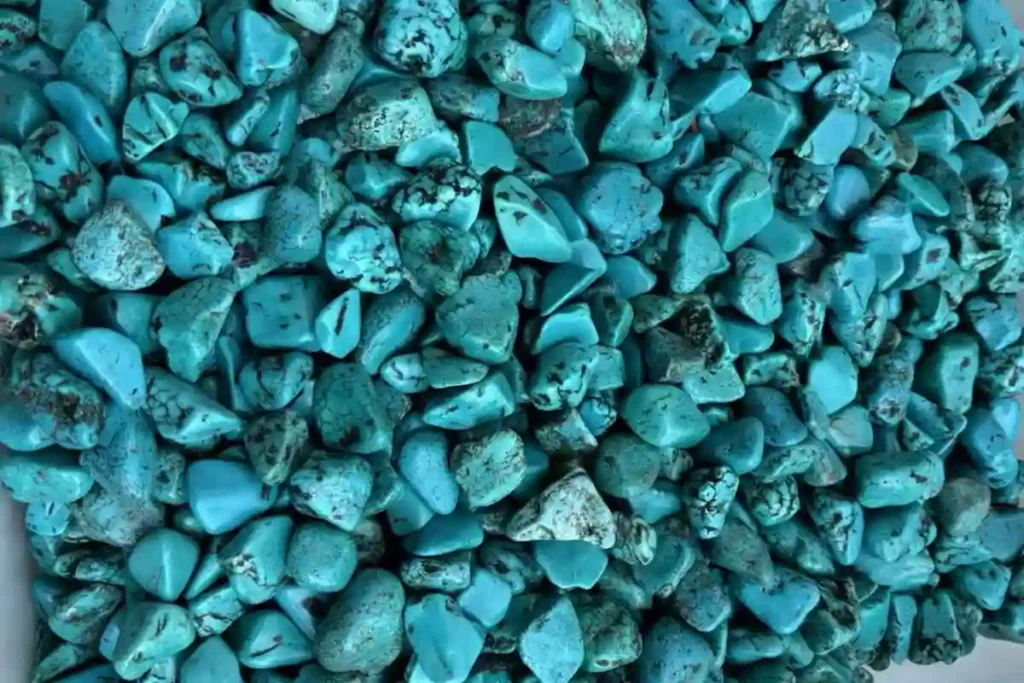
White Turquoise vs. Howlite vs. White Buffalo
These names often appear together in jewelry listings, but they are not interchangeable. Howlite is a mineral name, White Buffalo identifies a particular traded stone, and white turquoise is an ambiguous commercial label.
The following comparison helps separate the terms:
| Name | What it refers to | What buyers should know |
|---|---|---|
| White turquoise | A trade name applied to different white materials | The name alone does not establish composition or origin |
| Howlite | A natural mineral, often white with gray or dark veining | Natural howlite is a real stone, but it is not turquoise |
| White Buffalo stone | A white, dark-patterned stone associated with a Nevada source | A Howlite product should not automatically be labeled White Buffalo |
| Turquoise | A hydrated copper and aluminum phosphate mineral | Its identity depends on mineral composition, not a similar-looking pattern |
Is White Turquoise the Same as Howlite?
In many bead listings, “white turquoise” refers to howlite. However, the relationship works only within that particular listing: a seller’s use of the name does not mean every white turquoise product is howlite.
Other white minerals and manufactured imitations can have a similar appearance. Even a familiar gray web-like pattern is not enough to identify an unknown stone.
Is White Buffalo Turquoise the Same Stone?
White Buffalo is often marketed as “white buffalo turquoise,” although the material is not true turquoise. It should also be distinguished from ordinary howlite beads. A white background and black markings do not establish a White Buffalo origin.
For comparison, GIA’s turquoise description explains that genuine turquoise has a specific mineral composition and that its dark matrix consists of remnants of surrounding host rock. Similar markings on another stone do not make the materials identical.
When comparing products, ask for the material name first, followed by any treatment information and evidence supporting a claimed mine origin. This makes price comparisons more meaningful and helps prevent misleading labels.
White Turquoise Meaning and Spiritual Benefits
White turquoise meaning often centers on calm, patience, and a fresh start. When the name refers to howlite, these associations belong to modern crystal practices and personal symbolism. They should not be treated as proven effects of the stone.
Calm and Patience
Some people choose white howlite as a reminder to pause before reacting. Its soft white appearance can serve as a visual cue during meditation, journaling, or a quiet break.
For example, wearing a bracelet may remind you to take a slow breath before a difficult conversation. The practical value comes from the habit you build around it, rather than a guaranteed change caused by the stone.
Clarity and New Beginnings
White is often used to symbolize simplicity and a clean start. In this context, white turquoise spiritual meaning can reflect letting go of distractions and focusing on a personal goal.
A necklace, bracelet, or small carving can mark that intention. The meaning is personal: one wearer might associate it with patience, while another sees it as a reminder of a new chapter.
Crown Chakra Associations
In some modern crystal traditions, white stones such as howlite are linked with the crown chakra, which practitioners associate with awareness and spiritual connection. These associations vary between traditions and are not mineral properties.
When considering white turquoise stone benefits, separate symbolic uses from physical qualities. Its appearance and versatility make it useful for jewelry and decoration. Claims that it treats anxiety, improves sleep, or protects the body from pollution should not be presented as established benefits.


White Turquoise Jewelry, Beads, and Decorative Uses
White howlite offers a neutral base for many designs. Its pale color pairs easily with dark beads, colorful stones, and metal accents. Products sold as white turquoise jewelry include bracelets, necklaces, rings, and earrings, though buyers should check the material behind the name.
Beads and Bracelets
Round white turquoise beads work well in stretch bracelets, matching sets, and simple necklaces. Designers can use them alone for a light, understated look or combine them with contrasting beads.
One of our Indian customers runs a trading business in Hong Kong. He purchases about 3,000 strands of 8 mm howlite beads every three months and tells us he supplies the US market. He consistently chooses the same size, so we prepare stock ahead of his expected orders. This helps us dispatch promptly when he places an order.
That experience highlights a practical point: repeat buyers may value a dependable specification more than a wide choice of sizes.
Necklaces and Rings
A white turquoise necklace can feature small round beads, chip strands, or a larger pendant. The choice depends on whether the design needs a subtle accent or a clear focal point.
For a white turquoise ring, check both the stone identity and the setting. A setting that shields exposed edges offers more protection against everyday knocks. The finished piece’s value also reflects its metal, workmanship, and design—not simply the trade name on the label.
Carvings and Decorative Pieces
Beyond jewelry, we source howlite in shapes such as carvings, towers, spheres, and ornaments. These forms give buyers different ways to display the white background and contrasting veins.
When choosing a piece, look at the actual item or batch. Consider the pattern, polish, proportions, and any visible chips. For a sphere or carving, clear photos from several angles reveal more than a single front-facing image.
How to Check White Turquoise Before Buying
Start with the seller’s material description, then inspect the product’s condition. Photos and surface patterns can help you assess appearance, but they cannot reliably prove whether a piece is howlite, White Buffalo stone, or an imitation.
Inspect the Finish and Drill Holes
For stone beads, request close-up photos of the surface and hole openings. Look for chipped edges, uneven polish, cracks, and loose residue. These details affect how easily you can string the beads and how the finished jewelry looks.
In our experience, some low-cost imitation white beads felt rough and released powder from their drill holes during stringing. The residue left our workers’ hands dirty, so they washed their hands immediately afterward.
That observation describes the batches we handled. Powder alone does not prove a bead is artificial, and a smooth finish does not prove natural origin. Treat loose residue as a quality issue that needs explanation.
Separate Material Choice from Product Quality
Imitation materials can serve a budget jewelry market when sellers describe them clearly. We previously supplied matching bracelets that combined imitation white beads with matte black glass beads. One Thai customer ordered around 2,000 pairs per month during a strong sales period.
Their affordable price helped that particular design sell. However, buyers should know which components they are purchasing rather than assume that every white bead is natural howlite.
Before placing a bulk order, confirm:
- The actual material and any treatments.
- Bead diameter, hole size, and strand length.
- The finish and condition of a representative sample.
- How the supplier will handle an order that differs from the agreed sample.
Check Claims About White Buffalo Separately
If you want to know how to tell if white buffalo turquoise is real, ask for evidence supporting both the material identity and the claimed origin. A black-and-white pattern or a mine name in a listing is not enough.
For an expensive purchase or disputed identity, seek an independent gemological assessment. Ask what the examination can establish: identifying a material and confirming a specific mine origin are different tasks.
White Turquoise Price and Value
White turquoise has no single price range because sellers use the name for different materials. Compare products with the same confirmed material and specifications before deciding whether an offer represents good value.
What Affects the Price?
For howlite beads and finished pieces, consider these factors:
| Factor | What to compare |
|---|---|
| Material and treatment | The stated material and any disclosed processing |
| Size and quantity | Bead diameter, strand length, and number of pieces |
| Workmanship | Polish, shape, drilling, and chipped edges |
| Appearance | Whether the color and veining suit your design |
| Finished jewelry components | Metal, findings, stringing, and setting quality |
A lower strand price may offer little saving if the strand contains fewer beads or requires extensive sorting. For repeat orders, agree on acceptable size variation and finish before comparing quotations.
Does White Buffalo Have the Same Value as Howlite?
Do not use a White Buffalo jewelry listing to estimate the value of ordinary howlite beads. They represent different products, and a finished ring’s price also includes its metal, design, and workmanship.
When reviewing white buffalo turquoise value claims, ask what supports the material description and origin. A higher price does not establish authenticity, while the word “rare” alone does not justify a premium.
Is White Turquoise a Good Investment?
Choose a piece for its appearance, craftsmanship, and intended use. The trade name “white turquoise” does not establish investment value or guarantee resale demand.
For jewelry makers and retailers, a more useful calculation is the cost per usable piece. Include sorting, rejected beads, labor, and shipping when comparing suppliers. This gives you a clearer picture of your actual production cost.
How to Clean and Care for White Turquoise
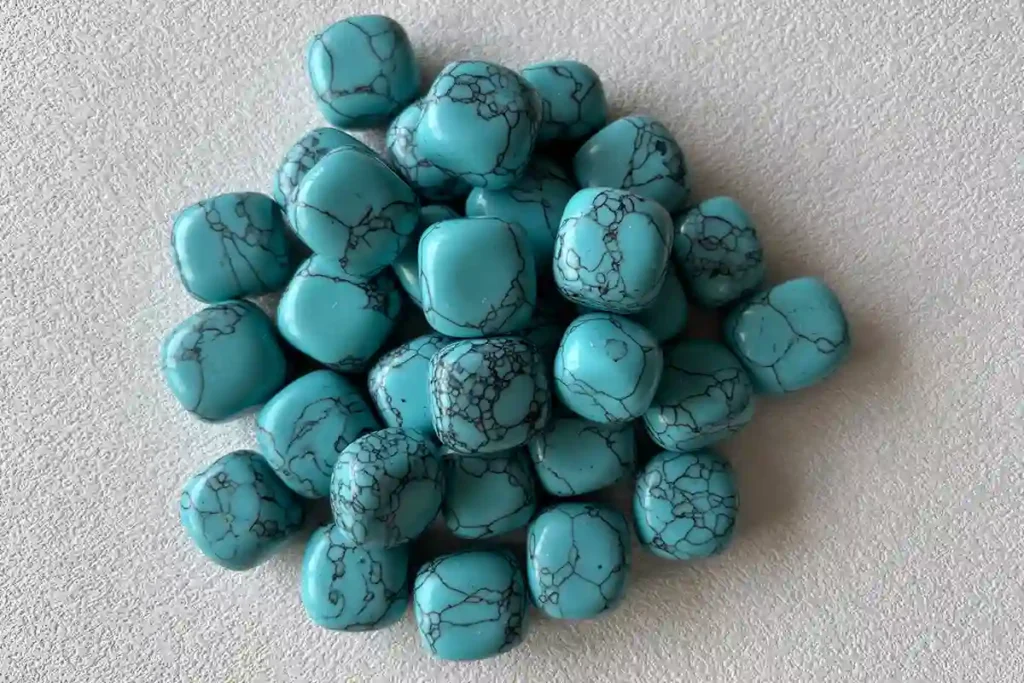
Care depends on the actual material, its treatments, and the jewelry components. For the howlite products discussed here, use gentle cleaning and protect the surface from scratches. Global Gemology describes howlite as porous and lists its Mohs hardness at about 3.5.
Keep Cleaning Gentle
For routine care, wipe the piece with a soft cloth. If needed, lightly dampen the cloth with lukewarm water, wipe away surface dirt, and dry the piece afterward.
Follow these precautions:
- Avoid prolonged soaking, especially for strung, glued, or treated pieces.
- Keep bleach, household cleaners, and abrasive powders away from the surface.
- Ask a jeweler before using steam or ultrasonic equipment.
- Follow the supplier’s instructions for any coatings, dyes, or other treatments.
If you do not know what a white turquoise piece contains, avoid experimenting with cleaning chemicals.
Protect Jewelry During Wear and Storage
Remove bracelets and rings before heavy work, exercise, or tasks that could knock them against hard surfaces. Apply perfume and lotion before putting on jewelry, and let those products dry first.
Store each piece in a soft pouch or a separate compartment. For stretch bracelets, gently roll the bracelet over your hand rather than pulling hard on the cord. Check the elastic and hole edges occasionally for signs of wear.
Separate Spiritual Cleansing from Physical Cleaning
If you include white turquoise in a personal spiritual practice, a quiet intention-setting ritual requires no contact with liquids or abrasive materials. Saltwater soaking and burial can introduce avoidable cleaning and care problems.
Spiritual cleansing is a personal practice; it does not replace removing dirt or checking the condition of your jewelry.
FAQ
Is White Turquoise a Real Stone?
It can refer to a real natural stone, such as howlite. However, “white turquoise” is a trade name, and some products use imitation materials. Check the actual material description rather than relying on the name.
Is White Turquoise Worth Anything?
Yes, but its value depends on the material, size, condition, and workmanship. A strand of howlite beads and a handcrafted White Buffalo silver ring are different products and should not share the same price benchmark.
What Is the Benefit of White Turquoise?
Its neutral color makes it useful for jewelry and decorative designs. Some people also use it as a personal reminder of calm or patience. These symbolic associations do not establish medical or therapeutic benefits.
What Is Another Name for White Turquoise?
Howlite is a common material sold under this name in the bead trade. However, White Buffalo is not an interchangeable name for howlite. Ask the seller which material a particular listing contains.
What Type of Rock Is White Turquoise?
The trade name does not identify one specific rock or mineral. If the product is howlite, it is a mineral. Other listings may refer to White Buffalo stone, another white mineral, or a manufactured imitation. The material description should make that distinction clear.
Conclusion
White turquoise offers a versatile look for beads, jewelry, and decorative pieces. The key is knowing what you are buying: howlite, White Buffalo stone, and genuine turquoise are different materials, even when sellers use overlapping names.
Choose pieces that suit your design and budget, then check the finish, dimensions, and treatment details. For bulk orders, approve a representative sample before confirming the full quantity.
Looking for howlite beads or finished bracelets? Contact Rocrystal through our inquiry form or WhatsApp. Share your preferred size, quantity, and reference photos so we can discuss suitable options.
References
- GIA — Turquoise Description: Explains turquoise composition, color, texture, and matrix.
- Global Gemology — Howlite: Covers howlite’s appearance, hardness, porosity, and use as a dyed turquoise imitation.
Disclaimer
Spiritual meanings and chakra associations reflect beliefs and personal symbolism, not scientifically established health benefits. This article does not provide medical advice. “White turquoise” is a trade name; confirm the actual material, treatments, and any claimed origin before purchasing.