
Jade Stone Meaning: Types, Colors, Benefits, Uses, and Wholesale Buying Guide
Written by Roc Gong | Founder of RoCrystal
Last updated: September 14, 2026
Jade stone meaning is commonly linked with good luck, harmony, wisdom, protection, and prosperity. But what does jade stone mean to modern buyers? Its appeal comes from more than spiritual symbolism. Color, texture, material type, treatment, and product form also affect how jade is selected and sold. For wholesale buyers, understanding these differences is important before purchasing jade beads, bracelets, tumbled stones, rough pieces, or carvings in bulk.
The word “jade” can cause confusion because it does not describe only one mineral. Genuine jade mainly refers to jadeite and nephrite, which differ in composition, appearance, and market value. In wholesale trade, some colored stones are also sold under jade trade names, while others have been dyed or treated. Buyers should therefore confirm the exact material and treatment instead of judging a product by its color or name alone.
This guide explains the meaning of jade, its natural colors, common spiritual beliefs, and commercial uses. It also compares jadeite with nephrite and covers quality grades, treatments, imitations, sizes, and product forms. Wholesale buyers will learn what to check before ordering, how to confirm color and specifications, and how to choose a reliable supplier. These points can reduce misunderstandings when purchasing jade products in bulk.
What Is Jade?
Is Jade a Stone, Mineral, or Gem?
Jade is often called a stone or gemstone, but it is not a single mineral species. According to the Gemological Institute of America (GIA), the name mainly covers jadeite and nephrite. These two materials have different chemical compositions, yet both can form dense and exceptionally tough gem materials.
In everyday trade, “jade stone” is a practical name for material used in jewelry, carvings, ornaments, and decorative products. Once suitable jade has been shaped and polished for its beauty, it can also be described as a gem. However, the word “jade” alone does not tell a buyer whether the material is jadeite or nephrite.
The name can become even less precise in the commercial bead market. Some products have “jade” in their trade names but are made from other minerals, while others may be dyed or otherwise treated. For wholesale orders, buyers should ask for the exact material name, color treatment, product specifications, and current-lot images before confirming a purchase.
Jadeite vs. Nephrite
Jadeite and nephrite are both sold as jade, but they belong to different mineral groups. The Gemological Institute of America (GIA) identifies jadeite as a pyroxene mineral and nephrite as an amphibole material. Jadeite can display brighter colors and greater translucency, while nephrite often has softer, more muted colors and a dense appearance.
Their hardness also differs slightly. GIA places jadeite at 6.5 to 7 on the Mohs hardness scale and nephrite at 6 to 6.5. Hardness measures resistance to scratching, not resistance to breaking. Both types have exceptional toughness because of their tightly interlocking structures, making them suitable for beads, bangles, carvings, tools, and ornamental pieces.
For wholesale buyers, material identity can affect price, product descriptions, and customer expectations. Fine jadeite can command much higher prices than commercial nephrite or color-treated beads. However, quality varies widely within both groups. Buyers should compare the actual color, transparency, texture, polish, size, treatment, and test documentation instead of assuming that every product labeled “jade” has the same value.
| Feature | Jadeite | Nephrite |
|---|---|---|
| Mineral group | Pyroxene | Amphibole |
| Typical appearance | Wide color range; may show stronger translucency | Often muted in color with a dense appearance |
| Mohs hardness | 6.5–7 | 6–6.5 |
| Common products | Beads, cabochons, bangles, pendants, and carvings | Bangles, beads, carvings, tools, and decorative pieces |
| Main buying concerns | Color, transparency, texture, treatment, and matching | Material identity, color, texture, polish, and consistency |
How Jade Forms in Nature
Jade forms through geological processes that take place deep within the Earth. According to the Gemological Institute of America (GIA), jadeite develops in subduction zones. In these areas, one tectonic plate moves beneath another, creating the high-pressure and relatively low-temperature conditions needed for jadeite to crystallize.
Mineral-rich fluids also play an important role. These fluids move through cracks and altered rocks below the surface, allowing jadeite-rich material to form in veins or pods. Later tectonic movement can bring the material closer to the surface. Weathering and erosion may then expose jade-bearing rocks where they can eventually be mined.
Nephrite forms through a different process. GIA explains that it is commonly produced by hydrothermal metamorphism or metasomatism, in which hot fluids react with suitable rocks and change their mineral composition. These processes create the tightly intergrown structure that gives nephrite its notable toughness. The formation process does not prove a stone’s quality, color, or commercial value.
Jade Stone Meaning and Symbolism
What Does Jade Stone Mean?
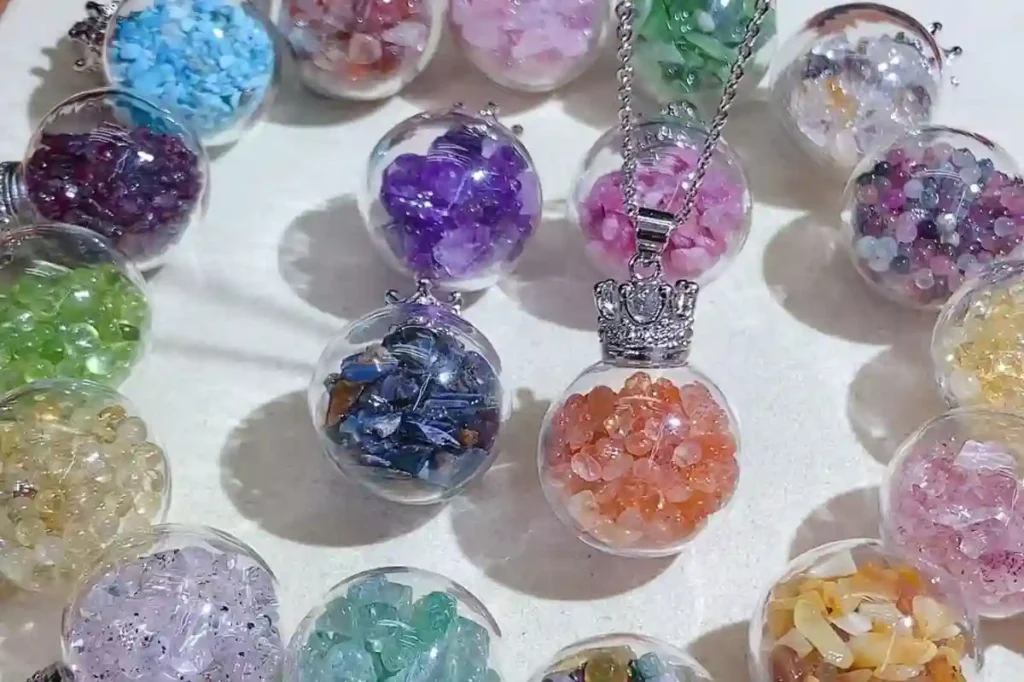
Jade stone meaning is commonly connected with good luck, wisdom, harmony, protection, and prosperity. These ideas come from long-standing cultural traditions rather than modern medical science. For many people, jade represents a calm and balanced way of living. Others choose it as a personal reminder to make thoughtful decisions and maintain stable relationships.
The significance of jade stone can also depend on the buyer’s culture and purpose. A person may wear jade jewelry as a symbol of family connection, give it as a wish for good fortune, or display a carving as a sign of peace and abundance. This explains why the same material can appeal to jewelry stores, gift shops, and spiritual retailers.
There is no single answer to “what is the meaning of jade stone?” Its symbolism may change with its color, shape, design, and local tradition. The meaning does not determine whether a product is genuine jadeite or nephrite, nor does it prove its quality. Wholesale buyers should therefore separate symbolic value from material identification and treatment disclosure.
Why Jade Became Culturally Important
Jade became culturally important because people valued both its appearance and its unusual toughness. The Gemological Institute of America (GIA) notes that people shaped jade into weapons, tools, ornaments, and ritual objects during the Stone Age. Its ability to resist breaking made it useful long before it became widely known as a jewelry material.
Over time, jade gained symbolic importance in several cultures, especially in China and parts of Central America. It became associated with virtue, status, heaven, life, and protection. Skilled craftspeople turned the material into bangles, pendants, ceremonial objects, and detailed carvings. These uses helped establish the lasting jade stone symbolism that many consumers still recognize today.
Modern buyers may choose jade because of family traditions, personal beliefs, or an appreciation for its color and smooth finish. Retailers often present it as both a decorative material and a meaningful gift. However, cultural importance does not make every product equally valuable. Material type, treatment, workmanship, transparency, texture, and condition must still be assessed separately.
Jade Stone Meaning for Love and Relationships
Jade stone meaning for love is often linked with harmony, loyalty, patience, and lasting emotional bonds. In crystal traditions, some people wear jade as a reminder to communicate calmly and treat relationships with care. It is also given as a meaningful gift between partners, family members, or close friends.
Different jade colors may carry slightly different symbolic associations. Green is often connected with growth and balance, while white may represent peace and clear intentions. Lavender or pink-colored products are sometimes marketed around compassion and affection. Buyers should remember that these meanings come from spiritual or cultural traditions, not scientific evidence.
Wearing jade cannot guarantee love, repair a relationship, or change another person’s feelings. Its value in this context is mainly personal and symbolic. Retailers should describe these beliefs carefully and avoid making promises. They should also disclose whether the color is natural, treated, or based on a commercial trade name.
Jade Meaning in Modern Jewelry
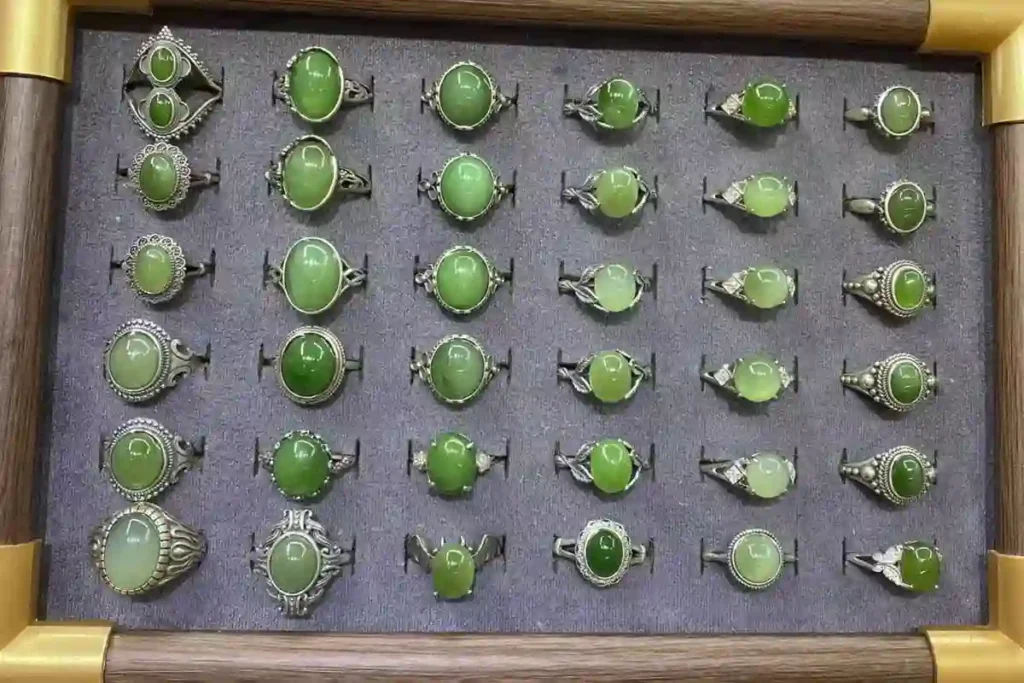
In modern jewelry, jade can express personal taste, cultural identity, or a wish for good fortune. Some customers choose a jade bracelet for its traditional symbolism, while others simply like its smooth texture and color. Pendants, beads, bangles, rings, and carved pieces also work well as gifts because buyers can connect them with a personal message.
For retailers and jewelry designers, symbolism can support a product’s story, but accurate material information remains essential. A bright pink dyed bead and an untreated green jadeite bead may both be sold for jewelry making, yet they differ greatly in material, treatment, price, and customer expectations. Clear descriptions help buyers select the right product for their market.
Jade Crystal Benefits and Spiritual Beliefs
Commonly Claimed Jade Stone Benefits
Jade stone benefits are often described in terms of calm, balance, protection, wisdom, and good fortune. In crystal traditions, some people believe jade can encourage a more peaceful mindset and help them focus on positive goals. These ideas form part of the jade crystal meaning found in many spiritual practices and cultural traditions.
Other commonly claimed jade crystal benefits include emotional stability, confidence, and a sense of abundance. Some people carry a tumbled stone, wear a bracelet, or place a jade carving in their home as a personal reminder of these intentions. Individual experiences can vary, and such feelings are subjective rather than measurable proof of a healing effect.
Jade should not be presented as a treatment for anxiety, pain, illness, or any other health condition. There is no reliable scientific evidence that wearing or holding it can cure disease. Responsible sellers can discuss its traditional symbolism and decorative use, but they should avoid medical promises or claims that may mislead customers.
Jade in Meditation, Chakra, and Feng Shui Traditions
Some people hold a jade stone during meditation to support calm thoughts and steady attention. Others place tumbled stones nearby as visual reminders of balance, patience, or personal goals. These practices reflect spiritual traditions and personal preferences. They do not prove that jade produces a measurable change in the body or mind.
Many crystal practitioners connect green jade with the heart chakra because its color suggests growth, harmony, and compassion. They may wear a bracelet, carry a small stone, or include jade in a meditation space. Retailers can explain this traditional connection, but they should not claim that jade can heal the heart or treat emotional conditions.
In feng shui traditions, people often display jade carvings in homes or workplaces to represent prosperity, protection, and peaceful relationships. Small carvings, decorative pieces, and polished stones can suit gift shops and spiritual retailers. Sellers should describe these items as symbolic products and clearly state the material, treatment, size, and color.
What Jade Cannot Be Proven to Do
Scientific research has not shown that jade can cure disease, relieve physical pain, balance hormones, or improve organ function. A person may feel calmer while wearing or holding it, but that personal response does not prove a medical effect. Buyers should treat jade as a gemstone, decorative material, or spiritual object rather than a form of medicine.
Sellers should avoid claims such as “jade removes toxins,” “jade heals the kidneys,” or “jade guarantees emotional recovery.” These statements may mislead customers and create unnecessary legal or marketplace risks. Instead, retailers can explain that some people associate jade with peace, protection, balance, and good fortune in cultural or crystal traditions.
Anyone with a physical or mental health concern should seek advice from a qualified healthcare professional. Jade jewelry and stones can support personal rituals, meditation, or symbolic intentions, but they cannot replace diagnosis or treatment. Clear wording helps businesses share traditional jade meanings without presenting unproven beliefs as established scientific facts.
Jade Stone Color Meaning
Natural Color, Dyed Color, and Trade Color Names
Jade stone color meaning often influences how customers choose jewelry, gifts, and spiritual items. However, color alone cannot identify the material. Natural jadeite may occur in green, white, lavender, yellow, orange, red, black, gray, and brown. Nephrite usually shows softer shades of green, white, yellow, brown, gray, or black.
Manufacturers can also dye pale material to create brighter or more even colors. According to the Gemological Institute of America (GIA), “C jade” refers to dyed jadeite within a trade classification used in China. Sellers should only use this classification after they have confirmed that the base material is jadeite.
Trade names can create further confusion. GIA notes that names such as pink jade, Mexican jade, Alaska jade, Transvaal jade, and Japanese jade often refer to other minerals. Wholesale buyers should ask the supplier to state the base material and treatment in writing. Current-lot photos, videos, samples, and independent testing can provide more useful information than a color name alone.
Green and Light Green Jade Meaning
Green jade stone meaning commonly centers on prosperity, growth, harmony, and good fortune. Many customers connect rich green shades with abundance and success, so green remains a popular choice for bracelets, beads, pendants, and carvings. Color depth can also influence buying decisions, especially when a retail market prefers a specific shade.
Light green jade stone meaning often focuses on renewal, calm, balance, and new beginnings. Its softer appearance can suit minimalist jewelry, spring collections, gifts, and meditation products. However, symbolic meaning does not determine quality. A light green stone may have fine texture and polish, while a darker product may show dye concentration, cracks, or uneven finishing.
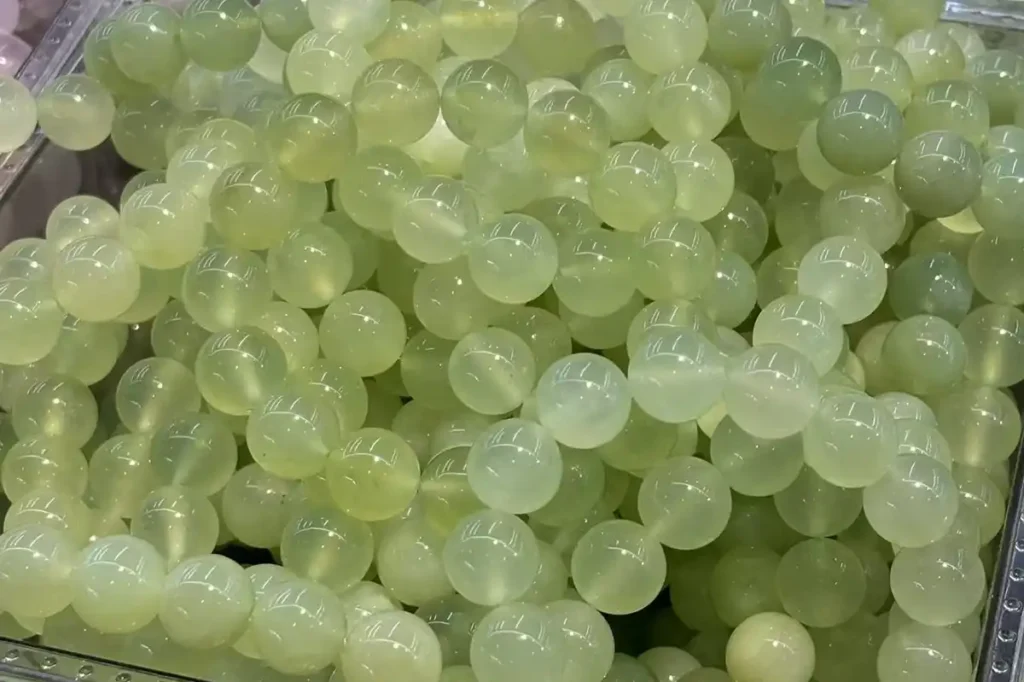
Wholesale buyers should define the target shade before placing a bulk order. Terms such as “green” or “dark green” can mean different things to different suppliers. A reference image, current-lot video, or approved physical sample can reduce misunderstandings. Buyers should also confirm whether the color occurs naturally or comes from dyeing or another treatment.
White and Lavender Jade Meaning
White jade stone meaning often relates to purity, peace, clear thinking, and honest intentions. Its neutral appearance works well in simple bracelets, mixed-stone designs, and gift collections. Buyers should still inspect each lot for unwanted spots, cracks, surface marks, color differences, and changes in translucency before approving a wholesale order.
Lavender jade often symbolizes calm, compassion, reflection, and emotional balance in crystal traditions. Natural lavender jadeite can range from pale grayish violet to a stronger purple tone. Shade, transparency, texture, and treatment can all influence its value. A vivid purple product should not automatically receive a natural lavender jadeite description.
Some suppliers also sell dyed purple beads under broad jade trade names. Wholesale buyers should confirm the base material and ask whether the color comes from treatment. Clear disclosure helps retailers describe the product accurately and price it for the correct market. Spiritual meaning never proves material identity or natural color.
Yellow, Orange, Red, and Black Jade Meaning
Yellow jade stone meaning often relates to warmth, optimism, confidence, and steady progress. Orange and red shades commonly represent energy, motivation, passion, and action in crystal traditions. These colors can attract customers who want brighter jewelry, seasonal collections, or gifts with an uplifting symbolic message.
Black jade commonly symbolizes protection, strength, self-control, and stability. Its dark appearance suits men’s jewelry, minimalist designs, carved pendants, and mixed-stone bracelets. Retailers may also pair it with lighter beads to create strong visual contrast. These symbolic associations reflect tradition and personal belief rather than proven physical effects.
Color names alone cannot confirm that a yellow, red, orange, or black product consists of jadeite or nephrite. Dyes and commercial trade names can produce similar appearances. Before buying in bulk, customers should request current photos, confirm the base material and treatment, and compare the approved sample with the finished lot.
| Jade Color | Common Symbolic Association | Wholesale Buying Note |
|---|---|---|
| Deep green | Prosperity, growth, balance, and good fortune | Confirm the exact shade, base material, and treatment |
| Light green | Renewal, calm, harmony, and new beginnings | Allow for reasonable color variation between lots |
| White | Purity, peace, clarity, and honest intentions | Check for dark spots, cracks, and uneven translucency |
| Lavender or purple | Calm, compassion, reflection, and emotional balance | Confirm whether the color is natural or treated |
| Yellow | Warmth, confidence, optimism, and steady progress | Request current-lot photos under neutral lighting |
| Pink | Love, kindness, affection, and close relationships | Verify the base material because “pink jade” can be a trade name |
| Blue | Calm, communication, and clear expression | Confirm the mineral identity and any color treatment |
| Black | Protection, strength, stability, and self-control | Inspect the polish, surface marks, and color consistency |
Jade Stone Meaning and Uses in Different Products
Jade Beads and Bracelets
Loose beads suit jewelry making, finished bracelets, DIY kits, gift sets, and mixed-stone designs. Round jade beads remain a practical wholesale choice because sellers can offer many sizes and colors. Common purchasing details include bead diameter, hole size, strand length, bead count, polish, color consistency, and whether the material has received any treatment.
Finished bracelets require additional checks. Buyers should confirm the inner circumference, elastic quality, knot position, bead quantity, and size tolerance. A bracelet that looks correct in a photograph may still feel too loose or tight. For large orders, suppliers should inspect the stringing and remove beads with serious chips, damaged holes, or obvious surface defects.
Weight can vary even when two products share the same bead size. Material density, hole diameter, bead count, and slight size differences all affect the final weight. Wholesale buyers should avoid estimating freight costs from bead diameter alone. An actual packed weight and carton measurement will produce a more accurate shipping quotation.
Tumbled Jade Stones
Tumbled jade stones usually have rounded shapes and polished surfaces. Crystal shops can sell them individually, by weight, or in gift bags and meditation sets. Their simple form also suits displays, home decoration, craft projects, and mixed-stone collections. Buyers should confirm whether the supplier sells them by piece, bag, kilogram, or another unit.
A bulk lot may contain differences in size, shape, color, and surface finish. Buyers should check the stated size range, overall fullness, polish, flat pieces, sharp edges, cracks, pits, and broken stones. Current-lot photos or videos can show the actual color mix more accurately than a carefully selected sample image.
Jade Rough and Carvings
Jade rough appeals to collectors, cutters, carving studios, and stores that sell natural-looking display pieces. Buyers should review the weight, dimensions, color distribution, outer skin, visible fractures, and usable areas. Rough material can hide internal cracks or color changes, so photos of the surface cannot guarantee what a cutter will find inside.
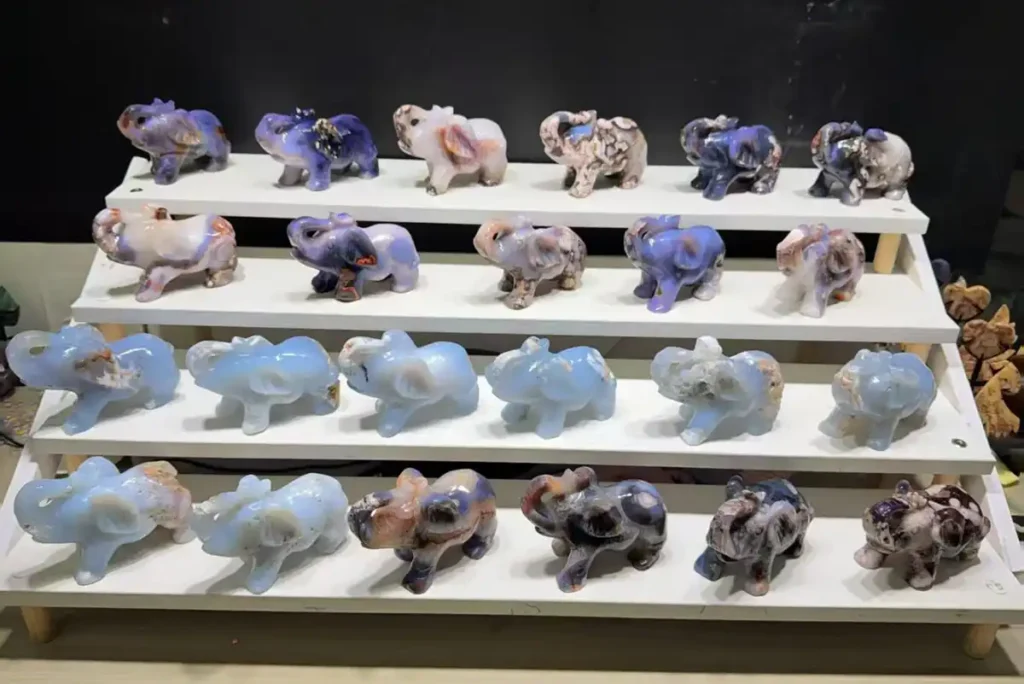
Carvings require a different quality check. Buyers should inspect the design, proportions, polish, tool marks, thin edges, drilled areas, and base stability. Detailed shapes may need more protective packaging than tumbled stones or beads. Weight matters, but carving quality, material loss, color placement, and workmanship can have a greater effect on the final price.
Which Jade Products Fit Different Markets?
Crystal shops often sell tumbled stones, stretch bracelets, pendants, and small carvings because customers can handle and compare them easily. Gift stores may prefer ready-to-display products with simple labels and individual packaging. A clear explanation of the material, color treatment, size, and symbolic meaning can help staff answer customer questions.
Jewelry designers usually need loose beads, cabochons, pendants, or carved components. They care about hole size, calibrated dimensions, matching colors, and repeat supply. Amazon sellers often prefer finished bracelets or packaged sets with consistent specifications because large differences between pieces can lead to complaints, returns, and inaccurate listings.
Importers and established wholesalers may purchase larger mixed orders across several colors and product forms. They usually focus on stable pricing, carton details, quality control, delivery time, and documentation. Before choosing stock, each buyer should consider the expected retail price, preferred color range, customer knowledge, and required level of material disclosure.
How Jade Quality Is Evaluated
Color and Color Consistency
Color plays a major role in jadeite quality and price. According to the Gemological Institute of America (GIA), buyers consider color the most important jadeite value factor. They look at hue, saturation, tone, and distribution. Vivid green can command high prices, but attractive jadeite also occurs in lavender, white, yellow, orange, red, black, gray, and brown.
Natural jade may show uneven color, veins, patches, or gradual changes in tone. These features do not always indicate poor quality. Some patterns can make a piece more attractive, especially when a skilled cutter uses them in a carving. However, fractures, cloudy areas, or weak color may reduce value when they disturb the overall appearance.
Commercial buyers also need consistency across a complete lot. One beautiful sample does not guarantee that hundreds of strands will match it. Before production, buyers should define an acceptable color range and approve current material. Suppliers can then sort the finished products against that standard and remove pieces that fall clearly outside it.
Transparency, Texture, and Polish
Transparency describes how deeply light enters a stone. The Gemological Institute of America (GIA) explains that jadeite can range from opaque to semitransparent. Fine semitransparent material often looks brighter because light enters below the surface. Cloudy or opaque areas may interrupt this effect, although buyers should evaluate transparency together with color and texture.
Texture depends partly on the size and arrangement of the mineral grains. Fine-grained jadeite usually shows a smoother surface and stronger luster after polishing. Coarser material may look grainy or uneven. Buyers should examine close-up videos under neutral lighting because strong filters, wet surfaces, or heavy image editing can hide texture and polish problems.
Commercial beads and high-end jadeite jewelry require different standards. A low-cost dyed bead may sell mainly for its color and consistent size, while fine jadeite depends more heavily on transparency, texture, and natural color. Suppliers and buyers should agree on the intended grade before comparing prices or approving production.
Natural Texture and Common Imperfections
Natural jade can contain color patches, veins, cloudy areas, mineral spots, and internal lines. These features develop within the material and may help give each piece a distinct appearance. Buyers should judge whether they add visual character or reduce the product’s appeal. The answer often depends on the grade, price, design, and target market.
Processing can create a different group of problems. Beads may show flat areas, scratches, pits, chipped edges, uneven polish, or damage around the drill holes. Tumbled stones can have sharp corners or broken surfaces, while carvings may show tool marks and fragile details. These issues reflect workmanship or handling rather than natural texture alone.
Before approving a bulk order, buyers should define which imperfections they can accept. A commercial-grade lot may include minor color differences and small surface marks, while a higher grade requires stricter sorting. Photos, videos, samples, and written quality limits give both sides a clearer standard for inspection and dispute prevention.
Size, Weight, Drilling, and Construction
Bead size affects appearance, weight, price, and the number of beads on each strand. Wholesale buyers should confirm the diameter tolerance, strand length, hole size, and approximate bead count. A product described as 8 mm may contain small variations, so both sides should agree on an acceptable range before production begins.
Drilling quality matters for jewelry makers. Holes should pass through the correct position and allow the intended cord or wire to fit. Chips around the holes, blocked openings, or off-center drilling can slow production and increase waste. Buyers who use thicker elastic or multiple strands should provide their minimum hole-size requirement.
Finished bracelets need secure stringing, suitable elastic, even spacing, and a properly hidden knot. Tumbled stones and carvings require different measurements, such as size ranges, piece counts, net weight, and individual dimensions. Suppliers should weigh and inspect the packed goods because product weight and shipping weight are not the same.
How to Tell Whether Jade Is Real, Imitated, or Treated
Type A, B, C, and B+C Jade
The A, B, and C terms describe treatment categories for jadeite, not general quality grades. According to the Gemological Institute of America (GIA), Type A jadeite remains natural or receives only traditional surface waxing. The letter A does not guarantee fine color, high transparency, perfect texture, or high market value.
Type B jadeite undergoes acid bleaching followed by polymer resin impregnation. The treatment can improve its apparent clarity, but it changes the material. Type C refers to dyed jadeite. When jadeite receives both bleaching or impregnation and color treatment, sellers may describe it as B+C jade. Buyers should request clear written disclosure instead of treating these letters as simple quality rankings.
These classifications only apply after someone has confirmed that the material is jadeite. A brightly colored bead sold under a broad jade trade name cannot automatically receive a Type C jadeite description. Its base material could be another mineral. For valuable orders, buyers should request a report from a qualified gemological laboratory that connects directly to the goods under review.
Common Jade Imitations and Misleading Trade Names
Many materials can resemble jade after cutting, dyeing, and polishing. Sellers may offer quartz, aventurine, serpentine, calcite, glass, or other materials under names that include the word “jade.” Some names reflect long-standing trade usage, but they do not prove that the product consists of jadeite or nephrite.
The Gemological Institute of America (GIA) warns that terms such as Mexican jade, Alaska jade, Transvaal jade, and Japanese jade generally refer to other minerals. Pink jade and blue jade can also create confusion because naturally colored jadeite in these shades is uncommon. Buyers should not rely on color or a commercial name alone.
A misleading name does not always mean that the product has no commercial value. Dyed beads and jade-like materials can still suit fashion jewelry, craft projects, and lower-priced retail ranges when sellers describe them honestly. Problems arise when a supplier presents another mineral as confirmed jadeite or nephrite without reliable evidence.
Can You Identify Real Jade at Home?
Home checks can reveal obvious warning signs, but they cannot confirm a stone’s identity or treatment. Buyers may examine color concentration, surface texture, bubbles, cracks, weight, and how light passes through the material. However, jadeite, nephrite, other natural stones, and treated products can share similar visual features.
Some online guides suggest scratch, sound, heat, or impact tests. These methods can damage the product and often produce unreliable results. A bead that feels cool or makes a certain sound does not automatically qualify as genuine jade. Lighting, thickness, shape, construction, and other materials can change what a buyer observes.
For a high-value order, a qualified gemological laboratory offers a safer option. The laboratory can use appropriate instruments to identify the material and detect some treatments. Buyers should also make sure that the report refers to the actual goods they plan to purchase, rather than an unrelated sample.
What Documents Should a Wholesale Buyer Request?
Wholesale buyers should request a written quotation or specification sheet that states the product name, claimed material, treatment, color, size, quantity, unit price, and packaging method. The document should also record the agreed quality range and delivery terms. Current-lot photos and videos can support the written details, especially when color consistency matters.
For valuable jadeite or nephrite orders, buyers may also request an independent laboratory report. They should check the laboratory name, report number, tested item, findings, and any treatment comments. A report for one sample does not automatically cover thousands of beads or several production lots, so buyers must confirm exactly what the document represents.
My Experience Supplying Dyed Jade Beads in Bulk
A Customer Who Required Several Colors
In my wholesale business, most jade products I currently supply are dyed jade beads. Buyers choose them because they offer bright colors and more options for bracelet making, jewelry design, and resale. Popular colors include pink, blue, green, white, and purple. We describe the color treatment clearly instead of presenting every color as natural jadeite or nephrite.
One of my Indian customers normally purchases about 5,000 strands of jade beads at a time. He often asks for several colors in one order, but he checks each shade carefully. From the wholesale lots I have handled, I have learned that a general color name rarely gives a demanding buyer enough information.
Green provides a good example. This customer only accepts a deep green shade because he believes it sells better and supports a higher retail price in his market. He does not want the regular or lighter green options. Before preparing his order, I need to compare the available lots and confirm that the shade matches his requirement.
What Happened With the 1,000-Strand Green Jade Order
One of our customers once ordered 1,000 strands of deep green dyed jade beads. I confirmed the required shade and prepared the goods according to his request. However, I made a serious mistake when I calculated the quotation. I offered a price that was far too low for the product cost and the work involved.
My profit came to only RMB 0.10 per strand. Across the complete order of 1,000 strands, I earned just RMB 100 before considering the extra handling costs. The quantity looked large, but the margin remained extremely small. This order showed me that order volume alone does not tell a supplier whether the business makes financial sense.
When we inspect bulk orders, we still need to sort the colors, count the strands, check the finished goods, and prepare them for shipment. A strict color requirement can also increase the time needed for selection. I completed the order at the agreed product price because the quotation error was my responsibility, not the customer’s.
Packing, Delivery, and the Extra RMB 100 Fee
The order still required packing and local delivery to the customer’s chosen freight forwarder. These tasks added labor, packing materials, and transport costs that my original quotation did not cover. After discussing the situation, I charged the customer an additional RMB 100 for packing and delivery to the forwarder.
Even with this extra fee, the order produced very little net profit. I still completed the packing carefully and delivered the goods as agreed. This experience reminded me to include every service in the quotation from the beginning. A low product price can quickly become unsustainable when strict sorting, packing, and local delivery require additional work.
What This Order Taught Me
In my experience, a large order does not always create a reasonable profit. A quotation for dyed jade beads must cover the actual material cost, strict color sorting, inspection, packing, and local delivery. If I leave out one of these items, even an order for 1,000 or 5,000 strands can produce very little return.
When the customer later asked about the deep green beads again, I gave him a corrected price. The new quotation reflected the real product cost and the work required to complete the order. He has asked about this item since then, but he has never purchased it from me again at the corrected price.
This experience also taught me to confirm shades more precisely. The term “green jade” covers too many color options when a buyer will only accept deep green. I now prefer to use current-lot photos or videos and confirm the target shade before completing a bulk order. Clear color standards protect both the supplier and the buyer.
Need dyed jade beads or other gemstone products for your market? Contact us on WhatsApp or send an inquiry form with your preferred color, bead size, quantity, packaging method, and destination. We can provide current-lot photos or videos and prepare a wholesale quotation based on your exact requirements.
Wholesale Jade Buying Guide
Confirm the Exact Material and Treatment
Before placing a bulk order, ask the supplier to identify the material as clearly as possible. The word “jade” alone does not confirm jadeite or nephrite. Some products use a commercial jade name even though they contain another mineral. A written quotation should state the claimed base material instead of relying only on color or appearance.
Buyers should also confirm whether the material has a natural color or has received dyeing, bleaching, impregnation, waxing, coating, or another treatment. This information affects pricing, care instructions, customer expectations, and retail descriptions. If the supplier cannot verify the treatment, the quotation should state that limitation rather than make an unsupported claim.
Keep the agreed material name and treatment disclosure in the order record. Current photos, videos, or samples can show appearance, but they cannot always prove mineral identity. For high-value jadeite or nephrite, an independent laboratory report may offer stronger evidence. Make sure the report connects directly to the goods under review.
Approve the Color Range Before Ordering
Color names can mean different things to different buyers. One customer may call a shade dark green, while another may consider it medium green. Ask the supplier to photograph the current lot under neutral lighting and on a plain background. Videos can also show color distribution, surface finish, and differences between strands.
For strict requirements, send a reference image or approve a physical sample before production. Define the acceptable range instead of expecting every natural or treated bead to look identical. Buyers should also state which shades they will reject. This process gives the supplier a practical sorting standard and reduces disputes after delivery.
Confirm Sizes, Quantities, and Tolerances
For beads, confirm the diameter, hole size, strand length, approximate bead count, and total number of strands. A label such as 8 mm does not always mean that every bead measures exactly 8 mm. State the acceptable size tolerance and explain whether the order requires closely matched beads.
For bracelets, provide the required inner circumference, elastic type, bead size, and preferred fit. For tumbled stones, confirm the size range, net weight, expected shape mix, and whether very flat or small pieces are acceptable. Rough stones and carvings may require individual dimensions as well as weight.
Buyers should also agree on how the supplier will count or weigh the final order. Ask whether packaging weight forms part of the stated weight and whether the quantity allows a small tolerance. Clear specifications help both sides check the goods using the same standard before shipment.
Inspect Samples and Production Lots Separately
A sample can show the available material, color, size, and finish, but it does not guarantee that every future lot will look the same. Raw material and dye batches can change. Buyers should ask whether the sample comes from the current stock and whether the supplier can reserve enough matching material for the planned quantity.
Before shipment, compare the finished lot with the approved sample or reference images. Check several pieces from different bags or cartons instead of reviewing only the best strand. For a large order, buyers can also approve production in stages. This approach makes it easier to correct color, sizing, or workmanship problems before the supplier completes the full quantity.
Build the Real Landed Cost
A low unit price does not always produce a low total cost. Buyers should include product value, color sorting, inspection, packaging, local delivery, international freight, insurance, import duty, and taxes. Heavy stone products can create high shipping costs, while detailed sorting and individual packing can add significant labor.
Compare suppliers by the final landed cost and the quality they can consistently deliver. A slightly higher unit price may reduce defects, returns, repacking work, and customer complaints. Before confirming an order, ask for the packed weight, carton size, shipping method, and all additional service charges that the quotation does not include.
Packaging and Shipping Jade Products
Packaging Beads, Bracelets, and Tumbled Stones
Suppliers can place bead strands in separate bags or group them by color, size, and item number. Clear labels help buyers count stock and prepare retail orders after delivery. To prevent movement inside the carton, packers should fill empty spaces and keep heavy products from pressing directly against finished bead strands.
Finished bracelets may need individual bags, display cards, boxes, or custom labels, depending on the sales channel. Before production, buyers should confirm the packaging material, logo, barcode, warning label, and quantity per inner box. Packers should also check that bracelet knots remain secure and that metal parts do not scratch the beads.
Tumbled stones usually ship in weight-based bags or smaller retail packs. Strong bags help prevent stones from escaping if the outer carton receives rough handling. Separate different colors and grades when the order requires clear sorting. Cushioning between heavy bags can reduce direct impact, surface scratches, chipped edges, and damage to nearby products.
Protecting Rough Stones and Carvings
Pack heavy rough stones separately from polished beads, bracelets, and delicate carvings. Direct contact can scratch finished surfaces or break thin details during transport. Use suitable padding around each large piece and fill empty carton space so the stones cannot shift when workers lift, stack, or move the boxes.
Carvings often need extra protection around points, wings, ears, handles, and narrow bases. Wrap these areas carefully without applying too much pressure. Packers should also keep each carving away from neighboring pieces and test whether the inner box moves inside the outer carton. Clear orientation labels can help with large or fragile items.
Shipping Documents and Final Checks
Before shipment, confirm the carton count, net weight, gross weight, dimensions, item quantities, and packing list. The shipping marks should match the buyer’s or freight forwarder’s instructions. Suppliers should also verify the delivery address, contact person, warehouse hours, and any label requirements before arranging local transport.
Final photos or videos can record the products, packaging, labels, and sealed cartons. These records help both parties review what left the warehouse if a problem appears later. Buyers should also confirm the shipping method, estimated transit time, insurance arrangement, customs documents, and who will handle import clearance at the destination.
How to Choose a Reliable Jade Supplier
Look for Clear Material Disclosure
A reliable supplier should explain what the product contains and whether it has received color or clarity treatment. Be cautious when a seller describes every green, pink, blue, or purple bead as natural jadeite without supporting evidence. Honest suppliers should distinguish jadeite, nephrite, dyed jade, other minerals, and commercial trade names.
Ask the supplier to include the material description and treatment information in the quotation or order record. If the exact identity remains unverified, the seller should say so clearly. Transparent wording allows importers and retailers to prepare accurate labels, set suitable prices, and answer customer questions without making unsupported claims.
Check Quality Control for Bulk Orders
Ask how the supplier checks color, size, drilling, polish, cracks, surface damage, quantity, and packaging. A useful quality standard should explain which differences remain acceptable and which defects require removal. Suppliers should also provide current-lot photos or videos when natural variation or strict color matching may affect the order.
A sample approval cannot replace the final inspection. Buyers should confirm that the supplier checks different bags and cartons across the complete production lot. For larger orders, request an inspection record or arrange a third-party inspection when necessary. Clear checks reduce the risk of receiving mixed grades, incorrect sizes, or colors that do not match the approved range.
Evaluate Communication and After-Sales Support
A reliable supplier should ask questions before production, especially when the order involves strict colors, custom sizes, private labels, or mixed packaging. Clear communication can reveal misunderstandings early. Buyers should keep important specifications in writing and confirm any changes to the quantity, price, quality standard, or delivery date.
Before paying, ask how the supplier handles shortages, incorrect items, serious defects, or transport damage. The quotation or agreement should explain whether the solution may involve replacement, refund, credit, or another arrangement. Avoid assuming that every problem receives the same response. A clear process gives both sides a fair basis for handling issues after delivery.
Frequently Asked Questions
What Is the Spiritual Meaning of Jade?
The spiritual meaning of jade commonly includes harmony, wisdom, protection, prosperity, and emotional balance. Some people wear it or keep it nearby as a reminder of these qualities. Different cultures and crystal traditions may interpret jade in different ways. These meanings reflect belief and symbolism rather than scientifically proven healing effects.
What Is Jade Lucky For?
Many people associate jade with good fortune, financial prosperity, career progress, protection, and peaceful family relationships. Green jade has the strongest connection with luck and abundance in many traditions. However, wearing or displaying jade cannot guarantee money, success, health, or a specific outcome. Its lucky meaning remains cultural, spiritual, and personal.
What Are Jade Stones Used For?
People use jade for beads, bracelets, bangles, pendants, rings, cabochons, carvings, tumbled stones, ornaments, and gifts. Jewelry designers value workable shapes and matched colors, while crystal shops often sell polished stones and symbolic pieces. Historically, people also made tools and ritual objects from jade because of its exceptional toughness.
Who Can Wear Jade Stone?
Anyone who enjoys jade’s appearance, cultural background, or symbolic meaning can wear it. A person does not need a particular zodiac sign or spiritual belief. Buyers with sensitive skin should also check the bracelet cord, metal findings, coatings, and dyes because these added materials may matter more to skin comfort than the stone itself.
What Color Jade Is the Luckiest?
Green is the color most commonly associated with jade, good fortune, growth, and prosperity. However, no scientific standard identifies one jade color as the luckiest. Buyers may choose white for peace, yellow for optimism, lavender for calm, or black for protection. Material identity and color treatment should still be confirmed before purchase.
References
- Gemological Institute of America. Jade Gem Encyclopedia. Information on jadeite, nephrite, mineral composition, Mohs hardness, toughness, color, history, and quality factors.
- Gemological Institute of America. Gems Formed in Metamorphic Rocks. Information on the geological formation of jadeite and nephrite.
- Gemological Institute of America. Jadeite Jade Quality Factors. Guidance on color, transparency, texture, cut, size, and bead matching.
- Gemological Institute of America. Jade Buyer’s Guide. Information on jade treatments, Type A, B, and C jadeite, trade names, durability, and cleaning.
Disclaimer
The spiritual meanings and jade stone benefits discussed here come from cultural traditions, crystal practices, and personal beliefs. They do not represent proven medical effects. Jade products cannot diagnose, prevent, treat, or cure any physical or mental health condition. Anyone with a health concern should seek advice from a qualified healthcare professional.
Material names, colors, treatments, sizes, and quality can vary between suppliers and production lots. Buyers should confirm the actual goods before placing a bulk order. Current photos and videos help with visual approval, but they cannot always confirm mineral identity. For valuable jadeite or nephrite purchases, consider testing by a qualified independent gemological laboratory.
Conclusion
Jade stone meaning includes harmony, wisdom, protection, prosperity, and good fortune in many cultural and crystal traditions. Its appeal also comes from its color, toughness, smooth texture, and long history of use in jewelry and carvings. These symbolic meanings can help retailers tell a richer story, but they do not prove medical or healing effects.
Wholesale buyers should also understand that jade is not one simple material. Jadeite and nephrite differ in composition and appearance, while dyed beads and products with jade trade names may involve other materials. A color name alone cannot confirm mineral identity, treatment, quality, or value.
Before ordering, confirm the base material, treatment, shade, size, quantity, quality range, packaging, and shipping terms. Ask for current-lot photos or videos when color matching matters. Clear specifications and honest product descriptions help wholesalers, jewelry designers, importers, and retailers select suitable products and reduce disputes after delivery.
Looking for dyed jade beads, bracelets, tumbled stones, or other gemstone products in bulk? Contact us on WhatsApp or submit our inquiry form with your preferred color, size, quantity, packaging, and destination. Request current-lot photos or videos, receive a detailed quotation, and start your wholesale order today.