
What Is White Turquoise? Meaning, Howlite Confusion, and Wholesale Buying Tips
Written by: Rocrystal Sourcing & QC Team, Last updated: May 7, 2026
White Turquoise is one of those stone names that sounds beautiful, clean, and valuable at first glance. Many buyers see the name and quickly connect it with natural turquoise, white stone jewelry, or high-end Southwestern-style designs. But in the wholesale bead market, the name can be more complicated than it looks.
For jewelry makers, crystal shop owners, and import buyers, the biggest question is not only what White Turquoise means. The real question is: what material are you actually buying? In many bead markets, this name is often used for white howlite, dyed howlite, magnesite, or other white stones with gray or black matrix lines. That does not always mean the product is bad. It means the material name must be clear before a bulk order.
This guide explains what White Turquoise is, why it is often confused with howlite, what White Turquoise meaning represents in jewelry, and how wholesale buyers can check material, price, quality, and product use before ordering. We will also look at real buying situations, including why white stone beads remain popular for bracelets, necklaces, earrings, and bulk jewelry production.
What Is White Turquoise in the Wholesale Bead Market?
Why the Name White Turquoise Causes Confusion
White Turquoise is a name that creates interest quickly, especially for buyers who like clean white stones with natural-looking gray or black veins. The name sounds close to turquoise, so many customers expect something rare, valuable, or connected to traditional turquoise jewelry. In the bead market, however, the name is not always used in a strict mineral sense.
Many wholesale suppliers use White Turquoise to describe white stones with web-like lines, especially when the beads have a similar look to turquoise matrix patterns. In many cases, the material may actually be white howlite, magnesite, or another white veined stone. This is why buyers should look beyond the product title and ask for the real material name before placing a bulk order.
For retail customers, the name may simply describe the look: white with turquoise-style veining. For wholesale buyers, that is not enough. If you are buying hundreds or thousands of strands, the difference between natural turquoise, howlite, dyed stone, and synthetic material can affect price, customer trust, and long-term selling value.
This does not mean White Turquoise has no value. It means the name needs context. Some buyers like the clean white base, the soft gray lines, and the easy matching style. It works well for bracelets, bead strands, pendants, and simple jewelry collections. But when you sell it to your own customers, the safest way is to describe the material honestly and clearly.
Is White Turquoise Real or a Trade Name?
White Turquoise can be a confusing name because different sellers use it in different ways. In some product listings, it may describe a white stone with turquoise-like matrix lines. In other cases, it may refer to white howlite beads, magnesite beads, or similar stones that have a clean white base and natural gray veining. That is why the name should not be judged by the title alone.
For wholesale buyers, the safer question is not only “Is White Turquoise real?” A better question is, “What is the actual material?” If the supplier says it is natural turquoise, the price, color, texture, and supply should make sense. If the price is very low and the product looks like white howlite, then buyers should ask for more details before ordering.
In daily trade, many customers still use the name White Turquoise because it is easy to understand visually. They want a white stone that carries a turquoise-style look, not always a rare natural turquoise mineral. This is common in bead supply, handmade jewelry, and fashion accessories.
Still, clear communication matters. If the material is howlite, it should be sold as howlite or white howlite. If it is dyed, synthetic, or stabilized, that should also be explained. A simple material check before payment can prevent wrong expectations, price disputes, and customer complaints later. For a deeper side-by-side guide, buyers can also read a full howlite vs turquoise comparison before placing a bulk order.
White Turquoise Meaning: Why Buyers Like This Clean White Stone
White Turquoise Spiritual Meaning in Jewelry
In jewelry, this stone is often associated with calm style, clean energy, and a peaceful visual tone. Many people are drawn to its simple white base and soft matrix lines because the overall look feels gentle, balanced, and easy to wear. The gray or black veining also adds natural detail, which helps the material feel less plain and more distinctive.
In jewelry, White Turquoise is often used to create a quiet and balanced look. Some customers associate it with patience, protection, clarity, and emotional calm. These meanings are part of crystal and jewelry culture, but they should not be described as medical effects. For sellers, it is safer to present the meaning as symbolism, style, and personal preference.
The meaning of White Turquoise also comes from its color. White often gives people a sense of purity and space, while the darker lines bring an earthy feeling. This contrast makes the stone suitable for both spiritual-style jewelry and modern fashion designs. It can look gentle, but it still has character.
For wholesale buyers, White Turquoise spiritual meaning can help with product storytelling. A bracelet is easier to sell when customers understand not only the look, but also the feeling behind it. A clean white bead with natural-looking veins can work well for meditation bracelets, gift jewelry, couple bracelets, and simple everyday accessories.
White Turquoise Stone Benefits for Jewelry Design
White Turquoise stone benefits are not only about meaning. For jewelry makers and wholesale buyers, the biggest benefit is its clean and flexible look. The white base color is easy to match with silver, gold, black, brown, and other natural stone materials. This makes it useful for many jewelry styles, from simple bracelets to layered necklaces.
White Turquoise jewelry also works well for both men’s and women’s designs. For men’s bracelets, it can be matched with black onyx, lava stone, hematite, tiger eye, or matte black glass. For women’s jewelry, it pairs nicely with gold spacers, silver charms, pearls, shell beads, or softer pastel stones. This wide matching ability helps sellers build more product lines from one material.
Another benefit is that white and turquoise-style stones are easy to display. A white bead strand looks clean in product photos, and the gray veins give each piece a natural pattern. Buyers who sell online often like this because the jewelry looks bright, simple, and easy for customers to understand.
For wholesale orders, White Turquoise can be practical because it offers a strong visual effect without being difficult to design around. Bead sellers, bracelet brands, and crystal shops can use it for daily wear collections, boho jewelry, couple bracelets, and gift items. The stone looks calm, but it is not boring, which is one reason it stays popular in bulk jewelry supply.
White Turquoise vs Howlite: What Buyers Should Know
Why Many White Turquoise Beads Are Actually Howlite
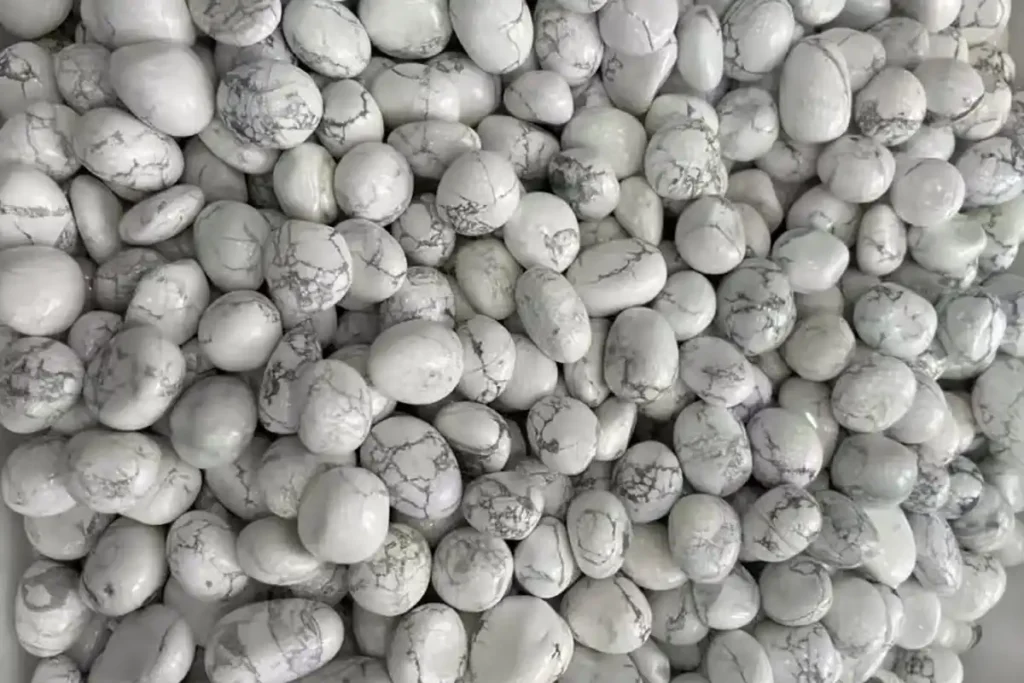
In the bead market, many White Turquoise beads are actually white howlite. This is one of the main reasons buyers get confused when comparing product names, photos, and prices. White howlite has a white or milky base color with gray web-like veins, so it naturally gives a look that feels close to turquoise-style matrix patterns.
Howlite is a real stone material with its own value. It is not a bad product. The problem only starts when a seller uses the name White Turquoise to make howlite sound like rare natural turquoise. For wholesale buyers, the material should always be named clearly, especially when the order quantity is large.
White howlite is popular because it can be made into many shapes. Round beads, bracelets, pendants, carved animals, towers, spheres, and decorative pieces are all common in the market. It also takes dye easily, so some factories use it to create blue turquoise-look beads.
This is why White Turquoise and howlite often appear together in product searches. If buyers want to understand the stone itself, a separate howlite meaning guide can explain its symbolism, jewelry use, and wholesale value in more detail. But for this article, the key point is simple: before buying White Turquoise in bulk, always ask whether the real material is howlite, turquoise, magnesite, dyed stone, or synthetic stone.
Howlite vs Turquoise: Material, Color, and Price Differences
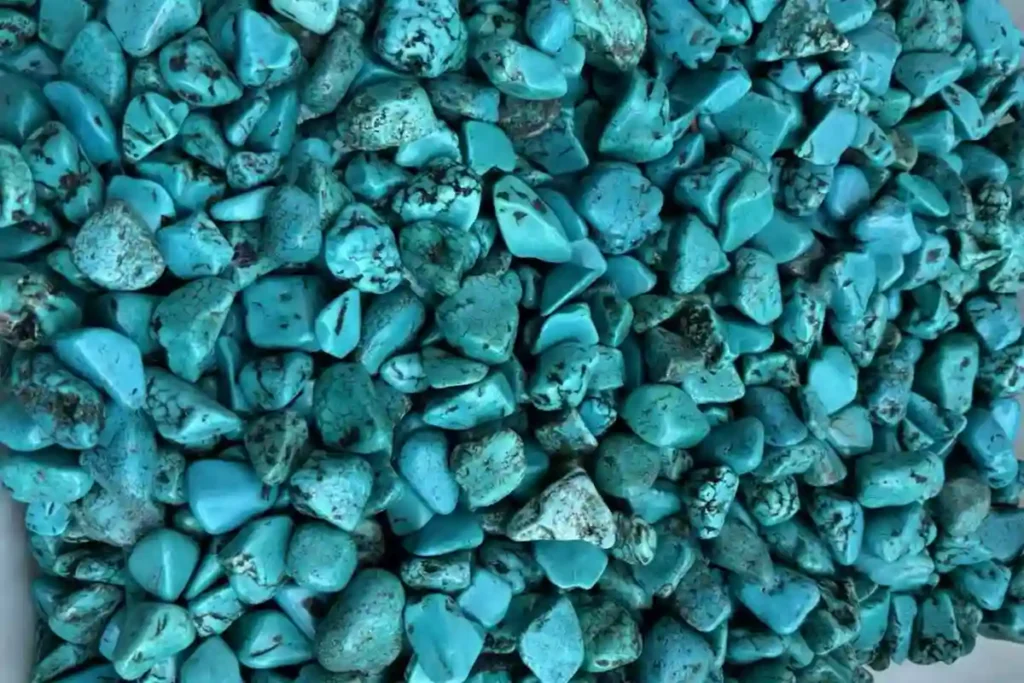
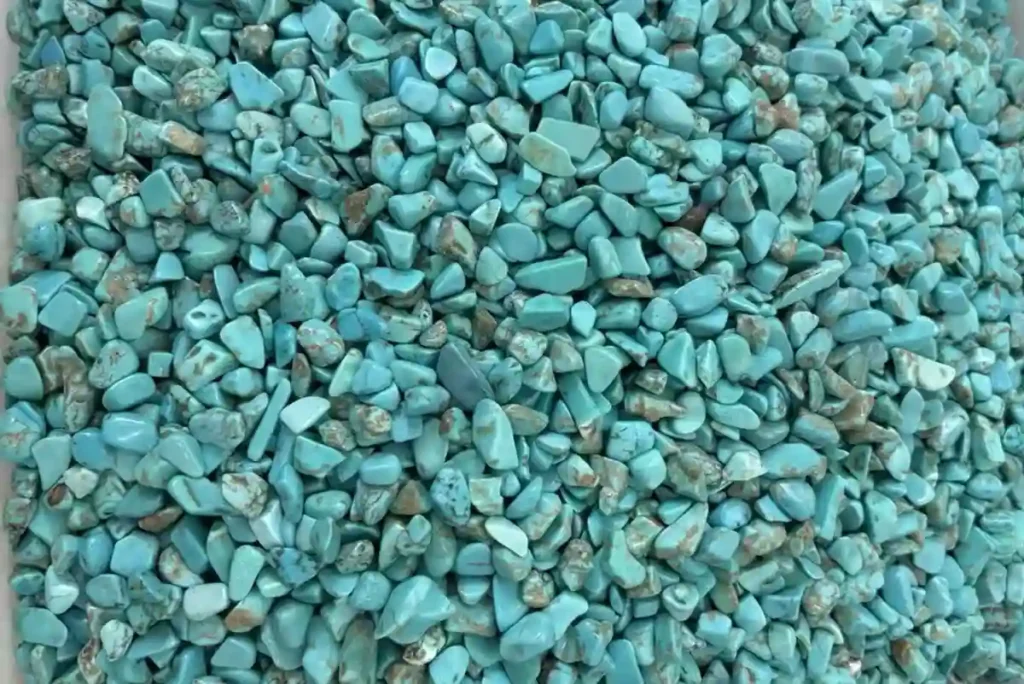
When buyers compare howlite vs turquoise, the first difference is the material itself. Howlite is usually white or milky with gray veins, while natural turquoise is better known for its blue, blue-green, or greenish color. Some turquoise may include dark matrix lines, but its base color is usually very different from white howlite.
Price is another major difference. Natural turquoise, especially good-quality material, is usually much more expensive than howlite. White Turquoise can sit in a confusing middle area because the name sounds valuable, but the actual material may be howlite or another white veined stone. This is why White Turquoise price can vary so much from one supplier to another.
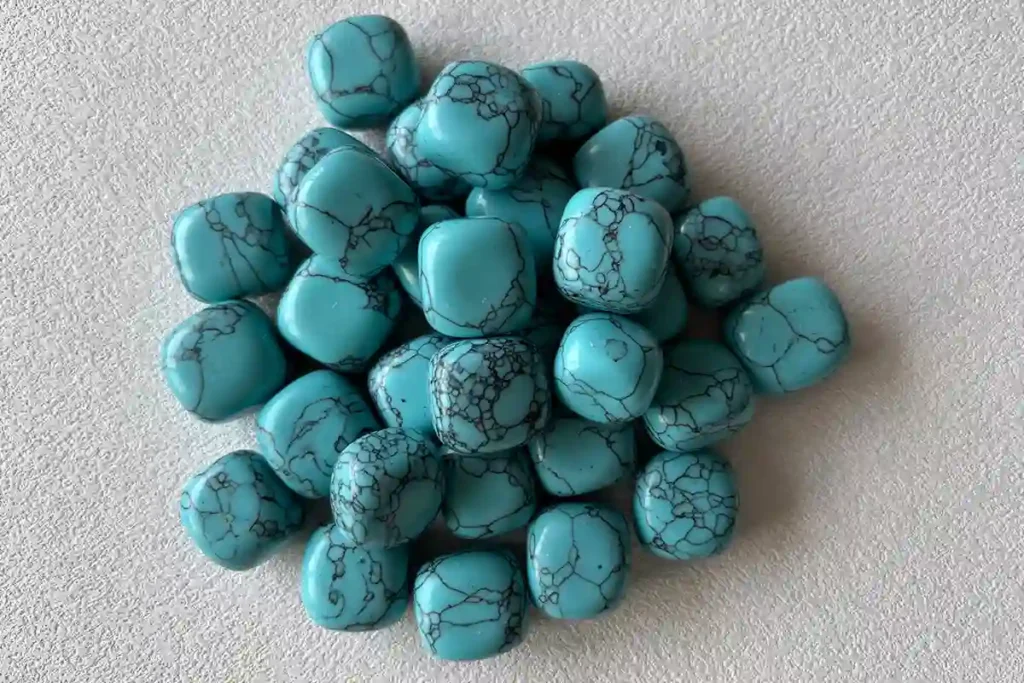
Color treatment also matters. Howlite is porous, so it can be dyed blue to look like turquoise. Dyed howlite can be attractive and useful for fashion jewelry, but it should not be sold as natural turquoise. If your customers ask for real turquoise, dyed howlite is not the same product.
For wholesale buyers, the safest way is to match the material with the market. Howlite is better for affordable bead strands, bracelets, and bulk jewelry lines. Natural turquoise is better for higher-end jewelry or customers who specifically care about the mineral name. White Turquoise can sell well, but the supplier must explain what the material really is before the order is confirmed.
Why the Name Matters in Wholesale Orders
In wholesale orders, the product name is not just a small detail. It affects price, customer trust, product description, and repeat business. If a buyer orders White Turquoise because they believe it is natural turquoise, but later receives white howlite, the problem is not only about the stone. The problem is the expectation.
This is why clear naming is important before payment. A supplier should explain whether the material is natural turquoise, white howlite, dyed howlite, magnesite, synthetic stone, or another white turquoise-style material. For a small retail order, the loss may be limited. For a bulk order, one unclear name can create many problems.
White Turquoise can still be a good product for jewelry sellers. Many customers like the clean white base, natural-looking veins, and simple style. But if the buyer sells it as natural turquoise without checking the material, the final customer may feel misled. That can hurt reviews, brand trust, and future sales.
For B2B buyers, the safest rule is simple: buy by material, not only by market name. A beautiful product name can help with sales, but the real material must support the price. When both buyer and supplier are clear from the beginning, White Turquoise can become an easy-selling item instead of a source of confusion.
How to Tell Authentic Turquoise from Dyed Howlite
Observe the Matrix Lines and Color Depth
When buyers compare White Turquoise, dyed howlite, and real turquoise, the first thing to check is the pattern. Natural turquoise usually has a blue, blue-green, or green base color with darker matrix lines. The pattern may look uneven, deep, and more complex. Each bead can show different color depth and natural variation.
White howlite usually has a white or milky background with soft gray veins. The lines may look lighter and more web-like. If howlite is dyed blue, the color can sometimes look too even, too bright, or too flat. Some dyed beads may also show blue color collecting inside cracks, holes, or lower areas of the stone.
For wholesale buyers, one photo is not enough. A polished product image can hide many details. Before ordering White Turquoise beads in bulk, ask for clear photos or videos of the actual batch. Check the color, vein pattern, bead holes, surface polish, and whether the strands look consistent enough for your market.
This does not mean dyed howlite has no value. It can still be useful for fashion jewelry and affordable turquoise-style designs. The key is honest description. If the product is dyed howlite, it should be sold as dyed howlite, not as natural turquoise. That simple difference protects both the supplier and the buyer.
Check Whether the Price Makes Sense
Price is one of the easiest ways to spot a possible material mismatch. If a supplier offers “natural turquoise” at a very low price, buyers should slow down and ask more questions. Real turquoise, especially good-quality material with strong color and natural matrix, usually does not sell at the same price level as common howlite beads.
White Turquoise price can be confusing because the name may refer to different materials. If the product is white howlite, the price should usually be more suitable for bulk bead orders. If it is natural turquoise or a rare white turquoise-style stone, the price should be much higher, and the supplier should be able to explain why.
For wholesale buyers, price should match the material, size, finish, and order quantity. A 4mm bead strand, an 8mm bracelet bead, and a carved pendant will not have the same cost. Polishing quality, hole drilling, color consistency, and packaging also affect the final price.
The best approach is to compare price with product details. Ask what the material is, whether it is dyed or natural, whether it is synthetic, and what the actual size and strand length are. If the answer is unclear, do not rush the order. A cheap White Turquoise deal can become expensive if customers later complain about the material.
Ask the Supplier for the Real Material Name
Before placing a bulk order, buyers should ask the supplier one direct question: what is the real material name? Do not only ask, “Do you have White Turquoise?” because different suppliers may understand that name in different ways. One supplier may mean white howlite. Another may mean dyed stone, magnesite, synthetic material, or a turquoise-style bead.
A better question is: “Is this natural turquoise, white howlite, dyed howlite, or synthetic stone?” This sounds simple, but it can prevent many problems. If you are comparing howlite vs turquoise, the supplier should be able to explain the difference clearly instead of only repeating a beautiful product name.
For wholesale orders, also ask about size, hole size, strand length, finish, color treatment, and packing. If the order is for bracelets, confirm whether the bead size is stable enough. If the order is for jewelry making, ask whether the hole size fits your cord, wire, or elastic string.
White Turquoise can be a good product when the description is honest. The risk comes from unclear naming. Before paying for hundreds or thousands of strands, ask for actual photos or videos of the current batch. Clear material confirmation helps you protect your own product page, customer trust, and long-term wholesale business.
Why White Turquoise Beads Sell Well in Wholesale Jewelry
Popular Product Styles: Beads, Bracelets, Rings, Earrings, and Necklaces
White Turquoise beads sell well because the material works across many product styles. Round beads are the most common choice for wholesale buyers, especially in sizes like 6mm, 8mm, and 10mm. These sizes are easy to use for stretch bracelets, bead strands, handmade necklaces, and simple jewelry kits.
For bracelet makers, White Turquoise gives a clean look without being too plain. The gray or black vein pattern adds natural detail, while the white base keeps the design easy to match. This is why many sellers use it for men’s bracelets, women’s bracelets, couple bracelets, and simple everyday jewelry.
White Turquoise jewelry can also include earrings, pendants, rings, and tumbled stones. A White Turquoise Ring may appeal to customers who like Western-style or boho jewelry. White turquoise earrings and a white turquoise necklace can work well for gift shops, online jewelry brands, and small handmade collections.
For wholesale buyers, the advantage is product flexibility. One material can support many styles. Beads can be sold as strands, finished bracelets, mixed jewelry sets, or DIY supplies. This makes White Turquoise useful for crystal shops, bead stores, jewelry makers, and online sellers who need a clean, easy-to-display stone with broad customer appeal.
Why 8mm White Turquoise Beads Are Easy to Sell
Among different bead sizes, 8mm White Turquoise beads are often easier for wholesale buyers to move. The size is not too small, so the natural vein pattern is still visible. It is also not too large, so the finished bracelet does not feel too heavy for daily wear.
For bracelet sellers, 8mm is a very practical size. It works for men’s bracelets, women’s bracelets, couple bracelets, and simple elastic designs. Many retail customers can accept this size because it looks balanced on the wrist. It also gives enough space to pair with black onyx, tiger eye, hematite, lava stone, or metal spacer beads.
From a wholesale point of view, 8mm White Turquoise beads are easy to prepare in larger quantities. Buyers can use them for finished bracelets or resell them as bead strands. This gives them more flexibility when planning product lines.
Another reason 8mm sells well is that it photographs clearly. The white base and gray veins show up better than very small beads, which helps online sellers create cleaner product images. For many jewelry businesses, a stone that looks good in photos and works across many designs is easier to reorder again and again.
Real Wholesale Experience: A Buyer Ordering 3,000 Strands Every Three Months
From our own wholesale experience, White Turquoise has always been a steady-selling material, especially in round beads. We also call it howlite in daily trade, and many buyers use the name White Turquoise because the stone has a clean white base with gray vein patterns. The important point is to make the material clear before the order.
One of our Indian customers runs a trading business in Hong Kong. Every three months, he orders about 3,000 strands of 8mm White Turquoise round beads from us. He told us that most of these beads are sold to the United States, where white stone jewelry, simple bracelets, and natural-looking bead designs are easy to move.
Because this buyer only wants 8mm beads, we usually prepare stock before he places the final order. When he confirms the order, we can arrange shipment quickly instead of making him wait for production. This saves time for his business and helps him serve his own customers faster.
This is also why understanding the market matters more than only reading about White Turquoise meaning. A stone can have beautiful symbolism, but wholesale buyers also care about supply stability, bead size, polish, color consistency, and fast delivery. When a material sells again and again, good preparation becomes part of the service.
Natural vs Synthetic White Turquoise: Quality Issues Buyers Should Notice
How Natural White Turquoise or Howlite Feels Different
Natural White Turquoise-style howlite usually feels smoother and more solid after proper cutting and polishing. The surface should not feel chalky or dirty in the hand. When the beads are drilled well, strung well, and polished evenly, they can look clean and comfortable enough for daily bracelets, bead strands, and simple jewelry designs.
Natural stone also has variation. Some beads may show more gray veins, while others look whiter and cleaner. This is normal. For many buyers, that natural pattern is part of the charm. It makes each strand look slightly different, which helps the finished jewelry feel less factory-made.
Still, buyers should not expect every bead to look exactly the same. White Turquoise and howlite can show small differences in color, line density, surface marks, or bead holes. These details are usually acceptable in natural stone products, as long as the overall batch quality matches the order standard.
For wholesale orders, the key is balance. Buyers need a natural look, but they also need stable quality. Before placing a large order, check whether the polish is smooth, the holes are clean, the bead size is close enough, and the vein pattern fits your customer group. This is especially important if you sell finished jewelry under your own brand.
Why Synthetic Beads May Feel Rough or Powdery
Synthetic White Turquoise-style beads can still look attractive in photos, but the hand feel may be very different from natural howlite. Some low-cost synthetic beads feel rougher on the surface. When workers string them into bracelets, fine powder may come out from the bead holes or surface. After handling many strands, the hands can look dusty and dirty.
This is a real quality issue that wholesale buyers should notice. If the beads leave too much powder during production, bracelet makers may need extra cleaning time. The finished jewelry may also feel less smooth on the skin. For sellers who focus on better customer experience, this can affect reviews and repeat orders.
However, synthetic material is not always useless. It depends on the market. Some buyers need a very low-cost product for promotional bracelets, couple bracelets, tourist gifts, or fast-moving fashion items. In that case, synthetic White Turquoise-style beads may still have demand if the price is low and the material is described honestly.
The problem is not low-cost material itself. The problem is hiding the material. If synthetic beads are sold as natural White Turquoise or natural howlite, buyers may face complaints later. A clear product description helps buyers choose the right grade for the right customer group.
When Low-Cost Synthetic Beads Still Have a Market
Low-cost synthetic White Turquoise-style beads can still sell well when they match the right product position. Not every customer is looking for natural stone, high-end jewelry, or collector-grade material. Some buyers simply want a clean black and white bracelet design at a price their customers can accept.
We once supplied a style made with synthetic white beads and matte black glass beads. The design was simple: one black bead, one white bead, repeated around the bracelet. It became a classic couple bracelet style for that market because the contrast looked clean, modern, and easy to wear.
One of our Thai customers used to order about 2,000 pairs each month. The reason was simple. The price was low, the look was strong, and the finished bracelet was easy for retail customers to understand. For gift sellers and fashion accessory shops, that kind of product can move quickly.
This is why buyers should not judge only by material name. Natural White Turquoise-style howlite is better for customers who care about stone quality and smoother touch. Synthetic beads can work for low-cost fashion lines. The key is honest labeling, clear pricing, and choosing the right grade for the right market.
Wholesale Buying Tips Before Ordering White Turquoise Beads
Confirm Size, Hole Size, Strand Length, and Finish
Before ordering White Turquoise beads in bulk, buyers should confirm the basic details first. Size is one of the most important points. A 4mm bead works well for delicate jewelry, while 8mm and 10mm beads are more common for bracelets. If the size is not stable, the finished product may not look balanced.
Hole size also matters. Some buyers use elastic cord for stretch bracelets, while others use wire, thread, or leather cord. If the hole is too small, production becomes slow. If the hole is too large, the bead may not sit well in the design.
Strand length should also be clear before payment. Many bead strands are around 15 inches or 38cm, but this can vary by supplier. A small difference in strand length can affect the number of beads per strand and the final cost.
Finish is another detail buyers should check. White Turquoise beads should have smooth polishing, clean holes, and a surface that fits your customer level. For higher-end jewelry sellers, the polish and color consistency need to be better. For low-cost fashion jewelry, buyers may accept a wider range, but the grade should still match the price.
Request Photos or Videos Before Bulk Shipping
For wholesale orders, photos and videos can reduce many problems before shipment. White Turquoise beads may look different from batch to batch because the white base, gray lines, polish, and surface details are not always the same. A clear photo helps buyers check whether the material matches their product plan.
Videos are even better when the order quantity is large. A short video can show the real color under normal light, the bead shine, the strand quality, and the overall consistency of the batch. This is useful for buyers who sell online, because product photos on their own website should match what customers receive.
Before shipping, buyers can also ask the supplier to show packing details. This includes strand quantity, bracelet packing, label options, carton packing, and mixed-size orders. For B2B buyers, small packing mistakes can create extra work after the goods arrive.
When ordering White Turquoise beads, do not rely only on one beautiful product photo. Ask for actual batch photos or videos, especially if you are buying hundreds or thousands of strands. Clear confirmation before dispatch saves time, reduces disputes, and helps both buyer and supplier build a longer business relationship.
Choose the Right Grade for Your Market
Not every buyer needs the same grade of White Turquoise beads. A jewelry brand that sells higher-end handmade bracelets may care more about smooth polish, clean drilling, steady bead size, and better color consistency. A DIY bead seller may care more about price, mixed sizes, and fast-moving stock.
Crystal shops often need White Turquoise beads that look natural and easy to explain to customers. They may prefer smoother howlite-style beads with clear gray veins and a clean white base. Gift shops may choose finished bracelets or simple jewelry sets because their customers want products that are ready to display and sell.
For online sellers, photo performance also matters. A better-grade bead usually looks cleaner in product images, which can help improve customer trust. If the beads look too rough, too powdery, or too different from one another, the product page may receive more questions or complaints.
The best choice depends on your customer group. If your market focuses on natural stone jewelry, choose better polished howlite or clearly described White Turquoise-style beads. If your market focuses on low-cost fashion accessories, a lower-cost grade may still work. The key is to match material, price, and customer expectation before placing the order.
Looking for White Turquoise beads for wholesale jewelry production? Contact us on WhatsApp or send an inquiry form to check current stock, bead sizes, strand length, packing options, and shipping time. We can also send photos or videos of the actual batch before dispatch.
How to Use White Turquoise in Jewelry Collections
White Turquoise Jewelry for Clean and Minimal Designs
White Turquoise jewelry works well when buyers want a clean, simple, and easy-to-match look. The white base gives the design a fresh feeling, while the gray or black vein pattern keeps it from looking too plain. This balance makes the stone useful for both everyday jewelry and gift-style products.
For bracelet collections, White Turquoise can stand alone or mix with other stones. A full strand bracelet looks calm and simple. A mixed bracelet can look stronger when paired with black onyx, lava stone, hematite, tiger eye, or metal spacers. This gives sellers more ways to create different price points from one material.
White turquoise earrings and necklace designs are also popular for buyers who want light-colored jewelry with a natural look. The stone can fit boho, Western, minimalist, spiritual, and handmade jewelry styles. It does not look too bright, so customers can wear it with many outfits.
For wholesale buyers, this flexibility is important. One material can support several product lines, including bracelets, bead strands, earrings, necklaces, and DIY jewelry kits. When a stone is easy to match and easy to explain, it becomes easier for shops and online sellers to reorder it regularly.
Pairing White Turquoise with Black, Gold, Silver, and Earth-Tone Stones
White Turquoise is easy to pair because the color does not fight with other materials. The white base gives space to the design, while the darker veins add enough detail to make the jewelry look natural. This is why many buyers like to use white with turquoise-style beads in both simple and mixed stone collections.
For a strong contrast, black stones are a good choice. Black onyx, matte black glass, lava stone, and hematite can make White Turquoise look sharper and more modern. A black and white turquoise-style bracelet is especially easy to sell because the color contrast is clear, clean, and suitable for both men and women.
Gold and silver spacers can change the feeling quickly. Gold makes the bracelet warmer and more fashion-focused, while silver keeps the design cooler and cleaner. These small details help jewelry sellers create several styles from the same White Turquoise bead stock.
Earth-tone stones also work well. Tiger eye, picture jasper, wood beads, smoky quartz, and brown agate can give the design a warmer handmade look. For wholesale buyers, this means one material can support many product combinations. Turquoise and white designs can be simple, bold, spiritual, or fashion-based, depending on what stones you match with it.
White Turquoise Ring, Earrings, and Necklace Ideas for Retail Buyers
White Turquoise can also help retail buyers build small jewelry collections beyond bead strands and bracelets. A White Turquoise Ring is often used in boho, Western, or handmade-style jewelry because the white stone surface looks clean, while the gray or black veining adds a natural pattern. It can work well with silver-tone settings, antique metal, or simple modern designs.
White turquoise earrings are another easy product idea. Small round beads, chip beads, or shaped stones can be used for drop earrings, hoop earrings, or simple wire-wrapped styles. Because the color is soft, these earrings can match many outfits and suit customers who prefer natural-looking jewelry without bright colors.
A white turquoise necklace can be made in several ways. Some sellers use full bead strands for a stronger handmade look, while others use one pendant or a few accent beads for a cleaner design. The stone can also pair with black, brown, gold, or silver details to create different styles for different customer groups.
For wholesale buyers, these product ideas matter because they help one material create more selling opportunities. White Turquoise beads can become bracelets, rings, earrings, necklaces, keychains, charms, or DIY supplies. That gives shops more ways to test the market without buying too many different materials at once.
FAQ
Is White Turquoise a Real Stone?
White Turquoise is a real market name, but buyers should be careful with the meaning. In many bead markets, White Turquoise often refers to white howlite or another white stone with gray or black veining. It is not always natural turquoise in the mineral sense. Before placing a wholesale order, ask the supplier for the real material name, treatment, size, and current batch photos. This is especially important if you plan to sell the product as natural stone jewelry.
Is White Turquoise Worth Anything?
White Turquoise can be worth buying when the material, quality, and price match your market. If it is white howlite, the value usually comes from clean color, good polish, stable bead size, and easy jewelry use. If someone sells it as rare natural turquoise, the price should be checked more carefully. White Turquoise price depends on the real material, bead size, finish, supply, and whether the stone is natural, dyed, synthetic, or stabilized.
What Is the Benefit of White Turquoise?
The main benefit of White Turquoise is its clean look and easy matching ability. It works well in bracelets, necklaces, earrings, rings, and DIY jewelry supplies. The white base can make designs look calm and simple, while the gray or black veins add natural detail. For wholesale buyers, White Turquoise stone benefits are more practical: it is easy to photograph, easy to combine with other stones, and suitable for many customer groups.
What Is Another Name for White Turquoise?
Another common name for White Turquoise in the bead market is white howlite. Some sellers may also use names like howlite, white turquoise-style stone, or white veined stone. This is why buyers should not depend only on the product title. If you want to understand the stone itself, a full howlite meaning guide can help. If you need a clearer material comparison, a howlite vs turquoise article can explain the difference in more detail.
What Type of Rock Is White Turquoise?
It depends on the actual material. If the product is white howlite, then it is not the same mineral as turquoise. If it is sold as a white turquoise gemstone, buyers should ask the supplier to explain the material clearly. In wholesale trade, the name White Turquoise may describe the look more than the mineral type. For serious bulk orders, always confirm whether the product is natural turquoise, howlite, magnesite, dyed stone, synthetic stone, or another white veined material.
Conclusion: Buy White Turquoise by Material, Not Just by Name
White Turquoise is a popular name because it sounds clean, beautiful, and easy to sell. It fits many jewelry styles, from simple bead bracelets to boho rings, earrings, necklaces, and DIY jewelry supplies. But for wholesale buyers, the name alone is not enough. The real value depends on the actual material, polish, bead size, finish, color consistency, and honest product description.
In many bead markets, White Turquoise is often connected with white howlite or other white veined stones. That does not make it a bad product. Howlite has its own stable market, affordable price range, and strong use in jewelry production. Buyers who want to understand the stone itself can read more about howlite meaning, while buyers who need a deeper comparison should also check a full howlite vs turquoise guide before placing large orders.
The safest way to buy White Turquoise is to confirm everything before payment. Ask whether the material is natural, dyed, synthetic, or stabilized. Check the White Turquoise price against the real material. Request photos or videos of the current batch. Confirm size, hole size, strand length, packing, and shipping time.
For wholesale White Turquoise beads, Howlite beads, bracelets, and custom stone jewelry supply, contact us on WhatsApp or submit the inquiry form. We can help confirm material, size, stock, packing, photos, videos, and shipping details before your order.
Disclaimer
The information in this article is for general jewelry, gemstone, and wholesale buying reference only. Stone names such as White Turquoise, Howlite, and related trade names may vary by supplier, market, and product description. Always confirm the actual material, treatment, size, quality, and batch details before placing a bulk order.
Any meaning, spiritual symbolism, or stone benefits mentioned here are based on traditional beliefs and customer preferences, not medical advice. Natural stones may vary in color, pattern, texture, and finish. For wholesale orders, we recommend checking photos or videos of the actual batch before shipment.