
Lepidolite Meaning Benefits Properties and Uses
Written by: Rocrystal Sourcing & QC Team, Last updated: September 10, 2026
Lepidolite meaning is commonly connected with calmness, emotional balance, personal transformation, and the ability to let go of old patterns. Often called the Stone of Transition, lepidolite is popular among people facing changes in relationships, careers, habits, or personal goals. Many also keep this stone nearby during meditation, quiet reflection, or stressful periods as a symbolic reminder to slow down and regain perspective.
Lepidolite is a lithium-bearing mineral from the mica family. This natural stone may appear lavender, deep purple, pinkish purple, grayish purple, or partly white. Its surface can show a soft mica-like sparkle and visible layers. Because lepidolite forms with other minerals, natural pieces rarely have a perfectly even color. White areas, darker markings, and differences between stones are common characteristics rather than automatic signs of poor quality.
This guide explains Lepidolite Meaning, mineral properties, traditional benefits, chakra associations, color meanings, and practical uses. It also covers lepidolite bracelets, identification, cleaning, and safe handling. For buyers sourcing stones in quantity, later sections explain how color range, white mineral content, polish, and batch consistency affect quality and price. Spiritual interpretations are presented as traditional beliefs, not as proven medical effects.
What Is Lepidolite?
A Simple Definition of Lepidolite
What is lepidolite? In simple terms, it is a naturally occurring, lithium-rich mineral from the mica family. It usually forms in thin, layered sheets and often has a pearly or slightly sparkling surface. Its color can range from pale lavender and pinkish purple to deeper violet, gray, or nearly colorless.
To define lepidolite accurately, it is important to separate its mineral identity from its symbolic use. Scientifically, it is a soft mica mineral with a layered structure. In modern crystal traditions, it is valued for its association with calmness, reflection, and personal change. These spiritual interpretations are based on belief and tradition rather than medical evidence.
A lepidolite crystal may be sold as a natural specimen, polished stone, bead, bracelet, carving, or decorative item. Unlike harder transparent gems, it is rarely chosen for traditional faceted jewelry because its layered structure can split or scratch easily. The lepidolite stone meaning may attract customers first, but color, finish, durability, and natural variation remain important when selecting the material.
What Is Lepidolite Made From?
Lepidolite is a lithium-rich mica composed mainly of potassium, lithium, aluminum, silicon, oxygen, and fluorine or hydroxyl. Its exact composition can vary because natural lepidolite minerals may contain different amounts of these elements. Small amounts of manganese can contribute to the familiar lavender, pink, or purple colors found in many specimens.
This lepidolite mica crystal usually develops in lithium-rich granite pegmatites. It may grow beside quartz, feldspar, tourmaline, or other minerals formed in the same geological environment. As a result, polished stones can contain white, clear, gray, or darker sections. These areas are often natural mineral associations rather than signs that the material is fake.
Although lepidolite contains lithium, wearing or holding the stone does not provide the effects of medical lithium. Its chemical composition explains its mineral identity, not a proven health benefit. Understanding this difference helps buyers appreciate the lepidolite crystal as a natural material while keeping traditional spiritual claims separate from scientific facts.
Physical Properties and Identification
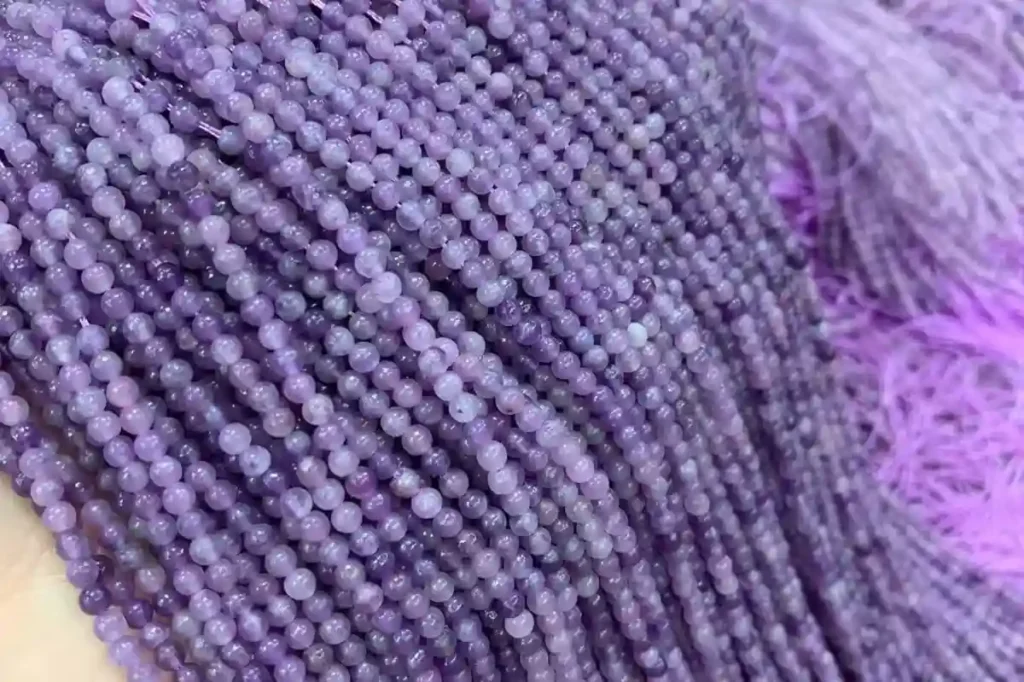
Lepidolite commonly appears in pale lavender, pinkish purple, lilac, gray-purple, or deeper violet tones. Its surface may show a pearly shine, fine sparkle, or visible layered texture. These features come from its mica structure. Some pieces look strongly purple, while others contain white quartz, feldspar, or lighter mineral areas.
Typical lepidolite properties include a relatively low hardness of about 2.5 to 4 on the Mohs scale and a tendency to split along its thin mineral layers. This makes the material easier to scratch or chip than quartz. Polished stones and beads should therefore be handled carefully during processing, packing, display, and daily wear.
Color and sparkle alone cannot confirm that a stone is genuine. Dyed material, purple mica, and other similar-looking minerals may be sold under confusing names. A reliable identification should consider structure, hardness, mineral associations, and professional testing when necessary. For wholesale orders, clear batch photos and close-up videos can help buyers evaluate visible quality, but they cannot replace laboratory identification.
Lepidolite History Origin and Mineral Formation
The History Behind Its Name
Lepidolite was once commonly called lilalite because of its soft lilac color. Its present name comes from a Greek word connected with scales, referring to the mineral’s thin, flaky layers. This name describes its physical structure more accurately because lepidolite belongs to the mica family and can separate into delicate sheets.
As interest in lithium-bearing minerals grew, lepidolite became important for more than its appearance. Mineral collectors valued its color and sparkling texture, while lapidary workers began shaping suitable material into polished stones, beads, and carvings. Later, modern crystal traditions connected it with transition and calmness, adding a symbolic history that remains separate from its scientific mineral classification.
Where Does Lepidolite Come From?
Lepidolite forms in several lithium-rich mining regions around the world. Well-known sources include Brazil, Madagascar, the United States, Russia, and Zimbabwe. Deposits may produce different colors, crystal structures, and mineral combinations. Some material forms as sparkling plates, while denser rough can be polished into beads, carvings, or tumbled stones.
Brazilian and Madagascan material is often seen in the commercial crystal market, but country of origin alone does not determine quality. One deposit may contain bright purple rough, while another produces pale material with more quartz or feldspar. Even stones from the same mining area can show noticeable differences in color, texture, and durability.
Buyers should therefore evaluate the actual batch rather than rely only on an origin label. Important details include the overall color range, the proportion of white minerals, surface condition, size, and suitability for polishing. For wholesale orders, current photos and videos usually provide more practical information than the country name alone.
How Lepidolite Forms
Lepidolite usually forms in granite pegmatites, which are coarse-grained rocks created during the final stages of magma cooling. These environments can concentrate lithium and other elements that are less common in ordinary rocks. With enough time and suitable conditions, lepidolite develops as thin mica plates, compact masses, or crystal clusters.
During formation, it may grow beside quartz, feldspar, tourmaline, spodumene, and other lithium-bearing minerals. These natural associations explain why a polished lepidolite crystal may contain white areas, translucent sections, dark inclusions, or mixed patterns. They can also affect how easily the rough material can be cut and polished.
Not every piece of rough lepidolite is suitable for beads or tumbled stones. Material with weak layers may split during cutting, while pieces containing many fractures can break during polishing. Denser rough generally produces a smoother surface and more durable finished item, although natural color and texture will still vary from piece to piece.
What Is the Meaning of Lepidolite?
The Core Lepidolite Stone Meaning
The lepidolite crystal meaning centers on calmness, personal transition, self-acceptance, and inner stability. Often called the Stone of Transition, lepidolite symbolizes the process of releasing old habits and adjusting to a new stage of life. Many people choose it during periods of change because its soft purple color creates a quiet and reflective feeling.
The lepidolite stone meaning is also associated with releasing habits, thoughts, or emotional patterns that no longer feel helpful. Some people carry a polished stone, wear a bracelet, or keep one nearby while making an important decision. The stone does not make the decision for them, but it may support a more thoughtful personal ritual.
When people ask what does lepidolite do, the answer depends largely on belief and intended use. In crystal traditions, it represents a gentler approach to change rather than sudden transformation. Lepidolite Meaning should therefore be understood as symbolic and spiritual. It is not a promise that the stone will control emotions, remove difficulties, or change life circumstances.
Lepidolite Spiritual Meaning
The lepidolite spiritual meaning centers on inner peace, self-awareness, and the willingness to move through change without holding too tightly to the past. In modern crystal practices, people often use it during meditation or quiet reflection. Its soft purple appearance also makes it a popular symbol of gentle, gradual personal growth.
Some users keep a lepidolite crystal nearby when reviewing old habits, setting new intentions, or entering an unfamiliar stage of life. Rather than expecting the stone to solve a problem, they use it as a reminder to pause and observe their thoughts. This gives the crystal a practical role within a personal spiritual routine.
The phrase Lepidolite meaning spiritual refers to traditional beliefs, not a scientifically proven effect. Experiences can differ from one person to another, and some people may simply appreciate the stone for its color or mineral structure. The lepidolite crystal spiritual meaning should not be presented as a guaranteed way to remove stress or change someone’s emotional state.
Why It Is Called a Stone of Transition
Lepidolite is called the Stone of Transition because it is commonly associated with moving from one stage of life to another. People may choose it when changing jobs, moving to a new home, ending a relationship, starting a business, or developing a healthier routine. In these situations, the stone symbolizes adjustment rather than instant change.
The Lepidolite Meaning also includes accepting what cannot be controlled while paying attention to the choices that remain available. A person might hold the stone while writing down a goal or keep it nearby when planning the next practical step. This kind of ritual can give a physical form to an otherwise abstract intention.
However, a lepidolite crystal does not create a new beginning by itself. Its value in this context comes from the meaning a person gives it and the actions that follow. The Stone of Transition is best understood as a symbolic companion during change, not as a substitute for clear decisions, professional guidance, or personal responsibility.
Lepidolite Meaning and Benefits
Emotional Benefits Traditionally Associated with Lepidolite
Many people associate lepidolite with calmness, emotional balance, and self-acceptance. During stressful periods, they may hold a polished stone, wear a bracelet, or place it in a quiet space as a reminder to slow down. These traditional Lepidolite benefits relate mainly to personal reflection and emotional intention.
The stone is also linked with releasing unhelpful habits and responding to change with greater patience. For example, someone might use it while writing in a journal or practicing slow breathing. The physical presence of the stone can serve as a simple cue to pause, identify an emotion, and consider the next realistic action.
Descriptions of Lepidolite meaning and benefits should not suggest that the mineral can treat anxiety, depression, trauma, or other mental health conditions. Experiences with crystals are personal and may differ from one person to another. Anyone facing persistent emotional distress should seek support from a qualified healthcare or mental health professional rather than depend on lepidolite healing properties alone.
Mental Focus and Everyday Reflection
Lepidolite is often used as a visual reminder to slow down and organize scattered thoughts. Some people keep a Lepidolite crystal beside a notebook, computer, or reading area when they need to focus on one task at a time. The stone itself does not create concentration, but it can support a deliberate routine.
For example, a person may pause before work, take several steady breaths, and write down the three most important tasks for the day. Others use the stone during journaling to separate immediate facts from worries or assumptions. These simple habits offer a practical explanation for what people sometimes describe as the mental healing properties of lepidolite.
Claims about what does lepidolite do should remain realistic. It may have personal value as part of meditation, reflection, or a calming workspace, but it has not been proven to improve memory or treat mental health conditions. Lasting changes in focus usually depend on rest, daily habits, a suitable environment, and professional support when needed.
Spiritual and Metaphysical Properties
In modern crystal traditions, the metaphysical properties of lepidolite are connected with intuition, inner awareness, and spiritual reflection. Some people use it during meditation when they want to observe their thoughts without reacting immediately. Others view its purple color as a symbol of wisdom, personal growth, and a quieter state of mind.
The lepidolite spiritual meaning is also associated with releasing old emotional patterns and making space for change. A simple practice may involve holding the stone, setting one clear intention, and sitting quietly for several minutes. Such a routine can help the user focus on a chosen idea, although individual experiences will naturally vary.
These beliefs explain why the lepidolite crystal spiritual meaning remains popular among meditation practitioners and crystal collectors. However, metaphysical descriptions are based on spiritual traditions and personal interpretation rather than scientific proof. Lepidolite should be treated as a symbolic aid for reflection, not as an object that guarantees spiritual awakening or controls external events.
What About Physical Healing Claims?
Some sources connect lepidolite healing properties with sleep, pain relief, the nervous system, or other physical conditions. These claims come from modern crystal practices and have not been established as medical facts. Holding, wearing, or placing the mineral nearby should not be presented as a way to diagnose, treat, cure, or prevent disease.
Lepidolite contains lithium within its mineral structure, but this does not mean the body receives medical lithium through skin contact. Prescription lithium is produced, measured, and administered under professional supervision. A natural stone cannot provide the same dosage, absorption, or controlled medical effect simply because lithium is part of its chemical composition.
People can still enjoy the traditional Lepidolite benefits as part of a personal relaxation or reflection routine. However, physical or mental symptoms require appropriate medical advice. The healing properties of lepidolite should therefore be described as spiritual beliefs rather than replacements for medicine, therapy, healthy sleep, or professional care.

Lepidolite Chakra and Energy Associations
Which Chakra Is Lepidolite Associated With?
Lepidolite is most often associated with the third eye chakra and crown chakra. In modern spiritual traditions, the third eye relates to intuition and self-awareness, while the crown represents spiritual connection and a broader perspective. The purple color of the stone is one reason these Lepidolite chakra associations have become common.
Some practitioners also connect pink or lavender pieces with the heart chakra because these colors may symbolize emotional openness and self-acceptance. Chakra correspondences can differ between teachers and traditions, so there is no single rule that every user must follow. Personal intention often influences how the stone is used.
During meditation, a person may hold the stone or place it nearby while focusing on one of these energy centers. This practice belongs to spiritual belief rather than medical science. The lepidolite spiritual meaning may support a personal ritual, but chakra work should not be treated as a replacement for physical or mental healthcare.
Lepidolite and the Third Eye Chakra
The third eye chakra is traditionally linked with intuition, perception, and the ability to examine thoughts more clearly. Because lepidolite is often purple or lavender, many practitioners connect it with this energy center. They may use the stone during meditation when reflecting on a decision, habit, or personal concern.
A simple practice is to sit in a quiet place, hold the stone comfortably, and focus on slow breathing. The user can then consider one clear question without expecting an immediate or supernatural answer. In this setting, the Lepidolite chakra connection provides a theme for reflection and helps keep attention on the chosen intention.
Lepidolite does not guarantee stronger intuition or reveal hidden facts. Its role is symbolic and depends on the beliefs and habits of the user. The lepidolite crystal spiritual meaning can complement mindful reflection, but important decisions should still rely on evidence, careful judgment, and suitable professional advice.
Lepidolite and the Crown Chakra
The crown chakra is commonly associated with spiritual connection, broader awareness, and a sense of meaning. In crystal traditions, lepidolite may be used with this chakra because of its purple color and its symbolic link with calmness. Some people place it nearby during meditation, prayer, or quiet reflection.
While the third eye chakra is usually connected with intuition and personal insight, the crown chakra focuses more on perspective and spiritual understanding. A user might work with lepidolite when considering how a current problem fits into a larger life experience. This practice can create space for reflection without requiring a complicated ritual.
Descriptions of the metaphysical properties of lepidolite vary among spiritual traditions. No chakra association has been scientifically proven, and the stone cannot create spiritual growth on its own. Its value comes from how thoughtfully a person uses it as part of a personal practice.
Purple Pink and Other Lepidolite Colors
Purple Lepidolite Meaning
The Purple Lepidolite meaning is commonly connected with calmness, intuition, personal transition, and spiritual growth. Purple has long been associated with reflection and wisdom in many cultural and spiritual settings. For this reason, deeper purple pieces often attract buyers who want a stone for meditation, symbolic jewelry, or a thoughtful gift.
Lepidolite can range from pale lavender to rich violet, and these shades do not necessarily represent different minerals. Color may be influenced by chemical composition, mineral structure, and the material found around it. A darker purple stone is not automatically more powerful, although its stronger color may make it more desirable in certain retail markets.
When discussing Lepidolite Meaning, color symbolism should remain separate from physical quality. A pale piece may have the same traditional associations as a darker one. For wholesale selection, however, color saturation, white mineral content, pattern, polish, and consistency can affect grading and price because different customers have different visual expectations.
Pink Lepidolite Meaning
The Pink Lepidolite meaning is often associated with gentleness, emotional comfort, self-acceptance, and patience during change. Its softer color gives it a different visual feeling from deep purple material, so it is often selected for delicate jewelry designs, calming displays, and gifts connected with care or personal renewal.
Pink, lavender, and purple lepidolite do not always have clear commercial boundaries. One supplier may describe a pale purple batch as pink lepidolite, while another may call the same color lavender. Lighting, camera settings, and screen differences can also change how the color appears, making current batch photos important for remote buyers.
Although the color symbolism may vary, the basic lepidolite stone meaning remains closely connected with transition and reflection. A pink shade does not have proven healing power beyond that of a purple shade. For wholesale orders, buyers should focus on the actual color range, mineral composition, surface finish, and consistency required by their customers.
Why White Areas Appear in Natural Lepidolite
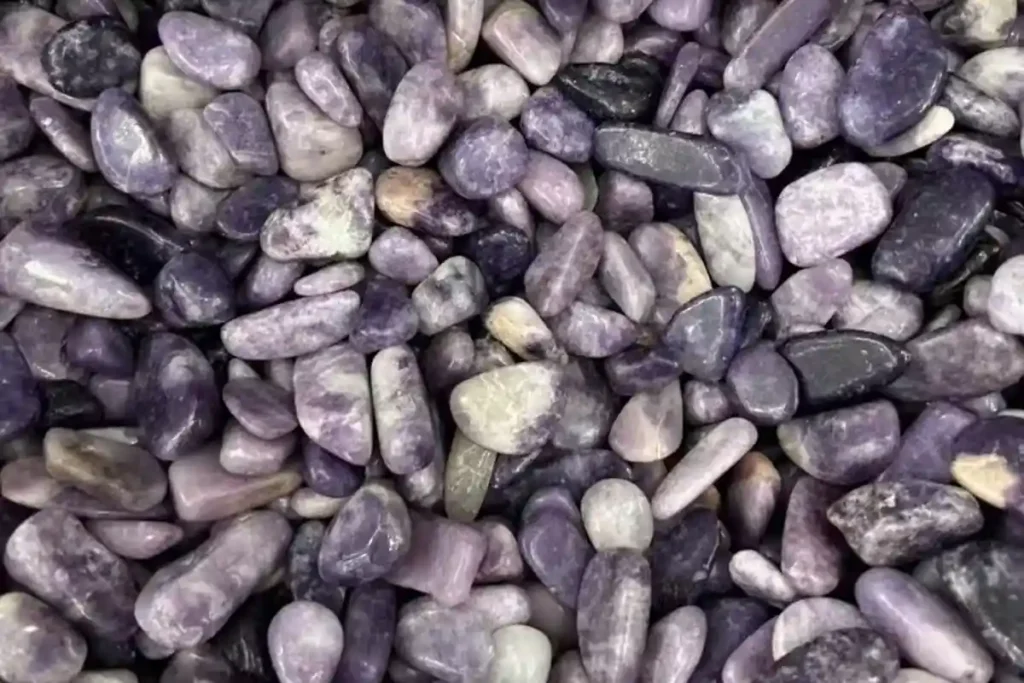
White areas often appear because lepidolite grows together with quartz, feldspar, or other minerals inside the same rock. When the rough material is cut and polished, these natural associations remain visible. A finished stone may therefore contain rich purple sections, pale lavender areas, white patches, and small mica-like sparkles.
The amount of white material can vary widely, even within rough taken from the same source. Small samples are often selected for stronger purple color, while a large batch reveals a broader natural range. For this reason, white portions should not automatically be treated as proof that the stones are fake or poorly processed.
However, mineral variation and commercial grading are different issues. Buyers who need mostly purple stones may request a tighter color selection, while others accept more white areas to reach a suitable price. Clear photos of the complete batch help both sides agree on the expected balance before shipment. Professional testing may still be needed if the exact mineral composition must be confirmed.
Lepidolite Zodiac Signs and Birthstone Use
Which Zodiac Signs Are Linked to Lepidolite?
Lepidolite is often linked with Libra because its symbolic themes of calmness and balance match qualities traditionally associated with that sign. Some modern crystal practices also connect it with Pisces or Gemini, especially when discussing emotional sensitivity, changing thoughts, or the need to adapt during uncertain periods.
These zodiac associations are not universal. Different crystal traditions and reference sources may connect lepidolite with different signs. Such relationships come from spiritual interpretation rather than astronomy or mineral science. They should therefore be understood as symbolic suggestions, not fixed rules that determine who can use the stone.
A person does not need to belong to a particular zodiac sign to wear a Lepidolite Bracelet or keep the stone nearby. Color preference, personal meaning, and intended use are usually more practical considerations. Anyone attracted to the traditional Lepidolite Meaning can choose it, regardless of their birth date or astrological sign.
Is Lepidolite a Traditional Birthstone?
Lepidolite is not included in the most widely recognized traditional or modern monthly birthstone lists. However, some contemporary crystal traditions describe it as an alternative birthstone for people associated with Libra, Pisces, Gemini, or other zodiac signs. These connections differ because there is no single official astrological system for lepidolite.
Traditional birthstones are normally assigned to a specific month, while modern crystal associations are often based on color, symbolism, or perceived energy. Lepidolite is therefore better described as a spiritually associated stone than as an official birthstone. Sellers should avoid presenting it as a universally accepted monthly gem.
People can still choose a Lepidolite crystal as a personal birthstone if its color or symbolism feels meaningful to them. Its connection with transition may also make it suitable for birthdays that mark a major life change. This is a personal choice rather than a historical rule or scientifically established relationship.
How to Use Lepidolite in Daily Life
Meditation and Quiet Reflection
Lepidolite can be included in a simple meditation without following a complicated ritual. Choose a quiet place, hold a polished stone comfortably, and take several slow breaths. You may then set one realistic intention, such as responding more patiently to change or paying closer attention to your thoughts.
Another option is to place the Lepidolite crystal beside a journal. Before writing, identify one concern and separate what you can control from what you cannot. The stone acts as a physical reminder to pause and reflect. Any benefit from this practice also depends on your attention, habits, and willingness to take practical action.
Some people use lepidolite during an evening relaxation routine, but it should not be described as a guaranteed sleep aid. Its spiritual meaning may complement meditation or quiet reflection, yet personal experiences vary. Persistent sleep problems, anxiety, or emotional distress require suitable advice from a qualified healthcare professional.
Where to Place Lepidolite in the Home
A lepidolite stone can be placed on a desk, beside a journal, or in a quiet reading area. These locations suit its traditional association with calm thinking and personal reflection. Keeping the stone somewhere visible may also remind you to pause, breathe slowly, and focus on one task at a time.
Some people place a Lepidolite crystal near their meditation space or on a bedside table. If used near the bed, treat it as a symbolic part of a relaxing routine rather than a cure for insomnia. Choose a stable surface where the stone will not fall, become crushed, or rub against harder objects.
Because lepidolite is relatively soft, avoid bathrooms, kitchen counters, direct sunlight, and damp areas. Water, cleaning products, heat, and frequent handling may damage its surface. Homes with children or pets should keep small stones in a secure place to reduce the risk of swallowing, dropping, or accidental breakage.
Wearing a Lepidolite Bracelet
A Lepidolite Bracelet allows the stone to be worn as part of an everyday outfit while keeping its symbolic meaning close at hand. Its lavender and pink-purple colors work well in spiritual jewelry, gift collections, and mixed-stone designs. Many customers choose it as a reminder of calmness, reflection, or personal change.
Because lepidolite is softer than quartz, the bracelet should be protected from impact and repeated friction. Remove it before exercising, swimming, showering, or doing housework. Perfume, lotion, sweat, cleaning products, and prolonged contact with water may dull the polish or weaken the elastic cord and metal accessories.
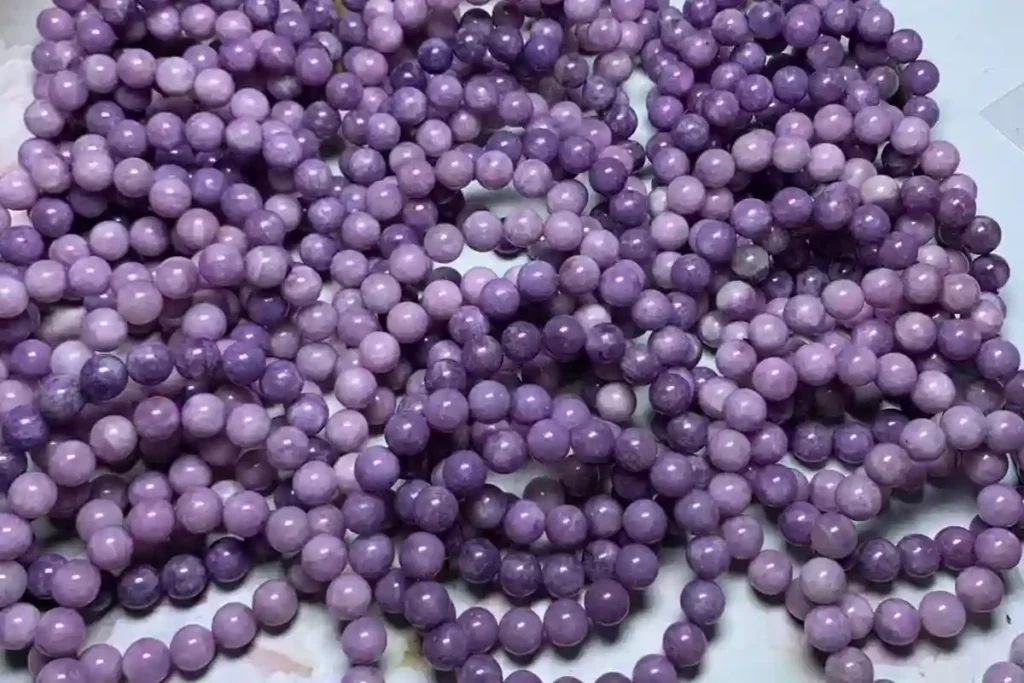
Natural beads may contain white sections, mica-like sparkle, small mineral marks, or variations in purple tone. These features do not automatically indicate poor quality, but wholesale buyers should confirm the acceptable color range and surface standard before ordering. Wearing a Lepidolite Bracelet can have personal significance, although no particular wrist provides scientifically proven healing effects.
What Does Lepidolite Pair Well With?
Lepidolite pairs well with amethyst when a design needs a coordinated purple color range. In crystal traditions, both stones are associated with calmness and spiritual reflection. Clear quartz offers a brighter contrast, while its transparent appearance helps pale lavender lepidolite remain visible in bracelets, necklaces, and display sets.
For a softer combination, moonstone can complement the gentle colors of a Lepidolite crystal. Smoky quartz creates a darker contrast and is traditionally associated with grounding. Rose quartz may be selected for pink and lavender designs connected with self-care, while black tourmaline can give jewelry a stronger, more balanced appearance.
When deciding what lepidolite pairs well with, consider more than symbolic meanings. Hardness, bead size, drill-hole quality, color consistency, and customer preference also matter. Harder beads may rub against lepidolite during wear, so suitable spacing and careful construction can reduce surface damage. Crystal combinations reflect personal beliefs and design choices rather than guaranteed increases in energy.
Looking for natural lepidolite stones for jewelry making, crystal displays, or repeat wholesale orders? Contact us on WhatsApp or send an inquiry through our form. Tell us your preferred product type, size, color range, quantity, and packaging needs. We can provide current batch photos, close-up videos, available specifications, and quantity-based quotations so you can review the actual material before placing your order.
How to Identify Natural Lepidolite
Color Texture and Mica-Like Sparkle
Natural lepidolite commonly appears in lavender, lilac, pink-purple, gray-purple, or deeper violet shades. Its mica structure can produce a pearly surface, fine sparkle, and visible layers. Many pieces also contain white quartz or feldspar, so perfectly even purple color should not be treated as the only sign of genuine material.
Texture provides another useful clue. Rough lepidolite may appear flaky or plate-like, while polished pieces can show small reflective areas beneath the surface. However, the final appearance depends on mineral composition, cutting, polishing, lighting, and photography. Some natural pieces may display very little sparkle, especially when mixed with other minerals.
Visual inspection can help a buyer compare batches, but it cannot prove mineral identity on its own. Dyed stones and other purple minerals may look similar in photographs. When accurate identification is commercially important, buyers should request clear supplier information and consider professional gemological or mineral testing instead of relying on color, sparkle, or an informal home test.
Lepidolite vs Amethyst and Purple Mica
Lepidolite and amethyst can both appear purple, but their physical properties are different. Amethyst is a variety of quartz with a glass-like luster and a Mohs hardness of 7. Lepidolite belongs to the mica family, usually shows a pearly or flaky texture, and has a much lower hardness of approximately 2.5 to 4.
Polished amethyst often appears transparent or translucent, although lower grades may be cloudy. Lepidolite is commonly opaque and may contain visible white minerals, fine silver-like reflections, or layered patterns. Its softer structure also makes it more likely to scratch, split, or develop edge damage during cutting and daily use.
The name “purple mica” can be confusing because it may be used as a general description rather than an exact mineral identification. Some purple mica material may be lepidolite, while visually similar material can contain other mica minerals or mixed rock. Buyers should ask for accurate naming and use professional testing when the precise mineral composition matters.
Treatments Mislabeling and Buyer Questions
Lepidolite may be confused with dyed quartz, colored mica, composite material, or other purple stones. A strong and uniform purple color does not automatically prove that a product is natural or high quality. At the same time, pale color and white mineral areas do not necessarily mean genuine lepidolite has been poorly graded.
Before ordering, buyers should ask whether the material has been dyed, stabilized, coated, reconstructed, or combined with other minerals. They should also request photos taken in natural light, close-up videos, and views of the complete batch. Images of a few selected pieces cannot show the full color and quality range of a large order.
Product naming should be clear and consistent on quotations, packing lists, and labels. If a supplier cannot explain the material or keeps changing its description, further verification may be necessary. Visual checks are useful for selecting appearance, but professional testing remains the most reliable option when mineral identity affects price, labeling, or customer trust.
Lepidolite Quality Value and Wholesale Buying
What Affects Lepidolite Quality?
Lepidolite quality depends on the intended use rather than one universal standard. Buyers commonly evaluate color saturation, the proportion of white minerals, visible cracks, edge damage, surface polish, size, and consistency across the batch. Rich purple material often receives a higher commercial grade, but paler or mixed-color stones may still be natural and attractive.
Different finished items require different standards. Beads need suitable density, clean drill holes, consistent diameter, and enough strength for stringing. Tumbled stones are usually judged by shape, polish, size range, and severe surface damage. Mineral specimens may be valued for crystal structure and natural associations instead of smoothness or uniform color.
Natural characteristics should also be separated from processing defects. White quartz, color zoning, and mica-like patterns may occur naturally, while deep scratches, broken holes, sharp edges, and poor polishing come from material selection or workmanship. Before placing a wholesale order, buyers should define which variations are acceptable for their market.
Why Prices Vary Between Batches
Lepidolite prices can change when suitable rough material becomes harder to source. The cost also depends on purple color saturation, the amount of white minerals, internal fractures, usable yield, and processing difficulty. Rough that looks large may produce fewer finished stones if weak layers split during cutting or polishing.
Selection standards create another major price difference. A mixed batch containing lavender, white, and gray-purple pieces usually requires less sorting than an order limited to rich purple stones. Tighter requirements increase material loss and labor costs. Uniform bead sizes, clean drill holes, stronger polish, and additional quality checks can also raise the final quotation.
Order quantity matters, but a larger order does not always guarantee a lower price per unit. If the buyer requests unusually strict color selection, the supplier may need several batches of rough to complete it. Since natural material changes over time, buyers should compare current photos, specifications, and grading standards rather than expect every shipment to match an old sample exactly.
What Wholesale Buyers Should Confirm
Before ordering wholesale lepidolite, buyers should confirm the product type, size range, quantity, and grading standard. Color requirements need more detail than simply requesting “purple.” A useful specification explains the preferred shade, acceptable white mineral content, surface finish, shape, and whether mixed natural patterns can be included.
For beads, confirm diameter tolerance, strand length, approximate bead count, drill-hole condition, and stringing method. Tumbled stone orders should state the required size range, acceptable percentage of flat pieces, and limits for cracks or edge damage. Packaging, labeling, weight tolerance, carton protection, and shipping method should also be agreed upon in advance.
Current batch photos and videos are especially important for natural material. Historical sample images may show the general style but cannot guarantee identical color in a new shipment. First-time buyers can begin with a sample or smaller trial order. Clear written specifications and visual confirmation reduce disagreements and make future repeat orders easier to manage.
My Experience With a 20 kg Repeat Lepidolite Order
Buyers Accept Natural Meaning but Expect Perfect Purple
Many customers first discover lepidolite because it is associated with calmness, emotional balance, and personal transition. In my wholesale work, however, I have noticed an interesting contradiction. Buyers may accept the natural Lepidolite Meaning, yet still expect every polished stone to have the same rich purple color and a nearly flawless surface.
Natural lepidolite rarely looks completely uniform. A batch can contain deep purple pieces, pale lavender areas, white mineral sections, silver-like mica reflections, and uneven patterns. Some customers initially treat the white portions as defects or signs of a lower grade, especially when their expectations are based on carefully selected or heavily edited pictures.
This difference matters because accepting a natural stone in theory is not always the same as accepting its appearance in a commercial order. Retail customers often choose with their eyes first. For that reason, I believe suppliers should explain the visible variations before shipment and show the actual batch instead of promising perfectly purple stones that natural material cannot consistently provide.
What a 20 kg Batch Looks Like Compared With a Small Sample
One of our American customers purchases approximately 20 kg of lepidolite stones every two to three months. With repeat orders of this size, I learned that a small sample cannot show the complete appearance of a full shipment. Several selected pieces may look mostly purple, while 20 kg naturally presents a wider range of shades and patterns.
The customer does not simply need “good lepidolite.” A useful standard must define the expected balance of purple color, white mineral content, stone size, shape, and surface finish. If these points are unclear, the buyer and supplier may use the same grade name while imagining two very different batches.
Before shipment, we check the overall appearance and provide photos or videos of the current stones. When a new batch contains more white material or lighter colors than the previous order, we explain the difference and ask the customer to confirm it. This process helps the buyer judge whether the stones match their retail market before the goods are shipped.
Why Honest Grading Is Better Than Promising Perfect Color
Suitable lepidolite rough has become harder to source, and prices have continued to rise. If a buyer requests only rich purple stones with almost no white areas, the factory must remove a large part of the available material. This stricter selection increases sorting time, material loss, and the final cost of the order.
In my experience, honest grading works better than a promise of perfect color. We show customers the current batch, explain the approximate color range, and point out visible white minerals before shipment. This approach gives buyers enough information to choose a grade that suits their retail customers and price level.
I also believe that understanding Lepidolite Meaning includes respecting the stone’s natural appearance. Every piece does not need to look identical to have value. Clear standards and actual batch videos create more trust than unrealistic claims about uniform purple color. For wholesale buyers, predictable grading supports repeat business and reduces misunderstandings after delivery.
How to Cleanse and Care for Lepidolite
Safe Ways to Clean Lepidolite
Use a soft, dry cloth to remove dust and fingerprints from lepidolite. If the surface needs more cleaning, lightly dampen the cloth with clean water and wipe the stone gently. Dry it immediately afterward. This simple method protects the polish and reduces the risk of moisture entering small cracks or weak mineral layers.
Do not soak lepidolite in water or place it in saltwater. Its soft, layered structure may develop scratches, dull areas, or edge damage through rough handling. Avoid steam cleaners, ultrasonic machines, strong detergents, acids, and abrasive brushes. These methods may damage the stone or affect nearby jewelry components.
For a Lepidolite Bracelet, wipe each bead after wearing it and check the elastic cord, clasp, and metal parts regularly. Remove any lotion, perfume, or sweat before storage. Gentle cleaning protects the surface more effectively than aggressive methods and helps polished stones maintain their appearance during repeated use.
Spiritual Cleansing Methods
People who follow crystal traditions often cleanse lepidolite with moonlight, sound, smoke, or focused intention. You can place the stone near a window overnight without exposing it to moisture or strong direct sunlight. A singing bowl, bell, or other gentle sound also offers a contact-free option that will not scratch the surface.
Some users pass the stone briefly through incense smoke or hold it while setting a new intention. Keep the stone away from flames, hot ash, and burning materials. If smoke causes discomfort or poor indoor air quality, choose sound, quiet reflection, or another method that does not affect breathing.
Avoid saltwater, buried salt, and rough cleansing materials because they may damage the soft mica surface. Spiritual cleansing reflects personal beliefs rather than a scientifically measurable process. It does not replace physical cleaning, so use a soft cloth when the Lepidolite crystal collects dust, skin oils, or other visible residue.
Storage and Jewelry Maintenance
Store lepidolite in a soft pouch or a small box with suitable padding. Keep it separate from harder stones such as quartz, topaz, or corundum because contact between them may scratch its polished surface. Avoid placing loose pieces together where they can rub against one another during movement or transport.
Before storing a Lepidolite Bracelet, wipe away sweat, perfume, lotion, and other residue with a soft cloth. Lay the bracelet flat rather than stretching it around a display stand for long periods. Check the cord and drill holes regularly, especially if you wear the bracelet often or combine it with heavier beads.
For wholesale shipping, pack beads, stones, and carvings in small bags or divided compartments. Add enough cushioning between the inner packages and the carton to limit impact. Careful packing cannot remove every risk, but it can reduce scratches, broken edges, and pressure damage while the order moves through international transportation.
Frequently Asked Questions About Lepidolite
What Is the Spiritual Meaning of Lepidolite?
The spiritual meaning of lepidolite centers on calmness, personal transition, self-acceptance, and thoughtful change. Many people use the stone during meditation or reflection when they want to release an old habit, adjust to a new situation, or approach emotional challenges with greater patience.
The Lepidolite Meaning does not suggest that the crystal can control events or remove every difficult feeling. Instead, the stone may serve as a physical reminder of a personal intention. Its purple color also connects it with intuition and spiritual awareness in some crystal traditions. These interpretations reflect cultural practices and individual beliefs rather than scientifically proven effects.
What Is Lepidolite Used For?
People use lepidolite for meditation, quiet reflection, jewelry, mineral collections, and decorative displays. Polished stones may sit beside a journal or on a desk, while beads often appear in bracelets and necklaces. Collectors may also choose natural specimens for their purple color, layered texture, and mica-like sparkle.
Traditional Lepidolite benefits include calmness, emotional balance, and support during periods of change. These meanings explain its popularity in spiritual gifts and crystal sets. However, lepidolite does not treat medical or psychological conditions. Its practical use depends on the product form, while its emotional or spiritual value depends on personal belief and intention.
Who Should Not Wear Lepidolite?
Most people can wear a Lepidolite Bracelet as ordinary jewelry, but its soft structure makes it unsuitable for activities that involve impact, water, sweat, or chemicals. Remove it before exercising, swimming, showering, cleaning, or doing manual work. People with sensitive skin should also check the cord, clasp, and metal accessories for possible allergens.
Young children should not wear small lepidolite beads without adult supervision because loose parts can create a choking risk. Anyone seeking help for anxiety, depression, insomnia, pain, or another health concern should not rely on the stone as treatment. A qualified professional can provide appropriate medical or psychological advice.
Where Should Lepidolite Be Placed in the Home?
Place lepidolite on a desk, beside a journal, in a reading corner, or near a meditation area. These locations match its traditional connection with calmness and reflection. A visible position can also remind you to pause, organize your thoughts, or return to a personal intention during the day.
You may keep a Lepidolite crystal on a stable bedside table as part of a relaxing routine, but it cannot guarantee better sleep. Avoid bathrooms, damp areas, direct sunlight, and kitchen surfaces exposed to heat or cleaning products. Keep small stones away from children and pets, and protect them from falls or contact with harder minerals.
What Does Lepidolite Pair Well With?
Lepidolite pairs well with amethyst for a coordinated purple design and with clear quartz for a brighter visual contrast. Moonstone complements pale lavender shades, while smoky quartz or black tourmaline adds darker tones. Rose quartz also works well in soft pink and purple bracelets, gift sets, and decorative displays.
Crystal traditions give these combinations different symbolic meanings, but no pairing guarantees stronger energy or a specific result. Jewelry makers should also consider bead size, hardness, weight, and drill-hole quality. Because lepidolite is soft, harder stones may scratch it when the beads rub together repeatedly. Spacers or careful construction can help protect the surface.
Conclusion
The Lepidolite Meaning centers on calmness, personal transition, self-acceptance, and thoughtful reflection. People often choose this purple mica mineral for meditation, symbolic jewelry, or a reminder to approach change with patience. Its chakra connections and traditional benefits come from spiritual practices and personal belief rather than proven medical effects.
Natural lepidolite may contain lavender, pink-purple, white, gray, and silver-like areas. These variations reflect its mineral structure and natural associations with quartz or feldspar. Buyers should evaluate color range, surface finish, durability, and actual batch consistency instead of expecting every stone to show the same deep purple appearance.
If you need natural lepidolite tumbled stones, beads, bracelets, or other crystal items in bulk, contact us through WhatsApp or submit our inquiry form. Tell us your preferred size, quantity, color range, and packaging requirements. We can share current batch photos and videos so you can confirm the material before ordering and choose products that match your customers’ expectations.
Disclaimer
This information describes traditional crystal beliefs and general mineral care. Spiritual meanings, chakra associations, and metaphysical properties reflect cultural practices and personal interpretations; scientific evidence does not confirm them as medical effects. Lepidolite cannot diagnose, treat, cure, or prevent any physical or mental health condition.
Although lepidolite contains lithium within its mineral structure, wearing, holding, or placing the stone nearby does not provide the effects of prescription lithium. Consult a qualified healthcare professional about anxiety, depression, insomnia, pain, medication, or other health concerns. Never replace professional diagnosis or treatment with crystals or spiritual practices.
About the Author
Roc Gong is the founder of RoCrystal and has over 10 years of experience in e-commerce and the crystal wholesale industry. He works directly with crystal sourcing, product selection, quality inspection, custom orders, packaging, and international shipping for wholesale buyers.