
Black Agate Meaning: Properties, Benefits, Identification, and Wholesale Buying Guide
Written by Roc Gong | Founder of RoCrystal
Last updated: September 22, 2026
Black agate meaning is commonly associated with protection, grounding, emotional balance, and inner strength. Its deep black color also makes it popular for beads, bracelets, rings, tumbled stones, and decorative pieces. For wholesale buyers, however, spiritual symbolism is only one part of its value. Material authenticity, surface finish, color consistency, available sizes, and treatment disclosure can directly affect customer satisfaction and repeat orders.
This guide explains the black agate stone meaning within the broader topic of agate meaning. It also covers mineral properties, common treatments, quality grades, and commercial uses. You will learn how black agate differs from onyx, obsidian, and black tourmaline. We will also discuss bulk inspection, polished and matte finishes, price differences, and supplier selection. Scientific facts and traditional crystal beliefs will remain clearly separated throughout this guide.
What Is Black Agate?
Black Agate as a Variety of Chalcedony
Black agate is a dark variety of chalcedony, which belongs to the quartz family. According to Mindat’s mineral information on chalcedony, chalcedony consists of microscopic or submicroscopic quartz crystals and has the chemical formula SiO₂. Agate normally shows bands or changes in color and translucency. However, these patterns may be difficult to see in a deeply colored or opaque black agate gemstone.
The fine-grained structure allows craftsmen to cut and polish the material into round beads, cabochons, rings, pendants, and tumbled stones. A polished black agate crystal usually has a smooth, glossy surface, while matte beads have a softer and less reflective finish. Some pieces may show gray areas, white bands, or slight color differences under strong light. These natural or treated visual features can affect grading and wholesale prices.
Is Naturally Black Agate Rare?
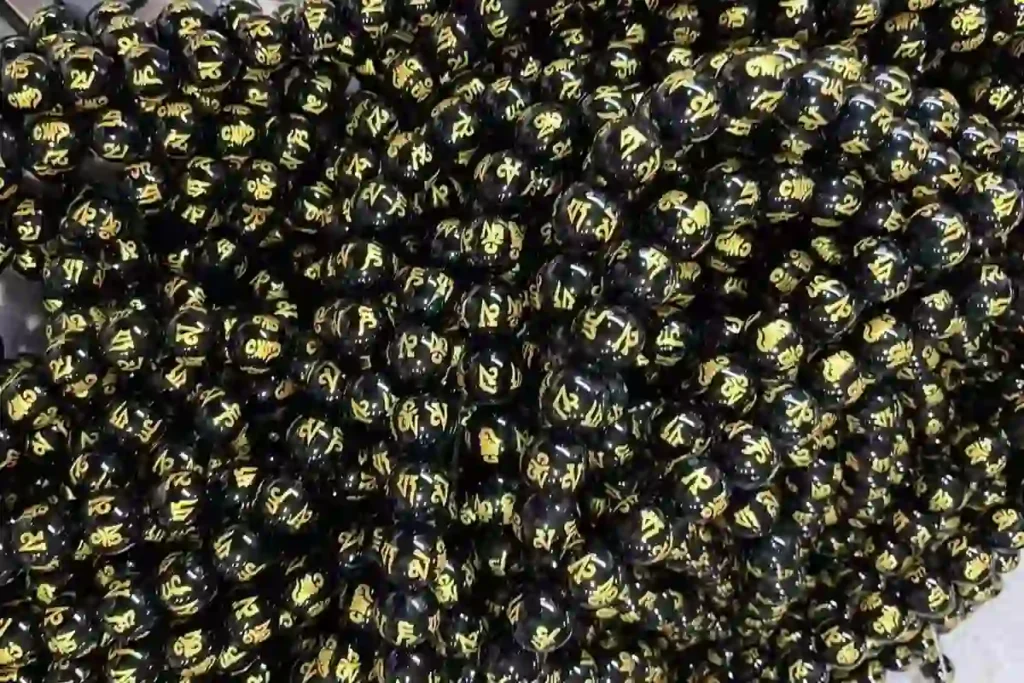
Many buyers ask, is black agate rare? Naturally dark chalcedony exists, but material with a uniform, solid-black appearance is less common. The Gemological Institute of America states that natural black chalcedony is rare and that virtually all black chalcedony in the market has been treated. Therefore, a consistent black color alone does not prove that a stone has a completely natural color.
Color treatment does not automatically make black agate fake. A treated stone may still be genuine chalcedony, but the supplier should disclose the treatment accurately. Buyers should distinguish treated black agate from glass, plastic, dyed composite materials, or cheaper black stones sold under the wrong name. For bulk orders, request clear treatment information, close-up photos, current-batch videos, and samples whenever possible. These steps are especially important when purchasing highly uniform black beads.
How Black Agate Forms and How Its Name Is Used
Geological Formation
Black agate develops when silica-rich material enters cavities, cracks, or open spaces inside rock. Over time, very small quartz crystals form in layers. According to Mindat’s mineral information on agate, agate is distinctly banded fibrous chalcedony that forms mainly in volcanic rocks, although it can also occur in sedimentary environments. Its bands result from changes in the translucency of each layer.
Mineral impurities and changing formation conditions can influence the stone’s color and pattern. Some pieces show curved bands, cloudy sections, black spots, or contrasting white lines. Others look almost uniform after cutting and polishing. However, an even black appearance may also result from commercial color treatment. Geological formation explains the underlying material, while later treatments may change how the finished stone looks in jewelry or bead strands.
Trade Names and International Labels
Gemstone names are not always used consistently across countries and wholesale markets. Suppliers may use black agate, black chalcedony, or black onyx for similar-looking materials. Some international listings also use less natural English phrases, such as agate black stone, agate stone black, agate black crystal, or agate crystal black. These labels describe the product’s color but do not confirm its mineral identity or treatment status.
Similar wording appears in searches such as agate black meaning or the Spanish phrase agata negra beneficios. These terms usually refer to the symbolism or claimed benefits of dark agate rather than a separate mineral variety. Wholesale buyers should rely on material details instead of names alone. Before ordering, confirm whether the item is chalcedony, whether its black color is natural or treated, and whether wax or another surface coating has been applied.
Black Agate Properties and Appearance
Physical Properties of Black Agate
The physical black agate properties come from its chalcedony structure. According to Mindat, chalcedony has a Mohs hardness of 6.5 to 7 and a typical density of about 2.6 g/cm³. This hardness makes black agate suitable for beads, bracelets, rings, and other jewelry. However, hard impacts can still chip thin edges or damage drilled holes.
Other black agate crystal properties include a waxy or dull natural luster that becomes more glass-like after polishing. Chalcedony has no observed cleavage and normally shows a conchoidal or slightly curved fracture. These properties of black agate help it take a smooth polish, but they do not make it unbreakable. Buyers should still inspect bead holes, edges, and surfaces for cracks or damage.
Color, Bands, Spots, and Natural Variation
The typical black agate color ranges from dark gray and brownish black to a deep, nearly uniform black. Polished material reflects more light, while matte beads have a softer appearance. In wholesale listings, phrases such as agate black color may describe the finish without explaining whether the color is natural or treated. Strong lighting can sometimes reveal lighter bands or uneven color inside the stone.
Some varieties may appear as agate stone black and white, with pale bands crossing a dark background. Buyers may also encounter agate with black spots, agate with black lines, or red and black agate. These patterns can result from natural banding and mineral inclusions, but appearance alone cannot confirm authenticity. For bulk orders, buyers should agree on acceptable patterns, color variation, surface marks, and treatment disclosure before production begins.
Black Agate Meaning and Spiritual Associations
Black Agate Spiritual Meaning
The black agate spiritual meaning is commonly connected with protection, grounding, stability, and inner strength. In crystal traditions, some people use the stone when they want to feel more secure during stressful periods or major life changes. The dark color is often seen as a symbol of firm boundaries and steady energy. These associations explain why black agate meaning spiritual searches often focus on emotional support and protection.
Another part of the black agate crystal meaning involves balance and self-control. Some wearers believe the stone helps them remain calm before making decisions or facing difficult situations. For this reason, black agate is often included in meditation sets, protection-themed bracelets, and meaningful gifts. These interpretations come from spiritual traditions and personal beliefs rather than established medical research.
Metaphysical Properties of Black Agate
The metaphysical properties of black agate are often described as steady rather than intense. Crystal users may carry it during travel, keep it near a workspace, or wear it during demanding tasks. Supporters believe its symbolic grounding qualities can encourage patience and clearer thinking. However, these experiences are personal and should not be presented as effects that every user will feel.
Descriptions of black agate metaphysical properties also include courage, confidence, and emotional resilience. Some people choose the stone as a reminder to stay focused on long-term goals instead of reacting quickly to pressure. Jewelry retailers can explain these traditional meanings while using careful language. Phrases such as “commonly associated with” are more accurate than promising a guaranteed emotional or physical result.
Chakra, Zodiac, and Feng Shui Traditions
In modern crystal practices, black agate is often linked with the root chakra because both are associated with security and grounding. Some traditions also connect it with zodiac signs such as Capricorn, Scorpio, and Gemini. These associations vary between sources and belief systems. No scientific rule requires a person to have a particular zodiac sign before wearing or using black agate.
Feng shui users may place black agate near an entrance, office, or quiet area to symbolize protection and stability. Others combine it with lighter stones to create visual and symbolic balance. Retailers should describe these uses as cultural or spiritual traditions. They should not claim that the stone can produce scientifically measured energy or replace professional medical and mental health support.
Commonly Claimed Black Agate Benefits
Protection, Grounding, and Stability
Traditional black agate benefits often center on protection and grounding. Some people wear the stone as a symbolic barrier against negative influences or stressful surroundings. Others keep it nearby as a reminder to remain practical and emotionally steady. These beliefs contribute to the popularity of black agate in protection bracelets, meditation collections, and spiritual gift sets.
The claimed benefits of black agate also include stability during periods of uncertainty or change. Crystal users may choose it when starting a new job, moving to another place, or making an important decision. Such black agate stone benefits reflect personal and cultural beliefs. They should not be described as guaranteed results that apply to every wearer.
Calm, Courage, and Focus
Some crystal traditions associate black agate with calm thinking, courage, and self-control. A person may wear it during a demanding day or hold it while meditating. Supporters believe the stone can serve as a physical reminder to pause, organize their thoughts, and respond with patience rather than fear. This symbolic role may make black agate appealing to students, travelers, and busy professionals.
The benefits of black agate stone are sometimes described as relief from anxiety or emotional pressure. However, there is no reliable scientific evidence that black agate can diagnose, treat, or cure anxiety. Retailers should avoid medical promises and explain the distinction clearly. Customers who enjoy crystals can still use black agate as part of a personal relaxation or mindfulness routine.
What “Healing Properties” Really Means
The phrase black agate healing properties usually refers to spiritual wellness rather than medical treatment. Within crystal traditions, the stone is associated with emotional balance, confidence, and a sense of security. Similar descriptions may appear under phrases such as black agate crystal benefits or black agate gemstone benefits. These terms express traditional beliefs, not clinically proven health effects.
Responsible sellers should avoid claims that black agate improves circulation, removes toxins, cures insomnia, or treats disease. Instead, they can describe the stone’s symbolism, appearance, durability, and practical jewelry uses. This approach respects customers who value spiritual traditions while keeping product information honest. It also reduces the risk of creating unrealistic expectations about what a gemstone can do.

Black Agate Beads, Bracelets, Rings, Tumbled Stones, and Rough
Black Agate Beads and Bracelets
Round black agate beads are commonly available in sizes such as 4 mm, 6 mm, 8 mm, 10 mm, and 12 mm. Smaller beads work well in delicate jewelry, while 8 mm and 10 mm sizes are popular for unisex and men’s designs. Wholesale buyers should check diameter tolerance, roundness, drill holes, strand length, and color consistency before confirming a bulk order.
A Black Agate Bracelet may have a glossy polish, matte finish, faceted surface, or waxed appearance. The claimed Black Agate Bracelet Benefits usually relate to protection, grounding, and calm, but the design also has practical appeal. Its neutral color matches metal spacers, tiger’s eye, hematite, and many other stones. This makes black agate easy for retailers and jewelry designers to include in different collections.
Black Agate Rings and Other Jewelry
A Black Agate Ring often uses a polished cabochon, flat-top stone, or carved face. The dark surface works with silver, gold-colored metal, stainless steel, and vintage-style settings. Ring buyers should pay close attention to scratches, chipped edges, glue marks, loose settings, and differences between the approved sample and the finished batch.
Black agate is also used for pendants, earrings, charms, and carved accessories. Cabochons require a smooth dome and an even base so they can fit standard settings. For custom orders, buyers should confirm dimensions, thickness, shape tolerance, drilling position, and finish. Clear specifications reduce assembly problems and help jewelry makers maintain a consistent appearance across one production run.
Tumbled Stones and Rough Material
Black agate tumbled stones have rounded edges and a polished or matte surface. Their shapes, sizes, and weights can vary more than calibrated beads. Retailers often sell them individually, by weight, or as part of crystal sets. Buyers should define an acceptable size range and ask whether the lot contains mixed patterns, gray areas, white bands, pits, or flat pieces.
Rough black agate retains more natural texture and may reveal bands, cavities, or uneven color that disappear after cutting. It suits collectors, lapidary work, carving, and decorative displays, but each piece can differ greatly. Unlike calibrated beads, rough material is usually compared by kilogram, usable cutting area, pattern, and waste rate. Current-batch photos or videos are essential before purchasing a large lot.
Black Agate Compared with Other Black Stones
Black stones can look almost identical in photographs, especially after polishing, waxing, or using dark backgrounds. The table below summarizes the main differences buyers should confirm before placing a bulk order.
| Material | Material type | Typical appearance | Common trade concern | Popular forms |
|---|---|---|---|---|
| Black agate | Chalcedony | Smooth, uniform, banded, or slightly translucent at thin edges | Dyeing, waxing, and material substitution | Beads, bracelets, cabochons, and tumbled stones |
| Onyx | Banded chalcedony in strict mineral use | Parallel dark and light bands | Name used loosely for solid-black chalcedony | Rings, cabochons, beads, and carvings |
| Black tourmaline | Tourmaline mineral group | Deep black with natural grooves or uneven surfaces | Broken edges, irregular shapes, and surface texture | Rough pieces, beads, pendants, and tumbled stones |
| Obsidian | Volcanic glass | Glassy black, sometimes translucent at thin edges | Scratches, chips, and confusion with other polished black materials | Tumbled stones, beads, carvings, and jewelry |
Black Agate vs Onyx
The black agate vs onyx comparison is complicated because suppliers often use both names for similar material. According to Mindat, onyx traditionally refers to chalcedony with straight, parallel bands. Agate normally has curved or irregular bands. Therefore, these names describe banding patterns within the chalcedony family rather than two completely unrelated minerals.
In everyday jewelry trading, “black onyx” may refer to uniformly black chalcedony even when no parallel bands are visible. Some sellers also use onyx for other banded materials, which creates more confusion. Wholesale buyers should not rely on the item name alone. Ask for treatment details, close-up images under neutral lighting, and a clear description of any visible banding.
Black Agate vs Black Tourmaline
In a black agate vs black tourmaline comparison, black agate usually looks smoother and more uniform after cutting. Black tourmaline may retain natural grooves, uneven surfaces, or small edge fractures. Round agate beads are often easier to calibrate into consistent strands, while lower-grade tourmaline beads may show greater variation in roundness, texture, and drill-hole quality.
Based on what I have seen in our warehouse, black tourmaline generally feels heavier than black obsidian in comparable products, while surface texture remains one of the most useful visual clues. However, weight and appearance alone cannot provide a conclusive identification. Treatments and polishing can hide important features, so large or disputed orders may require professional testing.
Black Agate vs Obsidian
The Black Agate vs obsidian comparison begins with their structures. Black agate belongs to the microcrystalline quartz family, while obsidian is natural volcanic glass. Polished obsidian often shows a stronger glass-like shine. Thin edges may also transmit brownish or smoky light, although appearance varies with thickness, lighting, and the specific material.
From the wholesale lots I have handled, black obsidian tumbled stones are often rounded, smooth, and relatively consistent in shape. Rough obsidian can resemble broken black glass and may have sharp edges. Black agate beads may look equally smooth after polishing, so a glossy surface alone is not enough to separate them. Buyers should confirm material names and treatments with their supplier.
Why Visual Inspection Alone Is Not Enough
A wax coating can temporarily make different black stones look smoother, darker, and more uniform. Dye can also hide lighter areas or natural color variation. These treatments make identification difficult when buyers only see studio photographs. Bright lighting, close-up videos, an unwaxed sample, and inspection of drilled holes can reveal useful details, but they do not replace gemological testing.
For routine wholesale purchases, consistent documentation and a trusted supplier may be more practical than testing every strand. Keep an approved sample from each order and compare it with the new batch before shipment. If the material, price, or appearance changes unexpectedly, stop the order and investigate. This step can prevent expensive complaints after the goods reach another country.
How to Identify and Evaluate Black Agate
Natural Features and Common Treatments
Black agate may appear solid black, dark gray, banded, spotted, or slightly translucent around thin edges. Natural variation can include pale lines, cloudy areas, and uneven color. However, these features are not present in every stone. A perfectly uniform appearance also does not prove that a product is fake, since genuine chalcedony can be treated to create a more consistent black color.
According to the Gemological Institute of America’s guide to gem treatments, dyeing adds a coloring agent to a gem to change or improve its color. Treated gemstones may also need special care, and suppliers should disclose relevant treatments. In black agate products, buyers may encounter color enhancement, waxing, or other surface treatments that improve darkness, luster, and visual consistency.
Treatment does not necessarily reduce a product’s commercial value if the material remains genuine and the supplier describes it honestly. Problems arise when treated agate is sold as naturally black or when another black stone is substituted without approval. Purchase specifications should clearly state the accepted material, color treatment, wax finish, surface appearance, and disclosure requirements.
Common Quality Problems in Black Agate Beads
When inspecting black agate beads, check size tolerance, roundness, strand length, drill-hole position, and surface finish. Common problems include chipped holes, flat areas, pits, scratches, visible cracks, incomplete polishing, and beads that do not sit evenly together. A few minor marks may be acceptable in lower grades, but the agreed standard should match the buyer’s retail market.
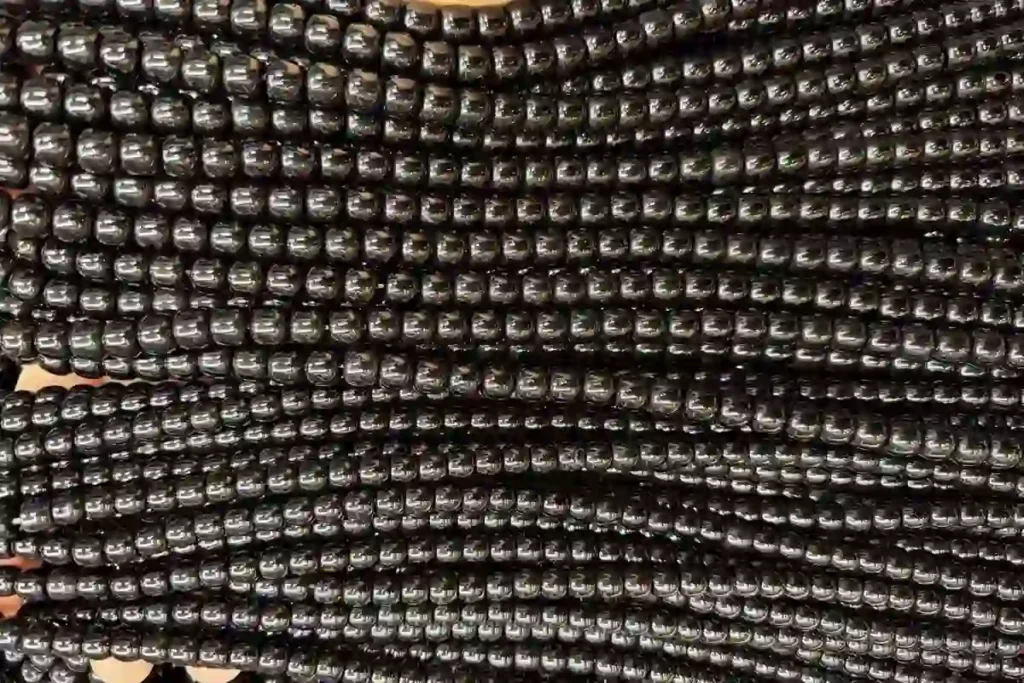
Matte beads require additional attention because wax can hide rough areas or improve the appearance temporarily. An uneven wax layer may create pale patches after storage or regular handling. Buyers should compare beads from different parts of the batch rather than checking only the top strands. Rubbing a small sample with a clean white cloth may also reveal obvious surface residue, although it cannot confirm the material.
Color consistency matters most when buyers plan to combine several strands in one production run. A batch may look black under warehouse lighting but show gray, brown, or green undertones in daylight. Ask the supplier to photograph the goods under neutral light and place new production beside the approved sample. This makes unwanted batch differences easier to detect before shipment.
Can Buyers Identify Fake Black Agate at Home?
Simple observations can help buyers notice warning signs, but no single home test proves that a stone is genuine black agate. Unusual lightness, visible coating, peeling color, plastic seams, bubbles, or color concentrated around drill holes may justify further investigation. Scratch, flame, or chemical tests can damage the goods and may still produce misleading results.
For a high-value order or serious material dispute, professional gemological testing offers stronger evidence than photographs or online identification tips. Buyers should also keep invoices, specifications, approved samples, and treatment statements. These records make it easier to trace a problem and negotiate compensation if the delivered material does not match the confirmed order.
Wholesale Buying Advice for Black Agate
Size, Weight, Finish, and Grade
Wholesale buyers should provide complete specifications instead of requesting only “black agate beads.” Confirm the bead diameter, hole size, strand length, number of beads per strand, surface finish, and acceptable size tolerance. A 6 mm bead suits delicate jewelry, while 8 mm and 10 mm beads are common in unisex and men’s bracelets. Larger beads create more weight and a stronger visual effect.
Finish can change both appearance and customer expectations. Glossy beads should have an even polish without dull patches, while matte beads need a consistent frosted surface. Waxed matte beads may look darker and smoother, so buyers should ask whether wax has been applied. Grades such as AB, AB+, or A are not universal standards. Request current-batch photos and a written quality description instead of relying only on grade names.
What Affects Black Agate Stone Price?
The Black Agate Stone price depends on more than bead diameter. Material quality, cutting accuracy, roundness, drill-hole finish, polishing, color treatment, wax application, order quantity, and packaging can all change the final quotation. Highly consistent calibrated beads usually require more sorting than mixed-color or irregular material, which may increase both production time and labor costs.
A low quotation is not always the most economical option. Poorly drilled beads, unstable coatings, mixed materials, or inconsistent sizes can create returns and damage customer trust. Buyers should compare quotations using the same specifications and inspection standard. Ask whether the price includes sorting, replacement of defective goods, custom labels, inner packaging, export cartons, and delivery to the freight agent.
Packaging and Shipping for Bulk Orders
Bead strands should be grouped by size, finish, and production batch. Each package needs a clear label so similar black materials do not become mixed during packing. Inner bags protect the strands from dust and moisture, while suitable padding reduces impact around drill holes and bead edges. Heavy cartons should have reinforced tape and enough internal support to prevent movement during transport.
Before shipment, buyers can request photos of the counted goods, labels, inner packaging, and sealed cartons. Keeping one approved sample and several beads from the shipped batch provides a useful reference if a later complaint occurs. For large orders, the packing list should state quantities by size and finish. Accurate records help importers, retailers, jewelry designers, and Amazon sellers organize stock after delivery.
How to Choose a Reliable Black Agate Supplier
A reliable supplier should explain whether the material is natural chalcedony, color-treated agate, waxed material, or another type of black stone. Clear disclosure is more valuable than a vague promise that everything is “natural.” Buyers should also ask how the supplier checks material identity, color consistency, drill holes, surface finish, and quantity before packing.
Start with a sample or small trial order when working with a new source. Compare the sample with bulk production and keep written records of approved specifications. A responsible supplier should communicate delays, material shortages, or substitutions before shipment. Never accept an unapproved replacement simply because the order is urgent. Reliable after-sales service is especially important when goods are delivered across several countries.
Need consistent black agate beads for your retail or jewelry business? Contact us on WhatsApp or send your specifications through our inquiry form. Tell us the required size, finish, quantity, treatment preference, and packaging method. We can provide current-batch photos and videos before you request a quote.
My Experience Supplying Matte Black Agate Beads
A Repeat Order for 8 mm Matte Black Agate
In my experience, black agate remains a popular material for men’s bracelets and protection-themed jewelry. One of my Indian customers runs a business in Hong Kong and purchased matte black agate beads from me regularly for two consecutive years. His American customer wanted only 8 mm matte, waxed black agate beads, so the specifications remained consistent across repeat orders.
Each order included about 5,000 strands, and the customer normally ordered three or four times per year. The total purchasing volume was considerable, although my profit margin was relatively low. Because this was an established product with repeat demand, maintaining the same black color, matte texture, bead size, and waxed finish was more important than making a high profit on one shipment.
What Went Wrong with One Shipment
One order taught me a serious lesson about material inspection. At that time, matte black agate beads were in short supply, but the customer needed the goods urgently. The factory sent me another type of black stone instead of genuine black agate. After waxing, its dark color and matte surface looked very similar to the material used for previous orders.
I had worked with the supplier before and trusted them. Because the order was urgent, I did not inspect the material as carefully as I should have before shipment. About three months after the goods arrived in the United States, my customer contacted me. He asked why the surface of that batch had started turning white when his previous matte black agate beads had never developed the same problem.
I immediately contacted the supplier and asked for an explanation. At first, they gave me several unclear answers about the finish and storage conditions. Eventually, they admitted that genuine black agate had not been available when I needed the goods. Instead of telling me about the shortage, they had supplied a cheaper black stone that looked similar after waxing.
How I Handled the Complaint
By that time, the beads were already in the United States, so returning thousands of strands was not practical. I accepted responsibility because I had not completed a careful enough inspection before shipment. I told my customer that I would compensate him for the affected goods. I also promised that I would never allow an undisclosed material substitution to happen again.
What Changed in My Inspection Process
Since that order, I have never relied only on surface appearance or a supplier’s verbal confirmation. When we inspect bulk orders, we check the material, bead size, matte finish, wax treatment, drill holes, and color consistency. I also compare production with the approved sample and keep reference beads from important shipments whenever possible.
Wax can temporarily make different black stones look darker, smoother, and more consistent. The true surface condition may become clearer after storage or regular handling. This experience changed how I understand Black Agate Meaning in business. Buyers may associate the stone with protection and stability, but suppliers must support those ideas with honest identification, careful inspection, and responsible after-sales service.
How to Clean, Store, and Care for Black Agate
Routine Cleaning and Storage
Clean black agate with lukewarm water, mild soap, and a soft cloth or soft-bristled brush. Rinse away any soap and dry the stone completely before storage. Avoid bleach, acids, abrasive cleaners, and hard brushes because they may damage the polish, wax layer, dye, or metal jewelry setting. The GIA guide to gem treatments also notes that treated gems may require special care.
Black agate can normally have brief contact with clean water, but long soaking is unnecessary. This is especially important for dyed, waxed, coated, cracked, glued, or strung products. Store finished jewelry separately from harder gemstones to reduce scratches. Keep bracelets and necklaces dry before packing, and avoid leaving treated material in strong sunlight or high heat for extended periods.
Cleansing and Recharging in Crystal Traditions
Physical cleaning and spiritual cleansing are not the same process. Physical cleaning removes oil, dust, and surface dirt. In crystal traditions, some people cleanse black agate with smoke, sound, moonlight, or by placing it near other crystals. These practices are based on personal belief and do not physically remove dirt or change the stone’s scientifically measured properties.
Some users describe moonlight or meditation as ways to “recharge” black agate. Retailers can mention these traditions, but they should not present them as proven scientific processes. Water methods also require care because bracelet cords, metal findings, glue, dye, and wax may react differently from the stone itself. Gentle dry methods are often more practical for finished jewelry.
Frequently Asked Questions
What Is the Spiritual Meaning of Black Agate?
Black agate is commonly associated with protection, grounding, emotional stability, and inner strength. In crystal traditions, some people wear it during stressful periods or major life changes as a reminder to remain calm and focused. These meanings come from spiritual beliefs and personal practices. They should not be treated as scientifically proven effects or as a substitute for professional medical or mental health support.
Who Should Wear Black Agate?
Anyone who likes its dark color, smooth texture, or traditional symbolism can wear black agate. It is especially popular with people who prefer simple jewelry, unisex bracelets, protective symbols, or grounding meditation tools. No zodiac sign is required, and there is no scientific rule about who should or should not wear it. Buyers should focus on comfort, personal preference, and any metal or material sensitivities.
What Are the Benefits of Black Agate?
Its practical benefits include a versatile black color, good polish, and suitability for beads, cabochons, rings, and tumbled stones. Spiritually, black agate is often linked with protection, balance, courage, and calm. These symbolic benefits are based on crystal traditions rather than medical evidence. Retailers should separate the stone’s measurable physical properties from personal claims about energy, emotions, or healing.
What Is Black Agate?
Black agate is a dark form of chalcedony within the quartz family. It may show bands, spots, pale lines, or a nearly uniform black appearance. Naturally black chalcedony is uncommon, so much of the evenly colored black material in the jewelry trade has been treated. Treated black agate can still be genuine chalcedony, but suppliers should clearly disclose dyeing, waxing, or other relevant treatments.
Is It Safe to Wear Black Agate Every Day?
Black agate is generally durable enough for everyday jewelry, but it can still scratch, chip, or break after a hard impact. Remove it before using strong chemicals, doing heavy manual work, or exposing the jewelry to high heat. Dyed or waxed material may require extra care. People with sensitive skin should also check the bracelet cord, adhesive, and metal findings, not only the stone.
References
- Mindat. Chalcedony: Mineral Information, Data and Localities. Used for chalcedony composition, hardness, density, luster, cleavage, and fracture.
- Mindat. Agate: Mineral Information, Data and Localities. Used for agate classification, formation, and banding.
- Mindat. Onyx: Mineral Information, Data and Localities. Used to explain the mineralogical distinction between agate and onyx.
- Gemological Institute of America. Wedding Anniversary Gemstone List and An Introduction to Gem Treatments. Used for information about treated black chalcedony, treatment disclosure, and special care.
Disclaimer
The spiritual meanings, chakra associations, and claimed healing properties described in this guide come from crystal traditions and personal beliefs. They have not been established as medical facts and should not replace professional medical advice or treatment. Natural and treated gemstones may vary in color, pattern, size, surface condition, and appearance.
Conclusion
Black Agate Meaning is commonly connected with protection, grounding, stability, courage, and emotional balance. Beyond these traditional associations, black agate is valued for its deep color, smooth finish, and versatility. It can be made into beads, bracelets, rings, cabochons, tumbled stones, carvings, and rough display pieces for different retail and jewelry markets.
Wholesale buyers should look beyond the product name. Confirm whether the material is genuine chalcedony, whether its color has been treated, and whether wax or another surface finish has been applied. Size tolerance, drill-hole quality, color consistency, packaging, and current-batch inspection also affect the success of a bulk order. Clear specifications are especially important because black agate, onyx, obsidian, black tourmaline, and other black stones can look similar in photographs.
A reliable supplier should disclose treatments, communicate shortages, and obtain approval before making any material substitution. These practices protect both the buyer and the final customer.
Looking for black agate beads, bracelets, tumbled stones, or custom wholesale options? Contact us on WhatsApp or submit our inquiry form. Share your required size, finish, quantity, and packaging needs to request current stock photos, receive a wholesale quote, and Start Your Wholesale Order.