
Red Agate Meaning, Properties, Benefits and Wholesale Buying Guide
Written by Roc Gong | Founder of RoCrystal
Last updated: September 21, 2026
Red Agate Meaning is often linked with courage, stability, protection, and emotional balance in crystal traditions. From a commercial view, red agate is also a popular material for bracelets, beads, tumbled stones, pendants, keychains, rough stones, and decorative chips. Its bright color makes it suitable for jewelry collections, gift products, crystal stores, and seasonal displays.
However, wholesale buyers need to look beyond the traditional Agate meaning. The color of a red agate stone may be natural or enhanced through treatment. Different batches can also vary in tone, transparency, pattern, size, and surface finish. This guide explains the mineral properties, spiritual beliefs, product forms, quality grades, treatment methods, price factors, and purchasing points that buyers should check before placing a bulk order.
What Is Red Agate and How Does It Form?
Red Agate as a Variety of Chalcedony
Red agate is a variety of chalcedony, a fine-grained form of quartz made mainly of silicon dioxide. The Handbook of Mineralogy identifies quartz by the chemical formula SiO₂ and describes chalcedony as its fine-grained to microcrystalline form. The crystals are so small that buyers cannot see them individually without specialized equipment.
The term red agate gemstone usually describes chalcedony with red, orange-red, brown-red, or brick-red colors. Some pieces have clear bands, while others look cloudy, translucent, or nearly opaque. Natural minerals and inclusions can influence the color, but commercial material may also receive color treatment. Therefore, buyers should not judge the identity, treatment, or quality of a red agate crystal from color alone.
How Agate Bands and Colors Develop
According to Penn State University, agate formation often begins inside a cavity or open space in rock. Water carrying dissolved silica moves through the surrounding material and enters the cavity. Over time, silica begins to crystallize along the inner walls. Repeated mineral growth can produce the curved bands commonly seen in agate.
These layers may differ in crystal size, structure, and mineral content. Trace elements such as iron or manganese can also influence their colors. Iron-rich material often contributes red, orange, yellow, or brown tones, although appearance alone cannot confirm the exact coloring agent. The formation process is complex, and not every red agate stone develops the same pattern.
As a result, natural red agate stones may contain uneven bands, cloudy areas, color zones, small inclusions, or changes in transparency. These features can help create their individual appearance, but they also make exact color matching difficult when buyers order large quantities.
Where Is Red Agate Found?
Agate occurs in many regions, including Brazil, Uruguay, Mexico, India, Madagascar, and the United States. However, a seller’s location does not always prove the geological origin of the material. Terms such as African red agate may describe a claimed source, a color style, or a commercial product name. Wholesale buyers should ask suppliers for available origin information, but they should avoid treating an unsupported trade name as confirmed proof of where the stone was mined.
Red Agate Properties Buyers Should Know
Composition, Hardness, and Physical Features
Red agate consists mainly of chalcedony, which is a microcrystalline form of silica. The Handbook of Mineralogy gives quartz the chemical formula SiO₂ and a Mohs hardness of 7. It also describes quartz as having a conchoidal fracture, while massive forms may show a waxy or dull luster. Polishing can give a red agate gemstone a brighter and smoother surface.
This hardness makes red agate suitable for beads, bracelets, cabochons, tumbled stones, and other decorative products. However, hardness measures resistance to scratching, not resistance to every type of damage. A bead can still chip around its drill hole, and a tumbled stone may crack if it receives a strong impact.
Red agate properties also vary with inclusions, internal fractures, transparency, and processing quality. Buyers should inspect the actual goods instead of relying only on general mineral specifications.
Color, Transparency, Patterns, and Weight
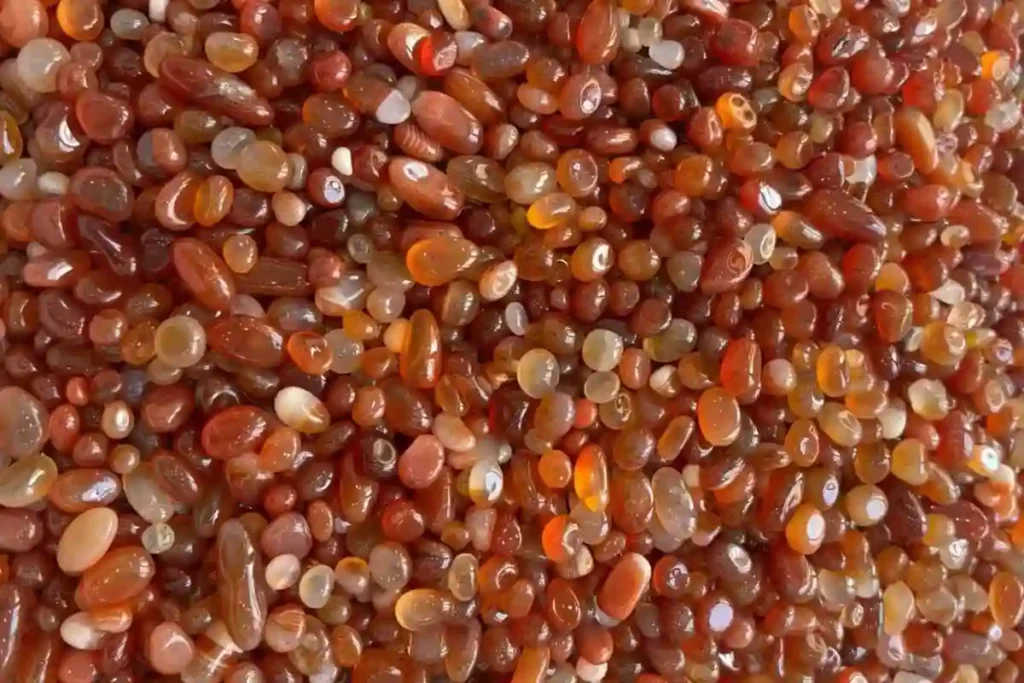
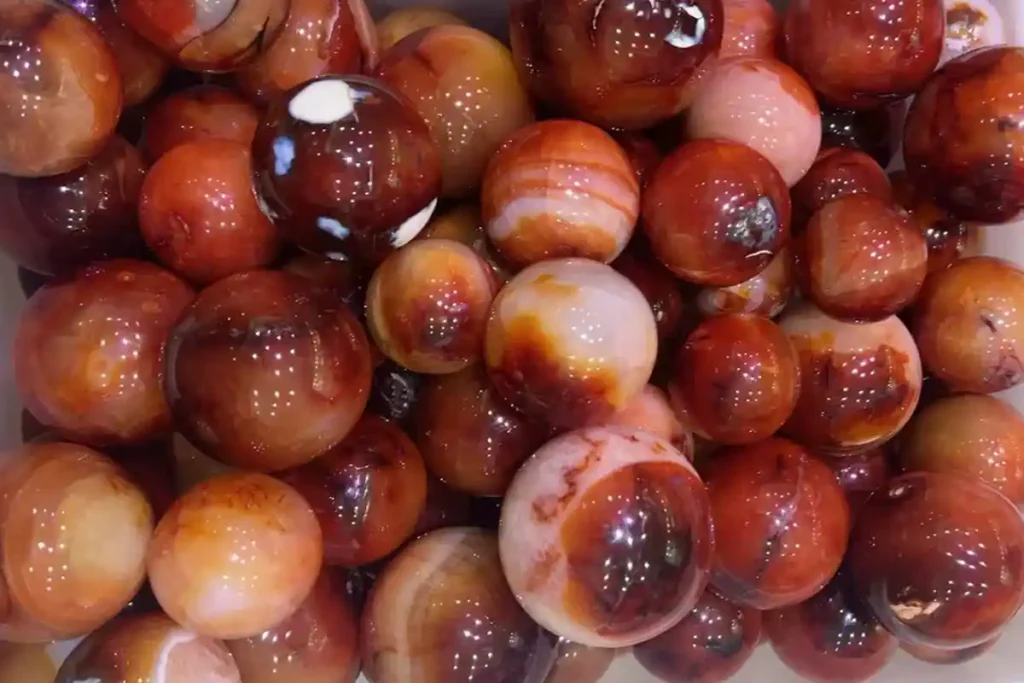
Red agate can appear orange-red, brick red, brown-red, or deep blood red. Some pieces show white, gray, or darker bands, while others have a more uniform color. Transparency may range from translucent to almost opaque. Lighting also affects its appearance, so the same red agate gemstones may look brighter under strong lamps and darker under normal room light.
Weight mainly depends on the product’s size, thickness, shape, and quantity rather than its color. Two bead strands labeled as the same size may still differ slightly because of drilling, polishing, or bead count. Tumbled red agate stones often have greater weight variation because their shapes are less uniform. For wholesale orders, buyers should confirm both the stated size range and the acceptable weight or quantity tolerance.
Natural Features and Common Imperfections
Natural red agate stones may contain uneven bands, cloudy areas, mineral inclusions, internal lines, small pits, or changes in transparency. These features do not always mean the material is fake or poorly made. However, large cracks, sharp edges, deep holes, weak sections, and heavy surface damage can reduce the value and make the products harder to sell.
Processing defects should be judged separately from natural variation. Beads may have chipped drill holes, uneven shapes, blocked holes, or poor polish. Tumbled stones can have flat sides, unpolished areas, deep scratches, or rough cavities. An agate red stone with minor natural patterns may still be acceptable, but obvious workmanship problems should be removed during inspection. Wholesale buyers should define acceptable defects before production so both sides follow the same quality standard.
Red Agate Beads, Bracelets, Tumbled Stones, and Rough Stones
Loose Beads and Finished Bracelets
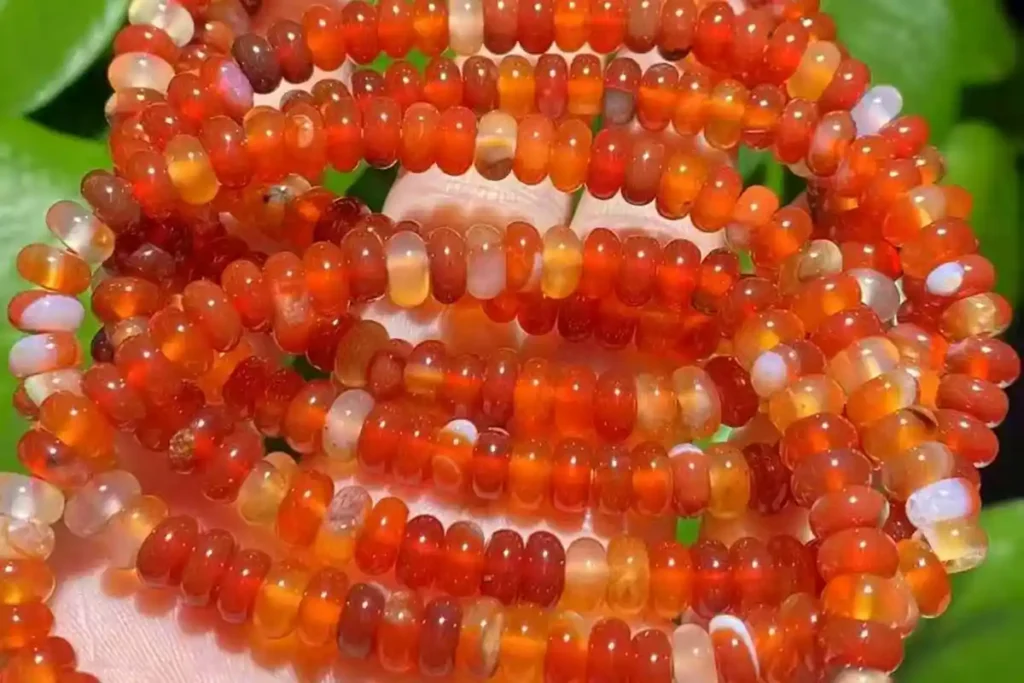
Loose red agate beads commonly come in sizes such as 4 mm, 6 mm, 8 mm, 10 mm, and 12 mm. Jewelry designers often buy full strands, while retailers may prefer a finished Red Agate Bracelet that is ready for display. Buyers should check bead diameter, strand length, hole size, shape, polish, and color consistency before confirming a bulk order.
Smaller beads require careful inspection because poor drilling can leave blocked holes or chipped edges. Finished bracelets also need strong elastic cord, a secure knot, and a balanced bead count. When ordering red agate gemstones in several sizes, buyers should not assume every size will show exactly the same shade. Different bead sizes may come from separate raw-material batches or production runs.
Tumbled Stones, Crystal Chips, and Rough Material
Tumbled red agate stones are usually sold by weight rather than by an exact piece count. Their shapes may be round, oval, flat, or irregular, even within the same size range. Buyers should therefore confirm the approximate dimensions, pieces per kilogram, polish, color range, and acceptable surface defects before ordering.
Crystal chips work well for crafts, decorative bottles, jewelry making, gift sets, and display products. Rough red agate stone is more suitable for collectors, lapidary buyers, carving, or DIY projects. These forms may not match the color of finished beads because they can come from different material batches. Cutting, tumbling, polishing, and color treatment can also change their final appearance. Current photos or videos offer a more reliable reference than old sample images.
Earrings, Pendants, Keychains, and Gift Products
Red agate also appears in earrings, pendants, keychains, charms, and other gift products. Its bright color is easy to combine with gold-tone, silver-tone, or antique-style metal fittings. For earrings, buyers should check whether the stones form a well-matched pair. Pendants and keychains require secure loops, smooth edges, and reliable metal parts.
Retail-ready products may also need individual bags, display cards, barcode labels, or custom packaging. These details should be confirmed before production because packaging, plating, and accessories can affect both the final cost and delivery time.
Need current red agate batch photos, available sizes, or custom packaging options? Contact us on WhatsApp or send an inquiry through our form. We can show you the latest beads, bracelets, tumbled stones, chips, and rough material before you confirm your wholesale order.
Red Agate Meaning and Spiritual Symbolism
Red Agate History and Cultural Symbolism
Agate has been used for jewelry, carvings, seals, ornaments, and personal objects for centuries. Different societies valued it for its patterns, durability, and polished appearance. Over time, people also connected agate with protection, courage, stability, and good fortune. However, these symbolic meanings varied between cultures and historical periods.
The meaning of red agate stone is often influenced by its strong, warm color. Red is commonly linked with vitality, determination, confidence, and action. As a result, the red agate stone meaning found in modern crystal traditions often focuses on inner strength and emotional security. These interpretations form part of cultural and spiritual belief systems rather than scientifically proven effects of the stone.
Red Agate Spiritual Meaning
In crystal traditions, the red agate meaning spiritual seekers commonly describe includes grounding, courage, motivation, and emotional balance. Some people believe the stone helps them feel more stable during stressful periods or more confident when making difficult decisions. These ideas explain why red agate is often carried, worn as jewelry, or placed in a personal space.
The red agate spiritual meaning is closely connected with its warm color and solid appearance. The red agate crystal meaning may also include protection, determination, and a stronger sense of security. Search phrases such as meaning red agate and agate red meaning usually refer to these same symbolic ideas, although the word order is less natural in English.
These beliefs are personal and cultural. They should not be presented as guaranteed medical, psychological, or physical results.
Red Agate and the Root Chakra
In modern crystal traditions, red agate is commonly associated with the root chakra, also called Muladhara. This energy center is symbolically connected with safety, stability, physical presence, and a sense of belonging. Because of its red color, the stone is often used during meditation or grounding practices.
Some people believe the red agate metaphysical properties can support courage, focus, and emotional steadiness. They may hold a red agate crystal, wear it as jewelry, or place it nearby while meditating. However, there is no scientific evidence that red agate activates a chakra or changes the body’s energy system. These practices should be understood as spiritual traditions and personal rituals, not as medical treatments or guaranteed results.
Red Agate Benefits and Traditional Uses
Emotional and Symbolic Associations
Traditional red agate benefits often focus on courage, confidence, motivation, and emotional stability. Some people believe the stone helps them remain calm when facing pressure or encourages them to continue working toward a difficult goal. Others keep it as a personal symbol of protection, strength, or resilience.
Claims about red agate healing properties should be expressed carefully. The healing properties of red agate described by crystal practitioners come from spiritual traditions and personal experiences rather than established medical research. Sellers should not promise that the stone can cure anxiety, improve circulation, relieve pain, or treat any health condition. A more responsible approach is to describe its symbolic associations while allowing customers to decide what the stone means to them.
What Is Red Agate Good For?
For practical use, red agate works well in bracelets, loose bead strands, pendants, earrings, tumbled-stone sets, keychains, carvings, and decorative displays. Its strong color can attract attention in jewelry collections, gift selections, craft supplies, and seasonal promotions. Smaller stones and chips also suit DIY kits, bottles, resin crafts, and mixed crystal sets.
From a spiritual perspective, some people use a red agate stone during meditation or keep it nearby as a reminder of courage and stability. Others give it as a symbolic gift for encouragement or protection. These uses depend on personal belief. For wholesale buyers, the best application depends on the target market, preferred price range, packaging style, and whether customers want finished jewelry or loose materials.
What Science Does and Does Not Say
Scientific research has not established that red agate can treat disease, improve blood circulation, remove anxiety, or change a person’s physical energy. The red agate healing properties discussed by crystal practitioners belong to spiritual traditions and should not be presented as proven medical effects.
A person may still find value in wearing the stone, meditating with it, or using it as a reminder of a personal goal. Rituals can encourage attention, reflection, and a sense of comfort, but individual feelings do not prove that the mineral itself caused a medical or psychological change. Experiences can also vary from one person to another.
Responsible sellers should distinguish symbolic language from health claims. Although red agate products may support a customer’s personal practice, they should never replace professional medical advice, diagnosis, or treatment.

Red Agate Bracelet Meaning and Wearing Traditions
Red Agate Bracelet Benefits and Meaning
A Red Agate Bracelet is often worn as a symbol of courage, stability, protection, and determination. In crystal traditions, some people believe that keeping the stone close to the body can serve as a reminder to remain calm and focused. These symbolic Red Agate bracelet benefits are based on personal beliefs rather than proven medical effects.
From a commercial perspective, red agate bracelets are popular because their strong color is easy to display and combine with other jewelry. Retailers can offer single-stone designs or pair red agate with black agate, tiger eye, hematite, or metal accessories. The Red Agate bracelet meaning can also support gift themes related to encouragement, confidence, friendship, or personal strength, as long as sellers avoid promising guaranteed results.
Which Hand Should You Wear a Red Agate Bracelet On?
There is no universal rule about which hand should wear a red agate bracelet. Some spiritual traditions associate the left hand with receiving energy and the right hand with action or expression. However, these interpretations vary and have not been scientifically proven.
People searching for “red agate bracelet Which hand” can choose according to comfort and personal preference. Wearing it on the non-dominant hand may reduce contact with desks and other hard surfaces, which can help protect the beads and elastic cord during daily use.
Bracelet Sizes and Wholesale Inspection
Wholesale buyers should confirm the inner circumference, bead diameter, bead count, and elastic strength of each bracelet size. A bracelet made with larger beads may need a different bead count to maintain the same fit.
During inspection, suppliers should check color consistency, polish, chipped holes, loose elastic, exposed knots, and incorrect sizing. Finished samples can help buyers approve the fit, but the production batch should still be checked before shipment.
Red Agate vs Carnelian
Appearance and Material Differences
Red agate and carnelian both belong to the chalcedony family, but their commercial appearance is often different. Carnelian usually has a translucent orange, red-orange, or reddish-brown body color. Red agate may show bands, cloudy areas, stronger color zoning, or a more opaque appearance.
In the red agate vs carnelian comparison, color alone is not enough for reliable identification. Some treated red agate can look similar to carnelian, while natural pieces may overlap in tone and transparency. Buyers should consider pattern, treatment disclosure, transparency, and the supplier’s identification rather than relying only on product names.
Red Agate vs Carnelian Comparison Table
| Feature | Red Agate | Carnelian |
|---|---|---|
| Typical color | Red, brick red, brown-red, or deep red | Orange, red-orange, or reddish brown |
| Common appearance | Banded, cloudy, patterned, or uniform | Usually more even in body color |
| Transparency | Translucent to opaque | Often translucent |
| Common products | Beads, bracelets, tumbles, chips, and rough stones | Beads, cabochons, bracelets, pendants, and tumbles |
| Treatment concern | Dyeing or other color enhancement | Heating or other color enhancement may occur |
| Wholesale focus | Batch color, treatment disclosure, polish, and matching | Transparency, tone, treatment disclosure, and matching |
Which One Is Better for Retail?
Neither stone is automatically better for every market. Red agate suits buyers who want bold colors, visible patterns, and a wide range of affordable product forms. Carnelian often appeals to customers who prefer warm orange-red tones and greater translucency.
Retailers should compare current prices, color consistency, treatment disclosure, and customer preferences. The best choice depends on the product design, target price, and expected sales market rather than the stone name alone.
Natural, Treated, and Imitation Red Agate
Natural Red Color vs Color-Enhanced Agate
Naturally occurring red agate can show red, brown-red, orange-red, and mixed bands caused by its mineral content. Material with an attractive natural red color and good pattern may command a higher price. However, many bright and evenly colored red agate gemstones in the commercial market have received some form of color enhancement.
The Gemological Institute of America explains that chalcedony may be dyed to create deeply colored material. A treated red agate can still have a natural agate base, so treatment does not automatically make the stone synthetic or poor quality. Its commercial value depends on the base material, processing quality, appearance, and color stability.
The main issue for wholesale buyers is honest disclosure. Suppliers should clearly state whether the color is natural, heated, dyed, or enhanced through another process whenever reliable treatment information is available.
How to Spot Possible Dyeing or Imitation
Possible signs of dyeing include unusually uniform color, concentrated pigment around cracks or drill holes, and color that appears much stronger on the surface than inside the stone. Buyers should also check for residue or color transfer when handling a sample. However, these signs are not conclusive, and aggressive home tests may damage the product.
The Gemological Institute of America notes that dyeing introduces color into porous or fractured gems and that qualified gemologists can detect many dyed materials. GIA also explains that some dyes may fade in sunlight or dissolve when exposed to solvents such as alcohol or acetone.
Imitations may include colored glass, resin, or other materials sold under an agate name. Air bubbles, a plastic-like feel, visible mold lines, or an unnatural surface may raise concerns, but professional testing is the safer choice when identification matters.
Why a Visual Check Cannot Prove Everything
Lighting, camera settings, polishing, and screen color can all change how red agate looks in photos. Some treatments are also difficult for an untrained buyer to identify by sight.
Current videos and close-up images can help buyers evaluate color and workmanship, but they cannot always confirm treatment or material identity. When formal identification is important, buyers should request documentation or use a qualified gemological laboratory instead of relying on a home test.
Commercial Names and International Search Terms
Names such as blood red agate, African red agate, red lightning agate, red green agate, and redcliffe agate may describe a color, pattern, claimed origin, or seller-created variety. They are not always formally recognized mineral names.
International buyers may also search for agata red, agata roja, or agata roja natural. These terms can help suppliers understand customer inquiries, but they do not confirm the stone’s origin, treatment, or authenticity. Buyers should evaluate the actual material and specifications instead of relying on the listing name alone.
Red Agate Quality Grades and Stone Price
What Determines Red Agate Stone Price?
Red Agate stone price depends on color, pattern, transparency, size, treatment, polish, product form, and order quantity. Material with an attractive natural red color may cost more than common color-enhanced agate. Larger pieces, well-matched beads, clean drill holes, and a smooth polish can also increase the price.
Finished products include additional costs for cutting, drilling, elastic cord, metal fittings, assembly, inspection, and packaging. A bracelet therefore cannot be priced only by the value of its stone. Matching several thousand beads within a narrow color range may also require extra sorting and labor.
Wholesale buyers should compare products with the same specifications. A low quote may refer to a different grade, smaller size, wider color tolerance, or simpler packaging. Current batch photos and a clear specification sheet make price comparisons more reliable.
A Practical Wholesale Grading Method
Wholesale grading should consider color consistency, pattern, transparency, polish, shape accuracy, drill-hole quality, cracks, pits, and overall matching. Buyers may also separate products by treatment disclosure and the number of acceptable natural features.
Labels such as A, AB, and AB+ are not universal gemological grades. One supplier’s A grade may resemble another supplier’s AB grade. For this reason, buyers should define the expected quality with current samples, photos, videos, and written defect limits instead of relying only on a grade name.
Samples, Photos, and Batch Approval
A sample helps buyers review size, polish, drilling, and general color, but the final batch may still vary. Before production or shipment, buyers should request current photos and videos taken under neutral lighting.
The approved color range, size tolerance, and acceptable defects should be confirmed in writing. For large orders, suppliers can also show several randomly selected bags or strands. This process gives buyers a more realistic view than one carefully selected sample.
Wholesale Buying Guide for Red Agate Products
Confirm Material and Treatment Before Ordering
Ask the supplier whether the product uses natural agate and whether its red color is natural, heated, dyed, or enhanced by another method. Treatment information should appear clearly on quotations, labels, or product specifications when it affects appearance, value, or care.
The Gemological Institute of America explains that gemstone treatments may not be obvious to an untrained buyer and should be disclosed. Be cautious with unsupported claims such as “100% natural color.” If formal identification is important, request reliable documentation or independent laboratory testing.
Set Clear Size, Color, and Quality Tolerances
A bulk order should include measurable standards for bead diameter, hole size, strand length, bracelet circumference, and tumbled-stone size range. Weight-based products may also need an estimated piece count per kilogram.
Color requirements should define an acceptable range rather than demand an impossible exact match. Buyers should also agree on limits for pits, cracks, flat areas, chipped holes, irregular shapes, and weak polish. Clear tolerances help the supplier inspect consistently and reduce disputes after delivery.
Compare Product Forms Before Building a Collection
Different red agate products serve different customers. Finished bracelets work well for gift and fashion retailers, while loose bead strands give jewelry designers more flexibility. Tumbled stones suit crystal shops, mixed sets, and display bowls. Chips are useful for crafts, decorative bottles, and small gift products. Rough material appeals more to collectors, carvers, and lapidary buyers.
Before ordering several forms, compare their colors and finishes. Beads, tumbles, chips, and rough stones may come from different material batches, so an exact match across the full collection may not be possible.
Packaging and Shipping
Loose beads, bracelets, tumbled stones, and metal-fitted products should be packed separately by size and item number. Inner bags help prevent mixing, while bubble protection reduces impact and surface rubbing. Strong outer cartons are important because stone products become heavy when packed in bulk.
Weight-based goods can be divided into smaller labeled bags for easier counting and resale. Finished jewelry may need individual bags, display cards, or boxes. Buyers should confirm whether labels, barcodes, and custom packaging are included in the quotation. Waterproof inner protection also helps prevent moisture damage during international transportation.
Choose the Right Supplier
A reliable supplier should provide current batch photos or videos instead of showing only old sample images. The supplier should also explain treatment information, available sizes, packaging methods, minimum order quantities, and normal production tolerances before accepting the order.
Ask how the goods will be inspected and what happens if the delivered quality does not match the approved standard. Good communication about natural variation is more useful than a promise that every piece will look identical. For repeat orders, compare each new batch with the previous shipment and approve any noticeable change in color, finish, or size before production.
Markets and Product Positioning
Red agate products can serve crystal shops, jewelry designers, importers, gift retailers, craft suppliers, Amazon sellers, and wholesalers. Bracelets and pendants suit ready-to-sell collections, while loose beads attract designers and DIY customers. Tumbled stones and chips work well in mixed crystal sets, gift boxes, and decorative displays.
Retailers can also use the strong red color for holiday, romantic, or confidence-themed collections without making unsupported medical claims.
My Experience Selling Red Agate Products
Natural Red Material and Commercial Color Treatment
In my experience selling agate products, naturally occurring red agate with a rich and attractive color is relatively uncommon. Pieces with excellent natural color can also be expensive. For this reason, many popular red agate jewelry products in the commercial market use natural white or gray agate as the base material and then receive color enhancement.
The base material is still natural agate, but buyers should understand that the red color may have been produced or improved through treatment. I do not consider treated agate automatically poor quality. What matters is whether the supplier explains the treatment honestly and whether the finished color, polish, and overall quality meet the approved standard.
Product Demand Across Different Forms
From the wholesale lots I have handled, red agate remains popular in many product forms. Our customers buy bracelets, loose beads, earrings, pendants, keychains, tumbled stones, rough stones, and crystal chips. Some place larger orders because the bright red appearance works well for jewelry collections, gift products, and seasonal displays.
Demand varies by market. Jewelry makers often prefer loose strands and pendants, while crystal retailers commonly choose bracelets, tumbled stones, and decorative chips. This range gives wholesale buyers several ways to build a coordinated red agate selection.
Why Batch Colors Do Not Always Match
Based on what I have seen in our warehouse, maintaining exactly the same red color across every product form is difficult. Beads, rough stones, chips, and tumbled stones may come from different agate batches. They may also undergo different cutting, polishing, or color-enhancement processes.
Their color depth, transparency, pattern, and overall appearance can therefore vary. Before confirming a bulk order, we usually show the customer current photos or videos and explain the acceptable color range. This helps the buyer understand the real batch and reduces disagreements after delivery.
Color Stability and Quality Inspection
When we inspect bulk orders, we check more than the initial brightness. The red agate products we regularly sell receive controlled high-temperature processing as part of their color treatment. Based on our handling experience, their color is less likely to fade during normal display and use. However, stability can still depend on processing quality, storage, and long-term sunlight exposure.
We have seen clearer fading in some blue-striped, black-striped, yellow-striped, and purple-striped treated agates. Poorly controlled coloring may even leave pigment on the fingers. For this reason, we pay attention to both color stability and treatment quality.
My Advice to Wholesale Buyers
My advice is to ask whether the color is natural, heated, dyed, or enhanced through another process. Treated agate is not necessarily low quality when the treatment is disclosed and the color remains stable. Honest labeling, consistent processing, and approval of the actual batch are more important than a simple “natural” claim.
How to Clean and Care for Red Agate
Routine Cleaning
Clean red agate with lukewarm water, mild soap, and a soft cloth. Remove dust from bead holes and metal fittings gently, then rinse the item and dry it fully. Avoid hard brushes or abrasive cleaners because they may damage the polish or scratch softer accessories used in the design.
For bracelets, check the elastic cord and knot while cleaning. Do not soak a finished bracelet for a long time, especially when it contains plated metal, glue, or other stones with different care requirements. Store each item separately to reduce rubbing and impact.
Extra Care for Dyed or Treated Material
The Gemological Institute of America explains that some dyes can fade after prolonged exposure to ultraviolet light. It also notes that solvents such as alcohol or acetone may remove certain dyes. For this reason, treated red agate should be kept away from harsh cleaning chemicals, strong solvents, and long periods of direct sunlight.
Do not assume that every treated stone has the same color stability. Processing methods and dye quality can vary between factories and batches. Use soft packaging and store the products in a dry place away from strong heat. Spiritual cleansing practices may be meaningful to some customers, but they should not replace proper physical cleaning and storage.
Frequently Asked Questions
Who Should Wear Red Agate?
Anyone who likes its color, appearance, or traditional symbolism can wear red agate. Some people choose it as a personal reminder of courage, confidence, or stability. Others wear it simply as attractive jewelry. There is no medical, spiritual, or astrological rule requiring a particular person to wear it, and personal comfort should guide the choice.
What Are the Benefits of Red Agate Stone?
Practical red agate benefits include its durability, attractive color, and suitability for beads, bracelets, pendants, tumbled stones, and decorative products. In crystal traditions, some people associate it with courage, grounding, protection, and emotional stability. These spiritual benefits reflect personal beliefs and are not scientifically proven medical effects.
What Is the Spiritual Meaning of Agate?
Agate is commonly associated with stability, balance, protection, and inner strength. The red variety is often linked with courage, motivation, and grounding because of its warm color. These meanings vary among cultures and crystal traditions. They should be presented as symbolic beliefs rather than guaranteed effects.
How Rare Is Red Agate?
Agate itself is widely available, but naturally vivid red material with an attractive pattern and good polish can be less common and more expensive. Many evenly colored commercial products use color-enhanced natural agate. Buyers should ask whether the red color is natural or treated instead of judging rarity from appearance alone.
What Does Red Agate Mean in Witchcraft?
In some modern witchcraft and spiritual practices, red agate is associated with protection, courage, grounding, confidence, and focused intention. A person may carry it, wear it, or place it on an altar. Practices and interpretations vary, and these spiritual meanings have not been scientifically verified.
References
- Pennsylvania State University. How Do Agates Form? Explains how silica-bearing water, rock cavities, mineral crystallization, and trace elements contribute to agate formation and banding.
- Handbook of Mineralogy. Quartz SiO₂ Provides information about quartz composition, microcrystalline chalcedony, Mohs hardness, fracture, color, and luster.
- Gemological Institute of America. An Introduction to Gem Treatments Explains gemstone treatment disclosure, chalcedony dyeing, color stability, treatment detection, and care requirements.
Disclaimer
The spiritual, metaphysical, and symbolic statements in this guide describe crystal traditions and personal beliefs. They are not medical advice and should not replace professional diagnosis or treatment. Natural stones can vary in color, pattern, size, and surface condition. Treatment, origin, and authenticity claims should be confirmed for the actual batch. Buyers who require formal identification should consult a qualified gemological laboratory.
Conclusion
Red Agate Meaning combines traditional ideas of courage, grounding, protection, and emotional stability with the practical appeal of a durable and colorful gemstone. However, wholesale buyers should look beyond spiritual descriptions. Color treatment, batch consistency, size tolerance, polish, drilling, natural features, packaging, and honest labeling all affect the value of a red agate stone.
A reliable supplier should explain whether the color is natural or enhanced, provide current batch photos, and confirm quality standards before production. This is especially important when ordering a Red Agate Bracelet collection, loose beads, tumbled stones, chips, or rough material in bulk.
Looking for wholesale red agate products? Contact us on WhatsApp or use our inquiry form to request current photos, available sizes, packaging options, and a quotation. Start Your Wholesale Order with a batch that matches your target market and quality requirements.