
Crazy Lace Agate Meaning, Properties and Wholesale Buying Guide
Written by Roc Gong | Founder of RoCrystal
Last updated: September 30, 2026
Crazy Lace Agate meaning often centers on joy, optimism, and balance in modern crystal traditions. Some people wear it as a personal reminder to stay positive. Others choose it for its bold patterns and decorative appeal. These symbolic associations are beliefs, rather than proven health effects. For wholesale buyers, understanding the stone also means checking its identity, surface quality, and the accuracy of the information supplied with each order.
Understanding crazy lace agate meaning and uses can help retailers explain their products clearly. Yet choosing stock requires more than an appealing story. Beads, bracelets, tumbled stones, rough material, and towers each need different checks. Buyers should confirm sizes, weights, color variation, treatments, and packaging before placing an order. My own experience with origin labels and bracelet beads shows why accurate information and careful inspection both matter in wholesale supply.
What Is Crazy Lace Agate?
Recognizing Its Twisting Bands and Patterns
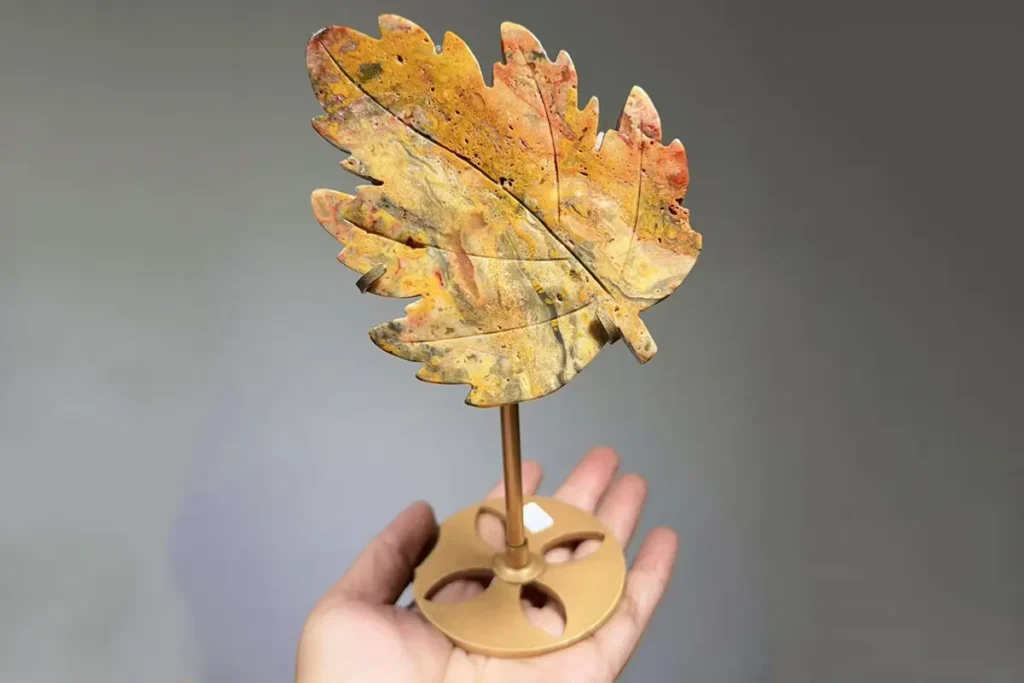
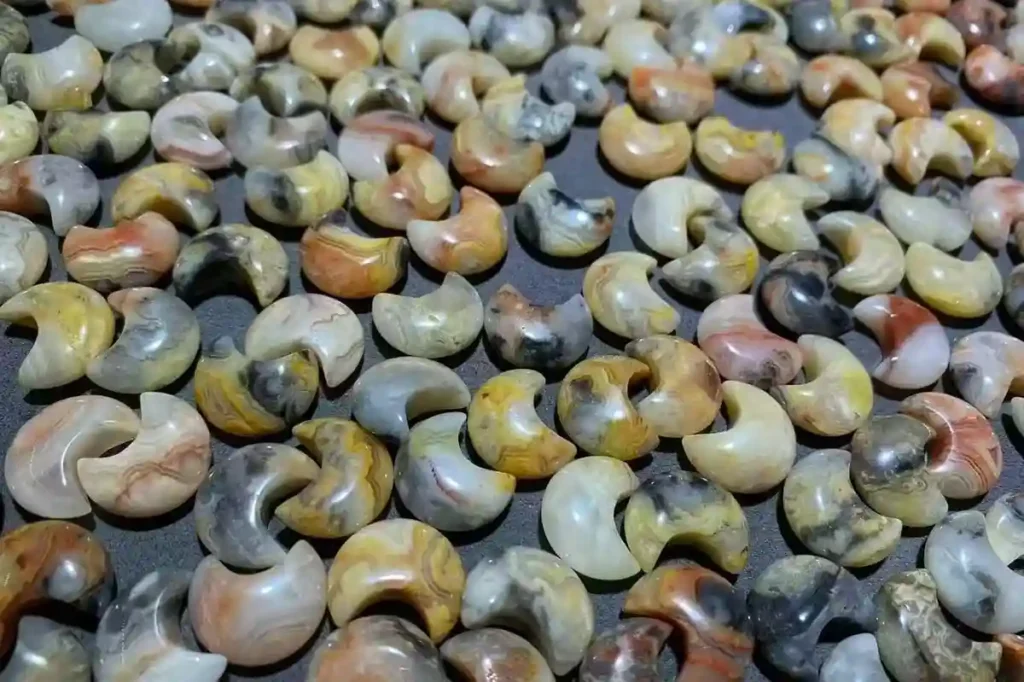
According to Mindat, Crazy Lace Agate features multicolored bands that twist and turn. These winding lines give the stone its lace-like appearance. Some pieces show tight curves, while others display broader bands and open areas. When choosing a crazy lace agate stone, buyers should look at how clearly the pattern appears across the finished surface, rather than expecting every piece to match.
For wholesale buyers, these visible crazy lace agate properties help guide product selection. A small bead shows only a limited section of the pattern. A larger polished piece offers more space to display it. Neither format guarantees stronger detail. Buyers should review the actual goods to see whether the mix of bands and less patterned areas suits their intended jewelry or retail range.
A close-up photograph can show detail, but it cannot represent an entire shipment. Ask for clear views of several pieces, followed by photographs or video of the full lot. Include different sides where practical. This helps you judge the range of patterns before ordering. Agree on the overall appearance you want, while allowing reasonable variation between individual stones within the batch.
Mexican Crazy Lace Agate and Other Trade Names
Names can create confusion when buyers compare supplier lists. Mindat records Crazy Lace Agate and Mexican Lace Agate at a locality in Chihuahua, Mexico. However, a name on a quotation does not prove where a particular batch came from. Buyers still need to confirm the material and ask what information supports its stated source before preparing labels for their own customers.
If a supplier uses wording such as “crazy Mexican lace agate,” ask whether it refers to the same material shown in the sample. Shorter labels such as “Mexican crazy agate” need clarification too. These phrases should not replace a clear product description. A useful quotation identifies the stone, its finished form, its dimensions, and any known treatment, alongside the available source information.
The phrase “Mexican crazy lace stone” also needs a clear explanation when it appears on a supplier list. Confirm what the seller means before repeating that wording on your labels. Use a consistent name across quotations, packing lists, and retail information. Clear naming helps your customers understand their purchase and reduces the risk of confusing products that carry similar descriptions.
Origin, Formation and Scientific Properties
Where Does Crazy Lace Agate Come From?
Mindat lists Crazy Lace Agate occurrences in Mexico, including records in Chihuahua. This supports Mexico as a documented source of the material. However, a locality record does not establish the origin of every shipment sold under that name. Buyers should ask suppliers what evidence supports the source stated for their goods, especially when they need origin information for labels. Avoid assuming that a familiar trade name provides complete traceability for a specific batch.
When buyers use the phrase “Mexico crazy lace agate,” they may be seeking both the stone and information about its source. Separate that question from where workers cut, drill, polish, or assemble the goods. Beads purchased in China may come from imported raw material. For retail information, ask suppliers to distinguish the stone’s reported source from its processing location. Do not treat a geological source description as a substitute for any origin documentation needed for an import shipment.
What Is Crazy Lace Agate Made From, and How Does Agate Form?
In their review of agate composition, Götze, Möckel, and Pan describe agate as banded chalcedony, with other forms of silica sometimes present. Silica is silicon dioxide, written as SiO₂. Chalcedony contains crystals too small to see with the naked eye. This gives buyers a clearer material description than the broad word “crystal.” Crazy Lace Agate belongs within this agate family; its trade name describes a distinctive pattern rather than a separate mineral species.
The same review explains that agate formation occurs in several geological settings. These include volcanic rocks, hydrothermal veins, and sedimentary environments. Differences in the silica structure, porosity, and included pigments contribute to bands and colors. The full process remains complex, so a simple explanation should not imply that all agates form in exactly the same way. These general findings explain the material family. They do not establish the precise formation history or age of a supplier’s individual lot.
Hardness and Physical Features Buyers Should Know
Mindat lists agate at 6.5–7 on the Mohs hardness scale. This rating describes resistance to scratching. Buyers should not interpret it as a guarantee against chips, cracks, or damage during handling. Product form still matters when setting inspection and packing requirements. A polished tower needs protection around its tip, while a bracelet also requires checks on its beads and assembly. Use hardness as one material fact alongside the condition of the actual goods.
| Feature | Buyer reference |
|---|---|
| Material family | Agate, a form of banded chalcedony |
| Main composition | Silica, or SiO₂ |
| Mohs hardness | 6.5–7 for agate |
| Identifying pattern | Multicolored, twisting bands |
| Batch review | Check actual patterns, dimensions, finish, and condition |
The material and pattern descriptions above follow Mindat and the agate review. Batch review remains a purchasing step: a mineral description cannot confirm the quality of finished stock.
Crazy Lace Agate Meaning and Spiritual Beliefs
Symbolism, Joy and a Positive Outlook
Crazy Lace Agate meaning often centers on joy, optimism, and balance in modern crystal traditions. Some people see its winding patterns as a reminder to approach life with flexibility. Others choose it as a symbol of finding lightness during a busy day. These interpretations describe what the stone represents to its owner. They do not mean that wearing it will produce a certain mood or change someone’s circumstances.
Buyers exploring Mexican crazy lace agate meaning may want a short explanation to share with their customers. A careful description can present the stone as a symbol of a positive outlook without promising emotional results. Let the appearance support that story: its varied bands offer a visual point of interest. Customers can enjoy the design whether they share the spiritual interpretation or simply appreciate patterned jewelry.
Within the broader subject of Agate meaning, different varieties carry different symbolic associations. Crazy Lace Agate spiritual meaning offers one such interpretation, rather than a rule that applies to every agate. For retailers, this distinction helps keep descriptions clear. Explain the association as a belief, leave room for personal meaning, and avoid presenting modern symbolism as an ancient tradition unless reliable historical evidence supports that claim.
Metaphysical Properties and Personal Reflection
Crazy Lace Agate metaphysical properties refer to the qualities people attribute to the stone within spiritual practices. Some associate it with balance, encouragement, or a lighter outlook. These ideas belong to belief systems and personal interpretation. A buyer who enjoys them may use the stone as a reminder of an intention. Another person may value the same piece for its pattern, without attaching any spiritual significance to it.
When explaining lace agate meaning, first clarify which variety the description concerns. The shortened name can leave customers unsure about the material. In this context, lace agate spiritual meaning refers to beliefs associated with Crazy Lace Agate. Keeping the full name nearby prevents confusion. It also helps retailers explain that a shared word in two stone names does not establish the same origin, appearance, or symbolic associations.
People searching for lace agate crystal meaning may also want ideas for personal reflection. A stone can serve as a chosen focus during a quiet pause or an intention-setting routine. Describe that as a voluntary practice, with no promised result. For gift buyers, an optional meaning card can share the symbolism in simple language while making clear that the recipient can give the piece their own meaning.
Benefits and Healing Claims: What Buyers Should Understand
Crazy Lace Agate benefits can refer to several different things. Its patterns provide decorative appeal, while finished pieces offer options for jewelry, gifts, or display. Spiritual descriptions may add associations with joy or balance. Keep these categories clear when speaking to customers. A visible design feature differs from a personal belief, and neither should become a promise that the stone will treat an illness or resolve an emotional difficulty.
The phrase crazy lace agate healing properties needs especially careful wording. Some people use “healing” to describe a spiritual intention or a personal ritual. That use does not establish a medical effect. The same caution applies to lace agate healing properties. Retail descriptions should avoid claims about treating anxiety, improving circulation, relieving pain, or replacing professional care. Adding “some people believe” should not become a way to repeat specific treatment promises.
Mexican agate healing properties is a broader phrase that may refer to more than one agate variety. Buyers should identify the actual stone before discussing its symbolism. For wholesale sourcing, keep spiritual descriptions separate from measurable requirements such as bead size, surface finish, and treatment information. A meaning card can accompany a product, but it cannot replace an accurate label or inspection. Clear descriptions let customers decide what they value without misleading them.
Color Meanings, Chakra and Zodiac Associations
White Crazy Lace Agate Meaning and Color Variation
White crazy lace agate meaning may appeal to customers who connect pale colors with calm, simplicity, or a fresh start. These are personal symbolic interpretations, rather than properties that a color guarantees. Treat “white” as an appearance description when discussing the goods. Ask to see the actual pieces, since a supplier’s color label alone does not explain the balance of light areas and patterned bands across a lot.
For wholesale orders, agree on the appearance your customers expect. Do they prefer a pale overall look, strong contrast, or a mixed selection? Use representative photographs to communicate that preference. Avoid promising identical colors or assigning a separate healing effect to lighter pieces. Confirm treatment information as well. A color description should help buyers understand the stock, while leaving room for natural differences between individual items in the shipment.
Crazy Lace Agate Chakra Associations
Crazy Lace Agate Chakra associations belong to spiritual practices, rather than mineral classification. Different descriptions may connect the stone with different energy centers, so buyers should avoid presenting one association as a universal rule. If you include a chakra explanation, identify it as a belief within a particular practice. Do not describe the stone as physically opening, repairing, or balancing a part of the body through its mineral properties.
For crystal retailers, a short explanation leaves customers room to follow their own practice. Someone may choose the stone as a focus during meditation, while another customer may wear it only for its appearance. Neither choice requires a fixed chakra assignment. Keep any optional spiritual information separate from the material label, dimensions, and care instructions. This helps customers distinguish personal symbolism from the practical facts about the finished product.
Crazy Lace Agate Zodiac and Birthstone Beliefs
Crazy Lace Agate zodiac descriptions may interest shoppers choosing a personal gift. However, zodiac associations should appear as optional interpretations, not restrictions on who can wear the stone. Avoid telling customers that it suits only one sign or will bring a particular sign good fortune. A person can choose a bracelet because they like its pattern, find its symbolism meaningful, or feel that it matches their style and preferences.
Birthstone wording also needs care. Without a reliable basis for a specific claim, do not label Crazy Lace Agate as an official birthstone for a particular month. For gift ranges, you can offer it as a personal choice for birthdays or other occasions. Let customers select the piece and meaning they prefer. Clear gift information can describe the material and symbolism without suggesting an official status that you cannot support.
Beads, Bracelets, Tumbled Stones, Rough and Towers
Loose Beads and Finished Bracelets
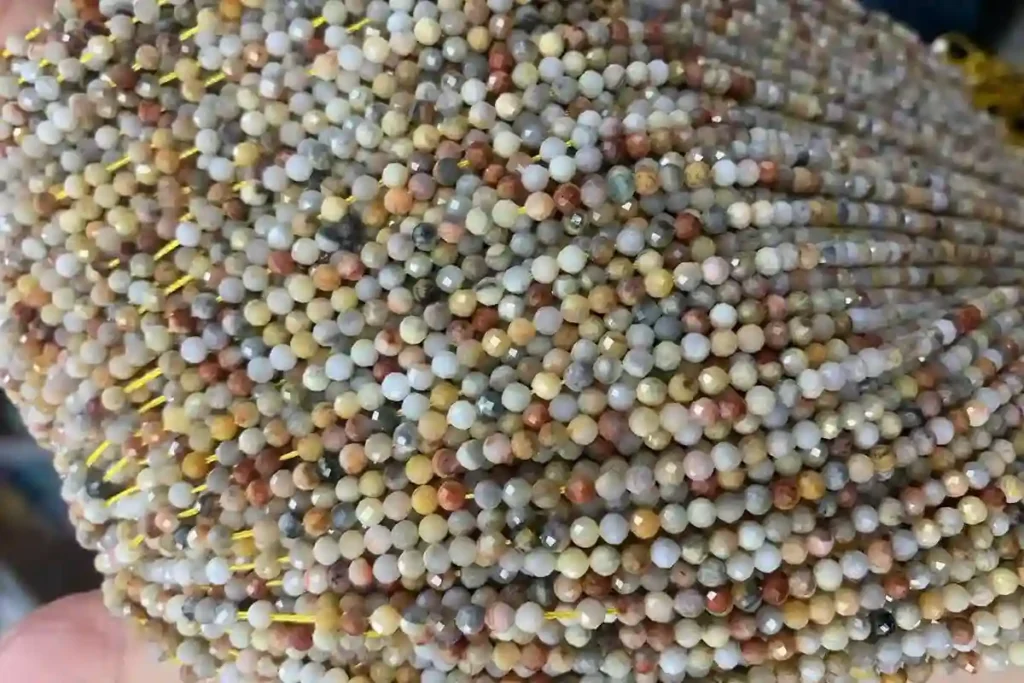
Loose beads give jewelry designers control over the finished piece. They can choose the layout, add other materials, and adjust the length for their customers. When buying crazy lace agate beads, confirm whether the quotation covers individual beads or strands. Ask for bead diameter, hole size, and the quantity supplied. A strand length alone may not tell you how many usable beads you will receive for assembly.
A finished Crazy Lace Agate Bracelet needs a different set of checks. Confirm the bead diameter, finished size, and how the supplier measures that size. Review the cord, knot, and overall finish as well as the stones. Check that holes have smooth edges and that beads sit comfortably together. If your customers need a particular fit, approve a sample rather than assuming that every bracelet follows the same sizing method.
Customers exploring crazy lace agate bracelet meaning may enjoy a short explanation of its symbolism. The physical product still needs to suit their expectations. Clear patterns, a smooth surface, and a suitable fit are separate purchasing considerations. Ask suppliers to explain which variations they allow and which defects they remove. Any example sizes discussed during sourcing should remain examples until the supplier confirms availability and you agree on the final specifications.
Tumbled Stones, Raw Material and Polished Towers
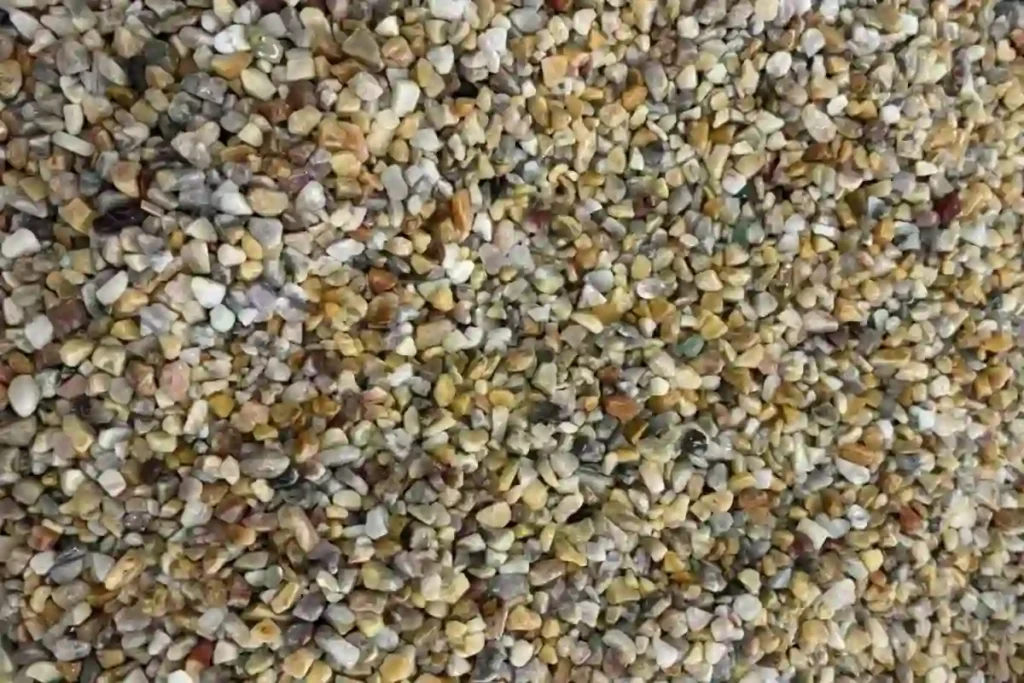
Tumbled stones offer a loose, polished format for individual sale, gift sets, or display. For crazy lace agate tumbled stones, ask how the supplier measures the size range and whether the order sells by weight or count. Request photographs that show the full selection. A close-up of a few pieces can reveal surface detail, but it will not show the proportion of smaller, larger, or less patterned stones in a lot.
Mexican crazy lace agate rough requires attention to its condition and intended use. Ask whether “rough” means unpolished pieces, partly worked material, or another preparation. Buyers planning further cutting should examine available views and discuss visible cracks, cavities, and unwanted material. Buying a kilogram of rough does not guarantee a kilogram of usable finished stones. Confirm what the supplier can show before estimating the material’s value for your own production.
A Mexican crazy lace agate tower is a cut and polished shape, rather than a naturally grown crystal point. Check its height, base width, weight, and whether it stands securely. Inspect the tip and edges for damage. Customers interested in Crazy Lace Agate Meaning may choose a tower as a symbolic display piece, but the purchase should also meet clear physical requirements. Pattern visibility and finish need approval alongside the dimensions.
Product Comparison for Different Buyers
Choose the format according to how your customers plan to use it. Jewelry designers may need loose beads that work with their chosen cord and components. Retailers may prefer finished bracelets or individually priced stones. Importers and wholesalers should also consider how easily workers can sort, label, and check each format. There is no single best choice for every buyer, so compare the requirements of your intended range before ordering.
When comparing crazy lace agate wholesale offers, make sure the quotations describe equivalent goods. A bracelet price cannot stand in for a bead-strand price, and two lots sold by weight may contain different size mixes. Ask what inspection, sorting, and packaging the quoted price includes. A clear comparison helps you judge value without assuming that a lower price delivers the same surface finish, dimensions, or usable quantity as another offer.
For bulk crazy lace agate purchases, approve a representative sample and record the specifications you accept. Use that record when reviewing the shipment and discussing future orders. Amazon sellers and other e-commerce retailers should also confirm the information needed to describe each item accurately. The table below outlines practical selection points. These are buying suggestions, rather than claims that a particular format sells best in any country or market.
| Product form | Typical buyer use | Specifications to confirm | Main inspection focus |
|---|---|---|---|
| Loose beads | Jewelry assembly | Diameter, hole size, count | Roundness, holes, surface |
| Bracelets | Finished jewelry retail | Bead diameter, fit, cord | Beads, knot, assembly |
| Tumbled stones | Gifts and individual sale | Size range, net weight | Finish, chips, size mix |
| Rough material | Cutting or display | Dimensions, weight, condition | Cracks, cavities, usable material |
| Towers | Decorative display | Height, base, weight | Tip, edges, stability |
Quality Grades, Natural Flaws and Authenticity
Natural Patterns Versus Surface Defects
Customers interested in Crazy Lace Agate Meaning may welcome differences in the pattern of each piece. Wholesale buyers still need to separate those differences from surface problems. A change in band width or pattern placement does not automatically make an item defective. A chipped edge, rough drill hole, or poorly polished surface needs a different judgment. Set your acceptance standards according to the finished product and the expectations of your customers.
Natural cavities do not, by themselves, prove that a stone is fake. They may still make a bead unsuitable for a bracelet that requires a smooth finish. For display pieces, a buyer might accept a visible cavity after reviewing it. The important step is to agree on that condition before ordering. Avoid using “natural stone” as a blanket explanation for every problem, or assuming that every irregularity requires rejection.
Ask for close-up views of questionable areas, alongside photographs of the whole lot. Check bead surfaces, drill openings, tower tips, and polished edges where relevant. State whether open cavities, chips, or visible cracks are acceptable for your order. A written agreement gives both sides a clearer inspection target. It also helps prevent disagreement when one buyer values a natural feature that another buyer considers unsuitable for their intended use.
What A, AA and AAA Labels Do—and Do Not—Tell You
A, AA, and AAA labels can help a supplier organize stock, but buyers should ask what each label means. Do not assume that two suppliers use the same criteria or that the letters represent a GIA grading standard. Request a written description and representative samples. A grade becomes useful when it tells you what to expect, such as the allowed surface condition, pattern range, dimensions, and level of sorting.
For beads, practical criteria may include roundness, hole position, polish, and diameter variation. Bracelets also need checks on fit and assembly. With larger polished pieces, review the visible pattern, edges, base, and any disclosed cavities. Define the requirements that matter to your customers instead of asking only for the “best grade.” A more detailed specification makes quotations easier to compare and gives workers a clearer basis for checking the finished goods.
Wholesale grading should lead to a clear crazy lace agate quality agreement. Keep photographs of the approved sample and record any accepted variation. If a later batch looks different, review it before shipment rather than relying on the same grade label alone. You can ask for stricter sorting, but the supplier must confirm what is feasible and how it affects the price. Avoid treating a descriptive grade as a guarantee of identical pieces.
Natural, Treated and Imitation Material
The Gemological Institute of America (GIA) explains that chalcedony can undergo dyeing to alter its color. This establishes a treatment possibility for the material family; it does not mean that every Crazy Lace Agate lot is dyed. A natural stone can also be treated, while an imitation uses another material to resemble it. Buyers comparing real vs fake crazy lace agate should keep these questions separate when asking suppliers for information.
Request clear treatment disclosure for the goods offered. Ask whether the supplier knows of dyeing, coatings, or filling, and what supports that answer. Do not treat an attractive pattern, cool touch, or seller’s photograph as proof that a piece is untreated. GIA notes that some treatments are difficult to identify, even for experts. Where the answer matters to a purchase, qualified gemological assessment offers a stronger basis than a simple visual guess.
A dyed agate is different from an imitation, so describe the material and treatment separately when preparing customer information. Avoid scratch, heat, or solvent tests on saleable goods; a damaged piece may still leave the identification question unresolved. For bulk purchases, confirm what the supplier can document and whether further assessment is needed before ordering. Keep those records with the batch information so that your own descriptions remain consistent with the evidence available.
My Experience Supplying Crazy Lace Agate to Wholesale Buyers
Correcting an Origin Label for a European Customer
One of my European customers asked me to print the country of origin on each stone’s label. When I prepared the Crazy Lace Agate labels, I initially wrote China. The customer then asked whether this stone really came from China. That question made me stop and check the information. I searched online, found references identifying Mexico as a source, and changed the labels to Mexico.
The mistake taught me to separate the source of the raw stone from the place where I buy or process the goods. Purchasing beads in China does not establish that the material originated there. My online check helped me correct the label at that time, but general information about a variety does not confirm the source of every batch. Specific shipments still need source information from the supplier.
When customers explain Crazy Lace Agate Meaning or Mexican lace agate meaning to their buyers, accurate product details matter alongside symbolism. I learned that a label deserves the same attention as the stone itself. My customer’s question gave me a chance to correct an error before continuing with that information. It also reminded me to check uncertain details rather than assume that the location of my supplier answers the origin question.
Removing Beads with Natural Cavities Before Making Bracelets
An American customer once ordered Crazy Lace Agate bracelets from me. I collected bead strands to assemble into finished bracelets, but found a few beads with natural surface cavities on each strand. I contacted the manufacturer to discuss the problem. They offered a discount on the batch. Although that reduced the purchase cost, it did not change the condition of the beads or make them suitable for the finish I wanted.
I asked our workers to inspect the beads as they made the bracelets. They picked out the ones with visible cavities and discarded them. We used only the beads that met our surface requirements. I accepted the loss of those rejected beads because the customer would receive finished bracelets, and I wanted those pieces to have the smooth surfaces expected for the order. The discount did not replace that inspection.
This order reinforced my approach to checking components before assembly. Natural features still need review against the agreed product standard. If you are planning a wholesale order, contact us through WhatsApp or our inquiry form. Send the product form, size, quantity, and surface requirements you need so we can discuss the details before you Request a Quote.
Uses, Cleaning and Care
Jewelry, Gifts, Meditation and Display
Crazy lace agate meaning and uses can help buyers choose a format that fits their customers. Bracelets offer a wearable option, while loose beads allow designers to create their own pieces. Tumbled stones can suit small gifts, and larger polished pieces can serve as decorative objects. Select each format for its appearance and practical use. A symbolic description can accompany the item without promising that ownership will produce a particular result.
Some people include Crazy Lace Agate in meditation or quiet reflection. They may hold a polished stone or place it nearby as a focus for an intention. This is a personal practice, rather than a treatment provided by the material. When customers ask about Mexican agate benefits, first clarify which variety they mean. The broader name alone does not establish the same appearance, source, or symbolic interpretation for every stone.
For customers asking about Mexican lace agate benefits in the context of Crazy Lace Agate, explain both its decorative appeal and its optional symbolism. Gift information can mention joy or optimism as associations within crystal traditions. Buyers who do not share those beliefs may still enjoy the patterns. Keep the wording suitable for both groups, and avoid claims that a bracelet or display piece will guarantee happiness, protection, or good fortune.
How to Clean Crazy Lace Agate Jewelry
For buyers asking how to clean crazy lace agate, start by checking the whole item, including any known treatments. The Gemological Institute of America (GIA) recommends warm water, mild dish soap, and a soft brush for most colored gems. This is general guidance, rather than approval for soaking every bracelet. Cord, metal parts, adhesives, and treatments may need different care, so confirm the instructions for the finished piece before cleaning it.
For routine care, a soft cloth offers a simple starting point for removing surface dust. If the supplier confirms that gentle washing suits the item, clean it briefly, remove soap residue, and dry it carefully. Do not leave a strung bracelet soaking or assume that cleaning instructions for loose stones apply to its cord. GIA also cautions that treatments can be affected by heat, solvents, steam, or ultrasonic cleaning.
Clear crazy lace agate care instructions should travel with the product when practical. Retailers can explain how to clean the finished item and when to ask for further advice. Avoid giving universal instructions for saltwater, strong chemicals, or cleaning machines. If treatment information is uncertain, confirm a suitable method with the supplier or a qualified jewelry professional. Keep the advice simple enough for customers to follow without risking the stones or other components.
Ritual Cleansing and Safe Storage
Customers asking how to cleanse crazy lace agate may mean a spiritual ritual rather than physical cleaning. Clarify that difference before offering instructions. Some people choose a quiet moment, an intention, or another personal practice to mark a fresh start with a stone. Describe this as symbolic. Do not claim that the ritual removes a measurable form of negative energy, sterilizes the item, or replaces the need to clean actual dirt.
A ritual does not need to expose jewelry to salt, soaking, or heat. Customers can choose a dry practice that involves simply placing the item nearby during reflection. If they prefer another method, they should check whether it suits the material and its components. GIA’s jewelry care guidance notes that heat and sudden temperature changes can damage some gems. That advice concerns physical care, rather than the spiritual purpose of a ritual.
For storage, keep finished pieces apart so they do not rub against one another or strike exposed edges. GIA recommends protective pouches, boxes, and padding to help prevent scratches and impact damage. Apply that guidance according to the product: protect tower tips, separate bracelets from hard objects, and avoid crushing strung pieces under heavier stock. Clear storage instructions give retailers and end customers a practical way to look after their purchases.
Bulk Buying, Packaging and Supplier Selection
Confirming Size, Weight, Color and Batch Standards
For bulk orders, start with a specification that matches the product form. Beads need a stated diameter, hole size, and count or strand length. Bracelets need an agreed fit, bead size, and cord description. For tumbled stones and rough material, confirm the size range and net weight. Ask how the supplier measures each field so both sides understand the quotation in the same way.
Discuss size tolerance and color variation before approving the goods. Decide whether your range needs a narrow color mix or can include broader differences. Record acceptable surface conditions as well. Avoid using a photograph of one attractive piece as the only reference for an entire shipment. A representative selection gives you a clearer basis for judging what your customers will receive.
Request views of the full lot, supported by close-ups where needed. If the order sells by weight, ask whether any piece-count estimate is approximate. If it sells by count, confirm what constitutes one unit. Keep the approved specifications and sample photographs with the order record. These details help guide inspection and provide a useful reference when discussing a later batch.
Packaging and Shipping Different Product Forms
Wholesale packaging should match the shape and finish of the goods. Consider separate bags or compartments for bracelets and polished pieces to limit rubbing. Protect tower tips and edges with suitable padding. Rough material may need separation from finished items. Ask the supplier to describe the packing method and show an example, especially when the order combines several forms or sizes.
When discussing shipping crystal bracelets, confirm how the supplier will protect both the beads and their assembly. Avoid packing them beneath heavy rough pieces without suitable separation. Check that labels identify the correct item and that the packing list matches the shipment. Buyers who need retail-ready packaging should agree on it separately rather than assume that standard transport packing includes presentation boxes.
For bulk gemstone shipping, distinguish product net weight from packed gross weight. Confirm carton dimensions, the destination, and the service included in the quotation. Compare transport options according to the order and your delivery needs. Ask about the procedure for reporting transit damage. Do not treat an estimated arrival date or protective packing as a guarantee that delays or damage cannot occur.
Choosing a Reliable Crazy Lace Agate Supplier
A reliable crazy lace agate supplier should explain the goods clearly and respond to specific questions. Ask about source information, treatment status, representative samples, and inspection standards. The Gemological Institute of America (GIA) explains why treatment information matters when buying gems. Use that principle when requesting details, while checking what the supplier actually knows about the offered batch rather than accepting an unsupported assurance.
Customers may first discover the stone through Crazy Lace Agate Meaning, but wholesale buying requires practical answers. Look for clear specifications, photographs that represent the lot, and an agreed process for handling problems. Ask what happens if the shipment fails to meet the approved standard. Record those terms before payment so that both sides understand the next steps if an issue arises.
My label correction and bead selection experiences taught me to value clear information and careful review. Apply the same approach when comparing suppliers: assess how they answer questions and define quality, alongside the price. Start with goods you can evaluate against an agreed sample. For repeat orders, review the new batch rather than assuming that the same product name guarantees an identical result.
Frequently Asked Questions
What Is the Difference Between Lace Agate and Crazy Lace Agate?
“Lace agate” can leave the variety unclear, so ask which stone the seller means. Mindat describes Crazy Lace Agate as having multicolored, twisting bands, while Blue Lace Agate has pale blue banding. When explaining lace agate meaning, identify the variety first. A shortened name alone does not confirm the material, its source, or the appearance of the goods you will receive.
Who Should Wear an Agate Stone?
Anyone who likes its appearance or finds its symbolism meaningful can choose agate jewelry. Agate meaning does not impose a requirement to belong to a certain zodiac sign or follow a spiritual practice. Select a finished piece that fits comfortably and suits your needs. Check the cord, clasp, and other components as well as the stones. Spiritual associations should not become promises of health benefits.
What Is Another Name for Crazy Lace Agate?
You may encounter names such as Mexican Crazy Lace Agate or Mexican Lace Agate. However, shorter descriptions such as “Mexican agate” can refer to a wider range of material. Ask the supplier to confirm what the name means on their quotation. Use consistent wording on your labels and packing lists, and keep source information separate from the product name unless the batch’s origin has been confirmed.
What Does Crazy Lace Agate Symbolize?
Crazy Lace Agate Meaning commonly centers on joy, optimism, and balance in modern crystal traditions. Some people choose it as a personal reminder to keep a positive outlook. These are symbolic associations, rather than guaranteed effects of wearing or owning the stone. Retailers can share this interpretation while leaving customers free to enjoy the patterns or give the piece a meaning of their own.
Is Agate a Stone or Gem?
Both terms can apply in everyday use: agate is a natural stone used as a gem material. In mineralogical terms, Götze, Möckel, and Pan describe it as banded chalcedony that can include other silica phases. “Gem” describes its use in jewelry and ornament, rather than a separate mineral species. Buyers should still confirm the identity and condition of the particular goods they purchase.
References
- Mindat.org, Hudson Institute of Mineralogy. Agate: Mineral Information, Data and Localities. Reference for agate hardness, variety descriptions, and recorded localities.
- Götze, J., Möckel, R., and Pan, Y. (2020). Mineralogy, Geochemistry and Genesis of Agate—A Review. Minerals, 10(11), 1037. Reference for composition, classification, banding, and formation.
- Weldon, R., Gemological Institute of America (GIA). An Introduction to Gem Treatments. Reference for gemstone treatments, including chalcedony dyeing, and identification limits.
- Gemological Institute of America (GIA). Tips on Caring for Jewelry. Reference for general cleaning, treatment precautions, protective storage, and jewelry care.
Disclaimer
Spiritual meanings, chakra associations, and zodiac connections reflect traditions or personal beliefs. They do not establish medical benefits, and this information does not replace professional healthcare advice. Natural stones vary in pattern, color, and condition. General mineral references cannot verify the origin, treatment status, or quality of a specific shipment. Before purchasing, confirm batch information, specifications, acceptable defects, and care instructions with the supplier. Cleaning methods should also suit any treatments, cords, metals, or other components in the finished item.
Conclusion: Choosing Crazy Lace Agate for Your Wholesale Order
Crazy Lace Agate Meaning gives customers a way to connect its patterns with ideas of joy, optimism, and balance. For wholesale buyers, that symbolism works best alongside clear product information. Choose the format that suits your customers, then confirm dimensions, surface requirements, treatment information, and the appearance of the actual lot. Beads, bracelets, tumbled stones, rough material, and towers each require different checks before you approve an order.
My experience has shown me why these details deserve attention. A European customer’s question prompted me to check and correct an origin label. An American bracelet order required us to remove beads with natural cavities before assembly. Both situations involved a practical decision about what the customer would receive. Accurate information and careful selection help set clear expectations, while agreed standards give both sides a useful basis for reviewing the goods.
To discuss your requirements, contact us through WhatsApp or our inquiry form. Include the product form, preferred dimensions, quantity, surface standard, and delivery destination. Share reference photographs if you have a particular appearance in mind, so we can discuss what is available and which natural variations you can accept. Clear requirements make it easier to review suitable options and prepare a quotation for your business. Request a Quote to begin planning your Crazy Lace Agate wholesale order.