
Ethiopian Opal Meaning: Properties, Benefits, Colors and Buying Guide
Written by: Rocrystal Sourcing & QC Team, Last updated: August 24, 2026
Ethiopian opal is admired for its bright play-of-color. As the stone moves under light, it may flash green, blue, red, yellow, or orange. These changing colors make it popular for pendants, rings, earrings, beads, and other jewelry. However, its beauty is only one part of the Ethiopian Opal Meaning.
Many people connect this gemstone with hope, creativity, emotional awareness, and positive change. The Ethiopian opal spiritual meaning may vary between different crystal traditions. Some people use the stone during meditation, while others wear it as a personal symbol. These beliefs come from spiritual practices and personal experiences, not proven medical evidence.
For jewelry designers and wholesale buyers, appearance is not the only concern. Color brightness, transparency, pattern, cracks, treatments, and moisture absorption can affect quality and value. Ethiopian opals also vary greatly from one piece to another. Buyers should therefore understand the material before comparing samples, prices, or bulk quantities.
This guide explains Ethiopian Opal Meaning, properties, benefits, colors, history, care, and common jewelry uses. It also covers price factors, treatment disclosure, authenticity checks, and practical buying points. Whether you collect gemstones or source them for a business, this information can help you view Ethiopian opal from both a spiritual and practical perspective.
What Is Ethiopian Opal?
A Simple Definition of Ethiopian Opal
Ethiopian opal is a natural gemstone mined in Ethiopia. Like other opals, it consists mainly of hydrated silica, which means its structure contains water. Precious opal displays shifting rainbow colors called play-of-color, while common opal does not show this effect. Both varieties may still occur in attractive body colors.
When people ask what is an Ethiopian opal, they often mean the bright precious opal used in jewelry. However, the name describes its country of origin, not one fixed color or quality grade. Ethiopian opals may appear white, transparent, yellow, orange, brown, gray, or dark. Understanding this difference provides a clearer foundation for exploring Ethiopian Opal Meaning.
Why Ethiopian Opal Shows Play-of-Color
Play-of-color appears when light enters the opal and interacts with its internal structure. Tiny silica particles can form an orderly pattern inside the stone. This structure separates white light into different colors, creating flashes of red, orange, yellow, green, or blue. The effect changes as the stone, light source, or viewing angle moves.
Not every Ethiopian opal shows the same color strength. Some stones display bright flashes across most of the surface, while others show smaller patches from limited angles. Lighting also matters. A stone may look vivid under direct light but softer in the shade. For this reason, wholesale buyers should compare Ethiopian opal properties through videos taken under consistent lighting, not rely on one enhanced photograph.
Welo Opal and Ethiopian Opal
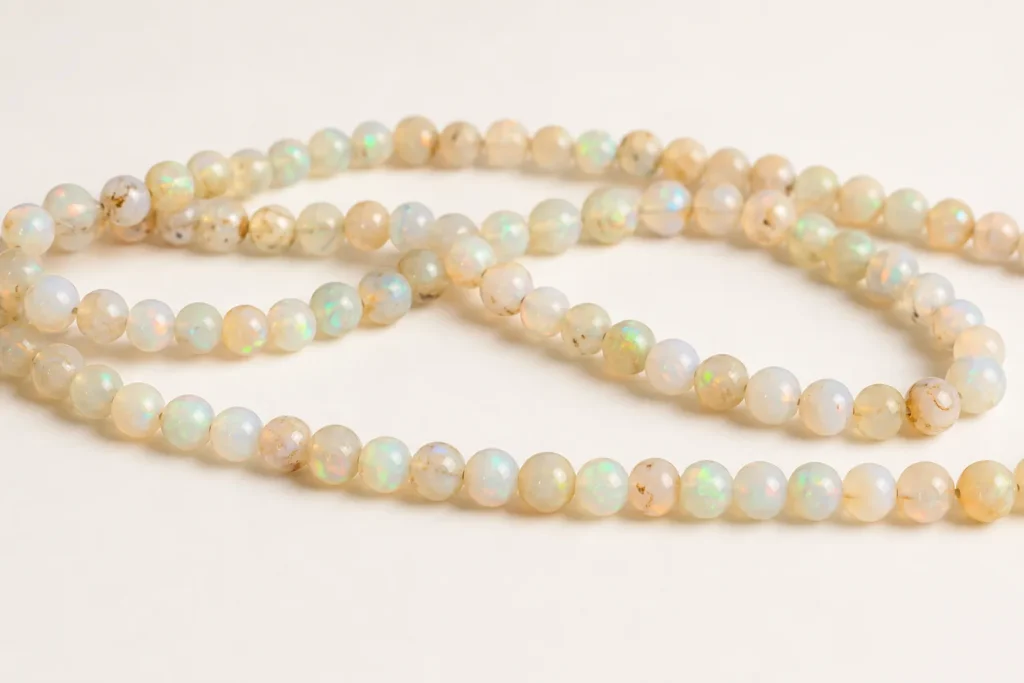
Welo, also written as Wollo, is an important opal-producing region in northern Ethiopia. The term Ethiopian Welo opal usually refers to material associated with this region, while Ethiopian opal is a broader name for opal mined anywhere in the country. Welo material often has a white, pale, or transparent body with strong play-of-color.
People exploring Welo opal meaning may also want to understand the broader Opal Meaning, including the symbolism shared by opals from different origins. It is often associated with inspiration, hope, and personal change. However, sellers should not label every opal stone in Ethiopia as Welo opal without reliable origin information. For wholesale orders, accurate origin descriptions help buyers compare materials and present them honestly to their own customers.
Ethiopian Opal History and Formation
Early Ethiopian Opal Discoveries
Ethiopia has a long connection with opal, although its deposits gained wider commercial attention only in recent decades. Material from the Mezezo area in the historic Shewa Province entered the international gem market during the early 1990s. These stones often formed inside reddish-brown volcanic rock and included orange, brown, and chocolate-colored precious opal.
The early deposits introduced collectors to a different appearance from many better-known Australian opals. However, production and available quality remained limited. Ethiopian opals became much more visible after later discoveries in northern Ethiopia. This history matters because the term Ethiopian opal can cover stones from different deposits, with variations in body color, structure, stability, and response to moisture.
The Wollo Discovery and Modern Market
A major change came in 2008, when miners found white and transparent precious opal near Wegel Tena in Ethiopia’s Wollo region. The deposit produced material with vivid play-of-color in larger quantities. As more stones entered the international market, jewelry makers and buyers gained access to a wider range of sizes, patterns, body colors, and quality grades.
Another deposit near Stayish began producing dark and black opal around 2013. These discoveries helped Ethiopian opal become more familiar in the modern gemstone trade. They also created new quality questions. Buyers needed to distinguish natural body color from smoke treatment or dye and understand how different stones react to moisture. Clear treatment and origin information remain important for wholesale purchases.
How Ethiopian Opal Forms
Ethiopian opal usually forms within layers of volcanic rock. Water carrying dissolved silica moves through cracks, cavities, and porous areas in the rock. As the water slowly evaporates, silica remains behind and builds up over a long period. These deposits may eventually develop into common opal or precious opal with visible play-of-color.
The arrangement of tiny silica particles affects how the finished stone looks. A more orderly structure can separate light into bright spectral colors, while an irregular structure may produce little or no play-of-color. Minerals and surrounding rock can also influence body color. Because natural conditions vary within each deposit, Ethiopian opals from the same mining area may still differ in transparency, pattern, brightness, and stability.
Ethiopian Opal Meaning and Symbolism
The Core Ethiopian Opal Spiritual Meaning
The core Ethiopian Opal Meaning centers on hope, creativity, emotional awareness, and personal transformation. Its moving colors often remind people that life can change when viewed from a different angle. For this reason, some wearers choose Ethiopian opal when beginning a new project, making an important decision, or entering a new stage of life.
The Ethiopian opal spiritual meaning is also connected with honest self-expression. Crystal users believe the stone may encourage them to notice emotions they have ignored and express their thoughts more openly. This does not mean the gemstone controls feelings. Instead, it can serve as a personal reminder to pause, reflect, and communicate with greater care.
Different cultures and spiritual practices may interpret the meaning of opal stone in different ways. No single definition applies to every person. Some people value Ethiopian opal for its symbolism, while others simply enjoy its natural color display. Both approaches are valid, and neither requires claims of guaranteed spiritual or medical results.
What Does Ethiopian Opal Symbolize?
Ethiopian opal often symbolizes possibility because its appearance changes with light and movement. A stone that seems pale from one direction may reveal strong green, orange, or red flashes from another. Many people connect this visual change with hidden potential, new perspectives, and the idea that personal growth does not always follow a straight path.
The gemstone can also represent individuality. No two natural opals have exactly the same pattern, transparency, or arrangement of colors. This makes each piece feel personal, especially when used in custom jewelry. For retailers and designers, that uniqueness creates strong visual appeal. At the same time, wholesale buyers should explain that natural variation is part of the material rather than promise that every stone will match a sample exactly.
Ethiopian Opal in Modern Crystal Practices
In modern crystal practices, people may hold Ethiopian opal during meditation or place it nearby while setting a personal intention. Some focus on its changing colors as a simple mindfulness exercise. Others choose it as a symbol of creativity, emotional openness, or a new beginning. These uses reflect personal beliefs rather than fixed rules.
The Ethiopian opal metaphysical properties may also influence how the stone is used in jewelry. A wearer might choose a pendant for quiet reflection or a ring as a daily reminder of a personal goal. Some people value the claimed Ethiopian opal benefits, while many buyers simply enjoy its appearance. Spiritual traditions can add meaning, but they should never replace medical care, professional advice, or practical judgment.
Ethiopian Opal Benefits and Metaphysical Properties
Emotional Awareness and Self-Expression
Some crystal users associate Ethiopian opal with emotional awareness. They believe its changing colors encourage a person to observe feelings instead of hiding or avoiding them. During quiet reflection, the stone may act as a visual reminder to slow down, identify an emotion, and consider what caused it. The benefit comes from the reflective practice, not from a guaranteed effect of the gemstone.
Ethiopian opal is also linked with open self-expression. Some people wear it when they want to speak more honestly or explain their needs with greater care. However, the claimed Ethiopian opal benefits should remain in a spiritual context. The stone cannot diagnose or treat anxiety, depression, or any other condition, and anyone facing ongoing emotional distress should seek qualified professional support.
Creativity and New Ideas
Ethiopian opal is often connected with creativity because its colors shift with every movement. Artists, jewelry designers, and other creative people may use the stone as a source of visual inspiration. A flash of green, red, or blue can suggest new color combinations, shapes, or design ideas. Each stone also offers a different natural pattern.
Some people keep Ethiopian opal near their workspace when planning a project or looking for a fresh direction. The stone does not create ideas by itself, but it may serve as a useful prompt to explore different possibilities. This part of Ethiopian Opal Meaning focuses on curiosity and imagination. It encourages an open mindset rather than promising sudden talent, success, or artistic results.
Confidence During Personal Change
Personal change often brings uncertainty, even when the change is positive. Ethiopian opal is sometimes used as a symbol of courage during a new job, relationship, business plan, or stage of personal growth. Its shifting appearance can remind the wearer that uncertainty does not always mean something is wrong. A different viewpoint may reveal options that were not clear before.
Some people wear the stone when they want to trust their decisions and move forward with greater confidence. However, Ethiopian opal cannot remove fear or guarantee a good result. Its value in this practice comes from the meaning assigned to it. The gemstone may support a personal intention, but careful planning, honest reflection, and practical action still shape the final outcome.
Meditation and Mindful Use
Ethiopian opal can be used as a visual focus during meditation. Hold the stone comfortably, breathe slowly, and observe its colors without trying to force a particular feeling. As the light changes, notice new flashes and patterns. This simple exercise may help bring attention back to the present moment when the mind starts to wander.
Another approach is to set one clear intention before meditation, such as listening more carefully or approaching change with patience. Afterward, write down any thoughts that arose. These practices offer a balanced way to explore Ethiopian opal metaphysical properties without expecting an instant result. Crystal use should remain a personal wellness practice and should never replace medical treatment or professional mental health support.
Ethiopian Opal Colors and Their Meanings
White Ethiopian Opal Meaning
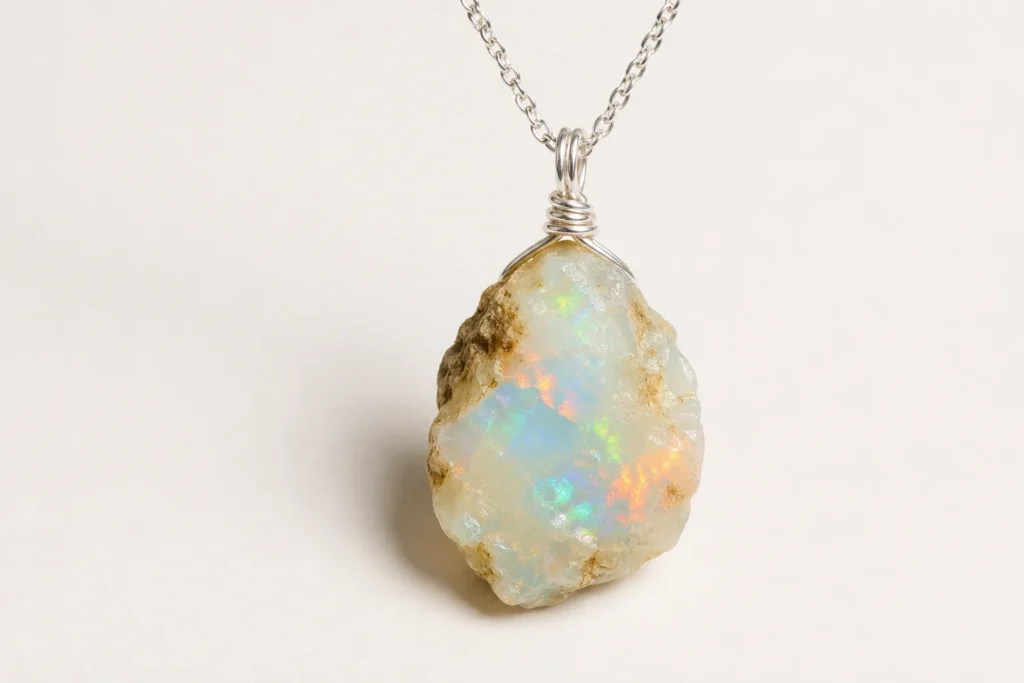
White Ethiopian opal has a white, cream, or pale body color that may display flashes of green, yellow, orange, red, or blue. Its light background often creates a soft appearance, while strong play-of-color adds movement and contrast. The body color and the flashing colors are separate features, so a white opal may still show many bright hues.
The White Ethiopian opal meaning is commonly associated with clarity, hope, and a fresh start. Some people choose it when they want to leave an old habit behind or approach a situation with a calmer mind. These meanings come from modern crystal traditions and personal interpretation. For buyers, brightness, pattern, transparency, cracks, and treatment information remain more useful indicators of material quality.
Blue Ethiopian Opal Meaning
The phrase Blue Ethiopian opal meaning can describe two different appearances. One stone may have a white or transparent body with blue flashes, while another may show a strong blue body color. These are not the same feature. Vivid and even blue body color may come from dye, so buyers should ask for clear treatment disclosure before placing an order.
In crystal traditions, blue is often associated with calm thinking, honest communication, and peaceful self-expression. A person may wear blue-flashing Ethiopian opal as a reminder to listen before responding or speak with greater care. These symbolic ideas do not confirm whether a stone is natural or treated. Color origin, stability, and laboratory identification are separate from its spiritual interpretation.
Black Ethiopian Opal Meaning
Black Ethiopian opal has a dark gray, brown, or black body that creates strong contrast with its play-of-color. Bright red, green, blue, or orange flashes may appear especially vivid against the darker background. However, a dark appearance does not automatically prove that the color formed naturally. Some Ethiopian opals receive smoke treatment or dye to create a deeper body color.
The Black Ethiopian opal meaning is often connected with protection, inner strength, and honest self-examination. Some people wear it as a reminder to remain steady during uncertainty. Buyers should keep symbolism separate from quality verification. Natural dark material and treated opal may look similar in photographs, so high-value or bulk purchases may require treatment records, close inspection, or independent laboratory testing.
Other Body Colors and Color Play
Ethiopian opals may have transparent, white, yellow, orange, brown, gray, or dark body colors. Their play-of-color can include blue, green, yellow, orange, and red. Body color describes the stone’s general background, while play-of-color refers to the flashes that appear as the viewing angle changes. Buyers should evaluate these two features separately.
Some sellers use the term Ethiopian water opal for transparent or highly translucent material with a watery appearance. However, this is not always a consistent gemological grade, so buyers should request photos, videos, measurements, and treatment details instead of relying on the name alone. Regardless of color, brightness, pattern coverage, cracks, cutting quality, and stability all affect the final appearance and commercial value.
Ethiopian Opal Properties and Quality Factors
Physical and Geological Properties
Ethiopian opal consists mainly of hydrated silica and contains water within its structure. Unlike gemstones with an ordered crystal structure, opal is amorphous. It has a Mohs hardness of about 5.5 to 6.5, so harder materials can scratch it. Strong impact, sudden temperature changes, and unsuitable storage may also damage the stone.
Many Ethiopian opals are hydrophane, which means they can absorb water or other liquids. However, the degree of absorption varies, and not every stone reacts in the same way. Moisture may temporarily change transparency, weight, or play-of-color. These Ethiopian opal geological properties matter to both jewelry makers and wholesale buyers because they influence cutting, setting, cleaning, storage, and customer care instructions.
Pattern, Brightness and Play-of-Color
Pattern describes how flashes of color appear and move across an opal. Some stones show small points of color, while others have broad patches, rolling flashes, or more unusual shapes. Buyers should view the stone from several angles because a pattern may look strong from the front but disappear when the opal turns.
Brightness describes the strength of the color flashes under normal lighting. A vivid stone with several visible colors usually attracts more attention than one with weak or limited color. Red is often valued because it is less common, but overall brightness and pattern coverage also matter. For wholesale grading, suppliers and buyers should use the same lighting conditions and agree on how much visible play-of-color each grade requires.
Transparency, Body Color and Cracks
Ethiopian opal may range from opaque to highly transparent. Clear material can show deep, floating flashes, while white or dark body color can create stronger contrast. Transparency alone does not determine quality. A less transparent stone with bright, well-distributed play-of-color may look more attractive than a clear stone with weak color.
Buyers should also inspect cracks, surface pits, chips, and crazing. Crazing appears as a network of fine fractures and may affect long-term stability. Natural matrix marks or small inclusions are not always serious defects, but open cracks require closer attention. For wholesale orders, videos should show both sides under consistent light, and the accepted defect range should be agreed upon before production or shipment.
Treatments and Disclosure
Some Ethiopian opals receive treatments that change their color or improve their appearance. Dye can create vivid blue, purple, or other body colors, while smoke treatment can darken a pale stone and increase the contrast of its play-of-color. Other materials may receive impregnation or clarity enhancement. A treated stone can still be natural opal, but the treatment must be disclosed.
Photos alone may not reliably separate natural dark opal from treated material. Before a wholesale purchase, buyers should ask whether the color is natural, whether the stone has received any treatment, and whether testing records are available. For valuable parcels, random laboratory checks can provide stronger evidence. Clear disclosure helps retailers set accurate prices, prepare care instructions, and avoid disputes with their customers. It should form part of the written order details rather than remain a verbal promise.
Ethiopian Opal Jewelry and Wholesale Applications
Ethiopian Opal Bracelet
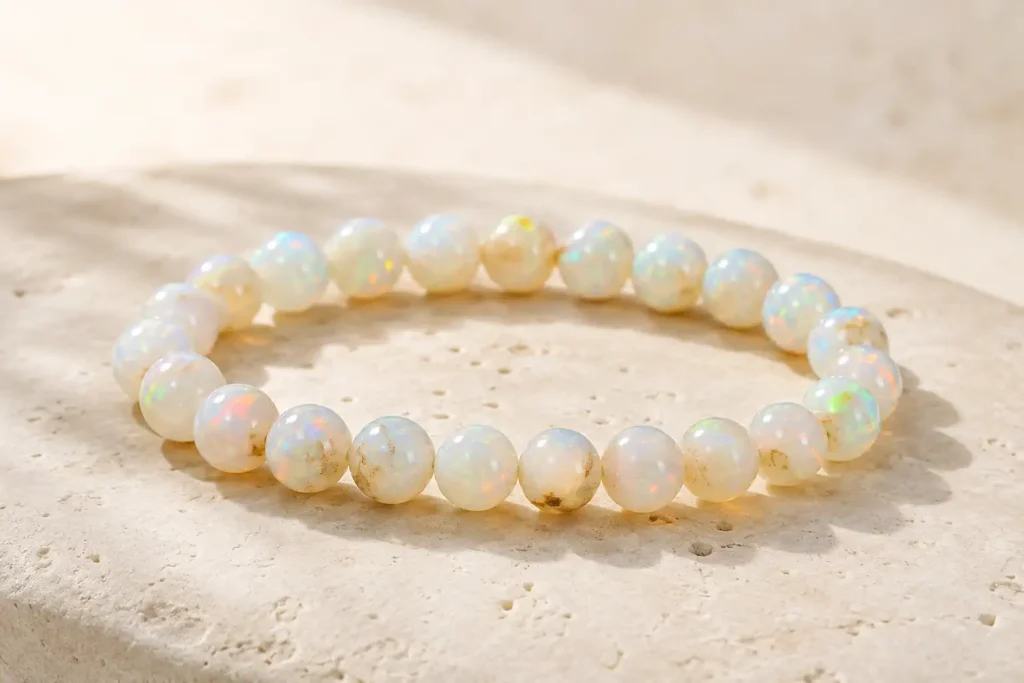
An Ethiopian Opal Bracelet can display many colors as the wrist moves, making it visually attractive in a jewelry collection. It may use smooth beads, faceted beads, small cabochons, or opal pieces combined with other gemstones. Retailers should show natural variation clearly because the color, transparency, and pattern of each bead may differ.
Opal is not ideal for rough handling. In a beaded bracelet, neighboring stones can knock against one another during daily wear. Water, skin oil, perfume, and cleaning products may also affect some hydrophane material. Jewelry makers should choose stable stones, avoid overly tight stringing, and provide clear care instructions. Wholesale buyers should also inspect drill holes for chips or hidden cracks before approving a bulk order.
Rings, Pendants and Earrings
Ethiopian opal can be used in rings, pendants, and earrings, but each design exposes the stone to a different level of risk. Pendants and earrings usually receive less impact during normal wear. They can therefore be practical choices for displaying bright opal while offering more protection than an exposed ring setting.
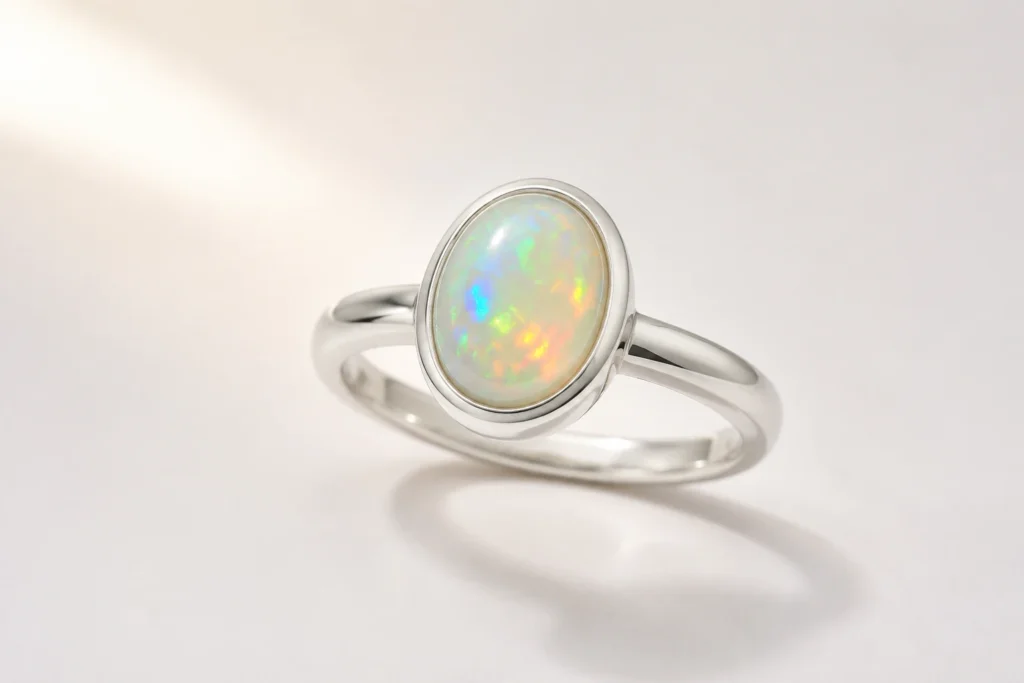
Rings face frequent contact with hard surfaces, water, soap, cosmetics, and household cleaners. A protective bezel or raised metal edge can reduce direct impact, although no setting makes opal damage-proof. Jewelry designers should avoid placing too much pressure on the stone during setting. For wholesale orders, buyers should inspect the fit, edge protection, adhesive use, and visible cracks instead of judging the finished piece only by its front appearance.
Choosing Products for Different Buyers
Jewelry designers often focus on shape, cutting quality, calibrated size, and matching pairs. A designer making earrings may accept small differences, but the two stones still need a balanced appearance. Retailers may care more about visual appeal, clear treatment information, care instructions, and a price range that suits their customers.
Wholesale buyers must also consider consistency across larger quantities. Natural opal will never look completely uniform, so the supplier and buyer should agree on acceptable ranges for body color, brightness, transparency, size, and defects. Clear grading photos can reduce misunderstandings. The best choice depends on the intended market: premium custom jewelry may require selected stones, while commercial designs may accept broader natural variation at a lower cost.
Chakra, Birthstone and Crystal Pairings
Ethiopian Opal Chakra Associations
Ethiopian opal is often associated with the crown chakra because of its bright appearance and changing spectral colors. In modern crystal practices, the crown chakra relates to awareness, spiritual reflection, and a sense of connection. Transparent or white Ethiopian opal is especially common in this interpretation.
Other users connect the stone with different chakras according to its visible color. Blue flashes may be linked with the throat chakra, while orange or red flashes may be associated with the sacral or root chakra. These connections vary between traditions, and there is no single official system. Chakra work remains a spiritual practice rather than a medical treatment, so users can choose an interpretation that fits their personal beliefs.
October Birthstone and Zodiac Associations
Opal is one of the traditional birthstones for October, along with tourmaline. An Ethiopian opal can therefore be used in birthstone rings, pendants, earrings, or personalized gifts for people born during this month. Its wide range of body colors and color flashes gives jewelry designers many options beyond a single fixed birthstone color.
Some modern crystal traditions connect opal with Libra, Scorpio, Pisces, or Cancer. However, zodiac associations differ between sources and should not be treated as strict rules. A person does not need a particular birth sign to wear Ethiopian opal. Color preference, jewelry style, quality, and personal meaning usually provide a more practical basis for choosing a stone.
Crystal Pairing Ideas
Ethiopian opal can be paired with clear quartz when someone wants a bright, clean-looking combination. Moonstone creates a softer style, while amethyst adds purple contrast. Jewelry designers may also combine Ethiopian opal with small diamonds, zircon, or other clear stones to highlight its play-of-color without competing with it.
In spiritual practices, people often choose pairings according to intention rather than a fixed rule. Clear quartz may represent clarity, moonstone may symbolize intuition, and amethyst may support calm reflection. These meanings remain personal beliefs. From a design perspective, buyers should also consider hardness, setting style, and care needs. A visually attractive pairing is not always suitable if the gemstones require very different handling or cleaning methods.
How to Care for Ethiopian Opal
What Happens When Ethiopian Opal Gets Wet?
Many Ethiopian opals are hydrophane, so they can absorb water through tiny pores. A wet stone may become clearer, cloudier, less colorful, or slightly heavier. Its play-of-color may also weaken or appear different. The degree of change depends on the stone, so two pieces from the same source may not react in exactly the same way.
These changes can be temporary as the absorbed water slowly leaves the opal. Place the stone in a dry room and allow it to return to its normal appearance naturally. Do not use a hair dryer, heater, direct sunlight, or another heat source to speed up the process. Sudden drying or temperature change may increase the risk of cracking. Regular soaking is therefore not a suitable cleaning method.
Safe Cleaning at Home
Clean Ethiopian opal gently with a soft, dry cloth. If the surface needs more cleaning, use a slightly damp cloth and wipe it carefully without soaking the stone. Dry it at room temperature before storing or wearing it again. This simple method is suitable for most routine dust, fingerprints, and light surface marks.
Avoid ultrasonic cleaners, steam cleaners, harsh soap, bleach, alcohol, and chemical jewelry solutions. Perfume, lotion, hair products, and oil may enter porous material and change its appearance. Doublets, triplets, dyed stones, or pieces assembled with adhesive may need additional care. When the treatment or construction is unclear, ask the seller or a qualified jeweler before using any liquid cleaner.
Storage and Daily Wear
Store Ethiopian opal separately from harder gemstones and metal jewelry that may scratch its surface. A soft pouch or fabric-lined box offers basic protection. Avoid leaving the stone near a heater, sunny window, air conditioner, or another place with sudden temperature changes. A stable indoor environment is safer than extreme heat or dryness.
Remove Ethiopian opal jewelry before swimming, bathing, exercising, washing dishes, or using household cleaners. Rings and bracelets need extra care because they contact more surfaces during daily wear. Check settings, drill holes, and stone edges regularly for movement or damage. Careful handling cannot prevent every problem, but it can reduce unnecessary scratches, chips, liquid exposure, and impact.
My View on Ethiopian Opal as a Crystal Wholesaler
Why I Have Not Added It to Our Wholesale Range
I have not sold Ethiopian opal in our wholesale collection, so I cannot share a direct order or customer case for this stone. However, after more than ten years in the crystal wholesale business, I have learned that an attractive appearance alone is not enough when deciding whether to offer a new material.
Ethiopian opal can show beautiful flashes of green, blue, orange, yellow, or red. At the same time, transparency, brightness, pattern, cracks, treatment, and stability may vary greatly between stones. This variation can create problems when a wholesale buyer expects the bulk goods to look exactly like a selected sample.
Many Ethiopian opals can also absorb water, oil, or other liquids. Before selling this material, I would need to understand how the actual stock reacts and whether the supplier can maintain a clear grading standard. This is why I have not rushed to add Ethiopian opal simply because it looks beautiful in photographs.
How I Would Test a First Order
Before placing a large order, I would begin with several samples from the same grade and supply batch. I would inspect each stone in a normal dry condition and compare its appearance under natural daylight and indoor lighting. I would also check the front, back, edges, drill holes, cracks, chips, pattern coverage, and visible treatment signs.
Next, I would ask the supplier to explain the grading standard in writing. The sample photos, bulk quality range, size tolerance, accepted defects, treatment status, and return terms should all be clear. I would not intentionally soak valuable samples, because unnecessary water exposure could create risk. If moisture response or color origin were important, I would prefer professional testing.
Even if the samples looked good, my first purchase would remain small. I would compare the delivered goods with the approved samples before considering a repeat order. My sourcing experience has taught me a simple rule: understand the material first, and only then make a quality promise to the customer.
How Wholesale Buyers Should Evaluate Ethiopian Opal
Ask for Treatment Disclosure
Before ordering Ethiopian opal, ask the supplier whether the body color is natural. Buyers should also confirm whether the stones have received dye, smoke treatment, impregnation, fracture filling, or another enhancement. A treated stone may still be natural opal, but its description and price should reflect the treatment.
Keep the supplier’s answer in writing and include the agreed treatment status in the order details. For high-value parcels, dark stones, or unusually vivid blue and purple material, request a report from a recognized gemological laboratory or arrange random testing. A general statement such as “natural stone” is not enough because it may describe the material itself without confirming that the color and clarity remain untreated. Clear disclosure protects wholesalers, retailers, and their customers.
Compare Samples With Bulk Goods
A selected sample may show stronger color, fewer cracks, or better transparency than the average stone in a wholesale parcel. Before approving an order, ask whether the sample represents the full grade or only the best available piece. Request a video of several randomly chosen stones instead of viewing only one carefully selected item.
Natural Ethiopian opals will not match perfectly, so buyers should define an acceptable quality range. This may include body color, play-of-color brightness, pattern coverage, transparency, size tolerance, and the allowed percentage of minor defects. After delivery, compare random pieces with the approved samples under similar lighting. A clear comparison method makes quality discussions more objective and reduces disagreements caused by photographs, screen settings, or unrealistic expectations of natural uniformity.
Confirm Grading, Photos and Return Terms
Before production or packing begins, confirm how the supplier separates each quality grade. Written standards should cover size and weight tolerances, body color, transparency, play-of-color, cutting quality, cracks, chips, drill-hole damage, and treated material. Labels such as A, AA, or AAA have no universal meaning, so buyers should not rely on grade names alone.
Ask for photos and videos taken under agreed lighting, without strong filters or excessive editing. Both sides of the stones should be visible, especially for cabochons and drilled beads. The order should also state how many defective pieces are acceptable and what happens if the goods fall outside the approved range. Clear replacement, credit, or return terms are especially important for a first order because natural material can vary between batches.
If you are looking for natural opal beads, cabochons, bracelets, or custom jewelry for your business, send us your required size, quantity, quality grade, and reference photos through WhatsApp or our inquiry form. We can discuss suitable materials, treatment requirements, and sampling options before you commit to a larger wholesale order.
Ethiopian Opal Price and Value
What Determines Ethiopian Opal Price?
The Ethiopian Opal price depends heavily on play-of-color. Stones with bright flashes, several visible colors, wide pattern coverage, and color that appears from many angles usually command higher prices. Red flashes often attract attention, but brightness, pattern, and overall appearance matter more than one color alone.
Body color, transparency, size, cutting quality, cracks, and stability also affect value. Larger clean stones are harder to find than small commercial pieces. A well-shaped cabochon with a smooth polish may cost more than a poorly cut stone of similar weight. Treatment status must also be considered because dyed or smoke-treated material is usually valued differently from comparable untreated opal. Buyers should compare stones within a similar grade instead of relying only on price per carat.
Why Some Ethiopian Opals Cost Less
Some Ethiopian opals cost less because large quantities of commercial-grade material have entered the market. However, a low price does not describe every stone from Ethiopia. Small size, weak play-of-color, limited viewing angles, uneven cutting, cracks, cloudy areas, or a common pattern can all reduce the value of an individual piece.
Treatment can also influence price. Dyed or smoke-treated opal may offer an attractive appearance at a lower cost, but the supplier should disclose the process. Buyers should be cautious when a parcel looks unusually uniform or vivid yet costs far less than comparable material. The lower price may be reasonable, but it may also reflect treatment, stability concerns, damage, or a quality level that photographs do not clearly show. Ask what the quoted price includes before comparing suppliers.
Is Ethiopian Opal Rare or Valuable?
Ethiopian opal is not equally rare in every quality grade. Small commercial stones with limited color may be widely available, while clean pieces with vivid play-of-color, attractive patterns, good stability, and larger sizes are much harder to obtain. A rare pattern does not automatically make a stone valuable if it also has serious cracks or poor cutting.
High-quality Ethiopian opal can be valuable, but origin alone does not determine its price. Buyers should consider beauty, condition, treatment status, durability, and current demand together. Online asking prices may not reflect completed transactions or wholesale value. For an important stone or costly parcel, an independent laboratory report and an appraisal from a qualified professional provide a stronger basis than photographs, seller claims, or a general price chart.
How to Tell If Ethiopian Opal Is Real
Visual Checks Buyers Can Make
Begin by viewing the opal from several angles under neutral lighting. Natural play-of-color should appear to have depth and move within the stone as it turns. Buyers can also inspect the surface and edges with a loupe for dye concentrations, unusual color inside cracks, repeated patterns, bubbles, glued layers, or signs of an assembled stone.
These checks may reveal obvious problems, but they cannot prove origin or treatment status. Natural Ethiopian opal can vary widely, and treated or synthetic material may look convincing. Photographs create another limitation because lighting, filters, and screen settings can change the apparent color. Visual inspection works best as an initial screening step rather than a final test of authenticity. Avoid destructive home tests that may scratch, stain, or damage the stone.
Natural, Treated, Synthetic and Imitation Opal
Natural opal forms without human manufacturing, although cutters shape and polish it for jewelry. Treated opal also begins as natural material, but dye, smoke, impregnation, or another process changes its appearance. A treated Ethiopian opal is not automatically fake, but the seller must disclose the treatment so buyers can judge its value and care needs.
Synthetic opal is produced in a controlled environment and may share some structural or visual features with natural opal. An imitation only copies the appearance and may consist of glass, resin, or another material. Doublets and triplets contain joined layers, which makes them assembled stones rather than solid opal. Clear product descriptions should separate these categories instead of using the word “real” without further explanation.
When to Request Laboratory Testing
Laboratory testing becomes important when a stone has high value, uncertain origin, unusual color, or unclear treatment information. Dark Ethiopian opal may require expert examination to separate natural body color from smoke treatment or dye. Vivid blue and purple stones also deserve closer attention because hydrophane material can absorb coloring agents.
A recognized gemological laboratory can identify natural, synthetic, imitation, or assembled material and may detect certain treatments. For a large wholesale parcel, testing every stone may not be practical, so buyers can request supplier reports and arrange random checks from different parts of the shipment. A report does not replace clear order standards, but it provides stronger evidence than photographs, informal home tests, or verbal assurances alone.
Frequently Asked Questions
Why Are Ethiopian Opals So Cheap?
Not all Ethiopian opals are cheap. Commercial production makes smaller or lower-grade material easier to obtain, while weak color, cracks, limited pattern coverage, poor cutting, or treatment can reduce the price further. Fine stones with bright play-of-color, attractive patterns, good stability, and few defects may still be expensive. Buyers should compare stones of similar size, quality, and treatment status rather than judge value only by country of origin.
Which Is Better, Ethiopian Opal or Australian Opal?
Neither origin is automatically better. Australian opal has a long market history and often shows lower liquid absorption, while many Ethiopian opals are hydrophane and need extra care. Ethiopian material can offer vivid play-of-color and attractive value across many grades. The better choice depends on pattern, brightness, stability, treatment, budget, and jewelry use. Buyers should compare individual stones rather than assume that every opal from one country has the same quality.
What Happens When an Ethiopian Opal Gets Wet?
A hydrophane Ethiopian opal may absorb water and temporarily become clearer, cloudier, heavier, or less colorful. Its normal appearance may return as the moisture leaves naturally, but the drying time can vary. Place the stone in a stable, dry room and do not use direct sunlight, a heater, or a hair dryer. Because repeated soaking can create unnecessary risk, clean Ethiopian opal with a soft dry or slightly damp cloth.
Is Ethiopian Opal Worth Much?
Some Ethiopian opals can be valuable, while others sell at commercial prices. Value depends on play-of-color, brightness, pattern, body color, transparency, size, cutting, cracks, stability, and treatment status. Large, clean stones with strong color visible from several angles usually attract more interest. Origin alone does not establish value, and online asking prices may be misleading. For a costly stone or parcel, request reliable treatment information, laboratory testing, and a professional appraisal.
How Can You Tell If an Ethiopian Opal Is Real?
Check the stone from several angles for color depth, pattern movement, glued layers, bubbles, or dye concentrated in cracks. These signs can help identify obvious imitations or treatments, but visual inspection cannot confirm every stone. Synthetic and treated opals may closely resemble untreated material. Avoid scratch, heat, or soaking tests because they can cause damage. For valuable stones or wholesale parcels, use written supplier disclosure and testing from a recognized gemological laboratory.
Conclusion: Understanding Ethiopian Opal Meaning Before Buying
Ethiopian Opal Meaning is commonly linked with hope, creativity, emotional awareness, and personal transformation. Its changing colors can make each stone feel unique, whether someone chooses it for spiritual symbolism, jewelry design, or natural beauty. These interpretations remain personal beliefs and should not be presented as proven medical benefits.
For wholesale buyers, appearance is only part of the decision. Play-of-color, body color, transparency, cracks, cutting, moisture absorption, treatment status, and batch consistency all require attention. Samples should represent the agreed grade, while written standards should explain acceptable variation and defects. Starting with a small trial order can reduce risk when working with unfamiliar material.
Understanding both the symbolism and physical properties creates a more complete view of Ethiopian Opal Meaning. If you are sourcing opal beads, cabochons, bracelets, or custom jewelry in bulk, contact us through WhatsApp or submit our inquiry form. Share your target size, quantity, quality level, and reference images, and we can discuss a practical sampling and wholesale plan.
Disclaimer
The spiritual meanings and benefits described here are based on traditional beliefs and personal practices. They are not supported by medical evidence and should not replace professional medical advice, diagnosis, or treatment. Gemstone colors, properties, treatments, and values may vary between individual stones. Buyers should request accurate supplier information or independent laboratory testing before making important purchasing decisions.