
Turquoise Stone Meaning, Symbolism, and How to Choose It
Written by Roc Gong | Founder of RoCrystal
Last updated: November 12, 2026
Turquoise stone meaning often centers on protection, friendship, and honest communication. In crystal traditions, some people wear turquoise as a symbol of protection. Others give it to a friend or wear it as a reminder to speak openly. The meaning a person gives the stone may come from a tradition, a relationship, or a memory.
If you’re choosing a turquoise stone for jewelry or buying beads in bulk, start by asking what the piece is made of and whether it has been treated. A product labeled turquoise may be named for its color. This guide explains turquoise meaning, the difference between natural and imitation materials, and what to check before you buy.
What Does Turquoise Mean?
What Does Turquoise Represent?
Turquoise symbolism often draws on the idea of a protective charm or a gift that marks a friendship. In modern crystal traditions, people also connect the meaning of turquoise with calm and self-expression. For someone who values that association, a turquoise pendant can serve as a simple reminder to pause and say what they mean.
What Does Turquoise Symbolize in a Gift?
A turquoise bracelet given before a friend moves away can stand for staying in touch. A pendant bought on a trip can bring back memories of the place where it was found. In each case, what turquoise means to the wearer comes from the story behind the piece.
What Is Turquoise and How Does It Form?
According to the Gemological Institute of America (GIA), turquoise is a hydrated copper aluminum phosphate mineral. It can form in dry regions when copper-rich groundwater seeps into rock and reacts with minerals that contain phosphorus and aluminum. A piece sold as a turquoise crystal may look more like a solid blue-green nugget than a crystal with visible faces. In jewelry, turquoise gemstone meaning and turquoise gem meaning usually refer to the symbolism people associate with this same mineral.
Turquoise Properties
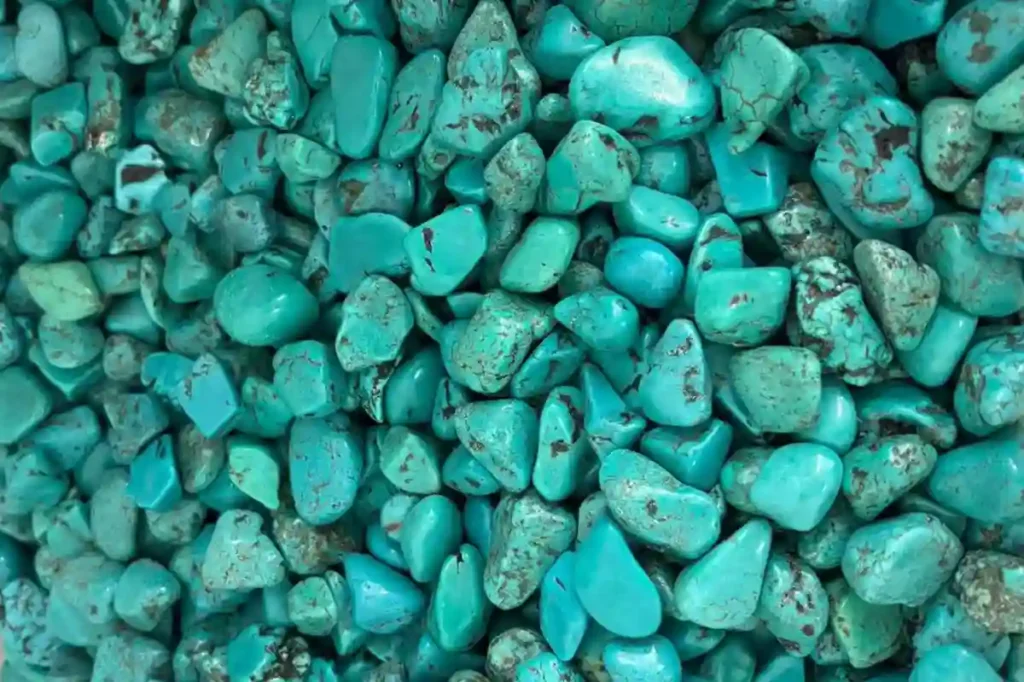
The physical properties of turquoise help explain how it wears in jewelry. Turquoise ranks 5 to 6 on the Mohs hardness scale, so harder materials can scratch it. It is also porous, and contact with cosmetics, skin oils, or perspiration can cause discoloration. Its color ranges from blue to green. Some pieces show dark veins called matrix, which come from the surrounding rock. For buyers, these turquoise crystal properties help explain why surface finish and care matter. A photo can show color and veining, while material identity and treatment require separate verification. GIA Turquoise Care and Cleaning Guide
Turquoise Spiritual Meaning and Traditional Associations
The spiritual meaning of turquoise stone often centers on protection, hope, and calm. Some people carry it as a protective charm or wear it during times of change as a reminder to stay steady. In modern crystal traditions, turquoise crystal meaning also includes honest expression. A turquoise pendant, for example, can serve as a personal reminder to say what you mean with care.
Throat Chakra, Meditation, and Personal Rituals
What does turquoise mean spiritually in chakra practice? Some practitioners link it to the throat chakra, which they associate with communication and self-expression. This turquoise stone spiritual meaning can guide a simple meditation. For instance, you might hold the stone while thinking about what you want to say in a difficult conversation. People use phrases like turquoise healing properties and metaphysical properties of turquoise to describe these beliefs and practices. The associations are symbolic and have no established medical benefit.
Turquoise in History and Culture
The significance of turquoise varies across cultures. Jewelry set with turquoise has been found in ancient Egyptian tombs, for example. In some traditions, people wore a turquoise talisman as a symbol of protection. Among Native American communities in the Southwest, the meaning of a piece can depend on the community, the maker, and how the piece is used. If you sell turquoise jewelry and describe it as the work of a particular community, verify who made it and where it came from. GIA Turquoise Overview
Turquoise Name Meaning and Origin
The turquoise stone name comes from a French expression meaning “Turkish stone.” A piece’s geographic origin is a separate detail to verify when buying. GIA Turquoise History and Lore
Meaning of Turquoise in the Bible
If you’re looking for the biblical meaning of turquoise, start with Exodus 28:18. The New International Version (NIV) lists turquoise as one of the stones in the second row of the high priest’s breastpiece. The surrounding verses say the twelve stones bore the names of the twelve tribes of Israel. English translations use different gem names for this passage, and the NIV notes that some of the stones are hard to identify with certainty. The passage explains what the twelve stones represented together and gives no separate symbolic meaning for turquoise. Exodus 28:18–21, NIV
Blue and Green Turquoise Meaning
Blue Turquoise Meaning
In modern crystal traditions, blue turquoise stone meaning often centers on calm and clear communication. What does the color turquoise mean on its own? In jewelry design, the blue-green shade can evoke water or an open sky, even when a piece uses glass or another stone. If you’re buying beads, ask the supplier to name the material and disclose any treatment. A vivid blue color alone can’t tell you whether the beads are natural turquoise or whether they’ve been treated.
Green Turquoise Stone Meaning
Some people associate green turquoise with growth or a fresh start. The meaning of green turquoise is personal, and the green color itself is part of the mineral’s natural color range. Some jewelry designers actively seek green shades. For a batch of beads, compare the shade, color consistency, and surface finish with your approved sample. Check the material and treatment separately before deciding how to label the finished pieces. GIA Turquoise Quality Factors
African, White, Red, and Purple Turquoise Names
African Turquoise Stone Meaning
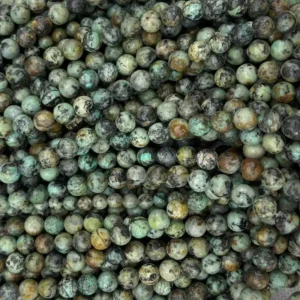
The name African Turquoise appears on beads and jewelry, but the label alone tells you neither the mineral identity nor the country of origin. Any symbolic meaning attached to the name depends on the seller or the wearer. If you’re buying these beads in bulk, ask the supplier to identify the base material and state whether it has been dyed or otherwise treated.
White Turquoise Stone Meaning
A piece sold as white turquoise can be hard to identify from a photo. If you’re looking up turquoise howlite meaning, first check whether the seller means howlite, dyed howlite, or another material. Dark veins can make two stones look similar, so use the supplier’s material description when deciding how to label the finished piece.
Red Turquoise Meaning and Purple or Copper Labels
If you’re looking up red turquoise stone meaning or purple turquoise meaning, you may be asking what those colors symbolize in jewelry. GIA lists the natural color range of turquoise as blue to green, so a red or purple label calls for a closer look at the base material and any color treatment. If you’re looking up copper turquoise meaning, ask the seller whether copper refers to a visible metal component, a finish, or a trade description. For a bulk order, request the material and treatment details for the actual lot. GIA Turquoise Overview


Natural, Stabilized, and Imitation Turquoise
Natural turquoise forms in the ground and may later undergo treatment. If you’re looking up stabilized turquoise meaning, the term refers to turquoise that has undergone treatment, often with resin, to make porous material easier to cut and more durable in use. When comparing quotes, ask suppliers to state the base material, any stabilization, and any added color in writing. GIA Turquoise Overview
| Label | What it means for buyers |
|---|---|
| Natural turquoise | The mineral formed in nature. Ask whether the material is untreated or treated. |
| Stabilized turquoise | The base material is turquoise. Ask what stabilization process the supplier used and whether it also added color. |
| Imitation turquoise | Another material resembles turquoise. Ask for the actual material, such as dyed howlite or glass. |
| Synthetic turquoise | The material is made in a lab to have essentially the same properties as turquoise. Ask for the precise identification because sellers may use the label loosely. |
| Composite or reconstituted material | The product contains components combined into one piece. Ask what those components are and what holds them together. |
My Experience Sourcing Natural Turquoise
An Indian customer once asked me to source natural turquoise. I spent time looking for suitable stock, but the options I found were described as synthetic. The price of natural turquoise was another challenge. I couldn’t find material that met his requirements, so the order didn’t go ahead. When a customer needs untreated natural turquoise, it helps to state that requirement at the start so suppliers can quote on the right material.
Turquoise Jewelry Meaning and Practical Uses
Bracelets, Beads, and Gifts
When customers ask about turquoise stone meaning and uses, start with how they plan to wear or give the piece. For a gift, turquoise bracelet meaning can come from the occasion, such as a birthday or a friendship. For everyday wear, blue-green beads pair well with black onyx or brown tiger’s eye. Jewelry makers can use stone beads to build their own designs, while retailers can offer finished stone bracelets as ready-to-wear gifts.
Turquoise Ring Meaning
A turquoise ring can mark a milestone or remind someone of a place they love. Turquoise engagement ring meaning is personal, too. A couple might choose the stone for its color or for a memory they share. For everyday wear, consider a bezel setting that helps shield the stone’s edges. Turquoise ranks 5 to 6 on the Mohs scale, so a ring can pick up scratches when it rubs against harder materials. GIA Turquoise Care and Cleaning Guide
Turquoise Stone Benefits and Wearing Considerations
Many people who ask about turquoise stone benefits want to know whether the stone has a different meaning for women and men. The same associations with friendship, calm, and honest expression can appeal to anyone. If you’re choosing a bracelet for yourself or as a gift, check the inner circumference and bead size. Smaller beads give a slimmer profile, while larger beads make the color and pattern more prominent.
Negative Effects of Turquoise Stone
When people ask about the negative effects of turquoise stone, there are two practical questions to consider. First, is the jewelry comfortable to wear? A tight fit, a rough bead edge, or a metal component you’re sensitive to can cause discomfort. Second, what might affect the stone’s appearance? According to GIA, cosmetics, skin oils, and perspiration can discolor turquoise. Apply lotions or perfume before putting on the jewelry, and check the fit and hardware before wearing it for long periods. GIA Turquoise Care and Cleaning Guide

How to Check Turquoise Quality Before Buying
When comparing wholesale turquoise, start with the supplier’s written description of the material and any treatment. Photos can help you compare color, polish, and veining, but they can’t tell you whether a piece is real turquoise or what material a seller calls fake turquoise. For a high-value lot, consider independent identification and ask which samples the report covers.
For drilled beads, check the bead diameter, hole size, and polish around the holes. Agree on how much color and size variation you’ll accept across the batch. Ask for current lot photos that show several pieces, including any pits, chips, or cracks. Before shipment, confirm the quantity, packing method, and material description on the labels.
Tumbled Stones and Rough Material
Turquoise tumbled stones have polished surfaces, while raw turquoise may still sit in its host rock. If you’re buying tumbled stones for retail assortments, ask for the size range, finish, and whether the lot is priced by piece or by weight. For rough material, ask how much host rock is visible and request photos from several angles. That helps you judge whether the pieces suit display or cutting. GIA Turquoise Quality Factors
How to Clean and Care for Turquoise
Gentle Cleaning and Storage
If you’re wondering how to clean turquoise jewelry, GIA recommends warm, soapy water. Use a soft cloth to wipe the piece gently, then dry it before storing it. Avoid steam and ultrasonic cleaners. Heat and solvents can damage treated surfaces. Store each piece separately to prevent scratches. For treated beads or jewelry with metal fittings or cord, ask your supplier for turquoise care instructions that apply to the entire piece. GIA Turquoise Care and Cleaning Guide
Physical Cleaning and Spiritual Cleansing
If you’re looking up how to cleanse turquoise as part of a personal ritual, you can keep it simple. Hold the stone for a moment while you reflect or set an intention. This practice has symbolic meaning for some people and requires no soaking, salt, or heat. For dirt or residue on the surface, follow the cleaning instructions above.
Frequently Asked Questions
What Does the Turquoise Stone Mean?
The meaning of the turquoise stone varies by tradition and by wearer. People often associate it with protection, friendship, and honest communication. The meaning of turquoise stone jewelry can also come from a personal experience, such as receiving a bracelet from a close friend.
What Is Turquoise Stone Good For?
What is turquoise good for in jewelry making? Beads work well for bracelets and necklaces, while polished cabochons can show off the stone’s color and veining in rings and pendants. GIA Turquoise Overview
Who Can Wear Turquoise?
Anyone who enjoys the color or meaning of turquoise can wear it. You can choose a piece based on your style, fit, and comfort. Some crystal traditions associate turquoise with particular zodiac signs, and people born under any sign can wear it.
What Does Wearing Turquoise on the Right Hand Mean?
There is no universal meaning for wearing turquoise on the right hand. Some people choose that side as part of a personal practice. Others choose it for comfort or to balance a watch on the opposite wrist. If you wear a ring on your dominant hand, consider how often it may rub against desks, tools, or other hard surfaces.
Is Turquoise a December Birthstone?
Yes. GIA lists turquoise as a traditional December birthstone. A turquoise pendant or bracelet can be a December birthday gift, especially for someone who likes blue-green jewelry. GIA Turquoise Overview
Is Turquoise a Gemstone or a Crystal?
Turquoise is a mineral used as a gemstone. It often appears as a solid, opaque piece without visible crystal faces. In everyday language, people may call it a crystal, a stone, or a gem. When buying jewelry, check the seller’s description of the material and any treatment. GIA Turquoise Overview
Conclusion
Turquoise stone meaning often centers on protection, friendship, and honest communication. If you’re buying turquoise beads or jewelry in bulk, ask for the material and treatment details for the specific lot. Check the size, color range, and finish against your sample before approving the order.
For a wholesale inquiry, message us on WhatsApp or use our contact form. Share the product type, size, and quantity you need, and let us know if you require untreated natural turquoise. We can discuss sourcing options and check availability.
Disclaimer
Spiritual meanings, chakra associations, and healing claims reflect beliefs and traditions. Turquoise has no established medical benefit and should never replace medical care.