
Tumbled Gemstones: Complete Guide for Buyers, Collectors, and Wholesale Customers
Written by: Rocrystal Sourcing & QC Team, Last updated: June 20, 2026
Introduction
Tumbled Gemstones are among the most popular stone products found in gift shops, crystal stores, educational collections, and decorative displays. Their smooth finish, attractive colors, and affordable pricing make them suitable for a wide range of customers. From first-time buyers looking for recognizable stones to experienced purchasers sourcing products in larger quantities, polished stones continue to maintain strong demand in many markets.
Many natural materials can be transformed through the tumbling process, including quartz, agate, jasper, fluorite, and other minerals. This variety allows buyers to choose from hundreds of stone types in different colors, sizes, and price levels. Understanding how these stones are made, identified, packaged, and used can help customers make better purchasing decisions. In this guide, you will learn about popular varieties, manufacturing methods, common applications, and important factors to consider when selecting stones for collecting, gifting, retail, or wholesale purposes.
What Are Tumbled Gemstones?
How Natural Stones Become Smooth and Polished
Natural stones begin as rough pieces collected from mines, quarries, or mineral deposits around the world. Most rough materials have uneven surfaces, sharp edges, and a dull appearance when first extracted. Through a controlled tumbling process, these stones are gradually shaped and polished until they develop a smooth surface and an attractive finish.
During production, rough stones are placed inside rotating tumblers together with abrasive materials and water. Over time, friction removes surface imperfections and rounds sharp edges. Several stages of grinding and polishing are usually required to achieve a consistent appearance. The final result is a polished stone that highlights the natural color, pattern, and texture of the original material while remaining comfortable to handle and easy to display.
Why Tumbled Stones Remain Popular
Several factors contribute to the lasting popularity of polished stones. First, they are affordable compared with large mineral specimens and collector-grade crystals. This allows retailers to offer natural stone products at different price points while keeping inventory costs manageable. Their compact size also makes them easy to package, display, and ship.
Visual appeal is another important reason. Bright colors, interesting patterns, and smooth surfaces attract customers in gift shops, crystal stores, museums, and souvenir businesses. Many buyers prefer products that are easy to handle and require little maintenance. Polished stones meet those requirements while still showcasing the natural beauty of the original material.
Demand remains strong because these products appeal to a wide audience. Some customers purchase individual stones, while others look for mixed assortments that contain several varieties in one package. As a result, this category continues to perform well across different markets and remains one of the most widely traded stone products worldwide.
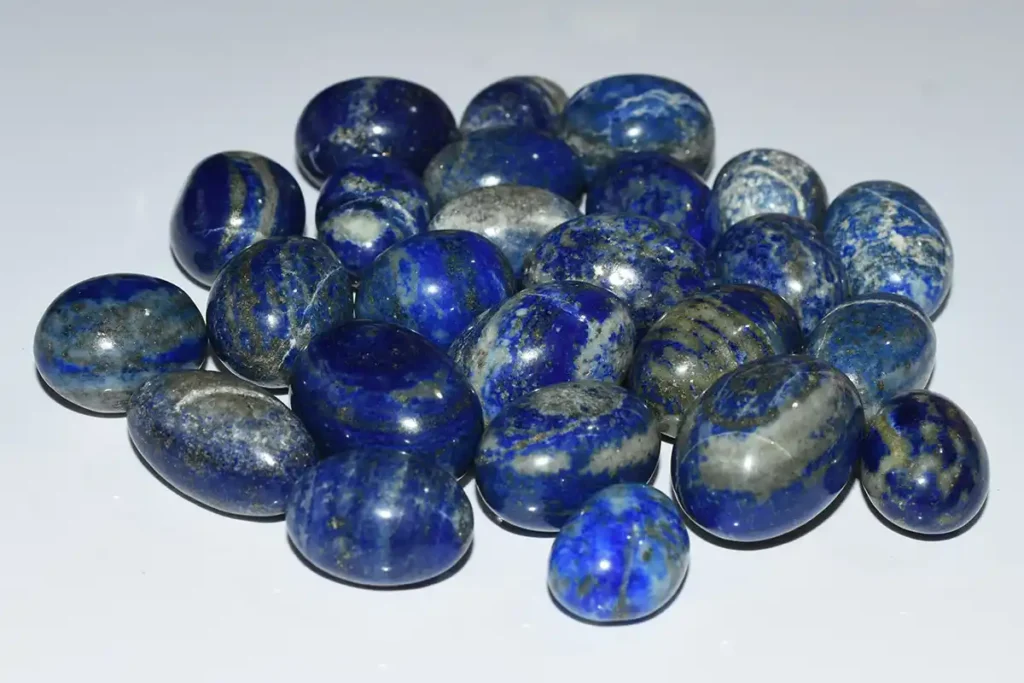
Tumbled Stones Meaning
Difference Between Rough Stones and Polished Stones
The meaning of a tumbled stone becomes easier to understand when it is compared with its rough form. Rough stones are natural materials that have not been shaped or polished after mining. They often have irregular surfaces, sharp edges, and a dusty appearance that can hide their true color and pattern. While some collectors appreciate rough specimens for their natural character, they are not always easy to display or identify.
Polished stones go through a tumbling process that improves both appearance and usability. The rounded shape makes them safer to handle, while the polished surface reveals details that may not be visible in rough material. Colors often appear brighter, and natural patterns become more noticeable after polishing. This transformation helps buyers, collectors, and retailers better appreciate the characteristics of each stone.
Another important difference is consistency. Rough materials can vary greatly in shape and size, whereas polished stones are usually sorted into more uniform grades. This makes them easier to package, display, and sell in both individual and mixed assortments. For this reason, many businesses choose polished stones when looking for products that combine natural beauty with practical commercial value.
Why People Collect Tumbled Gemstones
People collect polished stones for many different reasons. Some are attracted to their natural colors and patterns, while others enjoy learning about minerals from different regions of the world. Because these stones are available in a wide range of materials and price levels, they are often considered an accessible starting point for new collectors.
Many collectors also appreciate the variety available within a single collection. A small display can include quartz, agate, jasper, fluorite, obsidian, and many other materials without requiring a large budget. This makes it possible to build a diverse collection while exploring different mineral groups and geological formations. A well-organized tumbled gemstones list can help beginners identify popular stones and understand the differences between them.
Another reason for their popularity is convenience. Unlike large specimens, polished stones require very little storage space and are easy to transport. Some collectors focus on acquiring stones from specific countries, while others search for unusual colors, patterns, or mineral varieties. Whether purchased individually or as part of a mixed assortment, these stones remain one of the most practical and enjoyable ways to explore the world of natural minerals.
How Tumbled Gemstones Are Made
Selecting Raw Gemstones for Tumbling
The quality of a finished stone depends heavily on the raw material chosen at the beginning of production. Not every mineral is suitable for tumbling. Manufacturers usually select materials with good hardness, attractive colors, and stable structures that can withstand weeks of grinding and polishing without breaking apart. Common raw gemstones for tumbling include quartz, agate, jasper, aventurine, fluorite, and obsidian.
Before production begins, rough stones are sorted according to size, color, and overall quality. Materials with excessive fractures, weak structures, or heavy weathering are often removed because they may crack during processing. Careful selection helps improve yield rates and creates a more consistent final product.
Different stone varieties also require different handling methods. Hard materials such as agate and jasper generally tolerate longer tumbling cycles, while softer minerals may require additional care to prevent surface damage. For this reason, experienced producers pay close attention to material characteristics before a single stone enters the tumbler. Good raw material selection is one of the most important factors behind attractive, durable, and commercially successful polished stones.
Tumbling, Grinding, and Polishing Process
Once the rough material has been selected and sorted, it enters a multi-stage tumbling process designed to improve shape and appearance. The first stage focuses on grinding. Rough stones are placed inside rotating tumblers with coarse abrasive grit and water. As the barrel turns, friction gradually removes sharp edges and irregular surfaces. This stage often takes the longest because significant shaping occurs here.
After the initial grinding phase, the stones move through several finer abrasive stages. Each stage removes scratches left by the previous grit and creates a smoother surface. Careful cleaning between stages is important because leftover coarse particles can damage stones during later processing. Consistent monitoring also helps maintain product quality and reduces unnecessary material loss.
The final stage uses polishing compounds to produce a smooth and reflective finish. At this point, the natural colors, patterns, and textures become much more visible. Depending on the material, the complete process can take several weeks from start to finish. The result is a polished stone that is easier to identify, display, package, and sell than its original rough form.
Common Treatments Used in the Market
Not all polished stones sold in the market are completely untreated. While many materials are natural and receive only standard tumbling and polishing, some stones undergo additional treatments to improve appearance, color consistency, or durability. Understanding these treatments can help buyers make more informed purchasing decisions and avoid confusion when comparing products from different suppliers.
Color enhancement is one of the most common treatments. Certain materials may be dyed to create brighter or more uniform colors, especially when the natural stone has a pale appearance. Heat treatment is also used on some minerals to alter or intensify color. These processes are widely accepted within the stone industry when they are properly disclosed to customers.
Other materials may receive oil or wax treatments to improve surface appearance and reduce the visibility of minor fractures. Such treatments can enhance the visual appeal of a stone, although the effect may gradually diminish over time. For wholesale buyers, transparency is important. Knowing whether a stone is natural, dyed, heated, or otherwise treated helps ensure that product descriptions, customer expectations, and purchasing decisions remain aligned.
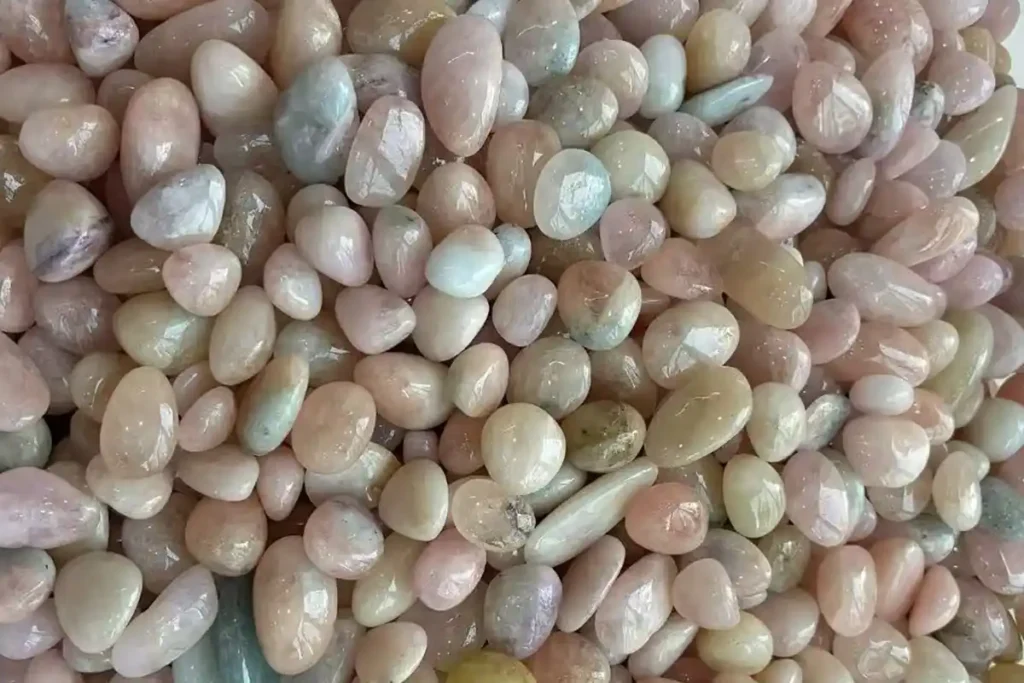
Types of Tumbled Gemstones
Quartz Family Stones
The quartz family contains some of the most widely recognized and commercially successful stones in the market. Quartz is abundant, durable, and available in a broad range of colors, making it an ideal material for tumbling. Many beginners encounter quartz varieties first because they are easy to identify, attractive, and available at different price levels.
Popular examples include Amethyst, Rose Quartz, Citrine, Smoky Quartz, and Clear Quartz. Each variety offers a distinct appearance while sharing the same basic mineral structure. Amethyst is known for its purple color, Rose Quartz for its soft pink tones, and Citrine for its warm yellow appearance. Clear Quartz remains a favorite among collectors because of its transparency and versatility.
From a wholesale perspective, quartz varieties are often among the best tumbled gemstones for retail displays and mixed assortments. Their consistent quality, reliable supply, and broad customer appeal make them suitable for gift shops, crystal retailers, educational collections, and souvenir businesses. For many suppliers, quartz-based products form the foundation of a successful polished stone inventory.
Chalcedony Family Stones
Chalcedony is another important group within the polished stone market. Unlike transparent quartz varieties, chalcedony typically has a more compact structure and often displays bands, patterns, or unique color combinations. These characteristics make it one of the most diverse mineral groups used in decorative stone products.
Well-known examples include Agate, Botswana Agate, Blue Lace Agate, Carnelian, Moss Agate, and Crazy Lace Agate. Agates are especially popular because each variety offers a different visual appearance. Some display striking banding patterns, while others feature natural inclusions, soft color transitions, or landscape-like formations. Carnelian is recognized for its orange to reddish tones, while Blue Lace Agate is valued for its delicate blue bands.
Many retailers choose chalcedony varieties because they appeal to both new buyers and experienced collectors. Their durability allows them to achieve an excellent polish, making them suitable for gift sets, display collections, and mixed assortments. In wholesale markets, agate-based products are frequently included in bulk tumbled gemstones orders due to their wide availability, attractive appearance, and consistent customer demand.
Popular Minerals and Decorative Stones
Beyond quartz and chalcedony, many other minerals are commonly used to create polished stones. These materials offer distinctive colors, optical effects, and natural patterns that help diversify product selections. As a result, retailers can provide customers with a wider range of options while building more attractive displays and mixed assortments.
Some of the most popular examples include Labradorite, Fluorite, Aventurine, Amazonite, Tiger Eye, Obsidian, Sodalite, Howlite, and Pyrite. Labradorite is known for its colorful flashes, while Tiger Eye displays a silky reflective effect that attracts attention in retail environments. Fluorite is appreciated for its wide range of natural colors, and Amazonite remains popular because of its distinctive blue-green appearance.
Decorative stones often perform well in gift shops, crystal stores, museum shops, and souvenir businesses because they offer visual variety without requiring a large investment. Many buyers prefer mixed collections that combine several mineral types in one package, allowing customers to experience different colors, textures, and patterns. This variety is one reason polished stones continue to appeal to collectors, educators, and wholesale buyers around the world.
Tumbled Gemstones List
Best-Selling Tumbled Gemstones
A well-balanced product selection usually includes a combination of classic best-sellers and visually distinctive minerals. While customer preferences vary by region, several stone varieties consistently perform well in gift shops, crystal retailers, educational collections, and souvenir markets. These stones are widely recognized, easy to display, and suitable for both individual sales and mixed assortments.
Some of the most popular choices include Amethyst, Rose Quartz, Clear Quartz, Citrine, Tiger Eye, Labradorite, Fluorite, Green Aventurine, Amazonite, Carnelian, Obsidian, Sodalite, Howlite, Pyrite, and Blue Lace Agate. Together, these varieties cover a broad spectrum of colors, patterns, and price ranges, allowing retailers to meet the needs of different customer groups.
Many wholesale buyers begin with these proven sellers before expanding into more specialized materials. Their strong market recognition helps reduce inventory risk and makes them suitable for starter collections, gift sets, educational kits, and retail displays. A carefully selected assortment of these stones can provide both variety and commercial appeal while creating opportunities for repeat purchases from existing customers.
Tumbled Gemstone Identification
Color Characteristics
Color is often the first feature people notice when identifying a polished stone. Many varieties have distinctive color ranges that make recognition easier. Amethyst is commonly purple, Rose Quartz displays pink tones, Amazonite is known for its blue-green appearance, and Tiger Eye typically shows golden-brown bands. Learning these basic color characteristics can help buyers quickly distinguish between common stone varieties.
However, color alone is not always enough for accurate identification. Some minerals share similar shades, while others display natural variations caused by mineral composition or geological conditions. For example, several different stones may appear green, blue, or black at first glance. Lighting conditions can also affect how colors are perceived, especially when stones are photographed or displayed indoors.
Experienced buyers usually evaluate color together with pattern, transparency, luster, and texture. This approach provides a more reliable method of identification than relying on color alone. For businesses that sell multiple stone varieties, understanding these visual characteristics helps improve product labeling, customer communication, and overall purchasing confidence.
Surface Texture and Polish Quality
Surface texture is another important factor when identifying and evaluating polished stones. High-quality stones should have a smooth finish, consistent polish, and comfortable feel when handled. A well-polished surface helps reveal the natural color and pattern of the material, making identification easier and improving its visual appeal in retail displays.
Small imperfections can still occur because natural minerals often contain fractures, inclusions, or growth features formed during geological processes. These characteristics do not always reduce value. In many cases, they help confirm that the material is natural rather than manufactured. However, excessive cracks, deep pits, or poor polishing may indicate lower production quality or unsuitable raw material.
From a wholesale perspective, polish consistency is often more important than achieving perfection on every individual stone. Buyers typically look for uniform appearance across an entire batch, especially when products are intended for gift sets, mixed assortments, or retail packaging. Consistent size grading, smooth surfaces, and reliable polishing standards help create a professional presentation and contribute to a better customer experience after purchase.
Common Mistakes When Identifying Stones
One of the most common identification mistakes is relying only on color. While color can provide useful clues, many different minerals share similar shades. For example, several stones may appear green or blue at first glance, even though they belong to completely different mineral groups. Accurate identification usually requires examining multiple characteristics rather than focusing on a single feature.
Another common error involves confusing treated materials with natural stones. Dyeing, heating, and other enhancement methods can alter appearance and make identification more challenging. Buyers who are unfamiliar with these treatments may assume that every bright or unusual color occurs naturally. Understanding common treatments can help prevent incorrect assumptions and improve purchasing decisions.
Some people also mistake glass, synthetic materials, or imitation products for natural minerals. A smooth surface alone does not confirm authenticity. Pattern, transparency, luster, hardness, and overall appearance should all be considered during evaluation. Taking time to compare several characteristics usually leads to more accurate results and helps buyers develop greater confidence when selecting or purchasing different stone varieties.
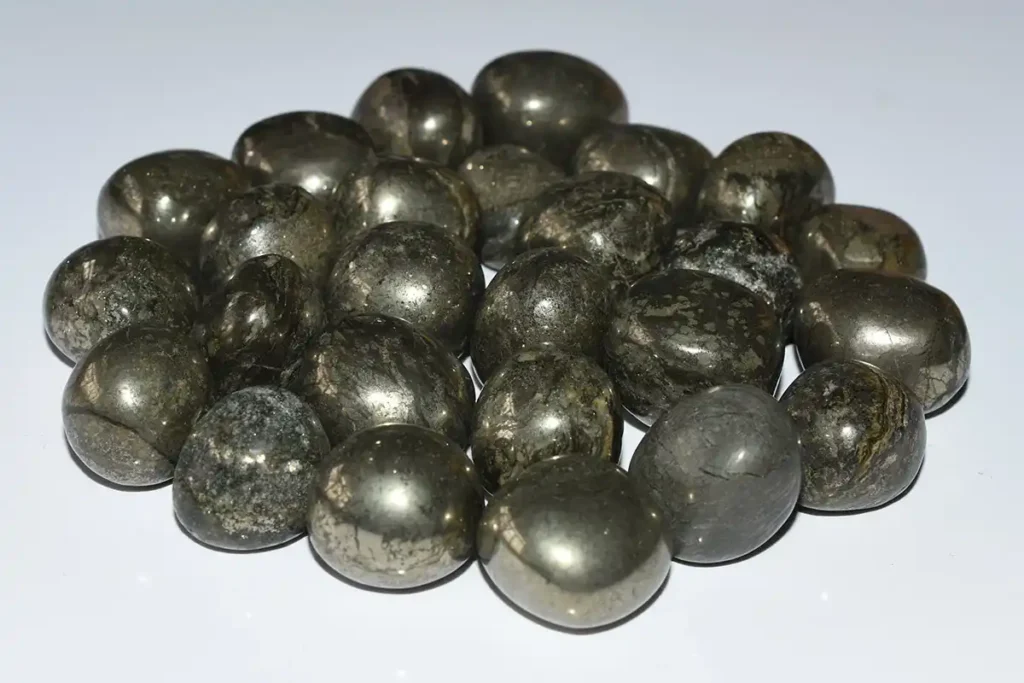
Common Uses for Tumbled Gemstones
Gift Shops and Souvenir Stores
Gift shops and souvenir stores are among the largest markets for polished stones. Their attractive appearance, compact size, and affordable price points make them suitable for a wide range of customers. Unlike large mineral specimens that require dedicated display space, polished stones can be presented in small bowls, display trays, gift boxes, or countertop containers, making them easy to merchandise in busy retail environments.
Many store owners prefer these products because they appeal to both casual shoppers and collectors. Visitors often purchase individual stones as small keepsakes, while others select mixed assortments as gifts. The wide variety of colors and materials allows retailers to offer products that suit different customer preferences without carrying excessive inventory.
Another advantage is their flexibility in packaging and presentation. Polished stones can be sold individually, grouped into themed collections, included in educational kits, or packaged as gift-ready products. This versatility helps retailers create multiple product offerings from the same inventory while maintaining strong visual appeal and broad customer interest throughout the year.
Crystal Retail Displays
Polished stones are widely used in crystal retail displays because they combine visual appeal with efficient use of space. Retailers often organize stones by mineral type, color, size, or price range to create a clean and attractive presentation. Well-arranged displays help customers compare different materials and encourage them to spend more time exploring available options.
Mixed displays are especially popular because they showcase a variety of colors and patterns in a single area. New customers may be drawn to the overall appearance first and then begin examining individual stones more closely. This approach allows retailers to introduce a broader range of products without requiring separate display sections for every variety.
From my experience supplying stone retailers, displays that combine best-selling materials such as Amethyst, Rose Quartz, Tiger Eye, Labradorite, and Aventurine often generate the strongest customer interest. Stores that regularly refresh their displays, introduce new varieties, and maintain consistent product quality tend to achieve better repeat sales. A well-organized presentation not only improves product visibility but also helps customers feel more confident in their purchasing decisions.
Home Decoration and Crafts
Polished stones are frequently used in home decoration projects because they add natural color and texture without requiring significant maintenance. Their smooth surfaces and compact sizes make them suitable for decorative bowls, glass containers, tabletop displays, and other interior design applications. Many homeowners use them to introduce natural materials into living spaces while creating visually appealing arrangements.
These stones are also popular in craft projects. Designers, hobbyists, and small businesses often incorporate them into handmade gifts, decorative artwork, jewelry projects, and seasonal displays. Because many varieties are available in different colors and sizes, they can be matched to specific themes or design concepts. This flexibility makes them useful for both personal and commercial creative projects.
Another common application involves decorative fillers. Polished stones are often placed in glass vases, plant displays, terrariums, and centerpieces to create a finished appearance. Retailers frequently purchase mixed assortments for these purposes because they provide greater visual variety while remaining cost-effective. The combination of durability, color diversity, and ease of use continues to make polished stones a practical choice for decorative and craft-related applications.
Educational Collections
Educational collections represent another important application for polished stones. Schools, science centers, museums, and training programs often use mineral collections to introduce students to geology, mineral identification, and earth science concepts. The smooth surfaces and visible patterns make many stone varieties easier to observe and compare than rough specimens.
Many educational kits include a selection of common minerals such as Quartz, Amethyst, Agate, Tiger Eye, Obsidian, and Fluorite. These collections help students learn about color, hardness, crystal formation, and geological processes. Clear labeling and consistent sizing also make the materials easier to organize and use in classroom settings.
Museum gift shops and educational retailers frequently purchase mixed stone assortments because they offer variety while remaining affordable. Smaller collections are suitable for beginners, while larger sets can support more advanced learning activities. As interest in hands-on science education continues to grow, polished stones remain a practical resource for introducing people of all ages to the study of minerals and natural materials.
Best Tumbled Gemstones for Beginners
Easy-to-Recognize Stones
Beginners often prefer stones that are visually distinctive and easy to identify. Materials with clear colors, recognizable patterns, and consistent appearance help new collectors build confidence while learning about different minerals. Choosing well-known varieties also reduces confusion when comparing stones from different sources.
Amethyst is usually one of the easiest stones to recognize because of its purple color. Rose Quartz is known for its soft pink appearance, while Tiger Eye displays golden-brown bands and a reflective effect that stands out in displays. Clear Quartz remains popular because of its transparency, and Obsidian is often identified by its glossy black surface. These varieties are widely available and commonly included in starter collections.
Blue stones are also popular among new collectors. Sodalite and Amazonite are frequently selected because their colors are easy to distinguish from other materials. In addition, Fluorite often displays multiple colors within a single stone, making it an interesting option for people who are beginning to explore mineral diversity. For retailers and wholesale buyers, these easy-to-recognize varieties are often reliable choices because they appeal to a broad customer base and require little explanation during the sales process.
Most Popular Choices Worldwide
Although preferences vary between countries and regions, several stone varieties consistently rank among the most popular choices worldwide. These materials have strong market recognition, reliable supply chains, and broad customer appeal, making them common selections for retailers, collectors, and gift businesses.
Amethyst remains one of the leading sellers due to its attractive purple color and wide availability. Rose Quartz continues to perform well because of its soft appearance and affordability. Tiger Eye attracts attention with its distinctive golden bands, while Green Aventurine is appreciated for its natural green color and competitive price point. Labradorite is another popular option because of its unique flashes of color that create visual interest in retail displays.
Many suppliers use these stones as the foundation of mixed assortments and starter collections. Their popularity has been built over many years, allowing customers to recognize them quickly and purchase with confidence. For businesses entering the stone market, these proven varieties often provide a practical balance between demand, availability, and inventory management. They also serve as an effective introduction to the wider world of natural minerals before customers begin exploring more specialized materials.
Buying Tumbled Gemstones Wholesale
Bulk Tumbled Gemstones vs Mixed Assortments
Wholesale buyers often choose between purchasing single-variety stones in bulk or selecting mixed assortments that contain multiple materials. Each option offers different advantages depending on the target market, sales strategy, and inventory requirements. Understanding these differences can help buyers make more effective purchasing decisions.
Bulk tumbled gemstones are usually preferred by retailers that already understand customer demand. Purchasing a single variety in larger quantities creates greater consistency in color, size, and presentation. This approach is commonly used for best-selling materials such as Amethyst, Rose Quartz, Tiger Eye, and Aventurine. It also simplifies inventory management and product labeling.
Mixed assortments offer a different advantage. Instead of investing heavily in one material, buyers can provide customers with a broader selection of colors and stone varieties in a single package. This option is especially popular with gift shops, museum stores, educational suppliers, and businesses testing a new market. Mixed collections can also help identify which varieties generate the strongest customer interest before larger wholesale orders are placed.
From my experience, new buyers often begin with mixed assortments and gradually move toward bulk purchases as sales data becomes available. This approach reduces inventory risk while providing valuable insight into local customer preferences and purchasing behavior.
Choosing Reliable Suppliers
Selecting the right supplier is one of the most important decisions for wholesale buyers. Competitive pricing is important, but product consistency, communication, and supply stability often have a greater impact on long-term business success. A supplier that delivers reliable quality across multiple orders can help reduce customer complaints and simplify inventory management.
Quality consistency should be evaluated before placing large orders. Buyers should pay attention to size grading, polish quality, color uniformity, and packaging standards. Requesting samples is often the best way to verify whether products match the supplier’s descriptions and photographs. Consistent products create a more professional presentation and help maintain customer confidence.
Supply capacity is another key consideration. Some stone varieties may be readily available throughout the year, while others experience shortages due to mining conditions or limited production. Buyers should discuss stock availability, lead times, and replenishment schedules before committing to large purchases. Clear communication can help prevent delays and unexpected inventory shortages.
Experience has shown that long-term supplier relationships are often more valuable than simply finding the lowest price. Reliable suppliers understand quality requirements, respond quickly to issues, and maintain consistent standards across repeat orders. These factors can contribute significantly to smoother operations and stronger customer satisfaction over time.
Packaging and Size Selection
Packaging and size selection can significantly influence both product presentation and operational efficiency. Wholesale buyers should choose packaging formats that match their sales channels, target customers, and storage requirements. A well-planned packaging strategy can reduce handling costs while improving the overall customer experience.
Polished stones are commonly sorted into size categories such as 0.5–1 cm, 1–2 cm, 2–3 cm, and 3–5 cm. Smaller sizes are often used in educational kits, decorative fillers, and mixed assortments, while larger stones are typically preferred for individual retail sales and display purposes. Consistent size grading helps create a more professional appearance and simplifies product packaging.
Several packaging options are available depending on business needs. Bulk bags are frequently used for wholesale distribution because they provide an economical way to transport larger quantities. Retail-ready packs offer convenience for stores that want products prepared for immediate sale. Mixed stone bags remain popular because they provide variety and appeal to a broad customer audience. Some suppliers also offer custom packaging, private labeling, and barcode services to support different retail programs.
When selecting packaging and sizes, buyers should consider transportation costs, display requirements, and customer expectations. The most effective solution is often one that balances visual appeal, practicality, and inventory efficiency while supporting long-term sales goals.
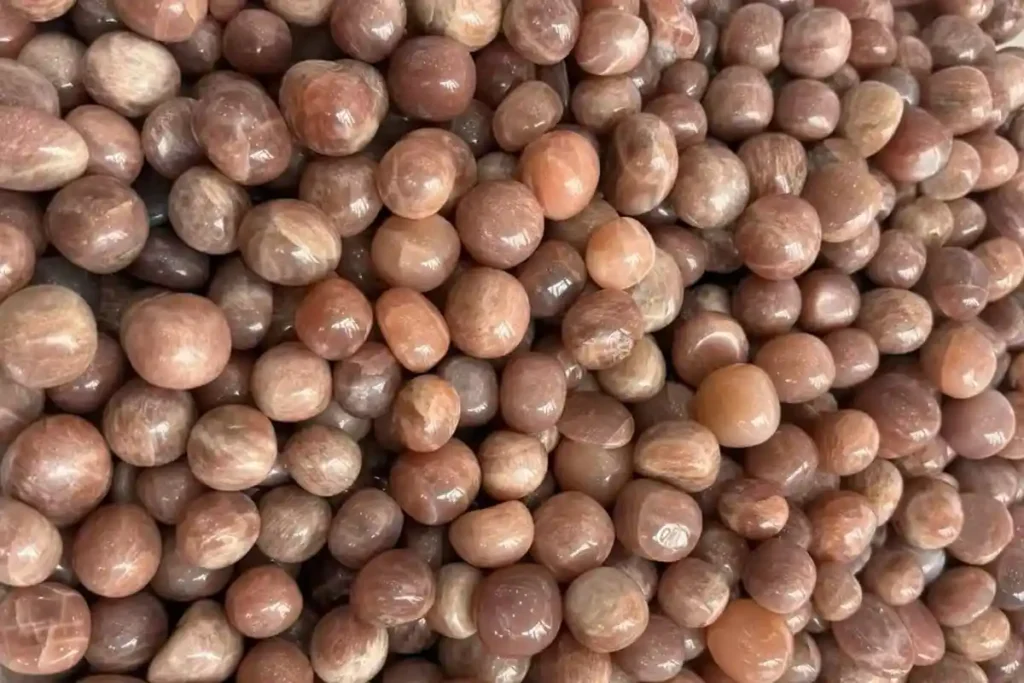
My Experience Supplying Tumbled Gemstones
What Sells Best in Different Markets
For many years, I have supplied polished stones to crystal retailers, gift shops, wholesalers, and distributors in different countries. One thing I have learned is that customer preferences can vary significantly from one market to another. While some buyers focus on colorful and eye-catching materials, others prefer classic stone varieties that are easy to recognize and sell.
Despite these regional differences, several stones consistently perform well across most markets. Amethyst, Rose Quartz, Tiger Eye, Green Aventurine, and Clear Quartz are often among the fastest-moving products. Their strong market recognition makes them suitable for both new and experienced customers. Many retailers use these varieties as the foundation of their inventory before expanding into more specialized materials.
I have also noticed that mixed assortments are often the starting point for new wholesale customers. Buyers frequently test local demand with a selection of different stone varieties before placing larger orders for individual materials. This approach helps reduce inventory risk while providing valuable information about customer preferences. In many cases, successful assortments eventually lead to repeat orders focused on a smaller group of proven best sellers.
Why Consistency Matters for Wholesale Buyers
From a supplier’s perspective, consistency is often more important than offering the lowest price. Wholesale buyers usually need products that look similar across multiple shipments so they can maintain a professional presentation and meet customer expectations. Large differences in size, color, or polish quality can create challenges for retailers and increase the likelihood of customer complaints.
Size consistency is particularly important for stores that package stones into sets, educational kits, or retail-ready collections. Customers expect products within the same size grade to look reasonably uniform. Color consistency also plays a major role, especially when buyers reorder a successful product and want the new shipment to match existing inventory as closely as possible.
Reliable stock availability is another factor that directly affects repeat business. Over the years, I have found that many customers place larger orders only after they are confident that future replenishment will be available when needed. A stable supply allows retailers to plan promotions, maintain inventory levels, and respond to customer demand without interruption.
Custom mixed assortments have also become increasingly popular. Many buyers request specific stone combinations, packaging formats, or size selections based on local market preferences. When quality standards, inventory availability, and communication remain consistent, these customized programs often develop into long-term business relationships and repeat wholesale orders.
Frequently Asked Questions
What Are Tumbled Gemstones?
Tumbled gemstones are natural stones that have been polished in a rotating tumbler using water and abrasive grit. The process smooths rough surfaces, removes sharp edges, and reveals the stone’s natural color and pattern. Common examples include Amethyst, Rose Quartz, Tiger Eye, Aventurine, and Labradorite. These stones are widely used in retail displays, educational collections, gift shops, and wholesale assortments.
Are Tumbled Stones Worth Anything?
Yes. The value of a tumbled stone depends on factors such as the material, rarity, color, size, and polish quality. Common stones are usually affordable, while rare minerals and premium-grade specimens can command higher prices. For retailers and wholesale buyers, value is often determined by product consistency, customer demand, and overall presentation rather than rarity alone.
What Stones Not to Tumble?
Very soft, porous, or heavily fractured materials are generally not suitable for tumbling. Stones with significant cracks may break during processing, while minerals with very different hardness levels can damage each other if tumbled together. Careful material selection helps improve polishing results, reduce waste, and maintain product quality throughout the tumbling process.
What Are the Coolest Stones to Tumble?
Many collectors enjoy tumbling Labradorite, Tiger Eye, Agate, Amethyst, and Fluorite because these materials reveal beautiful colors and patterns after polishing. Labradorite can display colorful flashes, while Agates often develop striking banding. The best stone to tumble depends on personal preference, the quality of the rough material, and the visual effect you want to achieve.
What Are the Different Types of Tumbled Stones?
Common types of tumbled stones include Quartz, Amethyst, Rose Quartz, Citrine, Agate, Carnelian, Aventurine, Tiger Eye, Labradorite, Fluorite, Amazonite, Obsidian, Sodalite, Howlite, and Pyrite. These stones are popular because they polish well, offer a wide variety of colors and patterns, and are suitable for collecting, decorating, retail sales, and wholesale distribution.
Conclusion
Tumbled gemstones remain one of the most versatile and widely traded stone products in today’s market. Their attractive appearance, broad variety, and affordable pricing make them suitable for collectors, retailers, educational suppliers, gift shops, and wholesale buyers. Understanding how these stones are made, identified, and selected can help buyers make more informed purchasing decisions while building product assortments that match customer demand.
Whether you are looking for mixed assortments, single-variety stones, or bulk supply options, focusing on quality consistency, reliable sourcing, and proper size selection can contribute to better long-term results. As customer interest in natural stone products continues to grow, polished stones remain a practical choice for both new and experienced buyers.
Conclusion
Tumbled gemstones remain one of the most versatile and widely traded stone products in today’s market. Their attractive appearance, broad variety, and affordable pricing make them suitable for collectors, retailers, educational suppliers, gift shops, and wholesale buyers. Understanding how these stones are made, identified, and selected can help buyers make more informed purchasing decisions while building product assortments that match customer demand.
Whether you are looking for mixed assortments, single-variety stones, or bulk supply options, focusing on quality consistency, reliable sourcing, and proper size selection can contribute to better long-term results. As customer interest in natural stone products continues to grow, polished stones remain a practical choice for both new and experienced buyers.
Looking for a reliable wholesale supplier of tumbled gemstones?
Contact us through WhatsApp or submit an Inquiry Form to receive product catalogs, size options, packaging details, MOQ information, and wholesale pricing. We can help you source mixed assortments, bulk stone orders, and custom packaging solutions for your business.
Disclaimer: Natural stones vary in color, pattern, shape, and size. Product appearance may differ slightly from photos due to the unique characteristics of each material. Information provided in this guide is for educational and commercial reference purposes only.