
Moonstone Benefits: Meaning, Uses, Varieties, and a Practical Buying Guide
Written by: Rocrystal Sourcing & QC Team, Last updated: July 18, 2026
Moonstone is valued for its soft glow, changing light, and long connection with intuition, love, and new beginnings. Many buyers search for Moonstone Benefits before choosing beads, bracelets, tumbled stones, pendants, or display pieces. Some are interested in its traditional symbolism, while others want to understand how color, clarity, and blue flash affect appearance, quality, and market value.
The benefits of moonstone are often described through cultural traditions, spiritual practices, and personal experience. However, not every stone looks or performs the same. White, rainbow, peach, black, and blue-flash materials can vary greatly in transparency, internal patterns, polish, and price. Understanding these differences helps wholesalers, jewelry brands, retailers, and designers choose material that matches their customers instead of simply ordering the highest grade available.
This guide explains Moonstone Benefits, common varieties, jewelry uses, care methods, quality grades, and practical buying points. It also covers terms such as moonstone crystal benefits and moonstone gemstone benefits without presenting traditional beliefs as medical facts. Crystal practices may support personal reflection or meaningful routines, but moonstone cannot diagnose, prevent, or treat health conditions. Buyers should consider both symbolic appeal and physical quality before placing a bulk order.
What Is Moonstone and Why Does Its Quality Vary?
How Moonstone Forms and Why It Glows
Moonstone is a feldspar gemstone made from thin mineral layers that formed as molten rock cooled. When light enters the stone, it reflects and scatters between these layers. This creates a soft glow that seems to move below the surface. The effect may appear white, silver, blue, or multicolored, depending on the mineral structure and the viewing angle.
Gemologists call this light effect adularescence. A well-cut stone can show a clear flash when it moves under a light source, while lower-grade material may display only a weak glow. The cutting angle also matters because the layers must face the right direction to reveal the strongest light. For bulk buyers, videos taken from several angles are often more useful than a single photo when comparing flash quality.
Color, Transparency, Hardness, and Durability
Moonstone can appear white, cream, gray, peach, black, green, or nearly colorless. Some pieces are transparent enough to let light pass through, while others have a milky or opaque body. A strong blue flash often attracts high-end buyers, but color consistency and surface finish also affect value. The most suitable grade depends on whether the material will be used for fine jewelry, bead bracelets, gifts, or lower-priced retail collections.
Although moonstone has moderate hardness, its layered structure can make it sensitive to sharp impacts and rough handling. Rings and bracelets usually face more wear than pendants, earrings, or decorative pieces. Small internal cracks may also expand during drilling, polishing, or shipping. These physical features matter when discussing Moonstone Benefits, because buyers need material that offers both symbolic appeal and enough durability for the intended use.
Moonstone Meaning Through History and Modern Culture
Ancient Beliefs About Love, Travel, and Protection
Across different cultures, moonstone was often connected with the moon, changing seasons, and the movement of light through darkness. Some traditions treated it as a symbol of love, emotional harmony, and safe travel. Jewelry makers also used it in rings, pendants, and amulets because its shifting glow gave the stone a mysterious and memorable appearance.
These stories helped shape many ideas now linked with Moonstone Benefits, especially themes of protection, romance, and new beginnings. However, ancient beliefs varied by region and period, so they should not be presented as fixed facts. For modern buyers, the historical meaning of moonstone adds storytelling value to jewelry, gift sets, and crystal collections, while the stone’s color, clarity, cut, and durability still determine its practical quality.
What Moonstone Symbolizes Today
Today, many people connect moonstone with emotional balance, intuition, personal change, and fresh starts. Its soft glow also makes it popular for gifts that mark birthdays, relationships, new jobs, or important life transitions. For jewelry buyers, this meaning can add emotional value without changing the need to check the stone’s actual quality and finish.
Modern interpretations of Moonstone Benefits often focus on calmness, self-reflection, and feminine symbolism. Still, moonstone is not limited to one gender or one spiritual practice. White, peach, black, and rainbow varieties can appeal to different customers because each color creates a different mood. Retailers and wholesalers should match the stone’s appearance, story, and price level with the preferences of their target buyers.
What Are the Main Moonstone Benefits?
Emotional Balance and a Calmer State of Mind
Many traditional crystal users associate Moonstone Benefits with emotional balance and a calmer state of mind. Its soft color and shifting glow can serve as a visual reminder to slow down, breathe, and respond with more patience. Some people wear moonstone jewelry during stressful periods, while others keep a polished stone nearby when they want to create a quieter personal routine.
The benefits of moonstone can feel different from one person to another. A bracelet, pendant, or palm stone may support relaxation as part of meditation or self-reflection, but it should not be treated as a medical solution for anxiety, depression, or sleep disorders. Buyers should describe these Moonstone Benefits as traditional associations and personal experiences rather than guaranteed results.
Intuition, Reflection, and New Beginnings
Moonstone is often chosen during periods of change, such as starting a new job, moving to a different place, or making an important personal decision. In crystal traditions, it is linked with intuition and self-reflection because its changing glow reflects the idea that situations can look different from another angle. Some people carry moonstone as a reminder to pause before making a choice.
These Moonstone Benefits are symbolic rather than guaranteed. The stone cannot make decisions for the wearer, but it may support a thoughtful routine when used during journaling, meditation, or quiet planning. New beginnings also make moonstone suitable for graduation gifts, relationship milestones, and personal keepsakes. For wholesale buyers, this meaning can help position bracelets, pendants, and polished stones for customers looking for a meaningful gift instead of decoration alone.
Creativity, Relationships, and Personal Expression
Moonstone is also associated with creativity, emotional connection, and personal expression. Designers often choose it because the moving light gives each bead, cabochon, or pendant a different character. Its soft colors work well with silver, gold, pearls, and other gemstones, making it suitable for both delicate jewelry and more modern collections.
Some buyers connect Moonstone Benefits with love, communication, and closer relationships. For this reason, moonstone is often used in couple gifts, anniversary jewelry, and pieces that mark a new stage in life. These meanings remain symbolic, but they can help customers choose jewelry that feels more personal. For wholesalers and jewelry brands, clear descriptions of color, flash, and intended use are more useful than making exaggerated claims about emotional results.
Emotional and Spiritual Associations of Moonstone
Emotional Healing Traditions
In crystal traditions, moonstone is often used as a symbol of emotional awareness, patience, and gentle self-care. Some people wear it during periods of change because its soft glow creates a calm visual focus. Others keep a polished stone nearby while journaling, resting, or reflecting on difficult feelings. These practices explain why the benefits of moonstone crystal are often connected with emotional healing.
Such ideas should be understood as personal or cultural beliefs rather than medical treatment. Moonstone cannot remove trauma, cure anxiety, or replace professional support. Instead, the traditional Moonstone Benefits may help users build a meaningful routine around reflection and relaxation. Sellers should use careful language such as “traditionally associated with calmness” instead of promising that the stone will produce a specific emotional result.
Moonstone Spiritual Meaning and Intuition
Many people connect moonstone spiritual benefits with intuition, inner awareness, and a stronger sense of personal direction. Its shifting glow is often seen as a symbol of hidden feelings becoming clearer over time. During meditation or quiet reflection, some users hold moonstone to create a simple focal point and reduce outside distractions.
The phrase moonstone benefits spiritual usually refers to symbolic practices rather than proven supernatural effects. Moonstone cannot predict the future or provide guaranteed answers, but it may encourage users to pause and examine their thoughts more carefully. These Moonstone Benefits can be meaningful for people who value personal rituals, especially during periods of change, uncertainty, or emotional growth.
Chakra, Meditation, and Personal Rituals
Moonstone is often used during meditation, chakra practices, and quiet personal rituals. Some users place it near the forehead or lower abdomen, while others simply hold it in one hand and focus on slow breathing. There is no single correct method. The stone mainly serves as a visual and physical reminder to pause, settle the mind, and create a more intentional routine.
These Moonstone Benefits depend on personal belief and experience rather than scientific proof. A bracelet, palm stone, or small decorative piece can be included in meditation spaces, journaling sessions, or evening routines. For retailers and wholesale buyers, different forms suit different customers. Smooth stones work well for meditation sets, while bracelets and pendants appeal to people who prefer to carry the symbolism with them throughout the day.
Traditional Physical Associations and Responsible Claims
Physical Associations in Crystal Traditions
In traditional crystal practices, moonstone has often been linked with sleep, digestion, hormonal balance, and the natural rhythms of the body. Some people keep it beside the bed, wear it during the evening, or include it in calming routines before sleep. These ideas are part of cultural belief systems and personal rituals, not proven medical effects.
Discussions of Moonstone Benefits should clearly separate symbolic use from healthcare advice. Moonstone healing properties are sometimes described in connection with women’s cycles, fertility, or physical recovery, but these claims lack reliable scientific support. The benefits of moonstone crystal may still hold personal meaning when the stone is used for reflection, relaxation, or sleep rituals. Anyone experiencing ongoing pain, sleep problems, digestive issues, or hormonal concerns should seek advice from a qualified medical professional.
What Moonstone Cannot Promise
Moonstone cannot diagnose, prevent, or treat any medical or mental health condition. It does not replace professional care, prescribed medicine, therapy, or a balanced lifestyle. Sellers should avoid statements that promise better sleep, improved fertility, pain relief, or hormonal changes. Such claims may mislead customers and create unrealistic expectations about what a gemstone can do.
People can still value moonstone as jewelry, a personal symbol, or part of a calming routine. Its color and glow may encourage reflection, but individual experiences will vary. Responsible descriptions should focus on traditional beliefs, cultural meanings, appearance, and practical uses. When customers have health concerns, they should speak with a qualified healthcare professional rather than depend on a crystal for treatment.
Moonstone Benefits for Women, Men, and Relationships
Moonstone Benefits for Female Wearers
Many people search for Moonstone Benefits for female wearers because the stone is often linked with softness, emotional awareness, and personal change. Its gentle colors also suit bracelets, pendants, rings, and gift sets designed for women. Some customers choose moonstone during important life stages, while others simply enjoy its calm appearance and moving blue or white glow.
However, moonstone is not limited to women, and its meaning should not be tied to fixed gender rules. Feminine symbolism usually refers to qualities such as care, reflection, patience, and intuition rather than biological effects. For wholesalers and jewelry brands, the strongest selling points are often the stone’s color, flash, transparency, and emotional story. Clear product details help buyers choose the right grade without relying on exaggerated claims.
Moonstone Benefits for Male Wearers
Interest in Moonstone Benefits for male wearers has grown as more men choose gemstones for personal meaning rather than decoration alone. Gray, black, and blue-flash moonstone often fits simple bracelets, rings, and pendants with a clean or understated look. Some users connect the stone with calm thinking, emotional awareness, and the ability to pause before reacting during stressful situations.
Moonstone does not belong to one gender, and men can choose it based on color, style, or personal preference. Matte beads may suit casual designs, while transparent stones with strong blue flash work better for higher-end jewelry. For wholesale buyers, size and finish also matter. Larger beads often appeal to men’s bracelet buyers, while smaller cabochons are commonly used in rings, pendants, and mixed-stone designs.
Moonstone Benefits for Love and Relationships
Many people connect Moonstone benefits love with emotional openness, gentle communication, and fresh starts in relationships. Couples may choose moonstone rings, bracelets, or pendants as anniversary gifts, engagement jewelry, or symbols of a shared commitment. Its soft glow can give the piece a romantic appearance, while each natural stone offers slightly different color, clarity, and light effects.
These Moonstone Benefits remain symbolic and cannot guarantee harmony or repair a difficult relationship. Instead, the stone may serve as a personal reminder to listen, speak honestly, and respond with patience. For wholesale buyers, matching the design to the customer matters. Transparent blue-flash material suits premium jewelry, while peach or milky moonstone often works well in affordable gift sets and softer romantic collections.
Moonstone Benefits in Astrology and Birthstone Traditions
Moonstone Benefits Astrology and the Cancer Zodiac Sign
In astrology, moonstone is often linked with the moon, emotions, intuition, and changing life cycles. It is commonly associated with Cancer because this zodiac sign is traditionally ruled by the moon. People who follow astrology may choose moonstone as a symbol of emotional awareness, protection, and personal growth during uncertain periods.
The phrase Moonstone benefits astrology usually describes symbolic meaning rather than a guaranteed result. Wearing moonstone cannot control events, predict the future, or change a person’s zodiac traits. Still, its lunar symbolism may appeal to Cancer buyers and anyone who feels connected with moon phases or emotional reflection. For wholesalers, zodiac gift sets and Cancer-themed jewelry can be useful options, especially when the material’s color, flash, size, and quality are clearly described.
June Birthstone Meaning and Personal Choice
Moonstone is one of the traditional birthstones for June, along with pearl and alexandrite. Many people choose it for birthday jewelry because of its soft glow, natural variation, and connection with intuition and new beginnings. White and blue-flash stones are common in elegant designs, while peach and gray varieties can create warmer or more understated styles.
A person does not need to be born in June to wear moonstone. Buyers may select it for its appearance, personal meaning, or connection with an important event. This makes moonstone suitable for birthday gifts, graduation pieces, relationship milestones, and custom jewelry collections. For wholesale orders, offering several colors and price levels can help retailers serve both birthstone buyers and customers who simply like the stone’s natural beauty.
Moonstone Benefits by Color and Variety
Rainbow Moonstone Benefits
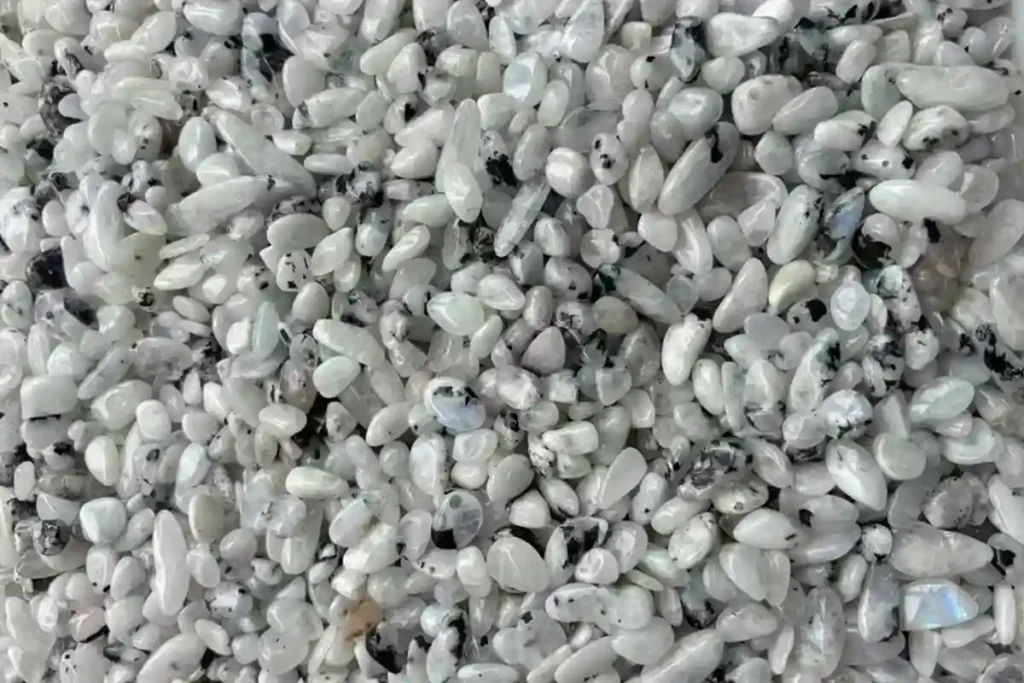
Rainbow moonstone is known for its milky body color and flashes of blue, green, yellow, or purple. In crystal traditions, rainbow moonstone benefits are often associated with intuition, emotional awareness, and personal growth. Its colorful light also makes it popular for pendants, cabochons, bracelets, and gift collections that need a brighter visual effect.
In the gemstone trade, rainbow moonstone may differ from traditional moonstone in its mineral structure, even though both names are commonly used by sellers and buyers. Colorful flash, transparency, cut, and surface polish all affect its value. For a more detailed look at the benefits of rainbow moonstone, buyers can compare its meanings, jewelry uses, quality grades, and sourcing points separately.
White and Blue Moonstone Benefits
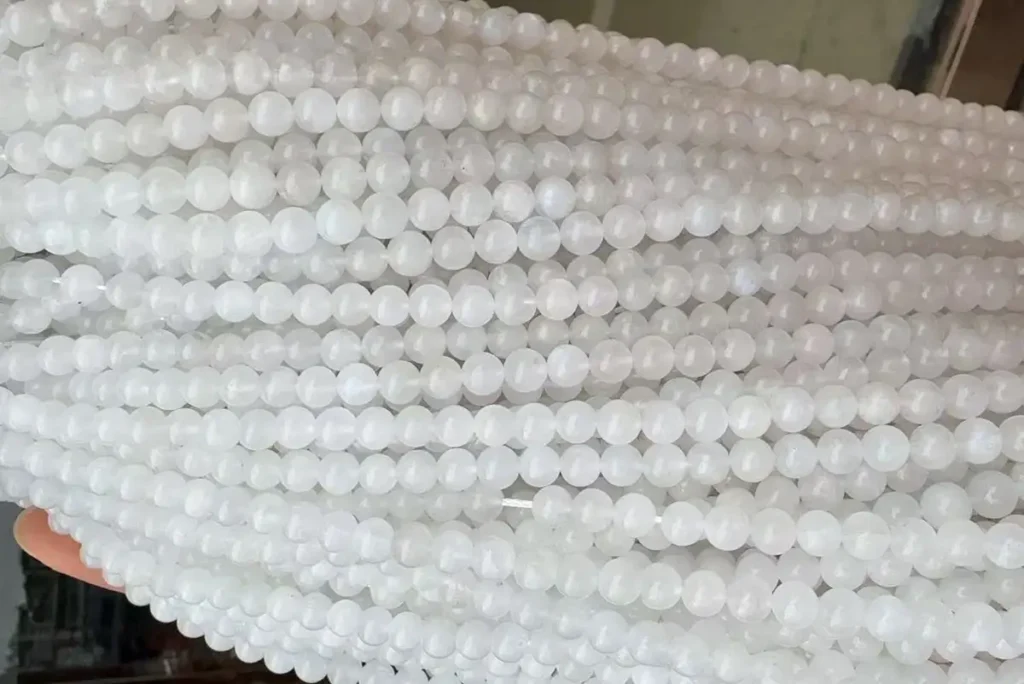
White moonstone may look milky, translucent, or almost clear, depending on its grade. In crystal traditions, white moonstone benefits are often linked with calmness, clarity, and new beginnings. Its soft body color works well in bracelets, pendants, earrings, and mixed gemstone designs, especially for buyers who prefer a clean and gentle appearance.
The term blue moonstone usually describes material that shows a strong blue flash rather than a naturally blue body color. Blue moonstone benefits are commonly associated with intuition and emotional awareness, but the visible light effect often matters more to jewelry buyers. Transparent stones with broad blue flash are usually harder to source and more expensive than opaque material with little or no visible glow.
Black Moonstone Benefits
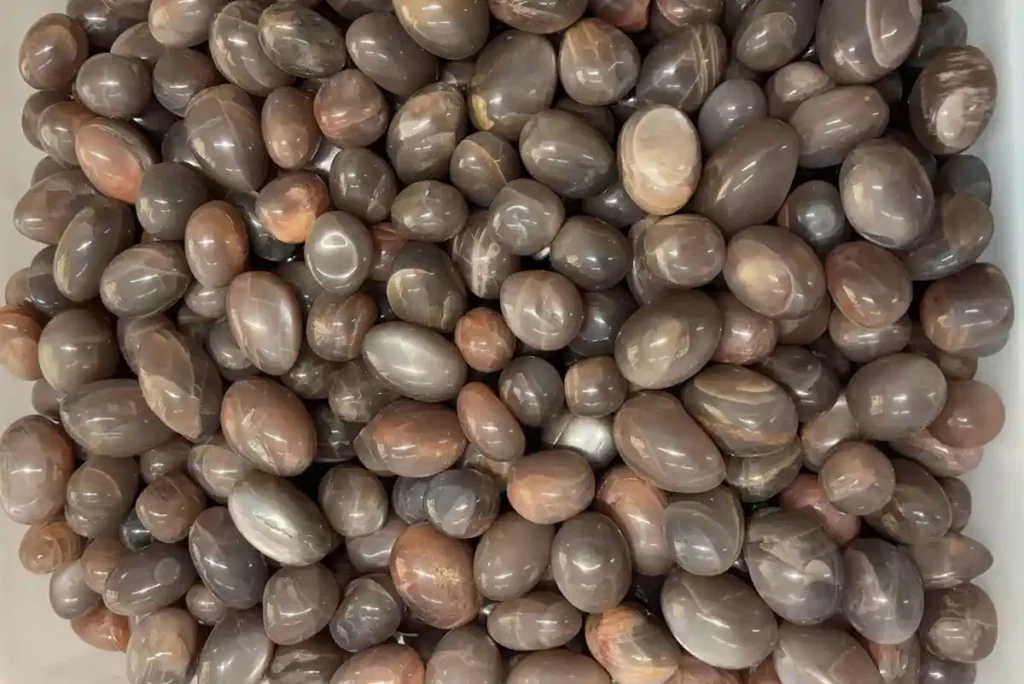
Black moonstone usually has a dark gray, brown, or nearly black body color with a soft silver, white, or blue sheen. In crystal traditions, black moonstone benefits are often linked with emotional stability, inner strength, and confidence during periods of change. Its deeper color also appeals to buyers who prefer understated jewelry instead of bright or highly transparent stones.
Market names are not always consistent, so wholesale buyers should confirm the material through current photos, videos, or samples. Some pieces may show strong flash, while others look mostly opaque with natural lines or lighter patches. Color consistency, polish, cracks, bead size, and visible sheen should all be checked before placing a bulk order.
Peach, Yellow, and Pink Moonstone Benefits
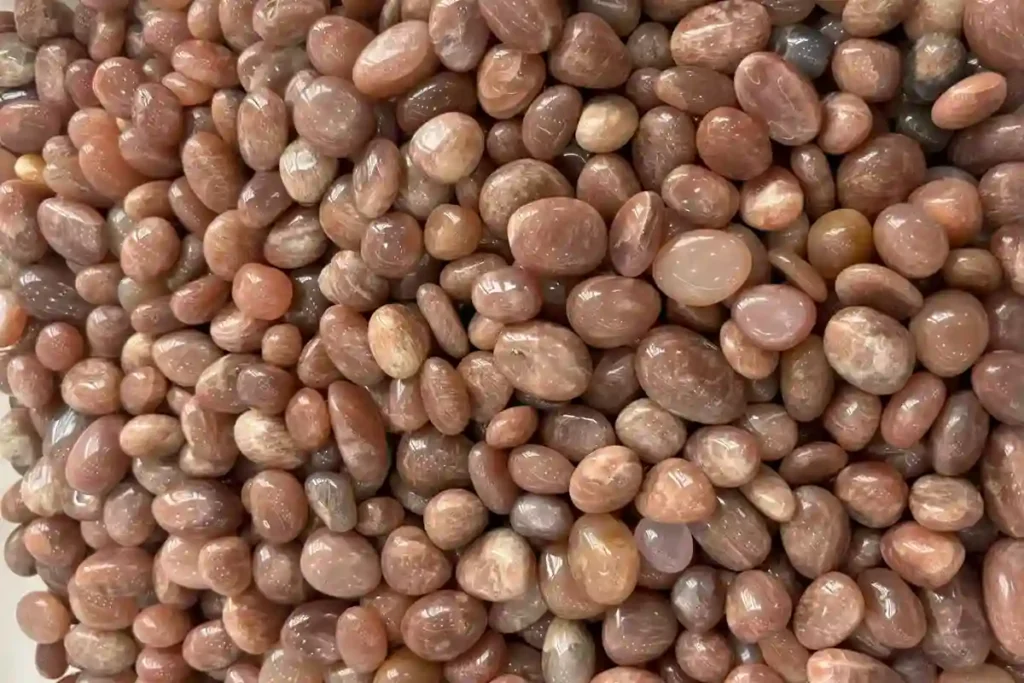
Peach moonstone has a warm cream, orange, or soft pink tone that works well in feminine jewelry, gift sets, and gentle color collections. In crystal traditions, peach moonstone benefits are often connected with emotional warmth, self-expression, and a more positive outlook. Yellow moonstone carries similar meanings, while pink material is commonly chosen for designs linked with care, affection, and personal comfort.
These Moonstone Benefits depend more on traditional symbolism than proven effects. From a buying view, body color, transparency, polish, and consistency usually matter most. Some beads show natural clouds, lines, or darker areas, so buyers should confirm the acceptable color range before bulk production. Warmer moonstone varieties often suit affordable bracelets and mixed-stone designs better than high-priced blue-flash jewelry.
Green and Gray Moonstone Benefits
Green moonstone usually has a soft green, gray-green, or slightly cloudy appearance. In crystal traditions, green moonstone benefits are often linked with emotional balance, personal growth, and a stronger connection with nature. Its muted color suits earthy jewelry collections, mixed-stone bracelets, and customers who prefer subtle tones instead of bright blue flash.
Gray moonstone may show silver, white, or faint blue light across a smoky body color. Gray moonstone meaning is commonly connected with reflection, stability, and quiet confidence. From a wholesale view, both varieties can vary greatly in color and transparency. Buyers should confirm natural patterns, polish, cracks, and acceptable shade differences before ordering larger quantities.
Madagascar Moonstone and Regional Material
Madagascar moonstone can vary from milky white and gray to peach, green, or slightly translucent material. Some pieces show a soft internal glow, while others have little visible flash. In crystal traditions, madagascar moonstone benefits are often described in the same way as other varieties, with links to calmness, intuition, and personal growth. However, the stone’s commercial value depends more on clarity, color, polish, and light effect than on origin alone.
Wholesale buyers should not assume that every stone from one region has the same grade. Madagascar moonstone may include attractive high-quality pieces, but each batch can show different levels of transparency, cracks, yellow marks, and color consistency. When comparing regional quality, buyers should check current photos, moving videos, and samples instead of relying only on the stated moonstone origin.
How Moonstone Is Used in Jewelry
Moonstone Bracelet Benefits
Moonstone bracelets are popular because they are easy to wear and allow customers to see several stones in one piece. In crystal traditions, moonstone bracelet benefits are often linked with calmness, emotional awareness, and personal reflection. Common bead sizes include 6mm, 8mm, and 10mm, although smaller or larger beads may suit different markets and jewelry styles.
For wholesale buyers, bead consistency matters as much as symbolic meaning. Each bracelet should be checked for size, polish, cracks, color range, and visible flash. Transparent beads with strong blue light usually cost more, while milky or opaque material suits lower-priced collections. Buyers who need more detail about wearing methods, bead grades, sizing, and sourcing can explore our complete guide to moonstone bracelet benefits.
Moonstone Ring Benefits
Moonstone rings keep the stone in clear view, which makes its glow and natural color easy to appreciate throughout the day. In crystal traditions, moonstone ring benefits are often linked with love, intuition, emotional awareness, and new beginnings. This symbolism makes moonstone suitable for engagement rings, anniversary gifts, and personal jewelry that marks an important change.
Because moonstone has a layered structure, rings require more care than pendants or earrings. Protective settings can reduce direct impact, while daily wear may still expose the stone to scratches, chemicals, and sudden knocks. Buyers should compare clarity, flash, cut, setting style, and surface condition before ordering. A detailed guide can also explain moonstone ring meaning, suitable wearing fingers, care methods, and quality differences.
Pendants, Necklaces, and Decorative Pieces
Moonstone pendants and necklaces are popular because they display the stone without exposing it to as much daily impact as a ring. Larger cabochons can show blue flash, transparency, and internal patterns more clearly, while smaller stones work well in simple silver or gold settings. A moonstone necklace may also carry symbolic meaning linked with intuition, love, and new beginnings.
High-grade moonstone is often used for pendants, bracelets, and small decorative pieces because strong blue light and good transparency can increase its visual value. However, size alone does not determine quality. Buyers should also compare clarity, flash coverage, cut, polish, cracks, and body color. For wholesale orders, moving videos are especially useful because a single photo may not show how the light changes from different angles.
For moonstone beads, bracelets, pendants, or decorative pieces, please send us your required product type, size, quantity, quality grade, blue-flash preference, and target price range. You can contact us through WhatsApp or submit your requirements through the inquiry form. Before confirming a bulk order, we can provide current photos and moving videos so you can compare transparency, color, surface condition, and flash quality more clearly.
How to Use Moonstone in Daily Life
Wearing and Placing Moonstone on the Body
Moonstone can be worn on the wrist, finger, neck, or close to the body in a small pouch. Bracelets suit daily wear, while pendants keep the stone protected and easy to notice. Rings show the flash clearly, but they face more impact and require careful handling. The best position depends on comfort, jewelry style, and the wearer’s personal routine.
Some crystal users believe that placing moonstone near certain parts of the body supports reflection or emotional balance. However, there is no scientific evidence that one position creates stronger Moonstone Benefits than another. Buyers should choose a placement that feels practical and comfortable. When selecting jewelry for resale, wholesalers should also consider bead size, weight, chain length, ring setting, and how often the customer plans to wear the piece.
Meditation, Home, and Work Uses
Moonstone can be held during meditation, placed beside a journal, or kept in a quiet area of the home. Some people use a polished stone as a visual focus while breathing slowly or setting a personal intention. This simple routine is sometimes described as a way to “activate” moonstone, although the stone is not being scientifically activated. The practice mainly helps the user create a personal connection with the object.
At home, moonstone may be placed near a bed, reading space, or meditation area. In a workplace, a small polished stone or decorative piece can add a calm visual element without taking up much room. These uses depend on personal preference rather than fixed rules. For wholesale buyers, palm stones, small carvings, bracelets, and desk pieces can serve different customer groups, so size, finish, packaging, and intended use should be confirmed before ordering.
How to Identify Real Moonstone and Compare Quality Grades
How to Know If Moonstone Is Real
Real moonstone often shows natural clouds, fine layers, small inclusions, or slight color differences inside the material. Its light effect should move as the stone turns under a lamp. A blue, white, or silver flash usually appears from certain angles rather than covering the surface at all times. Glass imitations may look too even, overly clear, or filled with round air bubbles.
Photos alone cannot always confirm whether a stone is natural because lighting, camera settings, and editing can change its appearance. Moving videos are more useful for checking the direction and coverage of the flash. Buyers should also inspect drill holes, polish, cracks, and repeated patterns across several beads. Understanding these details supports the practical side of Moonstone Benefits, especially when comparing samples before a bulk order.
Understanding Clarity, Yellow Marks, and Blue Flash
In my experience, lower-grade moonstone is often opaque and may contain yellow marks, cloudy areas, or uneven color. When the stone is turned under light, little or no blue flash may appear. Higher-grade material is usually more transparent and can show a wider, brighter blue glow from several angles. These visual differences strongly affect the price of beads, pendants, bracelets, and polished decorative pieces.
However, strong blue flash is not the only sign of good quality. Buyers should also check cracks, surface polish, color consistency, drilling quality, and the percentage of usable stones in each batch. Very transparent material can still create problems if it contains deep fractures or chips easily during production. The best grade should balance appearance, durability, processing loss, and the customer’s target price.
A Wholesale Lesson About Matching the Buyer’s Grade
One of my European customers once ordered 6mm moonstone bracelets in a lower, less transparent grade. When that material was out of stock, I replaced it with clearer moonstone that normally cost more. I thought the upgrade would be helpful, but the customer explained that his buyers did not accept the new appearance. The material was better in quality, yet it did not match the grade his market expected.
In the end, I refunded the order and let the customer keep the bracelets. This experience taught me that a higher grade is not always the right grade. Some buyers want strong blue flash and high transparency, while others need opaque material at a stable price. For repeat or bulk orders, suppliers should follow the approved sample, clarity level, color range, flash strength, and target cost. Replacing one grade with another without confirmation can create problems even when the substitute is more expensive.
Where Does Moonstone Come From?
India, Sri Lanka, Myanmar, and Madagascar
Moonstone is sourced from several regions, including India, Sri Lanka, Myanmar, and Madagascar. Each area can produce material with different body colors, transparency levels, internal patterns, and light effects. Indian moonstone is often known for strong blue flash and clearer material, while Sri Lankan stones may show a softer glow with fine transparency. Myanmar and Madagascar also supply white, gray, peach, and mixed-color grades.
Origin can influence appearance, but it does not guarantee quality. Two batches from the same country may differ greatly in cracks, yellow marks, polish, and flash coverage. Buyers should compare the actual material instead of relying only on the location name. For bulk orders, clear photos, moving videos, sample approval, and agreed grading standards provide more reliable information than origin alone.
Why Origin Does Not Replace Quality Inspection
A friend of mine who often attends gemstone trade shows once told me that some of the best blue moonstone he had seen came from India. According to his experience, high-grade Indian material may show strong blue flash and good transparency. However, this does not mean every stone from India has the same quality, and premium material is not always easy to find in large, stable quantities.
For wholesale buyers, origin should be treated as background information rather than a final grading standard. Each batch still needs to be checked for clarity, cracks, yellow marks, body color, polish, and flash coverage. These details affect both appearance and processing loss. Understanding Moonstone Benefits may help with marketing, but careful inspection is what determines whether the material fits the buyer’s price range, product design, and customer expectations.
How to Clean and Care for Moonstone
How to Clean Moonstone Safely
Moonstone should be cleaned with lukewarm water, mild soap, and a soft cloth. Gently wipe the surface, rinse away any soap, and dry the stone soon afterward. Brief contact with water is usually safe, but long soaking is not recommended because liquid may enter small cracks or weaken jewelry glue around certain settings.
Avoid ultrasonic and steam cleaners, especially when the stone has visible fractures or inclusions. Sudden temperature changes can also place stress on its layered structure. The question “Why can’t moonstone get wet?” is often overstated. Water itself is not always harmful, but repeated soaking, harsh chemicals, and poor drying may damage the setting or make existing cracks worse over time.
Heat, Chemicals, Impact, and Storage
Moonstone should be kept away from strong heat, sudden temperature changes, perfume, household cleaners, and other harsh chemicals. Rings and bracelets are more likely to hit hard surfaces, so they should be removed before exercise, housework, bathing, or manual work. Even a well-polished stone can scratch, chip, or develop larger fractures when its layered structure receives repeated impact.
Store moonstone jewelry separately from harder gemstones such as quartz, sapphire, or diamond. A soft pouch or lined jewelry box can reduce rubbing and surface damage. Beaded bracelets should not be packed too tightly because pressure may affect cracked beads or stretched elastic. For wholesale storage, use divided packaging and check pieces again before shipment, especially after long-distance transport.
A Practical Moonstone Buying Guide for Wholesale Orders
Choosing the Right Grade for Your Customers
The right moonstone grade depends on the buyers you serve. Fine jewelry customers may prefer clear material with broad blue flash, clean cutting, and fewer visible inclusions. Gift shops and general crystal retailers may focus more on stable pricing, natural appearance, and consistent supply. A higher grade is not always the best choice if it pushes the final price beyond what customers are willing to pay.
Before requesting a quotation, confirm whether your market needs strong blue flash, high transparency, or a more opaque and affordable grade. Buyers should also decide how much natural clouding, yellow marking, or color variation they can accept. These practical choices matter more than general Moonstone Benefits when selecting material for repeat orders. Clear standards help suppliers match the right quality, reduce misunderstandings, and maintain consistent pricing.
Samples, Size Consistency, Packaging, and Reorders
Before placing a bulk order, buyers should confirm bead diameter, hole size, bracelet length, surface polish, color range, crack tolerance, and blue-flash percentage. Photos can show the general appearance, but moving videos are better for checking light effects. A physical sample is especially useful when the order requires a fixed grade, custom packaging, or repeated supply over several months.
For reorders, keep the approved sample, grading notes, and packing requirements on record. Natural moonstone will never look completely identical from batch to batch, but clear standards can reduce unwanted differences. Suppliers should also inspect elastic strength, bead count, labels, bags, and protective packaging before shipment. Although Moonstone Benefits may attract customers, consistent sizing, reliable quality, and accurate order records are what support long-term wholesale cooperation.
Frequently Asked Questions About Moonstone
Who Should Not Wear Moonstone?
There is no universal rule saying that a certain person should not wear moonstone. However, anyone with sensitive skin should check the metal, elastic, glue, or other materials used in the jewelry. The stone itself may not be the cause of irritation.
People who perform heavy manual work should remove moonstone rings and bracelets before starting. Frequent impact can scratch or chip the stone. Anyone expecting medical results should also understand that moonstone is a symbolic gemstone, not a treatment for physical or mental health conditions.
Where Should You Put Moonstone on Your Body?
Moonstone can be worn on the wrist, finger, neck, or carried in a pocket or small pouch. Some people place it near the forehead or lower abdomen during meditation, but there is no scientifically proven position that creates stronger results.
Choose a location based on comfort, jewelry style, and daily activity. Pendants offer more protection, while rings and bracelets make the stone easier to see but also expose it to more impact.
What Birth Month Is Moonstone For?
Moonstone is one of the traditional birthstones for June, along with pearl and alexandrite. It is often chosen for birthday jewelry because of its soft glow, natural variation, and symbolic connection with intuition, change, and new beginnings.
People born in other months can also wear moonstone. Birthstone traditions are not strict rules, and many buyers choose the gem for its color, meaning, or jewelry style. For wholesale collections, June-themed gift sets can include bracelets, pendants, rings, or loose stones.
How Do You Activate Moonstone?
“Activating” moonstone is a personal ritual rather than a scientific process. Many people begin by cleaning the stone gently, holding it for a few minutes, and setting a clear intention for how they want to use it. Others include it in meditation, journaling, or a quiet evening routine.
There is no required method or fixed amount of time. The main purpose is to create a personal connection with the stone. Avoid harsh chemicals, strong heat, or long soaking during any cleansing ritual.
What Should You Avoid With Moonstone?
Avoid strong impact, high heat, sudden temperature changes, harsh chemicals, and ultrasonic or steam cleaning. Moonstone can scratch or chip more easily than harder gemstones, especially when used in rings and bracelets.
Remove moonstone jewelry before exercise, housework, bathing, or swimming. Long soaking may affect glue, elastic, or existing cracks. Store each piece in a soft pouch or lined box, away from harder stones that may damage its surface.
Conclusion: Understanding Moonstone Benefits and Choosing the Right Quality
Moonstone is valued for more than its traditional symbolism. Color, transparency, blue flash, cut, polish, cracks, and intended use all affect how the material performs in jewelry and how buyers judge its value. The most useful way to understand Moonstone Benefits is to consider both the stone’s cultural meaning and its physical quality.
Traditional beliefs may connect moonstone with calmness, intuition, love, or new beginnings, but these ideas should not be presented as medical facts. Buyers should also remember that the highest grade is not always the best match. Some markets prefer clear material with strong blue flash, while others need opaque stone, stable pricing, and consistent supply.
For moonstone beads, bracelets, pendants, rings, or decorative pieces, send us your required size, quantity, quality range, flash preference, and packaging needs through WhatsApp or our inquiry form. We can provide current photos and moving videos before confirming a bulk order, helping you compare the right material and understand the Moonstone Benefits that fit your target customers.
Disclaimer
The information provided here is for educational and general reference purposes only. Any spiritual, emotional, or physical associations linked with moonstone come from traditional beliefs and personal practices. They are not supported as medical treatments and should not replace professional medical advice, diagnosis, or care. Results may vary from person to person. Always consult a qualified healthcare professional for any health-related concern.