
Opal Meaning: Symbolism, Spiritual Meaning, Uses and Different Types
Written by: Rocrystal Sourcing & QC Team, Last updated: August 26, 2026
Opal Meaning is often connected with hope, creativity, love, and emotional expression. For centuries, people in different cultures have admired opal for its unusual colors and changing flashes of light. These features have also shaped much of the opal symbolism we know today.
The meaning of opal can change depending on its color, variety, and cultural background. Some traditions associate this gemstone with imagination and self-expression, while others connect it with emotional awareness and personal change. Because these ideas come from cultural and spiritual traditions, they should not be confused with scientifically proven effects.
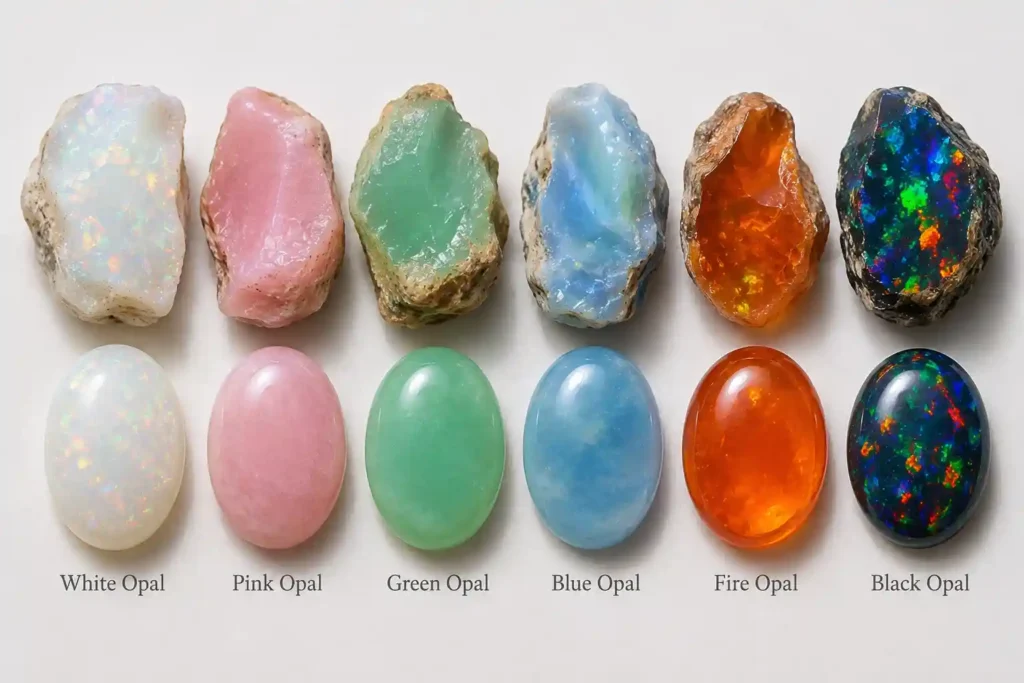
There is also no single meaning of an opal that applies to every variety. White, pink, green, blue, fire, black, and Ethiopian opals can look very different from one another. Their traditional meanings can differ as well. This is one reason why opal significance is better understood by looking at both the gemstone as a whole and its individual varieties.
For gemstone buyers, appearance matters just as much as symbolism. Color, transparency, inclusions, play-of-color, treatments, and overall quality can affect how an opal looks and how buyers evaluate it. Understanding Opal Meaning is therefore a useful starting point, but it is only one part of understanding this diverse gemstone.
What Is Opal?
Opal is a natural gemstone known for its wide range of colors and, in some varieties, bright flashes that seem to move as the stone turns. Unlike many crystalline gemstones, opal has a different internal structure and is generally described as a hydrated form of silica. Its water content and structure help give this gemstone some of its distinctive physical characteristics.
Understanding these basic features makes opal stone meaning easier to explore. The stone’s changing appearance has inspired many cultural and symbolic interpretations, but its beauty begins with natural geological processes rather than spiritual properties.
How Opal Forms
Opal can form when water containing dissolved silica moves through small cracks, cavities, and spaces in rocks. Over long periods, silica material can accumulate as water gradually leaves the area. Under suitable conditions, these deposits eventually develop into opal.
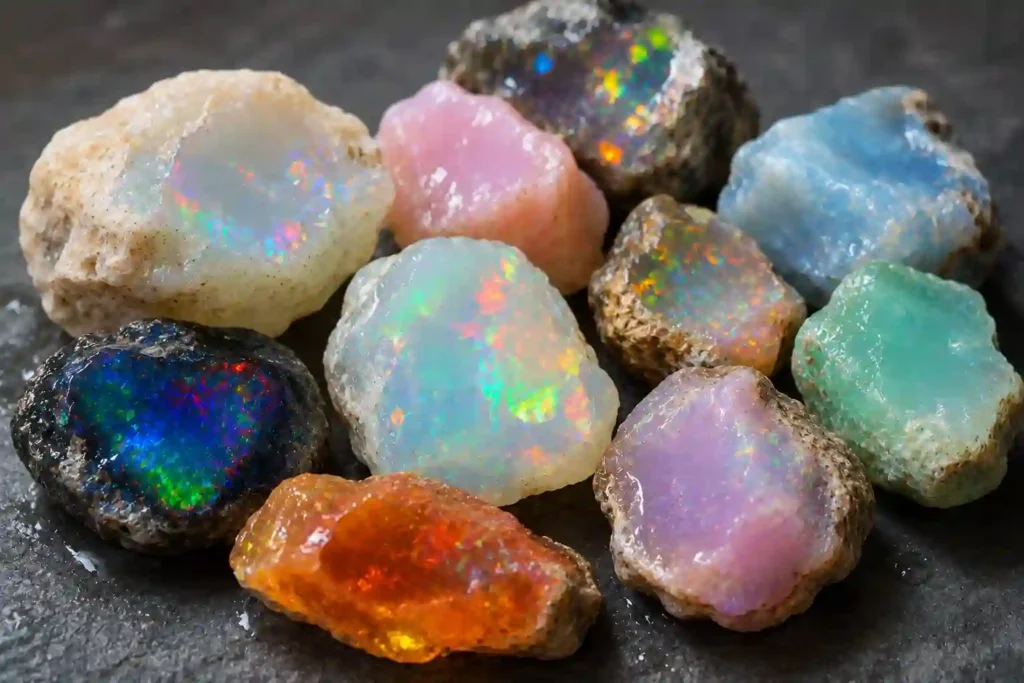
This formation process helps explain why natural opal can vary so much. One piece may appear milky white, while another can be transparent, orange, green, dark, or filled with changing colors. Location and geological conditions can also influence the material that forms.
For buyers, these natural differences are important. The term “opal” covers a broad group of materials rather than one uniform appearance. This is also why the opal gem meaning should not be used as a shortcut for judging quality. Two stones may share the same gemstone name while looking very different in color, transparency, pattern, and overall visual appeal.
Why Opal Can Show Different Colors
One of the most striking features of opal is its range of colors. Some stones look white, cream, blue, green, orange, or dark gray. Others display several bright colors at once. This visual variety is one reason the opal crystal has attracted attention in jewelry and gemstone collections for centuries.
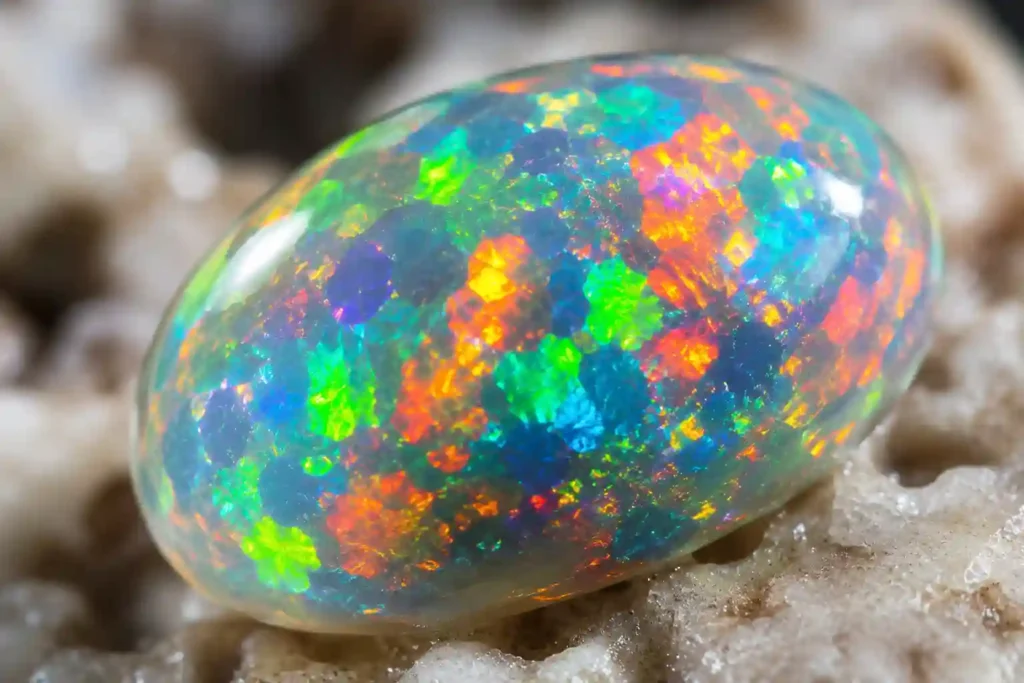
Certain opals show an optical effect called play-of-color. As the stone moves under light, flashes of red, green, blue, yellow, or other colors may appear to shift across its surface. This effect comes from the way light interacts with the stone’s internal structure.
However, not every natural opal has strong play-of-color. Some varieties are valued mainly for their body color, transparency, pattern, or soft appearance. Pink and green opals, for example, can look very different from the colorful material many people first imagine when they hear the word opal.
These differences are also important when discussing opal stone meaning. Color often influences the symbolism people associate with a particular variety, but appearance should still be evaluated separately from spiritual beliefs. For buyers, the actual color, pattern, transparency, surface condition, and consistency of the material provide much more practical information about the stone itself.
Opal Symbolism and Meaning
The symbolism of opal has developed over centuries, so there is no single interpretation that applies everywhere. In many traditions, the stone represents hope, creativity, emotional expression, and individuality. Its changing colors have also inspired ideas about transformation and the different sides of a person’s character.
For this reason, Opal Meaning often goes beyond the physical beauty of the gemstone. People may choose opal because they feel connected to its color, history, or traditional symbolism. These meanings are cultural and personal rather than scientifically proven properties.
Hope, Creativity and Self-Expression
Opal has long been linked with imagination and creativity. Its shifting colors can make every viewing angle feel slightly different, which may explain why the stone became associated with originality, inspiration, and personal expression.
In modern crystal traditions, some people use opal as a symbol of exploring new ideas or expressing thoughts more freely. Artists, designers, and other creative people may also be attracted to the stone simply because its colors and patterns are rarely identical from one piece to another.
The meaning of opal stone is therefore often connected with individuality. Instead of representing one fixed idea, opal can symbolize the freedom to develop your own style, thoughts, and direction.
Hope is another common part of opal symbolism. Historically, different cultures have given opal both positive and negative meanings, but today it is widely associated with optimism and positive change. For many people, its bright flashes of color represent the idea that something beautiful can appear even when it is not immediately visible.
This opal significance should still be understood as traditional symbolism rather than a guaranteed effect. Wearing or keeping an opal does not automatically make someone more creative or optimistic. Its meaning comes from the beliefs, stories, and personal associations people have built around the gemstone.
Emotional Depth and Transformation
Opal is also traditionally associated with emotions and personal change. Its shifting colors can look different as the stone moves, which has made transformation a common part of the opal crystal meaning. Some people see this changing appearance as a symbol of understanding different emotions rather than ignoring them.
In spiritual traditions, opal is sometimes connected with self-awareness. People may use the stone as a reminder to reflect on their feelings, recognize emotional patterns, and become more open to change. This does not mean the gemstone itself can control emotions. Instead, its symbolism may encourage personal reflection.
The stone opal meaning can also include growth during periods of change. A person starting a new relationship, career, or stage of life may connect with opal because of its traditional links with transformation and new possibilities.
Emotional depth does not always have to mean something difficult. Opal can also represent sensitivity, empathy, and a willingness to understand yourself and others more clearly. These ideas help explain why the gemstone appears so often in discussions about emotional balance and personal development.
As with other symbolic interpretations, these meanings come from cultural and metaphysical traditions. They should not be treated as proven psychological effects. For many people, the value of the symbolism is simply that it gives the gemstone a more personal meaning beyond its color and appearance.
Opal Meaning in Love and Relationships
Opal meaning love is often connected with affection, loyalty, emotional openness, and deeper communication. Because opal can display many colors within one stone, it has also become a symbol of the different emotions that can exist within a close relationship.
In traditional gemstone symbolism, opal may represent being honest about your feelings and understanding the emotions of your partner. Some people wear opal jewelry as a personal reminder of these ideas. Others choose it simply because the stone feels romantic and unique.
Different varieties can also carry slightly different associations. Pink opal is commonly linked with gentle love and compassion, while fire opal is often associated with passion and confidence. White opal may symbolize hope and a fresh start. These interpretations are traditional beliefs rather than fixed rules.
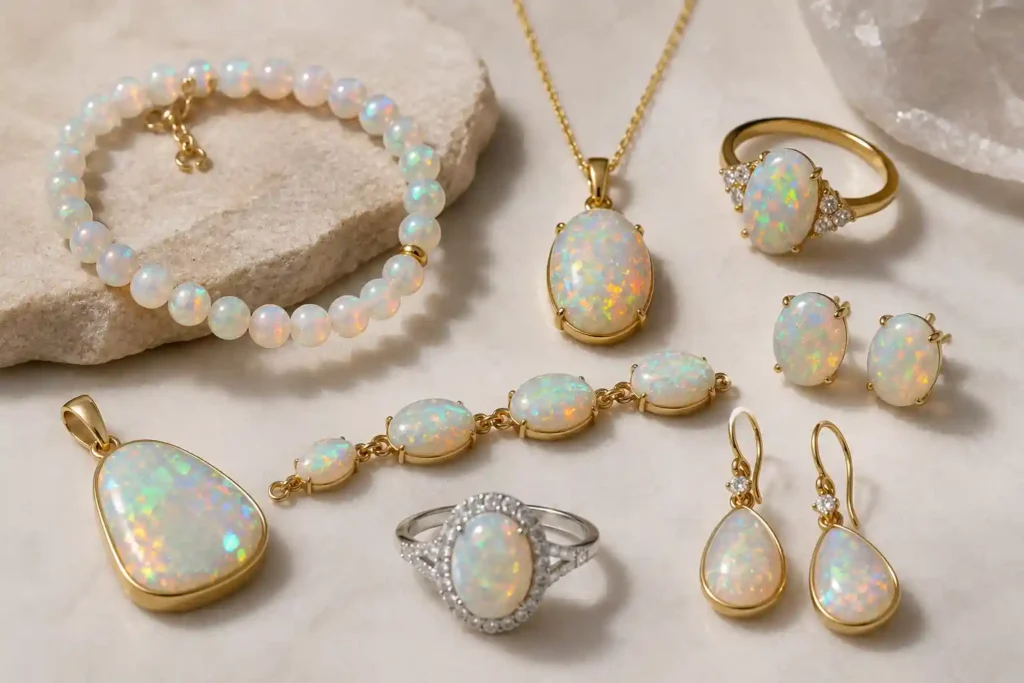
Opal can also have meaning when given as a gift. A pendant, ring, bracelet, or pair of earrings may represent affection, commitment, or an important stage in a relationship. Since every natural stone can have its own colors and patterns, an opal gift may feel especially personal.
Still, the emotional value of the gemstone depends largely on the person receiving it. Opal does not create love or guarantee a stronger relationship. Its symbolism can simply add another layer of meaning to a gift or piece of jewelry.
Opal Spiritual Meaning
The Opal Spiritual Meaning is commonly linked with intuition, self-awareness, creativity, and emotional expression. In many modern crystal traditions, people view opal as a stone that encourages them to look inward and better understand their thoughts and feelings.
However, spiritual interpretations can vary by culture, tradition, and opal variety. They are beliefs rather than scientifically proven effects. For this reason, the opal meaning spiritual traditions describe should be understood separately from the physical properties of the gemstone.
Spiritual Meaning of Opal
The spiritual meaning of opal often centers on intuition and inner reflection. Some crystal practitioners believe that opal can serve as a symbolic reminder to pay closer attention to thoughts, emotions, and personal choices.
Its changing colors also contribute to this interpretation. Because an opal can reveal different flashes as it moves under light, people sometimes connect it with seeing a situation from more than one perspective. In this sense, the stone may symbolize awareness, reflection, and personal discovery.
Another common part of the opal crystal meaning is creativity. Some spiritual traditions associate opal with imagination and the confidence to express original ideas. This connection is especially common among people who use gemstones during meditation, journaling, or other reflective practices.
These beliefs do not mean that opal can directly improve intuition or produce spiritual changes. The stone may instead act as a personal symbol. For someone who already values reflection or mindfulness, wearing or keeping an opal can represent an intention to become more aware of their emotions, ideas, and direction in life.
Opal and Emotional Balance
Opal is often associated with emotional awareness and balance in modern crystal traditions. Some people believe the stone can encourage them to recognize feelings they might otherwise overlook. Rather than viewing this as a direct effect of the gemstone, it is more practical to see opal as a symbol that may support reflection and mindfulness.
Different colors can also influence these traditional associations. Soft pink opal is commonly connected with compassion and gentle emotions, while green opal is often linked with renewal and personal growth. Fire opal, with its warmer colors, tends to carry stronger associations with confidence, passion, and emotional energy.
For people who use crystals during meditation or quiet reflection, opal may serve as a visual reminder to slow down and consider their emotional state. Its changing appearance can also symbolize the idea that feelings are not always fixed and may change with time and experience.
These ideas form part of the broader Opal Spiritual Meaning, but they should not be confused with psychological treatment. There is no scientific evidence that opal can regulate emotions or treat mental health conditions. Its role in emotional balance comes from spiritual traditions, personal beliefs, and the meaning an individual chooses to give the stone.
Opal and Chakra Traditions
In modern crystal practices, opal is sometimes connected with different chakras depending on its color. There is no single chakra association that applies to every type of opal. This is important because white, pink, green, blue, fire, and black opals can carry very different symbolic meanings.
White opal is often associated with the crown chakra because of its light appearance and traditional links with awareness and clarity. Blue opal is more commonly connected with the throat chakra, where it represents communication and self-expression. Green and pink varieties may be linked with the heart chakra because they are traditionally associated with growth, compassion, and emotional openness.
Fire opal is usually connected with the lower chakras. Its orange and red tones have led some crystal practitioners to associate it with creativity, confidence, passion, and motivation. Darker opals may have different associations depending on the spiritual tradition being followed.
These chakra connections are part of metaphysical belief systems rather than established scientific properties. When discussing Opal Meaning, it is therefore better to view them as traditional ways of interpreting different colors. A person’s own beliefs and reasons for choosing an opal may be more important than following a fixed chakra rule.
Opal Meaning in Witchcraft and Modern Spiritual Practices
Opal meaning witchcraft is usually connected with intuition, creativity, emotional awareness, and personal intention. In some modern spiritual practices, people may keep opal on an altar, carry it during rituals, or wear it as symbolic jewelry. The purpose often depends on the color of the stone and the belief system of the person using it.
For example, pink opal may be chosen for rituals related to love or emotional reflection, while fire opal may symbolize passion, confidence, and creative energy. Darker varieties can sometimes represent protection or inner strength. These associations are not universal, and different spiritual traditions may interpret the same opal in different ways.
Opal may also be used during meditation, journaling, or other personal rituals. In these cases, the gemstone often acts as a physical reminder of an intention rather than something that produces a supernatural result on its own.
These practices belong to spiritual and cultural traditions. There is no scientific evidence that opal has magical powers or can directly change events, emotions, or another person’s behavior. Understanding this distinction helps keep Opal Meaning clear while still respecting the symbolic role the gemstone can have in modern spiritual practices.
Opal Healing Properties: Traditional Beliefs vs. Medical Facts
Opal healing properties are commonly discussed in crystal and spiritual traditions. People may associate the stone with emotional awareness, creativity, confidence, and personal growth. However, these traditional beliefs are different from medical benefits. There is no reliable scientific evidence that opal can diagnose, prevent, or treat disease.
Understanding this difference is important when exploring Opal Meaning. A gemstone can carry cultural or personal significance without having a proven effect on physical health.
Traditional Opal Healing Properties
In crystal traditions, opal is often described as a stone connected with emotional expression and self-awareness. Some practitioners believe it may help a person focus on feelings, recognize emotional patterns, or set intentions during meditation and other reflective practices.
The traditional meaning can also change with color. Pink opal is often associated with compassion and gentle emotions. Green varieties may symbolize renewal and growth, while fire opal is commonly linked with motivation, passion, and confidence.
These associations help explain why opal stone meaning and uses often appear together. People may wear opal as jewelry, carry a small stone, keep it in a personal space, or use it during meditation because they value what the gemstone represents.
Still, these uses should be viewed as symbolic or spiritual practices. Wearing an opal does not guarantee emotional healing, greater confidence, or other specific results. The experience depends heavily on personal beliefs and how someone chooses to use the stone.
For gemstone buyers, it is useful to separate these traditional opal healing properties from measurable qualities such as color, transparency, pattern, inclusions, surface condition, and treatment. Spiritual meaning may influence why someone likes a stone, but it does not determine the physical quality of the material.
Does Opal Have Medical Benefits?
When people search for Opal meaning medical, they may wonder whether opal can improve physical health or treat specific conditions. Crystal traditions sometimes connect opal with the eyes, skin, circulation, or general wellness. However, modern medical research does not support these claims.
Scientists have not found reliable evidence that wearing, carrying, or meditating with opal can cure disease or improve a medical condition. Anyone with a health concern should seek advice from a qualified healthcare professional rather than rely on a gemstone as treatment.
This distinction does not remove the personal or cultural value of opal. Some people enjoy wearing the stone because its color makes them feel calm, because they value its symbolism, or because it reminds them of a personal intention. These experiences can still feel meaningful without becoming medical claims.
The same principle applies when discussing opal healing properties. We can explore the traditions and beliefs surrounding the stone while keeping them separate from established medical facts. This approach gives a clearer and more responsible understanding of Opal Meaning, especially for readers who want to distinguish gemstone traditions from scientifically supported health information.
Opal Meaning Across History and Cultures
Opal has attracted attention for centuries because of its unusual colors and changing appearance. Different societies gave the gemstone their own meanings, and these ideas changed as opal traveled between cultures and generations.
Some traditions viewed opal as a symbol of hope, beauty, and good fortune. Others developed stories that gave the stone a more mysterious reputation. Looking at this history helps explain why modern opal symbolism includes so many different ideas.
Opal in Ancient Rome
Ancient Romans valued opal for its beauty and variety of colors. Roman writers described the gemstone with admiration because a single opal could appear to contain colors associated with several other precious stones.
This unusual appearance helped give opal a strong symbolic reputation. Romans commonly connected the stone with hope and good fortune, and wealthy people valued fine specimens as luxury objects. The gemstone’s rarity and colorful appearance also contributed to its status.
Historical interest in opal shows that opal significance did not begin with modern crystal practices. People were fascinated by the stone long before today’s spiritual interpretations became popular.
However, historical symbolism and physical properties should remain separate. Ancient beliefs tell us how people understood and valued opal at the time, but they do not prove that the gemstone creates luck or changes a person’s life.
These early associations are still useful when exploring the meaning of opal, because they show how beauty, rarity, and cultural beliefs worked together to shape the gemstone’s reputation over time.
Arabic Lore and Medieval European Beliefs
Opal also appears in old stories from the Middle East and Europe. Arabic legends sometimes described opals as stones that fell from the sky during flashes of lightning. These stories helped create a mysterious image around the gemstone.
Medieval Europeans gave opal several positive meanings. Many people connected its changing colors with good fortune and hope. Some also thought the stone could carry qualities represented by gemstones of different colors.
Over time, European attitudes began to change. Stories about bad luck became attached to opal, especially during later periods. Literature and popular culture helped spread some of these ideas.
These changing beliefs show why opal symbolism can seem contradictory today. One culture may connect the stone with luck, while another story may present it as mysterious or unlucky.
Historical legends do not tell us what an opal can actually do. Instead, they show how people interpreted its unusual appearance. This cultural history adds another layer to Opal Meaning without turning old beliefs into modern facts.
How Opal Symbolism Changed Over Time
The meaning of opal has changed many times throughout history. Early cultures often valued the stone for its beauty and unusual colors. Later stories added ideas about mystery, luck, and misfortune.
These different views did not come from changes in the gemstone itself. Culture, literature, fashion, and local traditions shaped how people viewed opal. As these stories spread, they created new meanings around the stone.
Today, many people have moved away from the old idea that opal brings bad luck. Modern opal symbolism focuses more on creativity, hope, love, individuality, and emotional expression. Spiritual communities have added their own interpretations as well.
This history explains why opal significance can vary from one source to another. There is no single tradition that defines the stone for everyone.
For buyers, this distinction can also be useful. Historical meaning may add interest to a gemstone, but it does not determine quality or value. Color, pattern, transparency, condition, origin, and treatment provide more practical information when evaluating an actual opal.
What Do Different Types of Opal Mean?
Different types of opal can carry different symbolic meanings. Color plays a major role in these interpretations. The stone’s origin, appearance, and cultural background can also shape how people understand it.
For example, pink opal often represents gentle love, while fire opal has stronger links with passion and energy. Black opal carries different symbolism again. Because of these differences, Opal Meaning works best as a broad starting point. Each variety deserves a closer look.
White Opal Meaning
White Opal Meaning often centers on hope, clarity, new beginnings, and emotional openness. Its light body color gives it a softer appearance than many darker varieties. Some white opals also show flashes of several colors when viewed from different angles.
In spiritual traditions, people may choose white opal as a symbol of clear thinking and personal reflection. Its bright appearance also explains its connection with optimism and fresh starts.
White opal does not create these effects on its own. These ideas come from gemstone traditions and personal interpretation. From a practical point of view, buyers should also examine body color, transparency, play-of-color, inclusions, and surface condition. These physical features can vary greatly between individual stones.
Pink Opal Meaning
Pink Opal Meaning is often linked with love, compassion, kindness, and emotional comfort. Its soft pink color gives the stone a gentle appearance. For this reason, many people choose it when they want a gemstone that represents affection or close relationships.
In crystal traditions, pink opal may symbolize emotional openness and self-care. Some people also connect it with the heart chakra. They may wear it as jewelry or keep it nearby as a reminder to approach themselves and others with patience.
Pink opal usually looks quite different from precious opal with strong rainbow flashes. Buyers may see pale pink, deeper pink, cream areas, or natural inclusions within the material. These variations are normal in natural stone.
The symbolic meaning can make pink opal more interesting, but it should not replace quality evaluation. Buyers should still check the actual color, surface finish, inclusions, and consistency before choosing the material.
Green Opal Meaning
Green Opal Meaning often focuses on renewal, growth, balance, and positive change. Its natural green shades can remind people of plants and nature. This connection has helped shape its modern symbolism.
In crystal traditions, some people use green opal as a symbol of personal growth. Others connect it with the heart chakra and emotional openness. These ideas remain spiritual beliefs rather than proven effects.
Green opal can range from pale green to deeper earthy shades. Some pieces may also contain cream, brown, or darker natural areas. The material does not need strong play-of-color to belong to the opal family.
For buyers, these natural differences deserve attention. Look at the actual color, pattern, inclusions, surface finish, and overall consistency. Spiritual meaning may explain why someone likes green opal. However, the physical quality of the stone should guide practical buying decisions.
Blue Opal Meaning
Blue Opal Meaning often centers on calm communication, self-expression, and emotional clarity. Its soft blue shades can create a peaceful appearance. This has helped people connect the stone with open communication and thoughtful expression.
In crystal traditions, blue opal may symbolize the confidence to express thoughts and feelings more clearly. Some people also connect it with the throat chakra because of its color. These associations come from spiritual traditions, not scientific evidence.
Blue opal can range from pale sky blue to deeper blue-green shades. Some material looks fairly even in color, while other pieces show natural patterns, inclusions, or variations in tone.
For buyers, color should not be the only consideration. Surface condition, transparency, natural variation, treatment, and overall appearance also matter. A beautiful blue color may attract attention first, but the actual quality of the material determines whether it suits jewelry, collections, or other gemstone uses.
Fire Opal Meaning
Fire Opal Meaning often centers on passion, creativity, confidence, and motivation. Its warm yellow, orange, and red tones give it a very different appearance from white, pink, or blue opal. These fiery colors have strongly influenced its traditional symbolism.
In crystal traditions, people may choose fire opal as a symbol of courage and personal energy. Some also connect it with creative expression and the confidence to take action. These ideas come from spiritual traditions rather than scientific evidence.
Fire opal does not always show strong play-of-color. Many pieces attract attention mainly because of their vivid body color. Shades can range from light yellow and orange to deep orange-red.
Buyers should consider these physical differences when comparing material. Body color, transparency, inclusions, cracks, treatment, and surface condition can all affect appearance. The symbolic meaning may create interest, but the actual stone still matters most when judging quality.
Black Opal Meaning
Black Opal Meaning often centers on mystery, individuality, inner strength, and protection in traditional crystal beliefs. Its dark body tone can make flashes of blue, green, red, or orange appear especially vivid. This dramatic contrast has helped shape much of its symbolism.
Some spiritual traditions connect black opal with confidence and personal reflection. Others use it as a symbol of protection or staying grounded during periods of change. These ideas come from cultural and metaphysical beliefs rather than scientific evidence.
Black opal does not have to look completely black. Its body tone can range from dark gray to blue-gray or nearly black. Color patterns and brightness can also vary greatly from one stone to another.
For buyers, the name alone does not indicate quality. Body tone, play-of-color, pattern, brightness, cracks, treatment, and overall condition all deserve attention. Fine material can look very different from lower grades, so buyers should evaluate the actual stone rather than rely only on Opal Meaning or the variety name.
Ethiopian Opal Meaning
Ethiopian Opal Meaning often includes creativity, hope, transformation, and emotional expression. However, the word “Ethiopian” mainly describes the stone’s geographic origin. It does not give every Ethiopian opal one fixed spiritual meaning.
Ethiopian opal can show a wide range of colors and patterns. Some pieces have a light or transparent body with bright play-of-color. Others may look yellow, orange, or more translucent. Because the material varies so much, its symbolism can also depend on color and appearance.
In modern crystal traditions, some people connect Ethiopian opal with personal change and creative thinking. Others simply appreciate its colorful appearance and unique patterns. These interpretations remain personal or spiritual beliefs.
From a buyer’s perspective, origin alone should not determine quality. Color play, brightness, transparency, pattern, inclusions, cracks, treatment, and overall condition also matter. Two Ethiopian opals can look very different, so buyers should judge the actual material instead of relying only on its origin or symbolic meaning.
Opal as the October Birthstone
Opal is one of the traditional birthstones for October. Its wide range of colors makes it an unusual choice compared with gemstones that have a more consistent appearance. For people born in October, opal jewelry can carry both personal and traditional meaning.
Birthstone traditions have changed over time and can vary between cultures. Today, many people choose opal for birthdays, anniversaries, or meaningful gifts. They may value its history and symbolism as much as its appearance.
October Birthstone Meaning
As an October birthstone, opal often represents hope, creativity, love, and individuality. These ideas overlap with the broader Opal Meaning, but the birthstone connection adds a personal element for people born during this month.
Opal also works well as a symbolic gift because natural pieces can look very different from one another. One stone may have a soft white body, while another may show strong flashes of green, blue, orange, or red. This variety can make each piece feel more individual.
Some people choose an October birthstone because they enjoy the tradition. Others simply like the colors and patterns of opal. Neither reason requires a belief in crystal properties.
When choosing an opal as a birthstone, buyers should still consider practical factors. Look at color, brightness, pattern, transparency, inclusions, and surface condition. If the stone will go into jewelry, its setting and intended use also matter. Symbolism can make the gemstone more personal, but good material and suitable craftsmanship remain important.
Opal and Zodiac Associations
Opal also appears in modern astrology and crystal traditions. People most often connect it with Libra because October falls partly within the Libra season. Some traditions also link opal with Scorpio, which covers the later part of October.
Libra associations often focus on balance, harmony, relationships, and beauty. These themes fit with some traditional ideas behind Opal Meaning, especially love, emotional expression, and creativity. Scorpio interpretations may focus more on transformation, emotional depth, and personal change.
However, zodiac associations are not fixed rules. A person does not need to be a Libra or Scorpio to wear opal. Likewise, there is no scientific reason why another zodiac sign should avoid the gemstone.
Color can also influence personal choices. Someone may prefer pink opal for its gentle appearance, fire opal for its warm colors, or black opal for its dramatic play-of-color. These preferences can matter more than an astrological connection.
For buyers choosing opal jewelry as a gift, the October birthstone tradition offers a simple starting point. Zodiac symbolism can add another personal meaning, but the recipient’s style, preferred color, and intended use should also guide the choice.
What Does Opal Mean as a Name, Word and Symbol?
The word opal can refer to more than the gemstone itself. People also search for its meaning as a personal name, its meaning in English, and even possible slang uses. These questions have different answers, so it helps to separate them from the spiritual and historical Opal Meaning discussed earlier.
Opal Meaning in English and as a Name
When people search for Opal meaning in English, they usually want to know what the word itself means. In modern English, opal primarily refers to the gemstone. The word has much older roots, however, and its history passed through earlier languages before reaching the English form we use today.
Opal meaning name has a slightly different focus. Opal is also used as a given name, especially for girls. As a personal name, it takes much of its symbolism from the gemstone itself.
For this reason, the name Opal may suggest beauty, individuality, creativity, hope, and colorful self-expression. Some parents may also choose it because opal is the October birthstone or because they simply like gemstone-inspired names.
There is no single personality or spiritual quality attached to everyone named Opal. The meaning comes mainly from the gemstone, its history, and the symbolism people have given it over time. This makes Opal both a gemstone name and a personal name with strong connections to nature and color.
Opal Meaning in Slang
People sometimes search for Opal meaning slang, but the word does not have one widely accepted slang definition in everyday English. In most situations, “opal” simply refers to the gemstone or the personal name.
The meaning can change in a specific community, conversation, song, or social media post. Someone may use “opal” as a nickname or as a symbolic reference to beauty, color, rarity, or individuality. That does not make it a standard slang meaning.
Context therefore matters. If you see the word used in an unfamiliar way, look at the surrounding sentence before connecting it with traditional Opal Meaning.
For gemstone buyers, this distinction is useful. Slang or personal interpretations have little connection with the identity or quality of natural opal. When discussing the stone itself, terms such as variety, origin, color, treatment, transparency, and play-of-color provide much clearer information.
Opal Meaning in the Bible
Opal meaning Bible is a common search because the Bible mentions many precious stones. However, connecting modern opal directly with a specific biblical gemstone is not always simple. Ancient gemstone names can be difficult to translate, and different Bible translations may use different names for the same stone.
Some older interpretations have connected certain biblical gemstones with opal. Yet scholars and translators do not always agree on their exact mineral identity. For this reason, it is better not to claim that every reference clearly describes the opal we recognize today.
The Bible therefore does not provide one clear spiritual definition that establishes Opal Meaning for modern readers. Many ideas now linked with opal come from later cultural traditions, gemstone symbolism, and personal beliefs.
People can still give opal religious or personal significance. However, that meaning should remain separate from claims about what ancient biblical texts definitely meant. This distinction helps avoid turning uncertain historical translations into facts.
My Experience Evaluating Natural Stones as a Wholesaler
I have worked in the gemstone wholesale business for many years, but opal has not yet been part of our regular wholesale range. Therefore, I prefer not to share opal sourcing or customer experiences that I have not actually had.
My experience with natural stones has taught me that a gemstone name alone cannot tell buyers enough about quality. Color, transparency, inclusions, surface finish, treatment, and natural variation can differ greatly between pieces and batches. This is especially important with opal because white, pink, green, fire, black, and Ethiopian opals can look very different.
From a wholesaler’s point of view, I recommend checking actual photos or videos before buying natural gemstones in bulk. Buyers should also confirm the grade, size, treatment, and acceptable level of natural variation.
Opal Meaning may explain why customers like a particular stone, but actual material and quality should still guide a wholesale buying decision.
How to Choose Opal
Choosing opal requires more than finding a color you like. Natural material can vary in brightness, pattern, transparency, inclusions, and surface condition. Treatment can also affect what buyers see.
For wholesale buyers, consistency matters as well. A beautiful sample does not always represent an entire batch. It helps to check actual photos or videos and confirm the quality requirements before placing a larger order.
Color and Play-of-Color
Color is often the first feature people notice in opal. Some varieties have a white, pink, green, blue, orange, or dark body color. Precious opal may also display play-of-color, with flashes that change as the viewing angle moves.
Buyers should look at both the body color and the strength of these flashes. Brightness, color range, pattern, and distribution can make two stones look very different. Strong play-of-color may attract attention, but it is not the only feature that matters.
The intended use should also guide the choice. Jewelry makers may prefer material with attractive color in a specific size or shape. Retailers may care more about visual appeal and consistency across multiple pieces.
This is where physical quality becomes more important than Opal Meaning. Symbolism may help create interest, but buyers still need to judge the actual material. Clear photos, videos, and realistic quality descriptions can make that decision easier.
Transparency, Inclusions and Surface Condition
Transparency can change the overall appearance of opal. Some material looks opaque, while other pieces appear translucent or nearly transparent. Buyers should compare this feature with the color and pattern they want rather than assume that greater transparency always means better quality.
Natural inclusions and internal lines can also appear in opal. Small variations may form part of the stone’s natural character. However, obvious cracks or weak areas deserve closer attention, especially when the material will be cut, drilled, set into jewelry, or handled frequently.
Surface condition matters too. Buyers should check for scratches, pits, chips, uneven polishing, and visible damage. Finished pieces should have a surface quality that matches the agreed grade and intended use.
For bulk orders, consistency becomes another practical concern. Buyers can ask for photos or videos that show several pieces together instead of viewing only the best sample. This gives a clearer idea of the actual color range, inclusions, and overall quality within the batch.
These physical details are more useful for judging material than symbolism alone. Natural variation is normal, but buyers should understand how much variation to expect before confirming an order.
Natural, Treated and Synthetic Opal
Not every opal on the market has the same origin or treatment history. Buyers may encounter natural opal, treated material, synthetic opal, and assembled products such as doublets or triplets. These materials can look attractive, but they should not be described as if they were identical.
Natural opal forms through geological processes. Some natural stones may receive treatments to improve their color or appearance. Synthetic opal, in contrast, comes from a manufacturing process designed to reproduce important features of natural opal.
Buyers should ask suppliers what type of material they are purchasing. Questions about treatments, construction, origin, and product descriptions become especially important for wholesale orders. Clear information also helps retailers describe the material accurately to their own customers.
Price alone cannot confirm whether an opal is natural or treated. Photos may not provide enough information either. When authenticity or treatment status matters, buyers should request clear supplier disclosure and consider professional gemological testing for higher-value material.
This distinction is separate from Opal Meaning. A stone may carry personal symbolism for its owner, but commercial descriptions should still identify the material as accurately as possible.
Opal Meaning and Uses
Opal attracts people for both its appearance and symbolism. Jewelry makers use it for its distinctive colors, while collectors may value unusual patterns or play-of-color. Other buyers choose the stone because its traditional meaning feels personal to them.
When people search for an opal meaning stone, they often want to understand both its symbolism and practical uses. The opal gem meaning may add interest, but the stone’s color, quality, durability, and intended use still matter when choosing a piece.
Opal Jewelry
Opal appears in rings, pendants, necklaces, earrings, bracelets, and other jewelry. Its wide range of colors gives designers many options. A soft pink opal creates a very different look from a bright fire opal or a dark opal with colorful flashes.
The jewelry design should also protect the stone during normal wear. Opal requires more care than some harder gemstones. Rings can face frequent knocks and scratches, while pendants and earrings usually experience less direct impact.
Buyers should therefore consider more than appearance. Stone condition, setting style, size, and intended wear all affect the final choice. For larger quantities, consistency in color and quality may also become important.
This practical side of opal stone meaning and uses is especially relevant for jewelry buyers. Symbolism can help someone choose a meaningful gemstone, but good material and suitable craftsmanship make the finished jewelry more practical for everyday use.
Gifts, Collections and Spiritual Uses
Opal has uses beyond traditional jewelry. People may choose loose stones for gemstone collections, decorative displays, meaningful gifts, or personal spiritual practices. Its wide range of colors gives buyers many options for different tastes and purposes.
As a gift, opal can represent hope, love, creativity, or individuality. The October birthstone connection can add another personal meaning. Some buyers also choose a specific color because its traditional symbolism matches the message they want to express.
Collectors often focus on different qualities. They may look at origin, body color, transparency, pattern, play-of-color, rarity, or unusual natural features. For them, the physical characteristics of the specimen may matter more than its spiritual symbolism.
Some people also keep opal during meditation or other reflective practices. They may use the stone as a reminder of an intention, such as creativity or personal growth. These uses come from personal and spiritual traditions rather than proven effects.
The opal meaning stone searches often combine these different interests. However, the meaning of opal stone and its practical use are not the same thing. Buyers should consider symbolism alongside material quality, appearance, care requirements, and intended purpose.
How to Care for Opal
Opal needs thoughtful care because it is softer and more sensitive than many gemstones used in everyday jewelry. Hard knocks, scratches, strong heat, and harsh chemicals can damage the stone or affect its appearance.
Care also depends on the type of opal. Solid natural opal, treated material, doublets, and triplets may have different care requirements. Buyers should know what material they own before choosing a cleaning method.
Can Opal Get Wet?
Solid natural opal can usually handle brief contact with clean water. However, leaving opal in water for long periods is not a good general care method. Some types of opal can react to changes in moisture, and assembled stones may contain layers or adhesives that require extra care.
Ethiopian opal also deserves attention because some material can absorb water. Its appearance may temporarily change after soaking. Allowing the stone to dry naturally may restore its previous appearance, but repeated soaking still creates unnecessary risk.
Doublets and triplets require another level of caution. Water can reach the layers or adhesive, especially after long exposure. For this reason, buyers should first identify whether they have solid opal or an assembled stone.
Brief contact with water and prolonged soaking are not the same thing. When you are unsure about the material, choose the safer option. Avoid soaking it and use a gentle cleaning method instead.
Cleaning and Storing Opal
Gentle cleaning is usually the safest choice for opal. Use a soft, damp cloth to remove dust, fingerprints, and light surface dirt. If the stone needs more cleaning, use lukewarm water and a small amount of mild soap when the material allows it.
Avoid harsh chemicals, bleach, strong detergents, and abrasive cleaners. High heat and sudden temperature changes can also create problems. Ultrasonic and steam cleaners may not suit opal, especially when you do not know whether the stone has treatments, cracks, or an assembled structure.
Storage matters as well. Keep opal away from harder gemstones that could scratch its surface. A soft pouch or a separate section in a jewelry box can reduce unnecessary contact and impact.
For jewelry, check the setting from time to time. A loose stone can move inside the setting and may suffer damage if it receives a hard knock.
Good care does not need to be complicated. Handle opal gently, avoid extreme conditions, and choose cleaning methods that match the specific material. If you own a valuable piece and do not know its treatment or construction, ask a qualified jeweler or gemologist before using a more intensive cleaning method.
Frequently Asked Questions About Opal
What Does Opal Symbolize?
Opal commonly symbolizes hope, creativity, love, and individuality. Its changing colors also inspire ideas about transformation and emotional expression. However, Opal Meaning can vary by culture, tradition, and opal color.
What Is the Spiritual Meaning of Opal?
The spiritual meaning of opal often includes intuition, creativity, self-expression, and emotional awareness. These ideas come from spiritual and crystal traditions rather than scientific evidence.
Is Opal in the Bible?
Some translations and historical interpretations connect certain biblical gemstones with opal. However, ancient gemstone names are difficult to identify precisely, so the Opal meaning Bible question does not have one universally accepted answer.
Who Should Not Wear Opals?
There is no scientific reason why a certain person or zodiac sign should avoid opal. Anyone can wear it. The main concern is practical: opal needs careful handling because it can scratch or suffer damage from hard impacts.
What Happens If You Leave Opals in Water?
It depends on the type of opal. Some Ethiopian opals can absorb water and temporarily change appearance. Doublets and triplets also need extra care. As a general rule, avoid prolonged soaking and use gentle cleaning methods instead.
Conclusion: Understanding Opal Meaning
Opal Meaning has developed through centuries of history, cultural traditions, and personal beliefs. Today, opal commonly represents hope, creativity, love, individuality, and emotional expression. However, different varieties can carry different meanings. Pink opal may symbolize gentle love, while fire opal often represents passion and confidence.
The stone’s spiritual symbolism is only one part of its story. Claims about energy, healing, or metaphysical effects come from traditional beliefs. Scientific research does not show that opal can treat medical conditions or produce guaranteed emotional or spiritual results.
For gemstone buyers, the actual material matters just as much as the meaning of opal. Color, play-of-color, transparency, inclusions, treatment, surface condition, and natural variation can all affect the appearance and quality of a stone.
Understanding Opal Meaning can help you appreciate why this gemstone has attracted people for generations. Still, the best choice should combine personal preference with a careful look at the quality, appearance, and intended use of the actual stone.
Looking for Gemstones for Your Wholesale Business?
We supply natural gemstone beads, bracelets, carvings, and other crystal items for wholesale buyers. If you are sourcing gemstones for a crystal shop, jewelry business, or bulk order, send us your required stone, size, quantity, grade, or reference photos through WhatsApp or our inquiry form. We will check your requirements and recommend suitable options for your order.
Disclaimer
The information about Opal Meaning, spiritual properties, symbolism, and traditional healing beliefs is provided for educational and cultural reference only. These claims are based on historical traditions and crystal practices and are not scientifically proven. Opal should not replace professional medical advice, diagnosis, or treatment. Gemstone colors, patterns, inclusions, and appearance may also vary naturally from piece to piece.