
Sodalite vs Lapis Lazuli: Differences, Benefits, Price and Buying Guide
Written by: Rocrystal Sourcing & QC Team, Last updated: September 8, 2026
Sodalite and lapis lazuli are two popular blue materials used for tumbled stones, beads, bracelets, necklaces, carvings, and decorative pieces. Their similar colors can make them difficult to identify, especially when buyers compare polished products through photos. Both may show deep blue areas and white calcite patterns, but they are different in composition, appearance, price, and market position.
The main difference is that sodalite is a mineral, while lapis lazuli is a rock made from several minerals. Lapis usually contains lazurite, calcite, and sometimes golden pyrite. Sodalite often has stronger white veining and normally lacks the natural gold-colored pyrite found in some lapis. However, not every piece of lapis contains visible pyrite, so gold flecks should never be the only identification method.
Understanding Sodalite vs Lapis Lazuli helps wholesalers, crystal retailers, jewelry designers, and importers choose products that match their customers and budgets. This guide compares their color, patterns, composition, hardness, origins, benefits, jewelry uses, and wholesale prices. It also explains how to inspect an actual batch, recognize possible treatments, set clear grade requirements, and decide which blue material is more suitable for your market.
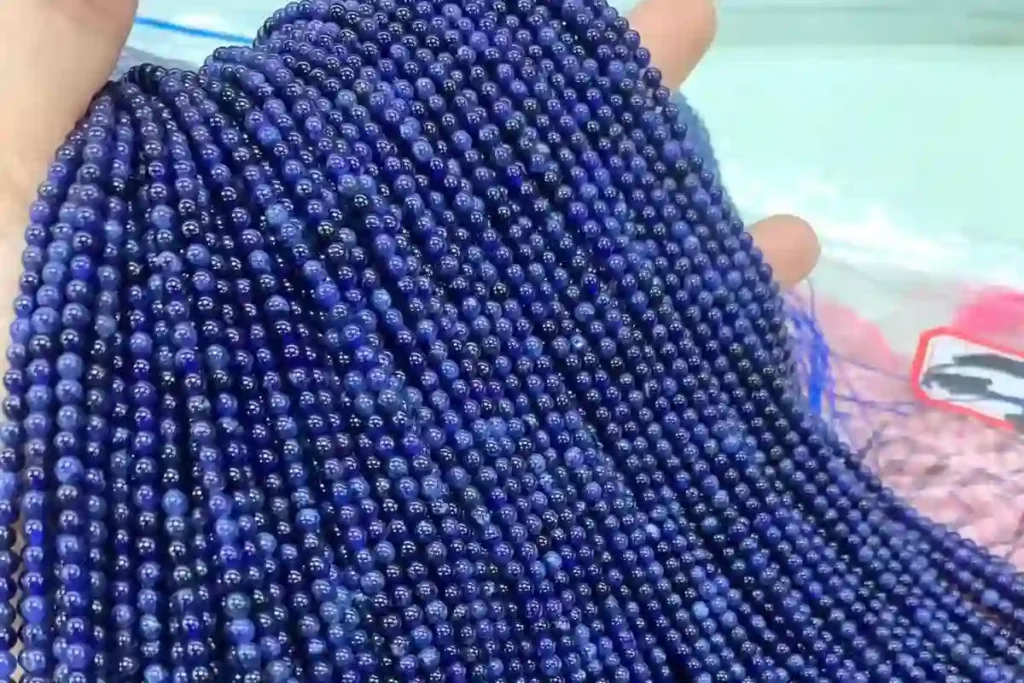
Sodalite vs Lapis Lazuli: Quick Comparison
The quickest way to compare sodalite and lapis lazuli is to look at their composition, patterns, inclusions, and price range. Sodalite is an individual mineral that commonly displays blue areas mixed with white calcite. Lapis lazuli is a rock composed mainly of lazurite, calcite, and other minerals, sometimes including golden pyrite. Sodalite is generally more affordable, while fine-quality lapis often holds a higher market value.
| Feature | Sodalite | Lapis Lazuli |
|---|---|---|
| Material type | A mineral | A rock made of several minerals |
| Main composition | Sodium-rich aluminosilicate | Mainly lazurite, calcite, and sometimes pyrite |
| Typical color | Grayish blue, navy blue, or blue-violet | Rich royal blue to violetish blue |
| White areas | Often has visible white calcite veins | May contain white calcite spots or streaks |
| Golden pyrite | Normally absent | May be present, but not in every piece |
| Mohs hardness | About 5.5–6 | About 5–6, depending on composition |
| Common products | Tumbled stones, beads, carvings, and bracelets | Beads, pendants, inlays, carvings, and premium jewelry |
| Typical price | Usually more affordable | Usually more expensive |
| Suitable buyers | Budget-focused retailers and volume buyers | Buyers targeting mid-range or premium markets |
| Care | Avoid chemicals, long soaking, and hard impacts | Avoid chemicals, long soaking, and abrasive cleaning |
The difference between lapis and sodalite becomes clearer when several features are examined together. Golden pyrite can support the identification of lapis, but it should not be treated as a required feature. Some genuine lapis has little or no visible pyrite, while both materials may contain white calcite.
Natural batches also vary in color, pattern, size, and surface finish. For this reason, buyers comparing lapis vs sodalite should review clear photos or videos of the actual goods instead of relying only on a standard sample image. This is especially important when ordering matched beads, selected tumbled stones, or large quantities for a consistent retail collection.
What Are Sodalite and Lapis Lazuli?
What Is Sodalite?
Sodalite is a sodium-rich mineral that belongs to the sodalite mineral group. It usually appears in navy blue, grayish blue, royal blue, or blue-violet shades. White calcite often runs through the material as veins, patches, or cloudy patterns. These natural markings give each piece a different appearance and help buyers recognize many common forms of sodalite lapis sold in the crystal market.
Although blue remains its best-known color, sodalite can also appear gray, white, green, yellow, or pink. Most crystal buyers choose blue material for tumbled stones, beads, bracelets, pendants, carvings, and decorative pieces. In addition, its moderate price allows retailers to offer attractive blue products without moving into the higher price range often associated with fine lapis lazuli.
The traditional sodalite meaning relates to logic, communication, emotional balance, and clear thinking. However, these ideas come from crystal traditions rather than medical evidence. From a practical buying perspective, important sodalite properties include its blue-and-white pattern, moderate hardness, polish, size, and surface condition. Wholesalers should also check color consistency, cracks, white calcite levels, and possible treatments before choosing a batch.
What Is Lapis Lazuli?
Lapis lazuli is a blue metamorphic rock rather than a single mineral. It mainly contains lazurite, which creates its valued blue color. The material may also include white calcite, golden pyrite, diopside, mica, and other minerals. Because the proportions vary, different pieces of lapis lazuli sodalite can show noticeable differences in color, pattern, and surface appearance.
Buyers often recognize lapis by its rich royal blue color and metallic golden flecks. However, genuine lapis does not always contain visible pyrite. Some pieces have a smooth, even blue surface, while commercial grades may show large white calcite areas. Therefore, wholesalers should never use gold-colored spots as the only test when comparing lapis with sodalite.
Fine-quality lapis usually has a saturated blue color, limited white calcite, a good polish, and an attractive distribution of pyrite when it appears. In contrast, lower grades may look pale, heavily veined, uneven, or difficult to match. Lapis commonly becomes beads, cabochons, pendants, carvings, inlays, and decorative objects. Its long history and strong market recognition often place it above sodalite in price and retail positioning.
Lazurite vs Lapis Lazuli: Mineral and Rock
The comparison of lazurite vs lapis lazuli starts with one basic distinction: lazurite is a mineral, while lapis lazuli is a rock made from several minerals. Lazurite provides most of the intense blue color that buyers value in lapis. Meanwhile, calcite creates white areas, and pyrite may add metallic golden flecks. Their different proportions influence the final color, pattern, hardness, and grade.
Lazurite belongs to the sodalite mineral group, so it shares some chemical and structural features with sodalite. However, lazurite and sodalite are not the same mineral. Likewise, lapis lazuli does not simply mean blue sodalite. The name refers to a rock that must contain enough blue lazurite to produce its characteristic appearance.
Buyers should also avoid confusing lazurite with lazulite. Despite their similar names and blue colors, lazulite has a different chemical composition and belongs to another mineral group. Therefore, wholesalers should use accurate names when requesting quotations, reviewing certificates, or labeling finished goods. Clear terminology reduces misunderstandings and helps customers compare materials, grades, and prices more effectively.
Why Do People Confuse Sodalite with Lapis Lazuli?
People often confuse these two materials because both can display deep blue colors and white calcite patterns. Polishing also increases their shine and makes their colors appear richer. As a result, tumbled stones, round beads, and small carvings may look almost identical in product photos. This similarity explains why the difference between lapis lazuli and sodalite may remain unclear to new buyers.
Commercial-grade lapis can create even more confusion because it may contain large white areas and little visible pyrite. Meanwhile, some sodalite has a saturated royal blue color with only limited white veining. Therefore, buyers who expect every piece of lapis to contain bright golden flecks may incorrectly identify genuine material as sodalite. In the same way, they may mistake high-quality sodalite for lapis because of its strong blue color.
Photography can also change how lapis sodalite products appear. Bright lighting may hide white calcite, while shadows can make a medium blue stone look much darker. In addition, filters, strong color correction, and different screen settings can increase blue saturation. Buyers should request natural-light photos, close-up images, and videos of the actual batch when color accuracy matters for matching or resale.
Finally, inconsistent market names can make identification more difficult. Some sellers use terms such as “blue stone,” “denim lapis,” or “sodalite lapis” without clearly explaining the material. However, a trade name does not confirm mineral composition. Buyers should compare the color, white patterns, metallic inclusions, surface texture, and supplier disclosure together. If an order has a high value, professional gemological testing provides stronger evidence than appearance alone.
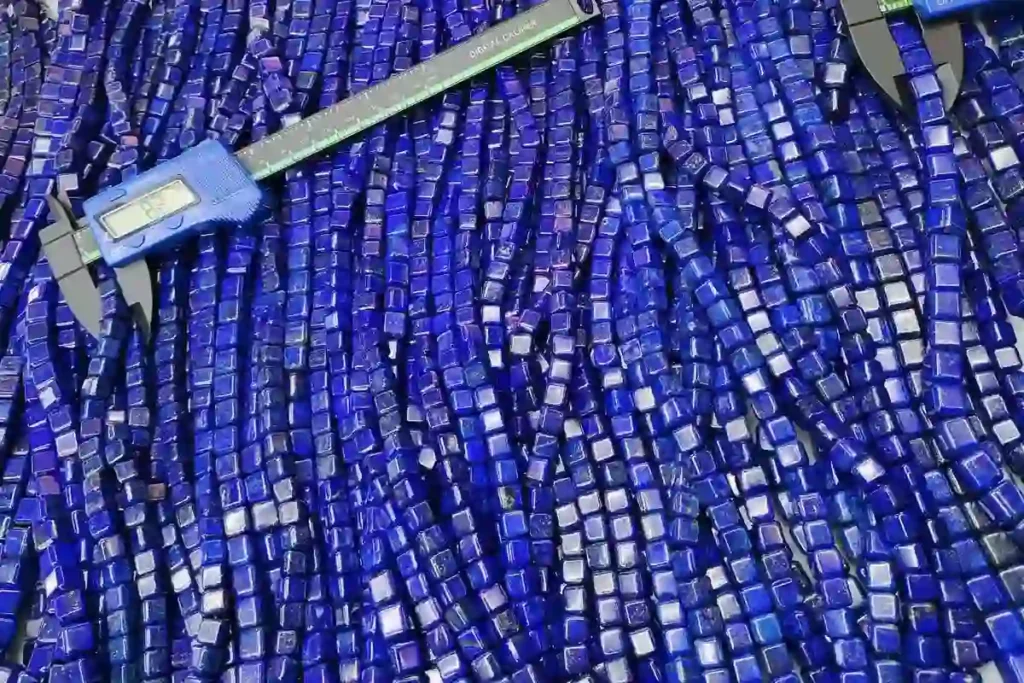
How to Tell Sodalite and Lapis Lazuli Apart
Compare the Blue Color
Color provides a useful starting point when comparing lapis lazuli vs sodalite, but it cannot confirm the material on its own. Sodalite often shows navy blue, grayish blue, or blue-violet shades. Some pieces look slightly dull or cloudy because white calcite mixes through the blue areas. However, selected sodalite can also display a deep and attractive blue with very little white.
Lapis lazuli usually ranges from medium blue to rich royal blue or violetish blue. Buyers often value strong saturation and an even color, especially in higher grades. In contrast, commercial material may appear lighter, patchier, or heavily mixed with white calcite. Moreover, different mineral proportions can create noticeable variations within the same batch.
The difference between sodalite and lapis becomes easier to see when buyers compare several pieces under natural light. They should avoid judging color through heavily edited photos or dark backgrounds. Instead, combining color with white patterns, pyrite distribution, texture, and supplier information produces a more reliable identification.
Look at White Calcite Patterns
White calcite appears in both materials, so its presence alone cannot separate sodalite from lapis lazuli. Sodalite often shows wide white veins, cloudy patches, or irregular areas that create a strong contrast with the blue background. In some batches, the white material covers a large part of each stone. However, selected grades may contain less white and display a more consistent blue color.
Lapis lazuli can also contain white calcite as small spots, thin streaks, or larger pale sections. Fine grades usually have limited visible calcite because buyers often prefer a rich and even blue surface. In contrast, commercial grades may show substantial white areas, making the difference between sodalite and lapis lazuli harder to recognize.
For wholesale orders, buyers should define how much white calcite they can accept before production or packing begins. Clear reference photos work better than broad terms such as “high quality.” Moreover, agreeing on an acceptable pattern range helps the supplier sort the batch more consistently and reduces disputes after delivery.
Check for Golden Pyrite
Golden pyrite provides one of the most useful visual clues when comparing Sodalite vs Lapis Lazuli. Natural lapis may contain small metallic flecks, fine veins, or scattered patches of pyrite. Under direct light, these inclusions often reflect with a gold or brass-like shine. Sodalite, in contrast, does not normally contain the natural golden pyrite associated with lapis lazuli.
However, genuine lapis does not always show visible gold-colored flecks. Some high-quality pieces have a rich, even blue surface with little or no noticeable pyrite. Therefore, buyers should not reject a blue stone as fake lapis simply because it lacks gold spots. Likewise, a large amount of pyrite does not automatically make a piece more valuable.
Fine, evenly distributed pyrite can create an attractive appearance, while large or irregular patches may reduce color consistency. In addition, manufacturers can add gold-colored material to imitations or reconstituted products. Buyers should examine the inclusions closely and consider the color, calcite, texture, treatment disclosure, and price together. For valuable orders, a gemological test offers more reliable confirmation than pyrite alone.
Compare Patterns, Texture and Polish
Sodalite often shows bold blue-and-white patterns, including wide veins, cloudy areas, and irregular patches. In contrast, lapis lazuli may combine a blue background with fine white calcite and scattered golden pyrite. However, commercial-grade lapis can contain large white areas, while selected sodalite may look smooth and evenly blue. Therefore, patterns help with identification, but they do not provide a final answer alone.
Surface quality also affects how both materials look and sell. A well-polished stone has a smoother feel, stronger color, and better shine. Meanwhile, low-grade material may show small pits, visible cracks, flat areas, or an uneven finish. These issues become especially important for beads, cabochons, and display pieces that customers inspect closely.
Wholesale buyers should compare several random pieces rather than judging only the best sample. In addition, they should confirm acceptable levels of surface pits, natural lines, shape differences, and polish before ordering. Clear standards help maintain a more consistent batch and support better retail presentation.
Raw Sodalite vs Lapis Lazuli
Comparing raw sodalite vs lapis lazuli can be more difficult because rough surfaces often hide color, shine, and mineral details. Weathering may also create a pale or dusty outer layer. Therefore, buyers should examine freshly exposed areas whenever possible. Sodalite rough commonly shows blue sections mixed with bold white calcite, while lapis rough may combine deep blue lazurite with calcite, pyrite, and other minerals.
Metallic golden flecks can support the identification of lapis, but their absence does not prove that a specimen is sodalite. In addition, rough material may contain a large amount of matrix that reduces the usable yield after cutting. Buyers should check the depth of the blue color, distribution of white material, visible cracks, matrix percentage, and estimated cutting loss before comparing prices.
Home tests can damage valuable specimens or produce unclear results. For example, acid may react with calcite, while scratch testing leaves permanent marks. Instead, buyers should request accurate material information and clear videos from the supplier. When the identity carries significant financial value, an independent gemological laboratory can provide a more reliable conclusion about the difference between sodalite and lapis.
Composition, Hardness and Durability
Chemical and Mineral Composition
Composition creates the most important scientific difference between sodalite and lapis lazuli. Sodalite is a sodium-rich aluminosilicate mineral that contains chlorine. It belongs to the sodalite mineral group and usually forms in sodium-rich igneous rocks. Although other minerals may appear beside it, sodalite itself has a defined mineral structure and composition.
Lapis lazuli, in contrast, is a metamorphic rock composed of several minerals. Lazurite produces most of its valued blue color, while calcite creates white areas. Pyrite may add metallic golden flecks. In addition, lapis can contain smaller amounts of diopside, mica, feldspar, amphibole, and other minerals. The exact mixture varies between deposits and individual pieces.
These different mineral proportions influence the color, pattern, density, hardness, and polishing result of lapis. Therefore, two genuine pieces may look noticeably different. This also explains why a simple chemical formula cannot describe all lapis lazuli. When comparing sodalite and lapis, buyers should understand that one is a mineral, while the other is a naturally variable rock.
Mohs Hardness and Everyday Durability
Sodalite usually measures about 5.5 to 6 on the Mohs hardness scale. Lapis lazuli generally ranges from 5 to 6 because its hardness changes with the proportions of lazurite, calcite, and other minerals. Therefore, neither material offers the strong scratch resistance found in harder gemstones such as quartz, topaz, or sapphire.
Both materials work well for beads, pendants, earrings, carvings, cabochons, and decorative pieces. However, daily-wear rings and bracelets receive more impacts and surface friction. Buyers who choose these products should inspect the setting, bead holes, edges, and overall construction. Protective metal settings can also reduce direct contact with hard surfaces.
In addition, sodalite and lapis may chip, scratch, or lose their polish when they meet harder materials. Jewelry owners should remove them before exercise, housework, or manual work. Retailers can reduce complaints by giving customers clear care instructions instead of describing either material as highly durable.
Treatments, Dyes and Imitations
The market may include dyed, waxed, oiled, stabilized, or reconstituted blue materials. Some treatments deepen pale color, hide surface defects, or improve polish. In addition, manufacturers may use dyed howlite, dyed jasper, glass, resin, or reconstructed stone to imitate lapis lazuli. Low-grade sodalite can also receive dye when suppliers want a darker and more even blue appearance.
Buyers should ask whether the material has received color treatment, resin filling, surface coating, or stabilization. However, appearance alone may not reveal every process. Dye can collect around cracks or bead holes, while wax and oil may create an unusually smooth surface. A very strong color combined with an extremely low price should encourage closer inspection, although price alone cannot prove treatment.
Before placing a bulk order, wholesalers can request material disclosure, close-up photos, random samples, and testing information. They should also describe treated products accurately to their customers. When the material identity or treatment status affects a high-value purchase, an independent gemological report offers stronger evidence than visual inspection alone.
Where Do Sodalite and Lapis Lazuli Come From?
Common Sodalite Sources
Sodalite occurs in several countries, including Brazil, Canada, Namibia, Portugal, Russia, and the United States. Canadian material has strong historical recognition because geologists identified important deposits in Ontario. Meanwhile, Brazil and Namibia supply blue rough used for beads, tumbled stones, carvings, and other decorative products.
Color and pattern can vary between deposits. Some rough has a rich blue base with limited white calcite, while other material shows pale areas, wide white veins, or gray tones. However, buyers should not assume that every stone from one country has the same appearance or quality. A mine or country name does not replace inspection of the actual goods.
For wholesale purchasing, batch quality matters more than a broad origin claim. Buyers should compare blue saturation, white calcite, cracks, cutting yield, polish, and consistency. In addition, suppliers should clearly separate confirmed origin information from trade assumptions when reliable mine records are unavailable.
Major Lapis Lazuli Sources
Afghanistan has supplied lapis lazuli for thousands of years, and material from the Badakhshan region has a strong reputation for rich blue color. The country remains the best-known historical source. However, quality still varies within Afghan material, so an origin label alone cannot guarantee a premium grade.
Other notable sources include Chile, Russia, Pakistan, and several smaller producing regions. Chilean lapis often contains more visible white calcite, although selected pieces can still show attractive blue color. Russian material may also provide strong blue shades and distinctive patterns. In addition, traders sometimes name material after a country even when they cannot provide complete mine records.
Wholesale buyers should focus on the actual batch instead of paying only for a well-known origin. Color saturation, calcite content, pyrite distribution, cracks, polishing quality, and treatment disclosure directly affect commercial value. Therefore, suppliers should support origin claims with reliable documentation when possible and avoid presenting uncertain sourcing information as a confirmed fact.
Sodalite vs Lapis Lazuli Price and Value
Which Stone Is Usually More Expensive?
When buyers compare Sodalite vs Lapis Lazuli price, lapis lazuli usually costs more than sodalite at a similar size and finish. Fine lapis has strong historical recognition, limited premium rough, and higher demand in jewelry and decorative markets. Meanwhile, sodalite offers an attractive blue appearance at a more accessible price, making it suitable for larger quantities and entry-level products.
However, grade can change the comparison. Selected sodalite with a rich blue color, limited white calcite, and excellent polishing may cost more than low-grade lapis with pale color and large white areas. In addition, large carvings, matched beads, unusual sizes, and difficult cutting work can raise the final price of either material.
Buyers should compare equal specifications instead of relying on average market prices. Important factors include color, pattern, treatment, origin, size, shape, polish, sorting consistency, packaging, and order quantity. Therefore, an unusually low quotation does not always represent better value. The buyer may receive a different grade, smaller size, weaker finish, or treated material. Reviewing actual batch photos and samples provides a more useful price comparison.
What Determines Sodalite Prices?
Sodalite prices depend on color saturation, white calcite content, usable rough size, cracks, cutting quality, and surface polish. Material with a strong blue color and limited white areas usually receives a higher grade. However, some buyers prefer bold blue-and-white patterns for carvings or decorative pieces, so visual preference can also influence commercial value.
Size and consistency matter as well. Large rough pieces with fewer fractures can produce bigger carvings, while evenly drilled and well-matched beads require additional sorting. Moreover, tumbled stones with smooth surfaces, full shapes, and a controlled size range usually cost more than irregular commercial-grade pieces.
Order requirements also affect the quotation. Strict color matching, narrow size tolerances, custom shapes, special packaging, and small production runs can increase labor costs. Therefore, wholesale buyers should compare the actual specifications and sorting standard instead of choosing sodalite only by its price per kilogram or strand.
What Determines Lapis Lazuli Prices?
Color creates one of the strongest influences on lapis lazuli prices. Buyers usually value a rich, saturated, and even blue more highly than pale or grayish material. White calcite often lowers the grade when it interrupts the blue surface. However, customer preferences vary, and some markets accept visible white patterns in affordable jewelry, tumbled stones, or decorative items.
Pyrite also affects value, but more gold-colored flecks do not always mean better quality. Fine, evenly distributed pyrite can create an attractive appearance, while large metallic patches may reduce color consistency. In addition, pieces with little or no visible pyrite can still reach a high grade when they have an intense blue color and minimal calcite.
Origin, treatment, size, cutting, and sorting further influence the quotation. Large carvings require suitable rough, while matched beads need extra selection and labor. Therefore, buyers should review natural-light photos or videos of the actual batch. They should also confirm whether the material is natural, dyed, stabilized, or reconstituted before comparing prices from different suppliers.
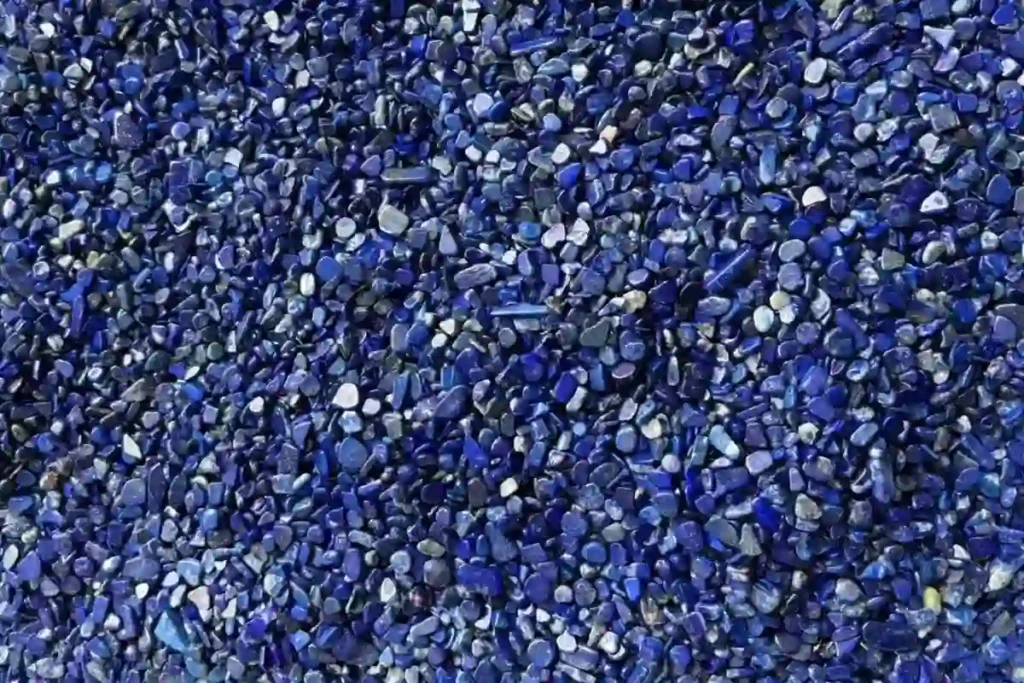
Sodalite vs Lapis Lazuli Benefits and Spiritual Meaning
Crystal traditions connect sodalite and lapis lazuli with several emotional and spiritual qualities. However, these beliefs come from cultural practices and personal experiences rather than established medical evidence. People can enjoy the stones for their appearance, symbolism, meditation practices, jewelry designs, or collections, but they should not use them to replace professional medical or mental health care.
Sodalite Meaning and Traditional Associations
The traditional sodalite meaning centers on logic, communication, honesty, and clear thinking. Many crystal users associate its blue color with calm self-expression and thoughtful decision-making. Therefore, people often choose sodalite for meditation spaces, personal jewelry, study areas, or objects that remind them to communicate more clearly.
Some traditions also connect sodalite properties with emotional balance and self-confidence. For example, users may carry a tumbled stone or wear a bracelet as a personal symbol during stressful conversations. However, individual experiences vary, and scientific research does not confirm that sodalite can treat anxiety, improve concentration, or cure physical conditions.
Beyond spiritual beliefs, sodalite offers practical benefits for retailers and designers. Its recognizable blue-and-white appearance works well in beads, carvings, pendants, and mixed-stone sets. In addition, its accessible price allows buyers to create attractive blue products for customers who may not want to pay the higher price of fine lapis lazuli.
Lapis Lazuli Meaning and Traditional Associations
Lapis lazuli has represented wisdom, truth, status, and inner awareness in many cultural traditions. Ancient civilizations used it in jewelry, carvings, seals, inlays, and valuable blue pigments. Because of this long history, modern crystal users often connect the stone with knowledge, confidence, and honest self-expression.
Many spiritual practices also associate lapis with intuition, self-awareness, and communication. For example, some people wear a pendant, hold a polished stone during meditation, or place a carving in a personal space. However, these practices reflect tradition and individual belief. Scientific evidence does not show that lapis can treat disease, improve mental health, or guarantee emotional change.
From a practical viewpoint, lapis offers a rich blue color and strong name recognition. Therefore, jewelry designers and retailers often use it for statement necklaces, premium bracelets, pendants, and gift pieces. Its symbolism can support a product’s story, while its color and mineral patterns create visual value. Sellers should clearly separate traditional meanings from proven physical properties when describing it to customers.
Lapis Lazuli and Sodalite Spiritual Meaning
The traditional lapis lazuli and sodalite spiritual meaning shares several themes, especially communication, truth, and self-awareness. However, crystal users often give each material a slightly different role. They commonly associate sodalite with logical thinking, calm expression, and emotional balance, while they connect lapis lazuli with wisdom, confidence, intuition, and inner truth.
Some people use sodalite and lapis lazuli together because they believe the two blue materials complement each other. For example, a person may combine them in a bracelet, meditation set, or personal collection. The similar colors create a coordinated appearance, while their different patterns make each piece easy to recognize.
These spiritual interpretations come from modern crystal practices and older cultural symbolism rather than scientific proof. Therefore, sellers should present them as traditional associations, not guaranteed results. Customers may choose the materials for their symbolism, color, history, or personal meaning, but neither stone should replace qualified medical, psychological, or professional support.
Sodalite vs Lapis Lazuli Benefits
The practical Sodalite vs Lapis Lazuli benefits begin with their attractive blue colors and wide range of uses. Manufacturers can shape both materials into beads, tumbled stones, pendants, cabochons, carvings, and decorative pieces. However, sodalite usually offers a more accessible price, while lapis provides stronger historical recognition and a more premium market position.
Sodalite works well for larger assortments, entry-level jewelry, gift sets, and customers who enjoy visible blue-and-white patterns. In contrast, selected lapis suits higher-value necklaces, bracelets, statement pieces, and cultural designs. Therefore, buyers can choose between the two according to their budget, desired grade, product type, and target customer.
Crystal traditions also give both materials symbolic benefits. People often connect sodalite with logical thinking and communication, while they associate lapis with wisdom and inner truth. Nevertheless, these meanings reflect personal beliefs rather than proven health effects. Responsible sellers should focus on appearance, craftsmanship, symbolism, and customer preference without promising medical or psychological results.
Wearing Sodalite and Lapis Lazuli in Jewelry
Lapis Lazuli and Sodalite Bracelet Benefits
The practical lapis lazuli and sodalite bracelet benefits include coordinated color, varied natural patterns, and flexible pricing. Both materials provide deep blue shades, while white calcite and occasional golden pyrite create visual contrast. As a result, designers can combine them in one bracelet without making the finished piece look mismatched.
Sodalite beads can help control the total cost, while selected lapis beads can create a more premium focal point. For example, designers may use sodalite for most of the bracelet and add a few lapis beads near a charm or metal spacer. In addition, silver-colored findings work well with both materials and support modern, spiritual, or unisex designs.
From a traditional crystal perspective, users may connect the combination with communication, wisdom, and self-expression. However, these beliefs do not guarantee physical or emotional results. Retailers should focus on accurate material names, bead size, wrist length, color consistency, and craftsmanship while presenting spiritual meanings as personal or cultural associations.
Choosing a Lapis Lazuli and Sodalite Necklace
A lapis lazuli and sodalite necklace can combine similar blue tones with noticeably different natural patterns. Designers may alternate the two materials, use lapis as a central feature, or add sodalite to create a more accessible price. However, they should compare the stones under the same lighting because color differences may appear stronger after assembly.
Bead size, hole diameter, necklace length, and weight all affect the finished design. In addition, designers should inspect drilling quality, surface cracks, polish, and color matching. Poorly drilled holes can damage the thread, while sharp edges may reduce the necklace’s durability. Heavy beads also require suitable stringing material and a secure clasp.
Wholesale buyers should confirm whether they need evenly matched beads or a more natural mixed appearance. They can also request reference photos for the acceptable white calcite and pyrite range. Clear specifications help the supplier sort lapis and sodalite more accurately and keep repeat orders closer to the original design.
Can You Wear Sodalite and Lapis Lazuli Together?
Yes, people can wear sodalite and lapis lazuli together. Their blue colors create a coordinated appearance, while their white calcite patterns and occasional golden pyrite add variety. Designers can combine them in bracelets, necklaces, earrings, or layered jewelry. In addition, silver, stainless steel, and neutral-colored spacer beads usually match both materials well.
Because the two materials have similar moderate hardness, they can work together without one strongly scratching the other. However, both may receive damage from harder gemstones, rough metal components, or repeated impacts. Therefore, jewelry makers should use smooth spacers, secure settings, and suitable stringing materials.
Crystal users may also combine sodalite lapis lazuli jewelry for its traditional associations with communication, wisdom, and truth. Nevertheless, these meanings depend on personal beliefs. From a practical perspective, comfort, craftsmanship, accurate labeling, and proper care matter more than claims about guaranteed spiritual results.
Which Stone Is Better for Your Market?
Choose Sodalite for Accessible Blue Products
Sodalite suits buyers who want attractive blue products at an accessible wholesale price. Retailers can use it for tumbled stone assortments, entry-level bracelets, bead strands, gift sets, carvings, and mixed crystal boxes. Because the material usually costs less than fine lapis, buyers can order larger quantities without pushing the final retail price too high.
Its blue-and-white appearance also gives customers clear natural variation. However, some batches contain more calcite, gray areas, or surface lines than others. Therefore, buyers should define their preferred blue tone, acceptable white percentage, size range, and polish before placing a bulk order. Clear standards improve consistency without removing the natural character of the stone.
Sodalite works especially well for price-sensitive markets, beginner crystal collections, craft projects, and high-volume retail displays. In addition, jewelry makers can combine it with metal spacers or selected lapis beads to create different price levels. The material offers practical value when buyers balance appearance, quality, and cost rather than simply choosing the lowest quotation.
Choose Lapis Lazuli for a Premium Position
Lapis lazuli suits buyers who want stronger name recognition, a rich historical background, and a more premium product range. Retailers often choose it for statement necklaces, selected bracelets, pendants, cabochons, collector pieces, and higher-value gifts. Its deep blue color and possible golden pyrite also give designers a distinctive visual story.
However, lapis has a wide quality and price range. Commercial material may contain large white calcite areas, uneven color, visible cracks, or a weak polish. In contrast, higher grades usually show stronger blue saturation, limited white calcite, and attractive pyrite when present. Therefore, the name “lapis lazuli” alone does not describe the actual grade.
Buyers should match the material to their expected retail price and customer preferences. For example, affordable lapis can support entry-level products, while selected pieces fit premium collections. In addition, clear disclosure about treatment, origin, and natural variation helps retailers build trust and explain why two lapis products may have very different prices.
Choose by Customer, Use and Budget
There is no single answer to which is better, sodalite or lapis lazuli. The right choice depends on the buyer’s target customers, product type, required grade, and available budget. Sodalite usually works better for affordable blue products and larger-volume orders, while lapis often supports higher retail prices and a more premium position.
Buyers should first decide how they plan to use the material. Tumbled stone assortments and entry-level bracelets may need competitive pricing and stable supply. In contrast, fine jewelry, statement pieces, and premium gifts may require stronger color, careful matching, and better surface quality. Therefore, the intended use should guide the material and grade selection.
Budget should include more than the cost per kilogram or strand. Buyers also need to consider sorting loss, drilling quality, packaging, shipping, and possible defects. When comparing Sodalite vs Lapis Lazuli, a well-selected batch that matches the market may provide better value than a cheaper batch that requires heavy sorting or creates customer complaints.
Wholesale Buying Guide for Sodalite and Lapis Lazuli
Confirm the Material and Treatment
Before placing a wholesale order, buyers should confirm whether the goods contain natural sodalite, natural lapis lazuli, treated material, or an imitation. Suppliers may use dye, wax, oil, resin, or stabilization to improve color and surface appearance. In addition, reconstituted stone can contain crushed natural material mixed with a binding agent.
Buyers should ask direct questions about dyeing, resin filling, surface coating, reconstruction, and declared origin. They can also request close-up images of cracks, bead holes, cut edges, and several random pieces. Dye sometimes gathers in these areas, although visual inspection cannot identify every treatment with certainty.
Price alone cannot confirm authenticity. Natural commercial-grade material may cost less because of pale color, white calcite, cracks, or weaker polishing. Meanwhile, an expensive quotation does not guarantee untreated goods. Therefore, buyers should include the confirmed material name and treatment status on the quotation or invoice. For valuable orders, independent testing can provide stronger evidence and reduce the risk of incorrect labeling.
Set a Clear Grade Standard
Wholesale grade names such as A, AA, AAA, or premium do not follow one universal standard. One supplier’s A grade may look similar to another supplier’s commercial grade. Therefore, buyers should define the visible features they expect instead of relying only on a grade label.
For sodalite, the standard can include blue saturation, acceptable white calcite, gray areas, cracks, surface pits, polish, shape, and size tolerance. Meanwhile, lapis specifications should also describe the acceptable amount and distribution of white calcite and golden pyrite. Buyers who need matched beads may require tighter color and diameter control than those purchasing mixed tumbled stones.
Reference photos make these requirements easier to understand. For example, buyers can mark acceptable and unacceptable stones in a sample image before the supplier starts sorting. In addition, the agreement should explain whether the standard applies to every piece or to an overall percentage of the batch. Natural materials cannot look completely identical, but clear tolerances help both sides measure quality fairly and reduce disagreements after delivery.
Check the Actual Batch Before Ordering
A small sample cannot always represent the appearance of a full wholesale order. Natural sodalite and lapis lazuli vary in blue tone, white calcite, pyrite, shape, and surface quality. In addition, a new production batch may come from different rough material. Therefore, buyers should check the actual available goods before confirming a large order.
Natural-light photos can show the overall color, while close-up videos can reveal polish, cracks, bead holes, and pattern differences. Buyers can also ask the supplier to select several random pieces instead of displaying only the best examples. For matched products, placing a ruler or color reference beside the goods makes the review more useful.
Repeat buyers should explain whether they need the new batch to resemble a previous order. However, exact reproduction may not be possible with natural stone. Agreeing on an acceptable range for color, calcite, pyrite, and size helps the supplier sort more accurately and gives the buyer a realistic standard for approval.
Compare Prices by Equal Specifications
Wholesale quotations only provide a fair comparison when they cover the same material, grade, size, treatment, quantity, and packaging. A low price may refer to smaller pieces, more white calcite, wider size tolerances, weaker polish, or treated goods. Therefore, buyers should not compare prices by weight or strand count alone.
For beads, confirm the diameter, strand length, hole size, bead count, shape, polish, and matching standard. Meanwhile, tumbled stone quotations should state the size range, weight, surface quality, and acceptable percentage of flat, cracked, or undersized pieces. Carvings also require clear measurements and workmanship standards.
Shipping terms can further change the final cost. Buyers should check whether the quotation includes packaging, local delivery, international freight, duties, or insurance. In addition, strict sorting and custom packaging require extra labor. Comparing equal specifications helps buyers identify real value and prevents a cheaper quotation from creating higher costs after inspection, repacking, or customer returns.
Not sure whether sodalite or lapis lazuli is the better choice for your customers? Send us your required style, size, grade, quantity, and target price through WhatsApp or our Request a Quote form. We can share photos or videos of the current batch, explain the available color and pattern ranges, and help you compare suitable wholesale options. Clear requirements allow us to recommend material that better matches your budget, design, and retail position.
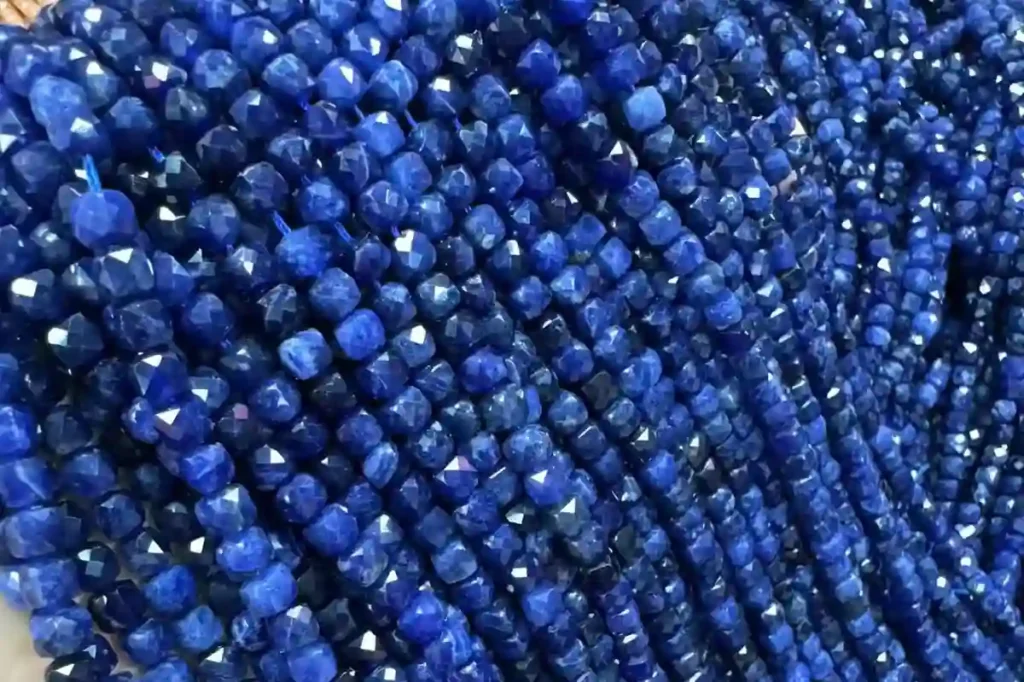
My Experience Supplying Sodalite and Lapis Lazuli
How I Compare the Two Materials for Buyers
In my wholesale crystal business, I have found that some buyers confuse sodalite with lapis lazuli when they compare them through photos. Both materials can show a deep blue color and visible white areas, especially in commercial grades. However, their appearance and wholesale prices often become easier to distinguish when I inspect the actual goods under natural light.
When I compare Sodalite vs Lapis Lazuli for a buyer, I check the overall blue tone, white calcite, surface pattern, and possible golden pyrite. Lapis often contains pyrite, but not every genuine piece has obvious gold-colored flecks. Meanwhile, sodalite commonly has blue-and-white patterns without the natural metallic inclusions associated with lapis. Therefore, I never use color or pyrite as the only identification feature.
I also inspect several random pieces instead of looking only at the best sample. This allows me to judge the true difference between lapis and sodalite across the batch, including color consistency, cracks, polishing, and pattern variation. For higher-value goods, I recommend professional testing when visual inspection and supplier information cannot provide enough certainty.
My Advice Before a Wholesale Order
From a wholesale perspective, I usually recommend sodalite to buyers who need attractive blue products at a more accessible price. It works well for tumbled stones, bead strands, carvings, and entry-level jewelry. In contrast, lapis lazuli often suits buyers who want stronger name recognition, a higher retail position, or a more premium product range.
Before confirming an order, I ask the buyer about the required size, quantity, grade, intended use, and acceptable price range. I also recommend checking photos or videos of the actual batch. Natural stones vary from piece to piece, so standard sample images may not show the true amount of white calcite, golden pyrite, cracks, or color variation.
For larger orders, both sides should agree on acceptable patterns, size tolerances, surface quality, and packaging before packing begins. In my experience, neither material is better for every customer. The right choice depends on the buyer’s budget, sales market, desired appearance, and product positioning. Clear communication at the start makes selection easier and reduces quality disputes after delivery.
Care and Cleaning
Can Sodalite and Lapis Lazuli Get Wet?
Sodalite and lapis lazuli can tolerate brief contact with a damp cloth, but owners should avoid soaking them in water. Lapis may contain calcite and pyrite, while some pieces also receive dye, wax, oil, or other surface treatments. Therefore, long exposure to water can affect the finish, loosen some jewelry components, or create problems in treated material.
Sodalite also has moderate hardness and may contain natural cracks or calcite. Although a quick rinse may not immediately damage every piece, repeated soaking creates unnecessary risk. In addition, elastic bracelets, adhesives, metal findings, and stringing materials may react differently to moisture.
Owners should remove both materials before swimming, bathing, or using household cleaning products. Salt water, acidic liquids, perfumes, and harsh chemicals may harm the stone or its setting. Instead, gentle surface cleaning and immediate drying provide a safer way to maintain the color and polish.
Safe Cleaning and Storage
Use a soft, slightly damp cloth to remove dust, fingerprints, and light dirt from sodalite or lapis lazuli. After cleaning, dry the piece immediately with another soft cloth. For dirt around bead holes or metal settings, use a soft brush with very light pressure. However, avoid scrubbing rough areas because this may weaken the polish.
Do not place either material in ultrasonic or steam-cleaning equipment. In addition, avoid bleach, acidic solutions, jewelry dips, alcohol, and abrasive cleaners. These methods may damage softer mineral areas, affect treatments, or change the surface appearance. Retailers should provide simple care instructions with finished jewelry to help customers prevent avoidable damage.
Store each piece in a soft pouch or a separate compartment. Harder gemstones and sharp metal parts can scratch the surface during transport or storage. Moreover, keep elastic bracelets away from heat and strong sunlight, which may weaken the cord. Careful cleaning and separate storage help preserve the stones’ color, polish, and overall appearance.
Frequently Asked Questions
Which Is Better, Sodalite or Lapis Lazuli?
Neither material is better for every buyer. Sodalite usually offers a more accessible price, so it works well for large-volume orders, entry-level jewelry, tumbled stone assortments, and gift sets. Lapis lazuli often provides stronger historical recognition and a more premium position, especially when it has a rich blue color and limited white calcite. However, grade and craftsmanship matter as much as the material name. Buyers comparing Sodalite vs Lapis Lazuli should consider their target customers, intended use, required consistency, and budget before making a choice. Reviewing the actual batch also helps prevent unexpected differences.
Is Lapis More Expensive Than Sodalite?
Yes, lapis lazuli usually costs more than sodalite when both products have a similar size, finish, and quality. Fine lapis commands higher prices because buyers value its rich blue color, historical importance, and limited premium-grade material. However, low-grade lapis with large white calcite areas, weak color, or poor polishing may cost less than carefully selected sodalite. Treatment, origin, shape, cutting difficulty, size, and order quantity also affect the quotation. Therefore, wholesale buyers should compare the actual grade and specifications instead of assuming that every lapis item has a higher value.
Who Should Not Wear Lapis Lazuli Stone?
No scientific evidence identifies a general group of people who must avoid wearing lapis lazuli. However, people with sensitive skin should check the metal, elastic, adhesive, or coating used in the jewelry because these materials may cause irritation. Anyone who performs heavy manual work, exercises, or regularly handles chemicals should remove lapis jewelry to prevent impact, scratches, or surface damage. In addition, people should not rely on the stone to treat a physical or mental health condition. Spiritual restrictions linked to zodiac signs or energy beliefs remain personal traditions rather than proven safety rules.
Why Can’t Lapis Lazuli Go in Water?
Lapis lazuli can handle brief cleaning with a slightly damp cloth, but owners should not soak it for long periods. The rock may contain softer calcite, metallic pyrite, natural cracks, and several other minerals. In addition, some pieces receive dye, wax, oil, resin, or surface coatings that water may affect. Moisture can also weaken elastic cord, adhesives, and certain metal components in finished jewelry. Therefore, remove lapis before swimming, showering, or using household cleaners. Gentle wiping followed by immediate drying provides a safer cleaning method than full immersion.
Why Is Lapis Lazuli Controversial?
Several issues can create concern around lapis lazuli. Buyers may question supply chain transparency, especially when sellers make valuable origin claims without supporting records. In addition, inconsistent grade names, dyed material, reconstructed stone, and imitations can make price comparisons difficult. Some discussions also focus on whether mining and trading practices provide clear and responsible sourcing information. Meanwhile, sellers may present traditional spiritual beliefs as guaranteed health benefits, although scientific evidence does not support such promises. Buyers can reduce these risks by requesting treatment disclosure, checking the actual batch, reviewing supplier records, and using independent testing for high-value purchases.
Conclusion
The main Sodalite vs Lapis Lazuli distinction comes from composition. Sodalite is a mineral that commonly shows blue color with white calcite patterns. Lapis lazuli is a rock composed mainly of lazurite, calcite, and sometimes golden pyrite. However, genuine lapis does not always contain visible pyrite, so buyers should examine several features instead of relying on gold-colored flecks alone.
When people look for the difference between sodalite vs lapis, they often focus first on color and price. Sodalite usually suits affordable, high-volume products, while selected lapis supports a more premium position. Nevertheless, grade, treatment, cutting, polish, size, and consistency can change the value of either material. The right choice depends on the customer, intended use, quality requirements, and budget.
Wholesale buyers should define acceptable color, white calcite, pyrite, surface quality, and size tolerances before ordering. In addition, photos or videos of the actual batch can reveal natural variations that a standard sample may not show. Clear specifications and treatment disclosure help both sides compare goods fairly and reduce misunderstandings after delivery.
Looking for sodalite or lapis lazuli in bulk? Contact us through WhatsApp or submit our Request a Quote form with your required style, size, grade, quantity, and target price. We can share current batch photos or videos, discuss available patterns and packaging options, and help you select material that matches your customers and market position.
Disclaimer
The information provided here is for general educational and commercial reference only. Mineral colors, patterns, inclusions, sizes, origins, treatments, and prices may vary between individual pieces and production batches. Photos and descriptions cannot replace professional gemological testing when exact identification, treatment status, or origin confirmation is required.
Statements about spiritual meanings, energy, chakras, or emotional benefits come from traditional crystal beliefs and personal practices. Scientific evidence does not confirm these claims, and neither sodalite nor lapis lazuli should replace medical diagnosis, treatment, psychological support, or advice from a qualified professional. Buyers should inspect current batch photos or videos, confirm specifications, and request independent testing when necessary before making a purchasing decision.