
Pink Quartz Meaning, Benefits, Properties, and Wholesale Buying Guide
Written by Roc Gong | Founder of RoCrystal
Last updated: September 16, 2026
Pink quartz, also widely known as rose quartz, is commonly associated with love, compassion, emotional balance, and gentle energy. In the commercial crystal market, both names often refer to the same familiar pink stone. Therefore, this guide treats pink quartz and rose quartz as the same product.
Understanding Pink Quartz Meaning is useful for retailers and jewelry buyers, but meaning alone does not determine whether a product will sell well. Color depth, transparency, natural inclusions, treatments, size, and surface finish can all affect its appearance and value. This guide explains its traditional symbolism, mineral properties, common benefits, and practical uses. It also helps wholesale buyers compare beads, bracelets, tumbled stones, rough pieces, jewelry, quality grades, packaging, and bulk purchasing requirements.
What Is Pink Quartz?
Pink Quartz and Rose Quartz in the Commercial Market
In the commercial crystal market, suppliers and buyers often use the names pink quartz and rose quartz for the same familiar pink material. Both terms can describe beads, bracelets, tumbled stones, rough pieces, carvings, pendants, and other jewelry components. For this reason, this guide uses both names for the same product.
When buyers search for pink quartz vs rose quartz, they may expect a clear difference between the two. However, product names alone rarely provide enough information about quality. Two suppliers may use different names for material with a similar appearance. They may also use the same name for products with very different colors, transparency, treatments, and prices.
Wholesale buyers should therefore inspect the actual material instead of relying only on its label. Ask for clear photographs or videos that show the stones under neutral lighting. For beads and bracelets, request images of loose beads without pink thread because the thread can make pale material appear much pinker.
A good product description should state the color range, transparency, size, natural inclusions, surface finish, and any known treatment. These details give buyers a more useful understanding of the material than the name alone.
Pink Quartz Properties and Quick Facts
Pink quartz is a variety of quartz with the chemical composition SiO₂. According to the Gemological Institute of America, its color ranges from very light pink, which may appear almost white, to medium-dark pink. It has a Mohs hardness of 7 and a specific gravity of approximately 2.66. These physical properties make it suitable for beads, bracelets, rings, pendants, carvings, and polished stones.
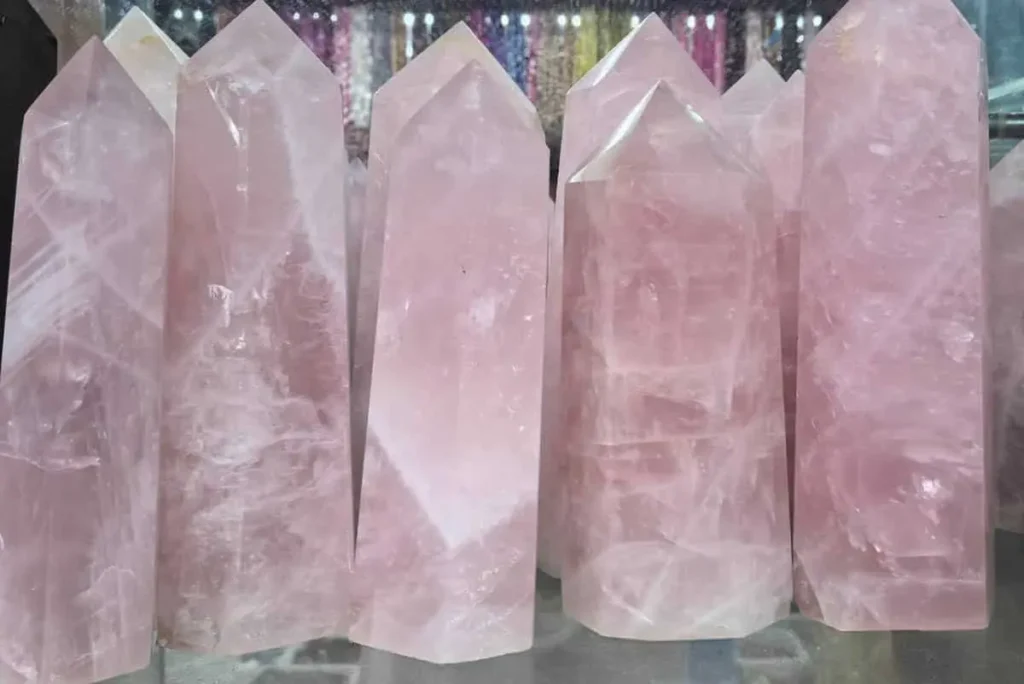
Most commercial material has a translucent or cloudy appearance. Tiny mineral inclusions can create the soft, misty look that many buyers associate with natural pink quartz. More transparent pieces are also available, but high transparency does not always produce the strongest pink color. Some clear beads may look much paler after the colored thread has been removed.
A hardness of 7 gives the stone reasonable resistance to surface scratches during normal use. However, hardness does not mean that it cannot break. Internal fractures, thin edges, drilled holes, and existing cracks can still become damaged during production, packing, or transport.
For wholesale buyers, the most important pink quartz properties include color, transparency, size consistency, polish, drilling quality, and the amount of visible inclusions. Buyers should evaluate these features together. A highly transparent product is not automatically better than semi-transparent material, especially when the target market prefers a softer and more natural pink appearance.
How Pink Quartz Forms and Gets Its Color
Geological Formation
Pink quartz is a natural variety of quartz that develops during geological processes inside the Earth. According to the Gemological Institute of America, common rose quartz usually occurs as a massive material without regular, flat crystal faces. It typically forms in pegmatites, although it can also occur in hydrothermal veins.
Pegmatites form when mineral-rich material cools and crystallizes, often during the final stages of magma development. This environment can produce large masses of quartz that miners later cut into rough pieces, beads, tumbled stones, cabochons, or carvings. Hydrothermal veins form when hot, mineral-rich fluids move through openings in rock and leave minerals behind as the fluids cool.
The rough material does not always show a strong pink color when it first leaves the mine. Its appearance can range from nearly white to medium pink, and one piece may contain several shades. Natural fractures, cloudy areas, white sections, and other mineral inclusions may also develop during formation. These differences remain visible after cutting and polishing, so wholesale batches cannot always have perfectly identical color and transparency.
What Creates the Pink and Cloudy Appearance?
The soft color of natural pink quartz comes from features inside the stone rather than from a simple surface color. The Gemological Institute of America explains that microscopic, aligned silicate mineral fibers create the delicate pink appearance of common rose quartz. These fibers are similar to, but not exactly the same as, the mineral dumortierite. They likely formed as the quartz cooled.
These tiny inclusions also scatter light, giving much of the material its cloudy or semi-transparent appearance. This explains why natural pink quartz often contains misty areas instead of looking completely clear. According to GIA’s rose quartz quality information, larger pieces usually show stronger color, while small specimens with an attractive pink shade are less common.
This size effect matters when buyers compare rough stones, carvings, and small beads. A large polished piece may display a clear pink tone, while beads cut from similar material may look much lighter. Drilling a hole through the bead and using white thread can make the color appear even softer.
Buyers should not assume that cloudy material is always lower quality. A balanced semi-transparent appearance may provide a more visible and natural-looking pink color than highly transparent material. The right choice depends on the product design, target price, and customer preference.
Pink Quartz Meaning and Symbolism
Pink Quartz Meaning in Love and Relationships
The pink quartz meaning in love is closely connected with affection, kindness, trust, and emotional openness. In crystal traditions, it is often called a stone of unconditional love. Some people believe it can serve as a reminder to express care, communicate gently, and build healthier relationships. These meanings may apply to romantic partners, family members, friends, and personal self-care.
Pink quartz does not guarantee that someone will find a partner or repair a difficult relationship. Its meaning is symbolic rather than a proven physical effect. Many customers choose it because its soft pink color supports themes of warmth and tenderness.
This symbolism also gives the stone strong retail appeal. Bracelets, necklaces, hearts, and small carvings can suit wedding gifts, anniversaries, Valentine’s Day displays, friendship collections, and thoughtful personal gifts. For wholesale buyers, understanding rose quartz symbolism can help with product selection, packaging, and marketing without making unrealistic promises.
Spiritual Meaning and the Heart Chakra
The pink quartz spiritual meaning is often linked with compassion, forgiveness, inner peace, and emotional balance. In crystal traditions, people may use the stone during meditation or quiet reflection as a symbol of releasing negative feelings and becoming more open to giving and receiving care.
Pink quartz is also commonly associated with the heart chakra. Within chakra traditions, this energy center represents love, relationships, empathy, and emotional connection. Some people place the stone near the chest during meditation or keep it in a personal space as a reminder of these ideas.
However, chakras and crystal energy belong to spiritual belief systems rather than established mineral science. Pink quartz cannot medically balance the heart, treat emotional disorders, or replace professional care. Sellers should describe these associations as traditional beliefs or personal practices. This approach respects customers’ spiritual interests while avoiding unsupported health claims about the stone.
What Does Pink Quartz Symbolize as a Gift?
When given as a gift, pink quartz commonly symbolizes love, care, friendship, compassion, and emotional support. A romantic partner may choose it to express affection, while friends or family members may use it to show appreciation and kindness. It can also represent reconciliation or a new beginning, although these meanings depend on the giver’s intention.
Its gentle color makes pink quartz suitable for birthdays, anniversaries, weddings, Valentine’s Day, Mother’s Day, and friendship gifts. Bracelets, necklaces, hearts, rings, and small carvings are easy for retailers to present with message cards or gift packaging.
For wholesale buyers, the significance of rose quartz creates opportunities across several markets. Jewelry sellers may focus on love and personal style, while crystal stores may highlight traditional symbolism. Gift shops can present it as a thoughtful keepsake without promising emotional or medical results.
Pink Quartz Meaning and Benefits
Traditional Emotional and Spiritual Benefits
The traditional pink quartz benefits focus mainly on emotions, relationships, and personal well-being. Some people believe the stone encourages self-love, patience, compassion, and a calmer state of mind. Others use it as a reminder to release resentment, communicate more gently, or become more accepting of themselves and the people around them.
These ideas explain why pink quartz remains popular in meditation sets, intention gifts, bracelets, pocket stones, and home displays. Its soft color can also create a peaceful visual style, even for customers who do not follow crystal traditions.
However, the meaning and benefits of pink quartz are personal rather than guaranteed. One customer may connect it with romantic love, while another may see it as a symbol of friendship or emotional support. Sellers should use phrases such as “commonly associated with” or “some people believe.” This wording allows retailers to explain traditional meanings without presenting spiritual claims as proven results.
Pink Quartz Healing Properties and Physical Claims
Searches for pink quartz healing properties often lead to claims about sleep, circulation, skin, stress, or heart health. These statements are common in crystal traditions, but they should not be presented as medically proven effects. There is no reliable basis for claiming that wearing a pink quartz bracelet or keeping the stone nearby can diagnose, prevent, or cure a physical condition.
Some customers may feel more relaxed while holding the stone, meditating, or following a personal ritual. That experience can still feel meaningful to them, but it does not prove that the mineral itself caused a physical change.
Retailers and wholesale buyers should avoid labels such as “healing treatment” or “medical crystal.” Safer wording includes “traditionally associated with calm,” “used in personal wellness practices,” or “chosen for its symbolic meaning.” Anyone with a physical or mental health concern should seek advice from a qualified healthcare professional rather than relying on pink quartz.
What Does Science Say About Pink Quartz Benefits?
Scientific evidence does not show that pink quartz produces a specific healing effect in the body. A 2025 peer-reviewed study by Escolà-Gascón and colleagues examined healing crystals in relation to anxiety. The researchers found that the crystals did not reduce anxiety beyond the placebo effect. Reported changes were instead connected with expectations and conditioning.
This does not mean that every personal experience is unimportant. A quiet ritual, meditation session, meaningful gift, or attractive object may help someone feel calm or focused. However, these experiences do not demonstrate that pink quartz releases a medically active energy.
The safest approach is to separate tradition from science. Sellers can explain that pink quartz is commonly associated with love, self-care, and emotional balance in crystal traditions. They should not say that it treats anxiety, depression, heart problems, or another medical condition. Clear wording protects customers and allows retailers to discuss the stone’s cultural and symbolic appeal without making unsupported health promises.
How People Use Pink Quartz
Wearing Pink Quartz Jewelry
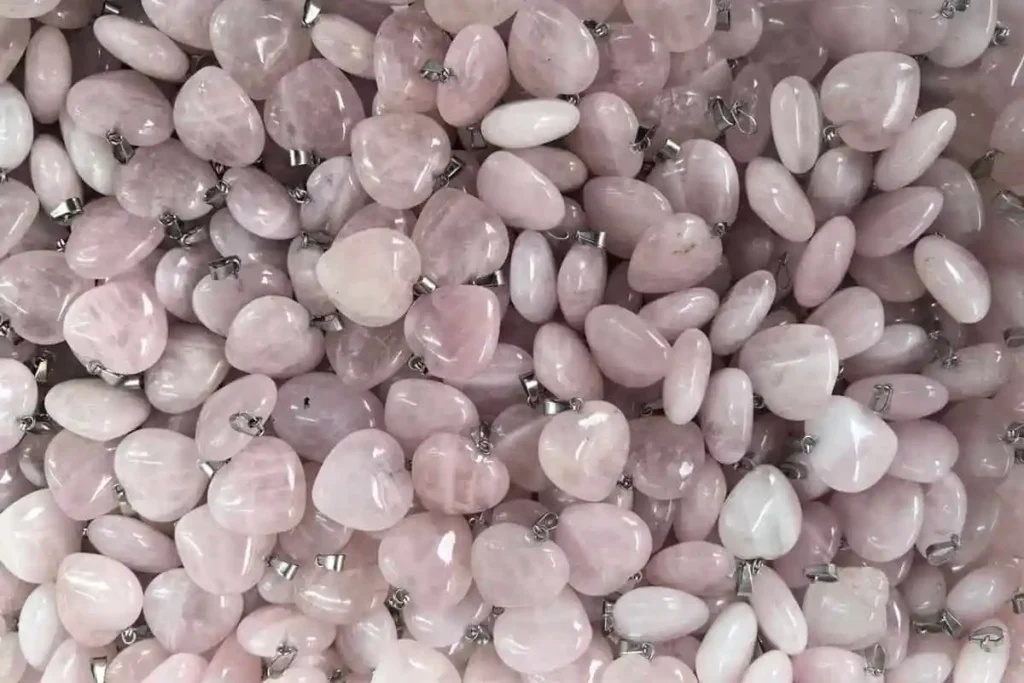
Pink quartz jewelry allows customers to enjoy the stone’s soft color and personal symbolism in daily life. Common choices include bracelets, necklaces, pendants, earrings, and rings. A pink quartz bracelet is easy to wear and works well for crystal stores, gift shops, and jewelry retailers. Necklaces and pendants place the stone near the chest, which some people connect with heart chakra traditions.
Jewelry buyers should also consider practical details. Bead size, thread color, metal quality, drilling, polish, and clasp strength can influence the finished product. Spiritual meaning may support the sale, but comfortable construction and consistent quality often determine whether customers wear the jewelry regularly.
Meditation, Home Placement, and Feng Shui
Some people hold pink quartz during meditation or place it nearby while practicing breathing exercises and affirmations. The stone can act as a visual reminder of compassion, calm, or a personal intention. These uses reflect individual spiritual practices rather than proven effects of the mineral.
At home, pink quartz is often placed in bedrooms, living rooms, meditation areas, or quiet workspaces. Feng shui traditions may connect it with love and relationship areas. However, placement rules vary between traditions, so there is no single correct location.
For retailers, polished stones, spheres, hearts, and carvings work well for home displays. Buyers should choose a size and style that suit the customer’s space, décor, and intended use.
Gifts and Crystal Combinations
Pink quartz is easy to include in gift sets because its pale color pairs well with many other stones. Retailers often combine it with clear quartz, amethyst, moonstone, or green aventurine. These combinations can create balanced colors for bracelets, jewelry collections, meditation sets, and small gift boxes.
In crystal traditions, each pairing may carry a different symbolic meaning. Clear quartz may represent clarity, while amethyst is often associated with calm. However, these combinations should not be presented as scientifically proven energy systems.
Wholesale buyers should focus on practical compatibility as well. Similar bead sizes, balanced colors, matching drill holes, and consistent polish help mixed-stone designs look professional. Attractive packaging and a simple meaning card can make the set easier for customers to understand and give as a gift.
Pink Quartz Product Forms for Wholesale Buyers
Pink quartz is available in several forms, and each one serves a different market. Buyers should compare the sales unit, finish, color consistency, and inspection requirements before ordering.
| Product Form | Common Sales Unit | Visual Features | Main Uses | Key Buying Point |
|---|---|---|---|---|
| Loose beads | Strand or piece | Drill holes and transparency are easy to inspect | Bracelets and necklaces | Check color without pink thread |
| Finished bracelets | Piece or set | Thread can affect the visible color | Jewelry and gifts | Inspect elastic, bead size, and fit |
| Tumbled stones | Kilogram or bag | Natural differences in shape and shade | Crystal stores and gift sets | Confirm the size range |
| Rough stones | Kilogram | Natural surfaces, fractures, and mixed colors | Collecting, décor, and processing | Check usable material |
| Rings and pendants | Piece | Cutting and metal affect the final appearance | Jewelry retail | Inspect settings and stone stability |
| Carvings | Piece or weight | Larger pieces may show stronger color | Gifts and home décor | Check cracks, polish, and shape |
Loose Beads and Finished Bracelets
Loose beads give wholesale buyers a clearer view of the material than finished bracelets. Buyers can inspect the drill holes, surface polish, transparency, natural inclusions, and actual color of each strand. They can also use the beads for custom bracelets, necklaces, earrings, and mixed-stone designs.
Finished bracelets are easier for retailers to display and sell, but the thread can change their appearance. Pink elastic or cotton thread may make pale beads look warmer and more colorful. After the thread is removed, the same beads may appear much lighter.
When comparing bulk pink quartz beads, buyers should confirm bead diameter, hole size, strand length, shape consistency, and acceptable surface flaws. For finished bracelets, they should also check the inner size, elastic strength, knot security, and replacement policy. Requesting photos of both loose beads and finished bracelets provides a more accurate view of the product.
Tumbled Stones and Rough Pink Quartz
Pink quartz tumbled stones have smooth surfaces and rounded edges, but natural differences remain visible. A wholesale lot may include light and medium pink pieces, cloudy sections, white areas, internal fractures, and small variations in shape. Buyers should confirm the required size range and acceptable color mix before ordering by weight.
Tumbled stones suit crystal stores, gift bags, meditation sets, decorative bowls, and mixed-stone collections. More uniform pieces are easier to package and photograph, while mixed grades can serve price-sensitive markets. A bright studio image should not replace a video showing the complete batch under neutral lighting.
Pink quartz rough retains its natural surface and may contain larger fractures, matrix, pale areas, or uneven color. It can be sold for collecting, home décor, or further cutting. Wholesale buyers should evaluate more than total weight. The amount of usable material, average piece size, color distribution, and risk of breakage all affect the real value of a rough stone order.
Rings, Necklaces, Pendants, and Carvings
A pink quartz ring or pendant requires more inspection than a loose stone because the setting becomes part of the finished product. Buyers should check the stone for cracks near the edges, uneven polish, loose settings, visible glue, scratches, and color differences. The metal type, plating thickness, ring size, and clasp quality can also affect durability and price.
Pink quartz necklaces range from simple bead strands to polished pendants with metal findings. Retailers should confirm the strand length, bead graduation, clasp strength, and whether the metal meets the requirements of the target market.
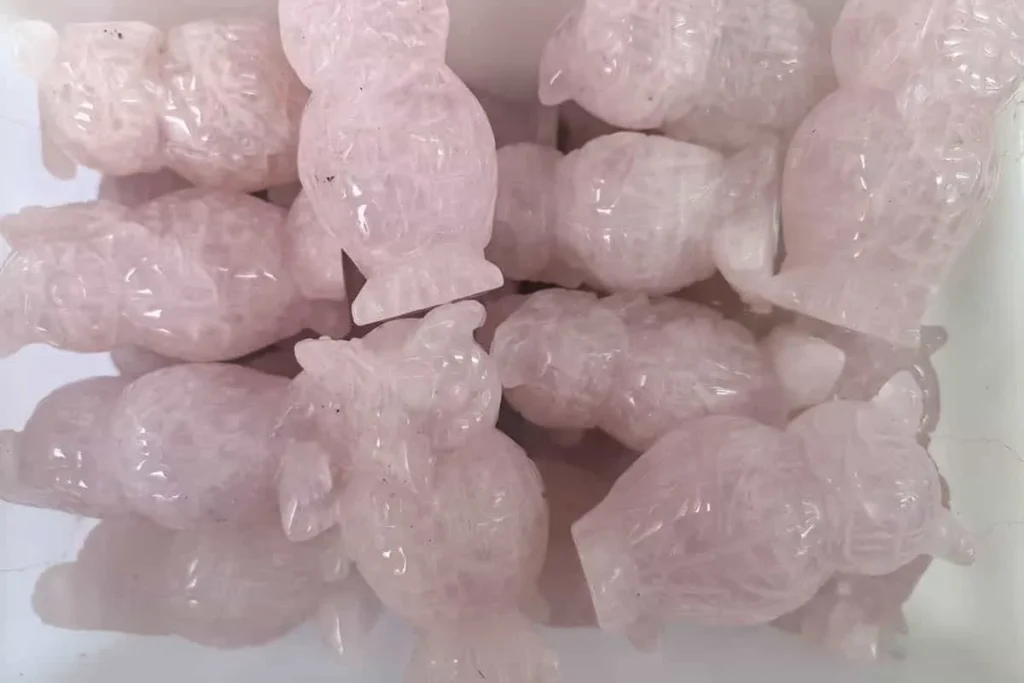
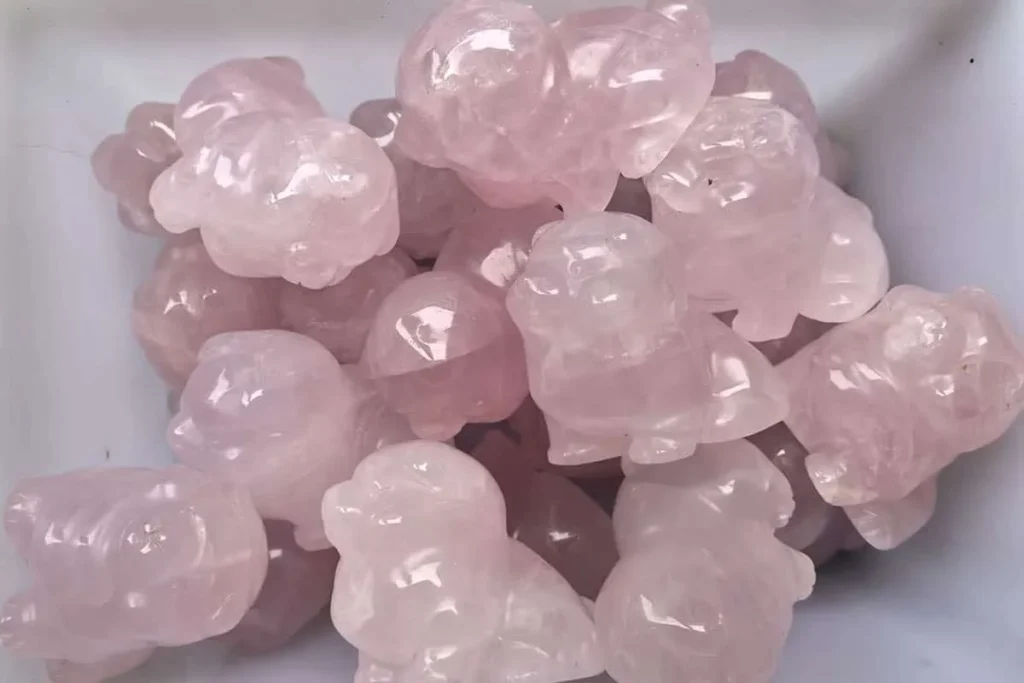
Carvings often show a stronger pink tone because larger pieces allow more color to remain visible. Hearts, spheres, towers, animals, and free-form pieces work well in gift and décor markets. However, deeper color does not remove the need for quality control. Wholesale buyers should still inspect the base, shape, polish, internal fractures, surface pits, and stability of each design before approving a bulk order.
Choosing the Right Form for Your Market
The best product form depends on how customers plan to use and resell the material. Crystal stores often carry tumbled stones, bracelets, carvings, and rough pieces because these items are easy to display at different price levels. Jewelry designers usually need loose beads, cabochons, pendants, or matched components that fit specific designs.
Gift shops may prefer finished bracelets, hearts, small carvings, and packaged sets. These products need attractive presentation and simple information about the traditional rose quartz meaning. Amazon sellers and other e-commerce businesses often focus more on standard sizes, stable color, repeatable packaging, and reliable restocking.
Before choosing a product, buyers should consider the target selling price, customer age, display method, packaging cost, and acceptable natural variation. A lower-priced mixed batch may suit loose-stone displays, while jewelry production usually requires tighter control over size, drilling, polish, and color consistency.
Pink Quartz Quality Grades
Color and Transparency
Color is one of the first features buyers notice when comparing pink quartz quality grades. The material can range from very pale pink to a more visible medium pink. According to the Gemological Institute of America, the strongest colors often appear in larger pieces, while small specimens with attractive pink color are less common.
Transparency also varies. Some material looks almost clear, while other pieces are semi-transparent or cloudy. Highly transparent beads may appear valuable at first, but they can look nearly white when placed on a white background or threaded with white cord. Semi-transparent material with soft, misty inclusions may show a warmer and more recognizable pink appearance.
Wholesale buyers should not assume that the deepest color or highest transparency always represents the best choice. An unusually bright pink may also require questions about possible treatment. The right grade depends on the market, product form, and selling price.
A practical quality description should state the general color range, transparency, visible white areas, and level of batch consistency. Actual photos or videos under neutral lighting give buyers a more reliable reference than edited promotional images.
Size, Weight, and Color Differences
Size can change how pink quartz looks. Larger rough pieces, carvings, and tumbled stones often display a more noticeable pink tone because light travels through more material. Small beads cut from the same rough may appear much paler, especially after drilling and polishing.
Weight depends on the product form, dimensions, and amount of material removed during cutting. Two carvings with a similar height may not weigh the same if one is thicker or has a different shape. Beads are usually compared by diameter and strand quantity, while rough and tumbled stones are commonly sold by weight.
Natural color differences can also appear within one bulk lot. Buyers should define an acceptable range instead of expecting every piece to match perfectly. Before production, confirm the bead diameter, stone size range, bracelet length, piece count, total weight, and allowed measurement tolerance. Clear specifications help prevent disputes caused by normal differences between handmade or naturally variable products.
Natural Inclusions and Common Imperfections
Natural pink quartz may contain cloudy inclusions, white areas, internal fractures, color zoning, mineral spots, and fine surface pits. Tumbled stones and carvings can also show uneven shapes or shallow polishing marks. These features may be acceptable when they do not affect the product’s appearance, strength, or intended use.
Not every inclusion means that the stone is fake or poor quality. A soft, misty interior is common in semi-transparent material and may help create a more visible pink tone. However, large open cracks, broken edges, deep pits, damaged drill holes, loose chips, and badly scratched surfaces usually require closer inspection.
Acceptance standards should match the product grade and price. A value-grade tumbled stone lot can include more natural variation than a matched jewelry order. When we inspect bulk orders, we separate normal mineral features from damage caused during cutting or handling. Buyers should ask suppliers to show representative pieces instead of displaying only the best stones from the batch.
How Suppliers Define Grades
Labels such as AB, A, AA, and AAA may look precise, but no universal grading system applies to pink quartz across the entire wholesale market. One supplier’s AA material may resemble another supplier’s A grade. Buyers should never rely on a grade name without checking the standards behind it.
A useful grade description should explain the color, transparency, polish, size consistency, natural inclusions, surface damage, and percentage of pieces that may fall outside the main range. For beads, drilling quality and hole position also matter. For tumbled stones and carvings, buyers should examine shape, cracks, flat bases, and finishing.
Approved samples, photos, and videos provide a better reference than grade letters alone. Buyers should also confirm whether the sample and bulk order will come from the same material batch. Before payment, record the agreed quality details in the order documents. This creates a clear standard for inspection and makes it easier to resolve differences after production.
Is Pink Quartz Natural, Treated, or Fake?
How to Tell If Pink Quartz Is Real
Real pink quartz often shows a soft color, cloudy areas, small inclusions, internal fractures, or natural differences between pieces. However, these features alone cannot prove that the material is natural or untreated. Treated quartz can still be genuine quartz, while glass, resin, or another stone may be sold as an imitation.
Buyers can begin with a visual inspection. Look for unnatural color collecting inside cracks, surface coating, round air bubbles, obvious mold lines, or a batch in which every piece looks unusually identical. These signs may justify further checking, but they are not a final diagnosis.
Avoid destructive home tests, such as scratching glass, heating the stone, using chemicals, or breaking a bead. These methods can damage the product and may still produce an incorrect result. Photographs also cannot confirm every treatment or imitation.
For a high-value order or a disputed batch, the most reliable choice is an independent gemological laboratory. Wholesale buyers should also ask the supplier for material identification, treatment disclosure, representative samples, and photos taken under neutral lighting before confirming production.
Common Treatments and Color Enhancement
Natural pink quartz can be pale, so some commercial products receive treatments intended to improve or strengthen their color. The Gemological Institute of America states that rose quartz is occasionally treated with irradiation to intensify its pink appearance. Such treatment does not automatically make the material fake, but suppliers should disclose it to buyers.
In the wholesale supply chain, buyers may also hear terms such as dyed quartz, coated quartz, wax-treated quartz, or color-enhanced quartz. These descriptions do not always refer to the same process. Without supplier records or laboratory testing, it may be difficult to confirm exactly how a batch received its color.
Treatments can also affect long-term appearance. Surface color may wear unevenly, while some enhanced material may fade or change under certain conditions. The result depends on the treatment method and the individual product, so buyers should avoid assuming that every bright pink batch will behave in the same way.
Before ordering treated pink quartz, ask which process was used, whether the color is stable, and whether the supplier can provide written disclosure. Honest treatment information is more valuable than an unsupported claim that every stone is completely natural.
Why Loose Beads Can Look Different from Finished Bracelets
The thread inside a bead can change how the entire bracelet looks. Pink elastic or cotton thread adds color through the drilled holes and makes pale beads appear warmer and pinker. White thread has the opposite effect. It can make the same material look lighter, colder, or closer to clear quartz.
Lighting and background also influence the result. Warm light may strengthen the pink tone, while bright white light can reveal pale areas. Dark backgrounds often make translucent beads look more colorful than a white surface does. Camera settings and image editing can create further differences.
Based on what I have seen during wholesale inspections, a finished bracelet does not always show the true color of its loose beads. For this reason, buyers should request images of the beads without colored thread. They should also compare the product under natural daylight and neutral white lighting.
For a large order, approve both the loose material and the finished bracelet. This helps confirm whether the final appearance comes mainly from the stone, the thread, or a combination of both.
Questions Buyers Should Ask Before Ordering
Before confirming a bulk order, buyers should ask whether the pink quartz is natural, treated, dyed, coated, waxed, or otherwise color-enhanced. If the supplier knows that a treatment was used, request a clear written description instead of relying on general terms such as “good quality” or “natural color.”
Ask for photos or videos under daylight and neutral white lighting. For beads and bracelets, request images of loose beads without pink thread. Buyers should also confirm whether the approved sample and bulk order will come from the same material batch.
Other useful questions include:
- Will the color fade or change over time?
- What level of color variation is normal?
- Which inclusions and surface marks are acceptable?
- What size tolerance will apply?
- Can the supplier provide a pre-shipment video?
- How will defective pieces be handled?
- Will future orders have a similar appearance?
These questions cannot replace professional laboratory testing, but they can reveal how clearly and honestly a supplier communicates. Recording the answers in the order specifications also reduces misunderstandings during production and inspection.
Need help comparing pink quartz grades or product forms? Contact us on WhatsApp or send an inquiry with your preferred size, color, quantity, and intended market.
My Experience Supplying Pink Quartz
What I Saw at a Pink Quartz Factory
In my experience, many pink quartz products in the wholesale market receive different levels of color enhancement. Some factories add only a small amount of color, while others create a much stronger pink appearance. I have also seen pale or nearly white material treated to look pinker. Without sourcing experience, buyers may struggle to recognize these differences from photographs.
During one factory visit, I watched workers melt red candle wax in a large container and place pink quartz inside it. The factory referred to this process as red-wax treatment. It produced a bright, attractive pink color, but the color could gradually fade after several months.
I have also handled material processed with a lighter or white wax. Its finished color was softer and less eye-catching. However, based on what I observed, it remained more stable over time than the strongly red-waxed material.
These experiences taught me not to judge pink quartz only by how bright it looks when it is new. Buyers should also consider treatment disclosure, color stability, and how the product may appear after months of storage, display, and customer use.
My Experience with a European Buyer
One of my European customers has purchased large quantities of pink quartz beads and bracelets from me. At the beginning of our cooperation, I sourced the products from a factory that did not honestly disclose the color treatment. The material looked attractive at first, but I later learned that its appearance did not match what the supplier had claimed. I stopped buying from that factory and moved the order to a second supplier.
At first, we selected highly transparent pink quartz. The finished bracelets looked pink because the beads were threaded with pink cord. However, after removing the cord, the beads appeared almost like clear or white quartz. The material was transparent, but its natural pink tone was too weak.
We later changed to semi-transparent beads with soft, misty inclusions inside. These beads did not look as clear, but they had a more visible and natural-looking pink appearance. The customer liked the new material and continued ordering the same type. We have worked with this product for several years without changing it.
To be fully honest, this semi-transparent material may still receive a very small amount of color enhancement. However, the treatment appears much lighter, and the finished product offers a better balance of color, natural appearance, and long-term retail appeal.
What This Experience Taught Me
This experience taught me that the brightest pink quartz is not always the best choice. Different customers want different results. Some prefer a sweet, vivid pink that stands out in photographs and retail displays. Others care more about long-term color stability and want the product to keep a similar appearance from the beginning of the sale to the end.
I also learned that high transparency does not always create the most attractive bracelet. When transparent beads have a very weak natural color, they can look almost white without pink thread. Semi-transparent material with soft, cloudy inclusions may show a more stable and recognizable pink appearance.
From the wholesale lots I have handled, buyers should compare the stone’s actual color, treatment, transparency, thread color, and target market together. A supplier’s description cannot replace direct inspection. Photos of loose beads, neutral-light videos, and clear treatment disclosure are especially important.
For bulk orders, I recommend checking loose beads without colored thread before confirming production. This simple step helps buyers understand how much color comes from the stone itself and reduces the risk of receiving a finished bracelet that looks different after restringing.
What Affects Pink Quartz Price?
Material and Processing Factors
The pink quartz price depends on several factors rather than color alone. Material with a visible, even pink tone may cost more than pale or heavily mixed material. Transparency, attractive cloudy inclusions, surface finish, size consistency, and the number of damaged pieces can also affect the wholesale price.
Different product forms use different pricing methods. Loose beads may be priced by strand, size, or piece. Bracelets are usually sold by piece or set, while tumbled stones and rough material are often priced by weight. Rings, pendants, and carvings also include cutting, polishing, drilling, metal, labor, and design costs.
Larger beads and carvings may require more usable rough material, which can increase production costs. Tight color matching and strict defect limits may also raise the price because the factory must remove more pieces.
Buyers should compare the actual specifications behind each quotation. A lower unit price may not offer better value if the batch contains weak color, poor drilling, unstable treatment, or a high percentage of defects.
Market Position and Retail Potential
Pink quartz can serve entry-level, mid-range, and higher-quality markets. Pale mixed batches, small tumbled stones, and simple bracelets can suit customers who want an affordable crystal product. More consistent color, better polishing, matched beads, and well-finished jewelry can support a higher retail position.
Crystal stores often benefit from offering several grades because customers have different budgets and preferences. Jewelry designers may pay more attention to drilling, matching, shape, and finish. Gift shops usually value attractive packaging and familiar love symbolism. Amazon sellers and other e-commerce businesses may place greater importance on repeatable specifications, clear photographs, and stable restocking.
Retail potential also depends on how accurately the product is presented. A supplier should not use strongly edited photographs that make pale material appear deep pink. Honest images help sellers set customer expectations and reduce returns.
For wholesale buyers, the best choice is not always the most expensive grade. It is the grade that matches the intended price, sales channel, customer expectations, and required profit margin.
Bulk Buying Advice for B2B Customers
Confirm Specifications Before Production
A bulk order should begin with clear and measurable specifications. First, confirm the product form, such as loose beads, finished bracelets, tumbled stones, rough material, carvings, rings, or pendants. Then state the required dimensions, quantity, weight, color range, and transparency.
For beads, buyers should confirm the diameter, hole size, strand length, shape, drilling position, and acceptable size tolerance. Bracelet orders also need an agreed inner size, thread color, elastic quality, and knot method. Tumbled stone and rough orders should include the size range, weight, general shape, and allowed percentage of small or damaged pieces.
Color terms such as “deep pink” or “natural pink” can mean different things to different suppliers. Use approved photos or physical samples as a reference. Buyers should also specify acceptable white areas, cloudy inclusions, internal fractures, surface pits, and polishing marks.
Finally, confirm whether color treatment is acceptable and require the supplier to disclose any known process. Written specifications create a shared inspection standard and reduce disputes after production.
Sample Approval and Bulk Quality Control
A sample helps buyers confirm the expected color, size, transparency, and finish before bulk production. However, one attractive piece cannot represent every item in a natural stone order. Buyers should ask whether the sample and bulk products will come from the same material batch.
Inspect samples under both natural daylight and neutral white lighting. Warm light can make pale pink quartz appear richer, while a dark background can increase the visible color. For beads, compare the finished strand with loose beads placed on a white surface. This makes it easier to judge the material without the influence of colored thread.
When we inspect bulk orders, we check random pieces from different bags or cartons. The inspection should cover measurements, color range, drilling, polish, cracks, broken edges, surface pits, bracelet construction, and packaging.
A pre-shipment video can help buyers review the general appearance of the batch. However, it cannot identify every treatment or replace laboratory testing. Approved samples, written tolerances, random inspection, and clear after-sales terms provide stronger protection when used together.
How to Choose a Reliable Pink Quartz Supplier
A reliable pink quartz supplier should explain the material clearly instead of relying on attractive photographs and vague grade names. Ask whether the products are natural, treated, dyed, waxed, coated, or otherwise enhanced. A trustworthy supplier should disclose known treatments and admit when a process cannot be confirmed.
The supplier should also provide representative photos or videos, not just images of the best pieces. For bracelets and strands, request loose-bead images without colored thread. Check whether the supplier can maintain the agreed size, color range, polishing standard, and packaging across repeat orders.
Communication after a problem is just as important as communication before payment. Ask how the supplier handles damaged goods, color differences, incorrect sizes, or quality that falls outside the approved standard. Written solutions are more useful than verbal promises.
For long-term wholesale cooperation, stable quality and honest communication often matter more than the lowest quotation. A slightly higher price may offer better value when the supplier provides careful inspection, consistent restocking, clear treatment disclosure, and responsible after-sales support.
Packaging, Shipping, and Care
Packaging Different Product Forms
Packaging should match the shape, weight, and risk of damage of each pink quartz product. Loose beads need separate bags with clear size and quantity labels. Finished bracelets should not be packed too tightly because pressure can stretch the elastic or cause beads to rub against each other.
Tumbled stones and rough pieces need strong inner bags and cushioning between layers. Heavy pieces should not move freely inside the carton. Rings, pendants, and other finished jewelry require individual protection to prevent scratches, tangled chains, damaged plating, or loose settings.
Carvings need extra padding around thin points, edges, and flat bases. Buyers should confirm carton weight, inner packaging, labels, and breakage protection before shipment. Clear item codes also make warehouse counting and order checking easier after delivery.
Cleaning and Customer Care Instructions
Pink quartz requires simple but careful cleaning. The Gemological Institute of America recommends warm, soapy water and advises against ultrasonic and steam cleaners. After washing, rinse the stone carefully and dry it with a soft cloth.
Although pink quartz has a Mohs hardness of 7, it can still chip or break around internal fractures, drilled holes, and thin edges. Store jewelry separately to reduce scratching and impact. Avoid pulling elastic bracelets too far when putting them on.
For dyed, coated, or wax-treated products, ask the supplier for specific care instructions before using water or cleaning products. Wholesale buyers can include a short care card with each item. Clear guidance helps customers protect the stone, thread, metal parts, surface treatment, and overall appearance.
Frequently Asked Questions
What Does Pink Quartz Mean Spiritually?
Spiritually, pink quartz is commonly associated with love, compassion, forgiveness, emotional balance, and self-care. In crystal traditions, some people use it during meditation or keep it nearby as a reminder to communicate gently and remain open to healthy relationships. It is also linked with heart chakra practices. However, these meanings come from spiritual beliefs and personal traditions. They do not prove that pink quartz produces a medical or scientifically measurable healing effect.
Who Should Wear Pink Quartz?
Anyone who likes the soft pink color, symbolic meaning, or appearance of pink quartz can wear it. People often choose pink quartz jewelry to represent love, friendship, compassion, or personal self-care. It can also suit customers who want an easy-to-match bracelet, necklace, ring, or pendant. No scientific rule limits the stone to a certain gender, age, personality, or zodiac sign. Buyers should select a comfortable size, suitable design, secure construction, and metal components that meet their personal needs.
Who Should Not Wear Rose Quartz?
There is no reliable scientific evidence that a particular zodiac sign, personality type, or group of people must avoid rose quartz. Most people can wear it as ordinary jewelry if the item is comfortable and well made. However, customers with sensitive skin or a metal allergy should check the clasp, plating, wire, and other metal components. People working with machinery should also avoid loose bracelets or necklaces for safety. Rose quartz should never replace professional medical or mental health treatment.
Where Should You Put Pink Quartz?
Pink quartz can be placed in a bedroom, living room, work area, meditation space, or retail display. Some people keep it near the bed because they associate it with calm and relationships. Others place it on a desk as a reminder of patience and kind communication. Feng shui traditions may suggest specific relationship areas, but these rules vary. Choose a safe location where the stone can be seen and enjoyed without exposure to falls, heavy impact, or harsh cleaning products.
Which Hand Should You Wear a Pink Quartz Bracelet On?
There is no scientifically proven rule about which hand should wear a pink quartz bracelet. Some spiritual traditions associate the left hand with receiving love or emotional support and the right hand with expressing care to others. These ideas vary and should not be presented as facts. Most customers can choose the wrist that feels more comfortable or suits their daily activities. The bracelet should fit securely without being too tight, and the elastic should not be overstretched during wear.
References
- Gemological Institute of America. Rose Quartz Gem. Mineral composition, physical properties, color range, clarity, hardness, and quality factors.
- Gemological Institute of America. Rose Quartz Description. Geological occurrence, pink color formation, inclusions, transparency, and common sources.
- Gemological Institute of America. Rose Quartz Care and Cleaning. Hardness, stability, treatments, and recommended cleaning methods.
- Escolà-Gascón, Á., et al. Placebo Effects in Alternative Medical Treatments for Anxiety: False Hope or Healing Potential?. CNS Spectrums, 2025. Scientific evaluation of healing crystals and placebo effects.
Conclusion
Pink Quartz Meaning centers on love, compassion, friendship, emotional balance, and self-care. These ideas help explain why the stone remains popular in jewelry, gifts, meditation sets, and crystal displays. However, its spiritual meaning should remain separate from medical claims.
For wholesale buyers, appearance and quality require equal attention. Color depth, transparency, cloudy inclusions, size, polish, drilling, thread color, treatments, and batch consistency can all affect the finished product. A brighter pink does not always mean better quality. Some customers prefer a vivid color, while others value a softer appearance and greater color stability.
Before placing a bulk order, compare loose and finished products, request neutral-light photos or videos, confirm known treatments, and record the approved specifications. These steps help buyers choose suitable products and reduce misunderstandings after delivery.
Looking for pink quartz beads, bracelets, tumbled stones, rough pieces, or jewelry? Contact Us on WhatsApp or send an inquiry with your required size, quantity, color, product form, and quality grade. We can provide current photos or videos before you Start Your Wholesale Order.
Disclaimer
The spiritual meanings, chakra associations, and traditional benefits described here reflect cultural beliefs and personal practices. They are not scientifically proven medical effects. Pink quartz should not be used to diagnose, treat, cure, or prevent any physical or mental health condition, and it cannot replace advice or treatment from a qualified healthcare professional.
Treatment identification based on appearance, photographs, or personal experience may not be conclusive. Buyers who need formal confirmation of a stone’s identity or treatment status should use a qualified independent gemological laboratory.