
Tree Agate Meaning: Appearance, Uses, and a Wholesale Buyer’s Guide
Written by Roc Gong | Founder of RoCrystal
Last updated: September 27, 2026
Tree agate is commonly associated with growth, patience, and a connection to nature. Its green markings often resemble branches spreading across a pale background. For many buyers, that look is as important as the meaning: the pattern needs to stand out, especially on small beads or polished stones. These symbolic meanings come from crystal traditions and personal beliefs, rather than scientific evidence of healing effects.
If you buy tree agate for resale, appearance is only the starting point. A bracelet maker may need round beads with smooth surfaces and even holes, while a crystal shop may prefer varied patterns in tumbled stones. This guide explains the stone’s material, how sellers use the names tree agate and moss agate, and what to check before ordering in bulk.
What Is Tree Agate?
Material, Appearance, and the Name “Tree Agate”
Tree agate is a trade name for a patterned stone in the chalcedony family. Chalcedony is a fine-grained form of silica, and agate is one of its familiar varieties. The Smithsonian National Museum of Natural History describes chalcedony as fine-grained quartz and notes its use in beads and other decorative objects. This helps explain why tree agate appears in both jewelry supplies and polished crystal goods. naturalhistory.si.edu
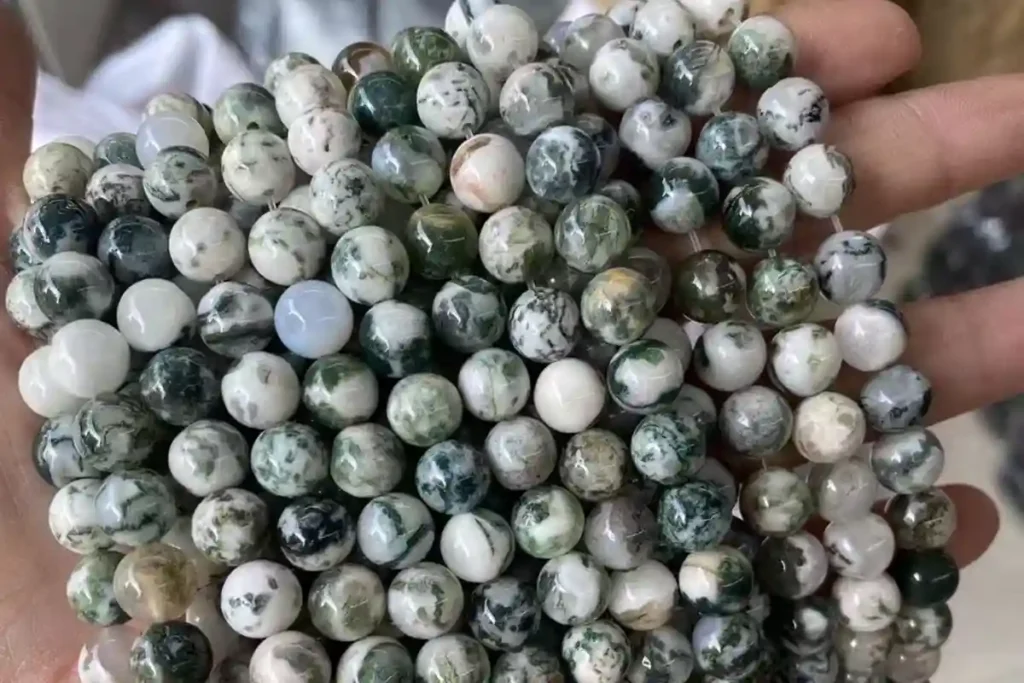
Many pieces sold as tree agate have a white or pale base with green marks that look like branches or vines. Yet the name alone does not guarantee that exact appearance. Mindat lists “tree agate” as a synonym of moss agate, so the two names can overlap. If a buyer searches for agata de árbol, the Spanish name for tree agate, photos and a clear description still matter more than the label. www.mindat.org
How Tree-Like Patterns Form
The “trees” inside tree agate are patterns in the stone, not preserved branches. Mindat describes moss agate as a variety of chalcedony that often contains green mineral inclusions or darker branching patterns. Those features can create the plant-like look that gives these stones their trade names. The exact minerals behind a particular green pattern cannot be confirmed from a product photo alone. www.mindat.org
You may also see names such as forest agate. In a sales listing, forest agate meaning often refers to the woodland look or the symbolism a seller attaches to it; the phrase does not identify a separate mineral by itself. The useful question for a wholesale buyer is what the actual lot looks like. Ask for images of the stones you will receive, especially when the pale base, green pattern, or depth of color matters to your customers.
Tree Agate Meaning and Symbolism
The meaning of tree agate comes largely from its appearance. Green, branching marks against a pale background remind people of trees and new growth. In crystal traditions, some people associate that image with patience, stability, and a closer connection to nature. These are symbolic interpretations, not measured properties of the stone.
Nature, Patience, and Personal Growth
A tree grows slowly, and its branches take different paths. That image is why some people use tree agate as a reminder to give a new plan time to develop. The green tree agate meaning often centers on growth and a connection to nature. It does not mean that carrying the stone will cause a particular change in someone’s life.
You may see the phrase agate tree crystal meaning in a customer search. It usually points to the same tree-like appearance and the ideas people connect with it. For a retailer, the most honest way to present this meaning is alongside a clear photo of the actual stone. Customers can appreciate the story while seeing that each natural pattern is different.
What the White and Green Colors May Represent
The white and green colors add another layer to the traditional interpretation. Some people see the pale background as a symbol of a fresh start and the green markings as a sign of growth. That is one way to explain white tree agate meaning without claiming that the colors have a proven effect on mood or health.
Color also matters when customers choose a piece to wear or display. One buyer may want a bright white base with fine green branches; another may prefer a softer cream color and dense markings. Both can fit the nature theme, but they create different looks. When describing tree agate for sale, pair the symbolic meaning with accurate photos and plain details about the color buyers will receive.
Spiritual Traditions, Chakra, and Zodiac
People who collect crystals often give tree agate a place in personal rituals. These ideas explain how some people use the stone, but they should not be confused with its physical properties or with medical advice. For buyers, this distinction helps keep product descriptions clear and trustworthy.
Common Spiritual Associations
In crystal traditions, tree agate metaphysical properties are often described in terms of feeling grounded, staying patient, and connecting with nature. Someone might keep a stone on a desk as a reminder to slow down or wear a bracelet because they enjoy its woodland pattern. Those are personal uses. They do not show that the stone changes the body or treats stress.
Searches for tree agate benefits or benefits of tree agate can bring up strong claims. A careful description can instead say what people believe and what the stone is used for as an object. The metaphysical properties of tree agate belong to spiritual traditions; its visible color, pattern, and finish are qualities that a buyer can inspect before placing an order.
Tree Agate Chakra and Zodiac
Some crystal traditions connect tree agate with the heart chakra because of its green color and nature-inspired appearance. Tree Agate chakra associations are part of a belief system, not a measurable feature of the mineral. A customer may find that symbolism meaningful, while another may simply like the way the green markings look against white stone.
Tree Agate zodiac associations vary across crystal guides, so there is no single mineralogical answer to which sign “owns” it. If your customers ask about a zodiac match, you can describe it as a traditional or personal choice. That leaves room for their preferences without promising a specific result from wearing or displaying the stone.
Tree Agate vs Moss Agate: What Buyers Can Actually Compare
Tree agate vs moss agate is a useful question when you are choosing stock, but the names do not draw a strict mineral boundary. The most practical comparison is between the appearances shown in a supplier’s actual lot. Look at the base color, how the green pattern appears, and whether those details match what your customers expect.
Names and Mineral Classification
Mindat lists tree agate as a synonym of moss agate, while its moss agate entry places moss agate within chalcedony. So, are tree agate and moss agate the same? In mineral listings, the names can refer to the same broader material. In wholesale listings, sellers may use them to describe different looks within that material. Check the stones rather than treating either name as a guarantee of appearance. www.mindat.org
This distinction matters when a customer sends only a name on a purchase list. One supplier may show white stones with sharp green branches under “tree agate.” Another may use that name for a more translucent lot with soft, moss-like shapes. Before confirming a bulk order, compare photos of the available lot with the look the customer has in mind.
Base Color, Pattern, and Depth
In the lots I look for, tree agate commonly shows green marks like branches or vines across a white background. Moss agate often has a more translucent base, with green shapes that appear to sit within the stone like moss or grass. This is a useful visual way to discuss a purchase, but individual stones vary and the appearances can overlap.
Some buyers also ask about Tree Agate vs Moss Agate spiritual meaning. Both names often appear in nature-themed crystal traditions, so I would not promise a firm difference in their effects. The visual distinction is more useful for a real order: a buyer can show the pattern they want and set an acceptable range for color, transparency, and finish.
| Buying point | Often sold as tree agate | Often sold as moss agate |
|---|---|---|
| Base | White or pale, often less translucent | Often more translucent |
| Green pattern | Branch- or vine-like marks against the pale base | Moss- or grass-like shapes that may appear within the stone |
| Overall look | Strong contrast between pale stone and green markings | More depth and variation in the inclusions |
| What to confirm | White base, visible branching pattern, smooth finish | Desired transparency, inclusion color, and pattern density |
These are shopping descriptions, not fixed identification rules. A mixed lot may contain pieces that fit both columns, and a polished photo may hide surface flaws. For wholesale orders, ask for images or video of the current batch, then agree on the acceptable appearance before the supplier packs it.
Forms and Sizes for Retail and Jewelry Buyers
The best form depends on what your customers plan to make or sell. A jewelry designer needs details about holes and matching sizes. A crystal shop may care more about visible patterns and the finish of individual stones. Before comparing prices, make sure suppliers are quoting the same form, size range, and way of counting the goods.
Beads and Bracelets
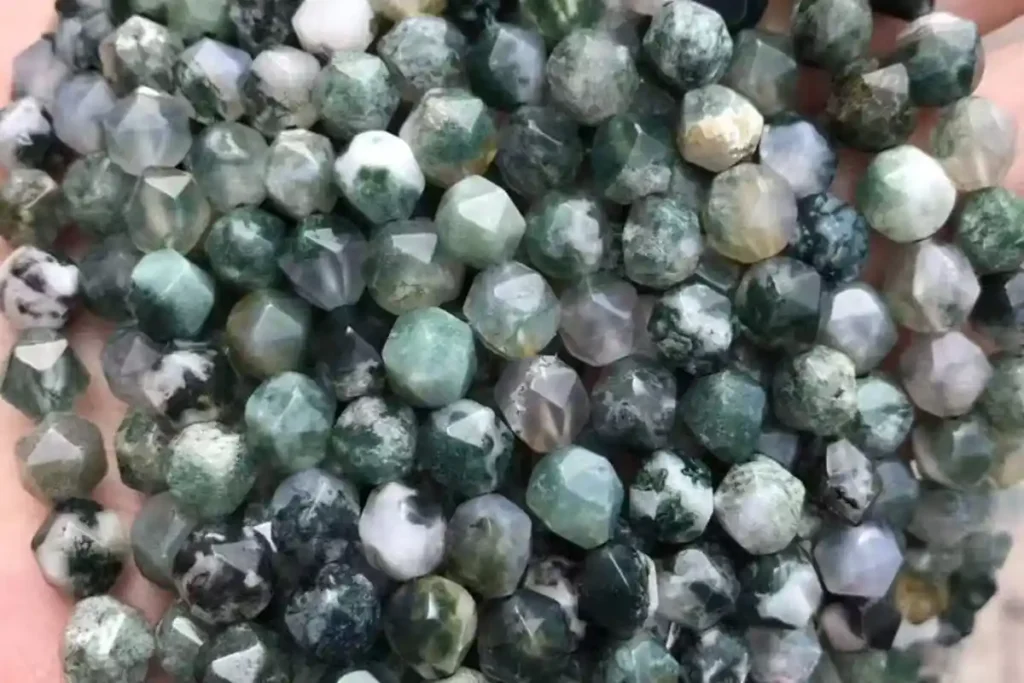
For tree agate beads, check more than the stated diameter. Look at how round the beads are, whether the holes sit near the center, and how many have pits or rough patches. A strong green pattern can attract a buyer, but it will not make up for beads that are difficult to string or uncomfortable to wear.
A finished Tree Agate bracelet has different checks. Confirm the bead size, wrist fit, stringing material, and whether the pattern looks reasonably balanced across the bracelet. Natural beads do not need to match perfectly. Still, if a customer expects a pale base with clear green branches, a bracelet made mostly from faintly patterned beads may miss the agreed look.
What to Check on a Strand of Beads
A stated bead diameter tells only part of the story. Look along the full strand for beads that are noticeably smaller, flatter, or less round than the rest. Then check the holes. A hole that sits too close to one edge can make a bead hang unevenly, while a rough opening may wear against the string.
Pay attention to how the green pattern appears across the strand as well. Natural variation is expected, but a strand with only one or two clearly patterned beads may not give a buyer the look shown in a close-up photo. Ask to see several complete strands from the available lot, not just loose beads selected for a picture.
Tumbled Stones, Rough Pieces, and Decorative Items
Tumbled stones let buyers see many patterns in one batch. Check their size range, polish, visible cavities, and whether the seller quotes them by piece or by weight. Rough stones offer a less finished look, but their final pattern and yield are harder to judge before cutting. Decorative pieces need close inspection at edges and contact points, where chips may stand out.
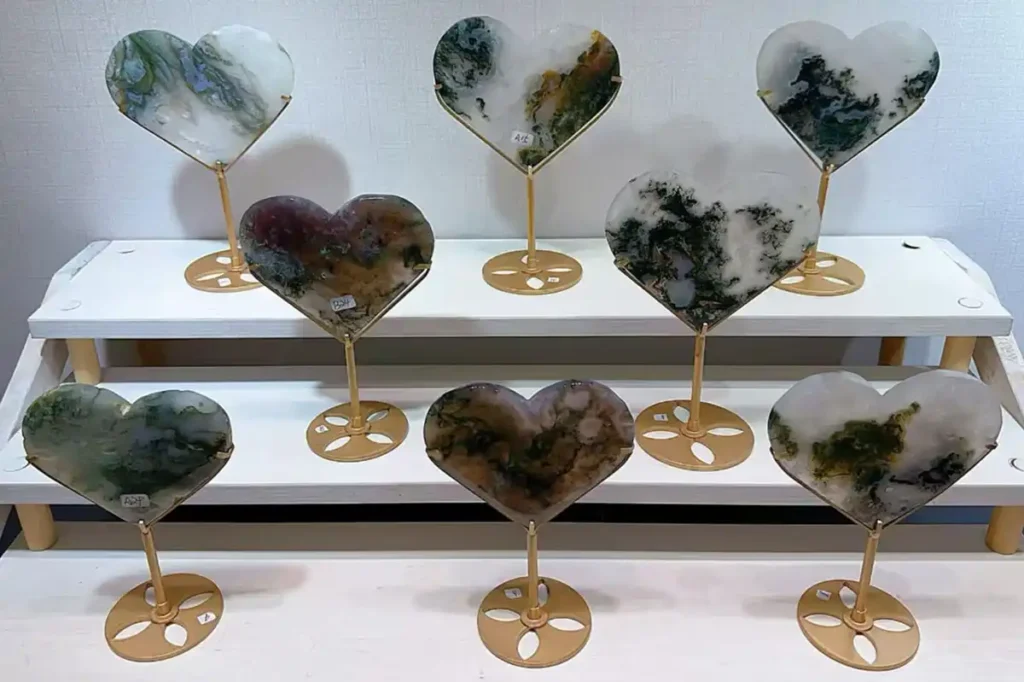
The phrase agate tree crystal can refer to different items in a search, from a single patterned stone to a small ornament made with stone chips. Ask for the product form and measurements instead of assuming the phrase identifies one standard item. That simple step prevents a quote for loose stones from being compared with a quote for assembled decorations.
Tree-Shaped Ornaments and Confusing Product Names
An agate tree of life is usually a decorative design or jewelry motif, rather than the mineral name “tree agate.” Likewise, christmas tree agate may describe a seasonal look or an ornament in a listing. Request photos and a material description before treating either phrase as a specific stone type.
Be especially careful with crimson agate tree. “Crimson” points to a red color, while the tree agate discussed here is commonly sought for green markings on a pale base. The phrase alone cannot establish what stone an ornament contains. If your buyer uses it, ask for a reference image and confirm the material, color, and finished form in writing.
Quality, Natural Variation, and Authenticity Checks
Tree agate does not need a perfectly repeated pattern to make a good wholesale lot. Natural variation gives each piece its character. Buyers still need clear limits for flaws that affect appearance or use. A pale base with uneven green marks may be acceptable; a deep cavity in a bead sold as smooth and round is a different issue.
Color, Pattern, and Surface Finish
Start with the look promised in the order. Check whether the base is white, cream, or gray, how clearly the green markings show, and whether some pieces have little visible pattern. For beads, turn several pieces under good light to inspect the whole surface. A photo of their best-looking side will not show pits, flat spots, or cracks near the drill hole.
Small differences in color and markings are normal in a patterned stone. The question is whether the batch still fits the range the buyer agreed to accept. If you need bright white stones with distinct branch-like marks, say so before production or packing. A supplier can then show you whether the available lot meets that standard.
When a Natural Feature Becomes a Quality Problem
A small change in green pattern is part of the stone’s appearance. A cavity, sharp pit, or crack near a drill hole can affect how a bead looks or performs in jewelry. The difference depends on the product you agreed to buy. A rough decorative piece may allow an open area that would be unacceptable on a smooth bracelet bead.
When reviewing a bulk lot, turn the beads and inspect more than their most attractive side. Look around the holes and feel for rough spots that may catch on skin or string. Decide which flaws are acceptable before approving the order. That gives you and the supplier a clearer standard than calling every mark either “natural” or “defective.”
What a Seller Can and Cannot Verify by Eye
Photos and a visual inspection can reveal the overall color, pattern, polish, roundness, and many visible defects. They cannot, by themselves, prove every mineral inclusion or rule out every treatment. Strong lighting, editing, and wet stones can also change how a lot appears in a picture. Ask for clear images in ordinary light and close views of any areas that concern you.
When authenticity or treatment disclosure matters to your market, request a clear written description from the supplier. For a higher-value order, independent gemological testing may be appropriate if the parties agree on the cost and scope. Avoid calling a lot “lab verified” or “untreated” unless you have evidence for that specific claim.
Grades, Samples, and Lot Consistency
Labels such as A or AA can be helpful within one supplier’s range, but they do not replace an agreed standard. Ask what the grade means for base color, green coverage, polish, holes, and allowable pits. Then compare a sample with images of the goods ready to ship. A sample from a different batch may not represent the lot you will receive.
For bulk orders, set tolerances that match the product’s use. Jewelry buyers may need tighter bead diameter and hole placement than buyers of mixed tumbled stones. Confirm how the supplier will handle pieces outside the agreed range before shipping. That conversation is more useful than relying on a grade name alone.
Agree on a Pattern Range, Not One Perfect Stone
A natural pattern cannot be copied across every bead. Instead of asking the supplier to match one exceptional sample exactly, agree on a range the whole lot should fit. You might specify a pale base, visible green markings on most pieces, and a limit for beads with very faint patterns. Keep the wording tied to photos both sides have reviewed.
Ask for a view of several pieces together before dispatch. A group photo or short video makes it easier to judge the balance of pale and green stones across the lot. If the appearance falls outside the agreed range, discuss sorting or replacement before shipment. This is especially useful when your customer expects the branch-like look commonly sold as tree agate.
My Experience Supplying Tree Agate Beads
Why I Rejected the First Batch
I once prepared tree agate beads for a customer in Europe. When the first batch arrived from my supplier, I found pits and uneven areas across many beads. Some also had visible cavities. These were not the smooth, rounded beads I intended to send, so I rejected the batch instead of passing the problem on to my customer.
I know natural stones can have different colors and patterns. That does not mean every surface flaw belongs in a shipment. A customer who orders beads needs pieces they can use and sell. In this case, the holes and rough finish fell short of the quality I wanted to provide, regardless of how attractive the green markings looked.
Why I Chose the More Expensive Beads
I sourced a replacement batch from another supplier. Those beads were smoother and more evenly rounded, though they cost me more. I chose them because meeting the quality standard mattered more to me than saving money on that order. When a customer trusts what arrives, there is a better basis for doing business again; I would not claim a repeat order that I have not documented.
I also check the pattern when selecting these stones. The tree agate I look for often has branch-like green marks against a white base. Moss agate can show softer, grass-like shapes that seem to sit inside a more translucent stone. The names may overlap, so I use those observations to discuss the customer’s preferred look, then check the finish as carefully as the color. For me, Tree Agate Meaning may draw someone to the stone, but reliable quality helps a buyer place an order with confidence.
Buying tree agate beads in bulk? Send us your preferred bead size, quantity, pattern, and surface standard through WhatsApp or our inquiry form. We can discuss the available lot before you place an order.
How to Buy Tree Agate in Bulk
A useful quote starts with a clear description of what you need. “Tree agate” alone leaves room for different base colors, patterns, sizes, and finishes. Give the supplier enough detail to select the right lot, then check the goods that are ready to ship against those details.
Specify the Look Before Ordering
Send a reference photo and describe what matters most: a white or cream base, how much green you want to see, and whether you prefer fine branches or denser markings. Ask the supplier to show a range of pieces from the available lot. A close-up of one outstanding stone cannot tell you what most of the order will look like.
Agree on what variation you can accept. Some buyers welcome a natural mix, while others need a consistent appearance for matched bracelets or repeat retail displays. If weak patterns, gray areas, or visible cavities are a problem for your customers, say so before the supplier packs the goods.
Confirm Size, Weight, and Packaging
For beads, confirm the diameter, hole size, number of strands or pieces, and any acceptable size range. For tumbled stones, ask for the approximate piece size and whether the price applies per piece or per kilogram. Rough stones need a clear weight and size range too. These details let you compare quotes on the same basis.
Packaging should fit the form of the goods. Separate polished pieces so they do not rub against harder items, protect beads from pressure, and use enough cushioning to limit movement inside the carton. Ask how many pieces or how much weight will go in each inner bag, and request clear carton labels if you stock several sizes.
Assess a Supplier’s Quality Process
Ask whether the supplier can show photos or a short video of the actual lot before dispatch. Find out who checks the surface finish, size, pattern, and quantity, and what happens if pieces fall outside the agreed standard. A clear answer is more useful than a broad promise of “top quality.”
If you approve a sample, confirm whether the bulk goods come from the same lot or how closely they can match it. Also agree on the packing method, lead time, and how any quality issue will be handled. This gives both sides a shared reference before the order leaves the warehouse.
Cleaning, Water, and Everyday Care
Tree agate jewelry needs gentle care, especially when it includes string, elastic, glue, or metal parts. The stone may be fairly hard, but a finished bracelet has more than one material to consider. Give customers simple care advice that suits the complete item.
Gentle Cleaning and Bracelet Care
Can tree agate go in water? Brief contact with clean water during gentle cleaning is generally different from leaving a bracelet to soak. As a reference for a related chalcedony material, the Gemological Institute of America’s sardonyx care guide recommends warm, soapy water and a soft-bristle brush. It also advises caution with ultrasonic and steam cleaning. That guidance concerns sardonyx; it is not a test of a particular tree agate lot. www.gia.edu
For loose polished stones, use a soft cloth or gentle wash, then dry them well. With bracelets, avoid long soaking because the string, glue, and metal findings may need different care from the beads. If a supplier has disclosed dye, coating, or another treatment, ask for care instructions that fit those goods.
Hardness and Handling Limits
The same GIA guide gives sardonyx, another chalcedony material, a Mohs hardness of 6.5–7. This is a useful family reference, not a hardness test for your tree agate shipment. Mohs hardness describes resistance to scratching; it does not mean a bead cannot chip when dropped or pressed against another hard object. www.gia.edu
Store finished bracelets where their beads will not strike heavier jewelry. Check the string and fittings from time to time, particularly on items worn often. For wholesale stock, keeping each size or style in separate, clearly marked packaging also makes handling easier and reduces unnecessary contact between pieces.
FAQ
What is tree agate good for?
Tree agate works well in beads, bracelets, tumbled stone assortments, and decorative pieces. Some people also keep it as a personal reminder of growth and patience. Those symbolic uses come from crystal traditions, not proven healing effects. If you buy it for resale, choose the form and finish your customers need, then check the color and pattern of the available lot.
What is the spiritual meaning of agate?
Agate meaning varies by type and by personal tradition. Tree agate is commonly linked with nature, steady growth, and patience because its markings can resemble branches. These ideas describe how people interpret the stone; they do not establish a medical or measurable effect. For a customer choosing a piece, the colors and natural pattern may hold as much appeal as the symbolism.
Are moss agate and tree agate the same thing?
The names can overlap. Mindat lists tree agate as a synonym of moss agate, while sellers may use “tree agate” for a pale stone with branch-like green marks and “moss agate” for a more translucent, moss-like look. Neither label guarantees one exact appearance. When ordering in bulk, show your supplier the pattern you want and inspect photos of the lot.
How to charge tree agate?
In some crystal traditions, people “charge” a stone by placing it in a meaningful setting or spending a quiet moment with it. There is no established mineralogical process that measures a tree agate stone becoming spiritually charged. If you display it near a window or outdoors as part of a personal practice, protect the jewelry’s string, glue, and fittings from moisture and rough handling.
Where to place tree agate?
Place tree agate where you can enjoy its pattern, such as a desk, display shelf, or jewelry stand. Some people choose a workspace or a spot near plants because they connect the stone with nature and growth. That is a personal choice, not a promise that the stone will change the space or bring a particular result. Keep it secure so it cannot fall and chip.
References
- Mindat — Tree Agate. Mineral name and synonym information.
- Mindat — Moss Agate. Chalcedony classification and descriptions of common inclusions.
- Smithsonian National Museum of Natural History — Agate. Chalcedony, agate, and their decorative uses.
- Gemological Institute of America — August Birthstones. Sardonyx hardness and cleaning guidance used as a reference for a related chalcedony material.
Disclaimer
The spiritual meanings, chakra associations, and crystal practices described here are matters of tradition and personal belief. They are not medical advice or evidence that tree agate treats a health condition. Natural stones vary in color, pattern, size, and finish. Confirm the details of an available lot before placing a wholesale order.
Conclusion
Tree Agate Meaning often centers on nature, patience, and growth. For a wholesale buyer, the stone’s visible qualities matter just as much: the base color, green pattern, surface finish, and product form all affect whether a lot suits your customers. The names tree agate and moss agate can overlap, so photos and agreed quality standards are more useful than the name alone.
If you need tree agate beads or other forms in bulk, tell us your preferred size, quantity, pattern, and acceptable finish. Request a Quote through WhatsApp or our inquiry form to discuss the available goods before you Start Your Wholesale Order.