
Green Agate Meaning: Color, Uses, and a Wholesale Buyer’s Guide
Written by Roc Gong | Founder of RoCrystal
Last updated: September 26, 2026
Green agate is commonly associated with balance, growth, and a connection to nature in crystal traditions. These ideas describe what the stone means to some people; they are not proven health benefits. For buyers, Green Agate Meaning also raises a practical question: what kind of stone are they getting? The patterns, shade of green, and color treatment can differ from one piece to another.
Some green agate products start with natural agate and receive added color. The green pendants I supply are made this way. Their irregular shapes and visible patterns make each piece look different, which appeals to customers who want variety. This guide explains the stone’s appearance and common uses, then covers the details wholesale buyers should confirm before ordering.

What Is Green Agate?
Agate, Chalcedony, and the Patterns You Can See
Agate is a form of chalcedony, a fine-grained material in the quartz family. Its bands and patterns are a key part of its appearance. According to the Gemological Institute of America (GIA), agate consists mainly of tiny quartz crystals and is a banded form of chalcedony. This explains why one polished pendant can show curved lines while another has a different pattern.
When people search for Agate meaning, they may be looking for a stone’s symbolic meaning or simply trying to identify what they see. The same applies to terms such as green agate crystal and green agate crystals. In product listings, “crystal” is often a broad retail term. A green agate pendant is usually a cut and polished piece of stone, even though its tiny crystals are too small to see individually.
For wholesale buyers, it helps to look at several pieces together instead of judging a full tray by one pendant. Bands may be bold on some pieces and faint on others. The outline can change as well, especially with irregular pendants. Those differences give each piece its character, but buyers should know the range of patterns and shapes they will receive.
How Agate Forms and Where It Is Found
Agate forms as silica-rich material fills spaces in rock over time. The Gemological Institute of America (GIA) explains that chalcedony can form inside cavities in volcanic rock. Silica deposits from the cavity walls inward, gradually filling the space. This process helps create the layers and patterns that make agate recognizable when a piece is cut and polished.
Agate occurs in different parts of the world, but a stone’s appearance alone does not prove its country of origin. For a wholesale order, ask the supplier for origin information if it matters to your customers. Keep that question separate from color treatment: knowing where the agate came from does not tell you whether its green color was added later.
Hardness, Feel, and Basic Physical Properties
According to Gemdat’s agate reference, agate has a Mohs hardness of about 6.5 to 7. This means it resists scratches better than many softer stones, but a hard blow can still chip or break a finished piece. Hardness also tells buyers nothing about whether green color was added. When comparing green agate properties for a bulk order, check the finish, edges, and visible cracks alongside the supplier’s treatment description.
Green Agate Meaning and Spiritual Associations
What Does Green Agate Symbolize?
In crystal traditions, people often connect green agate with growth, balance, and a sense of calm. Its green color may remind them of plants and new beginnings, while its varied patterns can make each piece feel personal. This is the green agate spiritual meaning many buyers have in mind. It describes a belief or personal association, not a measured effect of the stone.
The meaning of green agate stone can also vary from one customer to another. Someone may choose a pendant because of its symbolism. Another person may simply like its color and bands. Retailers can explain both without promising a result: “Green agate is commonly associated with balance and growth in crystal traditions.”
When describing green agate meaning spiritual themes to your customers, keep the stone’s story separate from its material details. The symbolism can help a shopper connect with a piece, but it cannot tell them whether the green color is natural or added. A clear listing should give them both the traditional meaning and an accurate description of the stone they will receive.
Green Agate Benefits: Beliefs Versus Measurable Properties
What are green agate benefits? In crystal traditions, some people associate the stone with emotional balance or a fresh start. Those are personal beliefs, not proven effects. Green agate cannot treat an illness or replace medical care. Retailers can share its traditional meaning while letting customers decide what that meaning represents to them.
There are also practical reasons to choose it. Agate’s bands give finished pieces visual variety, and its hardness makes it suitable for many jewelry designs when handled with care. These are observable features rather than spiritual claims. If a customer asks what is green agate good for, you can discuss pendants, bracelets, decorative pieces, and the ways different patterns suit different designs.
For wholesale buyers, the most useful benefits of green agate depend on the product and the audience. A jewelry designer may value unusual shapes, while a retailer may need pieces that look appealing together on a display. Compare the actual stock, ask about color treatment, and choose the qualities your customers can see and understand.
Chakra, Luck, and Other Traditional Uses
In some crystal traditions, people associate green stones with the heart chakra. They may choose green agate as a reminder to approach relationships with patience or to make room for personal growth. Others keep a piece because they consider it lucky. These are symbolic uses; a stone cannot guarantee a change in health, relationships, or fortune.
Customers may also give green agate as a gift or place it in a personal space where they enjoy its color. For a retailer, it is reasonable to describe these traditions as part of the stone’s appeal. Keep the wording clear: “Some people associate green agate with balance and good luck.” Then describe the piece itself, including its shape, pattern, and any color treatment.
Does a Darker Shade Change Its Meaning?
People searching for dark green agate meaning may expect a different symbolic meaning from lighter green pieces. In crystal traditions, some may personally connect a deeper shade with stability or strength. Color alone, however, does not give a stone stronger spiritual effects, and it does not prove higher quality.
For a wholesale order, shade is mainly a product choice. Ask to see the current lot under consistent lighting, especially if your customers prefer a particular green. A dark pendant may show its bands clearly, while another may look more even in color. Choose the appearance that suits your buyers, and confirm whether the color has been treated.
Natural Agate, Added Color, and Other Green Stones
Natural Stone Does Not Always Mean Natural Green Color
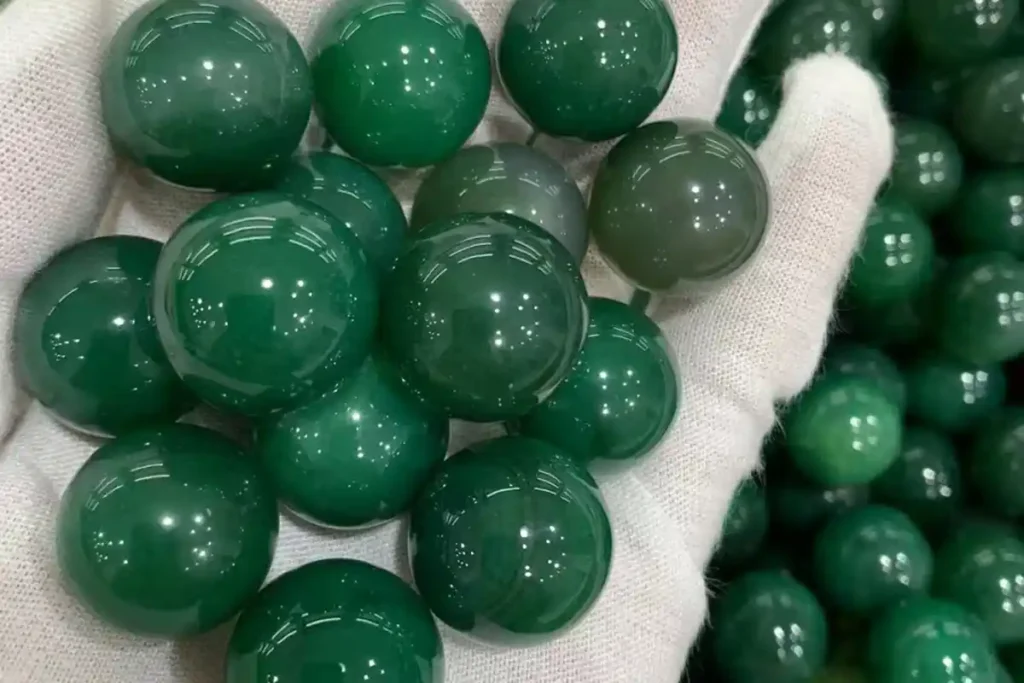
A green agate pendant can contain natural stone even when its green color has been added. Those are two separate details. The Gemological Institute of America (GIA) identifies dyeing as a treatment used to change a gem’s appearance, and Gemdat’s agate reference notes that agate is often dyed to produce strong commercial colors. A clear product description should tell buyers about the material and the treatment.
The pendants I supply are made from natural agate that has been color treated. Their bands and other visible patterns remain part of what makes each piece attractive. I would describe them as “natural agate, color treated green” rather than “natural green agate.” That small wording change helps a retailer give customers an accurate account of what they are buying.
Search phrases such as agate green meaning or agate green stone meaning may lead people to the same products, but they do not explain the color’s origin. A photograph cannot replace a treatment disclosure either. Before placing a bulk order, ask the supplier to state whether the green is natural or added, and make sure that description matches the goods you plan to sell.
How to Describe Treated Green Agate Honestly
A useful listing starts with the material and treatment: “natural agate, color treated green.” Then describe what the buyer can see, such as banding, an irregular outline, and differences between pieces. The GIA’s guide to gem treatments explains why treatment information matters when describing and caring for gemstones. Added color does not make the natural agate base a fake stone, but buyers should know the color has been changed.
For bulk goods, add a size range and explain whether customers will receive assorted patterns or a selected look. Show several pieces from the current lot so a single attractive photo does not suggest every item will be identical. If you sell pendants with fittings, identify the fitting material separately from the stone.
Buyers may also find these goods under search labels such as agate crystal green or agate green crystal. Those phrases are too vague to serve as a full product description. Clear material, treatment, shape, and quantity details will help wholesale customers order the right stock.
Green Agate vs. Moss Agate, Chrysoprase, Jade, and Emerald
These names can appear together when buyers search for green stones, but they should not be used as interchangeable product labels. The table below gives buyers a starting point for questions to ask. Color and photographs alone cannot confirm a stone’s identity or treatment.
| Product name | What to look for | What to confirm before buying |
|---|---|---|
| Green agate | Bands or other visible patterns; color and pattern may vary between pieces | Whether the green color is natural or added |
| Moss agate | Moss-like inclusions rather than the same look as a uniformly green pendant | Whether the supplier is describing inclusions, color treatment, or both |
| Chrysoprase | A green variety of chalcedony that may look more even in color | The material identification; do not assume every green chalcedony is chrysoprase |
| Jade | A separate gem trade name that can refer to more than one material | The specific material and any treatment |
| Emerald | A different green gemstone | Identification and treatment details, especially for a higher-value order |
Mindat describes moss agate as chalcedony that often contains green mineral inclusions. The GIA’s guide to green gemstones identifies emerald as beryl and explains that jade includes jadeite and nephrite. These distinctions help with product labels, but they do not identify a particular item from a photo.
The same care applies to color phrases such as blue and green agate or red and green agate. They describe an appearance, not a confirmed new mineral type. If a mixed-color lot matters to your customers, request images of the current stock and a clear statement of its material and color treatment.
Can Photos Prove Whether Green Agate Is Dyed?
No. Photos can show color, patterns, and finish, but they cannot reliably prove whether a particular stone has been dyed. This matters when a listing uses color phrases such as blue green agate meaning or red green agate meaning. Those words describe what someone is searching for; they do not confirm how the colors formed.
For a bulk order, ask the supplier to state the material and any color treatment in writing. Then review photos or a video of the current lot to judge its appearance.
Green Agate Meaning and Uses in Wholesale Products
Pendants and Irregular Statement Pieces
Pendants let buyers see a larger area of the stone than small beads do. Bands, patches of color, and the overall outline can become the main feature of the design. Irregular pendants are especially useful when a retailer wants pieces that look related but are not identical. This is one practical way to discuss green agate meaning and uses alongside the stone’s traditional symbolism.
When selecting pendants in bulk, look beyond the best piece in a photo. Check how much the shapes vary across a tray, whether the edges look smooth, and how the stones will hang when worn. If the pendants include a bail or other fitting, ask what material it is made from. A clear description helps buyers plan their own jewelry designs and retail listings.
The green agate pendants I supply have irregular shapes, so each piece has its own look. For customers who enjoy that variation, a tray can offer many individual choices. Buyers who need matching pendants for a uniform design should review the current lot first and agree on an acceptable range of shapes and patterns.
Beads and Green Agate Bracelets
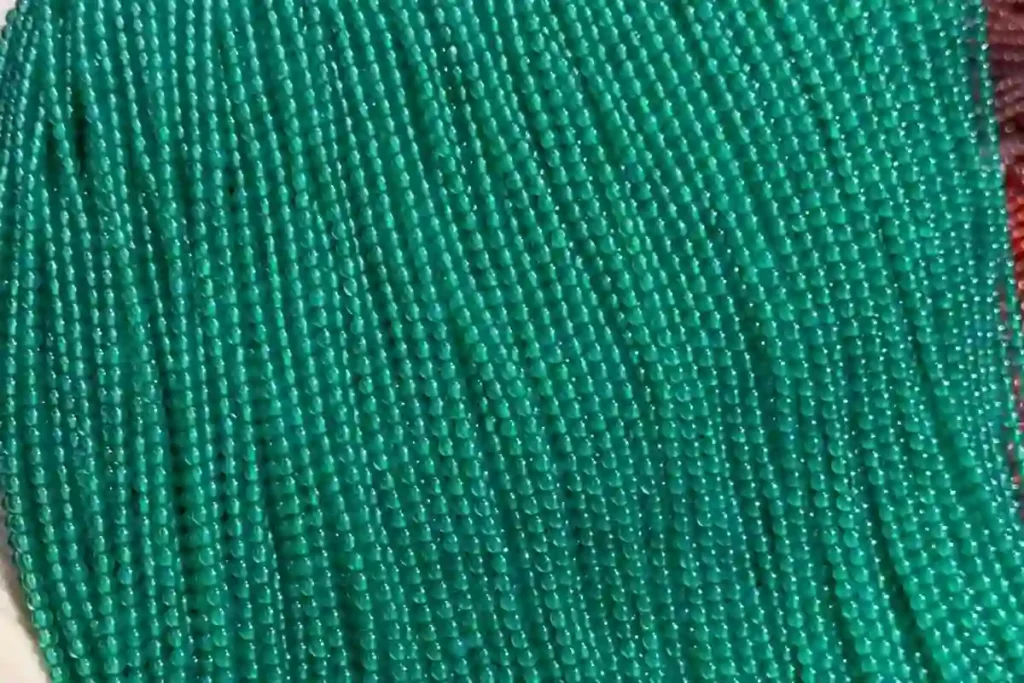
Beads call for a different kind of inspection than irregular pendants. Buyers usually need to know the bead diameter, hole size, surface finish, and how much the color changes along a strand. A small variation may add interest to a handmade design, while a matched bracelet line may need a narrower color range. Ask for photos of several strands from the current lot before deciding.
A Green Agate Bracelet can be sold as a simple accessory or as part of a collection built around green stones. Some shoppers also ask about Green Agate bracelet benefits. Retailers can explain that people may associate the stone with balance or growth in crystal traditions, without claiming the bracelet produces a health effect. The bracelet’s fit, bead finish, and accurate material description remain essential product details.
For bulk orders, confirm whether you are buying loose beads, finished bracelets, or both. If the bracelets come ready to sell, check their finished length, threading material, and treatment description. These details affect how consistently you can present the goods to your customers.
Tumbled Stones and Rough Pieces
Tumbled green agate usually has a smooth, polished surface. Buyers can compare the pieces by size range, shape, color, and how clearly their patterns show. A mixed bag may work well for a display where customers choose individual stones. If you sell sets that should look alike, ask how much variation to expect across the full order.
Rough pieces offer a different look. Their unpolished surfaces may hide patterns that become clearer after cutting, so photos of finished pendants cannot show what every rough piece will look like. For either form, confirm whether the green color is natural or added. Do not assume all products sold under “green agate” have received the same treatment.
Choose the form based on what your customers plan to do with it. Jewelry makers may need usable shapes and dimensions, while crystal shops may prefer attractive individual pieces for display. Request images of the current lot and agree on a size range before placing a bulk order.
Choosing a Product Form for Your Customers
Start with how your customers will use the stone. A jewelry designer may want irregular pendants that can become one-of-a-kind pieces. A retailer building a repeatable bracelet range may care more about bead size and color consistency. Crystal shops can offer tumbled stones for customers who like to choose a piece in person.
Importers and online sellers should also consider how easily they can describe and photograph the goods. An assorted tray of pendants needs several representative images and a clear note about shape variation. Finished bracelets need reliable measurements. Rough pieces need realistic expectations about their unpolished appearance.
No single form is best for every market. Before ordering, decide whether your priority is individual character, a closely matched group, or material for further design work. Share that preference with the supplier so you can review a lot that fits your customers’ needs.
Color, Size, Quality, and Green Agate Stone Price
Compare Color and Pattern Across a Whole Lot
One photo cannot show the full range of a wholesale lot. Ask to see several pieces together under consistent lighting. Look at how much the green shade changes, whether bands appear on most pieces, and how the patterns vary. For color-treated goods, also confirm that the supplier describes the treatment clearly.
The right level of variation depends on how you will sell the stones. A tray of irregular pendants can give customers a choice of distinct pieces. If you plan to photograph one item and sell many under the same listing, you may need a closer match in color and shape. Tell the supplier what your listing promises before the order is packed.
Check the whole presentation, not just the brightest green piece. A darker stone may show attractive bands, while a lighter one may have a shape your customers prefer. By reviewing a representative group, you can decide which differences add character and which would make the lot harder for your business to sell.
Check Shape, Surface, Holes, and Hardware
For pendants, inspect the outline and edges as well as the color. Irregular shapes are expected, but sharp edges, obvious chips, or a fitting that does not sit securely can affect whether a piece is ready to sell. Ask to see both the front and back of several pendants. That gives you a better view of their finish and natural pattern variation.
Loose beads need other checks. Compare their diameter across several strands, look at the polish, and check whether the holes suit your planned string or wire. If you buy finished bracelets, confirm the finished length and inspect the threading and closure, where applicable. A good-looking bead alone does not tell you how the finished piece will hold together.
Set your acceptance standards before the order. Decide which natural lines or shape differences are acceptable and which damaged pieces should be removed. For higher-value or tightly matched orders, request a representative sample or current-lot video. Visual inspection is useful for buying decisions, but it does not replace gemological testing when a material’s identity is in doubt.
Record Size and Weight Ranges Before Ordering
Irregular stones should be described with a size range, not a promise that every piece will have the same measurements. Ask how the supplier measures pendants and whether the stated size includes a metal fitting. For beads, confirm the diameter and hole size. If goods are sold by weight, clarify whether that weight includes packaging.
A photo beside a ruler can make the range easier to understand. For a tray of assorted pendants, ask how many pieces it contains and whether very small or very large pieces are mixed in. Record these details in the order so both sides know what to expect when the goods arrive.
What Affects Green Agate Stone Price?
There is no single Green Agate stone price that fits every wholesale order. A quote can change with the product form, size range, cutting and polishing work, fittings, order quantity, and how closely the pieces must match. A tray of assorted irregular pendants, for example, should be compared with other trays on its actual contents rather than on a single sample photo.
Treatment disclosure matters too. Make sure two quotations describe the same material and whether the green color has been added. Ask what the price includes: the number of pieces or trays, packaging, and any selection requirements. If a supplier uses a grade such as A or AB, request the grade’s specific criteria instead of assuming every supplier applies the same standard.
My Experience Supplying Green Agate Pendants
Why Buyers Like These Color-Treated Pendants
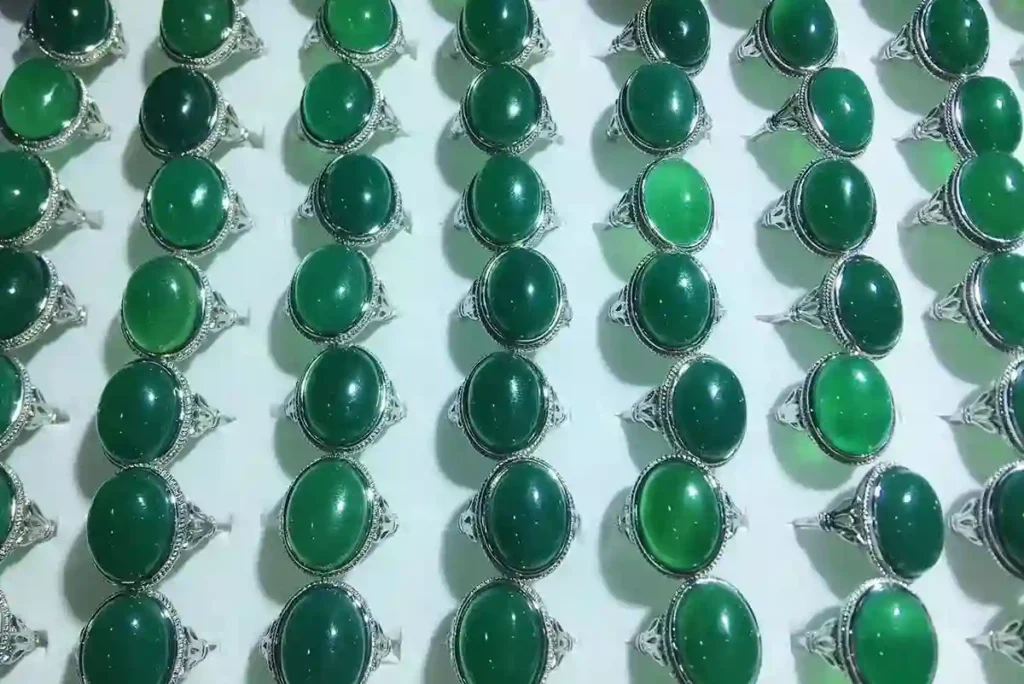
The green agate pendants I supply start with natural agate, then receive added green color. I tell buyers about that treatment. The color draws attention, while the visible patterns give each stone a different look. In my experience, customers who choose these pendants often like that combination of bright color and individual texture.
I have also found that some customers in the Middle East like this style. That is an observation from my own business, not a claim about every buyer in the region. Because the pendants have irregular outlines, I do not present them as perfectly matched pieces. I find it more useful to show buyers the variety they can expect across a tray.
A Repeat Order From My Kazakhstan Customer
One of my customers from Kazakhstan buys these green agate pendants regularly. He takes 10 trays at a time, with 36 pendants in each tray, and comes back for more every month. The pendants have irregular shapes and varied patterns, so no two pieces look exactly alike.
That repeat order has shown me that uniform shapes are not always what a buyer wants. For this customer, the varied look works well enough to keep ordering. I still make the variation clear: a tray contains 36 individual pendants, not 36 copies of the piece shown in one photo.
How I Set Expectations for Irregular Shapes
When I discuss these pendants with a new wholesale buyer, I make the shape variation clear before they order. Each tray contains a mix of individual pieces. Some may have broader outlines, while others may look slimmer, and the bands will not appear in the same place on every stone. That variety is part of the style.
I recommend checking photos or a video of the current batch, especially if the buyer has a specific color or shape preference. It also helps to agree on what would count as an unacceptable chip or damaged fitting. Clear expectations let buyers plan their display and product photos around the actual assortment, rather than expecting every pendant to match one example.
Looking for green agate pendants in bulk? Contact us on WhatsApp or send an inquiry with the quantity and style you need. We can discuss the current batch’s shapes, patterns, and color treatment so you can decide whether it fits your customers before requesting a quote.
How to Buy Green Agate in Bulk
Questions to Ask a Supplier Before Payment
Start with the material and treatment. Ask whether the goods are natural agate and whether their green color has been added. Then confirm the product form, size range, quantity per tray or pack, and any fittings. If a listing only says agata green or “green crystal,” request a fuller description before you order. A search label does not tell you enough about the goods.
Ask to see photos or a video of the current lot, especially for irregular pendants. Check several pieces together so you can judge the range of shapes, shades, and patterns. If you need a close match to a previous order, tell the supplier what must match and what variation you can accept.
Before payment, put the agreed details in writing. Include the quantity, treatment description, size range, packaging, and how damaged pieces will be handled. This gives both sides a clear record and makes it easier to check the shipment when it arrives.
Confirm the Sample Against the Production Lot
A sample helps you judge a stone’s finish and color, but it may not show every variation in a bulk order. Before approving the full lot, ask whether the sample represents the current stock. For irregular pendants, compare several pieces rather than expecting every pendant to match one selected example.
Tell the supplier which details matter most to your customers. You might accept a range of shapes but need a fairly consistent green shade, or you might prefer strong patterns even when the color varies. Record those preferences alongside the agreed size and quantity. This gives the supplier a clearer target when selecting the goods.
If you reorder later, review the new lot again. Natural patterns and hand-selected assortments can change between shipments, even when the product name stays the same. A current-lot check is especially useful when your retail photos or designs depend on a particular look.
Pack Irregular Pendants for Shipping
Irregular pendants can rub against one another or put pressure on exposed edges during shipping. Before placing a bulk order, ask how the supplier separates the pieces inside each tray and protects the trays inside the outer carton. Check whether the fittings also need protection from bending or scratching nearby stones.
The packing list should state the number of trays and pieces in each tray. If you order several styles, ask for clear labels so your team can count and sort them when they arrive. Photos of the packed goods can help you compare the shipment with the agreed order.
I would also agree in advance on how to report damage. Knowing which photos to take and when to contact the supplier makes an arrival check easier. The goal is simple: the assortment should reach you in a condition you can inspect and sell.
A Practical Order Checklist
Before confirming a green agate order, make sure both sides have agreed on these points:
- Material and treatment: Is the stone natural agate? Was the green color added?
- Product details: Which form, size range, fittings, and quantity will you receive?
- Appearance: What range of colors, patterns, and irregular shapes is acceptable?
- Packing: How will the pieces be separated, counted, and labeled?
- Arrival checks: How should you report pieces that arrive damaged?
Some buyers also search for agate green wrap. That phrase could mean a wire-wrapped green agate pendant, but it does not specify the wire, stone size, or treatment. If that is the style you want, send a reference image and ask the supplier to confirm exactly what the quote includes.
How to Care for Green Agate Jewelry
Cleaning and Storage
Wipe green agate jewelry with a soft, slightly damp cloth, then dry it before storage. Keep individual pieces apart so pendants and metal fittings do not rub against one another. Avoid hard knocks, and remove jewelry before using household cleaners or solvents.
Color-treated stones need particular care. The Gemological Institute of America’s guide to gem treatments advises keeping known dyed gems away from chemicals such as acetone or alcohol and from prolonged strong sunlight, which may affect the color. Because treatment methods can vary, ask the supplier whether a specific batch has any additional care requirements.
Do not assume an ultrasonic cleaner is suitable for every pendant, especially when its treatment or fitting is uncertain. Gentle hand cleaning is a practical choice for customers who do not know those details. Store the jewelry away from direct sunlight when it is not on display.
Explain Care Instructions to Retail Customers
Give retail customers a short care note they can follow: “Wipe with a soft, slightly damp cloth and dry after cleaning. Avoid solvents, strong sunlight, and hard impacts. Store pieces separately.” If the green color has been added, say so in the product details as well as sharing the care instructions.
For wholesale buyers, consistent wording matters. Your photos, product description, and packing information should all describe the same material and treatment. That helps your customers care for the jewelry and explain it accurately when they sell it.
Frequently Asked Questions
What does green agate do spiritually?
In crystal traditions, some people associate green agate with balance, growth, and calm. These are personal or cultural meanings, not proven effects of the stone. If you searched for agate stone green meaning, that is the distinction to keep in mind: a symbolic description can explain why someone likes a piece, but it does not establish a health benefit. When selling green agate, describe its appearance and color treatment separately from its spiritual meaning.
Who should wear green agate?
Anyone who likes its color, patterns, or personal symbolism can choose to wear green agate. There is no proven rule that limits it to a particular zodiac sign or group of people. For a comfortable purchase, focus on the pendant’s size and weight or a bracelet’s fit. Buyers should also know whether the green color has been added, so they can care for the piece properly.
Is green agate considered lucky?
Some people consider green agate a lucky stone in crystal traditions. That is a personal belief; wearing it cannot guarantee money, success, or any other outcome. Retailers can say it is “commonly associated with good luck” while keeping the product description factual. Tell customers what the stone is, what it looks like, and whether it has received color treatment.
How can I tell whether green agate is dyed?
You cannot reliably confirm a particular stone’s treatment from a photo alone. Ask the supplier for a clear written description of the material and whether the green color is natural or added. This applies even if you found the product through searches such as agata piedra verde or agata verde propiedades. If identification is essential for a higher-value order, seek a qualified gemological assessment rather than relying on a home test.
How do I choose green agate for wholesale orders?
Choose the product form first, then confirm the current lot’s treatment, size range, color variation, quantity, and packing. Review several pieces together if you are buying irregular pendants. The search question agata verde para que sirve asks what green agate is used for; possible products include jewelry and decorative pieces. Your best choice depends on what your customers want to make, wear, or display.
References
- Gemological Institute of America (GIA). “Agates from Morocco: Gemological Characteristics and Spectroscopic Features.”
- Gemological Institute of America (GIA). “Gems Recovered from Sedimentary Rocks.”
- Gemdat. “Agate Gemstone Information.”
- Gemological Institute of America (GIA). “An Introduction to Gem Treatments.”
- Mindat. “Moss Agate: Mineral Information, Data and Localities.”
- Gemological Institute of America (GIA). “GIA Green Gemstones Buying Guide.”
Disclaimer
The spiritual meanings, chakra associations, and benefits discussed here reflect crystal traditions and personal beliefs. They are not scientifically proven medical effects. Green agate should not replace professional medical advice or treatment. Material, color treatment, size, and appearance can vary between products and wholesale lots; confirm these details for the specific goods you plan to buy.
Conclusion
Green Agate Meaning often centers on balance and growth in crystal traditions. For wholesale buyers, the stone’s appearance and description matter just as much as its symbolism. Check the patterns, size range, finish, and variation across the current lot. Above all, distinguish natural agate from naturally green agate: a pendant can be made from natural stone and still have added green color.
Irregular pendants offer a different look in every piece. Beads, bracelets, tumbled stones, and rough pieces serve other needs, so choose the form that fits your customers. Before ordering, confirm the treatment, quantity, acceptable variation, and packing in writing.
Ready to source green agate in bulk? Send us your preferred product form, quantity, and color range through WhatsApp or our inquiry form. Request a Quote and ask about the current lot before you start your wholesale order.