
Fire Agate Meaning: A Practical Guide for Crystal Buyers
Written by Roc Gong | Founder of RoCrystal
Last updated: September 25, 2026
Fire agate meaning often refers to ideas of confidence, motivation, and protection in crystal traditions. Buyers also use the term when looking for a stone with a striking natural color effect. Before choosing a bracelet, ring, or loose stone, it helps to know which claims describe the gem itself and which describe personal beliefs. Neither a warm orange color nor the word “fire” in a listing proves that a stone is natural fire agate.
According to the Gemological Institute of America (GIA), fire agate is an iridescent variety of chalcedony, usually with a brown body color. This guide explains its appearance, traditional meaning, common product forms, and practical buying checks. For wholesale buyers, the main question is whether the supplier’s name, photos, treatment details, and actual batch all describe the same material.
What Is Fire Agate?
Fire Agate as a Type of Chalcedony
Fire agate is a variety of chalcedony, a form of quartz made of very small crystals. According to the Gemological Institute of America (GIA), it can form rounded, grape-like shapes and show a colorful optical effect called iridescence. This makes it different from an orange agate that has color but no visible iridescence. Buyers may call it a fire agate crystal, although “chalcedony” is the more precise material name.
The word “agate” covers many stones with different colors and patterns. It does not mean that all fire agate stones will look alike. One piece may have a broad area of color, while another shows only a small patch. For a wholesale order, ask to see the actual selection offered for sale. A single attractive specimen cannot show how much the rest of the batch may vary.
The Colors and Iridescence Buyers Should Expect
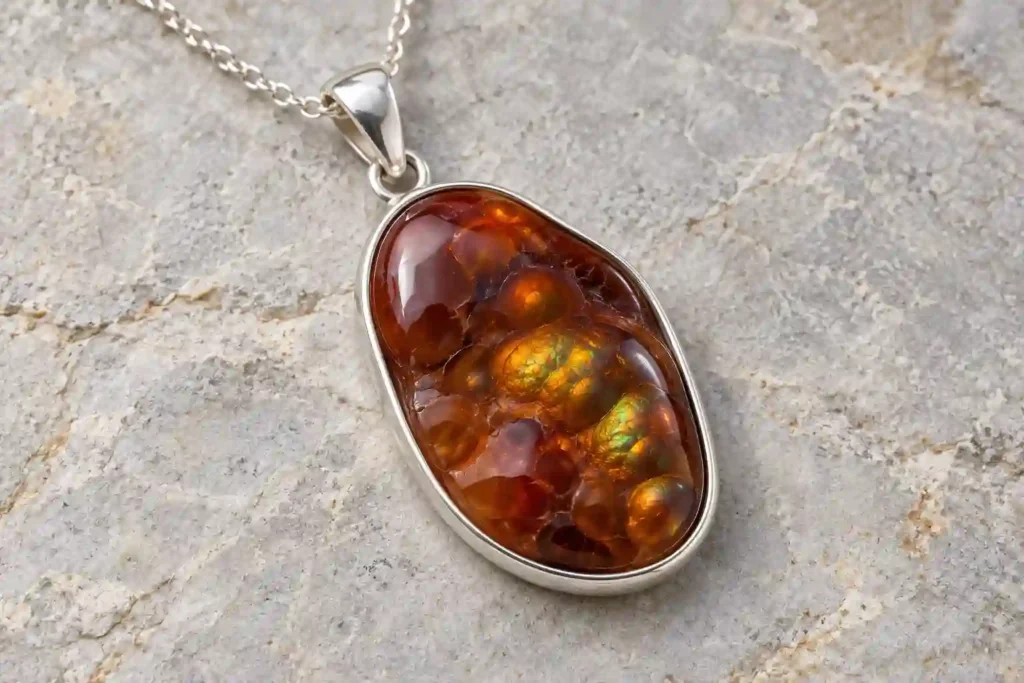
Natural fire agate often has a brown body color with areas of green, yellow, or orange iridescence. GIA’s review of optical effects in gemstones describes the iridescence as visible in reflected light. It also notes that the effect does not always change dramatically as the viewing angle changes. A buyer should therefore look for the color effect itself rather than expect every stone to flash like an opal.
Bright white lines from a lamp are reflections on a polished surface. They do not, by themselves, show the colored iridescence associated with fire agate. A supplier’s photos can help you inspect the surface, but lighting and camera settings may change how strong the colors appear. Request a short video and representative photos of the offered pieces, then compare them with a sample before approving a larger order.
Key Fire Agate Properties at a Glance
These fire agate properties give buyers a starting point for checking a listing. Mindat places chalcedony at about 6.5–7 on the Mohs hardness scale. That figure describes resistance to scratching; it does not promise that a polished stone or finished piece cannot chip after an impact. Color coverage, shape, and visible surface features still need to be checked piece by piece.
| Property | What a buyer should check |
|---|---|
| Material | Fire agate is a variety of chalcedony. |
| Main visual feature | Colored iridescence over a usually brown body color. |
| Hardness | Chalcedony is about 6.5–7 on the Mohs scale. |
| Natural variation | The area and strength of visible color can differ between pieces. |
| Product description | Ask whether photos show the actual pieces or only examples. |
Together, these properties of fire agate help you ask better questions, but they are not a home test for authenticity. If a listing uses the name “fire agate” for uniformly yellow or orange beads, ask the supplier to explain the material and show the color effect on those beads. When the identification or treatment status matters to a large purchase, seek an independent gemological assessment.
What Fire Agate Looks Like and How It Forms
How Agate Forms and What Research Says About the “Fire”
Agate commonly develops as silica-rich material fills spaces in rock over long periods. In its review of optical effects, the Gemological Institute of America (GIA) notes that agates form mainly in cavities in volcanic rocks, though they can also occur in other settings. Fire agate belongs to the chalcedony family. When a seller describes chalcedony fire agate or fire agate chalcedony, they are referring to this material relationship.
The word “fire” describes its iridescent appearance, not heat inside the stone. GIA reports that thin layers of iron oxides or hydroxides are the most likely cause of the effect. However, the exact cause has not been settled through detailed study. A buyer can describe the visible colors with confidence while avoiding claims that every detail of their formation is fully understood.
Rough Fire Agate Versus a Polished Stone
A polished piece gives buyers a clearer view of its color effect and surface finish. Rough material can look less striking because its surface has not been shaped and polished for display. The shape of a rough piece also gives no guarantee that every part will produce an attractive finished stone. If you buy rough material for cutting, ask which photographs show the exact pieces offered and how the supplier measures their weight.
Searches for fire agate rock, fire agate stone raw, or the Spanish phrase agata de fuego en bruto may lead to rough specimens. These names describe a product form, not a quality grade. Before ordering, confirm whether the quote covers natural rough, partly worked material, or a polished specimen. Cutting plans, usable areas, and the amount of material removed can affect a designer’s final yield.
Natural Patterns, Pits, and Shape Variation
Fire agate pieces can differ in outline, brown body color, and the amount of visible iridescence. Some rough specimens also have rounded, uneven surfaces. GIA describes this grape-like structure as botryoidal. A natural-looking shape may suit a collector, while a jewelry designer may need a smooth face and dimensions that fit a setting. Neither preference makes every stone in a lot equally useful.
Before placing a bulk order, separate acceptable natural variation from defects that would affect your products. Ask for close photos of pits, chips, cracks, and polished edges, along with a clear size range. Surface features alone cannot prove whether a stone is genuine or treated. The practical goal is to agree on what the supplier will include, what they will exclude, and how they will handle pieces outside that agreement.
Fire Agate Meaning and Traditional Beliefs
Fire Agate Spiritual Meaning
In crystal traditions, the fire agate spiritual meaning is often linked with confidence, motivation, and protection. These are symbolic associations, not measured properties of the stone. A customer may choose a piece because its warm colors remind them of energy or change. Another may simply enjoy its appearance. Both reasons are valid ways to describe a personal choice, as long as a seller does not present a belief as a proven result.
The phrase fire agate stone meaning asks what people associate with this particular variety. Fire agate crystal meaning is often used for the same question. Readers who want a wider view of agate meaning may also be interested in how other agate varieties are described in crystal traditions. The names may share a mineral family, but sellers should still identify each stone correctly before discussing its symbolic meaning.
Metaphysical Properties and Commonly Claimed Benefits
Some people believe fire agate supports a sense of courage or helps them stay focused during difficult periods. You may see these ideas described as fire agate metaphysical properties or fire agate benefits. They reflect personal and cultural beliefs. They do not establish that wearing a stone changes a person’s health, mood, or circumstances. A responsible description can explain the belief without promising a specific outcome.
Searches for the healing properties of fire agate may include claims about pain, circulation, stress, or other medical concerns. Such claims need scientific evidence before anyone presents them as treatment benefits. This guide makes no medical promises. If a customer asks about a health condition, a crystal seller should avoid giving medical advice and direct the person to a qualified health professional.
How Buyers Can Describe These Beliefs Responsibly
For a retail label or jewelry description, clear wording works better than a long list of promised effects. You could say, “In crystal traditions, fire agate is associated with confidence and motivation.” That sentence tells customers what the association is and where it comes from. It leaves room for personal interpretation without claiming that the stone will produce the same experience for every wearer.
Wholesale buyers should also check that a supplier’s symbolic description matches the material being offered. A yellow or orange bead does not become natural fire agate because its listing mentions “fire energy.” Confirm the stone’s name and appearance first. Then decide whether a short note about traditional meaning fits your customers, packaging, and sales rules.
Names, Origins, and Stones Often Confused with Fire Agate
Mexican Fire Agate and Documented Sources
The phrase Mexican fire agate meaning usually asks about the same traditional associations discussed above, with “Mexican” added as an origin claim. Mexico is a documented source of fire agate; Mindat’s fire agate records also list occurrences outside Mexico. A stone’s appearance alone cannot confirm which location it came from. If origin matters to your customers, ask the supplier what evidence supports the location stated in the listing.
A product name should tell a buyer what material they will receive. “Mexican fire agate” adds a geographic claim to that description. Before printing it on a retail label, confirm both parts with your supplier: the identification as fire agate and the claimed origin. If the supplier cannot support the location, describe the stone without making a specific origin claim.
What Do “Blue Fire Agate” and “African Fire Agate” Mean?
You may encounter blue fire agate or search for blue fire agate meaning. Some fire agate can show blue tones in its iridescence, but the phrase can also appear as a seller’s product name. It does not, by itself, establish a separate mineral variety. Ask for photographs of the exact stones, a description of the blue effect, and any treatment information before repeating the name to your own buyers.
Treat African fire agate with the same care. “African” sounds like an origin statement, yet a listing title alone cannot prove either origin or material identity. Request the supplier’s location information and ask what visible feature supports the “fire agate” name. If the answers remain unclear, use a description you can support rather than passing an uncertain trade name on to customers.
Spanish Search and Trade Names
Spanish-speaking buyers may search for ágata de fuego or type it without accents as agata de fuego. Longer searches include piedra ágata de fuego, piedra agata de fuego, and agata de fuego piedra. These phrases can help a buyer find a listing, but a translated name is not proof of identity. The supplier should still confirm the material, treatment status, and actual appearance of the offered stones.
Similar Names and Similar Colors
The table below helps buyers decide what to ask when listings look alike. It is a purchasing guide, not a way to identify a stone conclusively from a photograph. GIA describes fire agate’s iridescence as a feature of this chalcedony variety. GIA also notes that chalcedony can be dyed, so color alone cannot confirm whether a stone is untreated.
| Listing name | What the name may describe | What to confirm before buying |
|---|---|---|
| Natural fire agate | Iridescent chalcedony | The visible effect, treatment status, and offered batch |
| Orange agate or carnelian | A warm-colored chalcedony product | Its precise material name and any treatment |
| Fire quartz | A separate trade name used for some quartz products | The supplier’s material identification; do not assume it means fire agate |
| “Blue” or “African” fire agate | A name that needs further explanation | The color effect, claimed origin, and supporting information |
Fire Agate Jewelry and Other Product Forms
Beads and Bracelets
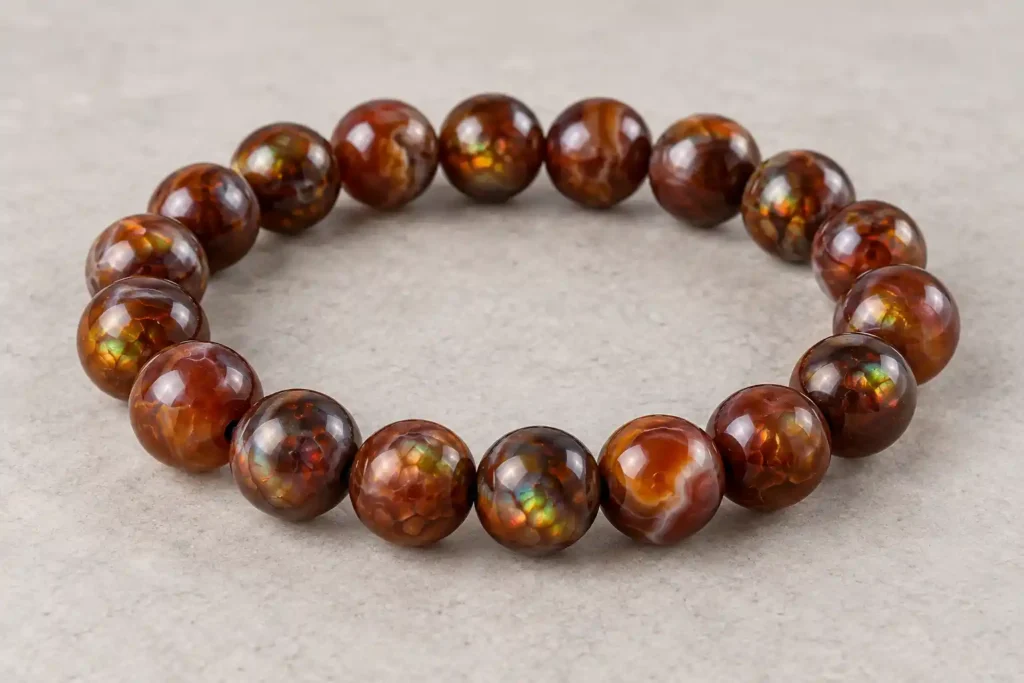
When buying fire agate beads, ask whether the supplier uses the name for every bead in a strand or only for a few stones with visible iridescence. Check the bead diameter, hole size, polish, and color variation. Photos of a complete strand are more useful than a close-up of its brightest bead. For larger orders, request images that show several strands together so you can judge how consistent the selection looks.
A listing for a Mexican fire agate bracelet adds both a material claim and an origin claim. Confirm each one before using that name in your own sales materials. Searches for fire agate bracelet benefits often refer to spiritual beliefs or the appeal of wearing the stone. You can describe those beliefs as traditions, while keeping comfort, fit, bead quality, and material identity as separate, practical buying points.
Rings, Pendants, and Polished Pieces
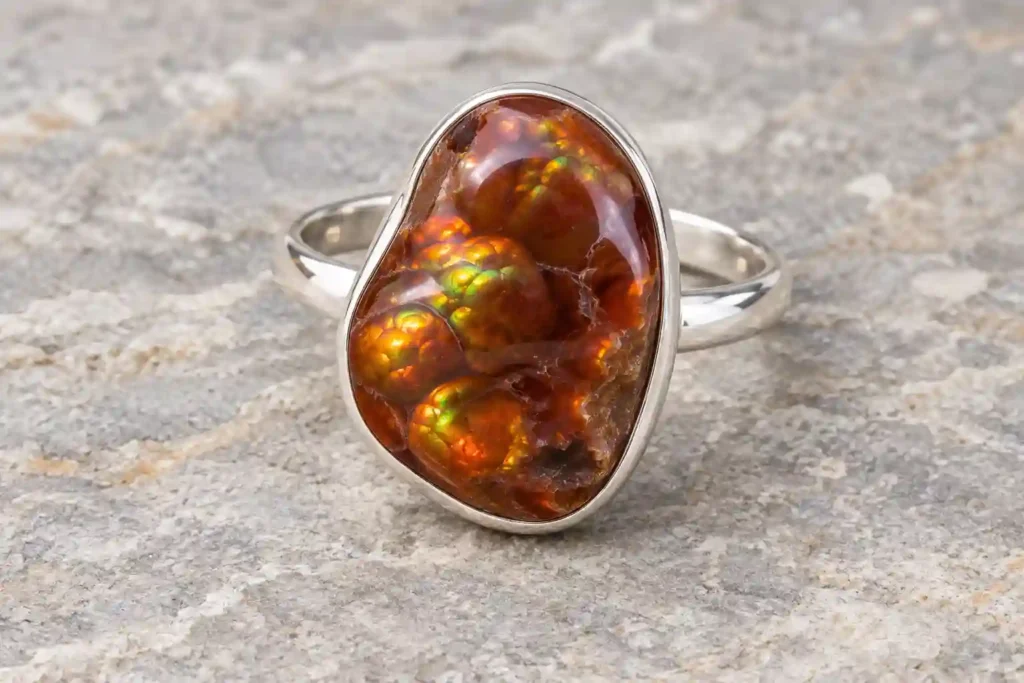
A fire agate ring puts one stone at the center of the design, so its visible color area and finished shape matter. Ask for the stone’s dimensions in millimeters, its setting measurements, and photos from the front and side. Also check whether the price includes the finished ring or only a loose stone. Those details help jewelry designers compare offers and avoid ordering a piece that will not fit their design.
The same checks apply to a Mexican fire agate pendant. Its outline may be irregular, and two pieces with the same weight may have different shapes or areas of iridescence. If you plan to sell individual pendants, request photos of the exact pieces you will receive. For a repeated design, ask the supplier which features can stay consistent across the order and which will naturally vary.
Rough Stones and Tumbled Stones
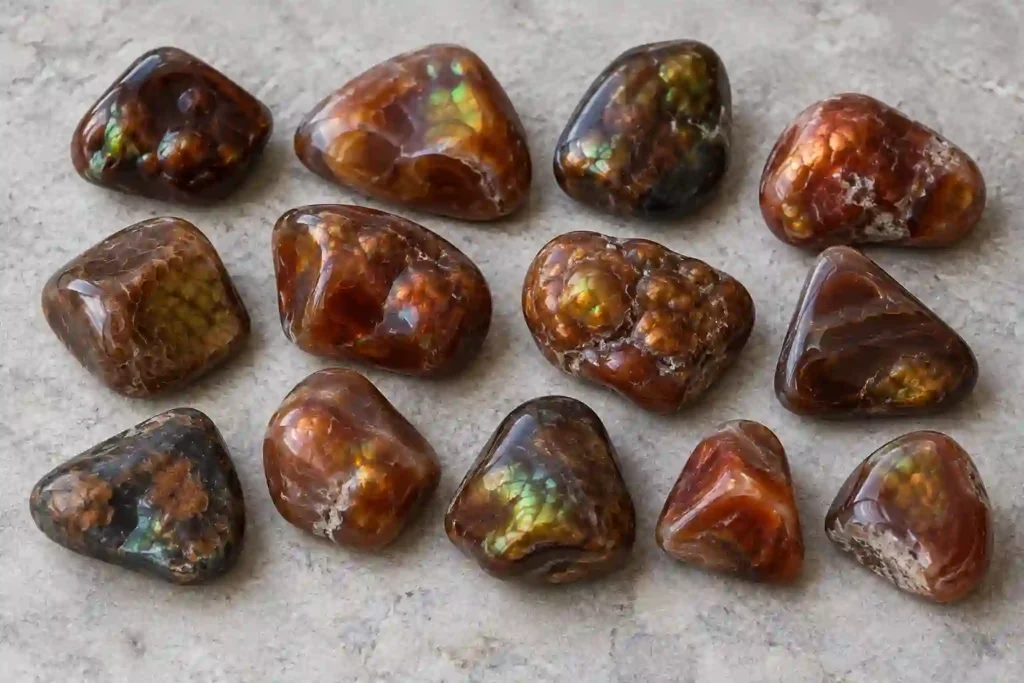
Rough fire agate may appeal to collectors or buyers who cut their own stones. A tumbled stone serves a different purpose: it should feel smooth, display well, and fall within the size range your customers expect. Neither form should be judged only by weight. Ask what proportion of a rough lot shows the desired appearance, or request representative photos of the finished tumbled pieces.
Product form can also affect how clearly a buyer sees the iridescence. A close-up of one polished stone does not show how an entire rough or tumbled lot will look. Tell the supplier whether you need pieces for cutting, jewelry making, crystal retail, or resale in small packs. Then agree on the appearance and size range for that specific use before discussing a bulk price.
How Wholesale Buyers Assess Quality and Price
Color Effect, Surface Finish, and Treatment Disclosure
Start with the feature buyers expect to see: the iridescence. Ask how much of each polished stone shows the effect, whether it remains visible in ordinary light, and how the offered pieces compare with the listing photos. Then inspect the finish. Chips near an edge, deep pits, or rough areas may affect a ring or pendant more than a specimen sold for collecting.
Treatment information deserves its own question. The Gemological Institute of America (GIA) explains that chalcedony can be dyed and that some treatments require expert examination to detect. Do not assume every brightly colored piece is treated, or that a natural-looking piece is untreated. Ask the supplier to state what they know about dyeing, coatings, or other treatments, and keep that statement with your order records.
Size, Weight, and What Varies Across a Lot
Compare stones using the measurements that fit their product form. Loose pieces and pendants may need length, width, thickness, and weight. Beads need a diameter and hole size. Rough stones may be sold by weight, but their usable shape matters to a cutter. Ask whether the stated measurements describe each piece, an average, or a range across the lot.
Color coverage and size can vary even when a supplier groups pieces under one grade. There is no single grade label in this article that can replace a clear buying agreement. Request representative photos of the full selection, identify the pieces you would reject, and agree on a reasonable size range before payment. For repeat orders, save the approved sample and the written specifications so both sides can compare later batches.
Fire Agate Price and Quote Comparisons
A search for fire agate price may show offers for rough pieces, loose polished stones, beads, or finished jewelry. Those figures are not directly comparable. Ask whether the quote is per piece, per strand, by weight, or for a complete item. Check what it includes: sorting, drilling, metal parts, packaging, and shipping can change the amount you pay and the product you receive.
Spanish searches such as ágata de fuego precio and agata de fuego precio ask about price too, but the same buying checks apply. A lower quote may describe a different material, a smaller size, less visible color, or a different level of finishing. Compare offers only after the suppliers answer the same questions and show the actual type of goods they intend to send.
How to Check Authenticity Before a Bulk Order
What Photos and Videos Can Show
Ask for clear photos of the exact pieces offered, taken in ordinary light from more than one angle. A short video can help you see how the colored areas appear as the stones move. It can also reveal chips, uneven polish, and differences within a group. Compare those images with the supplier’s listing photos, especially if the listing features only one unusually bright specimen.
Photos and videos are useful for checking appearance, but they cannot prove every part of a gemstone’s identity. A camera may make colors look stronger or weaker than they appear in person. White reflections from lamps can also draw attention away from the stone’s actual color effect. If a purchase depends on a specific level of iridescence, request a physical sample before approving the larger lot.
What to Ask About Treatments and Identification
Ask the supplier to name the material and state whether they know of any dyeing, coating, or other treatment. According to the Gemological Institute of America (GIA), chalcedony can be dyed, and identifying a treatment may require a trained gemologist. An orange or brown color alone cannot settle the question. Keep the supplier’s answer in writing, along with the photos and specifications used for the quote.
If you need independent proof for a valuable order, ask a qualified gemological laboratory what it can test and report on the sample. A lab report applies to the material examined; it does not automatically certify every stone in a separate bulk lot. Agree with the supplier on how samples will be selected and how any later shipment will be checked against them.
A Small Sample Before a Large Order
Order a sample that represents the proposed batch, not just the supplier’s most attractive piece. Examine several beads and their drill holes if you plan to buy strands. With loose stones, compare size, polish, and visible color across the sample. If you are buying rough material, confirm exactly what the quoted weight includes. Write down the features you accept so the sample becomes a useful reference for the full order.
Once the larger lot is ready, ask for new photos or a video before shipment. Check its stated count or weight, size range, and appearance against the approved sample and written agreement. This process cannot replace professional identification when you need it, but it can catch practical differences before the goods travel. It also gives both sides a clearer basis for resolving a mismatch.
My Experience with Agate Sourcing and Fire Agate Identification
What I Have Seen When Supplying Other Agates
I have supplied other types of agate to wholesale buyers, but I have not sold natural fire agate. In my experience, a familiar stone name does not tell a buyer exactly how every piece in a batch will look. Color and patterns can vary, so I pay attention to the actual goods and the customer’s requirements before describing a selection or agreeing to supply it.
I once dealt with a request involving Indian agate and moss agate. The customer wanted stones with a particular color balance, but I could not simply select stones from one group and assume they would meet the other order’s requirements. That experience reminded me to confirm the buyer’s expectations first. A name may help start the conversation; the agreed appearance decides whether the goods will work for the customer.
Why I Would Verify a Fire Agate Lot Before Offering It
Because I have not handled a natural fire agate order, I would begin by checking the supplier’s material description rather than relying on a listing title. I would request photos of the offered pieces and a short video showing their colored areas under ordinary light. I would also ask about treatment and origin claims. These are steps I would take, not tests I have already performed on fire agate.
I would then compare a representative sample with the proposed bulk lot. For beads, I would check size, drilling, and how many pieces show the appearance the buyer expects. For loose stones, I would check the finish and dimensions of each selected piece. If the identity or treatment status remained uncertain, I would avoid making a claim I could not support and seek professional testing where needed.
What Wholesale Buyers Can Learn from That Approach
My advice is to tell a supplier which features matter to your customers before asking for a final price. A designer may need a particular shape, while a retailer may need pieces that look consistent together in a display. Agree on the acceptable variation, ask to see the goods you will receive, and keep the photos and specifications with the order. That makes later discussions more precise for both sides.
If you are sourcing agate or exploring fire agate for your range, send us your preferred form, size, quantity, and appearance through WhatsApp or our inquiry form. We can discuss the requirements and check what information is available before preparing a quote.
Care, Packaging, and Shipping
Simple Cleaning and Storage
For routine care, wipe polished fire agate with a soft, damp cloth. If a piece needs more cleaning, use mild soapy water, rinse it, and dry it with a soft cloth. Keep harsh cleaners away from stones when their treatment status is unknown. If a piece sits in a ring or pendant, check the metal and setting before cleaning it. The setting may need different care from the stone.
Mindat lists chalcedony at about 6.5–7 on the Mohs hardness scale. That describes scratch resistance, not protection from every chip or crack. Store finished pieces separately from harder gems and metal parts that could rub against them. Use soft dividers or individual bags for polished stones, especially when a customer plans to display each piece on its own.
Packing Loose Stones, Beads, and Finished Jewelry
Packaging should match the product form. Separate loose polished stones so they do not strike one another during transport. Keep bead strands secured and count them before packing. For rings and pendants, protect both the stone and any metal parts that might scratch another item. A box should hold the contents firmly enough that they cannot move freely when handled.
If a wholesale order contains several sizes or selections, label each inner bag with its item name, quantity, and agreed size range. Include a packing list that matches those labels. Before closing the shipment, photograph the sorted goods and the packed boxes. These steps make it easier for the buyer to check what arrived and identify where a shortage or damage occurred.
What to Confirm Before International Shipping
Confirm the shipping method, delivery terms, and who will handle a claim if goods arrive damaged. Ask the supplier how they will protect individual pieces and whether finished jewelry needs separate boxes. For a heavier rough-stone order, check the total packed weight as well as the stone weight. Packaging can affect freight costs, so both figures matter when comparing quotes.
Agree on when the buyer will receive final photos and how long they have to report a problem after delivery. Keep the approved sample, order specifications, packing list, and shipment photos together. Clear records will not prevent every shipping issue, but they give both parties a practical way to check whether the received goods match the order.
Choosing a Reliable Fire Agate Supplier
Clear Names and Treatment Information
A reliable supplier should explain what they mean by “fire agate” and describe the stones they are offering. Ask whether the name refers to natural iridescent chalcedony, and request a clear statement about any known treatments. If the listing also claims a specific origin, ask how the supplier knows it. Answers that address the actual goods are more useful than a repeated product title.
Pay attention to uncertainty as well. A supplier may not have independent test results for every piece, but they should say what they can confirm and what they cannot. If your customers require a documented material identity or treatment status, discuss testing and sample selection before committing to a large order. Do not turn an unsupported supplier claim into a firm statement on your own label.
Representative Photos and Measurable Specifications
Ask for photos that show the selection as a group, along with close views of individual pieces. This helps you compare the brightest stones with the rest of the lot. A short video can add useful detail, but it should show the goods offered for sale. If the supplier cannot show them yet, ask when the final selection will be ready for approval.
Written specifications make an offer easier to judge. Request the size range, total quantity or weight, product form, and acceptable variation in appearance. For beads, add the hole size and number of strands. For loose stones, request dimensions for the selected pieces. A supplier who answers these points clearly gives you a stronger basis for comparing quotes and checking the shipment later.
Sample Approval and Repeat Order Consistency
Before a first large order, agree on a representative sample and record what you accept about it. Save its photos and measurements with the quote. When the full lot is ready, compare it with that reference before shipment. If natural variation is expected, define its limits in practical terms rather than asking for every stone to look identical.
Repeat orders need a fresh check too. Material from a later batch may differ in size, finish, or visible color even when the product name stays the same. Tell the supplier which features your customers noticed in the first order, then ask whether the next selection can meet those needs. A useful supplier relationship depends on clear communication each time you buy.
Practical Buying Checklist
Before requesting a wholesale quote, write down the product you need and the claims you intend to make about it. A clear request helps the supplier select suitable goods and gives you a record to check against the shipment. Use the points below for rough stones, polished pieces, beads, or finished jewelry. Add any requirements that matter to your own customers.
- Material and name: What does the supplier mean by “fire agate”? Can they explain any origin claim?
- Appearance: Do photos and video show the actual selection? How much variation in iridescence, color, shape, and finish is acceptable?
- Treatment: What does the supplier know about dyeing, coatings, or other treatments? Is any information still unconfirmed?
- Product form: Are you ordering rough, tumbled stones, beads, loose polished pieces, or finished jewelry?
- Measurements: What are the size range, weight, quantity, and pricing unit? For beads, what is the hole size?
- Sample: Does it represent the proposed lot, and how will the full order be checked against it?
- Packing and delivery: How will the pieces be separated and labeled? What shipping terms and damage procedures apply?
Ask the supplier to confirm the final specifications in writing before payment. If a feature is essential, such as a minimum visible color area or a narrow size range, describe it clearly and agree on how both sides will check it. Keep the approved images, sample details, quote, and packing list together. Those records are useful when you inspect the order and when you plan a repeat purchase.
FAQ
Who should wear fire agate?
Anyone who likes its appearance can consider wearing fire agate, provided the jewelry feels comfortable and suits their daily activities. In crystal traditions, some people associate it with confidence or motivation, but those beliefs do not predict a personal result. For a ring or bracelet, check the fit, setting, and materials that touch the skin. Buyers choosing gifts should focus on the recipient’s style rather than promise a spiritual or health benefit.
How rare are fire agates?
A precise rarity figure is hard to give without defining the material, size, and quality being compared. A piece with strong, attractive iridescence may be harder to source than a listing with the same name but little visible color effect. “Rare” is also a common sales word, so ask what the seller means by it. Judge an offer by the actual stones, their documented details, and comparable quotes instead of that label alone.
Is fire agate the same as fire quartz?
Do not assume the two names mean the same material. Fire agate is an iridescent variety of chalcedony, as described by the Gemological Institute of America (GIA). “Fire quartz” appears in trade listings for other quartz products, so its exact meaning needs confirmation from the seller. Ask for the material identification and photos of the offered stones before treating the names as interchangeable.
How can you tell if fire agate is real?
Look for the appearance expected of fire agate, and ask for photos or video of the actual pieces. Then confirm the supplier’s material name and any known treatments in writing. Images can help you reject a clear mismatch, but they cannot conclusively establish identity or treatment status. If those claims are important to a valuable order, have a representative sample assessed by a qualified gemological laboratory and agree on how it relates to the full lot.
Who should not wear agate?
There is no general rule that excludes a group of people from wearing agate for spiritual reasons. A person should avoid a particular piece if its metal, string, fit, or finish causes discomfort, and small loose parts need care around young children. A gemstone is not a substitute for medical care. For retail buyers, describe the jewelry’s materials and construction accurately so customers can decide whether that specific item suits them.
References
- Gemological Institute of America (GIA). “Structures Behind the Spectacle: A Review of Optical Effects in Phenomenal Gemstones and Their Underlying Nanotextures.”
- Mindat. “Chalcedony: Mineral Information, Data and Localities.”
- Mindat. “Fire Agate: Mineral Information, Data and Localities.”
- Gemological Institute of America (GIA). “An Introduction to Gem Treatments.”
Disclaimer
The mineral information in this guide comes from the sources listed above. Descriptions of spiritual meaning reflect beliefs and traditions; they do not establish medical or therapeutic effects. Photos, videos, and supplier statements can help buyers assess an offer, but they cannot always confirm a stone’s identity, origin, or treatment status. Seek advice from a qualified gemological laboratory when independent verification is important to a purchase.
Conclusion
Fire agate has a distinctive appearance, while its spiritual meaning comes from personal and crystal traditions. For buyers, the first step is to confirm the material behind the name. Look at the offered stones, ask about their visible iridescence, and check any treatment or origin claims before using those claims in your own sales materials. A warm color or an attractive listing photo cannot answer every question about an order.
Product form matters too. A designer selecting one stone for a ring may need different details from a retailer buying beads or tumbled stones. Set out your size, appearance, quantity, and packaging requirements, then compare the finished selection with the approved sample.
If you are exploring fire agate or sourcing other agates, contact us on WhatsApp or through our inquiry form to request a quote. Tell us the product form, target size, quantity, and features you need so we can discuss the available options accurately.