
Blue Lace Agate Meaning: A Practical Guide for Crystal Buyers
Written by Roc Gong | Founder of RoCrystal
Last updated: September 24, 2026
Blue lace agate stands out for its soft blue color and flowing white bands. In crystal traditions, people often connect it with calmness and clear communication. That is the most common answer to a search for Blue Lace Agate Meaning. For buyers, the stone also raises a practical question: what will the pieces in an order actually look like? Color, pattern, clarity, and finish can vary, even within one batch.
A blue lace agate stone may become a bead, bracelet, necklace, tumbled stone, or decorative piece. Each form calls for different checks before a bulk purchase. This guide covers the stone’s material and traditional meaning, then looks at quality grades, natural marks, treatments, and supplier questions. It also draws on my experience buying blue lace agate beads, including a discounted lot that taught me to inspect the actual goods before agreeing on a price.
What Is Blue Lace Agate?
A Banded Variety of Chalcedony
Blue lace agate is a banded form of chalcedony in the quartz family. Its pale blue and white lines create the lace-like look behind its name. The Smithsonian National Museum of Natural History describes agate as a familiar type of chalcedony with visible color bands. These bands help buyers recognize the material, but their width, shape, and contrast can differ from one piece to another.
According to Mindat’s chalcedony mineral record, chalcedony is a variety of quartz with the chemical formula SiO₂. This describes the material, while blue lace agate describes a particular banded appearance. A blue lace agate gemstone may be cut and polished into beads or other shapes. Buyers should still judge the finished pieces by the actual lot, since the mineral name alone says little about their color balance or finish.
Color, Bands, and Hardness
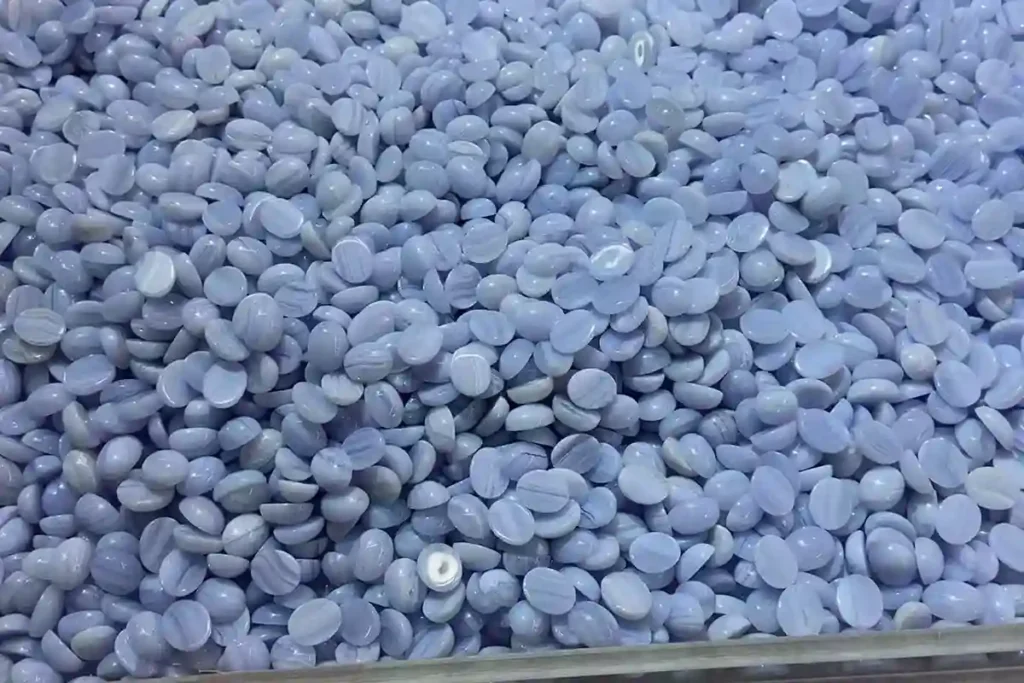
The most recognizable pieces show soft blue areas crossed by curved white bands. Some look more translucent, while others appear cloudy. Pattern placement matters too: a bead may show clear bands on one side and little pattern on the other. When buyers compare the properties of blue lace agate for jewelry, they should look at several pieces from the same lot rather than choose from one close-up photo.
Mindat lists chalcedony at about 6.5–7 on the Mohs hardness scale. That figure describes resistance to scratching; it does not guarantee that a bead will survive a hard impact or rough shipping. Roundness, polish, drill holes, and surface marks are separate quality checks. For bulk orders, those details can matter as much as the color of a lace agate stone.
Color, Formation, and Origin
How the Bands Form and What Buyers See
Blue lace agate gets its name from the bands that run through the stone. Agate develops as silica-rich material forms layers in openings within rock. Those layers create the curved or wavy patterns visible after cutting and polishing. The Smithsonian National Museum of Natural History identifies banding as a defining feature of agate. It does not mean every finished bead will show the same amount of pattern.
The direction of the cut changes what a buyer sees. One bead may display several clear lines, while another from the same material shows a broad blue area with fewer visible bands. In a bracelet, these differences can affect the overall look of the strand. The word lace in searches such as “lace agate meaning” refers to that delicate pattern; it is a description of appearance, not a separate mineral.
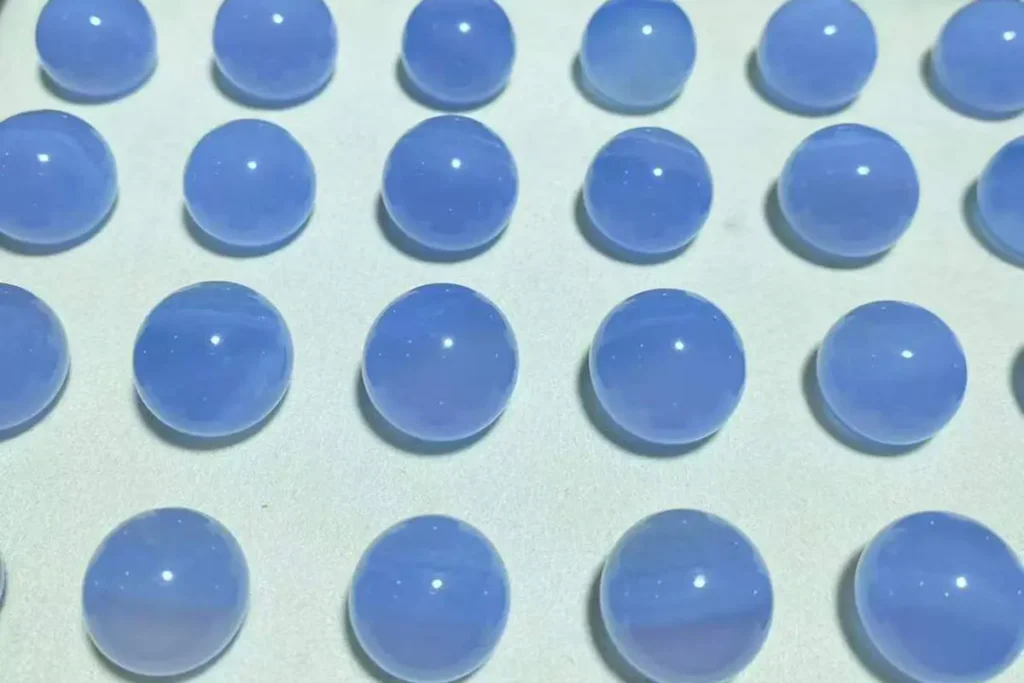
Color also needs careful wording. A piece may appear pale blue in daylight and look different under a supplier’s indoor lighting. Photos can help buyers compare lots, but they cannot fully show translucency or subtle color shifts. For a larger order, I would ask to see the current material from more than one angle, with several beads or stones together in the frame.
Where Blue Lace Agate Comes From
Mindat’s Blue Lace Agate record lists occurrences in Namibia and Kenya. Namibia is associated with well-known specimens, but a recorded occurrence does not prove the origin of every blue lace agate sold in the market. If a buyer needs a specific origin for labeling or purchasing, the supplier should provide information for the actual lot.
Origin and supply are different questions. A stone can have a documented location yet become hard to find in a particular wholesale market for a period of time. I saw that happen after my first purchase: local stock became difficult to find, then appeared again much later. That was my experience in the market, not evidence that the stone had disappeared worldwide.
For most bulk buyers, the immediate task is to confirm what is available now. Ask for photos or video of the current lot, its sizes, color range, and visible bands. If the supplier makes an origin claim, ask how they verified it. These steps give buyers a clearer basis for comparing offers than a country name alone.
Blue Lace Agate Meaning and Traditional Associations
Calm and Clear Communication
For a broader view of agate meaning, explore the traditional symbolism shared across different agate varieties.
The meaning of blue lace agate often centers on calmness and clear communication. In crystal traditions, its soft color and flowing bands remind people of a gentle way to express themselves. Some choose a bracelet or necklace as a personal reminder to pause before speaking. That is a symbolic use of the stone, not a result that every wearer will experience.
Descriptions of blue lace agate spiritual meaning and blue lace agate crystal meaning often use words such as peace, patience, and self-expression. These ideas can help retailers explain why a customer may feel drawn to the stone. They should be presented as beliefs or personal associations. The color and pattern are features a buyer can inspect; the feeling someone connects with them is personal.
For wholesale buyers, this difference shapes how to describe the product. You can tell customers what the stone looks like and how people traditionally use it. You can also invite them to choose pieces whose patterns appeal to them. There is no need to promise that wearing a particular bead will change someone’s mood or ability to communicate.
Spiritual Meaning, Benefits, and Healing Claims
People searching for blue lace agate gemstone meaning, “Blue lace agate meaning spiritual,” or “Blue Lace Agate benefits” often want to know what the stone represents. In crystal traditions, it is commonly associated with a calmer mind and more thoughtful speech. The benefits of blue lace agate in this context are reported beliefs and personal experiences, rather than measured effects that a seller can guarantee.
The phrases “blue lace agate healing properties” and “healing properties blue lace agate” appear in many searches. They need careful answers. Some people use the stone during quiet reflection because they find its appearance soothing. That does not show that the stone treats anxiety, throat problems, or any other medical condition. A buyer can respect a customer’s interest without turning a spiritual description into a health claim.
This approach also makes product descriptions clearer. Describe the blue bands, polish, bead size, and intended jewelry use as product facts. Introduce spiritual meanings with phrases such as “some people believe” or “in crystal traditions.” Customers can then decide whether the symbolism matters to them while still receiving accurate information about the goods.
Chakra and Zodiac Associations
Blue Lace Agate chakra descriptions usually connect the stone with the throat chakra because of its blue color and its traditional link to communication. This is a belief within some spiritual practices. A chakra association cannot establish a physical or medical effect. Buyers who serve this market can mention the association while keeping the stone’s observable features separate.
Blue Lace Agate Zodiac lists also vary between sellers and traditions. There is no single zodiac match that changes the stone’s mineral properties or makes it suitable only for certain people. If a customer chooses jewelry by zodiac sign, present a suggested pairing as an option, not a rule. Color preference, design, size, and comfort still matter when selecting a piece.
Searches for the metaphysical properties of blue lace agate, blue lace agate metaphysical properties, and blue lace agate spiritual properties ask about these traditional associations. They do not refer to the stone’s chemical makeup or hardness. For a retailer, using that distinction keeps the message honest: the stone has physical features buyers can check, while its spiritual meaning depends on the person wearing it.
Blue Lace Agate Compared With Similar Stones
Color alone is not enough to identify a stone. Several materials are sold in shades of blue, and supplier names are not always used in the same way. Blue lace agate is best recognized by the combination of its blue color and flowing, lighter bands. The Smithsonian National Museum of Natural History describes agate as a banded form of chalcedony. For a bulk order, buyers should compare the actual pieces as well as the name on the quote.
| Name on a listing | What to look for | What to confirm before buying |
|---|---|---|
| Blue lace agate | Blue material with visible, lace-like lighter bands | Whether the current lot has the color and banding shown in the sample |
| Blue agate | A broad trade description that may cover different blue agates | The specific stone, color treatment, and actual-lot photos |
| Blue chalcedony | Blue chalcedony may have little or no obvious banding | Whether the buyer needs visible lace-like bands |
| Other blue stones | Similar color does not mean the same material | The material name and any treatment disclosure |
Blue Agate and Blue Chalcedony
Blue lace agate belongs to the wider chalcedony family, but blue agate is a broader name. A search for “blue agate meaning” or “meaning of blue agate” may lead to stones with different patterns. Likewise, “blue chalcedony meaning” does not tell a buyer whether a piece has the bands expected of blue lace agate. Mindat describes chalcedony as a quartz variety; the visible pattern helps narrow the trade description.
The difference matters when comparing blue chalcedony vs blue lace agate for jewelry. A designer may want an even blue surface, while a crystal retailer may want clear white bands that customers can recognize. Searches for “blue agate properties” should therefore lead to a check of the specific material on offer. Broader phrases such as “blue agate crystal meaning,” “meaning of blue agate,” “blue agate spiritual meaning,” and “metaphysical properties of blue agate” describe interests or traditions; they do not confirm a stone’s identity.
A buyer looking up “blue chalcedony stone meaning” or “meaning of blue chalcedony” may also be interested in similar symbolism. The purchasing question remains more precise: does the lot contain the banded material needed for the design? Ask for a group photo and a close-up. That makes it easier to judge both the overall color and how consistently the bands appear.
Other Stones Buyers May Confuse With It
Some related searches point to different products altogether. Botswana agate has its own appearance, so “botswana agate meaning” should not be used as another name for blue lace agate. The term blue flower agate also describes a different look. A customer searching for “blue kyanite crystal meaning” or “blue kyanite stone meaning” is asking about another mineral, even if a product photo shows a similar shade of blue.
“Aragonite meaning crystal” is another separate search. It should not appear as a blue lace agate synonym on a product label or invoice. For B2B buyers, accurate names reduce confusion when a customer reorders. If a listing uses several stone names together, ask the supplier which material will actually arrive and request photos of the current lot.
Names and Spellings on Supplier Listings
Listings may use shortened or awkward phrases such as “bluelace agate,” “blue laced agate,” or “lace blue agate.” Searches may also reverse the words in phrases like “agate blue lace crystal,” “agate blue lace meaning,” “meaning blue agate,” and “agate blue meaning.” These are ways people search; they are not separate quality grades or proof of a different mineral.
Use blue lace agate consistently when requesting a quote, confirming a sample, and recording an order. If the listing says “dark blue lace agate,” check the actual color and ask whether any treatment has been disclosed. The description alone cannot establish whether a darker piece is natural, treated, or simply photographed under different lighting.
Product Forms for Wholesale Buyers
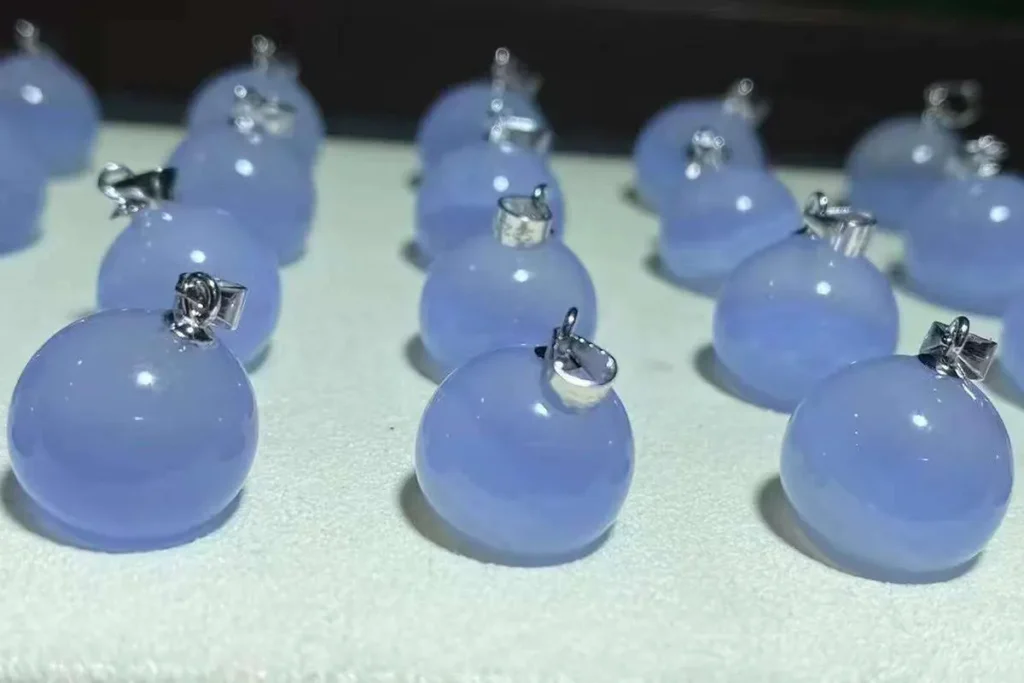
Blue lace agate can reach customers as loose beads, finished jewelry, polished stones, or rough material. Each form shows the color and bands in a different way. It also calls for different checks before a bulk order. A buyer choosing loose beads needs to inspect drilling and shape; someone buying tumbled stones needs to agree on a size and weight range.
Beads and Bracelets
Loose beads give jewelry designers room to choose their own stringing and color mix. Before buying strands, confirm the bead diameter, strand length, approximate bead count, and hole size. Ask whether the quoted lot has been sorted for roundness, polish, and visible bands. A few attractive beads in a close-up cannot show how the full strand will look.
For a finished Blue Lace Agate Bracelet, check the wrist size, bead size, cord, and finish as well as the stone. Some customers want a soft, even blue look. Others prefer stronger bands on every bead. Neither choice is a universal grade: the important point is to agree on the appearance before production or packing.
My past purchases showed me why shape deserves its own check. I once accepted a discounted lot of blue lace agate beads and found that some were not very round. Even if a customer accepts a lower grade, the quote should describe that grade clearly. Photos of several complete strands help a buyer judge the mix more fairly than a photo of one bead.
Necklaces and Jewelry Components
A Blue Lace Agate Necklace may feature one larger stone, several matched beads, or a full strand. These designs need different levels of color matching. For a pendant, the position of the bands on the front can matter more than small differences on the back. For a beaded necklace, buyers may care more about how the pieces look together.
Jewelry designers should also confirm the cut, dimensions, drill position, and metal or cord specifications. If they plan to assemble the jewelry themselves, loose beads and pendants may offer more flexibility. If they need ready-to-sell pieces, they should inspect the finished length, fastening, and overall presentation. The stone name alone does not cover those details.
Tumbled Stones and Rough Material
A blue lace agate tumbled stone is polished as an individual piece rather than drilled for stringing. Tumbled stones may suit loose-stone displays, small gifts, or mixed crystal assortments. Shapes and patterns can vary, so buyers should agree on a size range and ask whether the seller sorts pieces by appearance. If the goods are priced by weight, confirm what that price includes.
The word blue lace agate tumblestone refers to the same polished product form. Before ordering, request a photo of several pieces beside a ruler and ask for the approximate total weight. A stated size range does not mean every stone will have the same shape or weight. Surface polish and the amount of visible banding also deserve a look.
Rough material serves a different buyer. Its final pattern may be less obvious before cutting, and the usable yield depends on the individual pieces and the planned design. Ask for photos of multiple sides, the weight range, and any visible cracks or attached material. Do not judge a rough order by the appearance of polished beads made from another batch.
Which Markets and Displays Fit Each Form?
Crystal shops may choose tumbled stones or finished bracelets that customers can handle and compare. Jewelry designers often need loose beads or components with clear size and drilling details. Retailers and marketplace sellers may prefer consistent finished pieces that are easier to photograph and reorder. Importers may need several forms in one shipment, with each grade packed and labeled separately.
For any of these buyers, the best form depends on their customers and price range. A strongly patterned piece may work well as a single pendant, while a more even-looking lot may suit matched strands. Reviewing the actual goods helps buyers choose the right use without assuming that one finish or grade will sell equally well in every market.
Quality Grades, Natural Variation, and Treatments
A quote for blue lace agate should tell buyers more than the stone name and bead size. Two lots can have very different color, pattern, clarity, and finish. Grades may also vary between suppliers, so an “A grade” label alone is not enough. The safest way to compare offers is to agree on visible standards and inspect the goods that will fill the order.
Clarity, Pattern, Color, and Roundness
In my experience, the more attractive beads have good clarity and pleasing, visible bands. Cloudy pieces with yellow surface spots have sold as lower-grade goods in the lots I handled. These are my purchasing judgments, not an official grading system for every blue lace agate deposit. A buyer may accept a wider mix if the price and intended market suit it.
Roundness matters for bead orders. When several uneven beads sit together on one strand, the difference can show clearly in a finished bracelet or necklace. Buyers should check whether the beads are round enough for their designs, whether the drill holes sit near the center, and whether the polish looks consistent. Ask to see complete strands as well as individual close-ups.
Color should be checked across the batch. Some pieces may look lighter, darker, or more gray than the sample. Others may show fewer bands. Before placing a repeat order, state whether the previous shipment is the color target and ask for current-lot photos. A supplier may use the same grade name even when the available material looks different.
Natural Marks Versus Saleability Problems
Natural stones do not need identical bands to be genuine. Changes in line width, pattern direction, and translucency can make each piece distinct. Still, a mark that is acceptable in a loose-stone display may be less suitable for a matched jewelry set. Buyers should decide which differences their customers will welcome and which ones will make the goods harder to sell.
Yellow spots, cloudy areas, chips, scratches, and uneven polish should be described separately. They do not all have the same cause or effect on value. In the discounted bead lot I bought, the combination of yellow spots, poor clarity, and uneven roundness made the goods unsuitable for the grade I had hoped to receive. I sold them at a lower price instead.
For bulk orders, agree on what the supplier should do with pieces outside the accepted range. Should they remove them, quote a lower grade, or pack grades separately? A clear answer helps both sides avoid a dispute after delivery. It also lets retailers describe their stock honestly rather than treating every natural variation as either perfect or defective.
Can Blue Lace Agate Be Fake or Dyed?
A bright or dark blue color alone cannot prove that a stone is fake. Photos and lighting can change how a color appears, and some gem materials receive treatments. The Gemological Institute of America’s guide to gem treatments explains that chalcedony is among the materials that may be treated. That general fact does not establish whether a particular blue lace agate lot has been dyed.
Before buying, ask the supplier to disclose any known color treatment and show the actual batch under neutral lighting. Inspect whether the bands, color, and finish meet your needs. Do not rely on a home scratch test or a single photo to certify the material. If natural color is essential to the order and the answer remains uncertain, use a qualified gemological laboratory.
A treated stone and a lower-grade natural stone raise different questions. One concerns the accuracy of the material description; the other concerns appearance and price. Record both in the purchase terms. That gives buyers a fair basis for comparing lots and helps them pass accurate information to their own customers.

My Experience Buying Blue Lace Agate Beads
My First Sample Purchase and a Change in Supply
I still remember the first time I bought blue lace agate beads. A shop assistant asked whether I wanted to take a few strands as samples and photograph them. I assumed the price would be low, so I agreed without asking first. When I paid, I was surprised by how much they cost. It was an early reminder to confirm a price before accepting even a small sample lot.
Not long after that purchase, I could no longer find the beads in our local market. Much later, more suppliers began offering them again. The price was a little lower than it had been when I first bought them, and my customers continued to order. I learned from that period that local availability and price can change, even when buyers still want the material.
As I handled more strands, I paid closer attention to what customers would receive. In the lots I saw, beads with clearer material and attractive bands commanded a higher price. Cloudy beads or those with yellow spots on the surface belonged to a lower grade in my purchasing decisions. I needed to judge the whole strand, not just its best-looking bead.
What a Discounted Lot Taught Me
One supplier later offered me a group of blue lace agate beads at a discount and suggested that I take them all. I focused too much on the lower price and accepted the lot without checking it carefully enough. When the goods arrived, I was disappointed. Some beads were not very round, some had yellow spots, and many looked cloudy.
I eventually sold those beads at a lower price to an Indian customer who bought stones in several quality grades. The sale did not change what I had learned from the purchase: a low quote is only useful if the goods match the grade I can offer my customer. Poor roundness and weak clarity can limit how a buyer uses the beads, even when the material is still saleable.
Since then, I check the actual batch before I buy or quote blue lace agate beads. I look at roundness, clarity, surface marks, and how the bands appear across complete strands. I also make sure the customer understands the grade being offered. That experience helps me discuss price and quality together, instead of assuming that the cheapest available lot is the best purchase.
How to Buy Blue Lace Agate in Bulk
A good bulk order starts with a clear description of the goods. The name blue lace agate does not tell a supplier how many beads should show strong bands, how much color variation is acceptable, or whether a buyer will accept yellow spots. Put those points into the order discussion before comparing prices.
Confirm the Exact Lot Before Paying
Ask to see the lot that will fill your order, especially if the supplier first showed you a sample from earlier stock. Request photos of several complete strands or a group of stones. A short video under steady, neutral lighting can show how the colors and patterns vary across the batch. Close-ups are useful for checking polish, holes, and surface marks.
Write down the size range and how the supplier measures it. For beads, confirm the diameter, approximate strand length, hole size, and whether the strands are sorted by color or grade. For tumbled stones, confirm the size range, total weight, and whether the shipment may include pieces with less visible banding. If the supplier uses a grade name, ask what that grade means for this order.
Discuss treatments and acceptable variation before payment. For example, a buyer can ask whether the supplier knows of any dye or other color treatment and whether cloudy pieces or yellow spots are included. If those details affect the buyer’s selling price, they should be part of the agreed specification. Photos of the current lot can then serve as a useful reference when the goods arrive.
Compare Quotes by Grade, Not Price Alone
Two bead quotes may look similar until you compare the goods behind them. One lot may have better roundness and clearer bands. Another may cost less but contain more cloudy or uneven pieces. My discounted purchase taught me to calculate what I can actually sell at the intended grade, rather than judge a quote by its price per strand alone.
Check how each supplier prices the order: by strand, piece, or weight. Confirm whether sorting, jewelry assembly, packaging, and shipping are included. Ask what happens if a portion of the goods falls outside the agreed range. A lower unit price may still be useful for customers who want a mixed grade, as long as both sides understand what the lot contains.
For repeat orders, do not assume the next shipment will match the last one. Ask for current photos and compare them with the previous batch. If a close color match matters for a jewelry line, say so before the supplier selects the goods. Keeping the agreed photos and specifications with the order makes later checks much easier.
Questions to Ask a Reliable Supplier
A reliable supplier should be able to answer practical questions about the current stock. Can they show several complete strands or a representative group of stones? How do they describe the color range and visible bands? Will they separate different grades and label the packages? Clear answers help buyers decide whether the lot fits their customers.
Also confirm the packing method, order quantity, production or preparation time, and shipping plan. Beads can rub against one another in transit, while finished jewelry needs protection for its clasps and other parts. If a buyer needs a particular size or appearance, the supplier should confirm it before packing rather than leave the decision until the goods reach the customer.
Planning a bulk purchase? Send us the product form, size, quantity, and grade you need through WhatsApp or our inquiry form. We can discuss the available lot and provide current photos so you can review its color, bands, and finish before requesting a quote.
Wearing, Pairings, and Care
Customers may choose blue lace agate for its color, its bands, or the meaning they connect with it. Those preferences can guide a design, but they do not set rules for how someone must wear the stone. For buyers, the practical questions are whether the jewelry feels comfortable, whether the materials work together, and how to keep the pieces in good condition.
Which Hand and What Pairs Well?
People searching for “Blue Lace Agate which hand” may find different answers in crystal traditions. There is no mineral or medical rule that requires a blue lace agate bracelet on a particular wrist. A customer can choose the hand that feels comfortable and causes less contact with desks, tools, or other jewelry during daily wear.
For “Blue Lace Agate pairs well with,” start with the design rather than a promise about energy. Its pale blue and white bands can sit beside clear, white, or neutral-colored beads. A jewelry designer may also use a darker bead or metal detail to add contrast. Compare the actual pieces together before buying in bulk, since one lot may look much lighter than another.
If a customer asks about spiritual pairings, explain them as personal choices within crystal traditions. Neither a matching color nor a traditional association proves that two stones will produce a particular effect. Retailers can offer styling ideas while letting customers decide which combination they enjoy wearing.
Cleaning, Storage, and Shipping
For routine cleaning, use a soft cloth and handle the jewelry gently. If it needs more cleaning, use a little mild soap with lukewarm water, rinse it briefly, and dry it well. Check the cord, clasp, and any attached materials first; their care needs may differ from the stone’s. Avoid harsh chemicals and hard brushes that could affect the finish or jewelry components.
Be more cautious when a stone’s treatment history is unclear. The Gemological Institute of America notes that treatments can affect how some gems should be cared for. For that reason, do not leave an unknown or possibly treated lot soaking in water, and ask the supplier what they know about its treatment before giving customers specific care advice.
Store polished pieces so they do not rub against harder jewelry or knock into one another. For bulk shipping, pack strands, loose stones, and finished pieces according to their form. Keep different grades labeled and separated. Protective wrapping and a sturdy outer carton can help the goods arrive in the condition the buyer approved before shipment.
FAQ
What are the benefits of blue lace agate?
In crystal traditions, people associate blue lace agate with calmness and clear communication. Some enjoy wearing it as a personal reminder to slow down and express themselves thoughtfully. These are beliefs and individual experiences, not proven medical benefits. For buyers, its visible blue and white bands and the quality of the finished piece are the features they can inspect before purchase.
Who should wear blue lace agate?
Anyone who likes its color, pattern, and style can choose to wear it. There is no scientific rule that limits blue lace agate to a particular person or zodiac sign. For bracelets and necklaces, comfort matters too. Check the size, cord or clasp, and finish when choosing jewelry for yourself or for retail customers.
What does blue agate do spiritually?
Some people connect blue agate with peace or self-expression in crystal traditions. Blue agate is a broad trade name, so check which stone a seller means before applying a description to the product. Blue lace agate has a recognizable blue and white banded appearance. Spiritual associations describe personal beliefs; they do not establish that the stone produces a measurable effect.
What pairs well with blue lace agate?
For jewelry design, its soft blue and white colors can work with clear, white, or neutral-toned beads. Darker accents can create contrast. Place the actual materials side by side before ordering a large quantity, as the blue shade and visible bands can vary between lots. Spiritual pairing suggestions are matters of personal preference rather than proven effects.
How rare is blue lace agate?
Availability can change by supplier, grade, size, and location. I once saw blue lace agate beads disappear from our local market for a period, then return later at a somewhat lower price. That experience does not establish how rare the stone is worldwide. If steady supply matters to your business, ask a supplier about the current lot and future availability.
References
- Smithsonian National Museum of Natural History. “Agate.” Used for the relationship between agate, chalcedony, and visible banding.
- Mindat. “Chalcedony.” Used for mineral classification, chemical formula, and Mohs hardness.
- Mindat. “Blue Lace Agate.” Used for recorded occurrences and locality information.
- Gemological Institute of America (GIA). “An Introduction to Gem Treatments.” Used for general information about gemstone treatments and related care considerations.
Disclaimer
Descriptions of blue lace agate’s spiritual meaning, chakra associations, and benefits reflect beliefs and personal traditions. They are not medical claims, and the stone should not replace professional medical care. Color, pattern, clarity, size, and availability can vary between lots. Buyers should review current photos and confirm the agreed specifications before placing a bulk order.
Conclusion
Blue Lace Agate Meaning is often linked to calmness and clear communication in crystal traditions. For wholesale buyers, the stone’s appearance also deserves close attention. Blue color and flowing white bands make it easy to recognize, but clarity, pattern, roundness, and finish can vary from one lot to another.
My own purchases taught me to inspect the goods behind a quote. A low price may suit a mixed-grade order, while a matched jewelry design may need more careful sorting. In either case, clear photos and agreed specifications help buyers choose the right material for their customers.
Looking for blue lace agate beads, bracelets, or tumbled stones? Contact Us through WhatsApp or the inquiry form to review the current lot and Request a Quote for your wholesale order.