
Quartz Hardness Scale: Mohs 7 and What It Means
Written by Roc Gong | Founder of RoCrystal
Published: October 22, 2026
How hard is quartz? Quartz hardness is 7 on the Mohs scale, placing it between orthoclase at 6 and topaz at 8. However, this rating does not make it scratchproof or unbreakable. A quartz bead can resist surface wear and still chip when struck.
Understanding the quartz hardness scale helps you compare stones, assess scratch risks, and care for jewelry. This guide explains where quartz ranks, what its hardness means in daily use, and what to check when choosing beads or finished pieces. Here, quartz refers to the mineral used in gemstones, rather than engineered countertop materials.
What Is the Hardness of Quartz?
According to the National Park Service, quartz ranks 7 on the Mohs hardness scale. Hardness measures a mineral’s relative resistance to scratching. A harder mineral can scratch a softer one, so quartz can scratch calcite at 3 and orthoclase at 6. Topaz, at 8, can scratch quartz.
Common varieties—including clear quartz, amethyst, rose quartz, and smoky quartz—share this hardness rating. Their different colors do not give them different positions on the scale. The Oxford University Museum of Natural History lists quartz at 7 and identifies amethyst, rose quartz, and smoky quartz as its color varieties.
For buyers, this number answers one specific question: how well does the stone resist scratches? It does not grade its color, polish, clarity, or workmanship. Two quartz beads may have the same mineral hardness while differing greatly in appearance and condition.
Where Is Quartz on the Mohs Scale?
The Mohs scale uses ten reference minerals, ranked from talc at 1 to diamond at 10. Quartz sits between orthoclase and topaz, making it a useful reference for comparing scratch resistance.
The following chart follows the standard minerals listed by the National Park Service:
| Mohs Hardness | Reference Mineral | Comparison with Quartz |
|---|---|---|
| 1 | Talc | Softer than quartz |
| 2 | Gypsum | Softer than quartz |
| 3 | Calcite | Softer than quartz |
| 4 | Fluorite | Softer than quartz |
| 5 | Apatite | Softer than quartz |
| 6 | Orthoclase | Softer than quartz |
| 7 | Quartz | Reference hardness for quartz |
| 8 | Topaz | Harder than quartz |
| 9 | Corundum | Harder than quartz |
| 10 | Diamond | Harder than quartz |
What the Numbers Tell You—and Their Limits
Mohs hardness is a ranking, not a percentage or an evenly spaced measurement. A rating of 7 does not mean quartz is “70% as hard as diamond.” Nor does the step from 6 to 7 represent the same increase in scratch resistance as the step from 9 to 10.
The scale also does not measure resistance to breaking, chipping, heat, or chemicals. These limits matter when choosing jewelry: a higher number tells you about scratch resistance, but it cannot tell you whether a bead will survive a fall or a hard knock.
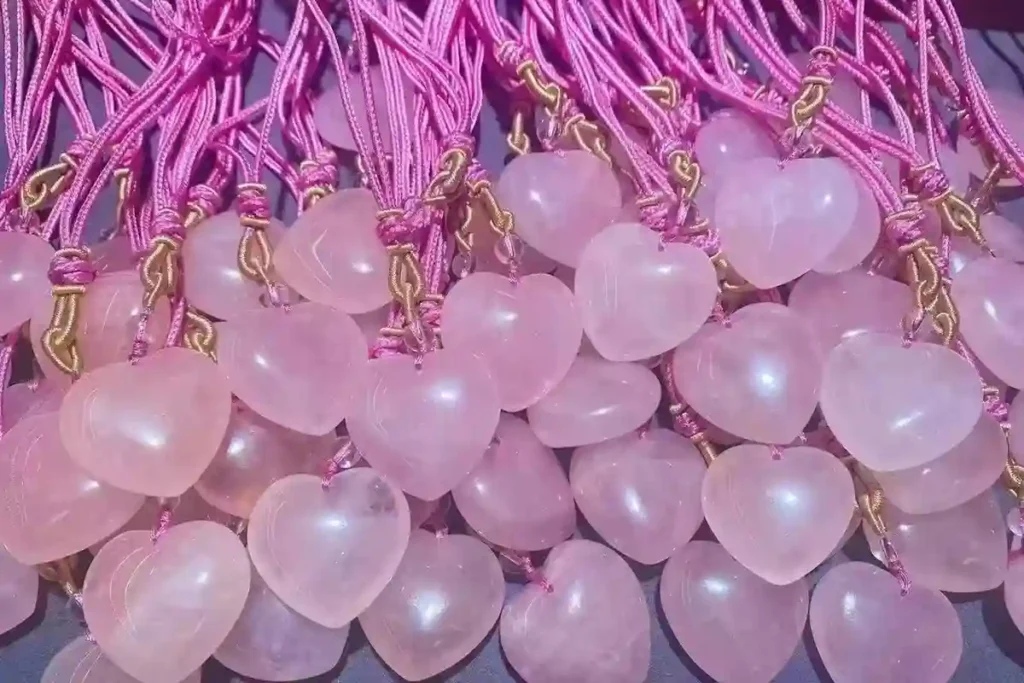
What Can Scratch Quartz?
Minerals harder than quartz can scratch its surface. These include topaz, sapphire, ruby, and diamond. Sapphire and ruby are varieties of corundum, which ranks 9 on the National Park Service’s Mohs hardness chart.
Softer materials generally cannot scratch clean, solid quartz. However, an object may carry harder abrasive particles, so its material alone does not always explain a scratch.
| Material | Approximate Mohs Hardness | Can It Scratch Quartz? |
|---|---|---|
| Fingernail | 2.5 | No |
| Ordinary glass | 5.5 | Generally no |
| Orthoclase | 6 | Generally no |
| Quartz | 7 | Quartz pieces can scratch one another |
| Topaz | 8 | Yes |
| Ruby or sapphire | 9 | Yes |
| Diamond | 10 | Yes |
Equal hardness does not guarantee that two surfaces cannot damage each other. Quartz pieces rubbing together may develop scratches, especially where sharp edges contact polished surfaces. GIA explains that gems of equal hardness can scratch one another.
For storage, keep quartz jewelry in separate soft pouches or divided compartments. Avoid placing loose beads against harder gemstones. Separating pieces also reduces collisions, which can cause damage that a hardness rating alone cannot predict.

How to Use the Mohs Scale to Test Quartz
A Mohs hardness test compares an unknown mineral with materials of known hardness. As the National Park Service explains, this method helps identify minerals by their relative resistance to scratching.
Use a spare, low-value mineral sample rather than a finished bead or piece of jewelry. Scratch testing can leave permanent marks.
- Choose a clean, solid area. Avoid weathered surfaces, coatings, and visible cracks.
- Start with a softer reference mineral. Orthoclase, rated 6, should not scratch quartz.
- Compare with a harder reference. Topaz, rated 8, should scratch quartz. Use light, controlled pressure.
- Wipe away loose residue and inspect the mark. A streak of powder or transferred material can resemble a scratch. Look for a lasting groove, using magnification if needed.
These comparisons can help narrow the sample’s hardness range. They do not provide a precise laboratory measurement. Household objects also vary in hardness, so reference minerals or calibrated testing tools offer more consistent comparisons.
Why a Scratch Test Cannot Prove Authenticity
A result consistent with hardness 7 supports an identification, but it does not prove that a sample is natural, untreated quartz. Other materials may have similar scratch resistance, and natural and laboratory-grown quartz cannot be distinguished by this test alone.
For a valuable stone or a disputed shipment, seek professional gemological testing. Scratching saleable beads is a poor substitute for identifying the material correctly.
Is Quartz Brittle? Hardness vs. Toughness
Quartz is brittle: it can chip or fracture under force even though it resists scratches well. Hardness describes resistance to scratching, while toughness describes resistance to breaking and chipping. Stability covers how a gem responds to heat, light, and chemicals. GIA distinguishes these three properties when explaining gemstone durability.
This means a quartz bracelet may hold its polish during normal wear yet suffer a chipped bead after hitting a hard surface. Its Mohs rating does not predict whether it will survive a particular impact.
An order we handled at Rocrystal illustrates why this distinction matters. A customer requested faceted malachite beads, so we sourced round beads for cutting. Processing losses were high, and several beads arrived split into two pieces after transport. Before shipping the order, we repeatedly checked the batch and removed and discarded beads with chips or cracks.
The factory attributed the losses to the difficulties of cutting malachite. However, we could not confirm how much damage came from the original material, cutting, or transport. This was a malachite batch, so its results do not establish how quartz would perform.
For quartz buyers, the practical lesson is to assess the actual piece as well as its hardness. A rating of 7 cannot guarantee that an individual bead is free from cracks or damage. Careful inspection and protective packaging still matter.
What Quartz Hardness Means for Beads and Jewelry
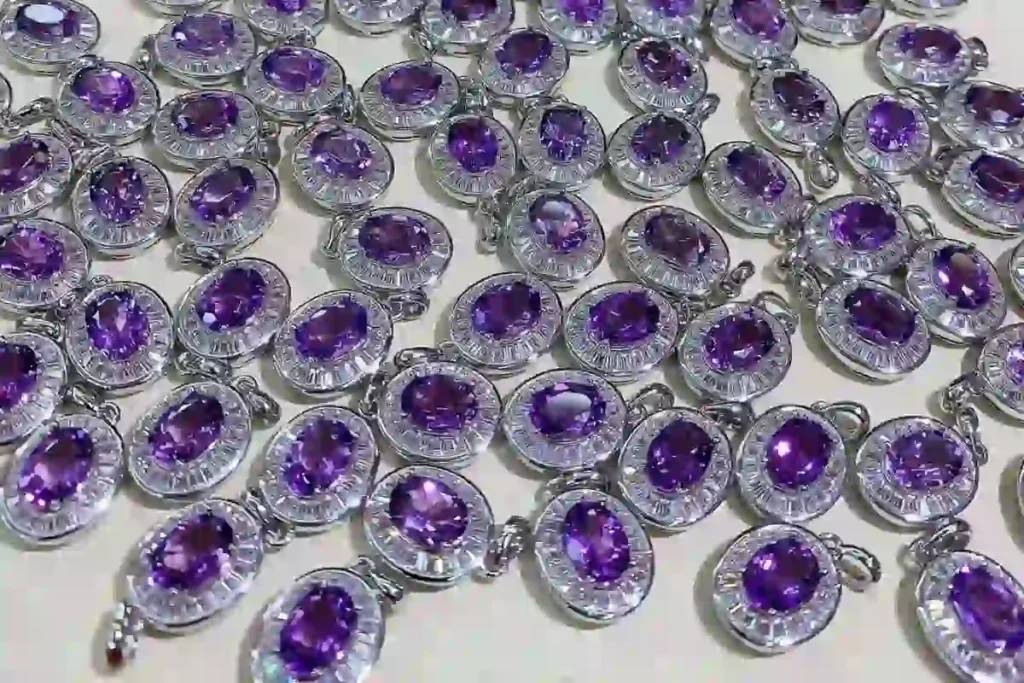
Quartz’s scratch resistance makes it a practical material for many jewelry designs. For example, GIA describes amethyst as having a Mohs hardness of 7 and good toughness, making it suitable for all jewelry types. Still, the condition of each stone and the finished construction deserve attention.
When choosing quartz beads or finished jewelry, check these details:
| Area to Check | What to Look For |
|---|---|
| Bead surfaces | Visible scratches, chips, pits, or uneven polish |
| Drill holes | Chipped openings, rough edges, or cracks extending from the hole |
| Faceted edges | Missing corners or damaged facet junctions |
| Internal features | Whether a visible feature reaches the surface or has an open gap |
| Finished construction | Secure stringing, suitable fit, and sound metal fittings |
An internal inclusion is not automatically a defect. However, an open crack, loose fragment, or chipped hole needs closer attention. If photographs leave the condition unclear, request close-up views or a video from several angles.
For bulk orders, compare stone beads across the batch rather than judging everything from one attractive sample. Check whether the polish and workmanship match the agreed standard, and clarify acceptable natural variation before production.
The same quartz hardness rating can apply to beads with very different levels of finish. Choosing well means looking beyond the mineral’s number to the quality of the actual product.
How to Care for Quartz Jewelry
Gentle cleaning and separate storage help protect quartz jewelry. Before cleaning, check whether the piece contains treated stones, glued settings, plated metal, or other materials that need special care.
For rose quartz, GIA recommends warm, soapy water and advises against steam and ultrasonic cleaning. Its guidance also notes that heat and sudden temperature changes can cause damage.
For routine care:
- Clean gently. Use lukewarm water, mild soap, and a soft cloth or brush when suitable for the whole piece.
- Avoid long soaking. Follow the care instructions for the cord, metal fittings, adhesives, and any treatments.
- Dry before storing. Pat the jewelry dry with a soft cloth.
- Store pieces separately. Soft pouches or divided compartments reduce rubbing and collisions.
- Remove jewelry before rough work. Take off bracelets and rings before activities that could knock them against hard surfaces.
Color also deserves attention. GIA notes that some amethyst can fade under prolonged intense light, so a sunny windowsill is a poor long-term storage spot.
Choose a cleaning method for the entire piece, not just the quartz. If its treatment history or construction is unclear, ask the supplier for care instructions before using cleaning equipment or chemical products.
Frequently Asked Questions
Can quartz scratch glass?
Yes. Quartz ranks 7 on the Mohs scale, while ordinary glass is approximately 5.5, according to the National Park Service. However, scratching glass does not prove that a stone is quartz, since other harder materials can do the same.
Can a steel knife scratch quartz?
An ordinary steel knife generally should not scratch clean quartz. However, steel hardness varies, and residue left by the blade may look like a scratch. A household knife is therefore an unreliable tool for confirming a stone’s identity.
Is quartz harder than granite?
Quartz is a mineral with a Mohs hardness of 7. Granite is a rock made of several minerals, so it does not have one uniform mineral hardness. A scratch test on granite may give different results depending on which mineral grain you test.
What are quartz’s streak and luster?
Quartz has a white streak, and its crystals usually have a vitreous, or glasslike, luster, as listed by the Oxford University Museum of Natural History. Because quartz can scratch many ordinary streak plates, a visible mark may be damaged plate material rather than quartz powder.
Does the same hardness mean two quartz beads are the same quality?
No. Two quartz beads can share a hardness rating of 7 but differ in color, clarity, polish, drilling, and condition. Hardness describes scratch resistance; it does not establish the bead’s grade, value, or suitability for a particular order.
Conclusion
Quartz ranks 7 on the Mohs hardness scale, giving it useful scratch resistance for beads and jewelry. However, hardness alone cannot tell you whether a piece will chip, crack, or meet your quality standards. Check the stone’s condition, polish, drill holes, and finished construction, then protect it with gentle cleaning and separate storage.
Looking for quartz beads or bracelets for your business? Contact Rocrystal through our inquiry form or WhatsApp to discuss sizes, quantities, and quality requirements. Share reference photos so we can better understand the appearance and finish you need.
References
- National Park Service — Mohs Hardness Scale
Standard reference minerals, scratch resistance, and comparisons with common objects. - Oxford University Museum of Natural History — Hardness of a Mineral
Quartz hardness, color varieties, streak, and luster. - GIA — More than the Mohs Scale: Understanding Gem Durability
The differences between hardness, toughness, and stability. - GIA — Amethyst Care and Cleaning
Amethyst durability and precautions involving heat, light, and cleaning. - GIA — Rose Quartz Care and Cleaning
Cleaning recommendations and protection from sudden temperature changes.