
Best String for Beaded Bracelets: How to Choose
Written by Roc Gong | Founder of RoCrystal
Last updated: October 25, 2026
The best string for beaded bracelets depends on whether your design needs to stretch, how much the beads weigh, and what fits through their holes. Elastic cord is a practical choice for slip-on bracelets. Nylon or silk thread suits knotted designs, while flexible beading wire works well for many bracelets with clasps.
Start with your beads and the finished style. A cord that works with large-hole glass beads may not fit small gemstone beads. The knot or clasp also needs to suit the material. This guide compares the main options and explains how to choose the right thickness, check the fit, and reduce common stringing problems.
What Is the Best String for Beaded Bracelets?
For a simple stretch bracelet, start by testing jewelry elastic with your actual beads. It should pass through each hole without forcing and leave enough room for your chosen finishing method. If the bracelet needs a clasp, knots between beads, or woven patterns, another material may be more suitable.
Use this table to compare the main types of bracelet string:
| Stringing material | Suitable bracelet styles | Stretch | Main consideration |
|---|---|---|---|
| Jewelry elastic cord | Slip-on gemstone, glass, or clay bead bracelets | Yes | Match the cord to the holes, bead weight, and knotting method |
| Nylon cord or thread | Knotted, adjustable, or clasp bracelets | Limited; varies by product | Choose a thickness and construction suited to the design |
| Silk thread | Pearl and gemstone bracelets with knots between beads | Limited | Allow room for knots and use a suitable clasp finish |
| Flexible beading wire | Strung bracelets with clasps | No useful stretch | Requires compatible crimps, findings, and tools |
| Fine beading thread | Woven seed bead bracelets and detailed patterns | Usually little or none | Leave room for the needle and repeated passes |
| Waxed cotton or polyester cord | Adjustable bracelets and large-hole bead designs | Usually little or none | Check that the cord and closure knots fit the design |
The strongest material is not automatically the best choice. A stretch bracelet needs a cord that extends and recovers. A woven bracelet needs thread that can pass through small holes several times. A clasp bracelet needs secure connections at both ends.
When choosing the best string for bead bracelets, check the whole construction: beads, string, knot or findings, and finished fit. Comparing the best cord for beaded bracelets means testing these parts together, rather than choosing by thickness or product name alone.
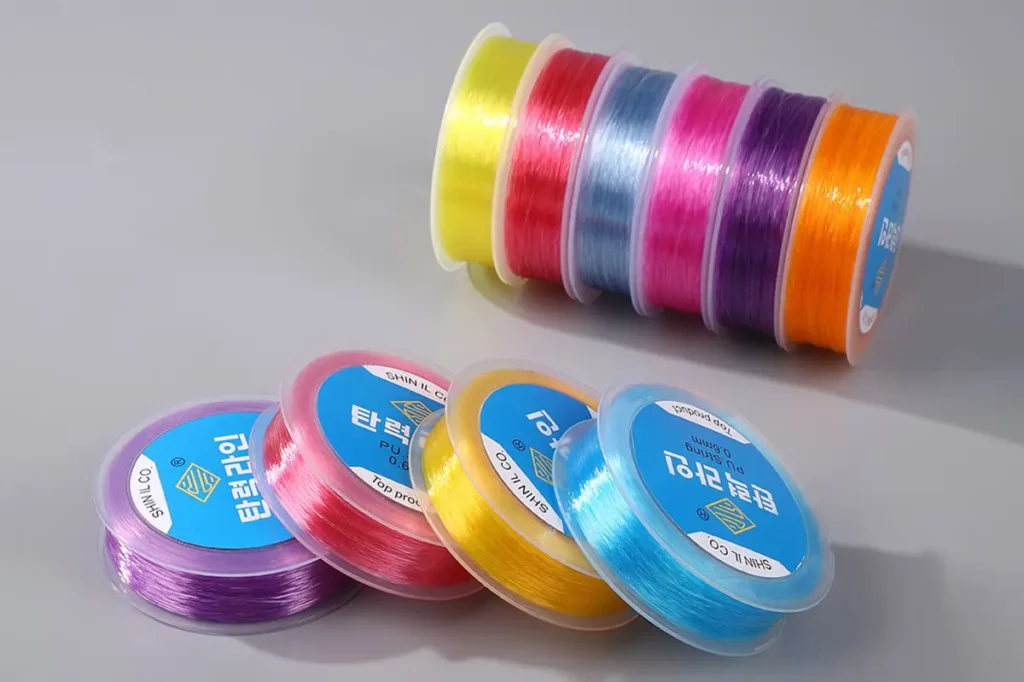
How to Choose Elastic String for Bracelets
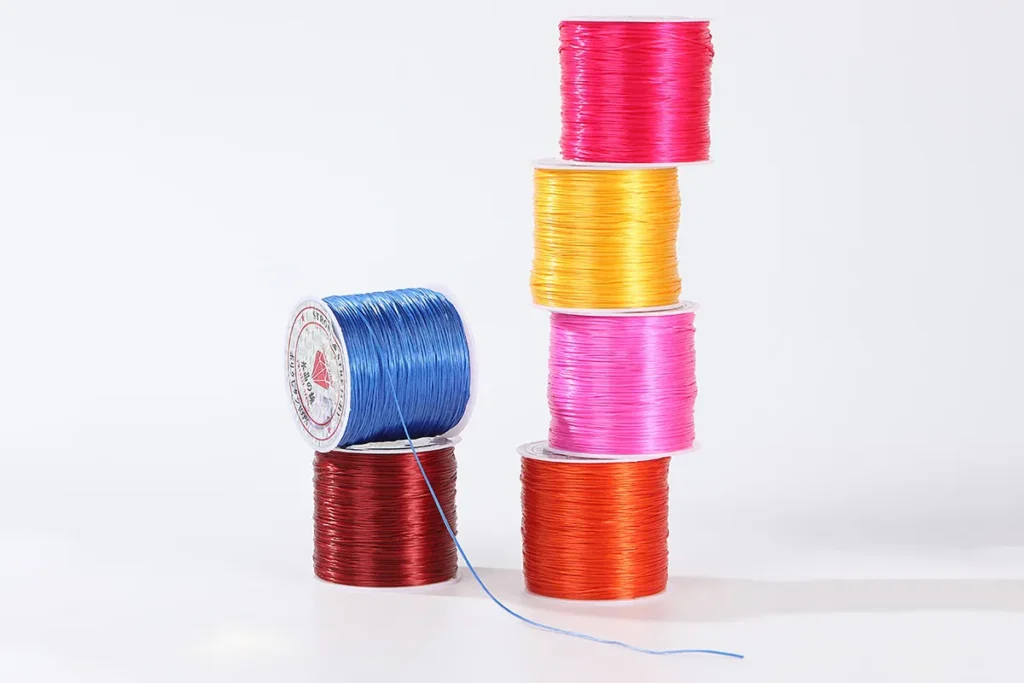
Choose strong and stretchy elastic string for bracelets that fits through the beads without forcing and returns close to its original length when released. The best stretch cord for bracelets should also suit the bead weight and knotting method. Check the specific product’s structure, condition, and instructions before use.
Start by comparing single-strand elastic with multifilament elastic. They can feel different during stringing and may need different finishing methods.
Clear Single-Strand Cord and Multifilament Elastic
Single-strand elastic cord has one solid strand, often with a clear, round shape. It can look discreet through transparent beads. A smooth surface may make the knot slippery, so follow the manufacturer’s instructions for securing it.
Multifilament elastic, often called stretch floss, contains several fine elastic strands. Some versions have a flatter shape and are easy to gather into a knot. Check for fraying during use, since damaged strands are a reason to restring the bracelet.
Neither structure is always stronger. Compare specific products with your beads rather than assuming that clear cord, flat elastic, or a higher price guarantees better performance.
Choosing Cord Thickness for Your Beads
Choose elastic after checking the smallest bead hole in the design. Bead diameter alone cannot tell you which cord will fit. Two strands of 8mm gemstone beads may have different hole sizes.
Common cord sizes include 0.5, 0.6, 0.8, and 1.0 mm, but treat these as options to test rather than fixed matches for particular bead sizes.
Before committing to a spool, check whether:
- The cord passes through every bead without forcing.
- Your needle fits through the hole with the cord attached.
- Any planned second pass has enough space.
- The finished knot can sit neatly without being pulled into a narrow hole.
A thicker cord is useful only when it fits the complete design. Forcing it through a tight hole can damage the cord before the bracelet is worn.
Single-Strand and Multiple-Strand Designs
One strand of suitable elastic may work well for a simple bracelet. Other designs use two or more lengths of finer elastic, depending on the cord and the space inside the beads.
Doubling the cord does not automatically double the bracelet’s strength. Both lengths can still rub against the same rough hole edge, and an insecure knot can release the entire bracelet.
Make a sample with the intended beads and finishing method. Check that it stretches over the hand comfortably, returns to shape, and rests on the wrist without exposed cord or excessive tension. This helps you choose the best elastic string for bracelets based on the finished piece.

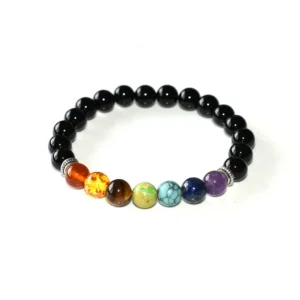
When to Use Nylon, Silk, Beading Thread, or Wire
Elastic is useful for slip-on designs. Bracelets with clasps, knots between beads, or woven patterns often need a different material. Choose the string and its finishing method together, since each option requires a suitable way to secure the ends.
Nylon String for Knotted Bracelets
Nylon string for bracelets comes in several forms, including twisted cord, braided cord, and fine thread. Check the specific product: the word “nylon” alone does not tell you its thickness, flexibility, or suitability for knotting.
A supple nylon cord can suit designs with knots between beads. Braided versions may work for adjustable bracelets when the cord and sliding knot are compatible. These materials do not provide the stretch needed to pull a closed bracelet over the hand, so plan a clasp or adjustable opening.
Silk Thread for Pearl Bracelets
Silk thread is a traditional choice for knotted pearl jewelry. Its soft drape suits bracelets where flexibility and neat knots are part of the design.
Choose a thread that passes through the pearl holes while allowing the separating knots to stay outside them. The ends also need a suitable clasp attachment. A small test section helps you check the knot size and appearance before stringing the full bracelet.
Beading Thread for Seed Beads
Fine beading thread suits woven seed bead bracelets, where a needle may pass through the same bead several times. The thread must leave enough room for those repeated passes.
Compare diameter, flexibility, and the manufacturer’s intended uses. A high breaking-strength rating alone does not establish the best beading thread for bracelets: a thread that fills the hole too quickly may prevent you from completing the pattern.
Beading Wire for Clasp Bracelets
Flexible beading wire typically contains fine metal strands covered with a protective coating. It is different from stiff craft wire and memory wire.
This material can suit strung gemstone or glass bead bracelets with clasps. It normally uses crimps to secure the ends, so match the wire diameter, crimps, and tools according to the manufacturer’s instructions.
Leave enough flexibility for the bracelet to curve around the wrist. Check rough bead holes rather than relying on the coating to protect the wire from every sharp edge.
Waxed Cord for Adjustable and Friendship Bracelets
Waxed cotton or polyester cord can work with large-hole beads and adjustable closures. The cord often remains visible, making its color and texture part of the finished bracelet.
For knotted friendship bracelets, embroidery floss or suitable knotting cord may be more practical. If you add beads, check that the holes accommodate the planned cord passes.
Choose by construction rather than appearance alone. Two bracelets with similar beads may need different string because one stretches, another uses a clasp, and a third relies on sliding knots.
Best String for Different Bead Types
The best bracelet string for beads depends on the bead material, hole size, total weight, and closure style. Use the comparisons below as a starting point, then test the string with the actual beads.
| Bead type | Stringing options to consider | What to check |
|---|---|---|
| Natural gemstone beads | Jewelry elastic for stretch designs; flexible beading wire for clasp designs | Total weight, narrow holes, and rough hole edges |
| Glass beads | Jewelry elastic, beading wire, or suitable thread | Hole finish, bead weight, and any sharp edges |
| Clay beads | Jewelry elastic or cord suited to an adjustable design | Small holes and the weight of added charms |
| Seed beads | Fine beading thread for weaving; fine elastic for suitable simple strands | Needle clearance and repeated thread passes |
| Pearls | Silk or nylon for knotted designs | Hole size, separating knots, and clasp attachment |
| Large-hole pony beads | Elastic, braided cord, or knotting cord | Hole clearance, closure type, and knot size |
Natural Gemstone Beads
For a slip-on bracelet made with natural stone beads, test jewelry elastic that fits the smallest hole without forcing. Check the whole bracelet’s weight, including spacers and charms.
Larger beads can add weight, but they do not necessarily have larger holes. If the design only accepts very fine elastic, consider whether a clasp construction with suitable beading wire would work better.
Glass and Clay Beads
The best string for glass bead bracelets depends partly on the hole finish. Inspect both openings for chips or sharp edges before stringing. Clear elastic can suit stretch designs, while flexible beading wire is an option when the bracelet uses a clasp.
For many lightweight designs, the best string for clay bead bracelets is jewelry elastic that fits the holes and secures neatly. Recheck the choice when adding heavier glass beads, metal spacers, or charms.
Seed Beads and Pearls
The best string for seed bead bracelets depends on the technique. Woven patterns need fine thread with room for repeated needle passes. A simple single-row stretch bracelet may use fine elastic if the holes allow it.
Pearl bracelets often use silk or nylon with knots between the pearls. Those knots must be large enough to stay outside the holes. A stretch pearl bracelet needs a separate fit test because pearl holes may limit the elastic thickness.
Beaded Friendship Bracelets
The best string for beaded friendship bracelets depends on how the bracelet closes. Braided or knotted styles may use embroidery floss, waxed cord, or another suitable knotting material. Stretch versions need jewelry elastic.
Plan the bead placement before choosing the cord. A bead threaded onto several strands needs more space than one threaded onto a single strand, especially when the pattern requires another pass through the same hole.
What Size String Should You Use for Beaded Bracelets?
When choosing string for bracelet making, check the smallest bead hole, the number of passes, and the finished bracelet’s weight. Bead diameter is only a starting point. An 8mm bead does not necessarily have a larger hole than a 6mm bead.
Match String Thickness to the Bead Hole
For a simple single-pass design, choose a cord that fits comfortably through every bead without forcing. Leave additional space if you need a needle, a second pass, or room to hide the knot.
Use the bead supplier’s listed hole size when available, then confirm the fit with actual beads. Natural stone bead holes can vary within a strand.
| Bead size or design | What to check before choosing string |
|---|---|
| 2–4mm beads | Small holes may require fine thread or thin cord; woven designs also need needle clearance |
| 6mm beads | Test the smallest hole and allow room for any repeated passes |
| 8mm beads | Compare suitable cord thicknesses with the actual holes and finished bracelet weight |
| 10–12mm beads | Check weight carefully; larger beads do not guarantee room for thicker cord |
| Mixed-size beads | Choose around the smallest hole while accounting for the heaviest parts |
What Size Cord Works for 8mm Beads?
For an 8mm stretch bracelet, 0.8mm jewelry elastic can be a starting point to test, rather than a fixed requirement. A small hole may require thinner elastic, while a wider hole may accommodate 1.0mm cord. Follow the specific cord manufacturer’s guidance and check the finished sample.
If you plan to double the elastic, both lengths must pass through the narrowest hole without scraping or bunching. Never force a thicker cord through simply because it seems stronger.
Consider Weight as Well as Thickness
There is no universal thread-strength rating for each bead diameter. Different stones, metal components, and bracelet lengths create different loads. Cord construction, knots, and wear also affect performance.
Check the completed sample for:
- Smooth movement between beads without excessive exposed cord.
- Comfortable stretch or drape, depending on the design.
- Secure knots or findings.
- Scraping, fraying, or damage near bead holes.
A breaking-strength figure on a spool does not guarantee the same strength after knotting or repeated wear.
How Much String Should You Cut?
For a simple single-strand stretch bracelet, allow enough cord for the bead section plus a generous working tail at each end. As a practical starting allowance, leave about 3–4 inches per end for holding and tying, then adjust to the cord’s instructions.
For example, a roughly 7.5-inch bead layout may need about 14–16 inches of cord for comfortable handling. Check the fit before securing the knot, and trim only after finishing.
Double-strand, knotted, woven, and adjustable designs need different amounts. Knots and repeated passes consume extra material, so a finished bracelet measurement alone is not enough to calculate the cutting length.
How to Reduce Breakage and Loose Knots
A bracelet can fail even when the cord fits the beads. Rough holes, a slipping knot, damaged elastic, or excessive tension can weaken the finished piece. Check each part before trimming the ends.
Inspect Bead Holes Before Stringing
Look for chips and sharp edges around both hole openings. As you string, stop if a bead catches the cord or leaves visible marks on it.
Set that bead aside rather than pulling harder. If the cord becomes scraped or frayed, replace the damaged section. Hiding it inside a bead does not restore its strength.
Follow the Instructions for Your Specific Cord
Elastic products differ in structure and finishing requirements. Follow the manufacturer’s directions for any stretching before use, knot choice, and adhesive.
Seat the knot firmly without pulling the bracelet so tight that the beads press against one another. Check for slipping before cutting the tails. If you hide the knot inside a bead, use a hole with enough room to accept it gently.
Glue should support a suitable finish, not compensate for a loose knot. Use adhesive only when it is compatible with the cord, and allow the stated curing time before stretching or wearing the bracelet.
Check the Finished Fit and Connections
A stretch bracelet should rest comfortably without leaving the elastic under constant strain. Roll it over the hand when putting it on or taking it off, rather than pulling it wide from one point.
For a clasp bracelet, inspect the crimps, clasp, and connecting rings. Look for loose connections, exposed wire ends, or kinks near the findings. Use components and tools suited to the chosen beading wire.
Watch for Wear and Restring When Needed
Check elastic for fraying, cracks, lasting looseness, or changes in texture. Inspect thread for worn fibers and beading wire for damaged coating or sharp bends.
Keep the cord away from unnecessary heat and chemicals, and follow the care instructions for both the string and beads. There is no fixed replacement schedule that suits every bracelet. Restring when wear appears instead of waiting for the cord to break.
What We Check Before Making Bulk Gemstone Bracelets
For bulk orders, the string choice should be clear before production begins. The sample needs to show how the bracelet fits, how the cord looks through the beads, and how the ends are secured.
At Rocrystal, customers can discuss the string type, color, and bracelet size alongside their bead requirements. A reference photo helps explain the design, but an actual sample is more useful for checking the finished feel.
Confirm Cord Color with the Beads
Cord color can change the appearance of a bracelet, especially around the holes, between beads, and near the knot. Clear or white cord may suit some designs, while other bracelets call for a matching or contrasting color.
In one hematite bead order, we changed the stringing cord from red to white to meet the customer’s requirements. This is a small specification, but it matters when a buyer wants a consistent appearance across repeat orders.
For custom work, confirm the cord color with the actual beads rather than choosing from a spool photo alone.
Check the Complete Bracelet Construction
Some designs need more than a single line through round beads. Our men’s hematite bracelets, for example, include styles made with two-hole beads and two separate stringing paths. Each path needs enough clearance, and both must work together to give a comfortable fit.
A double-hole design still needs careful checking. Two stringing paths do not prevent damage from rough holes, poor finishing, or excessive pulling.
Use Customer Feedback to Review the Design
In one order, a Spanish customer reported damage to several men’s hematite bracelets, and we sent replacements. That experience does not establish a single cause of failure, but it shows why checking bead appearance alone is insufficient.
For wholesale stone bracelets, the useful questions are practical: Does the string suit the design? Are the connections secure? Does the sample fit comfortably? Confirming these details helps buyers assess the bracelet before committing to a larger order.
Frequently Asked Questions
What Size Cord Should I Use for 8mm Beads?
For a stretch bracelet, 0.8mm jewelry elastic is a reasonable size to test first. The actual bead holes may require a different thickness. Check every bead, including spacers, and leave room for any second pass or hidden knot.
What Is the Strongest Stretch Cord for Bracelets?
There is no single strongest stretch cord for every bracelet. Compare specific products using the manufacturer’s specifications, then test the cord with your beads. Thickness, abrasion, knot security, and repeated stretching all affect the finished bracelet’s durability.
How Much String Do I Need for a Beaded Bracelet?
For a simple single-strand stretch bracelet, start with the bead layout length plus about 3–4 inches at each end for handling and tying. A 7.5-inch layout would therefore need roughly 14–16 inches. Knotted, woven, and multiple-strand designs require more material.
Can I Use Fishing Line for Beaded Bracelets?
Some fishing lines can be used, but they are not interchangeable with jewelry elastic or beading thread. Ordinary monofilament does not provide the stretch needed for a slip-on bracelet and may feel stiff. Choose a line suited to the technique, bead holes, and finishing method.
Should I Use One Strand or Two Strands of Elastic?
Use the construction that suits the specific elastic and bead holes. One suitable strand may be enough; two finer strands may work in another design. Doubling does not guarantee twice the strength, and crowded holes can make stringing and finishing harder.
Conclusion
The best string to use for beaded bracelets depends on the beads, closure, and finished fit. Jewelry elastic works for many slip-on designs. Nylon or silk suits knotted styles, fine beading thread supports woven patterns, and flexible beading wire is an option for clasp bracelets.
Check the smallest hole, account for the bracelet’s weight, and test the complete construction before making a batch. Secure finishing and smooth bead holes matter just as much as the material on the spool.
Planning a custom gemstone bracelet order? Send Rocrystal your bead size, hole size if known, preferred style, and quantity through our contact form or WhatsApp. We can discuss stringing options alongside your bead and packaging requirements.
References and Further Reading
- Beadalon — Learning Center FAQ: Manufacturer guidance on beading wire construction, choosing wire diameter for the smallest bead hole, and matching crimps and tools.
- Beadalon — Crimping Technique: Step-by-step instructions for attaching clasps and finishing compatible beading wire with crimps.
These resources cover Beadalon products and techniques. For other materials, follow the instructions supplied by the specific manufacturer.
Disclaimer
This guide provides general selection advice, not a guaranteed strength rating or service life. Cord performance varies with the specific product, bead holes, finishing method, and use. Follow the material manufacturer’s instructions and test your finished design before bulk production.