
What Does Lapis Lazuli Look Like? Color & Real Stone Guide
Written by Roc Gong | Founder of RoCrystal
Last updated: October 25, 2026
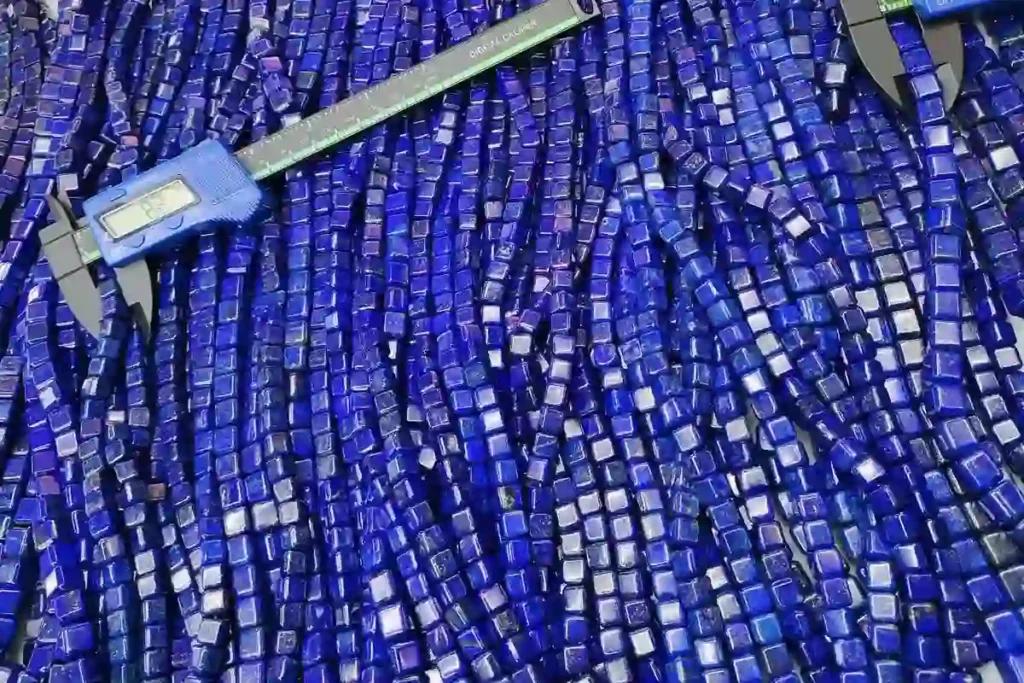
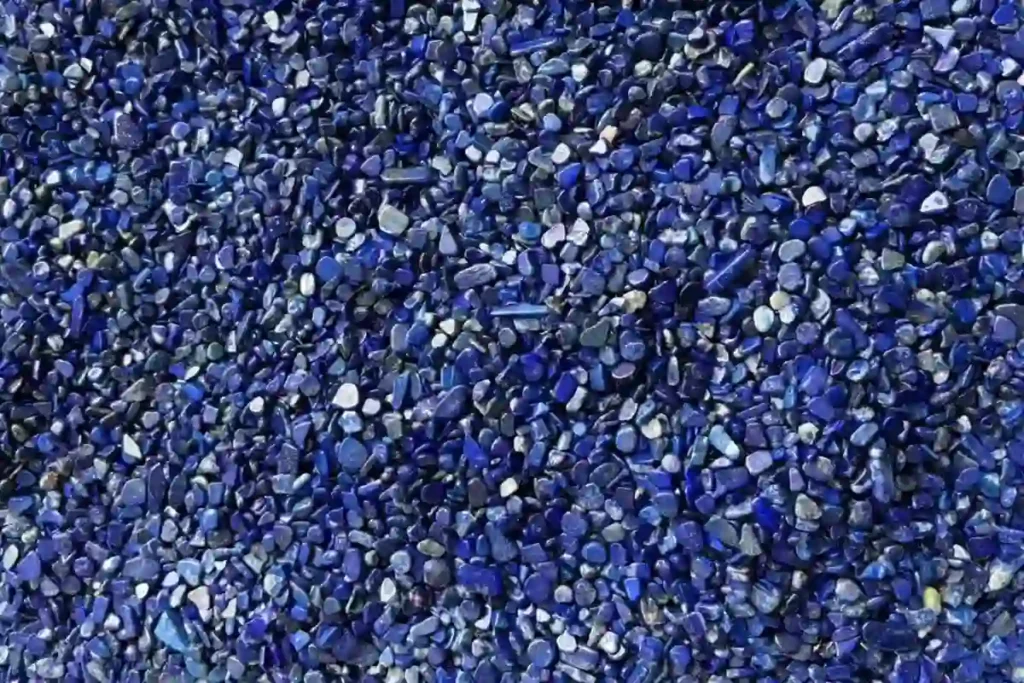
Lapis lazuli usually looks like an opaque blue stone with scattered gold-colored flecks and patches or veins of white. Its blue can range from pale denim to rich royal blue or violet-blue. Some pieces show a mix of all three colors, while others have an almost solid blue appearance.
These differences can make two genuine stones look quite different. This guide explains the main visual features, how raw and polished pieces compare, and what appearance can—and cannot—tell you about quality and authenticity.
What Does Lapis Lazuli Look Like?
The main characteristics of lapis lazuli are its blue body color, opaque appearance, and varying amounts of metallic specks and pale markings. According to GIA’s description of lapis lazuli, the blue comes from lazurite, while pyrite creates gold-colored flecks and calcite forms whitish areas.
| Visual feature | What you may see |
|---|---|
| Body color | Deep royal blue, violet-blue, lighter blue, or greenish blue |
| Gold-colored details | Small metallic dots, scattered flecks, or irregular veins |
| White markings | Fine lines, cloudy patches, or broad areas of calcite |
| Transparency | An opaque body that you generally cannot see through |
| Pattern | Uneven mineral patches or a relatively uniform blue surface |
Blue Color and Natural Variations
Lapis lazuli color is not limited to one shade of dark blue. A stone may look richly saturated, softly mottled, or noticeably pale. Within a single bead strand, some beads may also appear lighter than others.
Light blue lapis lazuli and pale lapis lazuli can be genuine. Their lighter appearance alone does not prove that the material is fake. GIA’s quality guide describes a color range that includes royal blue, violet-blue, turquoise blue, and greenish blue.
The term “green lapis lazuli” needs more care. A greenish cast can occur in lapis, but a seller’s label does not establish the identity of a strongly green stone. Ask for clear photos and material information rather than relying on the name.
Gold-Colored Pyrite and White Calcite
The gold-colored specks in lapis lazuli are usually pyrite, not gold. They reflect light with a metallic shine and may appear as tiny dots, larger patches, or thin veins. Lapis lazuli with pyrite can look striking against a deep blue background.
White calcite creates a different effect. It may form delicate streaks or cover large sections of the stone, making the overall appearance lighter and more mottled.
Neither feature must be visible in every piece. As GIA explains, genuine lapis can also have a uniform body color without visible pyrite or calcite. Missing gold flecks or white veins is not enough to identify a stone as fake.
What Is Lapis Lazuli?
Lapis lazuli is a blue rock used as a gemstone in beads, jewelry, carvings, and decorative objects. Unlike a single mineral such as quartz, it contains several minerals joined together. This mixture explains why one piece can show blue areas, white veins, and metallic flecks.
A simple lapis lazuli definition is an opaque ornamental rock whose distinctive blue appearance comes mainly from lazurite. According to GIA, its main components include lazurite, calcite, and pyrite, with other minerals sometimes present.
| Component | Contribution to appearance |
|---|---|
| Lazurite | Provides the characteristic blue color |
| Calcite | Creates white or pale areas |
| Pyrite | Adds gold-colored metallic flecks or veins |
The proportions and distribution of these minerals vary. Two pieces cut from the same rough material may therefore have different patterns.
You may see the material described as a lapis lazuli stone, lapis lazuli gemstone, or simply lapis. These names refer to the same material in ordinary jewelry trade usage. Calling it a gemstone describes its use and appeal; it does not mean that it is a single mineral or establish its quality, origin, or treatment status.
Raw vs. Polished Lapis Lazuli
Raw lapis lazuli typically has an uneven surface with rough edges and a dull appearance. Its blue areas, white patches, and metallic flecks may still be visible, but the texture can make these details harder to see.
Cutting and polishing create a smoother surface that reveals the color and pattern more clearly. The finished shape also changes how you notice those features: a large polished face shows broad mineral patches, while a small bead reveals only a narrow section.
| Form | Typical appearance | Details to examine |
|---|---|---|
| Raw stone | Irregular shape with rough, uneven surfaces | Color variation, mineral patches, and visible fractures |
| Tumbled stone | Rounded edges with a smooth surface | Patterns across several sides and any remaining pits |
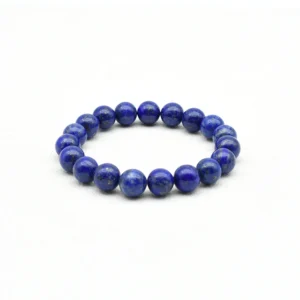
| Round beads | Small polished spheres | Color matching, polish, and condition around drill holes |
| Cabochons or pendants | A shaped face, often smooth and domed | Color distribution, visible veins, and surface finish |
A polished piece may look richer in color than a rough piece, but a glossy surface alone does not establish quality or prove that the stone is untreated. GIA’s buying guide notes that lapis may be dyed, waxed, or oiled to improve its appearance.
When comparing pictures of lapis lazuli, look for photos taken under similar lighting and against similar backgrounds. Ask for several angles or a short video when buying online. A single attractive image may show the best face while leaving pale areas, pits, or chips out of view.

Lapis Lazuli Quality: How Appearance Affects Value
Color is the most important quality factor for lapis lazuli. GIA’s buying guide identifies intense medium to dark blue or violetish blue as the most prized colors. In fine material, visible white calcite is limited or absent, while small, attractively distributed pyrite flecks may add appeal.
Still, the darkest stone is not automatically the best choice. Look at the overall color, mineral pattern, surface finish, and disclosed treatments together.
| Factor | What to look for | What needs closer inspection |
|---|---|---|
| Blue color | Rich color that remains attractive under ordinary lighting | Dull areas or large differences between matched beads |
| White calcite | An amount and pattern that suit your preferred appearance | Broad pale patches when buying a mostly blue selection |
| Pyrite | Flecks that complement the blue background | Large concentrations that dominate the surface |
| Surface finish | Smooth polish and well-finished edges | Pits, chips, scratches, or damage around drill holes |
| Treatment information | Clear disclosure of any known dye, wax, or oil | “Natural” used without explaining treatment status |
More gold-colored flecks do not automatically mean higher quality. Some buyers enjoy a noticeable sparkle, while others prefer a nearly uninterrupted blue surface. Likewise, a stone with white veins may suit a particular design even though fine, mostly blue material generally commands a higher price.
Treatment also matters when comparing lapis lazuli price. According to GIA, dye can improve color and conceal calcite, while wax or oil can improve color and luster. An attractive photo alone cannot establish whether these treatments are present.
Our Experience Choosing Lapis Lazuli Beads
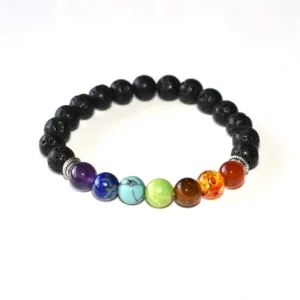
In our early seven-chakra products, we used a blue-dyed substitute material rather than natural lapis lazuli. We later switched to natural lapis. That experience taught us to separate material identity from appearance: a convincing blue color does not tell the whole story.
For the bead selections we now source, we usually look for a predominantly blue background with visible, attractive pyrite flecks. Some lower-priced batches we inspect have more white areas and fewer gold-colored details. This is an observation about those batches, rather than a rule for judging every lapis stone.
Our current selection has a mostly blue appearance with noticeable pyrite and sits toward the middle-to-upper end of our price range. We confirm the requested appearance through pictures before quoting, so customers can compare the actual selection with their budget.
When ordering, agree on the visible standard as well as the grade name. Ask how much white material is acceptable, how closely beads should match, and whether the photos represent the batch being supplied.
How to Tell If Lapis Lazuli Is Real
To assess whether lapis lazuli is real, examine its color, mineral details, and surface under good lighting. These observations can reveal reasons to ask questions, but appearance alone cannot confirm identity or treatment status.
A genuine stone may have white veins and metallic pyrite, or it may look almost uniformly blue. Neither a flawless appearance nor a lack of gold-colored flecks proves that it is fake.
Natural Lapis, Treated Lapis, and Imitations
These three categories are worth separating when comparing products:
| Material category | What it means | What to ask the seller |
|---|---|---|
| Natural, untreated lapis | Natural lapis without enhancement treatments | What supports the untreated claim? |
| Treated natural lapis | Genuine lapis enhanced with dye, wax, oil, or another treatment | Which treatments are known, and what care is required? |
| Imitation lapis lazuli | Another material made or sold to resemble lapis | What is the actual material? |
Treated natural lapis is still lapis, but its treatment should be disclosed. It differs from glass, plastic, or ceramic made to imitate the stone. GIA’s buying guide describes both enhancement treatments and these common imitation materials.
Look closely at several areas rather than judging one attractive spot. On beads, inspect around drill holes and compare multiple beads. Uneven color concentrated in surface openings can justify further investigation, but it does not establish the material’s identity by itself.
What Photos and Simple Checks Cannot Prove
Photos help you compare patterns, polish, and visible damage. They cannot reliably establish whether a piece is untreated or confirm its geographic origin. Lighting, filters, and camera settings can also change how blue it appears.
Simple home checks have limits:
- Coolness: A cool feel does not uniquely identify lapis.
- Weight: Heaviness alone cannot distinguish it from every imitation.
- Gold-colored flecks: Their presence is not proof, and their absence does not rule out genuine lapis.
- Color transfer: A positive result may suggest surface color or treatment; no transfer does not prove a stone is untreated.
Avoid using acetone, scratching, or other potentially damaging tests on finished jewelry. When identity or treatment status matters to the purchase, seek professional gemological testing. GIA explains that its identification reports identify the material and disclose detectable treatments, providing stronger evidence than a visual guess.
Where Does Lapis Lazuli Come From?
Afghanistan is the major source of lapis lazuli and is especially known for fine blue material, according to GIA. Other sources include Chile and Siberia in Russia. Research comparing material from Afghanistan, Siberia, Chile, and Tajikistan’s Pamir Mountains has examined mineral features that may help distinguish their origins.
You may encounter names such as Afghan lapis lazuli or Russian lapis lazuli when shopping. These describe a claimed geographic source, rather than a separate mineral species or a guaranteed quality grade.
Color and pattern can vary within a single deposit. A country name alone therefore cannot tell you how blue a particular stone will be, how much white calcite it contains, or whether it has been treated.
Likewise, appearance alone cannot reliably establish origin. Researchers studying lapis lazuli provenance used several analytical techniques to investigate differences between sources. A blue shade or familiar pattern in a product photo is much weaker evidence.
When comparing types of lapis lazuli, separate three questions: where the material reportedly comes from, what the actual piece looks like, and what treatments are disclosed. For most jewelry purchases, clear batch photos and accurate material information are more useful than choosing by origin name alone.
Lapis Lazuli Uses and Symbolism
Lapis lazuli is used in bead bracelets, necklaces, pendants, carvings, and decorative inlays. Its opaque blue color works well in smooth shapes that display the stone’s mineral patterns. GIA lists beads, cabochons, inlays, and tablets among its common cuts.
Different forms reveal different details. A pendant can display a broad blue area crossed by white veins, while a bead bracelet shows a series of smaller patterns. These natural variations can become part of the design.
What Does Lapis Lazuli Symbolize?
In contemporary crystal traditions, lapis lazuli is often associated with wisdom, truth, and self-expression. Some people wear it as a personal reminder to communicate honestly or reflect on their choices. These are symbolic associations, rather than measurable properties of the stone.
Lapis lazuli meanings should be kept separate from claims about its effects. A person may find meaning or comfort in wearing it, but that does not establish that the stone improves health, changes emotions, or provides protection.
When considering lapis lazuli benefits, its visible appeal and practical uses are the clearest starting points: blue color, contrasting mineral details, and a range of jewelry and decorative forms. Any spiritual significance depends on the wearer’s beliefs and preferences.
Frequently Asked Questions
Does Lapis Lazuli Have Gold in It?
The visible gold-colored flecks in lapis lazuli are usually pyrite, not gold. As GIA explains, pyrite can form metallic flecks or veins that contrast with the blue stone.
Can Real Lapis Lazuli Be Light Blue?
Yes. Light blue lapis lazuli can be genuine. GIA’s quality guide describes shades ranging from deep violet-blue to lighter and greenish blues. A pale color alone does not establish whether a stone is genuine or treated.
Does Real Lapis Lazuli Always Have Pyrite?
No. Genuine lapis can have no visible pyrite. Some pieces show scattered metallic flecks, while others have an almost uniform blue appearance. Missing gold-colored specks is not enough to identify a stone as fake.
Is Lapis Lazuli Rare?
Lapis lazuli is commercially available, but quality varies widely. Finding intensely colored material with little visible calcite is more selective than finding ordinary commercial lapis. A seller’s “rare” label should be supported by specific details about the piece rather than its name alone.
What Affects Lapis Lazuli Price?
Color is the leading quality factor, followed by the appearance of calcite and pyrite, size, workmanship, and treatment status. Compare similar product forms and sizes, and check actual batch photos. A grade label alone does not give enough information to judge value.
Conclusion
What does lapis lazuli look like? It is typically an opaque blue stone that may contain gold-colored pyrite flecks and white calcite markings. Genuine pieces range from pale blue to rich royal or violet-blue, with patterns that vary from mottled to nearly uniform.
When choosing lapis, compare its color, mineral details, polish, and disclosed treatments. Appearance helps you select a piece you like, but it cannot confirm authenticity or origin on its own.
For jewelry projects or wholesale orders, explore our stone beads and stone bracelets. Send your preferred appearance, size, and quantity through our contact form or WhatsApp to discuss suitable options and request current batch photos.
References
- GIA — Lapis Lazuli Description: Mineral composition and visible characteristics.
- GIA — Lapis Lazuli Quality Factors: Color variations and quality considerations.
- GIA — Lapis Lazuli Buying Guide: Treatments, imitations, and identification reports.
- Lo Giudice et al. — Multitechnique Characterization of Lapis Lazuli for Provenance Study: Analytical research into geographic origin.
Disclaimer
Spiritual meanings described here reflect beliefs and personal symbolism, not scientifically established health benefits. Visual observations cannot replace professional gemological testing for material identity, treatment status, or geographic origin.