
Tourmaline Meaning: Colors, Properties, and Uses
Written by Roc Gong | Founder of RoCrystal
Published: October 29, 2026
Tourmaline meaning centers on balance, protection, and compassion in modern crystal traditions. Its symbolism varies by color: black often represents grounding, pink suggests love and kindness, and green symbolizes growth. These associations offer a way to choose a meaningful stone, though they describe spiritual beliefs rather than proven effects.
Beyond its symbolism, tourmaline offers a wide range of colors for jewelry and mineral collections. This guide explores tourmaline stone meaning, color differences, physical properties, and practical uses. You will also learn how to choose and care for a piece that suits your needs.
What Is Tourmaline?
Tourmaline is a group of closely related borosilicate minerals. According to GIA, these minerals share a crystal structure but differ in chemical composition. Those differences help explain their varied colors and physical properties.
A simple tourmaline definition is a mineral group that includes black schorl and many colorful gem varieties. It is a mineral rather than a rock, although natural specimens may contain tourmaline crystals growing alongside other minerals.
Unlike a gemstone with one familiar color, tourmaline can appear pink, red, green, blue, brown, black, or nearly colorless. Some crystals contain several color zones. Watermelon tourmaline, for example, has a pink center surrounded by green, as described in GIA’s tourmaline guide.
Among the most useful tourmaline properties is its Mohs hardness of 7–7.5. However, hardness measures resistance to scratching, so it does not mean a stone cannot chip or crack. GIA’s care guide rates its toughness as fair and notes that sudden temperature changes can cause fractures.
Understanding these physical qualities helps when choosing beads, bracelets, pendants, or display specimens. The mineral’s identity explains what it is; tourmaline crystal meaning describes the symbolism people attach to it.
Tourmaline Meaning and Symbolism
The meaning of tourmaline varies with its color and the beliefs of the person choosing it. In modern crystal traditions, it commonly represents balance, protection, compassion, and personal growth. These themes can make a piece meaningful as jewelry, a gift, or a reminder of a personal intention.
What does tourmaline symbolize? Its main symbolic associations include:
- Balance: A reminder to make room for both your own needs and your relationships.
- Protection: A symbol of personal boundaries, especially associated with black tourmaline.
- Compassion: An expression of kindness and self-acceptance, often linked to pink varieties.
- Growth: A reminder of renewal and a connection with nature, commonly associated with green stones.
Tourmaline gemstone meaning can also reflect the occasion behind a gift. A pink pendant might express affection, while a green bracelet could mark a fresh start. The recipient’s preferences and the message behind the gift matter more than following a fixed set of color rules.
Multicolored pieces offer another interpretation. Their contrasting shades can serve as a personal symbol of bringing different parts of life together. However, these meanings are flexible associations, rather than a universal system shared by every culture.
Ultimately, tourmaline symbolism gives you a way to connect a stone’s appearance with something you value. Choosing a meaningful color can make the piece more personal without implying that the gemstone will produce a particular outcome.

Tourmaline Meanings by Color
Tourmaline meanings by color offer a simple way to compare the symbolism associated with different varieties. In modern crystal traditions, black often represents protection, while pink and green relate to love and growth. These associations vary between sources, so use them as personal inspiration rather than fixed rules.
| Tourmaline color | Common symbolic associations | A personal intention it may represent |
|---|---|---|
| Black | Grounding, protection, boundaries | Staying steady during change |
| Green | Growth, renewal, connection with nature | Beginning a new chapter |
| Pink | Love, compassion, self-acceptance | Treating yourself and others kindly |
| Blue | Communication, honesty, reflection | Expressing your thoughts clearly |
| Red | Passion, courage, commitment | Pursuing something you value |
| Watermelon | Compassion, harmony, emotional balance | Balancing your needs with those of others |
| Brown | Stability, patience, connection with the earth | Building a steady daily routine |
| Purple | Reflection, intuition, spiritual exploration | Making time for personal reflection |
Black Tourmaline Meaning
Black tourmaline meaning centers on grounding and protection in contemporary crystal practices. People may wear it as a reminder to maintain boundaries or place a specimen on a desk to symbolize steadiness. Here, protection describes a spiritual intention rather than a measurable shield.
Green Tourmaline Meaning
Green tourmaline meaning commonly relates to renewal, growth, and a connection with nature. Some crystal traditions also associate it with abundance. You might interpret this as appreciating opportunities and working toward goals, rather than expecting the stone to attract money.
Pink Tourmaline Meaning
Pink tourmaline meaning focuses on affection, compassion, and self-acceptance. Its symbolism suits gifts between partners, friends, or family members. A pink bracelet can also serve as a personal reminder to respond to yourself with patience.
Watermelon Tourmaline Meaning
Watermelon tourmaline meaning often combines the love symbolism of pink with the growth associations of green. Crystal enthusiasts may use it to represent harmony between giving and receiving care.
Its name also describes a specific appearance. According to GIA, watermelon tourmaline has a pink center surrounded by green. A strand containing separate pink and green beads does not, by itself, show this structure.
Blue, Red, Brown, and Purple Tourmaline Meanings
Blue tourmaline is often associated with honest communication, while red symbolizes passion and commitment. Brown tourmaline meaning usually emphasizes stability and a connection with the earth.
Purple tourmaline meaning is less consistently described across crystal sources. Some modern interpretations connect it with intuition and reflection, but there is no single accepted meaning. For any color, the symbolism can guide your choice alongside appearance, intended use, and budget.

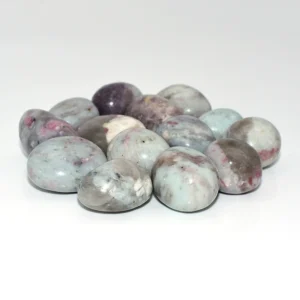
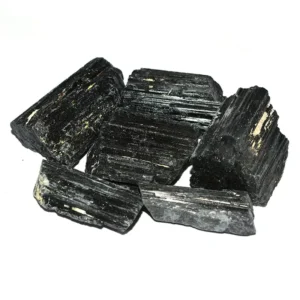
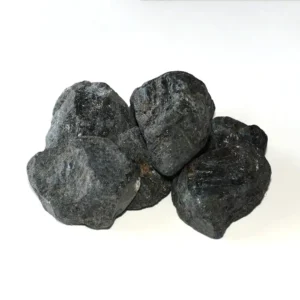
Tourmaline Spiritual Meaning and Metaphysical Properties
Tourmaline spiritual meaning often centers on staying grounded while remaining open to change. In modern crystal practices, people use it as a symbol of emotional boundaries, self-awareness, and compassion. These interpretations can support a personal ritual, but they do not describe scientifically established properties of the stone.
Grounding and Personal Boundaries
Among the commonly described metaphysical properties of tourmaline, grounding means bringing attention back to the present moment. For example, holding a smooth stone during a quiet break can serve as a reminder to pause, notice your surroundings, and consider your next step.
Protection has a similar symbolic role. Someone might wear a black tourmaline bracelet to remind themselves to set limits on their time or step away from an uncomfortable situation. The meaning comes from the intention attached to the piece.
Tourmaline and Chakra Traditions
Contemporary crystal practices often connect tourmaline colors with different chakras:
- Black and brown: The root chakra, associated with stability and grounding.
- Pink, green, and watermelon: The heart chakra, associated with love and compassion.
- Blue: The throat chakra, associated with communication.
- Purple: Sometimes linked with the third eye or crown chakra in modern interpretations.
These correspondences vary between practitioners. They offer a framework for spiritual reflection rather than a way to diagnose or treat a health condition.
What Does “Tourmaline Healing Properties” Mean?
The phrase tourmaline healing properties commonly refers to beliefs about emotional balance, energy cleansing, or spiritual support. In this context, a stone may act as a meaningful object during meditation, journaling, or another reflective practice. Those uses should remain distinct from claims that it treats illness.
Tourmaline also has real electrical properties. GIA explains that it develops an electrical charge when heated or subjected to pressure, known as pyroelectricity and piezoelectricity. These mineral properties do not, by themselves, establish the spiritual or healing effects attributed to tourmaline.
What Is Tourmaline Used For?
Tourmaline uses include jewelry, mineral collecting, decorative displays, and personal spiritual practices. The most suitable form depends on whether you want to wear it, examine its natural crystal structure, or include it in a quiet daily ritual.
Jewelry and Beadwork
Tourmaline appears in bracelets, necklaces, earrings, rings, and pendants. Its varied colors give jewelry makers options for a coordinated design or a strand with contrasting shades. For example, pink and green beads can create a soft color palette, while black beads offer a darker, more uniform look.
When choosing stone beads, consider their dimensions, drill holes, polish, and condition. These practical details affect how well they work in a design. A meaningful color is worth considering, but the beads also need to fit your stringing material and intended piece.
Mineral Collections and Displays
Natural tourmaline specimens appeal to collectors who enjoy crystal shapes and color variation. Some pieces show several colors within one crystal, while others feature tourmaline growing alongside surrounding minerals.
A display specimen also gives you a chance to observe details that polished jewelry may conceal. However, appearance alone cannot establish every aspect of a stone’s identity, origin, or treatment history.
Meditation and Personal Rituals
What does tourmaline do in a personal practice? It can serve as an object to focus on or a reminder of an intention. You might hold a polished piece while breathing slowly, keep one beside a journal, or wear a bracelet that reminds you to pause during a busy day.
These uses give tourmaline a personal role without requiring a promised outcome. Choose a comfortable, well-finished piece for handling, and let its symbolism reflect what matters to you.
How to Choose Tourmaline
Choose tourmaline by considering its appearance, intended use, condition, and price. Tourmaline meaning can add a personal connection, but it does not determine the quality of a particular piece.
Start with Color and Intended Use
Pick a color you enjoy, then decide how you want to use it. A bracelet needs a comfortable fit and smooth beads. A pendant should have a secure setting, while a display specimen may appeal because of its crystal shape or visible color zones.
For beadwork, check bead size, hole diameter, strand length, and how the colors work together. A mixed strand can suit a varied design; a coordinated strand may work better when you want a consistent palette.
Examine the Actual Piece
Ask for clear photographs and a video of the item or batch you will receive. Look at it from several angles, preferably in neutral lighting. Check for chipped edges, surface-reaching fractures, uneven polish, and damage around drill holes.
Inclusions alone do not make a stone unsuitable. GIA notes that pink to red tourmalines often contain more visible inclusions than green to blue varieties. Their position and effect on appearance matter, alongside the condition of the finished piece.
Ask About Treatments and Product Descriptions
Natural origin and untreated condition are separate questions. GIA’s care guide identifies heating and irradiation as important tourmaline treatments. Ask the seller what is known about the material, and request appropriate documentation when treatment status is central to your purchase.
Also, clarify color descriptions. A bracelet made from separate pink and green beads is different from beads that individually display watermelon tourmaline’s pink-center, green-outer structure.
For a bulk order, confirm dimensions, acceptable color variation, and finish before approving a sample. These details provide a clearer basis for comparing the delivered goods than a broad quality label alone.
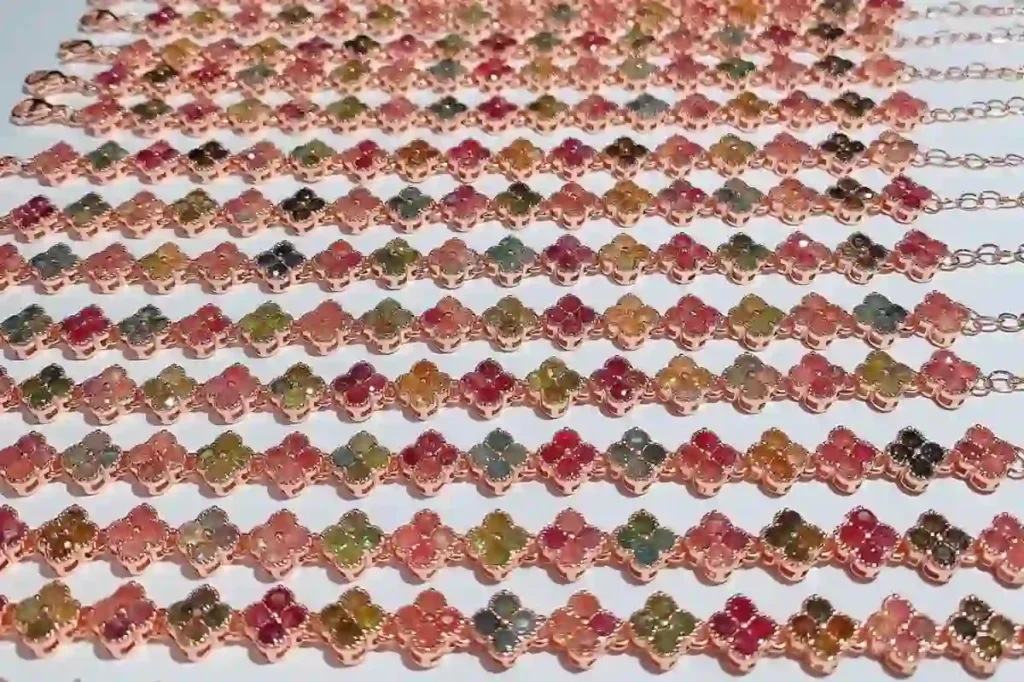
How to Clean and Care for Tourmaline
Gentle cleaning and careful storage help keep tourmaline in good condition. Although it resists scratches reasonably well, it can still chip or fracture. Therefore, choose a cleaning method that suits the whole piece, including its setting, string, and any accompanying stones.
Clean with Warm, Soapy Water
According to GIA’s tourmaline care guide, warm, soapy water is the best cleaning method for tourmaline. Ultrasonic and steam cleaners are not recommended.
For a loose, intact stone, follow these simple steps:
- Add a little mild soap to lukewarm water.
- Gently clean the surface with a soft brush.
- Rinse away the soap.
- Pat dry with a soft cloth.
However, strung bracelets, glued settings, and mixed-material jewelry may need a different approach. Check their care instructions before wetting the entire piece. When necessary, use a lightly dampened cloth to clean accessible surfaces instead.
Protect Against Heat and Impact
Heat can damage tourmaline, while sudden temperature changes can cause fractures. In addition, some colors produced by irradiation may fade under heat or bright light, as GIA explains.
For this reason, avoid hot water, steam, and leaving jewelry near a heater. Remove rings and bracelets before heavy manual work or activities that could knock the stones against hard surfaces.
After wearing your jewelry, store it in a separate pouch or compartment. This also helps prevent contact with harder gemstones that could scratch it.
Keep Symbolic Cleansing Gentle
If cleansing forms part of your spiritual practice, choose a ritual that protects the piece. For example, place it on a clean cloth indoors and spend a few moments setting an intention.
Physical cleaning removes dirt and residue; symbolic cleansing expresses a personal belief. You do not need salt, soil, prolonged soaking, or direct sunlight to make that ritual meaningful.
Frequently Asked Questions
What Is Tourmaline Good For?
Tourmaline is useful for jewelry, beadwork, mineral collections, and decorative displays. In addition, some people choose it as a personal symbol of protection, compassion, or growth. Its spiritual associations can make a piece meaningful, but they should not be treated as promised health benefits.
Can You Wear Tourmaline Every Day?
Yes, tourmaline can suit daily wear with appropriate care. However, the design, setting, and condition of the stone matter. Remove bracelets and rings before heavy work or activities that could cause impact, and check strings and settings regularly.
Which Tourmaline Color Should I Choose?
Start with a color you enjoy and a form that suits your needs. For symbolic meaning, black commonly represents grounding, pink suggests compassion, and green relates to growth. Then compare the actual pieces for appearance, finish, condition, and price rather than choosing by symbolism alone.
Is Tourmaline an October Birthstone?
Yes. According to GIA, tourmaline is an October birthstone alongside opal. It is also the gemstone associated with the eighth wedding anniversary. Therefore, a tourmaline piece can carry meaning through the occasion as well as its color.
Is Natural Tourmaline Always Untreated?
No. “Natural” describes the stone’s origin, while “untreated” describes its treatment history. GIA identifies heating and irradiation as important treatments used to improve tourmaline color. If untreated material is essential to your purchase, ask what evidence supports that description.
Conclusion
Tourmaline meaning brings together themes of balance, protection, compassion, and growth. Different colors offer different symbolic associations, while the stone’s appearance and condition help you choose a piece for jewelry, collecting, or personal reflection.
Start with a color you enjoy, then consider how you will use it. For jewelry projects, check dimensions, finish, and treatment information. With thoughtful selection and gentle care, your piece can hold both visual appeal and personal meaning.
If you are sourcing tourmaline beads or bracelets for your business, contact Rocrystal through our contact form or WhatsApp. Share your preferred colors, sizes, and quantities so we can discuss suitable options.
Disclaimer
Spiritual meanings, chakra associations, and crystal healing descriptions reflect beliefs and personal interpretations, not scientifically established medical benefits. Crystals should not replace professional medical or mental health care.
References
- GIA — Tourmaline: Gemstone overview, electrical properties, birthstone status, and anniversary association.
- GIA — Tourmaline Description: Mineral composition, color varieties, and watermelon tourmaline structure.
- GIA— Tourmaline Care and Cleaning Guide: Hardness, toughness, treatments, and cleaning recommendations.
These references support the gemological information in this article. They do not establish the spiritual or healing effects attributed to tourmaline.