
Watermelon Tourmaline Meaning, Benefits and Properties
Written by Roc Gong | Founder of RoCrystal
Published: October 27, 2026
Watermelon tourmaline meaning centers on love, compassion, joy, and emotional balance in modern crystal traditions. Its pink and green colors are often used as symbols of caring for yourself while staying open to others. These associations give the stone personal meaning, but they are spiritual beliefs rather than proven health benefits.
Beyond its symbolism, this gemstone has a distinctive appearance worth understanding. Whether you are choosing jewelry, collecting crystals, or buying bead strands, knowing the difference between watermelon tourmaline and a mix of colorful tourmaline beads can help you make a more informed choice.
What Is Watermelon Tourmaline?
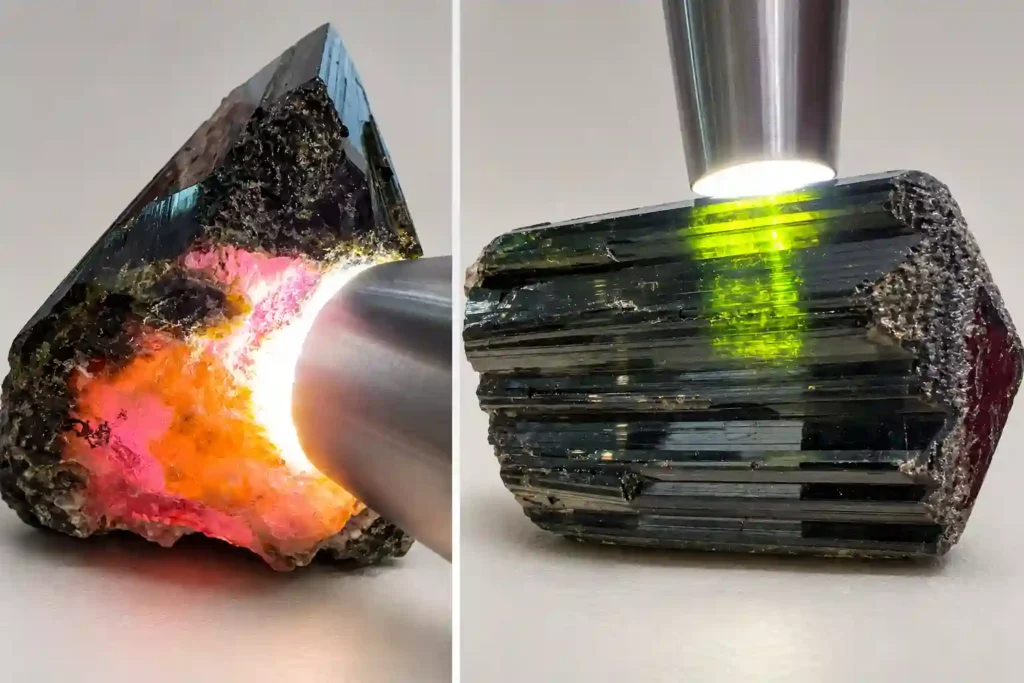
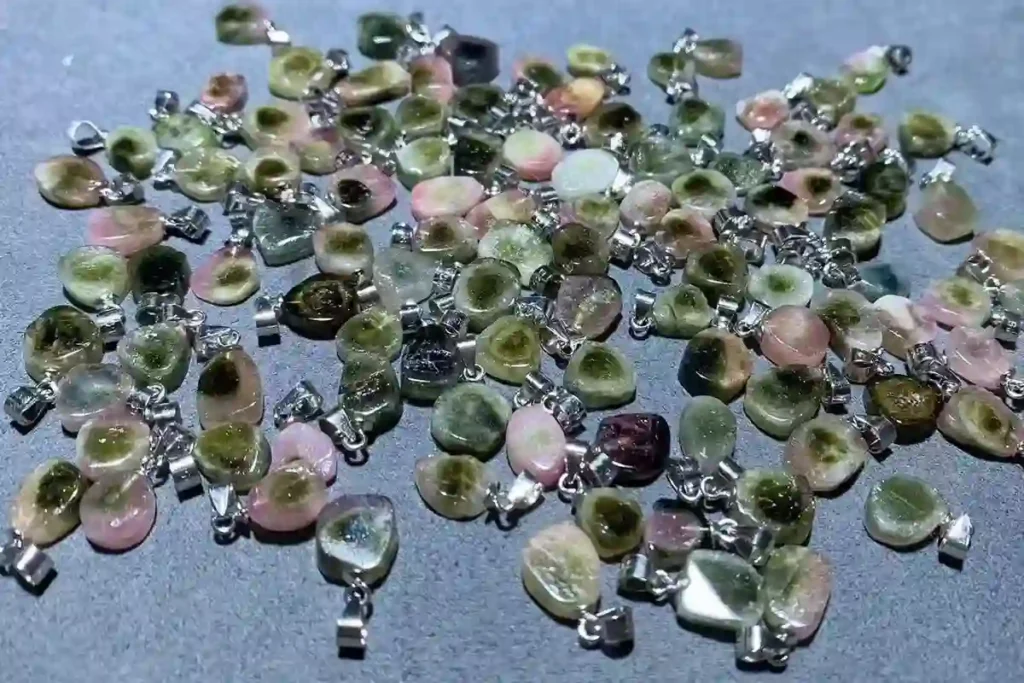
Watermelon tourmaline is tourmaline with a pink or red center surrounded by a green outer zone. Its name comes from the resemblance to a watermelon slice. According to GIA, cutters often slice these crystals across their width to reveal the pink center and green border.
The colors occur within the same crystal. As the crystal grows, changes in its chemical environment can produce different color zones. A polished slice makes this pattern easy to see, while the appearance of a bead depends on where it was cut from the crystal.
A few basic watermelon tourmaline properties are useful to know:
| Feature | Description |
|---|---|
| Material | Color-zoned tourmaline |
| Typical appearance | Pink or red center with a green outer zone |
| Mohs hardness | 7–7.5 |
| Durability consideration | Brittle; can chip or fracture under impact |
Mindat’s mineral entry describes its characteristic color pattern, hardness, and brittle nature. Hardness measures resistance to scratching, so it does not mean the stone cannot break.
A mixed-color tourmaline strand is not automatically a watermelon tourmaline strand. Separate pink, green, and black beads can create an attractive combination, but their arrangement does not establish watermelon color zoning within the individual stones. When buying bead strands, ask for close-up photos of the actual beads and clarify what the supplier means by the product name.
Watermelon Tourmaline Meaning and Spiritual Symbolism
Watermelon tourmaline spiritual meaning connects love with growth. In modern crystal practices, its pink center often represents affection and self-compassion, while the green outer zone symbolizes renewal and balance. Together, these colors offer a reminder to care for others without overlooking your own needs.
These interpretations are personal and symbolic. You can appreciate them without believing that the stone carries a measurable healing energy.
Love and Self-Compassion
The pink part of watermelon tourmaline is commonly associated with tenderness, kindness, and emotional openness. Some people choose it as a reminder to speak to themselves with the same patience they would offer a friend.
Its meaning can extend beyond romantic love. A watermelon tourmaline gift may express friendship, gratitude, or affection for a family member. The message comes from the intention behind the gift, rather than a promise that the stone will change a relationship.
Emotional Balance and Growth
Green is often linked with nature and renewal in crystal symbolism. Paired with pink, it represents a balance between offering affection and maintaining personal boundaries.
For someone going through a change, the stone can serve as a small reminder to pause, reflect, and respond thoughtfully. This gives the symbolism a practical role without suggesting that wearing a crystal will resolve emotional difficulties.
Heart Chakra Symbolism
Within chakra-based crystal practices, watermelon tourmaline is commonly associated with the heart chakra, which represents love, compassion, and connection. Its pink and green colors fit these themes, making it a popular choice for personal reflection or intention-setting.
Descriptions of watermelon tourmaline metaphysical properties often repeat these same ideas under different names: self-love, forgiveness, harmony, and emotional healing. Here, “healing” refers to a spiritual interpretation, not a demonstrated ability to treat illness or trauma. You can use the stone as a meaningful symbol while seeking support through conversations, healthy routines, or professional care when needed.
Watermelon Tourmaline Benefits and Everyday Uses
The most practical watermelon tourmaline benefits come from enjoying its appearance and giving its symbolism a place in your routine. You might wear it as jewelry, use it as a focus during a quiet moment, or give it to someone with a personal message.
Wear It as Jewelry
A watermelon tourmaline bracelet brings pink and green tones into an everyday outfit. If you connect with its meaning, seeing the beads on your wrist can remind you of an intention, such as practicing patience or making time for yourself.
People sometimes ask whether watermelon tourmaline bracelet benefits differ from those of a necklace or ring. The jewelry style changes how you wear and enjoy the stone; it does not establish a different healing effect.
Choose a style that suits your preferences:
- Bracelet: Lets you enjoy the beads’ colors throughout the day.
- Necklace: Makes a pendant the focal point of an outfit.
- Ring: Places the stone where you can easily admire its pattern.
For bead jewelry, look closely at individual stone beads as well as the overall color balance. A strand photo shows the combination, while close-ups help you understand what each bead looks like.
Use It for Reflection or Meditation
If you enjoy meditation, hold the stone or place it nearby as a visual focus. Notice its colors, breathe comfortably, and choose a simple intention, such as “I will respond with patience.”
The stone gives this routine a personal touch. However, you do not need a special placement, charging ritual, or belief in crystal energy to use it this way.
You can also keep a piece beside a journal. For example, let it prompt a short question: “What would caring for myself look like today?” This turns an abstract meaning into a concrete action.
Give It as a Meaningful Gift
Watermelon tourmaline can express affection, appreciation, or encouragement. Its association with love makes it suitable for friendship and family gifts as well as romantic occasions.
To make the gift more personal, explain why you chose it. A brief note about a shared memory or the recipient’s favorite colors often means more than a list of promised crystal benefits.

Watermelon Quartz vs. Watermelon Tourmaline
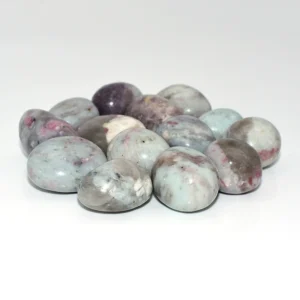
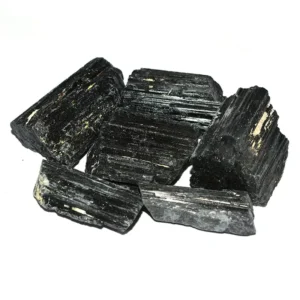
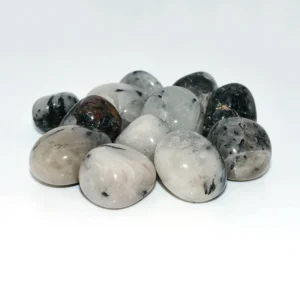
Watermelon quartz is not another name for watermelon tourmaline. Similar pink and green colors can make the names confusing, but appearance alone does not establish the material.
According to GIA, watermelon tourmaline has a pink center and a green outer zone. “Watermelon quartz,” however, should not be treated as a synonym for this gemstone. Ask the seller to identify the actual material and disclose any treatments. The product name alone does not confirm that an item is natural quartz or tourmaline.
| What to compare | Watermelon tourmaline | Products labeled watermelon quartz |
|---|---|---|
| Meaning of the name | Describes a color pattern in tourmaline | Requires clarification of the actual material |
| Color appearance | Typically a pink center and green outer zone | Pink, green, or mixed patterns, depending on the product |
| What buyers should confirm | Identity, treatment status, and condition | Whether the product is quartz, glass, or another material |
| Useful purchase information | Actual photos and clear material disclosure | Explicit composition rather than the trade name alone |
If you encounter a description of watermelon quartz meaning, treat its symbolism separately from its identity. A seller’s association with love or harmony does not tell you what the beads contain.
Before ordering, ask: “What is the actual material, and has it undergone any treatment?” For a higher-value purchase, request supporting identification information. This helps you compare products fairly and describe them accurately when making or reselling jewelry.
How to Tell If Watermelon Tourmaline Is Real
To assess whether watermelon tourmaline is real, start with the material description and inspect the actual piece. Pink and green colors are useful clues, but they cannot confirm identity on their own.
Examine the Color Pattern
GIA describes the classic watermelon pattern as a pink center surrounded by green. Look for this arrangement within an individual crystal or slice, rather than assuming that separate pink and green beads establish the same pattern.
For bead strands, ask for close-up photos of several beads. A full-strand image helps you judge the overall appearance, while close-ups reveal details that a distant photo may hide. However, the way a cutter shapes and orients a bead can make its original color zoning harder to recognize.
Avoid simple rules such as “a sharp color boundary means fake” or “natural stones must look cloudy.” Neither gives you a reliable identification.
Ask About Identity and Treatments Separately
A natural stone and an untreated stone are not necessarily the same thing. GIA notes that some tourmaline colors can result from natural or laboratory-induced radiation. Therefore, confirming the mineral’s identity does not automatically establish its treatment history.
Before purchasing, ask the seller:
- Is the material natural tourmaline?
- What does “watermelon” describe in this particular product?
- Are any treatments known or disclosed?
- Do the photos show the actual item or batch?
Clear answers help you understand the offer. They also give you a written description to refer to when the goods arrive.
Use Professional Identification When Needed
For an expensive piece or a disputed purchase, seek an assessment from a qualified gemologist or gemological laboratory. Ask what the examination can establish, including whether treatment testing is available.
Skip scratch, flame, and chemical tests at home. They can damage the item, and they do not provide the information you need to identify it confidently. Likewise, a cool touch, attractive color, or high price should never serve as proof of authenticity.
Watermelon Tourmaline Price and How to Choose
Watermelon tourmaline price depends on the quality and form of the material. A polished slice, a faceted gem, and an 8 mm bead strand are different products, so comparing their prices without checking the details can be misleading.
Start with the appearance you want and the purpose of your purchase. Then compare items with similar dimensions, condition, and material descriptions.
Compare Color, Clarity, and Condition
Color is a defining feature of watermelon tourmaline. GIA explains that cutters often use slices to display its pink center and green outer zone. If that pattern is your priority, choose a piece that shows it clearly from the angle you will normally view it.
For bead strands, consider both individual beads and the overall combination. A strand with more pink may suit your design better than one with more green, even when both fall within your budget.
Use these checks when comparing offers:
| What to check | What to ask or examine |
|---|---|
| Color balance | How much pink and green appears in the actual item? |
| Transparency | Do photos show the beads under normal lighting? |
| Condition | Are there chips, open cracks, or damaged drill holes? |
| Dimensions | What are the bead diameter, strand length, and hole size? |
| Finish | Does the polish look even around the entire bead? |
| Material disclosure | What identity and treatment information does the seller provide? |
Request a short video as well as photos when possible. Also, compare the full specifications: two strands with the same bead diameter may contain different numbers of beads.
Our Experience Sourcing 8 mm Bead Strands
At Rocrystal, one of our Hong Kong customers orders 8 mm bead strands sold as watermelon tourmaline and prefers a higher proportion of pink. His orders usually range from 50 to 100 strands, about twice a year, alongside other gemstone products.
In our sourcing experience, strands that match his requirements have been harder to find and relatively expensive compared with the mixed-color tourmaline strands we encounter. This describes our experience with those orders, rather than a rule for every supplier or grade.
The practical lesson is to confirm the color preference before comparing prices. “More pink” gives us a clearer selection target than simply asking for “good quality.” For repeat orders, actual batch photos help buyers assess whether the available strands still suit their needs.
Match the Purchase to Your Purpose
For a pendant, you may prioritize one clearly visible color pattern. For jewelry production, consistent bead size, usable drill holes, and a suitable color mix may matter more.
Before placing a larger order, consider a sample from the available batch. Review it against your requirements, then confirm what level of variation you can accept. A lower price offers little value if the material does not suit the finished product you plan to make.
How to Clean and Care for Watermelon Tourmaline
The best way to clean watermelon tourmaline is with warm, soapy water. GIA’s care guide recommends this method and advises against ultrasonic and steam cleaners. Heat and sudden temperature changes can also damage tourmaline.
Clean It Gently
For a loose stone or jewelry piece whose components tolerate water, follow these simple steps:
- Add a little mild soap to lukewarm water.
- Gently clean the surface with a soft cloth or soft brush.
- Rinse away the soap with water at a similar temperature.
- Pat dry with a soft cloth before storing.
For bead strands and stone bracelets, consider the string, elastic, metal parts, and any adhesive as well as the stone. If you do not know whether every component tolerates water, use a lightly damp cloth and ask the supplier for care instructions. Avoid prolonged soaking.
Protect It During Wear and Storage
Remove watermelon tourmaline jewelry before exercise, gardening, or other activities that could knock it against hard surfaces. Store pieces separately in a soft pouch or a lined jewelry compartment.
Also, keep the stone away from high heat and abrupt temperature changes. GIA describes tourmaline as generally stable to light, although some irradiation-induced colors can fade under heat or bright light. Therefore, avoid leaving jewelry on a hot windowsill or using sunlight as a charging treatment.
Keep Spiritual Cleansing Separate from Cleaning
In crystal practices, “cleansing” refers to a symbolic ritual rather than removing dirt. If you enjoy this tradition, place the stone beside your journal or spend a quiet moment setting an intention.
Neither saltwater soaking nor direct sunlight is necessary for that personal ritual. A simple practice lets you enjoy the symbolism while protecting the stone and its jewelry components.
Frequently Asked Questions
Is Watermelon Tourmaline Natural?
Yes, watermelon tourmaline occurs naturally. Its characteristic pink center and green outer zone develop within the crystal. However, a product name alone does not confirm that a particular item is genuine or untreated. Ask the seller for its material description and any known treatment information.
Why Is Watermelon Tourmaline Expensive?
Pieces with an attractive, clearly visible color pattern can command higher prices. Size, transparency, condition, and cutting also influence the offer. For bead strands, compare the bead diameter, strand length, color balance, and finish rather than judging by price alone.
Can You Wear Watermelon Tourmaline Every Day?
You can wear it regularly with care, but protect it from knocks and heat. According to GIA’s care guide, tourmaline has a Mohs hardness of 7–7.5 and fair toughness. Remove bracelets and rings before activities that could damage them.
Is Watermelon Tourmaline an October Birthstone?
Tourmaline is an October birthstone, as GIA explains. Watermelon tourmaline belongs to that gemstone group, making it an option for October birthstone jewelry. The association applies to tourmaline broadly, rather than exclusively to its watermelon color pattern.
Does a Watermelon Tourmaline Bracelet Have Special Benefits?
A bracelet offers a convenient way to enjoy the stone’s colors and personal symbolism. Some people wear it as a reminder of compassion or balance. However, wearing it on the wrist does not establish a special healing effect or make it more powerful than a pendant, ring, or loose stone.
Conclusion
Watermelon tourmaline meaning brings together love, compassion, and emotional balance in modern crystal traditions. Its pink and green colors also give it visual appeal, whether you choose a polished slice, a pendant, or bead strands.
When buying, look beyond the name. Confirm the material, review actual photos, and compare color, condition, dimensions, and treatment information. For bead strands, explain your preferred color balance so the supplier can understand what you need.
Looking for watermelon tourmaline bead strands for your jewelry collection or business? Contact Rocrystal or message us on WhatsApp with your preferred bead size, quantity, and pink-to-green color balance to discuss sourcing options.
References
- GIA — Tourmaline Description: Tourmaline varieties, watermelon color zoning, and mineral background.
- GIA — Tourmaline Care and Cleaning Guide: Hardness, toughness, stability, and cleaning recommendations.
- Mindat — Watermelon Tourmaline: Mineral description and physical properties.
Disclaimer: Spiritual meanings, chakra associations, and crystal healing descriptions reflect beliefs and personal symbolism. They are not established medical benefits. Crystals should not replace medical care or mental health support.