
Blue Tourmaline: Meaning, Properties, Colors and Uses
Written by Roc Gong | Founder of RoCrystal
Published: October 31, 2026
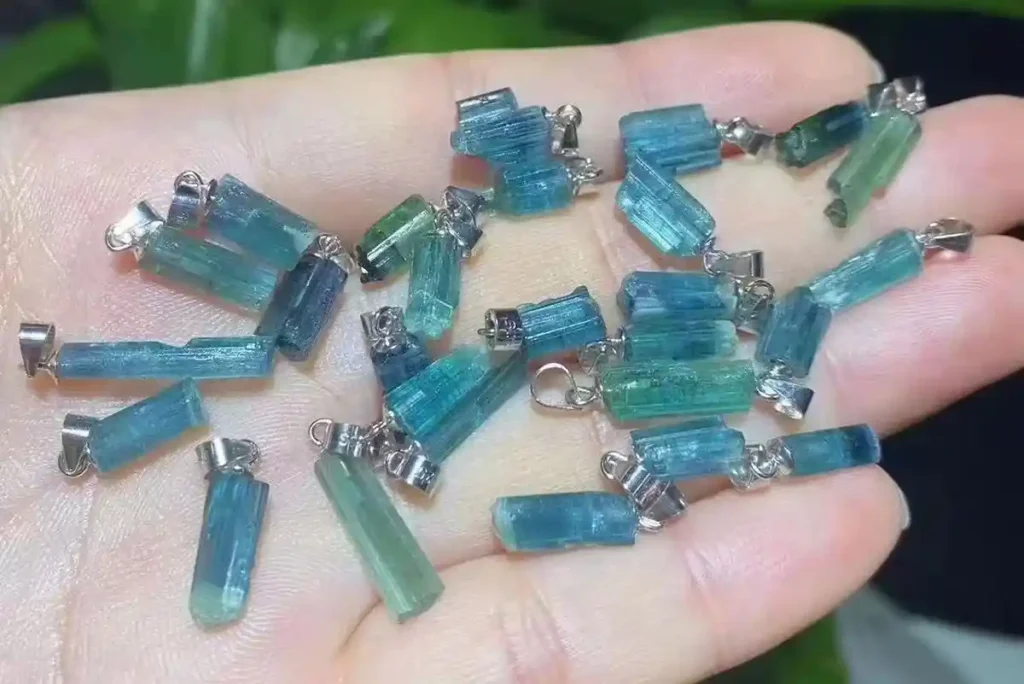
Blue tourmaline is a blue-colored member of the tourmaline mineral group, commonly known in the gem trade as indicolite. Its shades range from soft blue to deep blue, sometimes with green or violet tones. You may find it as a natural crystal, a faceted gemstone, or polished beads for jewelry.
Its appeal goes beyond color. Some people choose it for its symbolism of calm and honest communication, while others focus on its appearance, quality, and suitability for a particular design. These symbolic associations belong to crystal beliefs rather than established medical benefits.
This guide explains blue tourmaline meaning, properties, colors, and uses. It also covers raw crystals, jewelry, price factors, and practical questions to ask before buying.
What Is Blue Tourmaline?
A blue tourmaline stone belongs to a group of closely related minerals with a shared crystal structure but different chemical compositions. Therefore, “blue tourmaline” describes its color without identifying its exact mineral species, geographic origin, or treatment status.
According to GIA’s tourmaline description, indicolite is the trade name for blue tourmaline that can also show violet or green tones. GIA also explains that most gem tourmalines belong to the elbaite species. However, a blue color alone does not establish a specimen’s precise composition.
The following basic properties provide a useful starting point:
| Property | Description |
|---|---|
| Mineral group | Tourmaline |
| Common color name | Indicolite |
| Color range | Blue, including violetish-blue and greenish-blue shades |
| Crystal system | Trigonal |
| Mohs hardness | 7–7.5 |
Sources: GIA Tourmaline Description and GIA Tourmaline Gem Encyclopedia.
When comparing a blue tourmaline crystal with a finished gemstone, consider the intended use. A collector may value the crystal’s natural form, while a jewelry designer may prioritize its dimensions and appearance in a setting. The name identifies the material being offered; the individual stone still needs a clear description.

Blue Tourmaline Colors and Names Explained
Blue tourmaline can show noticeably different shades. When comparing stones, separate hue, the basic color, from tone, how light or dark it appears. A greenish-blue stone and a dark blue stone differ in more than brightness, so a general “blue” label may not give you enough information.
Light Blue and Dark Blue Tourmaline
Light blue tourmaline has a softer appearance, while dark blue tourmaline offers a deeper color. Some stones also show green or violet tones, consistent with the color range described in GIA’s tourmaline guide.
For a practical comparison, ask to see the stone in ordinary daylight as well as indoor lighting. A photograph taken with strong backlighting may not show how a dark gemstone looks during everyday wear. For beads, request a view of the whole strand so you can judge the color variation between individual pieces.
Indicolite and Paraíba Tourmaline
Indicolite is a trade name associated with blue tourmaline. Paraíba tourmaline, however, has additional color and chemical requirements. These names should not be treated as interchangeable.
GIA’s research on Paraíba tourmaline explains that the trade definition considers characteristic colors and the contribution of copper and manganese. The name can apply to qualifying material from different geographic origins, so “Paraíba” alone does not establish Brazilian origin.
Descriptions such as electric blue tourmaline and neon blue tourmaline emphasize appearance. They cannot, by themselves, confirm that a stone qualifies as Paraíba. When that identification affects your purchase, ask for an independent gemological report rather than relying on a vivid photograph or a seller’s color description.
Blue Tourmaline Meaning and Symbolic Benefits
Blue tourmaline meaning centers on calm, honest communication, and thoughtful self-expression in contemporary crystal traditions. Some people use the stone as a personal reminder to pause, listen, and choose their words carefully. These associations describe spiritual beliefs and personal symbolism rather than scientifically established effects.
For example, wearing a blue tourmaline pendant before a difficult conversation can serve as a reminder of your intention to speak clearly. The stone does not guarantee confidence or change the outcome. Its meaning comes from the connection you give it.
Communication, Calm, and Reflection
People interested in blue tourmaline stone benefits may find it helpful to distinguish symbolic uses from practical qualities:
- Communication: A reminder to express your needs honestly and listen to others.
- Calm: A meaningful object to include in a quiet, reflective routine.
- Self-awareness: A visual cue to pause and consider your thoughts before responding.
In some chakra practices, blue tourmaline is associated with the throat chakra, which symbolizes communication. Darker blue shades are also linked with the third eye chakra and intuition. These correspondences vary between practitioners and do not describe measurable mineral properties.
You can include the stone in meditation, keep it beside a journal, or wear it as jewelry. Choose an approach that feels meaningful without expecting a specific result. Its color and appearance also offer a straightforward reason to enjoy it, whether or not you follow crystal traditions.
Within the broader subject of tourmaline meaning, blue tourmaline provides a color-specific interpretation focused on expression and reflection. Its symbolic role can complement personal routines, but it should not be presented as a treatment for anxiety, sleep problems, or other health conditions.

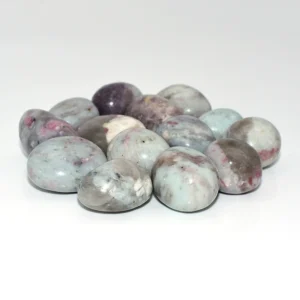
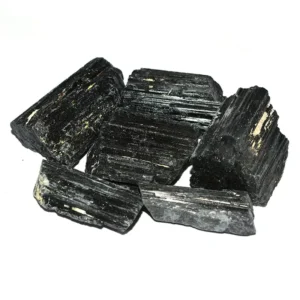
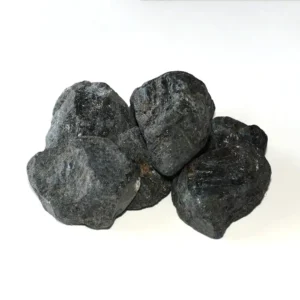
Raw Blue Tourmaline and Blue Tourmaline in Quartz
Raw blue tourmaline is material that has not been fashioned into a finished gemstone or polished bead. It may be a well-formed crystal, a broken crystal fragment, or part of a larger mineral specimen. “Raw” describes its form; it does not automatically confirm that the material is untreated.
Tourmaline often forms elongated crystals. However, a rough piece may have broken ends or partly concealed surfaces, so its shape alone cannot confirm its identity. For collectors, useful details include the specimen’s dimensions, visible damage, and whether the crystal has been repaired.
Crystals with Quartz and Inclusions in Quartz
When buying blue tourmaline in quartz, clarify what the description means:
| Description | What it refers to |
|---|---|
| Blue tourmaline with quartz | Separate crystals occurring together in one specimen |
| Blue tourmaline inclusions in quartz | Tourmaline crystals enclosed within the quartz host |
GIA’s research on tourmaline inclusions notes that tourmaline can occur inside quartz and other pegmatite minerals. Nevertheless, blue inclusions are not automatically tourmaline. GIA has also documented dumortierite-quartz material, demonstrating why color alone is insufficient for identification.
Before purchasing, request clear photographs from several angles and ask how the minerals were identified. For a specimen, check whether the crystals are naturally associated or attached with adhesive. For included quartz, ask whether the inclusion identification comes from laboratory testing or only a seller’s visual assessment.
These questions help you understand what is being offered without treating a commercial label as proof of composition.
Blue Tourmaline Jewelry and Practical Uses
Blue tourmaline jewelry includes rings, pendants, earrings, and beaded designs. The most suitable form depends on how you plan to wear it, the appearance you prefer, and the condition of the individual stone.
Rings, Pendants, and Earrings
A blue tourmaline ring places the gemstone where you can enjoy its color throughout the day. However, rings also face frequent contact with hard surfaces. When choosing one, consider whether the setting protects exposed edges and whether the stone has visible fractures.
Pendants and earrings generally experience fewer knocks than rings, making them worth considering for more delicate stones. For a matching pair of earrings, compare both gemstones together under the same lighting. Similar dimensions do not necessarily mean matching color.
According to GIA’s tourmaline care guide, tourmaline has a Mohs hardness of 7–7.5 and fair toughness. Hardness describes resistance to scratching; it does not mean a gemstone cannot chip or break.
Bracelets and Beaded Designs
A blue tourmaline bracelet offers a different appearance from a single faceted gemstone. Its overall character comes from the combination of beads, including their color variation, shape, polish, and arrangement.
When selecting stone beads for a design, check:
- Dimensions: Confirm bead size, hole diameter, and usable strand length.
- Surface condition: Look for chips, especially around drill holes.
- Color arrangement: Decide whether you want a close match or a gradual blend.
- Transparency: Review the whole strand rather than one brightly lit bead.
For finished stone bracelets, fit and construction also matter. Ask for the inner circumference and check whether the cord suits the beads’ weight and hole size.
For designers and retailers, these details help turn an attractive sample into a clear product specification. Keep reference photographs and written requirements together so future comparisons use the same criteria.
Blue Tourmaline Price and How to Choose
Blue tourmaline price depends on the individual stone and the form in which it is sold. A faceted gemstone, a bead strand, and a mineral specimen require different comparisons. A single price range for all three would provide little useful guidance.
What Affects the Price?
According to GIA’s tourmaline buying guide, color is the most important quality factor. Cut, clarity, and size also influence appearance and value. A larger gemstone does not necessarily offer better value if its color looks overly dark or its cut returns light unevenly.
When comparing a blue tourmaline gemstone, consider these factors together:
| Factor | What to compare |
|---|---|
| Color | Hue, lightness or darkness, saturation, and visible color zoning |
| Clarity | Visible inclusions, fractures, and their effect on appearance |
| Cut | Proportions, symmetry, polish, and how evenly the stone reflects light |
| Size | Both carat weight and measurements in millimeters |
| Treatment information | What the seller discloses and what any report actually establishes |
Ask specifically about treatments. A statement such as “natural tourmaline” does not, by itself, answer whether the stone has undergone treatment. GIA explains that its identification reports name detectable treatments; this is different from guaranteeing that every possible treatment can be detected.
Compare Like with Like
For faceted stones, compare the total price and price per carat alongside quality and dimensions. For bead strands, confirm strand length, bead count, size range, and hole diameter. Two similarly priced strands may contain different amounts of usable material.
For raw specimens, consider crystal condition, visible terminations, repairs, and the appearance of the whole piece. Weight alone cannot capture those differences.
Before a larger bead order, agree on acceptable color variation, size tolerance, and surface condition. If possible, approve a representative sample and retain photographs with the written specification. This gives both buyer and supplier a clearer basis for checking the order than labels such as “premium” or “AAA” alone.
How to Care for Blue Tourmaline
Gentle cleaning and careful storage help protect blue tourmaline jewelry. According to GIA’s tourmaline care guide, warm, soapy water offers the best cleaning method. GIA advises against ultrasonic and steam cleaners because tourmaline requires care despite its resistance to scratching.
Clean Gently and Avoid Sudden Temperature Changes
For a loose gemstone or suitable jewelry setting, follow these steps:
- Add a little mild soap to lukewarm water.
- Gently remove surface dirt with a soft cloth or soft brush.
- Rinse carefully over a bowl rather than an open drain.
- Pat dry with a clean, soft cloth.
For a blue tourmaline bracelet, consider the cord, clasp, and any other materials before cleaning. Wipe elastic bracelets with a damp cloth instead of soaking the entire piece, and let them dry fully before storage.
Keep tourmaline away from high heat and rapid temperature changes. GIA explains that heat can alter its color, while thermal shock can cause fractures. Some irradiation-induced colors may also fade with heat or bright light; this does not mean every blue tourmaline fades during normal wear.
Store Jewelry and Specimens Carefully
Store individual pieces in separate soft pouches or padded compartments to reduce contact with other jewelry. Remove rings and bracelets before heavy lifting, gardening, or activities that could knock the stones against hard surfaces.
Raw specimens need a different approach. Use a soft brush to remove loose dust, and check for fragile associated minerals, repairs, or adhesives before washing. A cleaning method suitable for a loose tourmaline gemstone may not suit every part of a mixed mineral specimen.
Frequently Asked Questions
What Is Blue Tourmaline Called?
The common trade name is indicolite. GIA describes this color variety as blue, violetish blue, or greenish blue. The name describes color rather than a specific geographic origin.
Is Blue Tourmaline Rare?
Rarity depends on the quality and type of material. Fine blue gemstones with attractive color, good clarity, and larger dimensions have more limited availability than ordinary commercial material. A blue label alone does not establish rarity or justify a premium price. GIA’s buying guide explains how color, clarity, cut, and size influence value.
Is All Blue Tourmaline Paraíba?
No. Paraíba tourmaline must meet additional color and chemical criteria. A seller’s description of “neon blue” cannot confirm that identification. GIA’s Paraíba research also explains why the trade name does not automatically indicate Brazilian origin.
Why Does Blue Tourmaline Look Almost Black?
A very dark tone can make blue difficult to see, especially under weak lighting. Cut and viewing direction can also affect its appearance. Ask for a video showing the stone from several angles under ordinary lighting rather than judging it only from a backlit photograph.
Can You Wear a Blue Tourmaline Bracelet Every Day?
Daily wear can be practical if the beads and construction are sound, but careful handling still matters. Remove the bracelet before sports or heavy work, avoid hard impacts, and check the cord regularly. GIA rates tourmaline’s toughness as fair, so scratch resistance does not make it resistant to every knock.
Conclusion
Blue tourmaline offers a range of blue shades, jewelry options, and mineral specimens. Understanding its names helps you compare products more accurately, while its symbolic meaning can add a personal connection beyond appearance.
Before buying, consider the individual piece: its color in ordinary lighting, condition, dimensions, treatment information, and suitability for your intended use. Compare similar products, and request supporting identification when a specific claim affects the price.
For wholesale sourcing inquiries, contact Rocrystal through WhatsApp or our inquiry form. Share your preferred product type, size, quantity, and delivery country so we can discuss your requirements and check available options.
References
The following professional resources support the gemological information in this guide. They do not establish spiritual or medical benefits.
- GIA — Tourmaline Description: Mineral group, composition, and color names.
- GIA — Tourmaline Quality Factors: Color variation and factors affecting gemstone quality.
- GIA — Geographic Origin Determination of Paraíba Tourmaline: Paraíba terminology, chemistry, and geographic origin.
- GIA — Tourmaline Traits and Inclusions: Tourmaline inclusions in quartz and other minerals.
- GIA — Tourmaline Buyer’s Guide: Selection criteria and identification reports.
- GIA — Tourmaline Care and Cleaning Guide: Cleaning, durability, and heat precautions.
Disclaimer
This article provides general educational and product information. Blue tourmaline meanings, chakra associations, and symbolic benefits reflect crystal beliefs and personal practices, not established medical evidence. Gemstones should not replace professional medical advice, diagnosis, or treatment. Product names and photographs alone cannot confirm mineral identity, geographic origin, or treatment status.