
Celestite Crystal Meaning: Spiritual Properties, Uses, Care & Buying Guide
Written by: Rocrystal Sourcing & QC Team, Last updated: August 11, 2026
Celestite Crystal Meaning often centers on peace, clarity, and calm communication. The stone is easy to recognize by its soft sky-blue color and delicate crystal points. Many people keep celestite for meditation, decoration, or crystal collections. Others simply enjoy its gentle color. Spiritual traditions also give the stone several symbolic meanings, but these ideas come from personal beliefs rather than scientific research.
Celestite is also called celestine. It usually grows as natural crystal clusters, although the material can take many other forms. You may see rough stones, chips, beads, bracelets, eggs, and small polished pieces. The raw material often contains natural cracks and cleavage lines. Because of this structure, manufacturers must handle the stone with more care than many harder crystals.
This guide explains the meaning of celestite crystal in simple terms. It also covers celestite crystal properties, spiritual beliefs, common uses, jewelry, care, and crystal combinations. Later, I will share what I have learned from handling and supplying celestite products. That experience is especially useful when choosing color, checking natural fractures, selecting product shapes, and protecting fragile pieces during shipping.
What Is Celestite?
What Is Celestite Made Of?
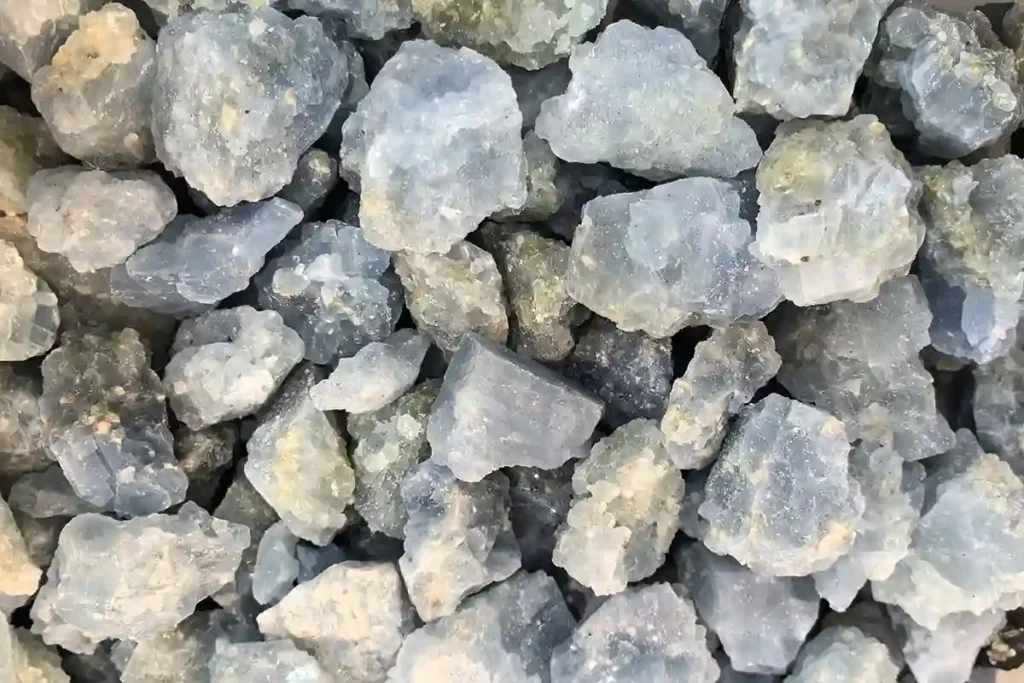
Celestite is a natural mineral that often grows in clusters with visible crystal points. Most people know it for its pale sky-blue color. Some pieces look almost colorless, while others show a deeper blue tone. The surface may look clear and sparkling in some areas but cloudy or uneven in others. These differences are normal because every piece forms naturally.
Another feature of celestite is its internal structure. Many pieces contain natural fractures, cleavage lines, or irregular patterns. These lines can make the stone look very different from smoother materials. A piece may appear solid from the outside while still having weaker areas inside. This natural structure also affects how manufacturers cut, polish, and shape the raw material.
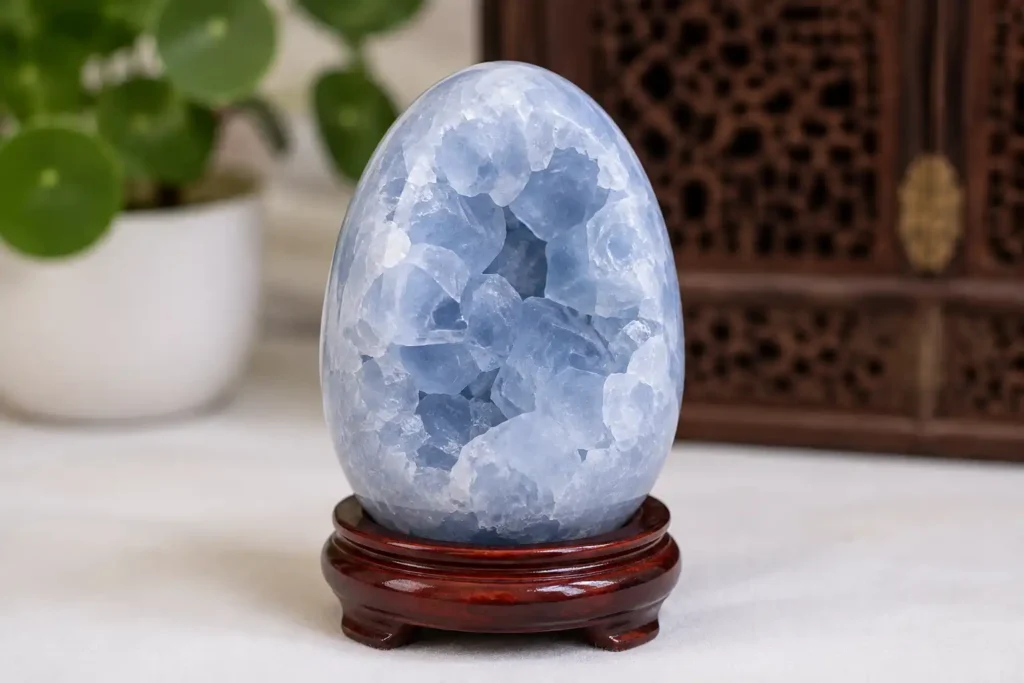
The size and condition of the rough stone often decide what products can be made from it. Smaller pieces may become chips, beads, or bracelets. Larger and more stable pieces can stay as natural clusters or become simple decorative shapes such as eggs. Not every piece is suitable for heavy cutting because cracks and weak areas can reduce the usable material.
Celestite vs. Celestine: Are They the Same?
Celestite and celestine are two names for the same mineral. You may see both terms in books, mineral references, or supplier catalogs. The difference mainly comes from naming habits. “Celestine” often appears in mineral or geological descriptions, while “celestite” is more common in the crystal and retail market.
For buyers, this naming difference usually does not change the material itself. A product labeled “celestine” can still be the same mineral sold elsewhere as “celestite.” It is more useful to compare the actual piece. Look at its color, crystal shape, size, surface condition, and natural fractures instead of judging quality by the name alone.
In everyday crystal sales, celestite is usually the more familiar term. Many people use it when searching for blue clusters, rough stones, beads, bracelets, or decorative pieces. Knowing both names can help buyers avoid confusion when comparing products from different suppliers.
Where Does Celestite Come From?
Celestite occurs in different parts of the world, but Madagascar is especially well known for its blue crystal clusters. The Sakoany deposit in northwestern Madagascar has produced many recognizable specimens. Celestite there often forms inside geodes or as natural crystal clusters. The crystals can range from pale blue to deeper blue, and some pieces appear almost colorless.
Celestite also occurs outside Madagascar, so the stone does not come from one single country. Different deposits can produce different crystal sizes, colors, and shapes. Even material from the same region can vary from piece to piece. This natural variation explains why some celestite looks clear and bright, while other pieces appear lighter, cloudier, or more uneven.
For buyers, origin can provide useful background, but the actual piece still matters more. I recommend checking the color, crystal formation, visible damage, usable size, and overall condition. Two pieces from the same source can still look very different. For wholesale orders, checking the real batch gives a better picture of quality than relying only on the country of origin.
Celestite Crystal Meaning
What Does Celestite Crystal Mean?
Celestite Crystal Meaning often centers on peace, clarity, and gentle communication. Many crystal users connect its soft blue color with a calm state of mind and a more thoughtful way of expressing feelings. People may keep celestite nearby during quiet moments, meditation, or personal reflection. These meanings come from crystal traditions and personal beliefs rather than scientific research.
The meaning of celestite crystal also includes openness and emotional calm. Its pale sky-blue color plays a big role in these ideas. The color can remind people of a clear sky, which gives the stone a light and peaceful appearance. Some users choose celestite because this look fits the mood they want to create in a bedroom, reading area, or meditation space.
Not everyone uses celestite for spiritual reasons. Some people simply enjoy its natural crystal points, soft color, and unusual formations. This makes the stone appealing to both spiritual users and mineral collectors. In practice, Celestite Crystal Meaning can come from personal belief, visual experience, or a mix of both.
Celestite Crystal Spiritual Meaning
The celestite crystal spiritual meaning often focuses on inner peace, spiritual awareness, and quiet reflection. Many people use the stone during meditation because its soft blue color creates a gentle atmosphere. Some also connect celestite with clearer communication and personal intuition. These ideas come from crystal traditions, so they should be understood as spiritual beliefs rather than proven effects.
People may place celestite in a meditation room, beside a journal, or in another quiet space. The stone does not need a complicated ritual. For many users, simply seeing the pale blue crystals helps create a calmer setting for reflection. Others choose celestite because its traditional meaning fits their interest in mindfulness, prayer, or spiritual practice.
The meaning can also vary from person to person. One user may focus on peace, while another may value communication or spiritual growth. This flexibility is part of celestite’s appeal. Its color, crystal form, and symbolic meaning work together, which helps explain why the stone remains popular with both spiritual users and crystal collectors.
Emotional and Metaphysical Properties
Celestite is often linked with emotional calm and gentle self-expression in crystal traditions. Some people keep it nearby when they want a quieter space to think or reflect. Its light blue color also gives the stone a soft appearance, which can make it feel suitable for bedrooms, meditation rooms, or reading areas.
Many users also connect celestite with patience, openness, and clear communication. During meditation, they may focus on these ideas while holding a small piece or placing a cluster nearby. The stone itself does not create a proven emotional effect, but the ritual and visual setting can still feel meaningful to people who enjoy crystal practices.
The metaphysical properties of celestite are usually described in personal terms rather than fixed rules. One person may value it for reflection, while another may focus on calm communication or spiritual awareness. This flexible meaning helps celestite appeal to different users without making medical or scientific claims.
Blue Celestite Crystal Meaning
Blue celestite crystal meaning often focuses on calmness, openness, and peaceful communication. Its pale sky-blue color shapes much of this symbolism. Many people connect blue with a clear sky, which gives the stone a light and gentle feeling. This visual quality is one reason celestite often appears in meditation spaces, bedrooms, and quiet corners.
Some crystal users also link blue celestite with self-expression and thoughtful communication. They may keep it nearby while journaling, meditating, or taking time to reflect. These ideas come from spiritual traditions rather than science, so the stone should not be treated as a medical or emotional treatment.
Color also matters from a product point of view. Buyers often notice the blue tone before anything else. Pieces with a pleasant sky-blue color and clear crystal points usually have stronger visual appeal. However, natural variation is normal. Some pieces may look lighter, cloudier, or more fractured, so color should always be considered together with crystal formation and overall condition.
Celestite Crystal Properties
Color and Crystal Formation
Celestite crystal properties can vary a lot from one piece to another. Pale sky blue is the color most people know, but natural celestite can also look nearly colorless, white, gray, or very light in tone. Some pieces have a clearer blue color, while others look softer or cloudier. These differences come from natural formation, so perfect color consistency is not common.
Crystal shape also changes from piece to piece. Some celestite forms sharp, well-defined points, while other material has smaller crystals or rougher surfaces. Natural fractures and cleavage lines are common as well. These features can affect both appearance and strength. A beautiful piece may still need careful handling if weak areas run through the crystal.
When looking at celestite, it helps to consider color and formation together. Strong blue color can add visual appeal, but crystal shape, surface condition, size, and stability also matter. This is especially important for clusters, rough stones, beads, bracelets, and carved pieces, since each product needs a different type of usable material.
Is Celestite Rare?
Celestite is not one of the rarest minerals, but attractive pieces can still be harder to find. Color, crystal size, clarity, and overall condition vary from one piece to another. Large clusters with a pleasant blue tone and clear crystal points are usually less common than ordinary rough material.
The same is true for celestite that can be cut or polished. A large rough stone may contain cracks or weak areas inside. These sections reduce the amount of usable material. As a result, not every piece can become beads, bracelets, eggs, or other finished shapes.
For buyers, quality often matters more than rarity alone. A good piece should have a suitable color, attractive crystal formation, and enough stability for its intended use. When ordering larger quantities, it is also important to understand that natural celestite will always show some variation.
Why Celestite Quality Can Vary
Celestite quality can vary because every piece forms under different natural conditions. Some stones show a stronger blue color and clearer crystal points. Others may look lighter, cloudier, or more uneven. Natural cracks and small chips are also common. These differences do not always mean poor quality, but they can change the overall appearance of the stone.
The usable material also affects quality. A rough piece may look large, but internal fractures can reduce the amount that manufacturers can safely cut or polish. This matters when making beads, bracelets, eggs, or other finished shapes. More stable material usually gives better results and less breakage during production.
For buyers, it is better to look at the whole piece rather than focus on color alone. Crystal formation, natural fractures, usable size, surface condition, and stability all matter. These points help explain why two celestite pieces of similar size can have very different prices.
Celestite Crystal Meaning and Uses
Celestite for Meditation and Quiet Spaces
Celestite crystal meaning and uses often come together in meditation and quiet spaces. Many people place a celestite cluster near a meditation cushion, desk, or reading area. Its pale blue color can make the space feel lighter and more peaceful. Some users also keep it nearby while journaling or taking a few minutes to reflect.
People who follow crystal traditions may connect celestite with calm thoughts, clear communication, and spiritual awareness. They may hold a small piece during meditation or simply leave a cluster within view. There is no single correct way to use it. The goal is usually to create a setting that feels calm and comfortable.
Natural clusters work especially well for this purpose because they need little handling. Celestite can be delicate, so leaving the stone on a stable surface helps protect the crystal points. For users who enjoy both decoration and spiritual practice, this makes celestite easy to include in a quiet room or personal space.
Can You Sleep With Celestite?
Many people keep celestite near the bed because they like its soft blue color and peaceful meaning. A small cluster can sit on a bedside table, shelf, or dresser. This keeps the stone close without placing it where it may get knocked, scratched, or damaged during the night.
In crystal traditions, some users connect celestite with calm thoughts and quiet reflection before sleep. Others simply enjoy the gentle look it brings to a bedroom. There is no scientific evidence that celestite can treat insomnia or improve sleep quality, so it is better to view this use as part of a personal routine.
Celestite is also quite delicate. Avoid placing loose pieces directly in the bed, where pressure or movement may cause chips or cracks. A stable surface is a safer choice, especially for clusters with thin crystal points.
Celestite in Home Decor
Celestite works well in home decor because of its soft blue color and natural crystal points. Many people place it on shelves, desks, side tables, or display cabinets. The stone has a light and clean look, so it can fit well with simple spaces, neutral colors, and quiet rooms.
Natural clusters are especially popular for display because they already have an attractive shape. Polished eggs and smaller pieces offer a smoother look. Some people also use celestite in meditation rooms, reading corners, or bedrooms where they want a softer visual style.
Because celestite can be fragile, placement matters. It should sit on a stable surface and stay away from busy areas. Hard objects can chip the crystal points if they hit the stone. Careful placement helps protect the piece while keeping it easy to see and enjoy.
Raw Celestite, Clusters and Decorative Shapes
Raw celestite and natural clusters are some of the most common forms on the market. Many pieces already have attractive crystal points, so they do not need heavy processing. Small rough stones and chips are also popular because they are easy to sort, pack, and use in mixed crystal sets or decorative displays.
Celestite can also be made into beads, bracelets, eggs, and other small polished shapes. The raw material decides what is possible. Pieces with too many cracks or weak areas may break during cutting. More stable sections can be shaped with better results and less waste.
Larger carved pieces are less common because suitable rough material is harder to find. A stone may look big from the outside but still have weak areas inside. This limits the usable size. For this reason, celestite often appears in smaller decorative shapes rather than large, complex carvings.
Celestite Chakra and Spiritual Associations
What Chakra Is Celestite Associated With?
Celestite is often connected with the throat chakra in crystal traditions. Its pale blue color is one reason people link it with communication and self-expression. Some users keep celestite nearby when they want to speak more calmly, listen with greater patience, or spend time thinking about what they want to say.
Some crystal practices also connect celestite with the third eye chakra. In this context, people may use the stone during meditation or quiet reflection. They often focus on intuition, awareness, and a clearer understanding of their thoughts.
These chakra meanings come from spiritual traditions rather than science. People can use celestite as part of a personal practice, but the stone does not have proven effects on the body or mind. Its soft color and natural crystal form are often what make it feel suitable for these routines.
Celestite and the Zodiac
Celestite is sometimes used in zodiac-based crystal practices, but there is no single rule that limits it to one sign. Many people choose the stone because they like its soft blue color and the calm meaning linked with it. Others select it because the stone fits their personal meditation or spiritual routine.
Some zodiac traditions connect celestite with qualities such as patience, clear communication, and reflection. These ideas can vary between different sources, so it is better to treat them as symbolic guidance rather than fixed rules.
For most users, personal preference matters more than astrology. If someone feels drawn to the color, shape, or meaning of celestite, they can still use it regardless of their zodiac sign. This flexible approach keeps the stone easy to enjoy without making the practice feel too strict.
What Crystals Pair Well With Celestite?
Celestite is often paired with amethyst, clear quartz, selenite, and moonstone. These stones work well together because their colors are soft and easy to combine in displays. Many people also use them in meditation spaces, crystal sets, or personal collections.
Amethyst is a common choice for meditation themes. Clear quartz fits easily into mixed crystal sets, while selenite creates a light and clean look beside blue celestite. Moonstone adds a softer polished contrast. Some users also choose these combinations because the traditional meanings of the stones feel compatible.
There is no single correct pairing for celestite. The best choice depends on color, personal preference, and how the stones will be used. For retailers, these combinations can also work well in themed sets based on calm colors, meditation, or spiritual practice.
Celestite in Jewelry
Celestite Crystal Bracelet
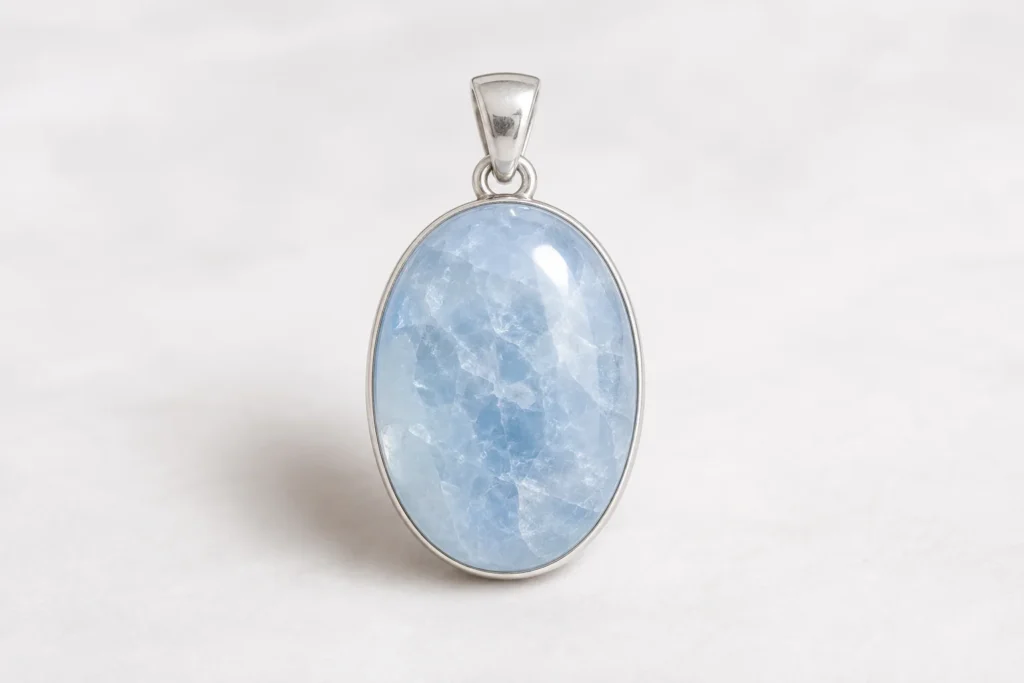
A Celestite Crystal Bracelet has a soft and gentle look because of the stone’s pale blue color. When the rough material is stable enough, manufacturers can cut it into round or slightly irregular beads. The finished bracelet usually has a light appearance, which makes it suitable for customers who prefer soft colors and natural-looking crystal jewelry.
Celestite needs more care during production than many harder stones. Natural cracks and cleavage lines can create weak points inside the material. Some beads may break during cutting, drilling, or polishing. This also means manufacturers may lose more raw material during production, especially when buyers need matching sizes and similar color.
For daily wear, celestite bracelets are better for light use. Hard knocks can chip or crack the beads, so they are not ideal for sports or heavy work. Wholesale buyers should check the polish, drill holes, visible fractures, bead size, and color consistency before placing a larger order.
Celestite Beads and Other Jewelry Uses
Celestite beads can work well in bracelets and other small jewelry designs when the rough material has enough stable areas. Smaller beads are often easier to make because they need less solid material. Larger beads require thicker sections with fewer cracks, which can make production more difficult. This is one reason bead size and quality may vary from one batch to another.
Cutting and drilling also create extra challenges. Celestite often contains natural fractures, so some material can break before it reaches the polishing stage. Manufacturers may lose part of the rough stone during production. When buyers need matching bead sizes and similar blue tones, sorting takes more time and can increase the final cost.
For wholesale orders, buyers should check more than appearance. Look at the polish, drill holes, bead shape, visible cracks, and color range across the batch. Good packing also matters because finished pieces can still chip during shipping. A careful quality check helps reduce problems before the jewelry reaches the retail stage.
How to Cleanse and Care for Celestite
Can Celestite Get Wet?
Celestite should not stay in water for long periods. The stone is relatively soft and often has natural fractures or cleavage lines. Water can enter these weak areas and may increase the risk of damage over time. Because of this, soaking is not a good choice, especially for clusters with thin crystal points.
For normal cleaning, use a soft dry cloth or a gentle brush. This is usually enough to remove dust from the surface. Avoid strong cleaners, rough scrubbing, or long contact with moisture. These methods can damage the surface or make small cracks worse.
The safest approach is simple care. Keep celestite dry, handle it gently, and place it away from harder stones. This helps protect the color, crystal points, and overall shape. For display pieces or jewelry, careful cleaning can also help the product keep a better appearance for longer.
How to Cleanse or Activate Celestite
Many crystal users like to cleanse celestite before meditation or other personal practices. Because the stone is delicate, dry methods are usually a better choice. You can use sound, place the stone near selenite, or simply leave it in a quiet space for a while. These methods come from crystal traditions rather than scientific practice.
To activate celestite, some people set a simple intention for the stone. You can place it nearby and focus on a goal such as calm communication, reflection, or meditation. The process does not change the mineral itself. Instead, it gives the stone a personal meaning within your routine.
There is no need to make the process complicated. Avoid soaking celestite in water or using harsh cleaning methods. Gentle handling is more important than any ritual. If you do not follow spiritual practices, you can simply keep the stone clean, dry, and protected from damage.
How to Store Celestite Safely
Keep celestite in a dry and stable place where it will not fall or hit harder objects. Natural fractures can create weak areas inside the stone, even when the surface looks strong. Clusters need extra space because thin crystal points can chip easily. A shelf, display case, or padded box can help protect larger pieces from accidental damage.
For beads, bracelets, and small polished pieces, separate storage works best. Soft pouches or divided boxes can prevent the stones from rubbing against harder materials. Avoid placing celestite under heavy objects or in crowded containers. Gentle storage helps reduce scratches, chips, and pressure on weak areas.
Wholesale stock needs even more care because pieces may move many times before they reach the customer. Individual wrapping, cushioning, and secure carton placement can reduce unnecessary breakage. In my experience, good storage and packing are just as important as color and crystal quality when working with celestite in larger quantities.
My Experience Working with Celestite Crystals
What I Notice When Handling Celestite
From my experience handling and supplying celestite, the soft sky-blue color is usually the first thing buyers notice. Some pieces can remind people of aquamarine because both stones may have a light and comfortable blue tone. However, celestite has a very different natural structure. Many pieces show visible fractures, cleavage lines, or irregular patterns inside the crystal.
These natural lines are important when checking the stone in person. A piece may look solid from the outside, but weaker areas can still sit inside. Because of this, celestite needs gentle handling. Strong knocks, drops, or rough packing can cause chips or cracks, especially around thin edges and crystal points.
When I sort celestite for wholesale orders, I do not look at color alone. I also check the crystal condition, weak areas, and how well each piece can handle packing and transport. This helps reduce unnecessary breakage and gives buyers a more accurate idea of the actual quality.
Why Celestite Products Come in Certain Shapes
From what I have seen, the size and structure of celestite rough material often decide the final product. Many pieces work well as raw stones, crystal clusters, chips, beads, bracelets, or simple carved shapes such as eggs. These forms suit the natural size of the material and do not require too much cutting.
Larger carvings are less common because celestite often contains natural cracks and weak areas. A rough piece may look big, but not all of it can be used safely. Once cutting begins, some sections may break or need to be removed. This reduces the amount of usable material.
Beads and bracelets can also be difficult to produce. The stone must survive cutting, drilling, and polishing. Some material is lost during these steps, which can raise the final cost. This is one reason good-quality celestite beads and carved pieces may cost more than buyers first expect.
What Wholesale Buyers Should Check
When I check celestite for wholesale orders, I look at more than the blue color. Crystal shape, natural cracks, usable size, and overall stability all matter. Two pieces can look similar in photos but perform very differently during cutting or shipping. A careful check helps buyers understand the real quality before they order larger quantities.
Finished products need another level of inspection. For beads, bracelets, eggs, and polished pieces, I usually check the surface finish, drill holes, visible chips, shape, and color range. Small problems can become more noticeable when the order size increases. Good sorting helps keep the batch more consistent and reduces complaints after delivery.
Packing also affects the final value of the order. Celestite can break if pieces move too much inside the carton. Individual wrapping, soft cushioning, and careful box placement help reduce this risk. For wholesale buyers, good packaging is not an extra detail. It is part of product quality because damaged celestite is harder to sell.
If you are sourcing celestite for a crystal shop, jewelry business, gift store, or wholesale collection, feel free to contact us on WhatsApp. You can also send your size, quantity, product type, and quality requirements through our inquiry form. We can then check suitable celestite clusters, beads, bracelets, rough stones, or carved pieces and prepare a quotation based on your needs.
How to Choose Celestite for Wholesale Orders
Check Color and Crystal Formation
Color is one of the first things buyers notice when choosing celestite. A soft sky-blue tone usually has strong visual appeal, but natural variation is normal. Some pieces look lighter, while others show a deeper blue. Buyers should first decide what color range fits their market instead of expecting every piece to look exactly the same.
Crystal formation matters just as much. Clear points and an attractive overall shape can make natural clusters easier to display and sell. At the same time, buyers should check for weak edges, heavy fractures, and visible damage. A beautiful color does not always mean the piece is stable enough for handling.
For larger orders, it is better to check several pieces from the same batch. This gives a more realistic view of the color range, crystal size, cracks, and overall quality. Celestite is a natural material, so perfect uniformity is not realistic. A good batch should still stay within the quality level agreed before the order.
Choose the Right Product Mix
The best celestite product mix depends on your customers. Crystal shops often prefer natural clusters, rough stones, and eggs because these pieces show the stone’s natural color and crystal shape. Jewelry buyers usually focus more on beads, bracelets, and smaller polished pieces. Each market has different needs, so one product mix will not suit every buyer.
Gift stores may prefer smaller items that are easy to display and sell. Small clusters, polished eggs, and decorative pieces can work well because customers can quickly understand the product. Buyers who serve meditation or spiritual markets may also choose mixed sets with celestite and other soft-colored crystals.
For a first wholesale order, I usually recommend testing several product types instead of buying only one style. This helps buyers see which sizes, shapes, and price ranges sell better in their market. Once demand becomes clear, future orders can focus more on the products that perform well.
Packaging Matters for Celestite
Celestite needs careful packaging because the stone can crack or chip during transport. Natural clusters need extra protection around the crystal points, while eggs, beads, and polished pieces should not knock against each other inside the box. Individual wrapping and soft cushioning can reduce movement and help protect weak areas during shipping.
The outer carton also matters. Heavy items should not press directly against fragile celestite pieces. Dividers, padding, and enough space between items can lower the risk of damage. For larger clusters, I prefer extra support around the base because this part carries most of the weight during transport.
For international wholesale orders, good packing can save a lot of trouble after delivery. A beautiful stone loses value quickly if it arrives chipped or broken. I always treat packaging as part of the quality check, not as a final step after production. This helps protect the stones and gives buyers a more reliable shipment.
Celestite Compared With Similar Blue Crystals
Celestite vs. Angelite
Celestite and angelite can look similar because both often have soft blue tones. However, their appearance is quite different when you look closely. Celestite usually shows visible crystal points and a more sparkling surface. Angelite often looks smoother, more solid, and more opaque.
The two stones also appear in different product forms. Celestite is common as natural clusters, rough pieces, beads, bracelets, and small decorative shapes. Angelite is often polished into beads, tumbles, carvings, and other smooth products. This difference comes from the way each material forms and how it handles during production.
For buyers, color alone is not enough to tell them apart. It is better to check the surface, crystal structure, transparency, and product shape. Celestite usually has a more natural crystal look, while angelite often has a softer and more uniform finish.
Celestite vs. Aquamarine
Celestite and aquamarine can look similar at first because both may show a soft blue color. In my experience, this is often why buyers compare them. The similarity is mainly visual. Celestite usually has more visible crystal points, natural fractures, and cleavage lines, while aquamarine often has a cleaner and more solid look.
The two stones also behave differently during production. Aquamarine is better suited to cutting and jewelry work, while celestite needs more careful handling. Weak areas inside celestite can break during drilling, polishing, or carving. This limits the size and shape of many finished products.
For buyers, it is better to compare more than color. Look at the crystal structure, stability, product type, and intended use. Aquamarine often fits jewelry better, while celestite is especially popular for clusters, rough stones, beads, bracelets, and small decorative pieces.
Frequently Asked Questions
How to Activate Celestite Crystal?
In crystal traditions, people often activate celestite by setting a simple intention. You can place the stone in front of you and spend a few quiet minutes focusing on your goal. Some people choose intentions related to calm communication, reflection, meditation, or spiritual awareness.
You do not need a complicated ritual. Because celestite is delicate, dry methods are usually safer. Some users place it near selenite or use sound during the process. These practices come from personal and spiritual beliefs rather than science. The goal is simply to give the stone a clear meaning within your own routine.
What Pairs Well With Celestite?
Celestite pairs well with amethyst, clear quartz, selenite, and moonstone. These crystals have soft colors, so they look natural together in displays, gift sets, and meditation spaces. Many users also like these combinations because their traditional meanings focus on calmness, clarity, or reflection.
The best pairing depends on your purpose. Amethyst works well for meditation themes, while clear quartz fits many mixed crystal sets. Selenite and moonstone also create a soft contrast with blue celestite. These combinations come from crystal traditions and personal preference rather than proven scientific effects.
Can You Sleep With Celestite?
Yes, you can keep celestite near your bed if you enjoy using crystals as part of a nighttime routine. Many people place a small cluster on a bedside table, shelf, or dresser. Its pale blue color can also give the room a softer and more peaceful look.
In crystal traditions, celestite is often linked with calm thoughts and quiet reflection. However, there is no scientific proof that it improves sleep or treats insomnia. It is better to see this use as part of a personal routine.
Celestite is delicate, so avoid placing loose pieces directly in the bed. A stable surface is safer and helps protect the crystal from chips, cracks, or accidental damage.
Is Celestite Crystal Rare?
Celestite is not one of the rarest minerals, but high-quality pieces can still be harder to find. Large clusters with a pleasant blue color, clear crystal points, and fewer damaged areas usually stand out more than ordinary material.
The same applies to rough material used for beads, bracelets, or carved shapes. Natural cracks can reduce the usable part of the stone, so not every large piece can become a finished product.
For buyers, quality matters more than rarity alone. Color, crystal formation, usable size, and overall condition often have a stronger effect on value and availability.
Why Can’t Celestite Get Wet?
Celestite should not stay in water for long periods. The stone is relatively soft and often has natural fractures or cleavage lines. Water can enter these weak areas and may increase the risk of damage over time.
For normal cleaning, use a soft dry cloth or a gentle brush. Avoid soaking the stone or using strong chemical cleaners. This is especially important for clusters with thin crystal points or pieces that already have visible cracks.
If you use celestite in spiritual practice, dry cleansing methods are a better choice. You can use sound, intention, or place it near selenite. These methods help protect the stone while keeping the routine simple.
Conclusion
Celestite Crystal Meaning often connects with peace, clarity, gentle communication, and spiritual awareness. Its pale sky-blue color also gives the stone a calm and attractive look. Some people choose celestite for meditation or spiritual practice. Others simply enjoy it as a natural mineral for collecting, jewelry, or home décor.
The stone also has some practical limits. Natural fractures and cleavage lines can make celestite easier to chip or break. These features affect how manufacturers cut, drill, polish, and pack the material. They also explain why celestite often appears as clusters, rough stones, chips, beads, bracelets, eggs, and other smaller shapes.
For wholesale buyers, color should not be the only factor. Crystal formation, usable size, natural cracks, workmanship, stability, and packaging all matter. A careful quality check can reduce breakage and help buyers choose products that better match their market.
If you are looking for celestite clusters, rough stones, beads, bracelets, chips, eggs, or other wholesale products, contact us on WhatsApp to discuss your requirements. You can also send your product type, size, quantity, and quality needs through our inquiry form. We can check suitable options and prepare a quotation for your order.
Disclaimer
The information on this page is for educational and general reference only. The spiritual meanings, metaphysical properties, and traditional uses of celestite are based on personal beliefs and crystal traditions. They are not scientifically proven and should not replace professional medical, psychological, or other qualified advice.