
How to Clean Pyrite Crystals, Raw Stones, and Jewelry
Written by Roc Gong | Founder of RoCrystal
Published: November 15, 2026
To clean pyrite, gently wipe a smooth, polished piece with a dry, soft cloth. On an intact raw specimen, use a soft brush to lift loose dust from between the crystals. If you see fresh powder, new cracks, or pieces breaking away, stop cleaning and keep the specimen apart from the rest of your collection. The Canadian Museum of Nature’s guide to pyrite disease explains how humidity can contribute to this type of deterioration.
If you’re wondering how to clean pyrite stone at home, start by checking the shape and condition of your piece. A polished stone is easier to wipe than a cluster with tight gaps, while finished jewelry also has settings or stringing materials to consider. For more on the mineral’s natural forms and symbolism, see our guide to Pyrite Crystal Meaning.
How to Clean Iron Pyrite Safely at Home
If you’re learning how to clean a pyrite stone, look at it under good light before picking up a cloth or brush. Check whether the surface is intact and whether the material you want to remove is loose dust.
| What you see | What to do |
|---|---|
| Dust or fingerprints on an intact polished surface | Wipe lightly with a dry, soft cloth. |
| Loose dust between intact crystals | Lift it gently with a clean, soft brush. |
| Material firmly attached to the crystal or its host rock | Leave it in place until you know what it is. |
| Fresh powder, new cracks, or crumbling edges | Stop cleaning, separate the specimen, and seek professional advice if needed. |
How to Clean Raw Pyrite and Crystal Clusters
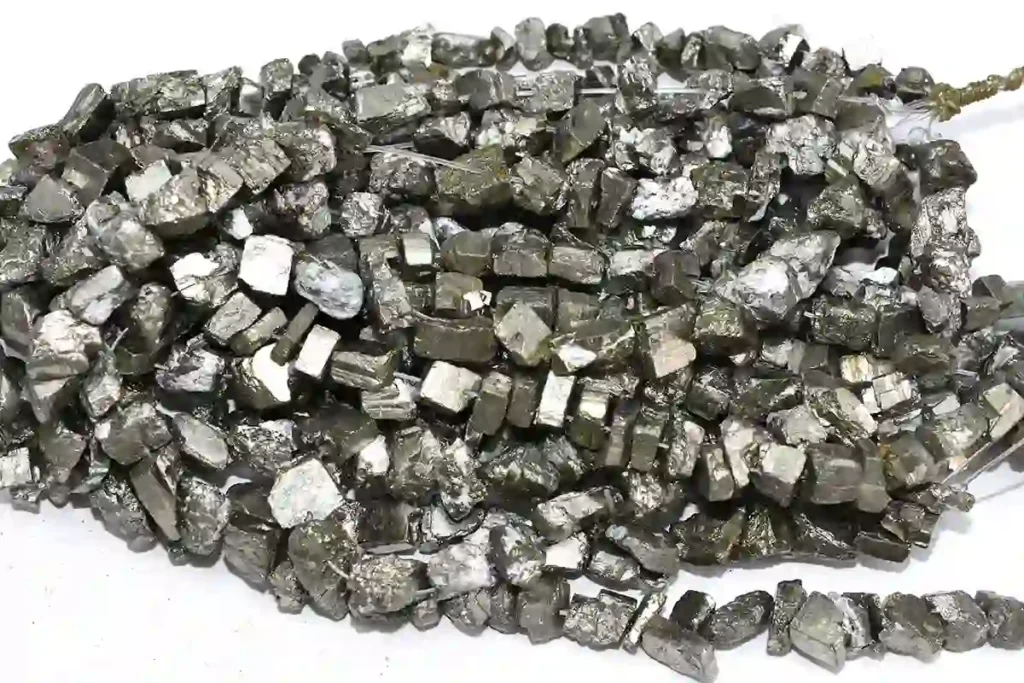
Start with the exposed crystal faces. Then use the tips of a soft brush to lift any loose dust you can reach between the crystals. If a gap is too narrow for the brush, leave it alone. Dirt can resemble part of the host rock, especially around the base of a cluster, so avoid picking at any material that stays firmly attached.
How to Clean Pyrite Cubes
Set the pyrite cube on a padded surface and check its faces and corners before cleaning. If the cube is attached to a host rock, support it by the base while you brush away loose dust. In my experience sourcing 20–30 mm pyrite cubes, some pieces have been prone to oxidation. When I check a batch, I look at the faces and edges for dull patches or loose powder before deciding whether routine dry cleaning is appropriate.
How to Clean Pyrite Jewelry
Before cleaning pyrite jewelry, check the stone, its setting, and any cord or elastic. If a stone is loose or a strand is fraying, have it repaired before cleaning. For pieces in good condition, gently wipe the surface with a dry, soft cloth. Use light pressure around prongs, clasps, and other parts where the cloth might catch.
How to Clean a Pyrite Bracelet
After wearing your bracelet, wipe the beads gently with a dry cloth, especially on the side that touches your skin. If the bracelet feels damp from sweat, blot it and let it air-dry before storing it. When cleaning a stretch bracelet, turn the beads gently to reach their sides without pulling on the elastic. If you’re comparing finished styles, browse our Stone Bracelets collection for examples of different bead sizes and bracelet designs.
Polished Beads and Tumbled Pyrite
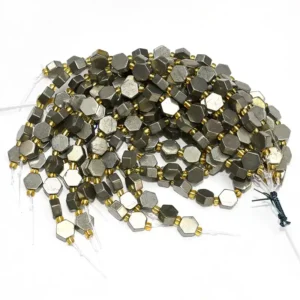
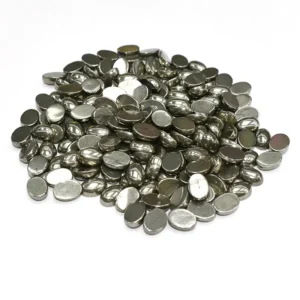
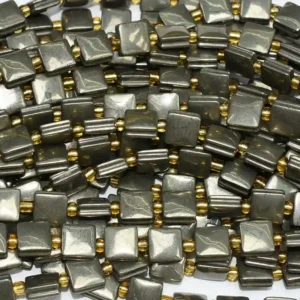
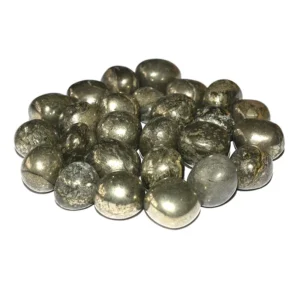
If you’re wondering how to clean pyrite stone with a smooth finish, start with a soft, dry cloth. For loose beads, check both ends of each drill hole and lift loose dust with a soft brush. With tumbled pyrite, pay attention to chipped edges where the cloth might snag. If you notice powder that returns after wiping, set the piece aside for a closer look.
How to Clean Oxidized Pyrite
Before cleaning oxidized pyrite, check whether you’re looking at loose dust, a dull but intact surface, or signs that the specimen is breaking down. If the surface is sound and the dust lifts easily, use a dry, soft brush. If the dull area stays put, leave it alone. Scrubbing may damage the crystal faces.
Does Pyrite Rust?
Pyrite can oxidize when exposed to moisture and oxygen. As it deteriorates, it may lose its metallic shine, develop powdery deposits, or crack. If you’re wondering how to clean tarnished pyrite, start by checking whether the dull area is stable. A dull patch alone gives you limited information. Fresh powder, new cracks, or loose fragments are stronger reasons to stop cleaning. The Canadian Museum of Nature’s guide to pyrite disease explains what this deterioration looks like.
What to Do if Pyrite Starts to Crumble
If you notice new powder where the piece was stored or see fragments breaking away, stop brushing it. Keep the specimen separate from the rest of your collection and store it in a dry place. Then take a photo so you can track whether the surface changes. If the powder keeps appearing or the piece is valuable, ask a mineral conservator to assess it.
How to Clean Pyrite Fossils and Suns
If you’re learning how to clean pyrite fossils, start by checking the surface under good light. On a stable specimen, use a soft brush to lift loose dust from intact areas. Leave firmly attached material in place, especially where it meets the fossil. If you see fresh powder, new cracks, or fragments coming loose, stop cleaning and store the specimen separately in a dry place. The Canadian Conservation Institute’s guide to natural history collections explains how damp conditions can contribute to pyrite deterioration.
How to Clean a Pyrite Sun
Lay the disc flat on a padded surface so its edges are supported. Then use a soft brush to lift loose dust from the face. If dust remains in the narrow grooves between the radiating crystals, leave it in place. Picking at those grooves can damage the fine surface details.
How to Clean a Pyrite Ammonite
Check the inner spiral and outer edge before cleaning. If the surface is intact, lightly brush away loose dust from the areas you can reach. Where the fossil meets the surrounding rock, leave firmly attached material in place. If powder keeps appearing in the spiral or along the edge, ask a fossil conservator to assess the specimen.
How to Polish Pyrite
First, check whether the piece looks dull because of fingerprints or because the surface itself has changed. A dry, soft cloth can remove fingerprints from an intact polished piece. If the area still looks dull after a gentle wipe, stop there. Restoring the finish may require removing surface material, which can change the shape or appearance of the piece.
How to Polish Pyrite by Hand
If you’re learning how to polish pyrite by hand, consider which features you want to preserve. On a polished bead, a light wipe can bring back the shine if fingerprints are the cause. On a natural cube, however, abrasive polishing can round sharp edges and wear away the fine lines on its faces. If a polished piece has deep scratches or an uneven finish, ask a lapidary to assess it. For a specimen with fresh powder, new cracks, or crumbling edges, consult a mineral conservator.
How to Clean and Charge Pyrite
Clean the Surface First
If you’re learning how to clean and charge pyrite, start by checking the surface. If the piece is intact, use a dry, soft cloth on polished areas or a soft brush to lift loose dust from between crystals. Once the surface is clean, you can move on to a separate ritual if that’s part of your practice.
How to Cleanse Pyrite Crystals Without Water
If you’re wondering how to cleanse pyrite as part of a crystal tradition, you can ring a bell nearby or take a quiet moment to set an intention. Some people use the word charge for this step. For example, you might place a pyrite cube beside a goal you’ve written down and use it as a reminder of your next step. Both practices keep the stone dry. For more on the symbolism behind these rituals, see Crystals for Cleansing.
Frequently Asked Questions
Can Pyrite Get Wet?
If pyrite gets splashed, blot the surface with a soft cloth and let it dry fully before storing it. For routine cleaning, use a dry cloth or soft brush. Avoid soaking pyrite, especially if the piece has cracks, tight gaps, or attached host rock.
Can You Clean Pyrite with Salt?
Skip salt and salt water for routine cleaning. Loose salt can lodge between crystals, and a saltwater soak exposes the specimen to moisture. If you use salt as part of a cleansing ritual, keep it in a separate dish.
Is Cleaning Pyrite with Vinegar a Good Idea?
Skip vinegar for routine care, especially on specimens with attached rock or jewelry with metal settings. Start with a dry, soft cloth or brush. If a dull patch remains after gentle cleaning, have the piece assessed before trying to restore its shine.
Can You Polish Pyrite in a Rock Tumbler?
A lapidary can assess whether a piece is suitable for tumbling. For a natural cube, cluster, or fossil, tumbling can round edges, chip fragile areas, or wear away fine details. If you want to preserve those features, stick to gentle surface care.
Is Pyrite Toxic?
The main concern in this cleaning guide is a specimen that has started to deteriorate. If you see fresh powder, new cracks, or loose fragments, stop brushing and store the piece separately in a dry place. A mineral conservator can assess whether it needs treatment.
How Do I Clean My Pyrite Stone?
Check the surface first. Wipe an intact polished stone with a dry, soft cloth. On a stable raw piece, lift loose dust with a soft brush. If the surface flakes or sheds powder, pause cleaning and set the piece apart.
Conclusion
Knowing how to clean pyrite starts with checking its condition. Use a dry, soft cloth on intact polished pieces and a soft brush for loose dust on stable crystals. If you notice fresh powder, new cracks, or crumbling edges, stop cleaning and store the piece separately in a dry place.
Request a Wholesale Pyrite Quote
Browse our Pyrite Collection for raw specimens, cubes, and polished pieces. To request a wholesale quote, send us the product form, size, quantity, and shipping destination through WhatsApp or our Contact form.
Disclaimer
This guide covers routine surface care for stable pyrite. If a specimen is fragile, valuable, or showing signs of deterioration, consult a mineral or fossil conservator before cleaning it.
References
- Canadian Museum of Nature. Pyrite Disease. Describes how humidity contributes to pyrite deterioration and illustrates how it can look on a specimen.
- Canadian Conservation Institute. Caring for Natural History Collections. Explains how humidity affects pyrite and other minerals in storage.