
Pyrite vs Gold: How to Tell Fool’s Gold from Real Gold
Written by Roc Gong | Founder of RoCrystal
Published: November 14, 2026
Gold or pyrite? Both can look yellow and metallic, but they leave different streaks. Gold leaves a golden-yellow streak, while pyrite typically leaves a dark greenish-black one. Gold also tends to dent under pressure, while pyrite can crumble. The U.S. Geological Survey’s guide to fool’s gold explains both differences.
This guide compares pyrite and gold in whole specimens, loose flakes, and quartz. If you’re interested in the symbolism behind fool’s gold, see our guide to Pyrite Crystal Meaning.
What Is the Difference Between Pyrite and Gold?
The basic distinction in any gold vs pyrite comparison is what each material is made of. Gold (Au) is a metallic element. Pyrite (FeS₂) is an iron sulfide mineral. Their similar shine can make them easy to confuse at first glance.
Pyrite vs Gold Side by Side
This iron pyrite vs gold comparison shows which clues you can see and which require a closer check. Start with shape and color, then use the other properties to check your first impression.
| Property | Pyrite | Native gold |
|---|---|---|
| Color | Usually pale brass-yellow | Usually yellow to deep gold |
| Common shapes | Cubes, angular grains, or clusters | Flakes, grains, or irregular nuggets |
| Streak | Typically dark greenish-black | Golden yellow |
| Mohs hardness | About 6–6.5 | About 2.5–3 |
| Under pressure | Can chip or crumble | Can dent or flatten |
| Density | Lighter at the same volume | Much heavier at the same volume |
The difference between gold and pyrite is easier to judge when several clues agree. For example, a brassy grain with flat crystal faces and a dark streak gives you more information than its color alone.
Color, Luster, and Crystal Shape
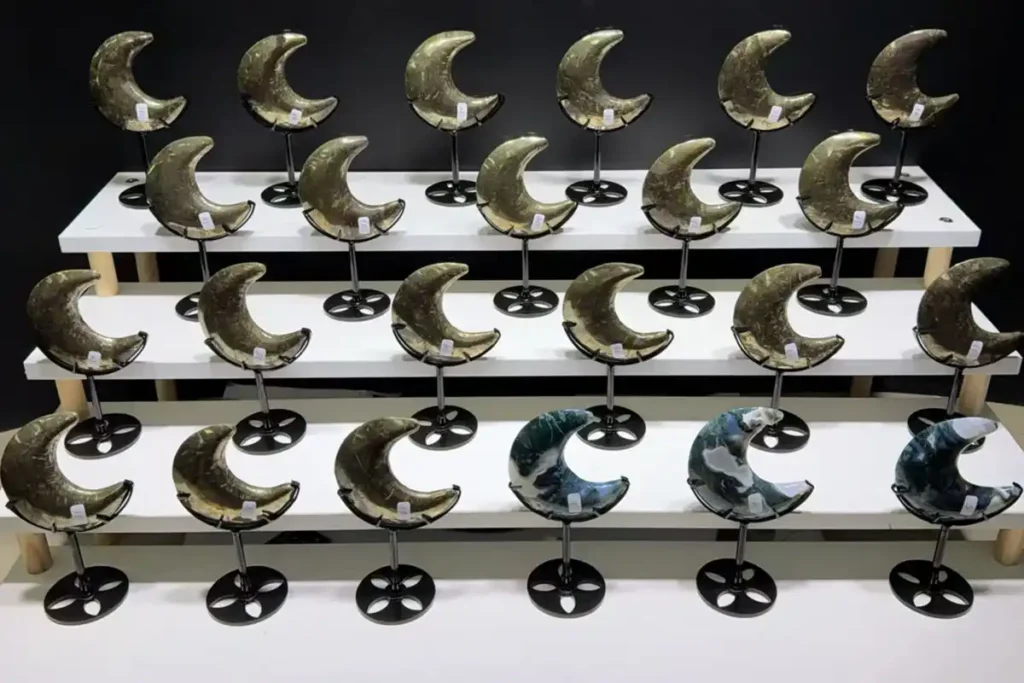
The color of pyrite often looks pale and brassy. As you turn a cube or cluster, the metallic pyrite luster can flash across individual crystal faces. In a pyrite vs real gold comparison, also look at the outline. A sharp cube points toward pyrite, while a rounded grain or flattened flake may be gold. Small or broken grains can hide those shapes, so use appearance as your first check.
How to Tell Gold from Pyrite
If you’re learning how to tell the difference between gold and pyrite, start with a magnifier. Look for flat crystal faces, sharp edges, or a flattened outline. If those clues leave you unsure, consider the checks below. Use a loose grain you can spare for any test that may leave a mark.
Pyrite vs Gold Streak Test
A streak is the color of the powder a mineral leaves on unglazed porcelain. In a pyrite vs gold streak test, gold leaves a golden-yellow mark. The streak color of pyrite is usually dark green to black. A scratch on the plate can be mistaken for a pyrite streak, so look for mineral powder before interpreting the result. A gold streak test can mark the sample, so save it for a loose grain and keep finished jewelry and intact display specimens out of the test. See the U.S. Geological Survey’s guide to fool’s gold.
Pyrite Hardness and What Happens Under Pressure
Hardness measures how well a mineral resists scratching. The hardness of pyrite is about 6 to 6.5 on the Mohs scale, while native gold is about 2.5 to 3. If you want to know how to tell iron pyrite from gold by its response to pressure, watch what happens to a small, expendable grain. Gold can dent or flatten, while pyrite can chip or crumble. For a valuable specimen or a finished piece of jewelry, ask a qualified professional to identify it before attempting a test that could damage it.
Is Pyrite Heavy Like Gold?
A piece of pyrite can feel heavy in your hand. At the same volume, pure gold weighs nearly four times as much. The density of pyrite is about 5 grams per cubic centimeter, compared with about 19.3 for pure gold. Because pyrite density is much lower than that of pure gold, the weight difference is easiest to notice when you compare loose pieces of similar size. If a grain is attached to quartz or another host rock, the weight of the whole piece tells you little about the identity of that grain.
Gold vs Pyrite in Rock
Start by looking at the exposed grains with a magnifier. Turn the rock slowly under steady light and look for flat crystal faces, sharp edges, or thin, irregular specks. A grain with several flat faces may be pyrite, but if only a small part of the grain is exposed, its outline can be hard to judge.
Pyrite Flakes vs Gold Flakes
The difference between gold and pyrite flakes is often easier to see under magnification. Gold flakes can have thin, irregular edges, while iron pyrite flakes or broken grains may show angular edges and flat faces. If you’re comparing gold vs pyrite flakes and have a loose grain you can spare, gold can flatten under pressure, while pyrite may crumble. Weathered mica and chalcopyrite can also look like gold, so a bright flash alone gives you little to go on.
Gold vs Pyrite in Quartz
If you’re trying to learn how to tell real gold from pyrite in quartz, inspect several exposed grains. Look for repeated shapes, such as small cubes or angular crystal faces. An irregular yellow speck may warrant a closer look because quartz can hide much of the grain’s outline. The weight of the whole specimen reflects both the quartz and the minerals it contains. For a valuable or uncertain piece, have the exposed grains examined professionally before breaking or scratching the specimen.
Does Pyrite Contain Gold?
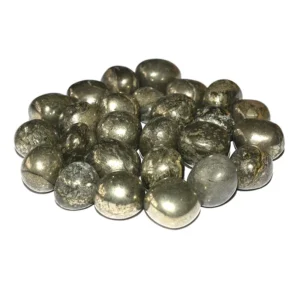
Some pyrite contains tiny amounts of gold. Researchers at Curtin University found that gold can be trapped in defects within a pyrite crystal at a scale too small to see with a magnifier. The brassy color and metallic shine come from the pyrite itself, so they tell you little about whether there is gold in pyrite or how much it might contain.
Can Gold and Pyrite Occur Together?
Yes. You can find gold and pyrite together in the same rock. One specimen may contain separate grains of native gold and pyrite, while another may contain microscopic gold in iron pyrite. If you see a yellow speck beside a brassy crystal, examine each grain separately. If you need to know how much gold the sample contains, a laboratory assay can measure its gold content.
Buying Pyrite Specimens and Jewelry
Listings may use terms like “gold pyrite” or “pyrite gold” to describe a gold-colored piece. If the label is unclear, ask the seller to confirm the mineral, disclose any coating or surface treatment, and share photos of the actual piece or batch.
Raw Specimens and Polished Stones
For a display specimen, look for clear photos of the crystal faces, corners, and host rock. If you’re buying a cube on its host rock, ask for the dimensions of both the cube and the whole specimen. For polished pieces, check the size range and look for dull patches across the batch. Browse the Pyrite Collection for raw specimens or Tumbled Stones for polished formats.
Beads and Finished Bracelets
When comparing bead strands, check the bead dimensions, drill holes, and how evenly the beads reflect light. One customer reviewed 20 sample strands of our 8 × 10 mm pyrite beads and asked for a brighter finish. If shine matters to your design, view several strands under the same light before approving a batch. Browse Stone Beads for loose strands. For finished pieces, compare bracelet length, bead size, and construction in Stone Bracelets.
Frequently Asked Questions
Is Pyrite Fool’s Gold?
Yes. Pyrite is the mineral most commonly called fool’s gold because its brass-yellow color and metallic shine can resemble gold. The nickname can also refer to other look-alikes, including chalcopyrite and weathered mica.
Is Pyrite Magnetic?
A magnet is a poor way to tell pyrite from gold. If you’re asking “Is iron pyrite magnetic?” a typical pyrite specimen shows little or no attraction to an ordinary magnet, and native gold also shows no noticeable attraction. A mixed specimen may respond if it contains a magnetic mineral.
How Can You Tell Gold from Pyrite Without Scratching It?
Use a magnifier to look for flat crystal faces, sharp corners, or thin, irregular flakes. If you have two loose pieces of similar size, compare how heavy they feel. These clues are easiest to use on loose grains with visible edges. For a valuable specimen, ask a mineral specialist to examine it.
How Can You Tell If Pyrite Is Real?
If you’re wondering how to tell if pyrite is real, start with its brassy color, metallic luster, and any visible crystal faces. On a polished bead, cutting may have removed the original crystal shape. For a bulk order, ask for a representative sample and have it identified if the material is uncertain.
How Does Pyrite’s Value Compare with Gold?
A pyrite vs gold value comparison depends on what the buyer is paying for. Gold’s metal value depends on weight and purity. A pyrite specimen’s price depends on features such as crystal shape, luster, and condition. Beads and finished jewelry also reflect the work that went into making them.
Can Chalcopyrite Look Like Gold Too?
Yes. In a chalcopyrite vs gold comparison, both can look yellow and metallic. Their streaks provide a better clue. Gold leaves a golden-yellow streak, while chalcopyrite can leave a dark green to black streak, much like pyrite.
Conclusion
In a pyrite vs gold comparison, start with the shape and surface of the exposed grains. If you have a loose grain you can spare, its streak and response to pressure can add useful clues. For jewelry, collectible specimens, or tiny grains embedded in quartz, a professional identification can help you preserve the piece.
Request a Wholesale Pyrite Quote
Sourcing pyrite specimens, bead strands, bracelets, or tumbled stones? Send us the product type, size, quantity, and shipping destination through WhatsApp or our Contact form.
Disclaimer
The identification clues in this guide are for preliminary screening. A professional examination can help identify an uncertain specimen, and a laboratory assay can measure its gold content.
References
- U.S. Geological Survey. What Is Fool’s Gold? Explains how gold, pyrite, chalcopyrite, and weathered mica differ in streak and response to pressure.
- Gouvernement du Québec. Elementary Mineralogy Summarizes pyrite’s hardness, specific gravity, color, and crystal form.
- Curtin University. Curtin Research Finds ‘Fool’s Gold’ Not So Foolish After All Describes research on trace gold trapped in pyrite crystal defects.