Lavender Jade Guide: Meaning, Value, and Buying Tips
Written by Roc Gong | Founder of RoCrystal
Published: October 18, 2026
Lavender jade is jadeite jade with a lavender to purple color. Its appeal comes from the combination of color, texture, and translucency, which can vary considerably between pieces. Some jewelry has a faint lilac tint, while other pieces display a richer purple.
However, a product labeled “purple jade” does not automatically come with proof of its mineral identity or treatment status. Before comparing prices or choosing jewelry, it helps to understand what the name means and what information to request from the seller.
This guide explains lavender jade’s appearance, symbolism, value, and common buying concerns. You will also learn what to check when selecting individual pieces or purchasing stone beads and jewelry in bulk.
What Is Lavender Jade?
Lavender jade is a color variety of jadeite jade, rather than a separate mineral species. According to GIA’s guide to jadeite quality factors, jadeite occurs in several colors, including lavender, green, white, yellow, and black. Lavender describes its color; it does not, by itself, establish quality, origin, or whether the material has been treated.
You may encounter several related names when browsing jewelry or speaking with suppliers:
- Lavender jade: The common name used for jadeite jade with lavender or purple coloration.
- Lavender jadeite: A more specific name that identifies the material as jadeite.
- Purple jade: A broader sales description that should be clarified, especially when the listing does not identify the material.
These terms may describe the same material in a clearly documented listing. Still, a seller’s label alone is not enough to confirm that a particular bracelet, necklace, or strand of beads is lavender jadeite.
It also helps to separate two questions: What is the material, and has it been treated? Identifying a stone as jadeite does not automatically establish that its color is natural or that it is free from other treatments. Those details need separate confirmation.
For buyers, the first step is straightforward: ask for the exact material name and a clear treatment disclosure. When independent confirmation matters, request a gemological report that corresponds to the item being purchased. This gives you a sound starting point before judging its color, comparing its price, or describing it to your own customers.
Lavender Jade Colors and Appearance
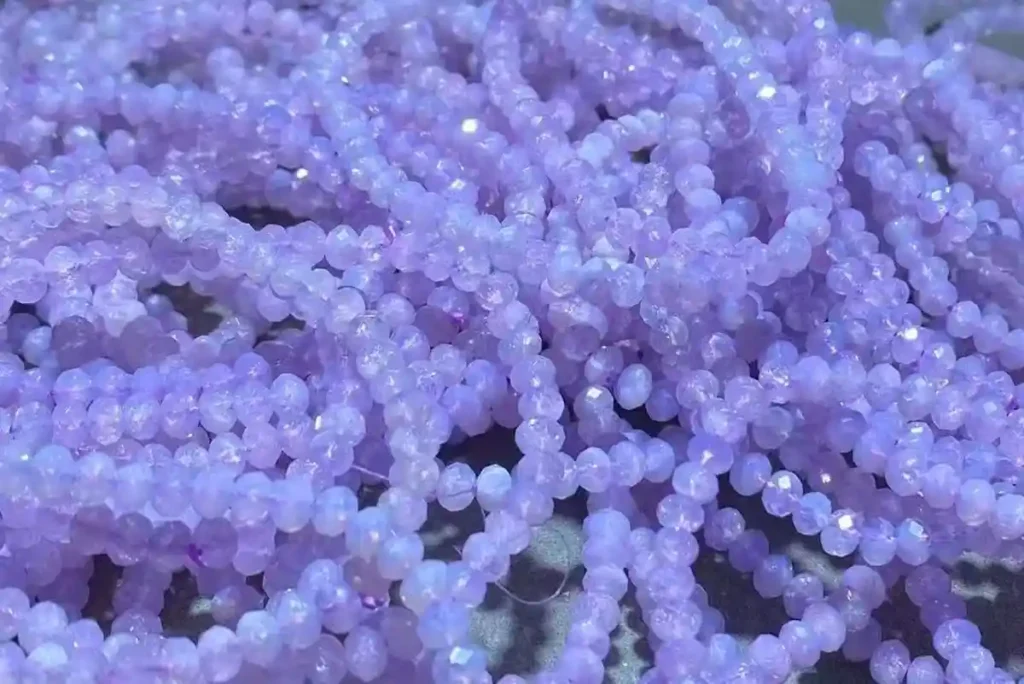
Lavender jade can have a pinkish, lilac, or bluish-purple appearance. Some pieces show a delicate wash of color, while others have more noticeable purple areas. Terms such as violet jadeite describe that appearance, but they do not establish a separate mineral variety or a standardized quality grade.
When examining a lavender jade stone, look beyond how purple it appears. Its overall appearance depends on the distribution of color, the grain structure, and how much light passes through it.
Color Distribution, Texture, and Transparency
Some pieces have relatively even coloration, while others display purple patches alongside lighter areas. Neither pattern alone proves authenticity. For jewelry, consider whether the distribution looks attractive and suits the design.
Texture refers to the material’s grain structure. As GIA explains, jadeite can have a fine, medium, or coarse texture. Fine texture can contribute to a smooth appearance and high luster, while coarser material may look more visibly granular.
Transparency varies as well. Some pieces appear opaque, while others allow light to penetrate below the surface. A cloudy appearance is not proof of natural lavender jade, and greater translucency does not establish that a piece is untreated. These are features to assess, rather than shortcuts to identification.
For stone bracelets or necklace, compare the pieces together. Differences in color, translucency, and bead size can become more apparent across a complete strand than in a close-up photograph of one bead.
Why Photos and Lighting Matter
Lighting can change how lavender jade appears. GIA notes that jadeite buyers assess color under different light sources. A photograph taken under one lamp therefore provides only part of the picture.
Camera settings, editing, and your screen can also affect the color you see. Before choosing a dark purple jade bracelet based on a vivid product image, ask for additional photographs or a short video under clearly described lighting.
For bulk purchases, request images of the actual batch, including a full view and close-ups. A neutral background and consistent lighting make comparisons easier. If color matching is important, a representative sample can help set expectations, although natural variation may remain.
Use photographs to assess appearance and consistency; use appropriate testing to confirm material identity and treatment status.
Lavender Jade Meaning and Symbolism
Lavender jade meaning often centers on calm, harmony, and reflection. In contemporary crystal traditions, its soft purple color is associated with inner peace and spiritual awareness. These are symbolic interpretations, rather than scientifically established effects of wearing or holding the stone.
It helps to distinguish the broader cultural significance of jade from meanings assigned specifically to lavender jade. GIA discusses jade’s importance in Chinese culture, including associations with peace and protection. However, this does not mean that every modern interpretation of lavender jade has the same historical roots.
Some crystal practitioners connect lavender jade with the crown chakra and use it during meditation. Others wear it as a personal reminder to slow down or approach difficult moments thoughtfully. Such practices reflect individual beliefs and preferences; the stone should not be presented as a treatment for anxiety, trauma, or other health conditions.
A lavender jade bracelet or necklace can also carry a meaning chosen by its owner. It might mark an anniversary, represent a valued relationship, or simply reflect a love of purple gemstones. Buyers do not need to follow a particular spiritual tradition to appreciate its appearance.
For retailers, clear wording lets customers explore these associations without confusing symbolism with a product benefit. For example:
“Lavender jade is often associated with calm and harmony, making it a thoughtful choice for someone who enjoys jewelry with personal meaning.”
Keep material information separate from that story. A meaningful description can explain why someone might choose a piece, while accurate identification and treatment disclosure explain what they are buying.
Lavender Jade Price and Value
Lavender jade price varies widely because pieces sold under this name can differ in material identity, treatment status, quality, and size. A pale bead bracelet and a finely matched necklace made from exceptional lavender jadeite are not directly comparable.
Lavender jade can be valuable, but the name alone does not establish a high value. According to GIA’s jadeite quality guide, color, transparency, and texture are the three most important quality factors affecting jadeite’s market value. Fractures, craftsmanship, and size also influence the assessment.
What Affects Lavender Jade Value?
| Factor | What to consider |
|---|---|
| Color | The strength and appeal of the lavender hue, along with its distribution |
| Transparency | How much light enters the material and whether opaque areas interrupt its appearance |
| Texture | Whether the grain structure appears fine, medium, or coarse |
| Fractures and condition | Cracks, chips, and other damage that affect appearance or durability |
| Size and craftsmanship | Dimensions, proportions, polish, and the material needed to produce the piece |
| Treatment status | Whether treatments are present and how clearly they are disclosed |
| Matching | Consistency of color, texture, transparency, and dimensions across multiple beads |
GIA notes that stronger lavender colors can command a premium over weaker colors. However, darker does not automatically mean better. Color must be considered alongside texture, transparency, condition, and treatment status.
Why Can Fine Lavender Jade Be Expensive?
Fine material becomes more difficult to find when several desirable features need to occur together. A piece may have attractive color but coarse texture, or good translucency but a noticeable fracture.
Matching adds another challenge. GIA explains that fine jadeite bead strands require careful matching of color, texture, transparency, size, and symmetry. A necklace with consistently matched beads may therefore carry a premium that cannot be explained by its total weight alone.
Bangles involve different considerations. Cutting a complete bangle from one piece of rough requires suitable material and results in substantial cutting waste. Its price cannot be compared directly with a bracelet assembled from separate beads.
How to Compare Prices Fairly
If you are asking, “Is purple jade valuable?” start by confirming what the seller means by purple jade. Then compare items with similar material identification, treatment status, dimensions, and quality.
For wholesale bead bracelets, check bead diameter, bracelet length, matching, and the number of pieces included in the quotation. For rings or pendants, separate the stone’s characteristics from the cost of the metal and setting.
A low quotation deserves questions, but a high quotation is not proof of authenticity. Ask what supports the price, review the actual goods, and arrange independent testing when the purchase warrants it. This provides a more useful comparison than relying on color names or a seller’s quality label alone.
How to Check Lavender Jade Authenticity and Treatments
Natural lavender jadeite exists, but confirming a particular item requires more than recognizing its purple color. A useful assessment separates material identity from treatment status. A stone may be genuine jadeite and still have been dyed or otherwise treated.
Understand Type A, B, and C Jadeite
You may see jadeite described using letters such as A, B, or C. These terms describe treatment categories, not a ranking of beauty or craftsmanship.
GIA’s jade buyer’s guide explains the distinctions:
| Term | What it describes |
|---|---|
| Type A jadeite | Natural jadeite without treatment beyond conventional surface waxing |
| Type B jadeite | Jadeite that has been acid-bleached and then impregnated with polymer resin |
| Type C jadeite | Jadeite that has been dyed |
Material subjected to both the B and C processes is commonly described as B+C jadeite.
Type A does not automatically mean top quality. It does not promise rich color, fine texture, freedom from fractures, or a particular origin. Likewise, a supplier’s “AAA” label should not be treated as equivalent to independently confirmed Type A jadeite.
Ask sellers to explain their terminology in writing. A description such as “natural stone” is less informative than a clear statement identifying the material and disclosing any known treatments.
What Can Visual Inspection Tell You?
Close inspection can help you notice cracks, surface damage, uneven polish, or differences between beads. It can also reveal features that deserve further investigation. However, appearance alone cannot reliably settle every question about identity or treatment.
Avoid treating these observations as proof:
- A soft, misty appearance does not establish that the color is natural.
- Strong purple color does not, by itself, prove dyeing.
- A cool feeling against the skin does not confirm jadeite.
- Similarity to a photograph of verified jadeite does not identify your item.
Scratch tests and chemical experiments are poor choices for finished jewelry because they can damage the piece. When the answer matters to a purchase or product description, use professional testing rather than a home test.
Check What a Gemological Report Actually Covers
A report is useful only when it corresponds to the goods you are buying. Compare the item’s photograph, measurements, weight, and other identifying details with the report. Where the laboratory offers online verification, check the report number through its official website.
Read the findings rather than relying on the word “certificate.” Confirm whether the document identifies the material and addresses relevant treatments. Do not assume it also establishes geographic origin, quality, or market value.
For a bulk order, clarify the scope of testing. A report for one loose bead does not establish the identity and treatment status of every bead in a shipment. Agree with the supplier on which items will be tested and what happens if the results differ from the description.
Lavender Jade vs. Amethyst: Why Material Names Matter
Although lavender jade and pale amethyst can look similar in color, they are different materials. The former is lavender-colored jadeite, while GIA identifies amethyst as the purple variety of quartz. A similar appearance does not make them interchangeable.
For bead buyers, this distinction matters when placing an order, approving a sample, or describing finished jewelry. A customer who requests amethyst should receive the agreed material, even if another purple stone looks attractive or costs more.
A Lesson From an Early Bead Order
When I first started working in the crysta; & stone business, a customer ordered strands of 8mm light amethyst beads. The supplier had run out of stock and suggested another material that he called “zi yu,” or “purple jade.” He said it looked similar and cost slightly more. I was unfamiliar with that material at the time, so I took the strands home to compare them.
The colors were close, but I noticed differences inside the beads. That particular batch of “purple jade” looked mistier, while the light amethyst showed some line-like internal features. Those observations did not identify the replacement material, and they should not be used as a general test for distinguishing jadeite from amethyst.
What concerned me most was the substitution. My customer had ordered light amethyst, and I had not asked whether a different material would be acceptable. After thinking it over that evening, I returned the replacement strands to the supplier the next day.
The material sold to me as “purple jade” was never independently identified. I therefore cannot describe it as confirmed lavender jadeite.
How to Handle a Proposed Substitute
That experience changed how I approach unavailable stock. If the requested material is missing, the first step is to explain the shortage.
Before offering an alternative, confirm its identity and disclose any known treatments. Then share photographs, specifications, and the price difference so the customer can make an informed choice. Get approval before changing the order.
For retailers and jewelry makers, the same care should carry through to product names and labels. A replacement is acceptable when its identity is clear and the buyer agrees to it. A higher price or a similar purple shade cannot replace that agreement.
Lavender Jade Jewelry: Bracelets, Bangles, Necklaces, and Rings
Lavender jade jewelry includes bead bracelets, solid bangles, necklaces, and rings. Each form presents the material differently and calls for different measurements. Choose the style you want before comparing specifications and prices.
Lavender Jade Bracelets and Bangles
A lavender jade bracelet made from separate beads offers flexibility in bead size, arrangement, and construction. When selecting a purple jadeite bracelet, check the finished length, bead diameter, drill-hole finish, and stringing material. Look at the complete bracelet to judge how well the beads match.
A lavender jade bangle bracelet is a rigid piece that must pass over the hand. Its inner diameter, width, and thickness matter more than a general wrist-size label. A wider bangle may also fit differently from a narrow one with the same inner diameter, so request clear measurements and fitting guidance.
GIA notes that solid jadeite bangles are carved from a single piece of rough. This construction differs from a bead bracelet or a hinged design assembled with metal components. Check the description carefully so you know which form you are purchasing.
Lavender Jade Necklaces
A lavender jade necklace may feature a single pendant or a full strand of beads.
For a pendant, check its dimensions, thickness, weight, and attachment. Confirm whether the chain is included and identify the metal used in the bail and setting.
For a bead necklace, assess matching across the entire strand. GIA explains that jadeite beads are selected for consistency in color, texture, transparency, size, and symmetry. Request a photograph showing the complete necklace rather than relying only on close-ups of its best beads.
Length also changes how a necklace sits and how much material it contains. Two strands with similar bead diameters may differ considerably in length and total weight.
Lavender Jade Rings
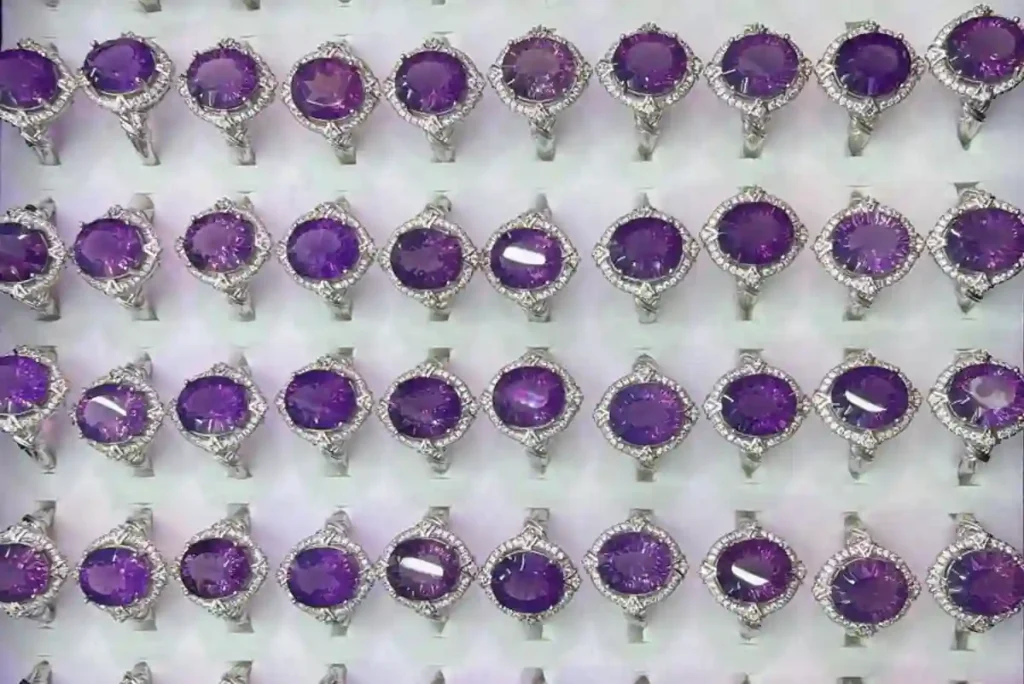
A lavender jade ring may have a jadeite cabochon set in metal or consist of a band carved entirely from jadeite. Confirm which construction the listing describes.
For a metal-set ring, review the stone’s dimensions, setting security, metal specification, and ring size. With an all-jadeite band, accurate sizing is especially important because it cannot be resized like a conventional metal band.
If you are considering a lavender jade engagement ring, discuss everyday wear and any future repairs with the jeweler. Jadeite has exceptional toughness, but it can still be scratched or damaged, as GIA’s care guide explains. The setting, existing fractures, and treatment status should all inform the choice.
Across these styles, select a piece whose construction suits its intended use. Attractive color matters, but fit, workmanship, and clear material information determine whether the jewelry meets your needs.
What to Check Before Buying Lavender Jade in Bulk
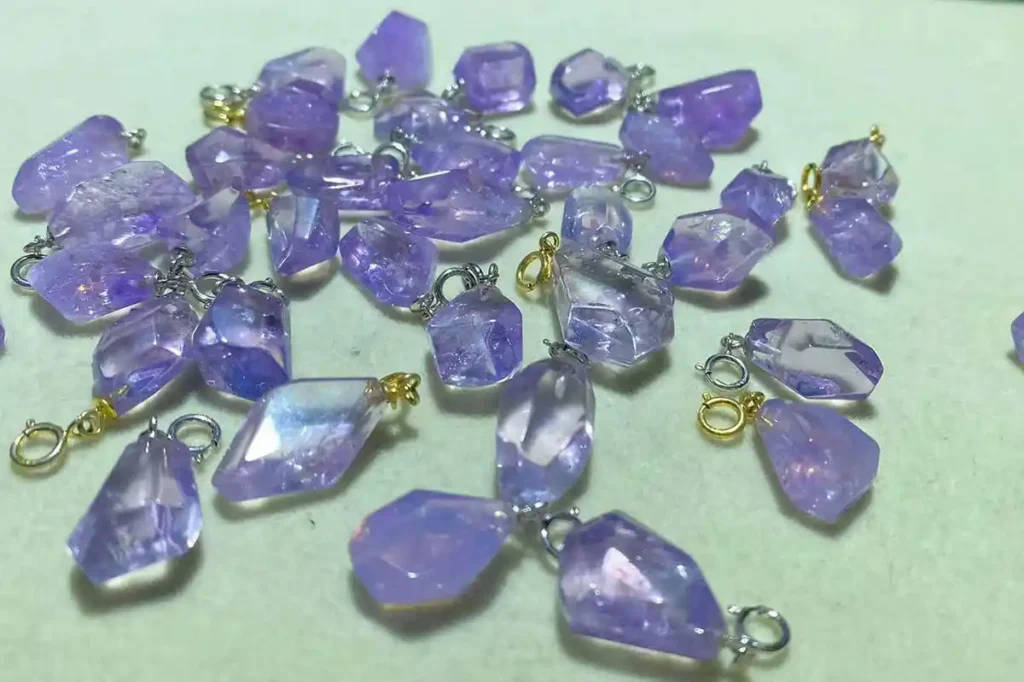
Buying lavender jade in bulk requires a clear agreement about the goods you expect to receive. An attractive sample helps you assess appearance, but the order also needs written specifications covering material, treatments, dimensions, and acceptable variation.
Define the Order Before Approving Production
Use the following checklist to turn a general inquiry into a quotation you can evaluate:
| Item to confirm | Details to request |
|---|---|
| Material identity | The specific material name, rather than “purple stone” or “purple jade” alone |
| Treatment disclosure | Known treatments and the basis for any claim that the material is untreated |
| Actual goods | Photographs or video of the available batch, with confirmation of whether the order is ready stock or new production |
| Dimensions | Bead diameter, strand length, bracelet length, or bangle measurements, with agreed tolerances |
| Color matching | The acceptable range of shade and variation within each piece and across the order |
| Workmanship | Polish, bead shape, drill-hole finish, stringing, clasps, and metal components where relevant |
| Condition | How cracks, chips, surface pits, and other defects will be assessed |
| Testing | Which items will be tested, by whom, and how results will be linked to the goods |
| Packing | Individual protection, quantity labels, and separation of different sizes or batches |
Avoid relying on labels such as “premium” or “AAA” without an explanation. Reference photographs and measurable specifications give both sides a clearer standard.
Agree on How Samples Represent the Shipment
Ask whether the sample comes from the stock reserved for your order. If it represents future production, clarify which features the supplier expects to match and where variation may occur.
For bead bracelets and necklaces, distinguish between matching within one piece and consistency across the shipment. A bracelet may look balanced on its own while differing noticeably from the rest of the order. Your requirements may depend on whether the goods will be sold individually, photographed as one product, or supplied as matching sets.
Keep approved sample photographs and written specifications with the order record. If a supplier proposes a different batch or material, review and approve that change before shipment.
Set a Practical Inspection and Packing Plan
Inspection should cover the features that matter to the finished product. Beads intended for restringing need suitable holes and dimensions; finished bracelets also require checks of fit, stringing, and assembly.
Agree on how nonconforming pieces will be handled, including shortages, incorrect sizes, undisclosed substitutions, or test results that differ from the description. Put the inspection period and proposed remedy in writing before payment or dispatch.
Finally, request packing that prevents pieces from rubbing or striking one another in transit. Keep different sizes and batches clearly labeled so receiving staff can check the shipment against the order.
A repeat order should receive the same review. Previous purchases provide a useful reference, but they do not establish the identity, treatment status, or consistency of a new batch.
How to Care for Lavender Jade Jewelry
Care for lavender jade should account for the stone’s treatment status and the jewelry’s other components. A solid bangle, an elastic bead bracelet, and a pendant in a metal setting may need different handling.
Clean Gently
GIA recommends warm, soapy water for cleaning jade, noting that possible treatments affect which cleaning methods are suitable.
Use a soft cloth with lukewarm water and a small amount of mild soap. Remove soap residue with a clean, damp cloth, then dry gently. Avoid prolonged soaking when the piece includes elastic, thread, glued parts, or components with separate care requirements.
If dirt remains around a setting or inside a carved area, ask a jeweler for help rather than scraping it away with a sharp tool.
Choose Cleaning Methods That Suit the Whole Piece
GIA states that ultrasonic and steam cleaning can be suitable for untreated jade. However, that does not make these methods appropriate for every item sold as lavender jade jewelry. Treatments, existing damage, settings, and stringing materials all need consideration.
When treatment status is unknown, use gentle cleaning and seek advice before trying stronger methods. Keep jewelry away from household cleaning chemicals and direct heat. GIA specifically notes that heat from a jeweler’s torch can harm jade, so tell the jeweler about the stone before repair work.
Protect the Stone and Check the Construction
Store pieces separately in soft pouches or lined compartments to reduce rubbing and accidental impacts. Remove rings and bracelets before work that could expose them to hard knocks or abrasive surfaces.
Check elastic bracelets for fraying or loss of stretch. On necklaces and pendants, inspect clasps, connecting rings, and bails for wear. Stop wearing a piece if a stone moves in its setting or a connection looks weak.
For retailers, include care instructions that match the actual product. State the material and any disclosed treatments separately from advice about elastic, plating, or metal settings. This gives customers useful guidance without assuming that every purple jade item can be maintained in the same way.
Frequently Asked Questions
What Is Lavender Jade?
Lavender jade is jadeite jade with a lavender to purple color. The name describes its appearance, rather than a separate mineral species. A product labeled “purple jade” still needs clear material identification and treatment disclosure.
Is Lavender Jadeite Real?
Yes. Lavender is a recognized jadeite color, as GIA confirms. However, that does not establish the identity of every purple item sold as jade. A particular piece may require gemological testing to confirm its material and detect treatments.
How Rare Is Lavender Jade?
Rarity depends on quality. Fine lavender jadeite with attractive color, fine texture, good translucency, and few distracting fractures is harder to find than material with less desirable features. The word “lavender” alone does not make every piece rare or collectible.
Why Is Lavender Jade So Expensive?
Fine pieces can be expensive because desirable color, texture, translucency, size, and condition must occur together. Matching beads for a necklace adds difficulty, while cutting a solid bangle requires suitable rough and substantial material loss. These factors help explain high prices for particular pieces, rather than all lavender jade.
Is Lavender Jade Expensive?
Not always. Prices vary with quality, size, treatment status, and jewelry construction. Before comparing quotations, confirm that the items are the same material and have comparable specifications. Neither a high price nor a bargain price proves authenticity.
Conclusion
Lavender jade’s appeal comes from its purple color, texture, and translucency. Before buying, confirm the material identity and treatment status, then compare quality, dimensions, and workmanship.
For bulk orders, clear specifications and representative samples help set expectations. Any proposed substitute should be accurately identified and approved before shipment.
Have a gemstone sourcing question? Contact Rocrystal on WhatsApp with your preferred material, product style, size, and quantity. If you need lavender jadeite specifically, let us know so we can discuss availability and identification requirements.
Disclaimer: Spiritual meanings mentioned in this guide reflect cultural associations, contemporary beliefs, or personal interpretations. They are not established medical benefits. General information and photographs cannot confirm the identity or treatment status of an individual gemstone.
References
- GIA — Jadeite Jade Quality Factors: Color, transparency, texture, and other factors that influence jadeite quality and value.
- GIA — Jade Buyer’s Guide: Buying considerations and explanations of Type A, B, and C jadeite.
- GIA — Jade Care and Cleaning Guide: Hardness, toughness, cleaning methods, and treatment-related care considerations.
- GIA — Amethyst: Background on amethyst as the purple variety of quartz.