
Red Tigers Eye Meaning: Benefits, Uses, and Buying Guide
Written by: Rocrystal Sourcing & QC Team, Last updated: August 14, 2026
Red tiger eye is a striking red-brown stone known for its silky bands and moving cat-eye effect. The red tigers eye meaning is commonly connected with courage, motivation, confidence, and the strength to take action. Its warm color gives the stone an energetic appearance, while its darker bands create a grounded feeling that appeals to crystal users, jewelry makers, and wholesale buyers.
Its appearance can range from bright brick red to deep reddish brown, often with darker lines running across the surface. When a polished stone turns under direct light, these fibrous bands reflect a narrow line that seems to move across it. This effect is called chatoyancy, and it is one of the most important features buyers examine when comparing different red tiger eye grades.
This guide explains the stone’s symbolism, spiritual properties, traditional benefits, everyday uses, and connection with love, work, and astrology. It also covers its physical properties, heat treatment, cleaning methods, and differences from blue tiger eye. For wholesale buyers, the later sections provide practical advice on grading, polishing, color consistency, bead sizes, treatment disclosure, and the questions worth asking before placing a larger order.
Red Tigers Eye Meaning and Symbolism
What Does Red Tiger Eye Represent?
At its simplest, the red tigers eye meaning centers on courage, motivation, confidence, and personal strength. Its rich red color is often linked with passion and action, while its darker brown bands give it a more grounded appearance. For this reason, many crystal users choose red tiger eye when they want a symbolic reminder to stop hesitating, make clear decisions, and move forward with greater determination.
To understand the broader tiger eye stone meaning, it helps to look at the balance between enthusiasm and self-control. Instead of representing uncontrolled energy, the stone is often associated with using energy in a practical and focused way. This interpretation comes from crystal traditions rather than scientific evidence. Even so, the meaning of tiger’s eye remains popular because its moving light band creates a strong visual symbol of awareness, direction, and the ability to stay focused on a goal.
Why Is Red Tiger Eye Called Bull’s Eye?
Some customers and suppliers call red tiger eye “Bull’s Eye” because its deep red-brown color resembles the eye of a bull. This name becomes easier to understand when a well-polished piece moves under direct light. A narrow band appears to travel across the surface, creating an eye-like effect. The darker background and reddish tone make the appearance warmer and stronger than the golden bands commonly seen in yellow tiger eye.
The name Bull’s Eye does not usually refer to a completely different mineral. In the crystal trade, it is commonly used as another market name for red tiger eye. The red tiger eye gemstone meaning also remains closely connected with energy, courage, and determination. For retailers, “Bull’s Eye” can be a useful secondary name because it describes the stone’s appearance in a simple way that customers can easily remember.

Science, Origin, and Physical Properties of Red Tiger Eye
Red tiger eye belongs to the quartz family and shares its fibrous structure with other tiger eye varieties. Its warm color attracts attention first. However, color alone does not explain the stone’s appearance or quality. Mineral structure, hardness, inclusions, and polish all affect the finished piece. These features also help buyers compare grades and identify misleading descriptions. Understanding them places the red tiger eye meaning in a more practical context.
Mineral Family and Physical Properties
Mineralogists classify red tiger eye as a quartz-based material with the chemical formula SiO₂. Quartz gives the stone a solid structure and good durability. On the Mohs hardness scale, it ranks around 7. This hardness makes it suitable for beads, bracelets, cabochons, carvings, and many decorative items. However, a sharp impact can still chip an edge or damage a drilled bead.
Most pieces appear opaque, although some thin edges may let through a small amount of light. Polished surfaces often show a silky or glass-like shine. Colors range from brick red to dark reddish brown. Some pieces also contain golden, black, or brown bands. The most desirable red tiger eye properties usually include a clear light band, smooth polish, attractive color, and limited surface damage.
What Creates the Moving Cat-Eye Effect?
Red tiger eye produces its moving light band through an optical effect called chatoyancy. Fine fibrous inclusions run in a similar direction inside the stone. Light reflects from these parallel fibers and forms a narrow, bright line. When someone turns the stone, the line appears to travel across its surface. This movement gives tiger eye its distinctive depth and makes each polished piece look more vivid.
Cutting and polishing also influence the strength of this effect. Skilled cutters position the material so the fibers cross the visible face at the correct angle. Poor orientation can make the light band look weak or uneven. Wholesale buyers should examine stones under a moving light instead of relying on one still photo. A clear and smooth cat-eye effect often matters more than an unusually bright red color.
Where Does Tiger Eye Come From?
South Africa supplies much of the tiger eye found in the international crystal trade. Large deposits in the Northern Cape have produced golden, blue, and mixed-color material for many years. Other commercial sources include Australia, Brazil, India, and several smaller mining regions. However, origin alone does not determine quality. Buyers must still compare color, fiber direction, cracks, and the strength of the cat-eye effect.
People once viewed tiger eye as a much rarer ornamental stone. As miners developed larger deposits, market supply grew and the material became more affordable. Today, factories cut it into beads, cabochons, carvings, and decorative pieces. Much of the red material does not leave the mine with a finished red color. Producers usually create that tone later by heating selected yellow or golden tiger eye.
How Yellow or Golden Tiger Eye Becomes Red
Factories often create red tiger eye by heating yellow or golden tiger eye under controlled conditions. Heat encourages further oxidation of iron-rich material within the stone. This process changes the golden brown color into deeper brick red or reddish brown shades. Producers adjust the result by selecting suitable raw material and controlling the heating time and temperature.
Heat treatment changes color, but it does not create a better grade of stone. Weak chatoyancy remains weak after heating. The same rule applies to cracks, pits, poor fiber direction, and uneven polishing. Heating also cannot turn low-grade golden tiger eye into premium red material. Therefore, the original tiger eye properties still determine much of the finished quality.
A properly heated piece usually keeps its red color during normal use. The change develops within the material rather than sitting only on the surface. This means heat-treated red tiger eye remains real tiger eye, although sellers should disclose the treatment. Understanding this process also gives the red tigers eye meaning a more honest and practical foundation.
Red Tiger’s Eye Spiritual Meaning and Energy
Many crystal traditions give red tiger eye a strong and active character. Its warm color suggests movement, passion, and personal drive. Meanwhile, its dark bands add a sense of stability. These ideas shape how people use the stone during meditation, reflection, and goal setting. They come from spiritual beliefs and personal experience, not from scientific proof.
Spiritual Meaning of Red Tiger Eye
The red tigers eye spiritual meaning focuses on courage, inner strength, and the willingness to act. Many users connect the stone with breaking hesitation and moving toward a clear goal. Its shifting light band can also serve as a symbol of awareness. It reminds the user to notice risks, remain alert, and choose a practical direction before taking action.
The red tigers eye crystal meaning also includes balance between passion and control. Red suggests energy, while brown suggests stability. Together, these colors support the idea of steady progress rather than quick or careless action. Some people carry the stone during difficult decisions. Others keep it nearby as a visual reminder of confidence. These uses reflect personal beliefs, so individual experiences may differ.
Metaphysical Properties
Crystal traditions describe red tigers eye metaphysical properties as grounding, protective, and strengthening. Many users choose the stone when they want to direct their energy toward a practical goal. Its darker bands represent stability and careful judgment. The red areas represent movement and determination. This combination gives the stone a reputation for supporting controlled action instead of sudden or emotional decisions.
Some users also believe red tiger eye helps them maintain personal boundaries. They may wear it during demanding work, negotiations, or stressful social situations. Others place it near a desk to encourage discipline and steady progress. These red tigers eye properties come from traditional practices rather than laboratory evidence. The stone cannot control outside events, but it can serve as a meaningful reminder of the attitude a person wants to develop.
Root Chakra and Grounding
Crystal traditions connect red tiger eye with the Root Chakra, which represents safety, stability, and a firm connection to daily life. Its red-brown color supports this association. Practitioners may hold the stone during meditation or keep it nearby during uncertain periods. In this context, the red tiger eye meaning focuses on staying calm, thinking clearly, and taking practical steps instead of reacting from fear.
Some users also link red tiger eye with the Solar Plexus Chakra. This energy center represents confidence, willpower, and personal direction. The connection helps explain why people often choose the stone for goal setting and motivation. These chakra ideas come from spiritual systems, not medical science. Red tiger eye cannot correct a physical condition, but it may serve as a personal symbol of grounding, discipline, and steady action.
Red Tiger Eye Benefits and Healing Properties
Crystal users often discuss red tiger eye in terms of spiritual, emotional, mental, and physical benefits. These ideas come from traditional practices and personal experiences. Scientific research does not confirm that the stone can heal medical or psychological conditions. However, people may still use it as a personal symbol, meditation aid, or reminder of the habits they want to build.
Spiritual Benefits
The traditional red tigers eye benefits include stronger intention, greater self-trust, and a clearer sense of direction. Some users hold the stone while setting a goal or repeating an affirmation. The act gives them a physical object to connect with that intention. Its moving light band may also represent awareness and the ability to notice opportunities without losing focus.
Other benefits of red tigers eye relate to discipline and steady progress. People may keep it near a journal, meditation space, or daily planner. Each time they see the stone, it can remind them to return to their chosen path. The stone does not create spiritual growth by itself. Instead, users give it meaning through regular reflection, personal effort, and the actions they take afterward.
Emotional Benefits
Some people connect the benefits of red tiger eye with confidence and emotional steadiness. They may reach for the stone before a difficult conversation or an unfamiliar situation. Holding a familiar object can create a short pause before acting. That pause may help a person notice strong feelings, organize their thoughts, and choose a calmer response instead of reacting too quickly.
Red tiger eye may also serve as a symbol of self-respect and healthy boundaries. Its bold color can remind users to speak clearly and value their own needs. However, the stone cannot remove anxiety, depression, trauma, or ongoing emotional distress. Anyone facing these concerns should seek qualified support. Crystal use may complement a personal routine, but it should never replace professional mental health care.
Mental Focus and Motivation
Many users connect red tigers eye benefits with concentration, clear decisions, and steady motivation. They may place the stone beside a notebook before starting an important task. The stone then acts as a visual signal to begin working. This simple habit can help users shift their attention away from distractions and return to the next practical step.
Red tiger eye also fits routines that focus on reducing delay and building discipline. A person might hold it while choosing three priorities for the day. Another user may keep a bracelet nearby until completing a planned task. The stone does not improve mental performance on its own. However, a repeated cue can support better habits when the user combines it with planning, effort, rest, and realistic goals.
Physical Healing Claims and Their Limits
Some crystal traditions connect red tiger eye healing properties with stamina, physical energy, and healthy circulation. Other claims mention metabolism, strength, or recovery after exercise. These ideas appear often in crystal practices, but reliable medical studies do not confirm them. Red tiger eye cannot diagnose, prevent, or treat a health condition. Wearing a bracelet also cannot replace medicine, medical testing, or advice from a qualified doctor.
A person may still use the stone as part of a healthy daily routine. For example, a bracelet can act as a reminder to move, drink water, rest, or follow a planned exercise schedule. The benefit comes from the person’s actions, not from a proven physical effect of the stone. Anyone with pain, fatigue, poor circulation, or another ongoing symptom should seek appropriate medical care.
Red Tigers Eye Meaning and Uses in Daily Life
Jewelry, Beads, and Bracelets
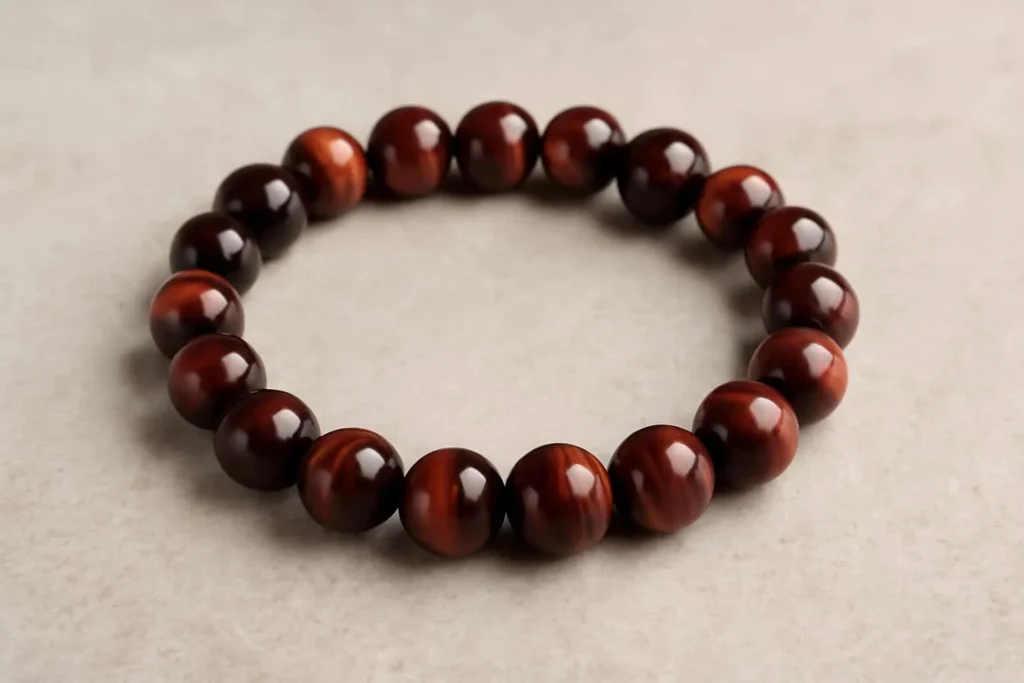
Red tiger eye works well in bracelets, necklaces, pendants, cabochons, rings, and loose bead strands. Its red-brown color suits men’s, women’s, and unisex designs. Jewelry makers often combine it with black obsidian, hematite, stainless steel, or gold-tone findings. These materials create clear color contrast. They also help designers build collections with a bold, earthy, or modern appearance.
Round beads in 8mm, 10mm, and 12mm sizes remain common choices for red tigers eye bracelets. Smaller beads create a lighter look, while larger beads show the bands more clearly. Buyers should also examine how the light moves across each finished piece. Strong chatoyancy gives bracelets more depth under display lighting. Weak or poorly aligned bands can make even a bright red strand look flat.
Red Tiger Eye Bracelet Benefits
A bracelet keeps the stone close and makes it easy to include in a daily routine. Some wearers touch the beads before a meeting, workout, or difficult task. This small action can remind them to slow down and focus on the next step. The traditional red tiger eye bracelet benefits include courage, motivation, confidence, and a stronger sense of personal direction.
The red tiger eye stone meaning also makes these bracelets suitable for thoughtful gifts. Customers may choose them for a new job, business goal, or personal challenge. Designers can pair the beads with hematite for a darker style or metal spacers for a cleaner finish. However, wearing red tiger eye does not guarantee confidence or success. Its value comes from its appearance, personal symbolism, and the meaning that each wearer gives it.
Meditation, Workspace, and Decorative Uses
The red tigers eye meaning and uses extend beyond jewelry. Some people hold a polished stone during meditation or place it beside a journal. Its smooth surface gives the hands a simple point of focus. Users may also keep it near a desk as a visual reminder to stay organized, make decisions, and complete one task at a time.
Red tiger eye also works well in spheres, pyramids, carvings, and other decorative pieces. These shapes display the red-brown bands from different angles. Strong lighting can make the cat-eye effect more noticeable in a retail display. Gift shops may also combine small polished stones with meaning cards, pouches, or themed crystal sets.
Looking for red tiger eye beads, bracelets, or decorative pieces for your business? Contact us on WhatsApp to check current sizes, grades, and natural-light videos. You can also send your quantity, packaging, and customization requirements through our inquiry form. We will help you compare suitable options for your market.
Red Tigers Eye Meaning for Love, Relationships, and Money
Love and Relationships
When people explore red tigers eye meaning, love is often one of the main themes. The red color represents warmth, passion, and attraction in many crystal traditions. Its brown bands add a sense of stability and commitment. Together, these colors support a red tiger eye love meaning based on confident affection rather than sudden or uncontrolled emotion.
Within an existing relationship, the stone may serve as a reminder to communicate clearly and respect personal boundaries. A person might wear it before an important conversation or hold it while organizing their thoughts. Red tiger eye cannot repair a relationship or attract a specific person. Honest communication, mutual care, and consistent action still matter far more.
Bracelets also make practical gifts for couples, friends, or family members facing a new stage in life. Retailers can offer matching sizes or combine red tiger eye with darker stones. A short meaning card can explain its traditional symbolism without promising a result. This approach gives the gift a clear story while keeping the description honest.
Money, Career, and Personal Drive
In money-related crystal traditions, red tiger eye represents the drive to create opportunities through consistent action. The red tiger eye meaning does not suggest effortless wealth. Instead, it connects financial goals with discipline, confidence, and practical decisions. Users may keep the stone near a budget, business plan, or task list as a reminder to follow through.
For career goals, the stone often symbolizes courage during interviews, negotiations, or new responsibilities. Some people wear a bracelet when they need to speak with more confidence. Others place a polished stone on their desk while working toward a target. These habits may support focus, but the stone cannot guarantee a promotion, sale, or financial return.
Retailers can present red tiger eye as a goal-setting stone rather than a promise of quick success. That message feels more honest and useful. Bracelets, polished stones, and small desk pieces also suit graduation gifts and career-themed sets. Their warm color gives the items a strong visual identity, while the traditional meaning adds a simple story.
How to Use, Cleanse, and Recharge Red Tiger Eye
People can use red tiger eye in many ways, depending on their routine and the form of the stone. A bracelet offers easy daily wear, while a polished stone suits meditation or desk use. Larger shapes work well in a room or display. Regular cleaning protects the surface, while spiritual cleansing and recharging remain matters of personal belief.
How to Use Red Tiger Eye
Wear a red tiger eye bracelet when you want a simple reminder of courage or steady action. You can also carry a polished stone in a pocket or pouch. Before starting an important task, hold the stone and choose one clear intention. This routine gives the red tiger eye meaning a direct connection with your own actions.
For meditation, place the stone in your hand and focus on its weight, texture, and temperature. Keep your breathing natural and return your attention whenever it wanders. At work, place a small piece beside your planner or computer. In the home, use a sphere or carving as a decorative object. Choose a method that feels useful instead of following a fixed rule.
How to Clean Red Tiger Eye
Wipe red tiger eye with a soft, slightly damp cloth after regular handling. If the surface needs more cleaning, rinse it briefly with clean water. Dry it at once with a soft towel. Use a small amount of mild soap only when necessary. Avoid harsh chemicals, rough brushes, steam cleaners, and sudden changes in temperature.
Do not soak a bracelet for a long time. Water may weaken elastic cord or affect metal spacers, even if the stone remains stable. Store each piece away from harder gemstones to reduce scratches and impacts. Physical cleaning removes dust, oil, and residue. Spiritual cleansing serves a different purpose and depends on the user’s personal practice.
How to Recharge Red Tiger Eye
Crystal traditions describe recharging as a way to refresh a stone’s symbolic energy. Some users place red tiger eye in soft moonlight for several hours. Others rest it beside a clear quartz cluster or use sound from a bell or singing bowl. These methods do not change the stone’s physical properties, but they can support a meaningful personal ritual.
You can also hold the stone, take several slow breaths, and repeat a simple intention. Choose words that connect with a real action you plan to take. Avoid leaving bracelets in strong sunlight for long periods. Heat and sunlight may affect elastic cord, adhesives, or nearby decorative materials, even when the tiger eye itself remains stable.
What Stones Pair Well with Red Tiger Eye?
Black obsidian and hematite create a strong contrast with red tiger eye. Their dark colors make the red-brown bands look brighter in bracelets and necklaces. Crystal traditions also connect both stones with grounding and protection. Red jasper offers a warmer combination and supports designs with earthy colors. It often appears in sets built around energy and endurance.
Yellow or golden tiger eye creates a more natural color transition. The golden tiger eye meaning usually focuses on confidence, awareness, and balanced judgment. Combining red and golden varieties also helps customers compare their different tones. Choose pairings according to color, bead size, and design purpose. No combination guarantees a spiritual result.
Red Tiger Eye vs. Blue Tiger Eye
Differences in Color and Appearance
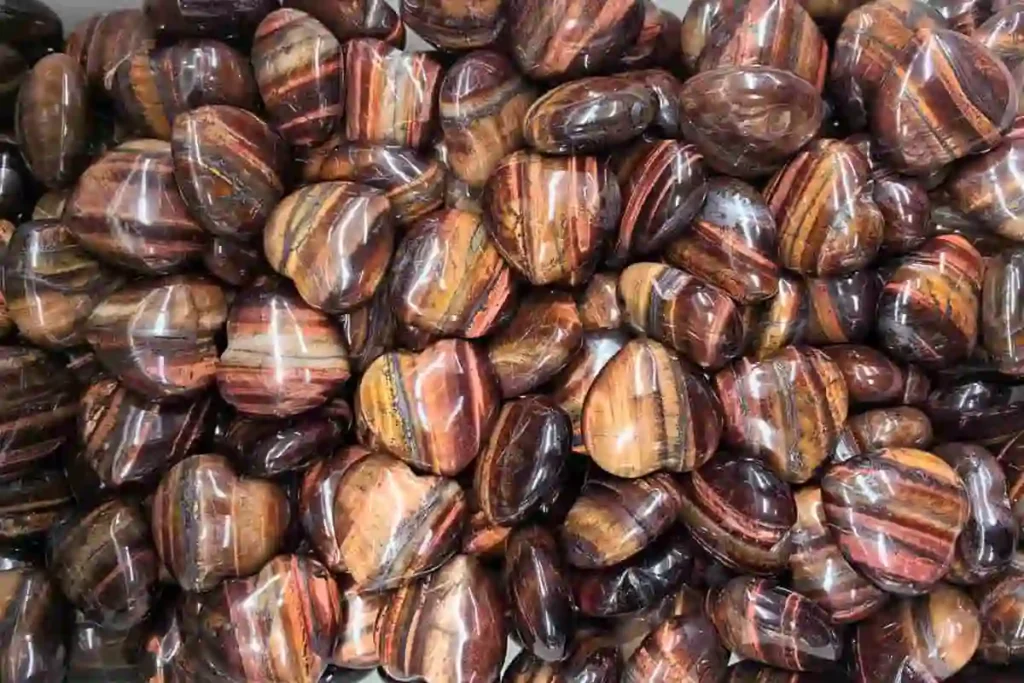
Red tiger eye shows brick red, reddish brown, and dark brown bands. Producers usually create this color by heating yellow or golden tiger eye. Blue tiger eye has blue-gray, navy, or steel-colored bands. Its fibers experienced less oxidation, so the stone keeps a cooler and darker appearance. Suppliers may also call it hawk’s eye.
Both varieties can display a moving cat-eye effect. However, the red type looks warmer and more energetic under light. Blue material usually gives a calmer and more subtle appearance. Buyers should compare chatoyancy, polish, and surface quality in both colors. These visual differences also help explain why Blue Tigers Eye meaning differs from the red variety.
Differences in Traditional Meaning
The red tiger eye meaning usually centers on courage, passion, motivation, and practical action. Crystal users often choose it when they want a symbol of stronger drive. Its warm red-brown color supports this active interpretation. People may connect it with work goals, exercise routines, difficult decisions, or situations that require a confident response.
The blue variety carries a quieter traditional meaning. Users often connect it with patience, calm thinking, communication, and careful observation. These differences come mainly from color symbolism and crystal traditions. Neither variety can guarantee an emotional or spiritual effect. Buyers can choose between them based on appearance, personal meaning, and customer preference.
My Experience Sourcing and Selling Red Tiger Eye
From my experience sourcing and selling red tiger eye, finished color tells only part of the quality story. I also check the original material, cat-eye effect, polish, surface condition, and batch consistency. Heat can turn yellow tiger eye red, but it cannot hide every weakness. That lesson has shaped how I inspect bead strands, bracelets, tumbled stones and other finished pieces before supplying them to buyers.
How Yellow Tiger Eye Determines the Finished Grade
When we need A-grade red tiger eye, we normally start with A-grade yellow tiger eye. Good original material already has a clear light band, attractive fibers, and fewer visible defects. Heating changes its color from golden brown to red or reddish brown. However, the process does not create stronger chatoyancy or repair poor material.
The same rule applies to AB+ grade. If a factory heats AB+ yellow tiger eye, the finished red material generally remains around AB+ grade. It does not suddenly become A grade because the color looks brighter. Grade names can also vary between suppliers. For that reason, buyers should confirm quality with samples, videos, and clear standards.
I compare more than color when checking red tiger eye properties. A strong batch should show smooth polish and visible movement under light. I also inspect cracks, pits, bead shape, hole condition, and size consistency. This approach helps us separate an attractive red color from genuinely well-finished material.
What I Found After Cutting a Bead Strand
I still remember one unusual batch of red tiger eye bead strands that we purchased. After cutting the string, I removed the beads and checked the crystal elastic cord inside. A fairly thick layer of red material covered part of the cord. This residue looked much heavier than the small amount of dust that sometimes appears during normal bead handling.
The red material appeared to have some connection with the coloring or heating process. However, I could not confirm the exact cause from appearance alone. I did not send the residue for laboratory testing. Therefore, I would not describe it as dye, coating, or material released by heating without further evidence.
This experience reminded me to inspect more than the outside of a finished strand. Photos can show color and general shape, but they may not reveal residue, hole condition, or other production details. When a batch looks unusual, I prefer to open several strands and check the actual beads before making a final judgment.
Why Red Tiger Eye Still Sells Well
Even though most red tiger eye receives heat treatment, it continues to sell well in our wholesale business. Buyers respond first to its deep red or reddish brown color. A clear moving light band adds depth and makes the stone more noticeable under display lighting. The combination looks bold without losing the natural striped character of tiger eye.
From our experience, the heated red color remains stable during normal use. It does not simply fade after customers wear a bracelet or handle polished pieces. Some customers also call the material Bull’s Eye. The name suits its rich color and eye-like reflection. It also gives retailers another simple way to introduce the stone to customers.
Heat treatment does not automatically make a stone poor quality. The original material, chatoyancy, polish, and consistency still matter more. I prefer to explain the treatment clearly instead of hiding it. Honest information helps buyers choose the correct grade and set accurate expectations. It also reduces problems when they reorder the same style later.
How Wholesale Buyers Can Evaluate Red Tiger Eye
Check the Color and Cat-Eye Effect
Start by viewing red tiger eye under neutral daylight or a white indoor light. Warm lighting can make brown material look redder than it really is. Compare the batch with an approved sample or natural-light video. Check whether the overall tone matches the agreed range. Small variations remain normal, but the order should not look like several unrelated grades.
Next, move the strand or finished piece slowly beneath one light source. A good cat-eye effect should travel across the surface as the stone turns. Check several pieces from different parts of the batch. One strong sample cannot represent the whole order. Among all red tiger eye properties, clear chatoyancy often has the greatest effect on visual quality.
Inspect Polish, Cracks, Pits, and Bead Size
Run a clean finger over several beads and examine them under bright light. Good polishing should leave a smooth surface without dull patches or rough edges. Natural lines may appear inside tiger eye, but open cracks and deep pits can weaken the piece. Also check the areas around each drill hole. Chipped holes may damage elastic cord during assembly or regular wear.
Measure beads from different strands instead of checking only one sample. An 8mm order should not contain many visibly smaller or larger pieces. Roll several beads on a flat surface to find uneven shapes. Small differences may look minor in one strand. However, they become obvious when retailers display many bracelets or strands together.
Confirm Treatment, Grade, and Batch Consistency
Ask the supplier whether the red color comes from heat alone or from another treatment. Also confirm the grade standard before placing a bulk order. Labels such as A and AB+ can vary between suppliers. Request natural-light videos, close-up photos, and a clear description of allowed defects. An approved sample can provide a useful reference for later inspection.
Before shipment, compare several items from different cartons with that reference. Check color, chatoyancy, polish, size, and overall appearance. Buyers should also confirm mixed-order options, packaging, private labeling, and repeat-order availability. Clear requirements help both sides avoid disputes. They also make it easier to maintain a similar grade when the buyer restocks.

Frequently Asked Questions
Who Should Not Wear a Red Tiger Eye Stone?
Most people can wear red tiger eye if they enjoy its color and meaning. No reliable rule says that a specific zodiac sign must avoid it. However, anyone with sensitive skin should check the bracelet cord, metal spacers, and other findings. Nickel or other metals may cause irritation. Stop wearing the piece if it creates discomfort. People dealing with medical or emotional concerns should not rely on the stone as a substitute for qualified care.
What Is Red Tiger Eye Good For?
People use red tiger eye in bracelets, necklaces, meditation, desk displays, and decorative pieces. Traditional benefits of red tiger eye include courage, motivation, confidence, and steady action. Some users keep it nearby while setting goals or making difficult decisions. Jewelry makers value its warm color and moving light band. Gift shops may also pair polished stones with meaning cards. These uses reflect tradition and personal preference, not proven medical or spiritual results.
Which Zodiac Should Wear Tiger Eye?
Modern crystal guides often connect red tiger eye with Leo and Capricorn. Some traditions also mention Gemini. The red tiger eye meaning in astrology focuses on confidence, determination, and practical action. However, zodiac associations differ across systems, and no universal rule limits the stone to certain signs. Anyone can wear red tiger eye based on its color, design, or personal symbolism. A zodiac sign should guide personal choice, not create a strict restriction.
How Rare Is Red Tiger Eye?
Commercial red tiger eye is not especially rare. Suppliers can produce it from suitable yellow or golden tiger eye through heat treatment. However, high-quality material with strong chatoyancy, even color, smooth polish, and few surface defects can be harder to source. Large orders with consistent size and appearance may also require careful selection. Buyers should not treat bright red color alone as proof of rarity. Quality depends more on the original material and finished workmanship.
Is Red Tiger Eye a Real or Fake Stone?
Most red tiger eye begins as natural yellow or golden tiger eye. Heat changes its color, but the material remains real tiger eye. Treatment does not make it fake. However, sellers should still disclose it. Buyers should distinguish heat-treated stone from dyed material, surface coatings, fiber-optic glass, and other imitations. Check the moving light band, surface, drill holes, and supplier information. For valuable or uncertain material, request testing from a qualified gemological laboratory.
Conclusion: Understanding Red Tiger Eye Before Buying
The red tigers eye meaning combines courage, motivation, confidence, and practical action. Its deep red-brown color and moving light band also make it attractive for jewelry and decorative pieces. Most commercial material receives heat treatment, but that process does not make the stone fake. Buyers should judge quality through the original material, chatoyancy, polish, surface condition, size, and consistency across the full batch.
If your business needs red tiger eye beads, bracelets, carvings, or other wholesale items, contact us through WhatsApp. We can share current sizes, available grades, natural-light videos, and packaging options. You can also send your quantity, quality, and customization requirements through our inquiry form. Clear details help us recommend a suitable option and prepare a more accurate quotation for your market.
Disclaimer
The information on this page shares traditional crystal beliefs, cultural interpretations, and practical buying experience. Scientific research has not confirmed the spiritual, emotional, metaphysical, or physical healing claims associated with red tiger eye. Do not use crystals as a substitute for medical diagnosis, treatment, mental health support, or other professional advice. Always consult a qualified professional about health concerns. Gemstone color, pattern, treatment, and grade may also vary between suppliers and production batches. Buyers should confirm specifications before placing an order.