
Tiger Eye Stone Meaning: Properties, Benefits, and Uses
Written by Roc Gong | Founder of RoCrystal
Last updated: November 2, 2026
Tiger eye stone meaning centers on courage, confidence, protection, and clear judgment. In modern crystal traditions, people choose this golden-brown gemstone as a reminder to stay focused, trust themselves, and approach difficult decisions calmly. These meanings are symbolic beliefs rather than proven effects.
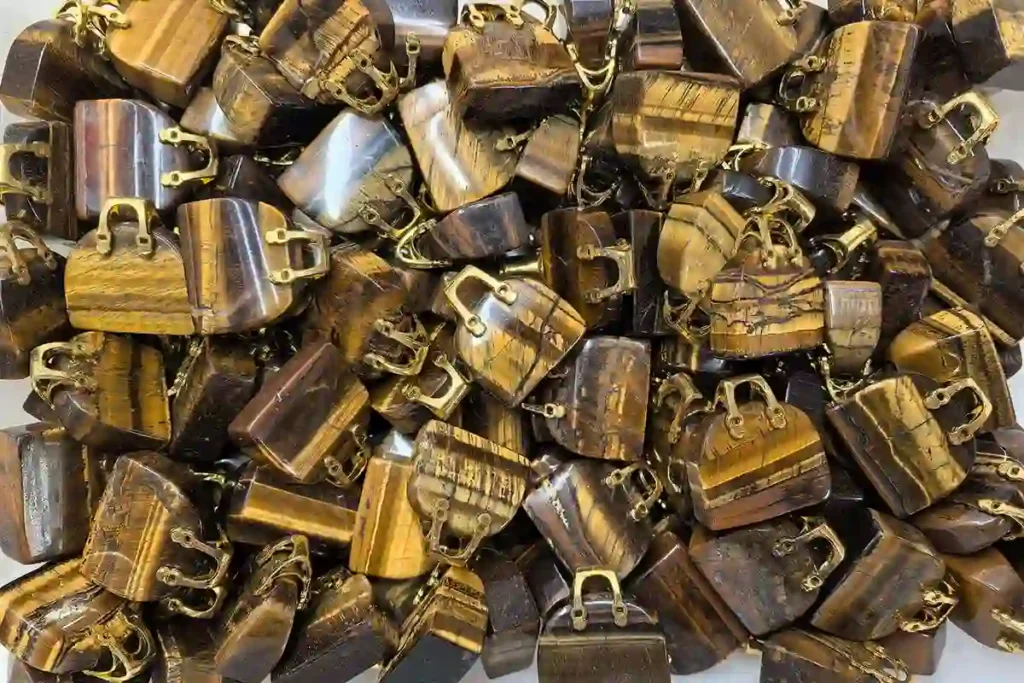
The stone’s appearance is just as appealing as its symbolism. Turn a polished piece under a light, and silky bands seem to move across its surface. This shifting sheen makes tiger eye recognizable in beads, bracelets, pendants, and decorative objects.
Understanding the meaning of tiger’s eye stone also means separating its mineral properties from its spiritual associations. This guide explains both, along with its colors, everyday uses, and the details that matter when choosing a finished piece or comparing material for jewelry making.
What Is Tiger Eye Stone?
Tiger eye, also called tiger’s eye or tigereye, is a variety of quartz known for its golden-brown bands and silky, shifting sheen. It is a gemstone, although shops often describe it as a tiger eye crystal or tiger eye semi precious stone. These expressions refer to the material rather than separate mineral species.
Its most distinctive feature is chatoyancy, an optical effect that produces moving bands of reflected light. A GIA review of gemstone optical effects explains that fibrous mineral inclusions create tiger’s eye’s chatoyancy. The effect becomes visible as you change the position of the stone or light.
The following table summarizes the main tiger eye properties. These measurable tigers eye properties are separate from the symbolic meanings discussed below.
| Feature | Basic description |
|---|---|
| Mineral variety | Quartz |
| Familiar appearance | Golden-yellow to brown bands |
| Distinctive optical effect | Chatoyancy, often called a cat’s-eye effect |
| Mohs hardness | About 7 |
| Common finished forms | Beads, cabochons, pendants, carvings, and polished stones |
Mohs hardness describes resistance to scratching, rather than resistance to every kind of damage. Quartz ranks at 7 on this scale, so a tiger eye gemstone still needs sensible care despite its relatively hard surface.

Tiger Eye Stone Meaning and Symbolism
The tiger eye meaning combines courage with thoughtful action. In modern crystal traditions, tigers eye meaning centers on confidence, awareness, and personal protection. Rather than representing force alone, the stone can symbolize moving forward while considering the consequences.
In modern crystal traditions, tiger eye symbolism commonly includes:
- Courage: facing an unfamiliar situation instead of avoiding it.
- Confidence: trusting your judgment while remaining open to advice.
- Focus: keeping attention on a clear goal.
- Protection: using the stone as a personal symbol of watchfulness and boundaries.
These associations help explain the significance of tigers eye as a gift or personal keepsake. Someone might choose it for a graduation, a new job, or another transition. The message comes from the intention behind the stone; it does not promise success or prevent harm.
Spiritual Meaning and Chakra Associations
The spiritual meaning of tiger eye often centers on grounding, intention, and steady resolve. Discussions of tigers eye spiritual meaning describe grounding as feeling present and connected with everyday responsibilities. A stone can serve as a physical reminder of that intention during meditation or a quiet pause.
Discussions of tiger eye metaphysical properties also frequently associate golden tiger eye with the solar plexus chakra. Within chakra-based crystal practices, this connection represents confidence, personal will, and taking responsibility for decisions. Some practitioners additionally associate it with the root chakra and stability.
These interpretations vary between practitioners. There is no single universal tiger eye chakra assignment, and chakra associations are spiritual beliefs rather than measurable mineral properties.
Tiger Eye Stone Meaning in Love
In relationships, tiger eye stone meaning can extend to self-respect, honest communication, and healthy boundaries. Its symbolism offers a reminder to express your needs clearly while listening to the other person.
For someone beginning a relationship, the stone may represent confidence in being themselves. After a breakup, it might symbolize rebuilding independence and making thoughtful choices. As a gift between partners, a tiger eye crystal meaning can be personal: encouragement, support, or a shared commitment to communicating openly.
However, the stone cannot determine compatibility, control another person’s feelings, or guarantee a relationship’s future. Its meaning comes from the values and intentions that the wearer or giver connects with it.
Tiger Eye Stone Benefits and Uses
Tiger eye stone benefits fall into two categories: practical uses and traditional symbolic associations. As a decorative material, the stone brings warm color and shifting light to jewelry and display pieces. Discussions of tiger eye benefits and tigers eye benefits also commonly include confidence, focus, and protection as symbolic associations.
So, what does tiger eye do? Its visible effect is optical: reflected light creates its changing sheen. Wearing or holding it can also provide a personal reminder of an intention, such as pausing before a decision. However, claims about tiger eye healing properties should not be presented as established medical benefits.
Beads, Bracelets, and Other Jewelry
Tiger eye beads are popular stone beads for jewelry making, bringing warm colors and shifting light to a design. Smaller beads create a lighter look, while larger beads make individual patterns more visible. Pendants and rings instead draw attention to a single polished piece. For finished jewelry inspiration, explore our stone bracelets collection.
Tiger eye beads meaning and tiger eye bracelet meaning share the stone’s associations with courage and confidence. More broadly, tiger eye jewelry meaning depends on the wearer’s intention. Practical tiger eye bracelet benefits include enjoying the stone’s appearance in a wearable form; spiritual benefits remain matters of personal belief.
For buyers, useful differences include:
- Bracelets: wrist fit, bead size, comfort, and string construction.
- Necklaces and pendants: stone weight, chain length, and secure fittings.
- Rings: setting protection, fit, and exposure to knocks.
- Loose beads: hole size, dimensions, and suitability for the intended design.
A well-chosen piece should suit its purpose as well as its wearer’s taste.
Meditation, Gifts, and Display
If you are wondering what is tiger eye used for, common choices include personal keepsakes, meditation objects, gifts, and home decor. Polished tumbled stones can sit on a desk, fit in a pocket, or become part of a quiet daily routine.
During meditation, someone might hold the stone while focusing on breathing or a personal intention. This describes how people use the object; it does not establish special tiger eye crystal benefits beyond that practice.
As a gift, tiger eye can carry a message of encouragement for a new job, graduation, or personal goal. Meanwhile, carvings and polished display pieces appeal to people who enjoy their patterns without attaching a spiritual meaning. Both approaches are valid reasons to appreciate the stone.



Tiger Eye Stone Colors and Meanings
Tiger eye stone colors and meanings vary across modern crystal traditions. Golden shades commonly symbolize confidence, while blue, red, and other colors receive different interpretations. These associations are not standardized, so personal meanings may differ.
Color also raises a separate question: how did the stone acquire its appearance? Gemdat’s tiger’s eye reference describes its familiar gold-yellow and gold-brown colors and records bleaching, dyeing, and heat treatment as possible enhancements. A color name alone therefore cannot establish whether a particular piece is untreated.
Tiger Eye Colors and Their Symbolic Meanings
| Color or trade description | Common modern symbolic associations | What buyers should understand |
|---|---|---|
| Golden tiger eye / yellow tiger eye | Confidence, courage, and clear judgment | The familiar golden-yellow to brown appearance |
| Brown tiger eye | Grounding, patience, and stability | Often a description of darker tones within the classic color range |
| Blue tiger eye / hawk’s eye | Calm focus, awareness, and communication | Confirm the material and treatment status rather than relying on its trade name |
| Red tiger’s eye / bull’s eye | Motivation, determination, and action | Heat treatment can produce the dark red color |
| Green tiger eye | Growth, balance, and fresh beginnings | Ask whether the color involves dyeing or another treatment |
| Pink tiger eye | Kindness, self-expression, and emotional confidence | Confirm both the underlying material and the origin of its color |
| Purple tiger eye | Creativity, intuition, and personal growth | Treat the name as a product description, not proof of a natural color |
| Black tiger eye | Protection and strength | Clarify what material the seller means by this name |
Color Treatments and Buying Considerations
When comparing tigers eye colors, separate symbolic preference from product identification. Someone may choose green for its association with growth or purple for creativity, but those meanings do not establish composition, rarity, or treatment status.
For jewelry makers and retailers, the same distinction matters when describing products. A treated natural stone and an imitation are different categories. Neither an unusual color nor a moving light band, by itself, provides enough evidence to identify a piece confidently.
As GIA’s guide to gem treatments explains, enhancements can change appearance and sometimes affect durability or care requirements. Request clear treatment information before choosing cleaning methods or making claims about natural color.
How to Choose Tiger Eye Stone
Choosing tiger eye starts with its appearance, condition, and intended use. A bracelet needs comfortable, well-finished beads, while a pendant may highlight one distinctive pattern. For larger orders, compare several pieces under the same lighting instead of judging the entire batch from a single photograph.
Compare Chatoyancy, Polish, and Surface Condition
Turn each piece slowly under a single light source. Look for visible movement across the surface, then check whether the polish lets you see the pattern clearly. A broad, flowing sheen can be attractive; every piece does not need a perfectly narrow light band.
Next, inspect the workmanship:
- Surface: check for open cracks, pits, chips, and polishing marks.
- Beads: compare dimensions, shape, and the finish around drill holes.
- Finished jewelry: examine fittings, string construction, and comfort.
- Matched pieces: decide how much variation suits the design.
Natural variation and inconsistent workmanship are different issues. Beads can have individual patterns while still meeting an agreed size and finish.
Understand Treatment Information and Value
Tiger eye stone value depends on what you are comparing. Loose beads, finished bracelets, and carvings involve different amounts of material and labor. Compare equivalent sizes, quantities, finishes, and treatment descriptions before deciding which offer provides better value.
In our red tiger eye sourcing experience, the starting material strongly affects the finished result. Material we purchase as A-grade yellow tiger eye generally produces a better finished red product than lower-grade starting material. Heating changes the color; it does not remove existing pits or cracks. These grades are our purchasing descriptions, rather than universal gemological standards.
For an unfamiliar color or uncertain material, ask for written product information. A natural stone may receive treatment, while an imitation is a different material made to resemble it. Visual checks help assess appearance and workmanship, but they do not replace professional identification when composition or treatment status matters.
Is Tiger Eye Stone Dangerous?
The question “is tiger eye stone dangerous” needs context. Wearing an intact polished bracelet is a different activity from cutting, drilling, or grinding the material. The condition of the product and how you handle it matter more than its symbolic meaning.
Finished Jewelry and Everyday Handling
For finished pieces, inspect practical details such as chipped beads, sharp edges, loose fittings, and damaged string. Stop wearing jewelry if it causes irritation, and check all components rather than assuming the stone is responsible.
Questions about side effects of tiger eye stone also appear in spiritual discussions. Claims that the stone causes bad luck or produces harmful “energy” should not be presented as established health effects. Likewise, its traditional protective meaning does not guarantee physical safety.
Cutting, Drilling, and Mineral Dust
Tiger eye is a quartz material, so dust-producing work requires precautions. According to NIOSH’s guidance on silica and worker health, cutting, grinding, polishing, and drilling silica-containing materials can release fine airborne particles. Breathing excessive respirable crystalline silica can cause serious lung disease.
For makers, this means:
- Avoid dry cutting or grinding without effective dust controls.
- Use suitable wet methods and local exhaust ventilation.
- Avoid dry sweeping or blowing dust away with compressed air.
- Base respiratory protection on a proper workplace exposure assessment.
These measures follow NIOSH’s safe work practices. They address processing hazards; they are not evidence that simply wearing a polished stone creates the same exposure. Unidentified rough material or pieces shedding loose fibers need professional assessment before processing.
How to Care for Tiger Eye
Tiger eye care should suit the whole piece, including its stone, treatments, metal fittings, and string. Hardness alone does not tell you which cleaning method is appropriate.
Gentle Cleaning and Storage
For everyday dust and fingerprints, start with a soft cloth. If further cleaning is necessary, follow the supplier’s instructions. For an intact piece confirmed suitable for washing, use a little lukewarm water and mild soap, rinse briefly, and dry thoroughly. Avoid prolonged soaking, especially with strung beads or glued components.
Store jewelry separately to reduce rubbing and accidental knocks. Before wearing a bracelet again, check the elastic and look for damaged beads.
Treatment information matters here. GIA’s guide to gem treatments explains that some dyes can fade under prolonged sunlight or react to solvents such as alcohol and acetone. If the color treatment is unknown, avoid these exposures and ask the supplier for care instructions.
How to Cleanse Tigers Eye
People asking how to cleanse tigers eye may mean spiritual cleansing rather than removing dirt. In crystal practices, this ritual represents resetting an intention or preparing a stone for personal use. It is separate from physical cleaning.
A simple approach is to wipe the piece gently, place it somewhere secure, and spend a quiet moment reflecting on your intention. Some people prefer a sound-based ritual that does not expose the stone to liquids, salt, or heat.
These practices have personal or spiritual meaning; they do not demonstrate that the stone stores negative energy or needs charging to function. Choose a ritual that respects the care requirements of the actual product.
Frequently Asked Questions
What Does It Mean When Someone Gives You Tiger Eye?
A tiger eye gift can represent encouragement, confidence, or support during a change. However, it does not automatically signal romantic interest. The giver’s intention and your relationship provide more context than the stone alone.
Who Should Not Wear Tiger Eye Stone?
There is no evidence-based rule excluding a particular zodiac sign or personality. Choose jewelry that fits comfortably and has secure, undamaged components. If a piece causes irritation, stop wearing it and check the metal, cord, and other materials.
What Is the Difference Between Tiger Eye Necklace Meaning and Tiger Eye Ring Meaning?
Tiger eye necklace meaning and tiger eye ring meaning generally share the same associations with courage, confidence, and protection. The jewelry style changes how someone wears the symbol, rather than giving the stone a different proven effect. A ring may mark a personal commitment, while a necklace can serve as a keepsake.
Can Treated Tiger Eye Still Be Real?
Yes. Treatment and imitation describe different things. Natural tiger eye can receive color treatment, while an imitation uses another material to resemble it. Gemdat records dyeing, bleaching, and heat treatment among tiger eye enhancements. Confirm the material and treatment separately when buying.
Does Stronger Chatoyancy Mean Stronger Spiritual Benefits?
No evidence establishes that a brighter light band produces stronger spiritual effects. Chatoyancy is an optical feature that influences appearance. People discussing tigers eye spiritual properties may attach personal meaning to that sheen, but it does not measure healing ability or protective power.
Conclusion
Tiger eye stone meaning brings together courage, confidence, focus, and protection in modern crystal traditions. Whether described as tiger eye gemstone meaning or tigers eye crystal meaning, these associations are symbolic. The stone’s practical appeal comes from its warm colors, shifting sheen, and versatility in jewelry and decorative pieces.
When choosing tiger eye, consider both personal preference and product quality. Compare workmanship, confirm treatment information, and select a piece suited to its intended use. Symbolic meaning can make a stone personal, while clear product information helps you buy with confidence.
For tiger eye beads, bracelets, or other wholesale products, contact Rocrystal through WhatsApp or our contact form to discuss available sizes, treatment information, and order requirements.
Disclaimer
Crystal meanings, chakra associations, and spiritual benefits reflect traditions and personal beliefs rather than scientifically established effects. This article provides general information and does not replace medical advice, professional gemstone identification, or workplace safety assessment.
References
- GIA — Structures Behind the Spectacle: A Review of Optical Effects in Phenomenal Gemstones: gemstone optical effects, including tiger’s eye chatoyancy.
- Gemdat — Tiger’s Eye: material properties, colors, and recorded treatments.
- USGS — Mineral Gemstones: Mohs hardness and quartz.
- GIA — An Introduction to Gem Treatments: treatment disclosure and care considerations.
- CDC/NIOSH — Silica and Worker Health: health risks from respirable crystalline silica during processing.
- CDC/NIOSH — Safe Work Practices: dust controls and exposure prevention.