
Hematite Color: Natural Colors, Red Streak, and Jewelry Finishes
Written by Roc Gong | Founder of RoCrystal
Published: November 17, 2026
Hematite colors range from silver-gray and nearly black to rusty red and reddish-brown. A polished bead can look like dark metal, while a rough piece may have dull red-brown areas. Even a silver-gray specimen typically leaves a reddish-brown streak on an unglazed streak plate. When choosing hematite jewelry, check whether the color comes from the material itself or from a surface finish. Mindat’s hematite mineral profile
What Color Is Hematite?
The color of hematite is easiest to describe when you specify which surface you’re looking at. A polished face catches the light, while a rough or earthy surface can look much duller. Here are three common colors of hematite and how they can appear on a sample.
| Visible color | What you may see |
|---|---|
| Silver-gray | Bright reflections on polished beads or smooth faces of a specimen. |
| Dark gray to nearly black | A deep gray surface that looks brighter where it catches the light. |
| Rusty red to reddish-brown | Dull, earthy areas with little shine. |
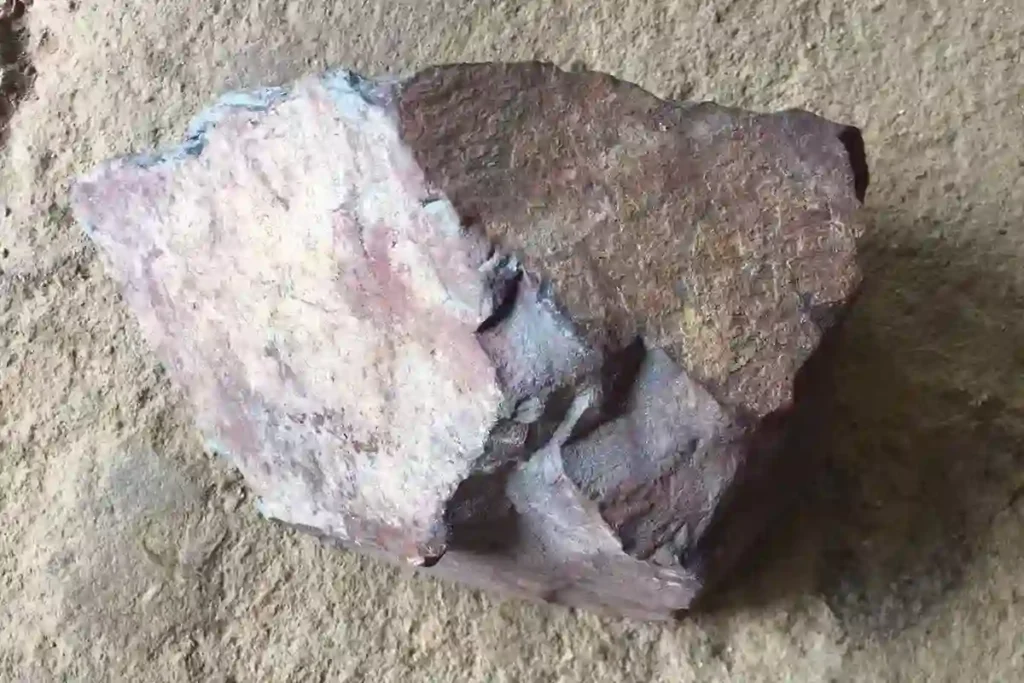
In the first photo, the raw hematite sample has a silvery-gray face and a rougher brown area along one side. If you’re comparing it with a brown hematite sample, look at both pieces under the same light and turn them slowly. You may see flashes of silver on one face while another stays dull. In the second photo, the dark exterior and lighter broken face give you another reason to check more than one side of a rough sample before describing its color.
What Does Hematite Look Like? Raw vs. Polished
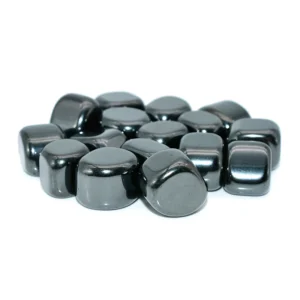
Rough hematite can have dull patches alongside faces that catch the light. After polishing, the surface can reflect light more evenly, giving polished hematite a silvery or steel-gray sheen. This difference in hematite luster is easy to see when you compare a rough piece with polished tumbled stones under the same light. Turn each piece slowly and watch which areas brighten as the angle changes.
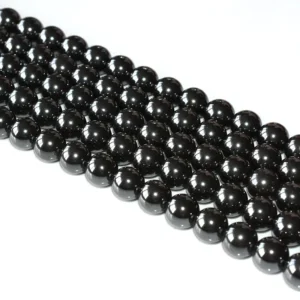
Smooth round beads show a broad highlight that moves across the curve. Faceted hematite beads produce smaller flashes as their flat faces catch the light one by one. If you’re comparing stone beads for a bracelet design, place samples of both finishes side by side under the same light. This makes it easier to see whether you prefer the steady shine of a smooth bead or the sharper flashes of a faceted one.
What Is the Streak Color of Hematite?
The typical hematite streak color is red to reddish-brown, even when the stone looks silver-gray or nearly black. Hematite color and streak can differ because the streak shows the color of the mineral’s powder. To see the difference, rub a small corner of a loose, uncoated sample across an unglazed streak plate. The test can leave a mark on the sample, so save it for a rough piece or an offcut. Mindat’s hematite mineral profile
Hematite Powder and Red Pigment
Hematite powder can look red even when the solid piece has a metallic shine. That powder is also the link between the red streak and hematite pigment. Hematite can supply the red iron oxide in red ochre, an earth pigment. If you see a red pigment labeled “hematite,” the label describes the powdered material. A polished bead made from the same mineral can have a very different appearance.
Specular, Micaceous, and Oolitic Hematite
Mirror-Like Flakes in Specular Hematite
Specular hematite, also called specularite, contains shiny flakes or flat crystals that reflect light like tiny mirrors. A polished bead usually shows a smooth highlight that moves across its surface. On a rough piece of specular hematite, individual flakes can flash at different angles as you turn it. The term micaceous hematite describes hematite with a flaky texture that resembles mica. Mindat’s entry on specularite
Oolitic Hematite and Rounded Grains
Oolitic hematite has a different texture. Look closely at a cut or broken surface and you may see tiny rounded grains. Some show concentric layers, like rings around a center. In a dark red or brownish specimen, those grains can be easier to spot under a hand lens. Petrographic description of oolitic iron ore
Gold, Silver, and Rainbow Hematite
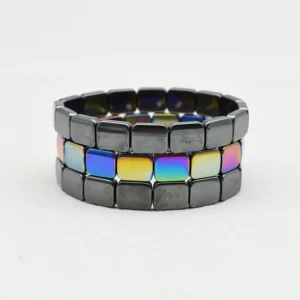
Polished hematite can have a natural silvery-gray shine. However, when a supplier lists gold hematite or silver hematite, ask what the color name refers to. For example, a silver-gray bead may get its shine from polishing, while a gold-tone bead may have a plated finish. Before ordering from a hematite collection, ask the supplier to confirm the base material and any surface treatment separately.
Rainbow hematite describes an iridescent appearance, while blue hematite may simply describe the color shown in a listing. In either case, ask how the color was produced. Even if a listing says “raw,” request a close-up of an unpolished face and ask whether the surface has been treated. If you also need to check the material’s response to a magnet, see our guide Is Hematite Magnetic?.
How to Check Hematite Color Before a Bulk Order
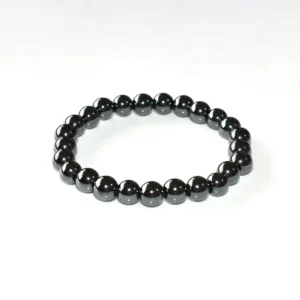
For one wholesale order, we supplied 10,000 bracelets in the original gray finish and another 10,000 with gold-tone plating. Both styles used 8 mm round beads. For the gray batch, we checked the hematite color and polish against the approved sample. For the plated batch, we also looked for worn spots and uneven coverage around the drill holes. If you’re sourcing stone bracelets in both finishes, approve a separate sample for each and compare the production batches under the same light.
On a separate antique bronze-tone hematite order, a U.S. customer reported that the finish had faded on components used in a DIY project. The factory said the plating might have been thin on some pieces. However, it also explained that increasing the plating thickness could darken that particular finish. For a repeat order, confirm the target shade and plating requirements together. Then review a new sample if the factory changes the finish.
Frequently Asked Questions
What Colour Is Haematite?
Haematite can look silver-gray, dark gray, nearly black, or reddish-brown. The visible haematite colour depends partly on the surface you’re looking at. For example, a polished face can look bright and metallic, while an earthy surface may look dull and red-brown. Haematite is the British spelling of hematite. Mindat’s hematite mineral profile
Is Brown Hematite Natural?
Yes. Brown hematite can occur naturally, especially in earthy specimens with reddish-brown surfaces. However, other minerals can look similar. If you’re checking an uncoated sample, compare its streak with its surface color before drawing a conclusion. Mindat’s comparison of streak colors in iron minerals
Where Is Hematite Found?
Hematite occurs worldwide. For example, GIA describes iridescent hematite from the Andrade iron ore deposit in Minas Gerais, Brazil. That is one documented locality. If a supplier lists an origin, ask for the provenance of the batch you’re considering. GIA’s review of optical effects in gemstones
Can Hematite Have a Natural Rainbow Sheen?
Yes. GIA describes a natural Brazilian specimen whose fine mineral structure produces iridescent colors. However, a rainbow sheen in a product photo gives you little information about the material or its finish. If you’re buying rainbow-colored beads, ask the supplier to identify the base material and disclose any coating. GIA’s discussion of rainbow hematite
Can You Identify Hematite by Color Alone?
Color is one clue. For example, a silver-gray specimen can leave a reddish-brown streak, while magnetite typically leaves a black streak. If you’re inspecting finished jewelry, check an uncoated loose sample and ask the supplier to confirm the material and finish. Mindat’s comparison of streak colors in iron minerals
Conclusion
Hematite color can range from bright silver-gray to rusty red or reddish-brown. A polished surface can look metallic, yet the mineral typically leaves a red to reddish-brown streak. When comparing beads or bracelets, check the finish under consistent lighting and ask the supplier to confirm the base material and any coating. For more on how people wear and use this mineral, see our guide to hematite benefits.
If you’re sourcing hematite beads or bracelets in bulk, send us your size, quantity, and preferred finish. If you need to match a previous order, include a photo of the approved sample. Reach us on WhatsApp or through our contact form.
Disclaimer
Product photos can illustrate color and finish. For material identification or confirmation of surface treatment, use a verified sample or ask the supplier for documentation.