
Is Hematite Magnetic? Natural vs. Magnetic Hematite
Written by Roc Gong | Founder of RoCrystal
Published: November 16, 2026
Is hematite magnetic? Natural hematite is weakly magnetic at room temperature, and its pull toward an ordinary magnet may be hard to notice. If beads sold as “magnetic hematite” snap together, ask the seller what the beads are made of. If only one end of a bracelet is drawn to a magnet, check the clasp first. These observations help you decide what to ask the seller about the finished piece. Research on hematite’s magnetic behavior · Mindat’s entry on magnetic hematite
What Is Hematite?
Hematite is a crystalline iron oxide mineral with the chemical formula Fe₂O₃. It can have a metallic luster, which means its surface reflects light in a way that resembles metal. If a supplier lists a piece as “haematite stone,” haematite is the British spelling of the same mineral name.
What does hematite look like? A polished hematite stone can have a bright, steel-gray surface, while some rough specimens look dull and rusty red. Hematite typically leaves a reddish-brown streak on an unglazed streak plate, even when the stone itself looks dark. The streak is the color of the fine powder the mineral leaves behind. Mindat’s mineral profile for hematite
Why Does Hematite React to a Magnet?
To understand hematite magnetism, think of each iron atom as a tiny magnet. In hematite, these tiny magnets mostly point in opposite directions, so most of their effects cancel out. At room temperature, a slight tilt leaves a weak magnetic effect. The response can vary from one sample to another. For example, a piece that also contains magnetite may show a stronger pull. Research on hematite’s magnetic behavior · University of Illinois Physics Van
A bead moving toward an external magnet tells you how it responds to that magnet. If two loose beads snap together on their own, one or both may be acting as magnets. Listings may call these products “hematite magnets” or “magnetized hematite.” To find out what you’re buying, ask what the beads are made of and whether the beads themselves or a separate component provide the magnetic pull. Mindat’s entry on magnetic hematite
What Is Magnetic Hematite?
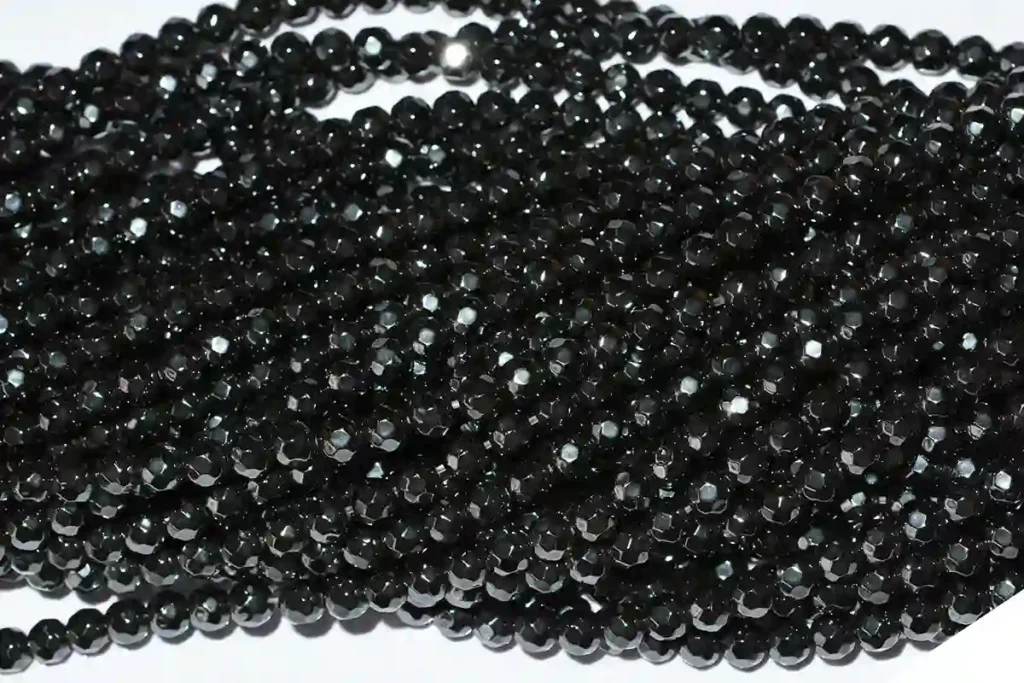
“Magnetic hematite” and “magnetic haematite” are trade labels you may see on dark, metallic-looking jewelry components. Sellers may also use the names hematine and Hemalyke. Mindat documents an item sold as magnetic hematite that was made of ceramic ferrite. If a supplier offers hematine beads or strongly magnetic parts, ask for the base material, the surface finish, and whether the parts are magnetized before shipment. Mindat’s entry on magnetic hematite
What We Check on Repeat Magnetic Hematite Orders
Since 2022, we’ve supplied magnetic hematite components to a U.S. customer who typically orders twice a year. Two-hole and three-hole components make up most of those orders. For styles that can be magnetized after production, we magnetize the finished components before shipment.
The buyer asks us to check inside the drill holes for dirt and rust marks. They had previously received rust-marked components from another supplier, so we make the inside of each hole part of our inspection. A glossy finish on the outside can make these details easy to miss.
The buyer also orders antique bronze-tone, silver-tone, and gold-tone finishes. Once, they reported that the plating had faded on components their customer used in a DIY project. The factory said the plating might have been thin on some pieces. It also explained that a thicker coating could darken that particular finish and change the antique bronze color. For repeat orders, confirm both the target color and the plating details with the factory before approving production.
If you’re pairing two-hole or three-hole components with other stone beads, check the drill holes against the cord you plan to use. You can also browse our hematite collection and ask us to confirm the base material, finish, and magnetic properties of the style you’re considering.
Hematite vs. Magnetite
Hematite and magnetite can both look dark gray or black, so color alone gives you little to go on. A magnet and a streak plate offer two different clues. The hematite streak is typically reddish-brown, while magnetite leaves a black streak. Magnetite also tends to pull much more strongly toward a magnet. Mindat’s guide to streak colors in iron minerals
| Material | Typical response to a magnet | What to check next |
|---|---|---|
| Natural hematite | Usually weak. The pull may be hard to notice. | Look for a reddish-brown streak on an uncoated sample. |
| Magnetite | Usually strong. | Check for a black streak on an uncoated sample. |
| Manufactured magnetic hematite lookalike | Can respond strongly. Some pieces may attract one another. | Ask the supplier to identify the base material. |
Start by looking at the finish, then check where the magnetic pull is strongest. On finished jewelry, a clasp or another fitting can affect what you observe. If you want to check the streak, use an uncoated loose sample and an unglazed streak plate. The test can leave a mark on the piece. For a bulk order, use these observations to guide your questions about the base material and finish, then confirm the specifications in writing.
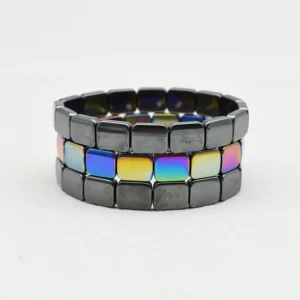
How to Check Hematite Jewelry and Polished Stones
Check the Beads and Clasp Separately
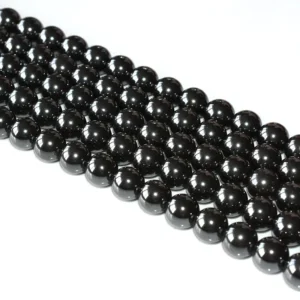
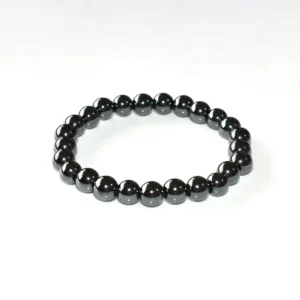
When checking stone bracelets, bring a small magnet close to the clasp first, then test a bead on the opposite side of the bracelet. If the pull is strongest near the clasp, a magnetic fitting may account for what you feel. If several beads respond strongly, ask the supplier to identify the bead material. For a bulk order, request a loose bead from the same batch so you can check it away from the metal fittings.
Compare the Finish and the Material Label
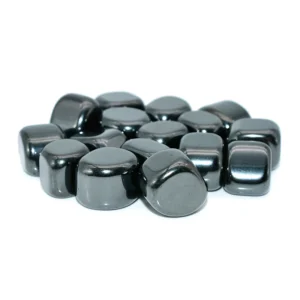
Polished hematite tumbled stones can have a bright silver-gray finish. A coated stone or a manufactured lookalike can have a similar shine. When comparing tumbled stones, ask the seller to identify the material and say whether the surface has a coating. If you’re comparing two samples, view them under the same light. That makes it easier to compare the finish you’ll receive and check it against the supplier’s description.
Frequently Asked Questions
Is Magnetic Hematite Fake?
“Magnetic hematite” is a trade label. Some products sold under that name are manufactured lookalikes, such as ceramic ferrite pieces. If a listing describes strongly magnetic beads as natural hematite, ask the seller to confirm the base material in writing. Mindat’s entry on magnetic hematite
Is Haematite Magnetic?
Yes, natural haematite can show weak magnetism at room temperature. Haematite is the British spelling of hematite. With an ordinary magnet, the pull may be hard to notice. University of Illinois Physics Van
Is Specular Hematite Magnetic?
Specular hematite can show a weak magnetic response, like other forms of hematite. Its shiny, mirror-like flakes give it a distinctive appearance. If a specimen pulls strongly toward a magnet, check whether it contains another mineral, such as magnetite. Mindat’s entry on specularite
The magnetic response of rainbow hematite jewelry depends on the base material. The rainbow finish alone tells you little about how it will respond to a magnet. If you’re buying it, ask the seller to confirm both the base material and any surface coating.
Where Is Hematite Found?
Hematite occurs in rocks around the world. One example is the banded iron ore of Minnesota’s Mesabi Iron Range, where hematite can occur alongside red jasper. Mindat’s mineral profile for hematite
Do Magnetic Hematite Bracelets Have Benefits?
When people ask about magnetic hematite benefits, they may mean everyday wear, personal symbolism, or pain relief. The polished finish can add contrast to a bracelet, and some wearers give the piece a personal meaning. For pain relief, the National Center for Complementary and Integrative Health reports that research has found no conclusive evidence that static magnets are effective. Our guide to hematite benefits explains the traditional meanings and practical uses in more detail. NCCIH’s guide to magnets and pain
Conclusion
Natural hematite usually shows only a weak response to an ordinary magnet. Magnetite typically reacts more strongly, and some products sold as magnetic hematite also show a strong pull. If you’re inspecting jewelry, check the beads and clasp separately. For a bulk order, ask the supplier to confirm the base material, finish, and magnetic properties in writing before you approve the sample.
Wholesale Inquiries
If you’re sourcing magnetic components, share the size, hole count, finish, and quantity you need with Rocrystal. For two-hole or three-hole pieces, let us know your requirements for drill-hole cleanliness and whether the pieces need to be magnetized before shipment. Reach us on WhatsApp or through our contact form.
Disclaimer
This article is for general information. The spiritual meanings associated with hematite reflect personal beliefs and crystal traditions. Consult a healthcare professional for guidance on pain or other health concerns.
References
- Mindat mineral profile for hematite
- Mindat entry on magnetic hematite
- Mindat guide to streak colors in iron minerals
- Mindat entry on specularite
- University of Illinois Physics Van on hematite magnetism
- Journal of Geophysical Research study on hematite’s magnetic behavior
- NCCIH guide to magnets and pain