
Agate Meaning: Properties, Colors, Types, Uses, and Wholesale Buying Guide
Written by Roc Gong | Founder of RoCrystal
Last updated: September 19, 2026
Agate meaning is commonly linked with balance, stability, protection, and inner strength. In crystal traditions, some people believe this stone can support a calm mind and steady emotions. These ideas reflect cultural beliefs rather than proven medical effects. From a practical view, agate is valued for its colorful bands, natural patterns, durable surface, and wide range of commercial uses. Each agate stone can look different, while its color, transparency, finish, and treatment may affect its quality and market value. This guide explains agate crystal meaning, physical properties, popular colors and varieties, product forms, identification methods, and care. It also offers practical advice for buyers sourcing agate beads, bracelets, tumbled stones, rough pieces, slices, and carvings in bulk.
What Is Agate?
Is Agate a Crystal, Mineral, Rock, or Gemstone?
Agate is commonly sold as a gemstone, crystal, or decorative stone. In mineralogical terms, however, it is a distinctly banded form of fibrous chalcedony. Chalcedony consists mainly of very fine quartz crystals that are too small to see without magnification. According to Mindat, agate forms in different rocks, especially volcanic rocks, although it can also occur in sedimentary environments.
The word used to describe agate often depends on the context. A collector may call it a rock, while a jewelry seller may describe a polished piece as a gemstone. In the crystal market, “agate crystal” is also widely used and easily understood. Therefore, searches for agate rock meaning, agate stone, and agate gemstone meaning often refer to the same broad material. The product form may change, but the stone remains part of the chalcedony and quartz family.
Agate, Chalcedony, and Quartz: What Is the Difference?
Quartz describes a large mineral family made mainly of silicon dioxide. Some quartz grows as visible crystals, while other forms develop from crystals too small for the eye to separate. Gemologists use the name chalcedony for this fine-grained quartz material. Agate belongs to the chalcedony group and usually shows bands, layers, or other distinct patterns.
These terms describe related materials rather than three completely separate stones. Quartz forms the broader mineral family, chalcedony identifies its fine-grained form, and agate describes material with recognizable structures or trade characteristics. Sellers also use the word agate for Moss Agate, Tree Agate, and several other materials that may not display strong bands. Buyers should therefore examine the actual color, pattern, transparency, and treatment instead of judging a wholesale lot by its name alone.
Agate Meaning and Symbolism
What Does Agate Mean?
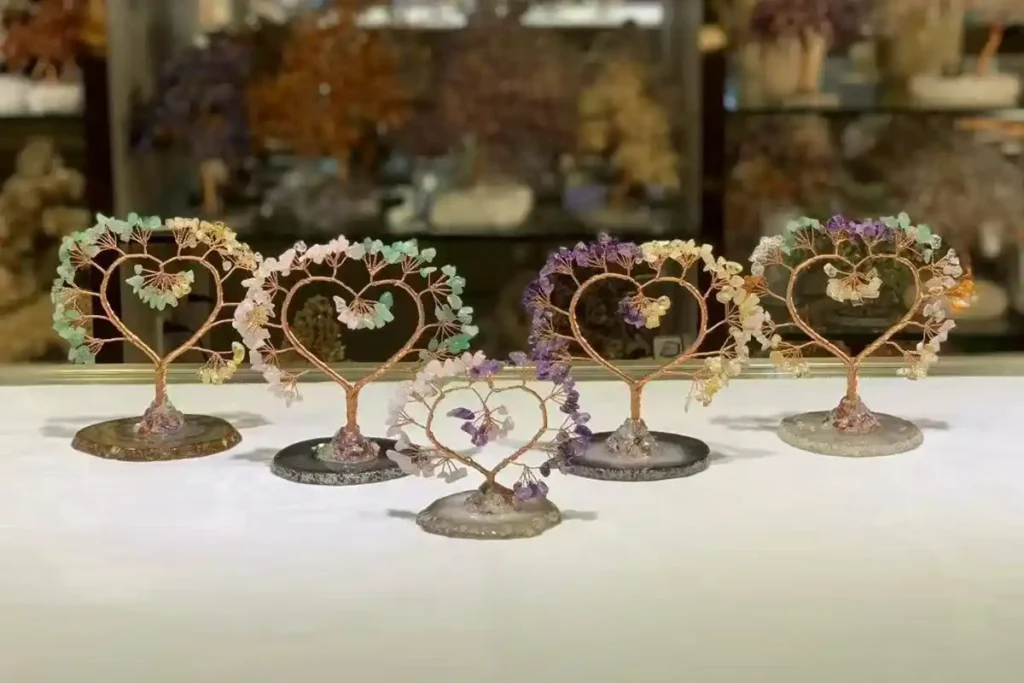
Agate meaning often centers on balance, stability, protection, and inner strength. In many traditions, people carried or wore this stone as a personal ornament and protective symbol. Today, crystal users still connect agate with a calm mind, steady emotions, and confidence during periods of change.
The meaning of agate can also vary with its color and pattern. Blue varieties often symbolize calm communication, while red stones commonly represent energy and courage. Black agate usually connects with grounding and protection. These associations explain why the broader agate stone meaning includes several ideas rather than one fixed definition.
From a commercial view, agate also represents variety and natural individuality. Its bands, inclusions, colors, and levels of transparency make each piece different. Buyers can use these features to create jewelry lines, gift sets, decorative collections, and themed displays. However, spiritual symbolism comes from cultural traditions and personal beliefs. Scientific research has not confirmed that agate can treat medical or psychological conditions.
Agate Spiritual Meaning
Agate spiritual meaning commonly includes emotional balance, grounding, strength, and protection. In crystal traditions, some people believe that agate can help them remain calm when they face pressure or uncertainty. Others carry it during meditation or wear agate jewelry as a reminder to stay patient, focused, and confident.
Different varieties may carry more specific associations, but they often share the same general theme of stability. Dark agates usually represent grounding and protection, while softer blue or pink stones often connect with peace and emotional comfort. This explains why searches for agate meaning spiritual or agate crystal meaning may produce different answers based on the stone’s color.
These ideas describe traditional beliefs rather than scientifically proven effects. Agate should not replace medical care, mental health support, or professional advice. Buyers who sell spiritual products should use careful language and present these meanings as cultural associations or personal practices.
Physical Properties and Formation of Agate
Physical Properties of Agate
Agate combines fine-grained silica with a wide range of colors, bands, and natural inclusions. According to Mindat, mineralogists classify agate as distinctly banded fibrous chalcedony. Its structure may also include quartz, quartzine, moganite, opal, and small mineral inclusions. These materials help create the patterns that buyers see in polished products.
| Property | Description |
|---|---|
| Main composition | Silicon dioxide |
| Mineral family | Chalcedony and quartz |
| Mohs hardness | About 6.5 to 7 |
| Transparency | Commonly translucent to opaque |
| Luster | Waxy in rough material and glass-like after polishing |
| Common features | Bands, color zones, inclusions, cavities, and quartz centers |
| Common forms | Beads, bracelets, tumbled stones, slices, carvings, and rough pieces |
A hardness of 6.5 to 7 gives agate good resistance to everyday scratches. However, hardness does not measure how well a stone survives impact. Thin slices, pointed carvings, beads with large drill holes, and pieces with internal fractures may still chip or break.
Wholesale buyers should examine more than hardness. Polish, drilling, natural cracks, pattern, color consistency, and usable yield can all affect quality. These details often matter more than a general grade name when customers compare finished agate products.
How Agate Forms and Develops Bands
Agate begins when silica-rich fluids enter cavities, cracks, or open spaces within rock. As conditions change, silica starts to collect along the walls and gradually grows inward. Many deposits occur in volcanic rocks such as basalt and rhyolite. However, agate can also develop in sedimentary rocks or through hydrothermal processes, so one simple formation model cannot explain every deposit.
A scientific review published in the journal Minerals explains that agate may contain chalcedony, macrocrystalline quartz, quartzine, moganite, opal, and other silica phases. Differences in crystal size, structure, porosity, and mineral inclusions produce many of the visible bands and patterns. Repeated stages of silica growth can also create layers that follow the shape of the original cavity. Götze and coauthors provide a detailed review of agate mineralogy and formation.
Color develops when iron oxides, manganese compounds, and other fine mineral particles enter or grow within the silica. These materials can create red, brown, yellow, black, or other tones. Heat, dye, and additional treatments may also change the final appearance. Buyers should therefore avoid assuming that every bright or evenly colored agate shows its original natural color.
Agate Colors and Their Meanings
Agate appears in blue, green, red, black, pink, white, purple, brown, and many mixed shades. Natural minerals and inclusions create some colors, while heat or dye can produce others. The Gemological Institute of America notes that manufacturers have dyed chalcedony in many colors for a long time. Buyers should therefore separate traditional color symbolism from scientific facts and confirm whether a supplier sells natural-color or treated material.
Blue Agate Meaning
Blue agate meaning commonly relates to calmness, clear communication, and emotional balance. Some people wear it during meditation or stressful situations as a personal reminder to speak thoughtfully and remain patient. The broader blue agate stone meaning can vary because sellers use this name for several pale, dark, banded, and dyed materials.
Wholesale buyers should check color depth, banding, translucency, and treatment before ordering. Natural batches may show noticeable variation, while dyed blue agate often offers brighter and more consistent colors for jewelry and gift markets.
Green Agate Meaning
Green agate meaning often connects with growth, balance, renewal, and a close relationship with nature. Crystal users may choose it as a symbol of patience and steady personal development. These associations come from spiritual traditions rather than medical research.
Green agate can range from pale and translucent to dark and strongly patterned. Some pieces show natural green inclusions, while others receive dye to create a brighter or more even appearance. Wholesale buyers should confirm the treatment, preferred shade, pattern, and acceptable color variation before placing a bulk order.
Red Agate Meaning
Red agate meaning commonly relates to vitality, courage, confidence, and motivation. In crystal traditions, some people wear this stone as a reminder to stay active and face difficult situations with determination. Red agate spiritual meaning reflects symbolic beliefs, not scientifically proven physical effects.
Suppliers may use names such as Red Agate, Carnelian Agate, or dyed agate for materials with similar warm colors. However, these names do not always describe identical products. Carnelian usually shows orange-red to brownish-red tones with a more even or translucent appearance. Buyers researching carnelian agate meaning should also confirm the actual material, color treatment, translucency, and pattern before ordering.
Black Agate Meaning
Black agate meaning commonly connects with grounding, protection, stability, and personal strength. In spiritual traditions, some people wear it when they want to feel more secure or focused. Black agate spiritual meaning comes from cultural beliefs and personal practice rather than scientific evidence.
Natural-looking black agate may show gray bands, white layers, brown areas, or slight translucency near thin edges. Completely uniform black material may have received dye, although appearance alone cannot confirm treatment. Wholesale buyers should compare the actual batch, inspect drill holes and surface cracks, and ask the supplier to disclose any known color enhancement.
Pink Agate Meaning
Pink agate meaning often relates to gentleness, emotional comfort, friendship, and supportive relationships. Some crystal users choose it as a symbol of patience and self-kindness. The meaning of pink agate remains a traditional association and does not represent a medically proven effect.
The pink agate crystal meaning may attract gift buyers and customers who prefer soft colors. However, natural pink tones can vary, and manufacturers may dye chalcedony to create brighter or more uniform shades. For wholesale orders, buyers should confirm the treatment, preferred color depth, banding, polish, and acceptable level of variation.
White Agate Meaning
White agate meaning commonly relates to peace, clarity, balance, and new beginnings. In crystal traditions, some people use it as a quiet symbol of focus and emotional calm. These meanings reflect personal beliefs rather than scientific findings.
White agate may appear milky, translucent, banded, or mixed with gray and cream tones. Buyers should not expect every piece in a natural batch to show the same level of whiteness. For bulk orders, confirm the preferred shade, transparency, surface finish, pattern, and acceptable amount of darker material before production.
Purple Agate Meaning
Purple agate meaning often connects with intuition, reflection, creativity, and spiritual awareness. Some people use it during meditation or keep it nearby as a reminder to slow down and think clearly. These associations belong to crystal traditions and do not prove that the stone produces a physical or psychological effect.
Naturally intense purple agate appears less commonly in the commercial market than dyed material. Wholesale buyers should ask whether the color is natural or enhanced. They should also inspect color consistency, banding, drill holes, polish, and possible fading risks before choosing products for jewelry or gift sales.
Popular Types of Agate
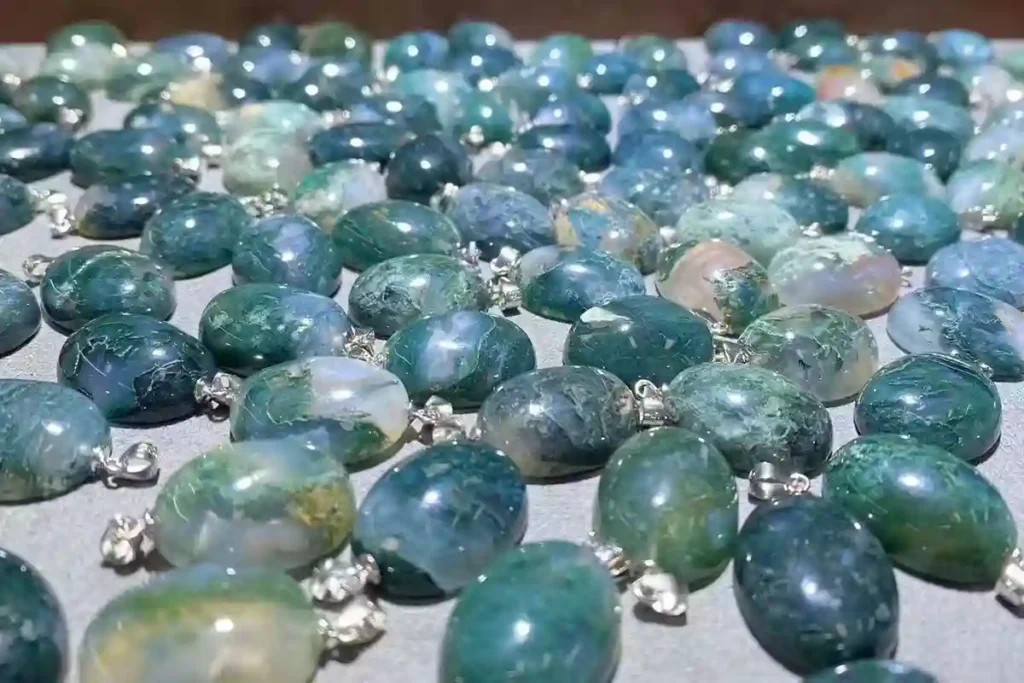
Agate names may refer to a color, pattern, place of origin, inclusion, or trade category. As a result, two products with “agate” in their names may look very different. Buyers should treat each name as a starting point and then check the actual material, color, pattern, treatment, size, and finish.
Moss Agate
Moss Agate usually shows green, brown, black, or reddish inclusions that resemble moss, branches, or small landscapes. Many pieces have a translucent or milky background. The patterns vary naturally, so one stone may contain strong green inclusions while another shows more clear or white areas.
Moss agate meaning commonly relates to growth, renewal, patience, and a connection with nature. The phrases moss agate spiritual meaning and green moss agate meaning often describe the same traditional associations. Some people also search for moss agate crystal meaning or the meaning of moss agate when choosing stones for meditation, gifts, or symbolic jewelry.
In commercial use, moss agate stone meaning and moss agate gemstone meaning matter less than the actual appearance of the batch. Wholesale buyers should confirm the percentage of green material, inclusion density, transparency, shape, polish, and acceptable amount of brown or red coloring.
Blue Lace Agate
Blue Lace Agate usually features pale blue, white, and gray bands with soft, wavy patterns. Its delicate appearance makes it popular for beads, pendants, cabochons, bracelets, and small decorative pieces. Strong lace-like banding and an even polish often make the material easier to present in higher-value retail designs.
Blue lace agate meaning commonly relates to calm communication, patience, and emotional balance. Searches for blue lace agate spiritual meaning or blue lace agate gemstone meaning usually refer to these traditional associations. Before ordering in bulk, buyers should confirm the shade of blue, band visibility, translucency, treatment disclosure, drilling quality, and consistency across the current lot.
Flower Agate
Flower Agate usually has a translucent chalcedony background with white, cream, pink, or peach inclusions that resemble flowers, seeds, or small clouds. Buyers often prefer pieces with clear floral patterns, balanced colors, smooth surfaces, and fewer distracting dark areas. Tumbled stones, towers, spheres, carvings, and cabochons remain common product forms.
Flower agate meaning often relates to growth, confidence, and new beginnings. Flower agate spiritual meaning may also include creativity and personal development. These ideas come from modern crystal traditions. For wholesale orders, buyers should focus on visible pattern coverage, base color, transparency, cracks, polish, shape, and size consistency.
Crazy Lace Agate
Crazy Lace Agate displays curved bands, loops, eyes, and irregular patterns in colors such as cream, gray, brown, red, yellow, and black. Its busy surface gives every piece a different appearance. Buyers often choose stones with strong contrast, clear patterns, good polish, and few open cracks for jewelry, carvings, and decorative products.
Crazy lace agate meaning commonly relates to joy, energy, confidence, and emotional balance. Some crystal users also connect crazy lace agate spiritual meaning with optimism and flexibility. For bulk purchasing, buyers should confirm the preferred color mix, pattern density, surface condition, size range, and acceptable natural variation.
Fire Agate
Fire Agate can show flashes of red, orange, gold, green, or brown beneath a layered surface. Light reflects from its internal structure and creates a fiery appearance. Skilled cutters must follow the natural layers carefully, so polished cabochons often vary in shape, size, brightness, and pattern.
Fire agate meaning commonly relates to courage, energy, protection, and action. Searches for fire agate crystal meaning usually refer to these traditional beliefs. Wholesale buyers should examine the strength of the color flash, viewing angle, surface contour, polish, cracks, and usable face. Reference photos should show the stone under clear and realistic lighting.
Botswana Agate
Botswana Agate usually features fine bands in gray, white, brown, pink, peach, and soft purple tones. Some pieces also show small eyes, curves, or layered patterns. Its neutral colors work well for beads, bracelets, cabochons, tumbled stones, and understated jewelry designs.
Botswana agate meaning commonly relates to stability, comfort, patience, and emotional balance. These associations come from crystal traditions rather than scientific evidence. Wholesale buyers should compare band quality, color contrast, polish, drilling, translucency, and natural cracks. They should also confirm whether the supplier can maintain a similar color range across the full order.
Indian Agate
Indian Agate commonly contains a natural-looking mix of green, red, brown, gray, cream, and translucent areas. Some pieces show clear bands, while others display clouds, spots, or blended colors. This variation makes the material suitable for tumbled stones, beads, bracelets, carvings, and mixed-color displays.
Indian agate meaning often relates to balance, strength, grounding, and connection with nature. However, buyers should not expect one fixed color combination from every batch. For wholesale orders, confirm the preferred balance of green, red, and brown stones, along with size, polish, shape, surface condition, and packaging. Current batch photos provide more useful information than the trade name alone.
Tree Agate and Dendritic Agate
Both materials can show branch-like inclusions, but their commercial appearance often differs. A typical Tree Agate has green patterns within a white or opaque background. Dendritic Agate more often shows brown, black, or green branching inclusions against a translucent, gray, or pale base.
Tree agate meaning commonly relates to growth, stability, and a connection with nature. Dendritic agate meaning carries similar associations with patience and personal development. Buyers should compare the background color, inclusion pattern, transparency, polish, cracks, and product form instead of treating the two trade names as interchangeable. Clear photos of the current lot help prevent confusion during bulk purchasing.
Agate Products and Their Best Uses
Beads and Bracelets
Agate beads come in many shapes, including round, faceted, barrel, oval, chip, and irregular forms. Common round bead sizes range from small jewelry beads to larger statement pieces. As bead diameter increases, each strand becomes heavier and usually contains fewer beads. Designers should therefore confirm bead size, strand length, hole diameter, and approximate bead count before ordering.
For bracelets, color matching and drilling quality can strongly affect the finished appearance. Off-center holes, chipped drill openings, uneven bead sizes, weak elastic, or poor polish may reduce the usable quantity in a bulk lot. Retailers should also check whether the supplier uses clear elastic, colored elastic, wire, or cord. Mixed-color agate works well for natural designs, while carefully matched beads better suit customers who expect a consistent bracelet style.
Tumbled Agate Stones
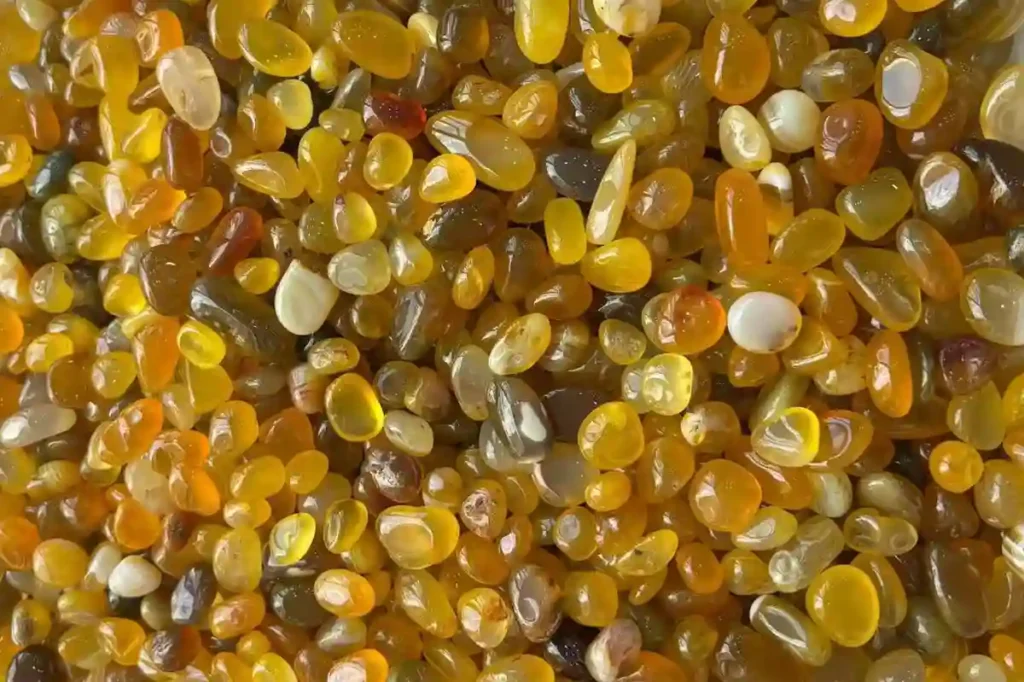
Tumbled agate stones usually sell by weight rather than by an exact piece count. A 20–30 mm lot may contain round, oval, flat, long, or irregular stones, so the number of pieces per kilogram can change between batches. Larger, denser, or fuller stones naturally reduce the final piece count.
Crystal shops often sell tumbled agate individually, by weight, or inside gift and meditation sets. Before ordering, buyers should confirm the size range, preferred color mix, shape, polish, cracks, pits, and amount of small or flat material. Photos or videos of the current batch can show whether the stones fit the intended retail display.
Raw Agate, Slices, Geodes, and Carvings
Raw agate pieces vary widely in shape, weight, color, and visible pattern. A rough exterior may hide attractive bands or a quartz center, but buyers cannot judge every internal feature before cutting. This makes each piece suitable for collectors, live sales, lapidary work, or natural displays.
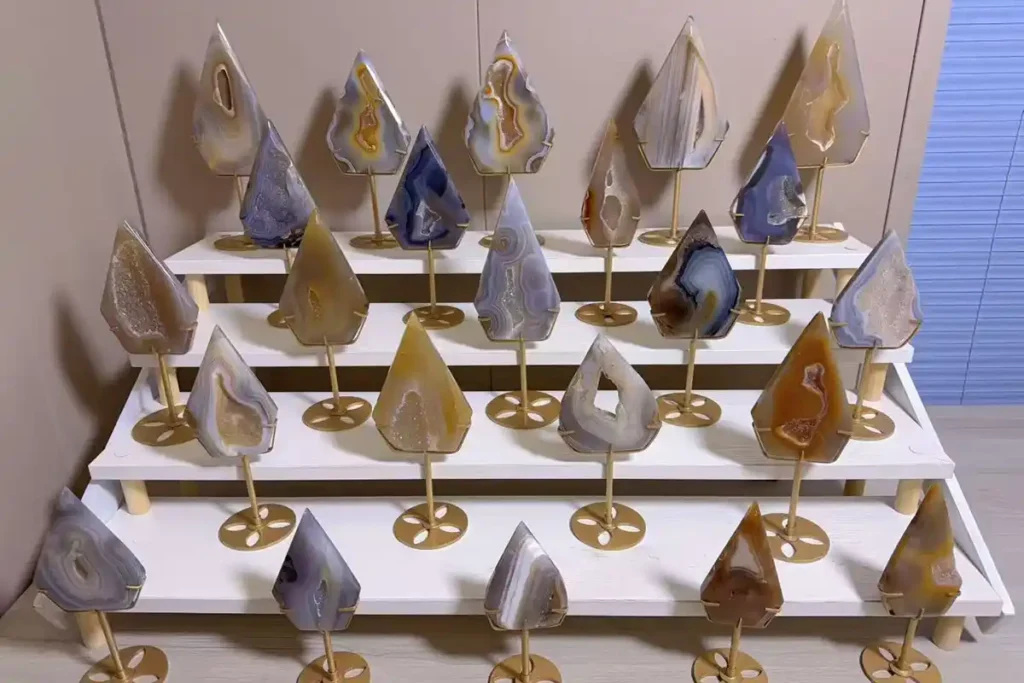
Agate slices and geodes often need extra protection because thin edges and crystal centers may chip during transport. Carvings also require careful inspection around points, corners, and narrow sections. Wholesale buyers should confirm dimensions, weight ranges, polishing areas, bases, repaired sections, and natural cracks. Foam, bubble wrap, inner boxes, and separation between heavy pieces can reduce damage in international shipping.
Need agate products for your retail or jewelry business? Send us your preferred color, size, product form, quantity, and reference photos through WhatsApp. We can check available batches and discuss treatment, color variation, quality, packaging, and estimated production time. You can also submit the inquiry form to request current photos and a wholesale quote for agate beads, bracelets, tumbled stones, rough pieces, slices, or carvings.
How to Identify and Evaluate Agate
Common Signs of Natural Agate
Natural agate often shows bands, curved layers, color zones, small inclusions, or changes in transparency. Some pieces contain a quartz center or open cavity, while others look solid. According to Mindat, agate consists of distinctly banded fibrous chalcedony, although sellers also use the name for several related materials without obvious banding.
Buyers should expect some variation in natural lots. One stone may show clear patterns, while another has cloudy areas, small pits, internal lines, or uneven color. These features do not automatically prove that a piece is natural, and a smooth, uniform appearance does not always prove that it is synthetic.
Simple home tests cannot confirm every agate. Dye, glass, resin, and other materials can sometimes imitate parts of its appearance. When identification affects a large order or a high-value purchase, buyers should request treatment information and consider professional gemological testing.
Natural, Dyed, and Treated Agate
A dyed agate can still contain natural chalcedony. The treatment changes its color rather than replacing the stone with an artificial material. Therefore, “dyed” and “fake” do not mean the same thing. Sellers should clearly disclose known treatments so buyers can price, market, and care for the goods correctly.
The Gemological Institute of America explains that manufacturers have used dyes on chalcedony and quartz to create stronger colors. Dye may collect in porous areas, fractures, drill holes, or between bands. Bright color and darker lines near cracks can suggest treatment, but these signs cannot confirm every case.
A qualified gemologist can identify many dyed stones, although some treatments require laboratory equipment. Wholesale buyers should ask whether the supplier knows of any dye, heat, coating, resin, or other enhancement. For important orders, written treatment disclosure provides more value than relying only on appearance.
Natural Textures and Common Imperfections
Natural agate may contain uneven bands, cloudy areas, color changes, mineral inclusions, internal lines, small pits, or open cavities. These features can add visual character, but they may also affect how buyers grade and use the material. A natural feature becomes a quality concern when it weakens the stone or makes the finished item difficult to sell.
Processing can create different problems. Poor polishing may leave dull areas, scratches, flat spots, or visible wheel marks. Drilling can cause chipped holes, off-center openings, and broken edges. Tumbled stones may also appear too thin, sharp, or uneven for the stated size range. Wholesale inspection should separate acceptable natural variation from avoidable workmanship defects.
Quality Grades and Price Factors
Agate quality depends on several factors, including color, pattern, transparency, polish, size consistency, treatment, and usable yield. A stone with strong bands and an attractive natural color may cost more than a plain or heavily included piece. However, buyers in different markets may value different features. Some prefer bright dyed colors, while others want natural tones and visible variation.
Grade names such as A, AA, or AAA do not follow one universal industry standard. One supplier’s A grade may look different from another supplier’s product with the same label. Buyers should request photos, videos, samples, or clear written standards instead of choosing by grade name alone.
Price also changes with product form. Beads require cutting and drilling, carvings require more labor, and matched colors create extra sorting work. Large sizes, high usable yield, rare patterns, and strict consistency can further increase the cost.
Wholesale Buying Guide for Agate
Confirm Color, Size, Weight, and Tolerance
Before placing a wholesale order, buyers should define the preferred color range and any colors they want to limit. A request for “green agate” may still include pale, dark, white, brown, or translucent areas. If the order needs a specific color percentage, both sides should confirm this requirement before production or sorting begins.
Size also needs a clear standard. Round beads may allow a small diameter tolerance, while tumbled stones usually follow a broader range such as 20–30 mm. A stated size does not guarantee the same shape or weight for every stone. Flat pieces and full pieces can fit the same measurement but produce different counts per kilogram.
Buyers should also confirm strand length, hole size, bracelet size, package weight, and quantity tolerance. Clear written details reduce misunderstandings when natural variation affects the final bulk lot.
Check Samples and the Actual Bulk Lot
A sample helps buyers confirm size, polish, color direction, and basic workmanship. However, natural agate from a later batch may not match the sample exactly. Patterns, transparency, inclusions, and color proportions can change with the available raw material.
Before shipment, buyers should request current photos or videos of the completed lot. The supplier should show the goods under clear lighting and include close views of the surface, drilling, size range, and color mix. For larger orders, random inspections from different bags or boxes provide a more reliable view than one carefully selected piece.
Strict matching or color sorting requires early agreement. Buyers should confirm whether the factory can meet the standard and whether extra selection will affect price, minimum quantity, or delivery time.
Packaging and Shipping
Packaging should match the product form, weight, and level of fragility. Suppliers can place beads and bracelets in individual bags or group them by size and color. Tumbled stones usually need strong inner bags with a controlled weight, while labels can identify the variety, size, treatment, or customer code.
Heavy rough pieces, slices, geodes, and carvings require more protection. Foam, bubble wrap, dividers, inner boxes, and strong outer cartons help prevent impact and surface damage. Thin edges, quartz centers, points, and repaired areas need special attention.
Buyers should confirm the packing method before shipment because protective materials increase the final chargeable weight. For mixed orders, separating heavy products from small or fragile pieces can reduce breakage during international transport.
Which Agate Products Sell in Different Markets?
Agate beads mainly serve jewelry designers, bracelet makers, craft businesses, and accessory brands. Round beads offer easy sizing and repeatable designs, while faceted or irregular beads help create more distinctive collections. Finished bracelets suit gift shops, crystal retailers, and customers who want products ready for immediate resale.
Tumbled stones work well for crystal stores, mixed stone sets, meditation kits, small gifts, and individual displays. Agate slices, geodes, and polished freeforms fit home decoration, live sales, and collector markets. Rough stones attract lapidary buyers and customers who prefer a natural appearance.
The best product form depends on local price levels, display space, shipping cost, customer preferences, and expected sales volume. Buyers should test a focused range before expanding into too many sizes and styles.
How to Choose a Reliable Agate Supplier
A reliable supplier should explain the material, known treatments, size range, color variation, quality standard, minimum order quantity, and packaging method before accepting an order. Clear answers help buyers compare offers that may use the same product name but follow different grading rules.
Buyers should also check whether the supplier can provide current batch photos, videos, samples, and inspection details. A good supplier should identify visible problems rather than hide them and should discuss solutions when finished goods fail to match the confirmed standard.
Price matters, but the lowest quotation may include weaker sorting, wider size tolerances, poorer polish, or less protective packaging. Consistent communication, honest treatment disclosure, careful inspection, and practical after-sales support often provide greater long-term value than a small price difference.
My Experience Supplying Agate Products
Product Names Do Not Always Define the Exact Color
In my experience supplying agate products, the product name alone does not always tell buyers exactly what colors they will receive. Indian Agate, for example, often contains a mixture of green, red, brown, gray, and translucent stones. Moss Agate buyers, by comparison, usually pay more attention to green colors and visible moss-like inclusions.
Some green Indian Agate stones can look similar to pieces sold as Moss Agate. However, this does not mean that a supplier can freely move selected stones from one order to another. Factories normally sort and sell them as separate commercial products.
For wholesale orders, I confirm the actual colors, patterns, transparency, and overall appearance instead of relying only on the trade name. This step helps me understand whether the available batch can meet the customer’s expectations before I accept the order.
A Factory Refused My Color-Sorting Request
I once needed additional green stones for a Moss Agate order. At the factory, I noticed that an Indian Agate batch also contained some green pieces that looked suitable for the customer’s request. I asked whether the factory could select those greener stones separately and use them to help complete the Moss Agate order.
The factory refused. They wanted to keep the Indian Agate batch together rather than remove only the greener pieces. As a result, I could not use those stones to complete the order, even though some of them had the color the customer wanted.
This experience taught me to confirm color requirements before arranging a wholesale agate order. If a customer wants a particularly high percentage of green, red, or another color, I first need to check whether the factory can provide that type of sorting. The actual batch determines which colors and patterns we can supply.
Why Buyers Should Confirm the Actual Batch
Based on this experience, I recommend that wholesale buyers confirm the actual batch instead of ordering by product name alone. Buyers should explain which colors they prefer, which colors they want to limit, and whether they can accept a naturally mixed assortment.
Reference photos help me understand the required color and quality. However, a new batch of natural agate will not look exactly the same as a previous sample. The proportions of green, red, brown, and translucent stones may also change from one lot to another.
Before shipment, we can provide current photos or videos showing the available colors, patterns, sizes, and surface finish. If a buyer requires strict color selection, we need to confirm whether the factory can complete that sorting before accepting the order. Additional selection may also affect the price, minimum order quantity, or production time.
Natural variation remains normal in agate, but buyers should not have to accept an unsuitable batch. Confirming the actual goods helps us supply products that match the intended retail market.
How to Clean and Care for Agate
Everyday Cleaning
Use warm water, mild dish soap, and a soft brush or lint-free cloth to clean most agate products. The Gemological Institute of America recommends this gentle method for most colored gemstones. Rinse the stone carefully, wipe away any remaining soap, and dry it completely before storage.
Keep agate away from harder stones that may scratch its polished surface. Bracelets and necklaces also need regular checks around the elastic, cord, drill holes, clasps, and metal settings. Remove jewelry before heavy work or situations where strong impacts could chip the stone.
Extra Care for Dyed Agate and Jewelry
Dyed agate needs protection from strong chemicals and long periods of direct sunlight. The Gemological Institute of America explains that alcohol or acetone can remove some dyes, while ultraviolet light may cause certain colors to fade. Avoid these substances when cleaning treated agate.
Do not use steam or ultrasonic equipment when you do not know the stone’s treatment, fracture condition, or setting quality. Heat, vibration, and cleaning chemicals may affect treatments or loosen mounted stones. A soft cloth, warm water, and mild soap provide a safer routine. Jewelry with metal parts may also require separate care based on the metal, plating, elastic, or adhesive.
Frequently Asked Questions
What Is the Spiritual Meaning of Agate?
The spiritual meaning of agate commonly includes balance, grounding, protection, stability, and inner strength. Different colors may carry more specific associations. For example, blue agate often connects with calm communication, while black agate commonly represents grounding and protection. These meanings come from cultural traditions and personal beliefs. Scientific research has not confirmed that agate produces healing effects or treats physical or psychological conditions.
What Does “Agate” Mean?
Agate refers to a type of chalcedony that commonly shows bands, layers, or distinct natural patterns. In symbolic traditions, the word also connects with balance, protection, stability, and strength. The exact meaning can change according to the stone’s color, pattern, and variety. Mineralogical facts describe what agate is, while spiritual meanings reflect cultural beliefs and personal interpretation.
Is Agate Stone Lucky?
Some people consider agate a lucky stone and carry it for protection, confidence, or success. Different cultures have connected agate with positive outcomes for a long time. However, science has not shown that wearing or carrying agate changes a person’s luck. It works best as a personal symbol, decorative stone, or reminder of an intention rather than a guarantee of wealth or success.
Who Should Not Wear Agate?
No reliable scientific evidence shows that a particular group of people must avoid wearing agate. Most concerns relate to the finished jewelry rather than the stone’s spiritual properties. People with sensitive skin should check the metal, plating, dye, adhesive, and elastic used in the product. Anyone who notices irritation should stop wearing the item and seek professional medical advice when necessary.
What Birthstone Month Is Agate?
Agate does not appear as one of the main stones on the widely used modern birthstone list. However, some traditional, historical, astrological, or commercial lists connect different agate varieties with certain months or zodiac signs. These systems do not always agree. Retailers should avoid presenting agate as the only official birthstone for one month unless they clearly explain which tradition or list they follow.
References
- Mindat. Agate: Mineral Information, Data and Localities.
- Götze, J., Möckel, R., and Pan, Y. Mineralogy, Geochemistry and Genesis of Agate—A Review. Minerals, 2020, 10(11), 1037.
- Gemological Institute of America. An Introduction to Gem Treatments.
- Gemological Institute of America. Tips on Caring for Jewelry.
Disclaimer
The spiritual meanings, chakra associations, energy claims, and ideas about luck described here come from cultural traditions and personal beliefs. Scientific research has not confirmed them as medical treatments or health effects. Agate should not replace diagnosis, treatment, medication, or advice from a qualified healthcare professional. Gem identification and treatment detection can also require laboratory testing. Buyers should seek professional gemological analysis when material identity or treatment status affects an important purchase.
Conclusion
Agate meaning commonly connects with balance, stability, protection, and inner strength. Beyond these traditional associations, each agate stone offers practical value through its colors, bands, inclusions, durability, and wide range of product forms. Beads, bracelets, tumbled stones, rough pieces, slices, geodes, and carvings can serve different customers and price levels.
For wholesale agate orders, buyers should look beyond the trade name. Color proportions, size tolerance, treatment, polish, natural textures, drilling, packaging, and the appearance of the current batch all affect the final result. Clear standards and pre-shipment photos can reduce misunderstandings, especially when natural materials vary between lots.
If you need agate products for your jewelry, crystal, gift, or retail business, contact us through WhatsApp or submit the inquiry form. Send your required variety, color, size, quantity, packaging, and reference photos to request current batch information and a wholesale quote.