
Tiger Eye Color: A Guide to Different Colors and Types
Written by Roc Gong | Founder of RoCrystal
Published: November 04, 2026
Tiger eye color is most familiar as golden yellow to brown, with a silky band of light that shifts as the stone moves. However, you will also find tiger eye sold in blue, red, green, pink, purple, and other shades. These color names alone do not tell you whether a stone is untreated, treated, or accurately identified.
This guide compares different tiger eye colors, explains what buyers should understand about their origins, and offers practical points for choosing beads, bracelets, and polished stones. For jewelry makers and retailers, checking the material and treatment details helps you describe products accurately and set clear expectations for customers.
For the stone’s broader symbolism and traditional uses, explore our guide to tiger eye stone meaning.
What Color Is Tiger Eye?
Tiger eye is typically golden yellow, honey brown, or dark brown, often with contrasting bands. Its moving line of reflected light gives the surface a silky appearance. As a result, the same polished stone may look brighter or darker when you turn it under a lamp.
Other tiger eye stone colors include blue and red, while sellers also offer green, pink, purple, black, and white material under the tiger eye name. These descriptions need closer attention because a color label does not establish the material’s identity or treatment history.
| Color description | Typical appearance | What buyers should check |
|---|---|---|
| Golden or yellow | Honey-yellow to golden-brown bands | Color consistency and strength of the moving sheen |
| Brown | Medium to dark brown with golden highlights | Whether photos show the stone under ordinary lighting |
| Blue or gray | Blue-gray to dark, sometimes mixed with golden areas | Material identity and any disclosed treatment |
| Red | Reddish brown to deeper red | Whether heat treatment or another enhancement is disclosed |
| Green, pink, or purple | Distinct colored bands, sometimes strongly saturated | How the color was produced |
| Black or white | Dark or pale material sold under these names | What material the seller means by the name |
| Tri color | A combination of contrasting colors | Whether the description refers to one stone or mixed beads |
When comparing colors of tiger eye stones, request a short video as well as photographs. Movement helps reveal the sheen, while neutral lighting makes color comparisons more useful.

Why Does Tiger Eye Come in Different Colors?
Tiger eye colors reflect both natural mineral differences and, in some products, treatments. However, the cause of a stone’s color differs from the optical effect that creates its moving sheen.
Natural Color and the Moving Sheen
Tiger eye contains quartz and fibrous mineral inclusions. Iron-bearing alteration products contribute to its familiar golden-yellow and brown appearance. Blue material, commonly called hawk’s eye, retains a different mineral composition within those fibers. The Natural History Museum’s tiger’s eye overview explains these mineral relationships.
Meanwhile, aligned fibers produce the reflective band known as chatoyancy. As you move the stone or change the light, this band travels across the surface. Consequently, brighter highlights do not necessarily indicate a different body color.
Treatments Can Change the Color
Heat and dyes can also alter the appearance. For example, Gemdat’s tiger’s eye reference records heat treatment to produce dark red material, along with dyeing and bleaching as possible enhancements.
Therefore, compare tiger eye colours using more than the seller’s photographs. Ask for treatment information, check the material description, and review the actual batch under neutral lighting. A vivid shade alone cannot establish whether the color has a natural origin.
Golden, Brown, Blue, and Red Tiger Eye
These familiar shades provide a useful starting point when comparing different types of tiger eye. However, individual stones can show more than one color, so check the whole piece rather than its brightest band.
Golden and Brown Tiger Eye
Golden tiger eye combines yellow-gold highlights with brown bands. Sellers also use yellow tiger eye for pieces with a brighter, honey-colored appearance. Meanwhile, brown tiger eye usually describes darker material within this familiar color range.
For bead strands, compare several beads together. A strand with similar background tones will create a more uniform design, while stronger contrasts can give each bead a distinct appearance.
Blue and Gray Tiger Eye
Blue tiger eye, also called hawk’s eye, can show blue-gray bands against a dark background. Some pieces also contain golden-brown areas. Consequently, a single stone may look mostly dark until movement reveals its reflective bands.
Listings such as gray tigers eye or grey tiger’s eye require the same checks: confirm the material, examine a video, and ask about treatments. For its symbolic associations, see our blue tiger eye meaning guide.
Red Tiger Eye
Red tiger eye shows reddish-brown bands with lighter reflective streaks. Heat treatment can produce this red appearance, so ask the supplier to disclose the treatment status.
When selecting a batch, compare the depth of red and the visibility of its sheen. For symbolism and traditional uses, explore red tiger’s eye meaning.

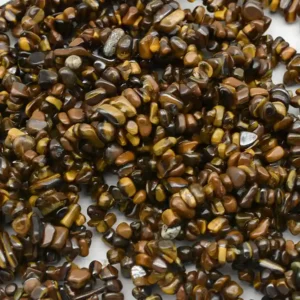


Green, Pink, Purple, Black, and White Tiger Eye
These color names appear in product listings, but they do not establish a stone’s mineral identity or prove a natural color origin. Therefore, treat each name as a starting point for checking the product details.
Green, Pink, and Purple Tiger Eye
Green tiger eye, pink tiger eye, and purple tiger eye offer alternatives to the familiar gold and brown palette. However, tiger eye can undergo dye treatment, so ask how the supplier achieved the color before describing a piece as naturally green, pink, or purple.
For example, request confirmation of the underlying material and any color treatment. Then compare samples under neutral lighting. Strong saturation alone cannot prove dyeing, just as visible bands cannot prove an untreated color.
For retailers, clear descriptions help customers understand their purchase. If the supplier confirms dyed tiger eye, include that information in the listing rather than presenting the shade as a rare natural variety.
Black and White Tiger Eye
Black tiger eye may describe very dark-looking material, but the name alone does not identify it. Check whether movement reveals blue, brown, or golden highlights, and ask the supplier for a precise material description.
Similarly, approach white tiger eye as a product name that needs clarification. A pale stone with a moving light band does not automatically qualify as tiger eye; other materials can also show a cat’s-eye effect. Before ordering, confirm its identity and request supporting identification when the supplier’s explanation remains unclear.
What Is Tri Color Tiger Eye?
Tri color tiger eye describes a product with three contrasting colors, often gold, red, and blue. However, check whether the name refers to colors within individual stones or a bracelet that combines separate beads.
Color Bands Within One Stone
An individual piece may show contrasting areas across its surface. To understand its appearance, ask for photographs from several angles and a video that follows the moving sheen.
However, three visible colors do not establish that every shade has a natural origin. Ask the supplier about treatments, just as you would for a single-color stone.
Mixed-Color Beads and Bracelets
A tri color bracelet can combine golden, red, and blue tiger eye beads. In this case, the name describes the jewelry’s color arrangement rather than a separate mineral variety.
For bulk orders, confirm the bead count and color proportions. For example, a repeating three-color pattern will look different from a strand with mostly golden beads and a few red or blue accents. Also, check whether the supplier can maintain that arrangement across repeat orders.
When writing product descriptions, state whether the item contains multicolored individual stones or a mix of separate colors. This detail helps buyers understand what they will receive.
Natural vs. Treated Tiger Eye Colors
Natural tiger eye and treated tiger eye can both serve jewelry designs. However, buyers need clear information about the material and its color. A natural stone can undergo treatment, so “natural” alone does not mean “untreated.”
Ask Specific Questions About Color
Instead of asking only whether the stone is real, request details that you can use in your product description:
- Material: What mineral or gemstone does the supplier identify?
- Treatment: Has the stone undergone dyeing, heating, bleaching, or another enhancement?
- Batch: Do the photographs and video show the goods you will receive?
- Care: Does the treatment require special handling?
If the supplier cannot confirm a detail, avoid turning that uncertainty into an “untreated” claim. For higher-value purchases, consider an independent gemological report that addresses the relevant identification and treatment questions.
Compare Samples Before Ordering
First, review samples under the same neutral light. Then compare the background color, band contrast, polish, and moving sheen. This gives you a more useful basis for selecting a batch than heavily edited listing photos.
However, visual checks cannot reliably identify every treatment. Likewise, avoid scratch, solvent, or heat tests that could damage the goods without producing a clear answer.
Finally, keep the supplier’s written treatment information with your order records. Accurate descriptions help retailers explain tiger eye color consistently across product pages, packaging, and customer enquiries.
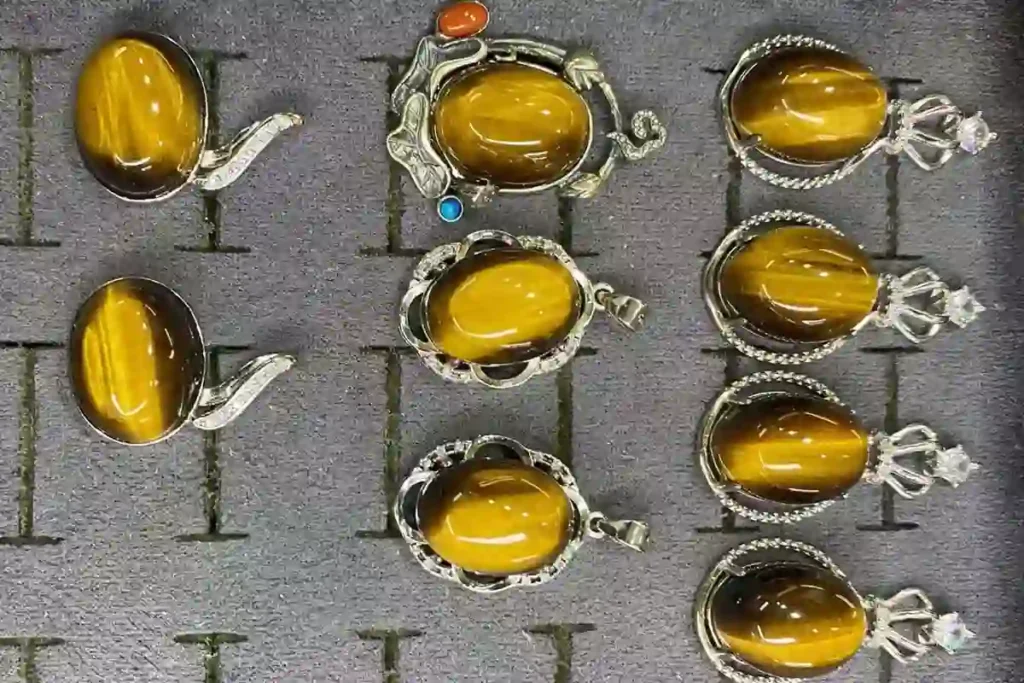
Choosing Tiger Eye Colors for Jewelry
Start with the overall palette you want to create. Golden and brown tiger eye suit warm color schemes, while blue-gray shades offer a cooler look. For stronger contrast, combine different colors, but keep the bead size and finish consistent if you want a balanced design.
Beads for Jewelry Making
When choosing stone beads, compare complete strands rather than a few attractive beads. Look for a color range that matches your design, then check hole size, bead dimensions, polish, and visible flaws.
Also, consider how the beads look when you rotate them. A strand may show bright bands in one position and darker tones in another. Therefore, request a moving video before approving the appearance for a bulk order.
Bracelets and Coordinated Collections
For finished stone bracelets, decide whether you want closely matched colors or deliberate variation. Then give the supplier a reference sample or approved photograph so both sides understand the target appearance.
For example, a golden collection might allow light honey through medium brown, while a mixed-color collection needs clear proportions for each shade. However, expect some variation between individual stones.
Finally, use consistent lighting when photographing your products. Show both the background color and the reflective bands, and avoid filters that change the shade. This helps customers compare your jewelry and gives repeat buyers a clearer reference when reordering.
Frequently Asked Questions
Is Blue Tiger Eye Natural?
Blue tiger eye, commonly called hawk’s eye, occurs naturally. However, that does not establish the treatment status of every blue product. Ask the supplier to confirm both the material and any enhancements.
Is White Tiger Eye a Natural Variety?
The name white tiger eye alone does not establish a recognized natural variety. If a seller uses this description, ask what material it refers to and how it acquired its pale appearance. A cat’s-eye effect by itself cannot identify the stone.
Does Tiger Eye Change Color in Different Lighting?
Tiger eye can appear lighter or darker as the viewing angle and lighting change. Its reflective band also moves across the surface. However, this shifting appearance does not mean the stone’s underlying color has permanently changed.
Is There a Standard Tiger Eye Color Code?
There is no single color code for every tiger eye stone. Natural variation, lighting, and photography affect the shades you see. For design work, sample a representative photograph, but treat the resulting code as a digital reference rather than a gemstone specification.
Do Different Tiger Eye Colors Have Different Meanings?
Tiger eye stone colors and meanings vary across modern crystal traditions. People often associate gold with confidence, blue with calm, and red with motivation. However, these symbolic interpretations do not establish mineral identity, treatment status, or proven health benefits.
Conclusion
Tiger eye color ranges from familiar golden-brown shades to blue, red, and other colors offered under trade names. However, appearance alone cannot confirm a stone’s identity or treatment history. For a more informed purchase, compare the actual goods, request treatment details, and keep product descriptions accurate.
For jewelry makers and retailers, clear color specifications also make repeat orders easier. Share your preferred shades, bead sizes, and quantities with Rocrystal through WhatsApp or our contact form to discuss your requirements.
Disclaimer
This article provides general educational information. Color names and photographs cannot replace gemological identification or treatment testing. Symbolic meanings reflect personal beliefs and traditions, rather than scientifically established health benefits.
References
- National Museum of Natural History, Sofia — Tiger’s Eye Quartz: Mineral composition and optical appearance.
- Gemdat — Tiger’s Eye: Gemological properties and recorded treatments.
- GIA — An Introduction to Gem Treatments: General information about gemstone enhancements and treatment disclosure.